
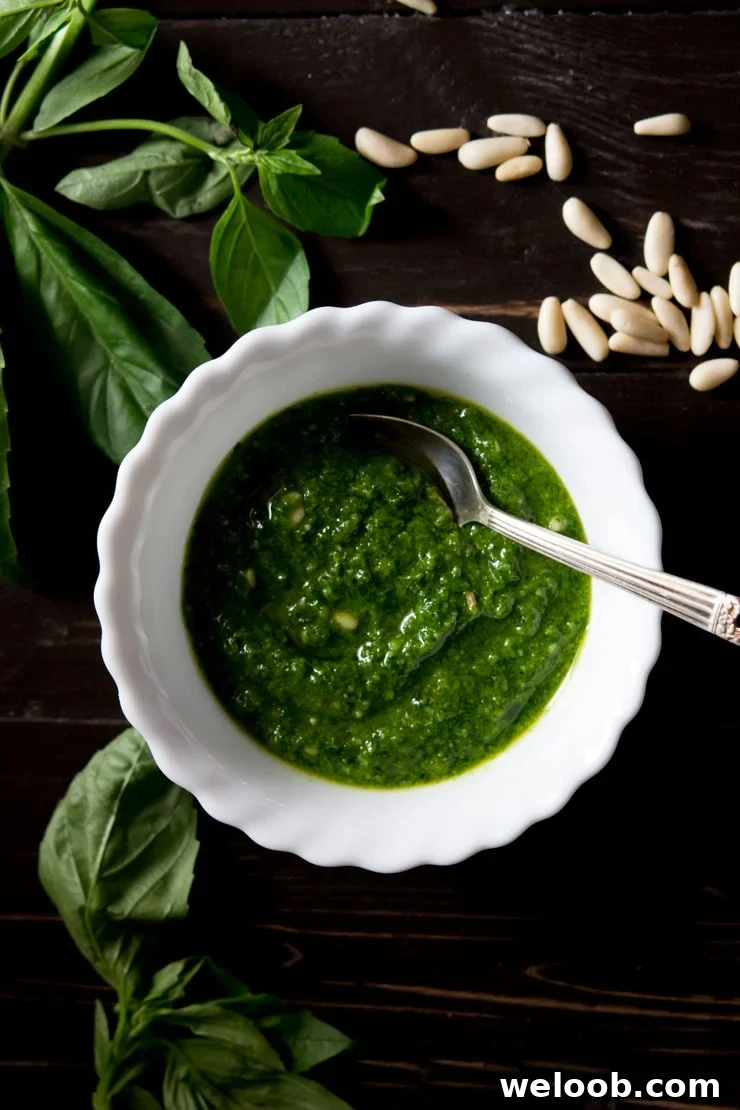
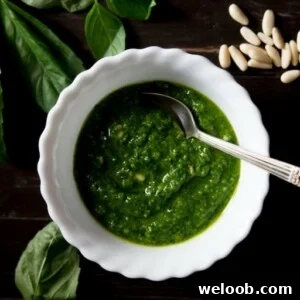
A classic, no-fuss basil pesto recipe—simple, aromatic and versatile. Made with just five core ingredients, this vibrant pesto is perfect tossed through pasta, swirled into salads, smeared on sandwiches, used on pizza or stirred into soups for an instant flavour boost.
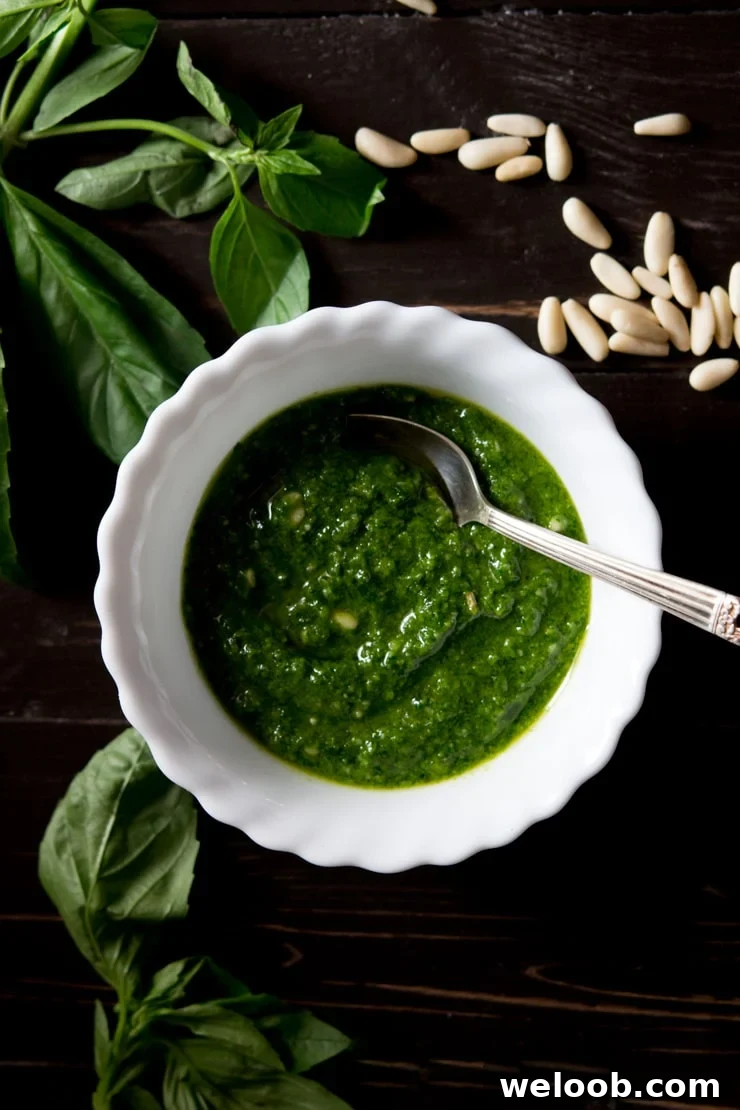
Whoever first tried crushing together fresh basil, pine nuts, garlic and cheese with olive oil deserves thanks—this emerald sauce turns everyday dishes into something special. Use pecorino or parmesan for a salty, nutty finish and choose a good extra virgin olive oil for the best flavour.
Pesto Alla Genovese – Origins
Pesto comes from Genoa in the Liguria region of Italy and traditionally is made with a mortar and pestle. Pine nuts are the classic choice for the nutty element, but if you don’t have them you can substitute cashews, pistachios, almonds or walnuts. A pinch of chilli can also add a pleasant, warming edge.
I once tried a walnut-and-chilli version in a small family restaurant in Siena — it inspired a spicy gnocchi with walnut and chilli pesto recipe that’s well worth trying if you enjoy a bit of heat.
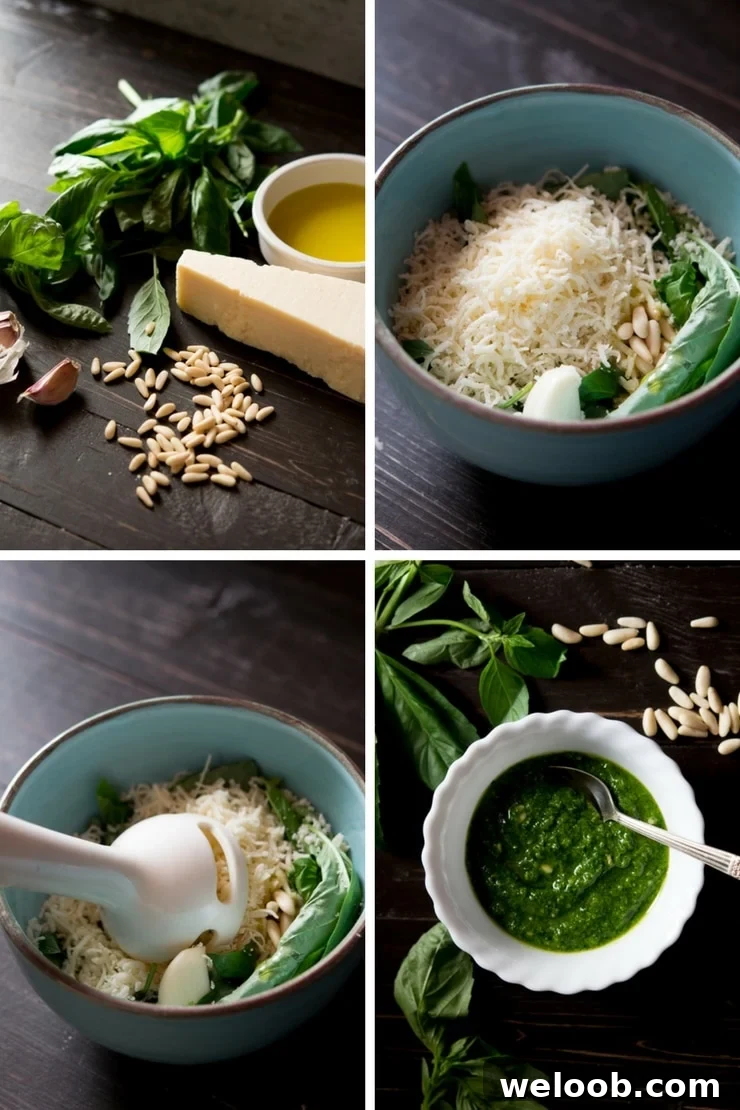
How to make basil pesto – step by step
Place all ingredients in a bowl and blend with a hand-held (immersion) blender until smooth. If the mixture is too thick, add a little more olive oil to reach the desired consistency. Taste and season with salt and pepper.
It’s incredibly quick: cook pasta and toss it with the pesto, use it as a dressing for greens, spread it on sandwiches, or spoon over roasted vegetables. For a different twist, try a sun-dried tomato pesto with ricotta for a red version that’s equally versatile.
Top tips for the best basil pesto
- Use fresh, bright basil leaves—avoid any that are wilted or spotted.
- Choose a good quality extra virgin olive oil for the best aroma and taste.
- If pine nuts are unavailable, cashews or walnuts make excellent substitutes.
- A blend of pecorino and Parmigiano Reggiano is traditional; use either if you prefer to keep costs down.
- Store pesto in the fridge for up to one day; it may oxidise and darken slightly—stir it before serving to refresh the colour.
More ways to use pesto
- Pasta alla Montecarlo (a creamy meat sauce with pesto)
- Pesto and roasted tomato pizza
- Pesto provolone cannelloni
- Sour cream pesto dip with prosciutto dippers
- Chicken pesto ciabatta
- Easy pesto gnocchi
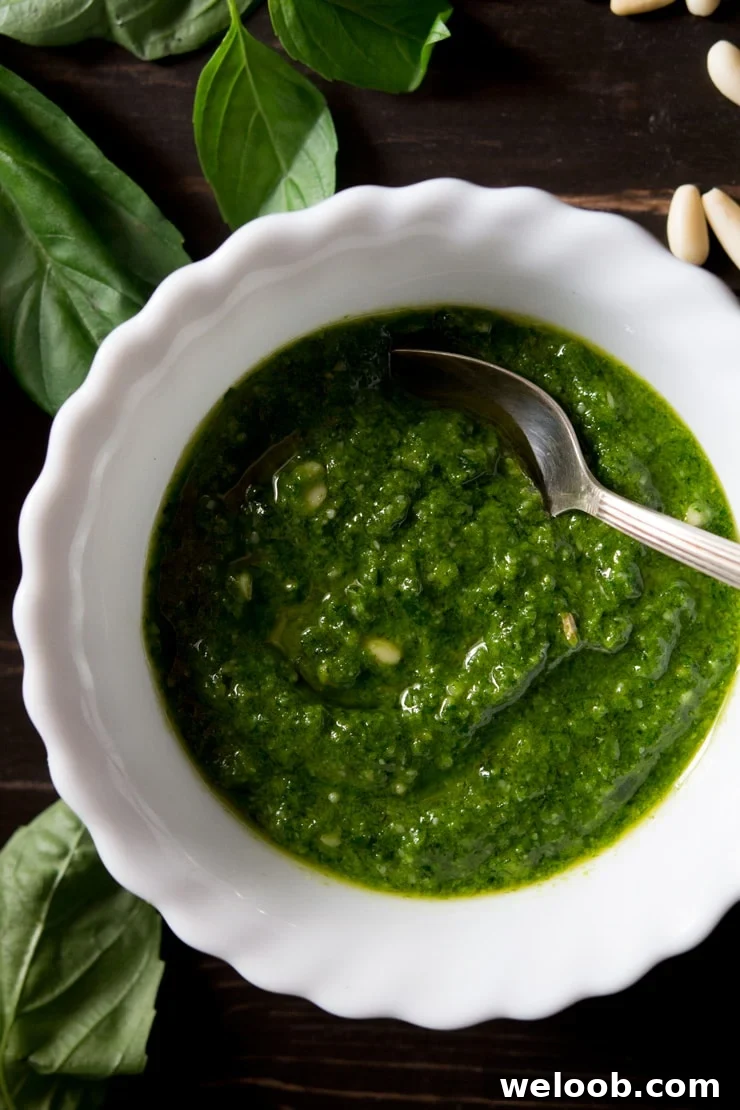
More pesto recipes
- Pesto alla Trapanese (Sicilian pesto)
- Red pesto with sun-dried tomatoes and ricotta
- Fresh parsley pesto
If you try this recipe, please rate it and share your experience in the comments—I love hearing how you use the pesto. You can also follow the author on social media to see more recipes and kitchen ideas.
Step By Step Photos Above
Most of our recipes include step-by-step photos and helpful tips to make them succeed first time.
How To Make Basil Pesto
By Emily
Ingredients
- 2 cups (30g) basil
- 1/8 cup (15g) pine nuts
- 1 clove garlic
- 3 tbsp (45ml) olive oil
- 1/4 cup (25g) pecorino or parmesan cheese
- salt and pepper
Instructions
-
Put all ingredients in a bowl apart from the salt and pepper.
-
Blitz the ingredients into a smooth sauce using a hand-held blender or food processor, then season with a pinch of salt and pepper. Add more olive oil if necessary to loosen the texture.
Video
Notes
- Use fresh Italian basil and discard any leaves that are wilted or spotted.
- Choose good quality extra virgin olive oil for the best flavour.
- Cashews or walnuts work well as alternatives to pine nuts.
- Traditionally pecorino and Parmigiano Reggiano are combined, but either works alone.
- Keep pesto refrigerated for up to one day; it may oxidise and darken slightly—stir before serving.
Helpful Info for All Recipes
- Extra virgin olive oil is used unless stated otherwise.
- When using canned or jarred tomatoes, choose quality brands for best flavour.
- Vegetables are medium sized unless specified.
- Recipes are developed using a fan (convection) oven where relevant.
- Nutrition is calculated automatically and should be treated as an approximation.
Nutrition
Nutrition information is automatically calculated and is an approximation.