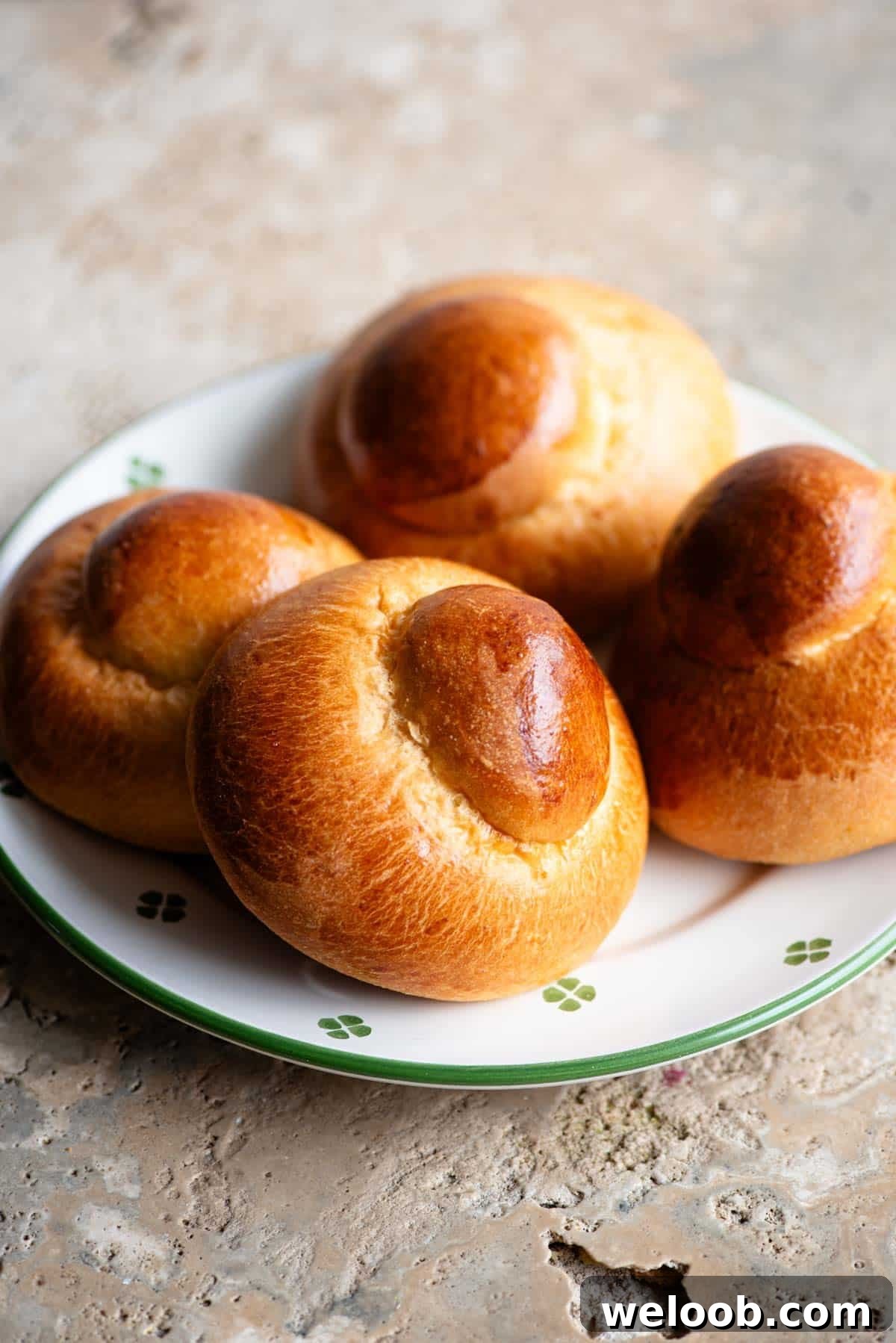
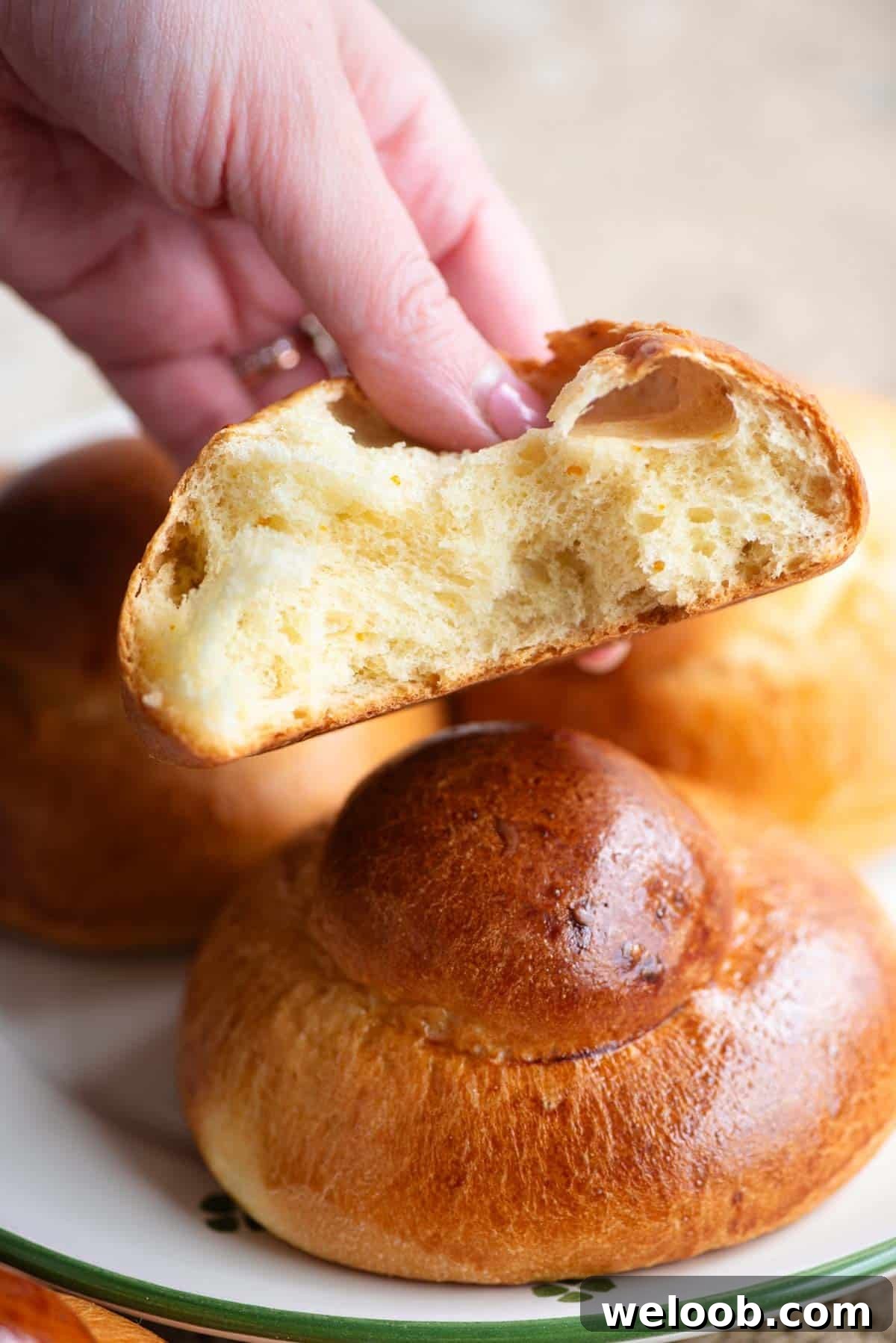
Soft, buttery Sicilian brioche buns—known locally as brioche col tuppo—are lightly sweet, fragranced with orange zest and vanilla, and perfectly tender. In Sicily they’re traditionally enjoyed for breakfast with a cold granita and a dollop of whipped cream, ideal for dunking.
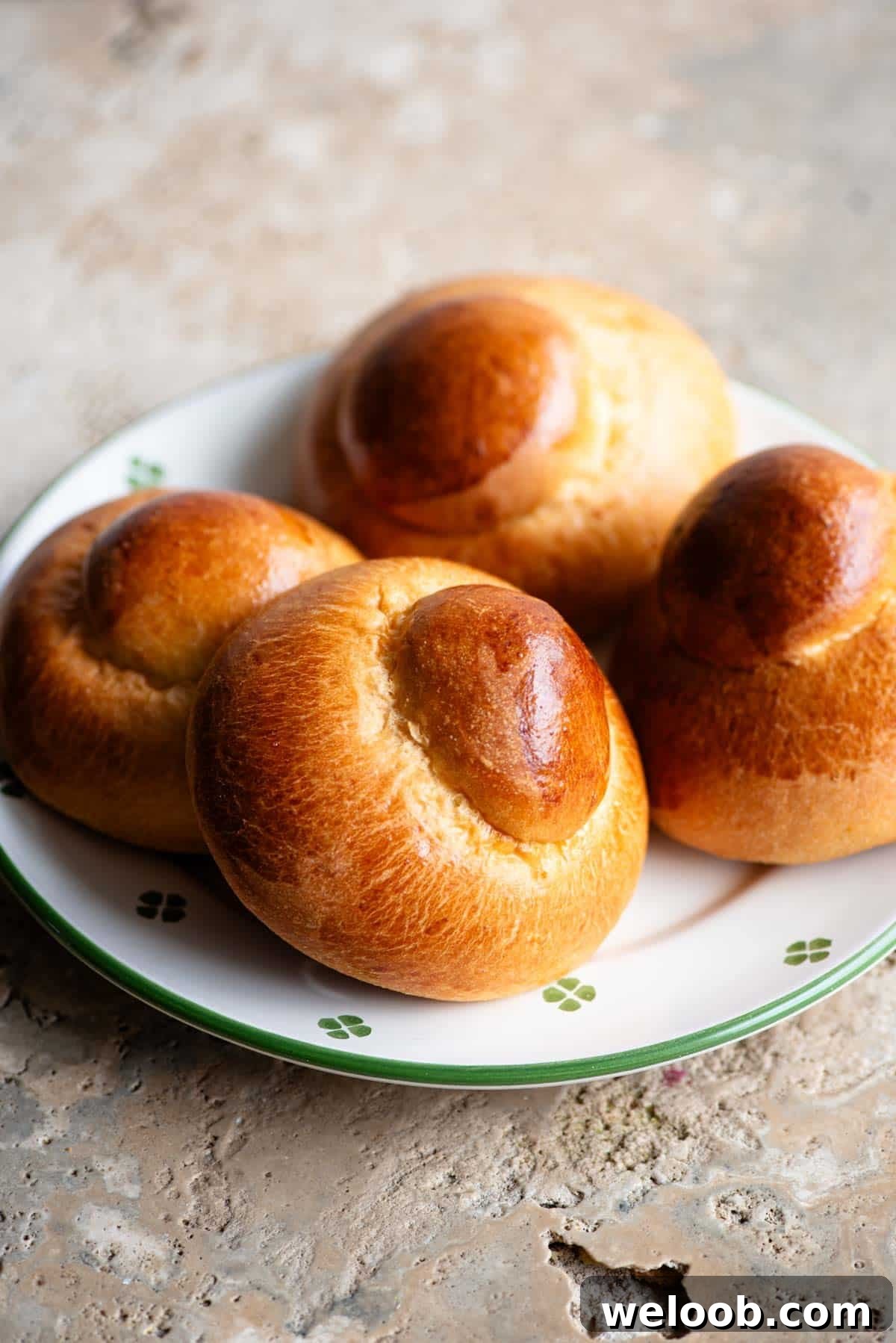
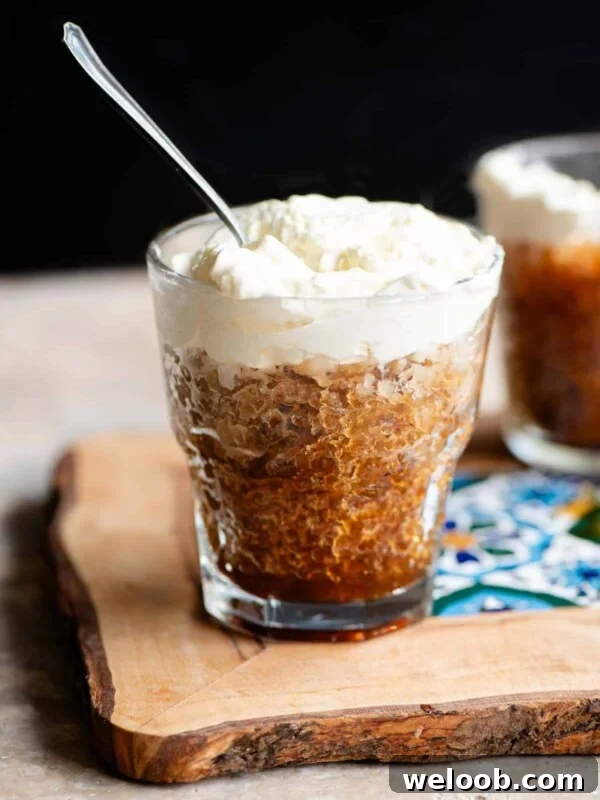
A classic Sicilian breakfast in summer is a glass of icy granita topped with whipped cream, paired with a warm brioche bun for dunking. It’s a simple combination that’s refreshingly delicious.
After tasting this breakfast in Sicily, I wanted to recreate it at home. The result is authentic-feeling brioche that brings back those sunny mornings—soft, slightly sweet and intensely comforting.
This brioche dough is wet and sticky, so a stand mixer with a dough hook makes the process much easier. If you don’t have one, it’s possible to knead by hand but it’s more labour-intensive.
These buns are best eaten warm. If you’re not serving them with granita, try them split and filled with gelato, spread with chocolate hazelnut spread, or topped with sweetened whipped cream.
Table of Contents
- Ingredient notes
- Visual walk-through of the recipe
- Recipe tips and FAQs
- Granita and gelato to serve with your brioche
- Full Recipe
Ingredient notes
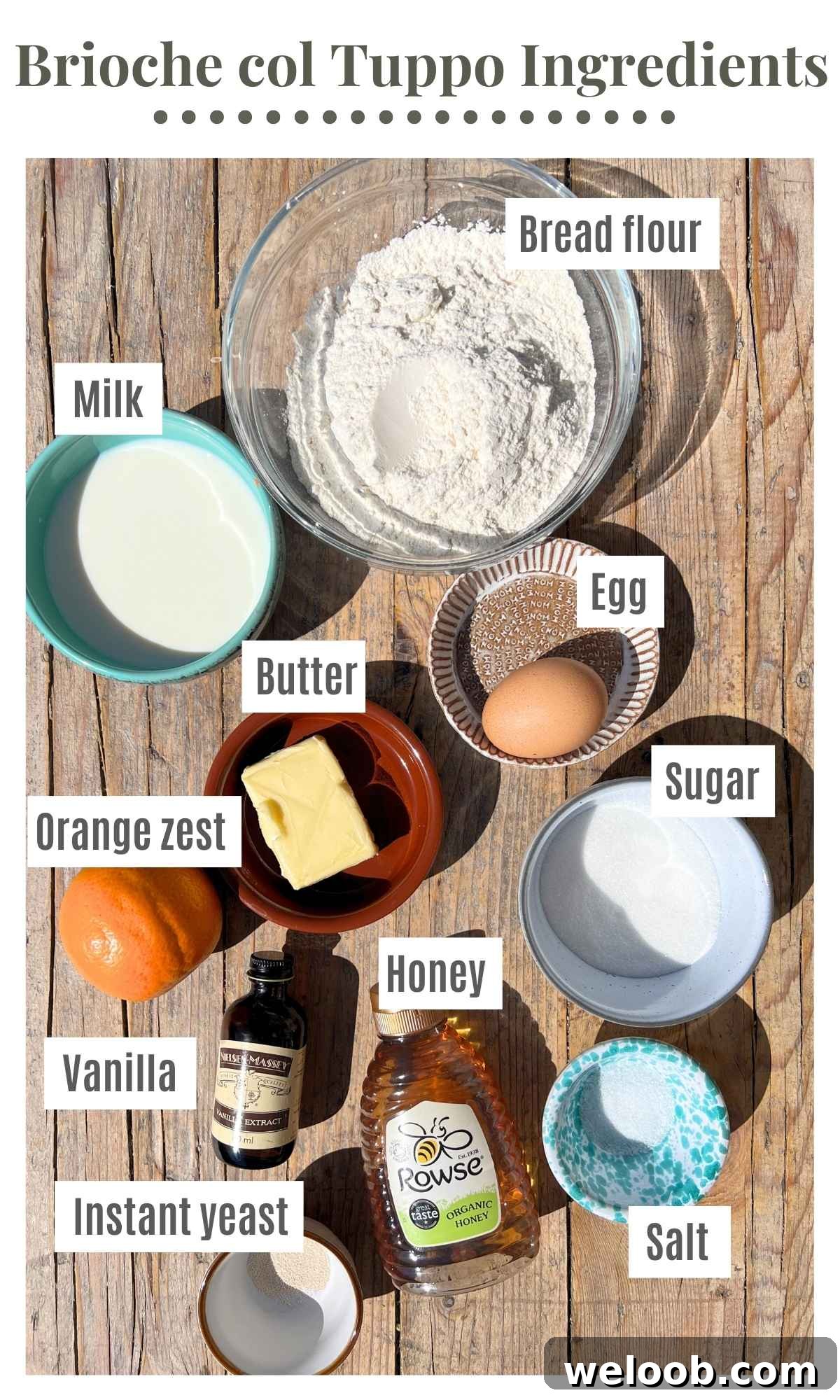
- Unsalted butter – use room-temperature butter for easy incorporation. If you only have salted butter, omit the recipe salt and note texture/taste may differ.
- Orange zest – swap with lemon zest or omit if you prefer a neutral flavour.
- Vanilla extract – use real vanilla extract, vanilla bean paste or a scraped vanilla pod rather than artificial essence for best flavour.
Visual walk-through of the recipe
Step 1 – In the bowl of a stand mixer fitted with a dough hook, combine the flour, instant yeast, slightly warmed milk, one egg, orange zest, honey and vanilla. Mix on low speed until a rough dough forms. Add the sugar and salt, then mix until incorporated.
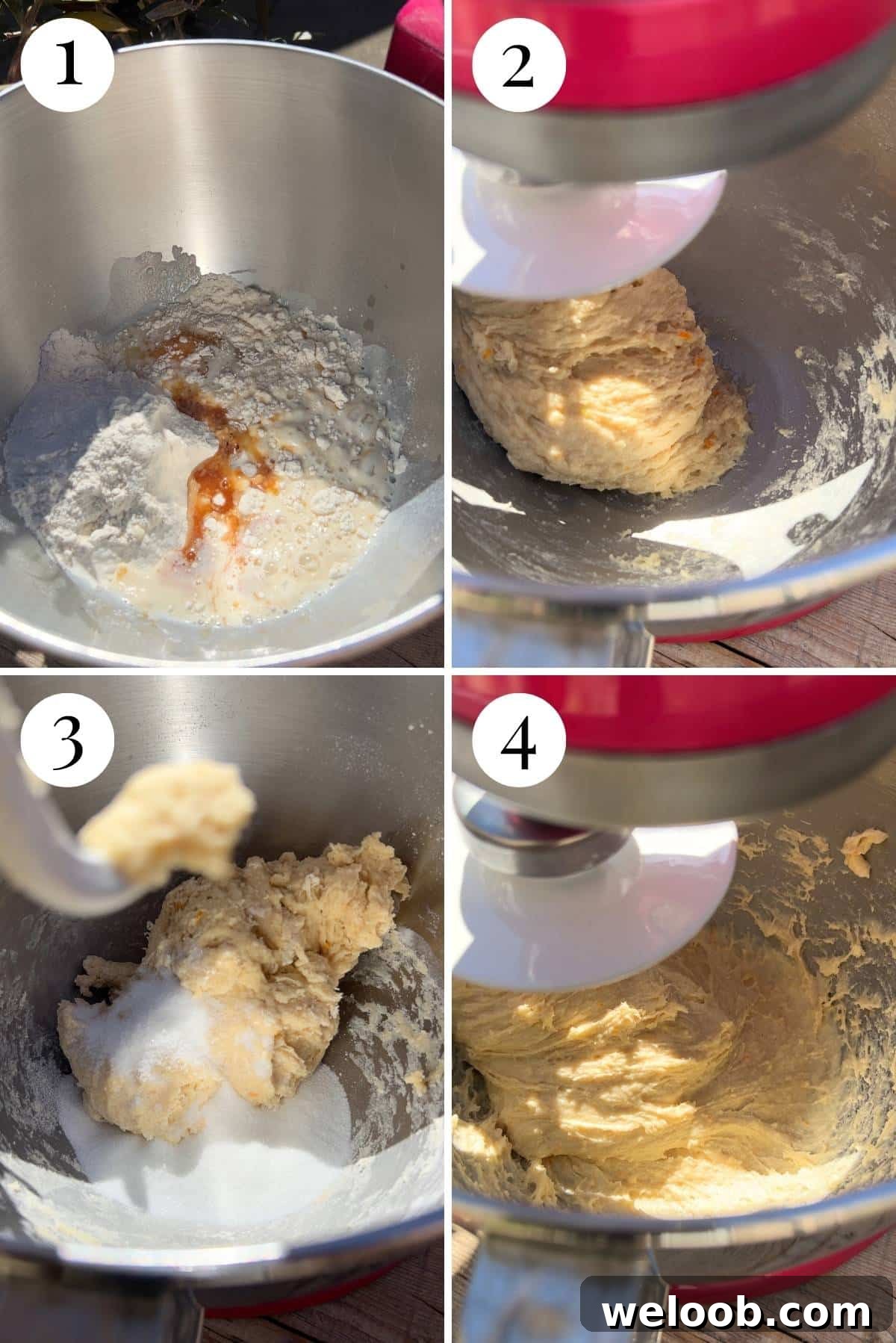
Step 2 – With the mixer on medium speed, add the room-temperature butter a tablespoon at a time, waiting until each addition is fully incorporated. After all the butter is added, continue kneading on medium for about 20 minutes. The dough should turn glossy, smooth and tacky but not overly sticky.
Step 3 – Transfer the dough to a lightly greased large bowl, cover with plastic wrap and let it proof at room temperature until doubled (about 4–6 hours, depending on room temperature).
Step 4 (shaping) – Turn the dough out and divide it into six equal portions. Remove a small piece from each portion for the traditional top knot (tuppo), leaving six larger base pieces and six smaller tops (approx. 78g and 20g each if weighing).
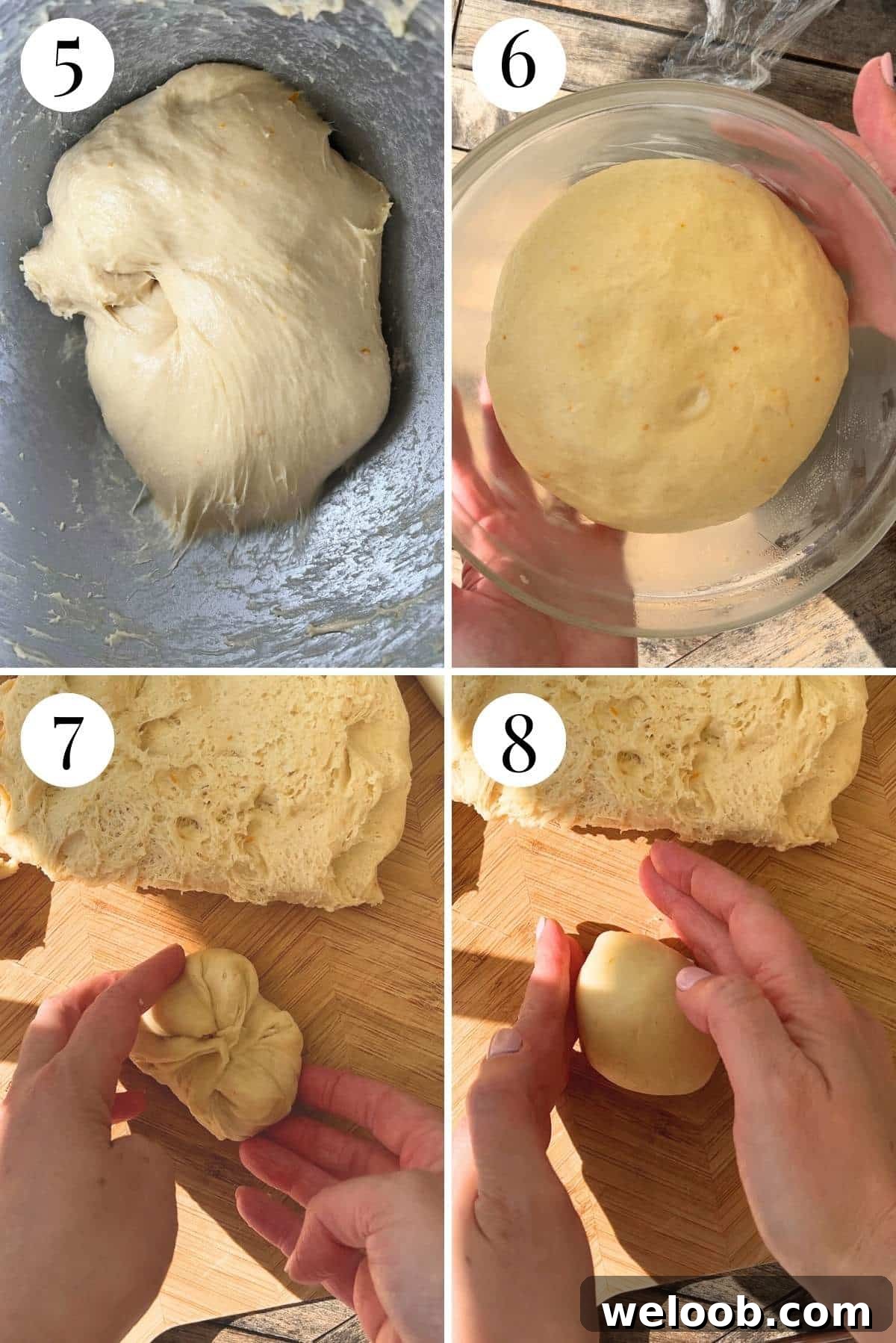
Step 5 – To shape each ball, gently fold the dough’s edges into the center to create surface tension, then turn it seam-side down and cup your hands to roll into a smooth ball.
Step 6 – Place the larger balls on a parchment-lined tray and press a small indentation in the center with two fingers. Shape the small balls the same way and set them inside each indent to form the tuppo.
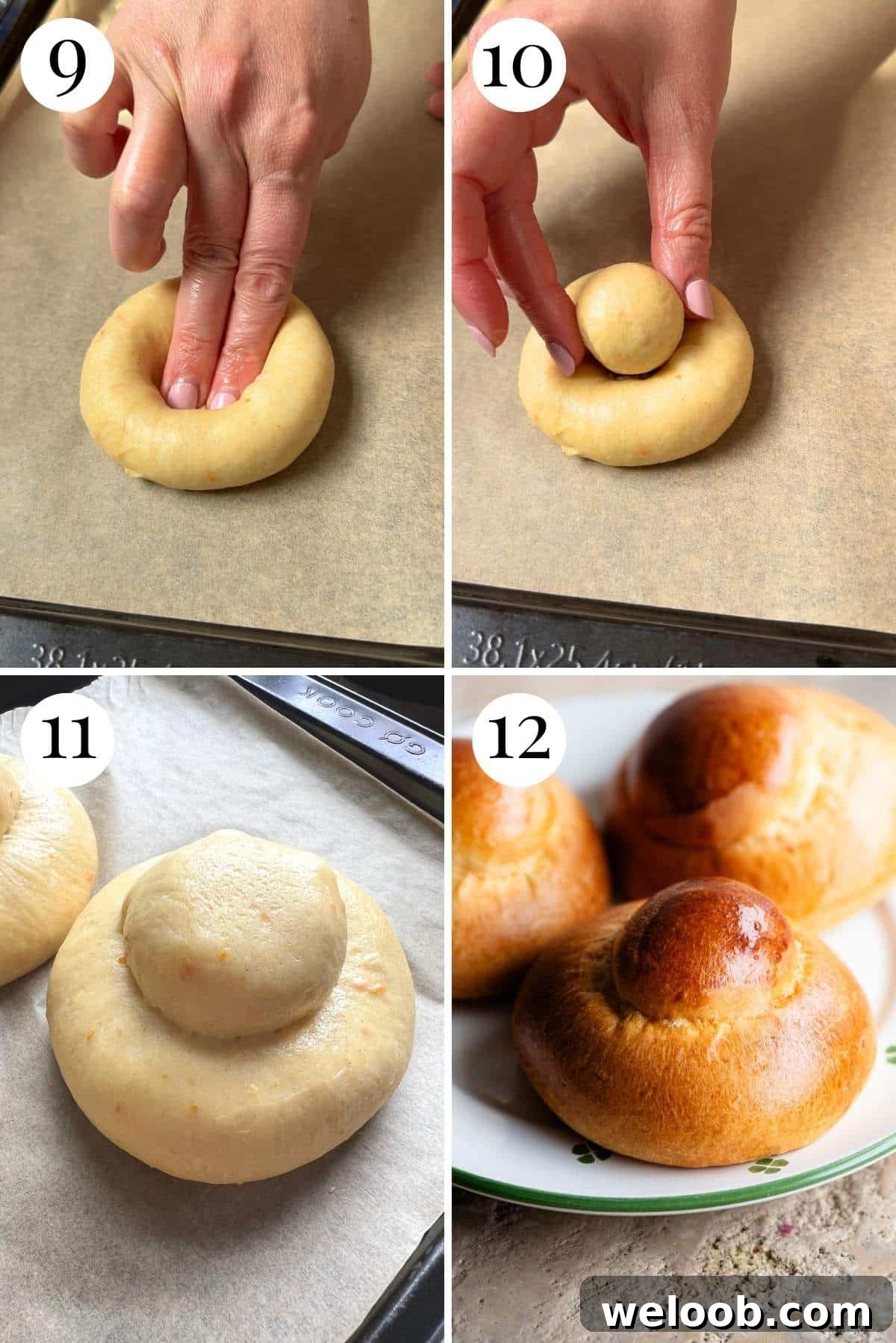
Step 7 (second proof) – Cover the tray and refrigerate the buns overnight for a slow second proof; this develops better flavour and texture. Remove them 1–2 hours before baking to come to room temperature and double in size. If you need to bake the same day, allow the buns to proof at room temperature until doubled.
Step 8 (bake) – Preheat the oven to 170°C fan (190°C static / 340°F fan). Brush with egg wash and bake for 15–20 minutes until evenly golden. Cool briefly before serving or store fully cooled in an airtight container.
Recipe tips and FAQs
- Overnight proof – An overnight cold proof gives noticeably better flavour and a softer crumb, so I recommend it when possible.
- Shaping alternative – If you prefer, skip the small top knot and shape six plain brioche buns instead.
- Serving ideas – Besides granita, use the buns to make gelato sandwiches, or split and spread with jam, whipped cream, hazelnut chocolate spread or pistachio cream.
Yes. Brioche dough is very sticky and requires a vigorous kneading method (slap-and-fold) to develop gluten; expect about 20–25 minutes of work. It’s doable but more demanding than using a mixer.
Granita and gelato to serve with your brioche
Italian Desserts
Sicilian Pistachio Granita
Italian Desserts
Granita al Caffè con Panna (Coffee Granita)

Italian Desserts
Aperol Spritz Granita

Italian Desserts
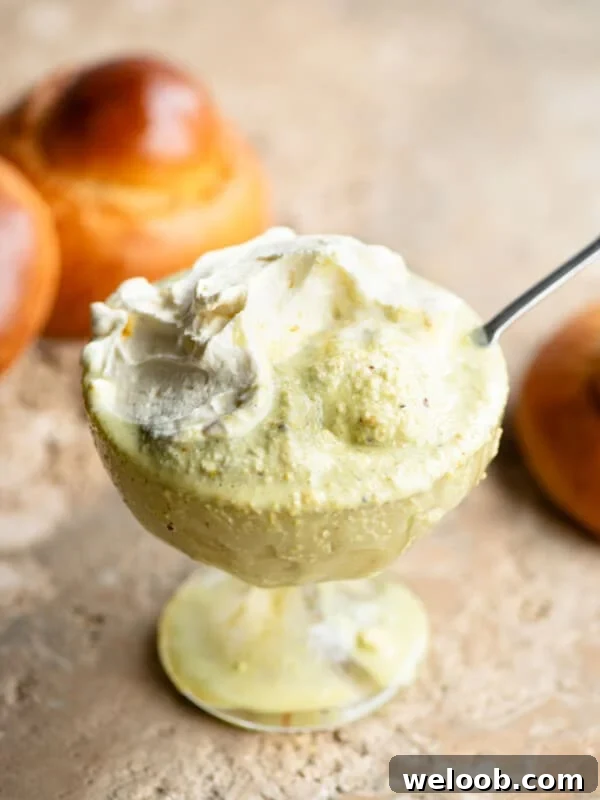
Pistachio Ice Cream (Gelato al Pistacchio)
If you try these Sicilian brioche buns or any recipe from this site, please rate it and leave a comment sharing your results—I love hearing from readers. Follow the blog on social media or sign up for the newsletter to receive new recipes and updates.
Step By Step Photos Above
Most recipes include step-by-step photos and helpful tips to ensure success.
Sicilian Brioche Buns (Brioche col tuppo)
By Emily

Equipment
- Stand mixer
- Dough hook
- Large mixing bowl
- Baking tray
- Parchment paper
- Plastic wrap (cling film)
Ingredients
- 275 g (2 cups) bread flour
- 1 large egg, at room temperature (plus 1 for egg wash)
- 1 orange zest
- 1 tablespoon honey
- 1 teaspoon vanilla extract
- 125 ml (1/2 cup) milk, slightly warmed
- 70 g (5 tablespoons) unsalted butter, at room temperature
- 1/2 teaspoon fine salt
- 2 g (1/2 teaspoon) instant yeast
- 45 g (scant 1/4 cup) caster sugar (or granulated)
Instructions
Important notes before starting
- The instant yeast used here can be added straight to dry ingredients. If your yeast requires activation, dissolve it in a portion of the warmed milk first.
- Warm the milk gently so it’s not fridge-cold, but avoid making it hot—too-warm liquid can scramble the egg and melt the butter.
Make the dough
- Combine flour, yeast, warmed milk, one egg, orange zest, honey and vanilla in the mixer bowl and mix on low until a rough dough forms.
- Add the sugar and salt, then mix until incorporated.
- With the mixer on medium speed, add the butter in ~1 tablespoon pieces, waiting until each piece is fully mixed in before adding more.
- After all the butter is in, knead on medium for 20 minutes. The dough should become glossy, smooth and tacky but not stick to your hands.
- Lightly grease a large bowl, transfer the dough into it, cover and proof at room temperature until doubled (about 4–6 hours).
- After the first proof, turn the dough out and divide into six portions, removing a small piece from each for the top knot (approx. 78g base + 20g top when weighed).
Shaping the dough
- To shape, fold the edges into the center to create tension, turn seam-side down and roll into smooth balls.
- Arrange the larger balls on a parchment-lined tray, press an indentation in each, then place the small ball into the indent to form the tuppo.
Second proof
- Cover the tray. For best results refrigerate overnight for a slow second proof, then remove 1–2 hours before baking to come to room temperature and double in size. Alternatively, proof at room temperature for 1–2 hours and bake the same day.
Baking
- Preheat the oven to 170°C fan (190°C static / 340°F fan).
- Brush each bun with beaten egg and bake for 15–20 minutes until golden brown all over. Cool briefly, then serve warm or store cooled in an airtight container.
Notes
Helpful Info for All Recipes
- I typically use extra virgin olive oil unless noted otherwise.
- All vegetables referenced are medium unless stated.
- Recipes are tested using a fan (convection) oven unless indicated.
Nutrition
Nutrition information is an approximation.