

Make authentic Italian Easter bread—soft, sweet brioche-style wreaths baked with colourful painted eggs and cheerful sprinkles. These tender, buttery breads, scented with lemon zest and vanilla, are ideal for Easter morning or served as a snack with butter or jam.

Pane di Pasqua, or Italian Easter Bread, is a joyful, traditional treat. The dough is enriched and brioche-like, producing a soft, buttery loaf with a delicate citrus and vanilla aroma.
The dough is formed into wreaths or nests, and a painted egg is placed in the centre to symbolise new life. Traditionally, three-strand braids represent the Father, the Son and the Holy Spirit. Modern versions often add coloured eggs and sprinkles for a festive look.
Ingredients – what you need
The photo below shows the ingredients used and notes on a few of them.
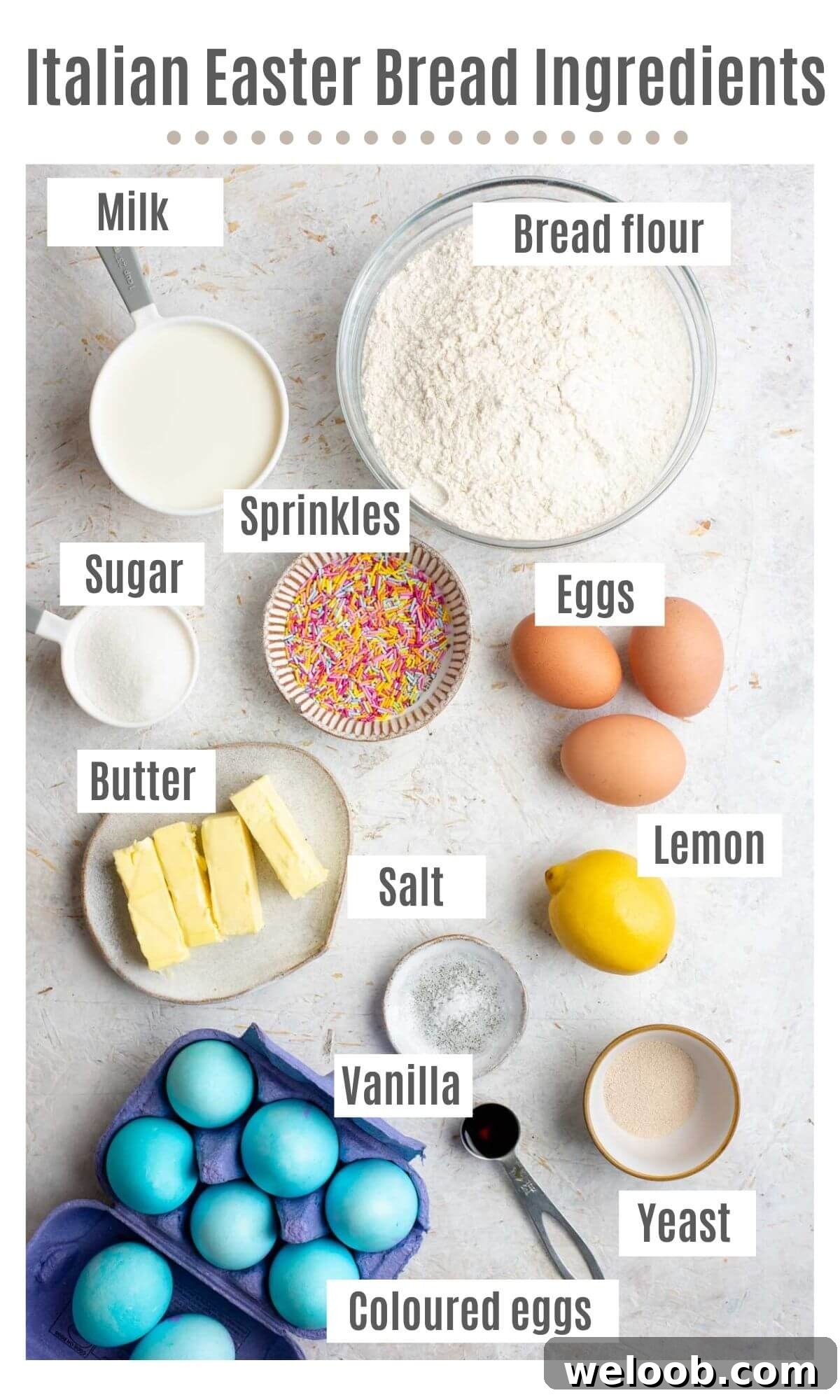
- Flour – Bread flour gives a soft, elastic texture. All-purpose flour can be substituted, though texture will vary slightly.
- Sugar – Use white granulated sugar.
- Milk – Whole milk yields a richer dough; warm it slightly before use.
- Vanilla – Use real vanilla extract or vanilla bean paste for best flavour.
- Yeast – Instant dry yeast is recommended. If your yeast requires activation, proof it in a small amount of warm milk first.
- Citrus zest – Zest of one lemon or orange adds brightness. Lemon is used here.
- Salt – Salt enhances the sweetness and overall flavour; do not omit it.
- Sprinkles – Optional, but they add colour and fun.
- Coloured eggs – Paint raw eggs with food colouring before baking; do not hard-boil them first.
Step by step photos and recipe instructions
Place flour, sugar, salt and lemon zest in the bowl of a stand mixer and combine.
Add the yeast, mix briefly and create a well in the centre. Add the whisked eggs (2 large), warm milk, melted butter and 1 tsp vanilla.
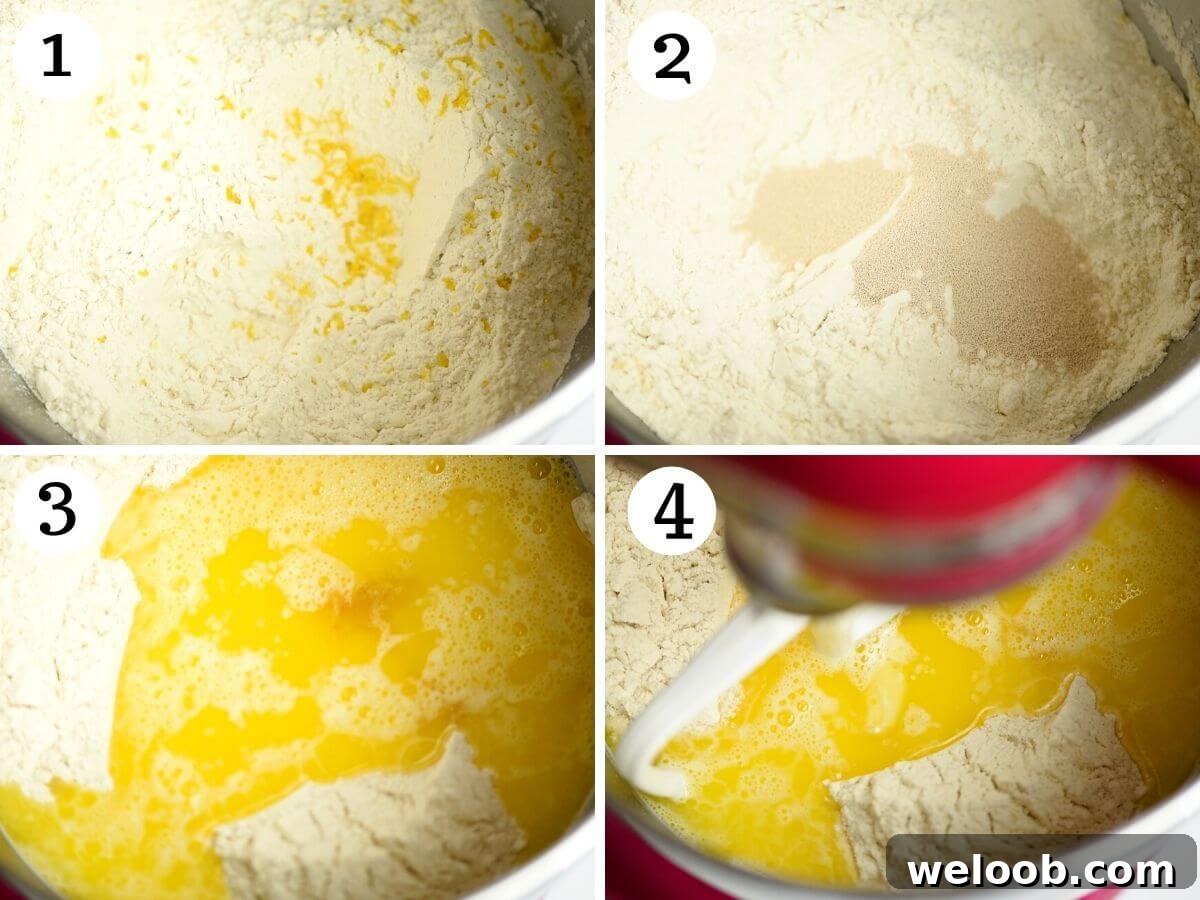
Start with the paddle attachment to bring the ingredients together, then switch to a dough hook and knead on medium-low for about 10 minutes. The dough will be sticky but should not cling excessively to your hands.
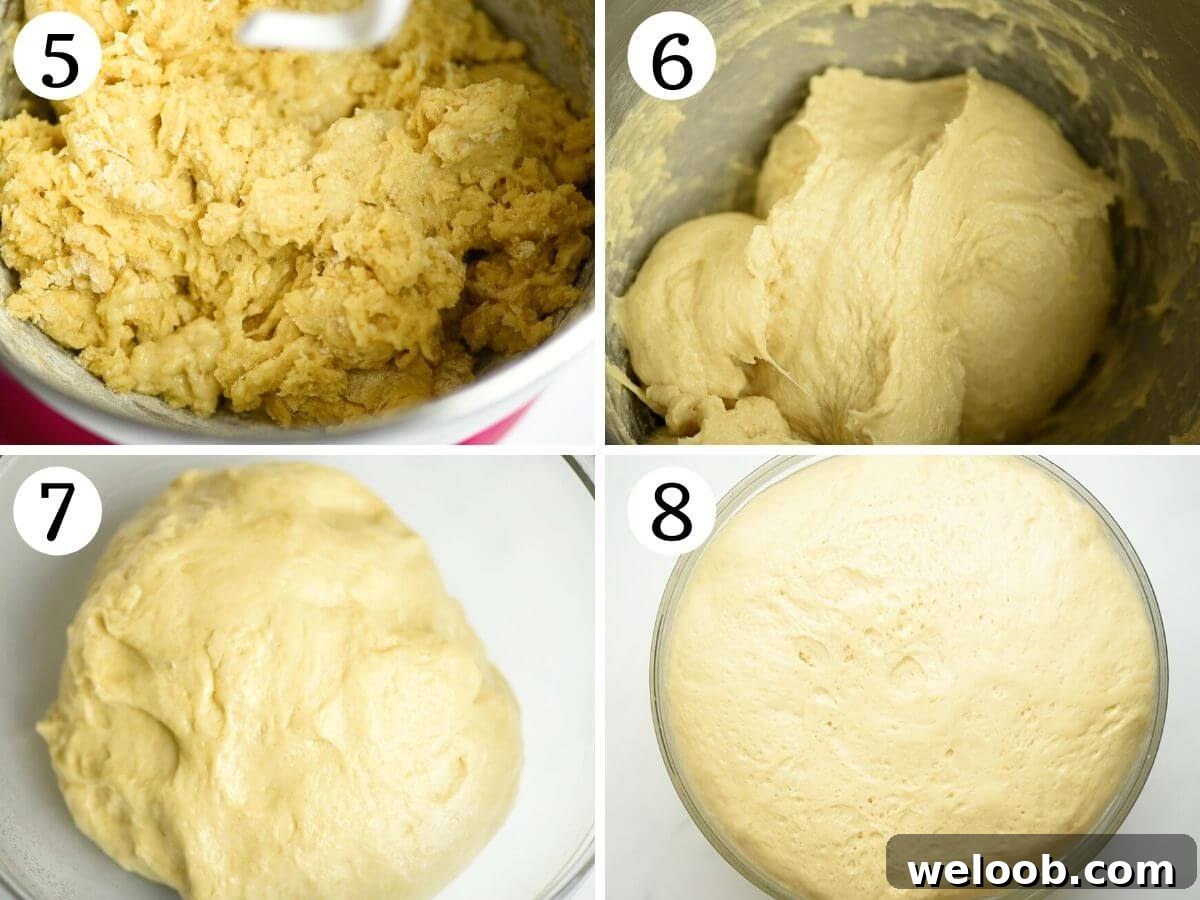
Transfer the dough to a lightly oiled bowl, cover and let rise for about 2 hours or until doubled in size.
How to dye the eggs different colours
Paint raw eggs (uncooked) for the brightest results; white shells show colour best. Gel food colouring gives vivid, even coverage.
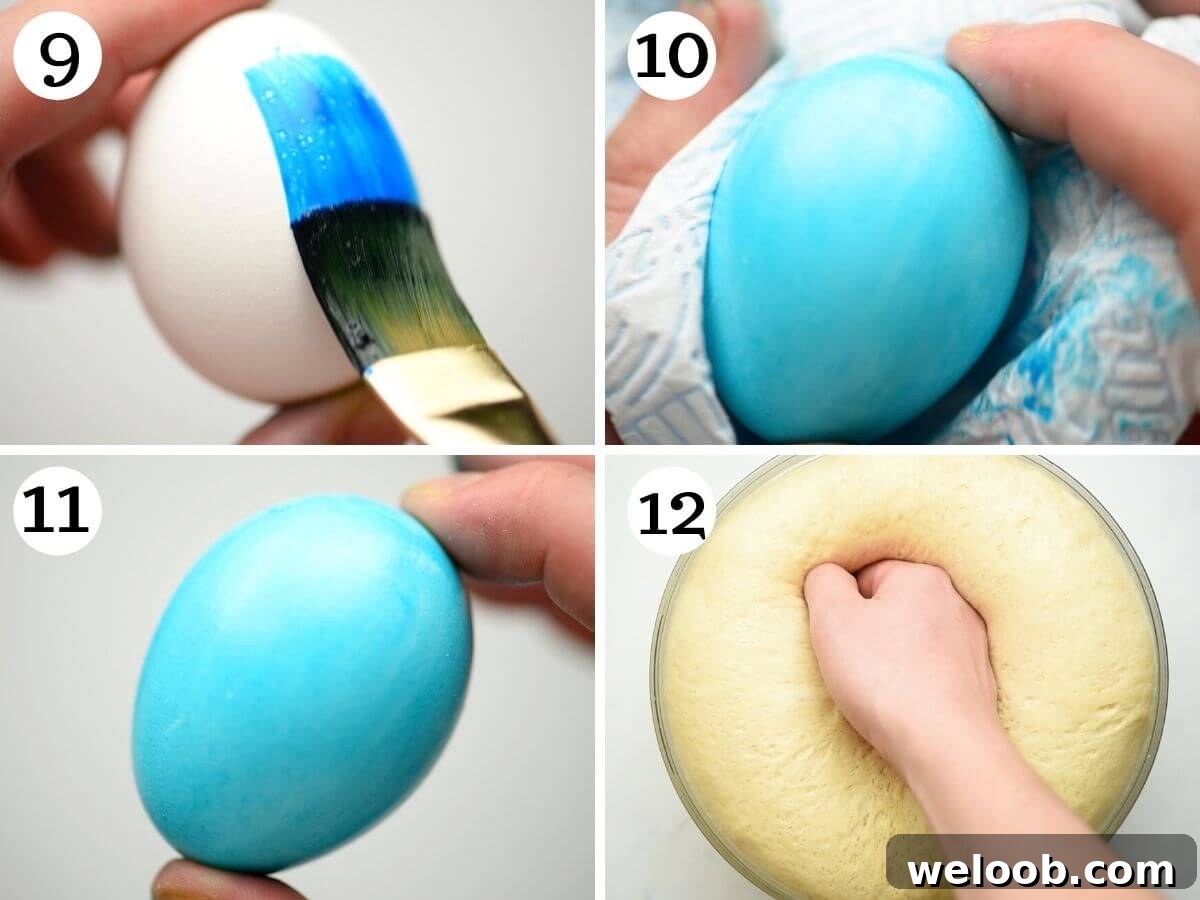
Use a damp, clean paintbrush to apply gel colouring, then rub the egg with kitchen paper to remove brush strokes for a smoother finish. When dry, rinse briefly under cold water to remove excess colour and pat dry.
How to braid the Easter bread
After the first rise, deflate the dough and place it on a lightly floured surface. Divide the dough into eight pieces, then halve each to make sixteen pieces total. Pair two pieces and roll each pair into ~10-inch strands.
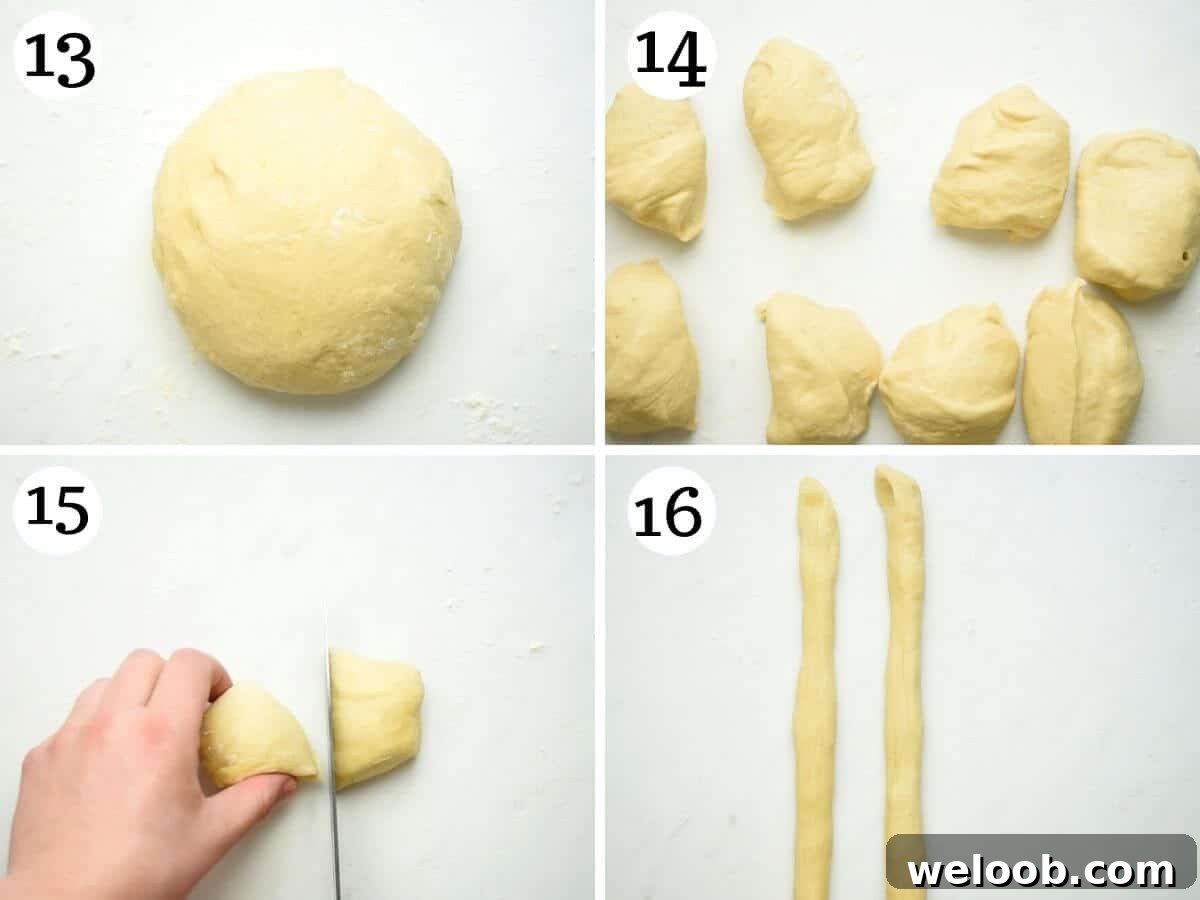
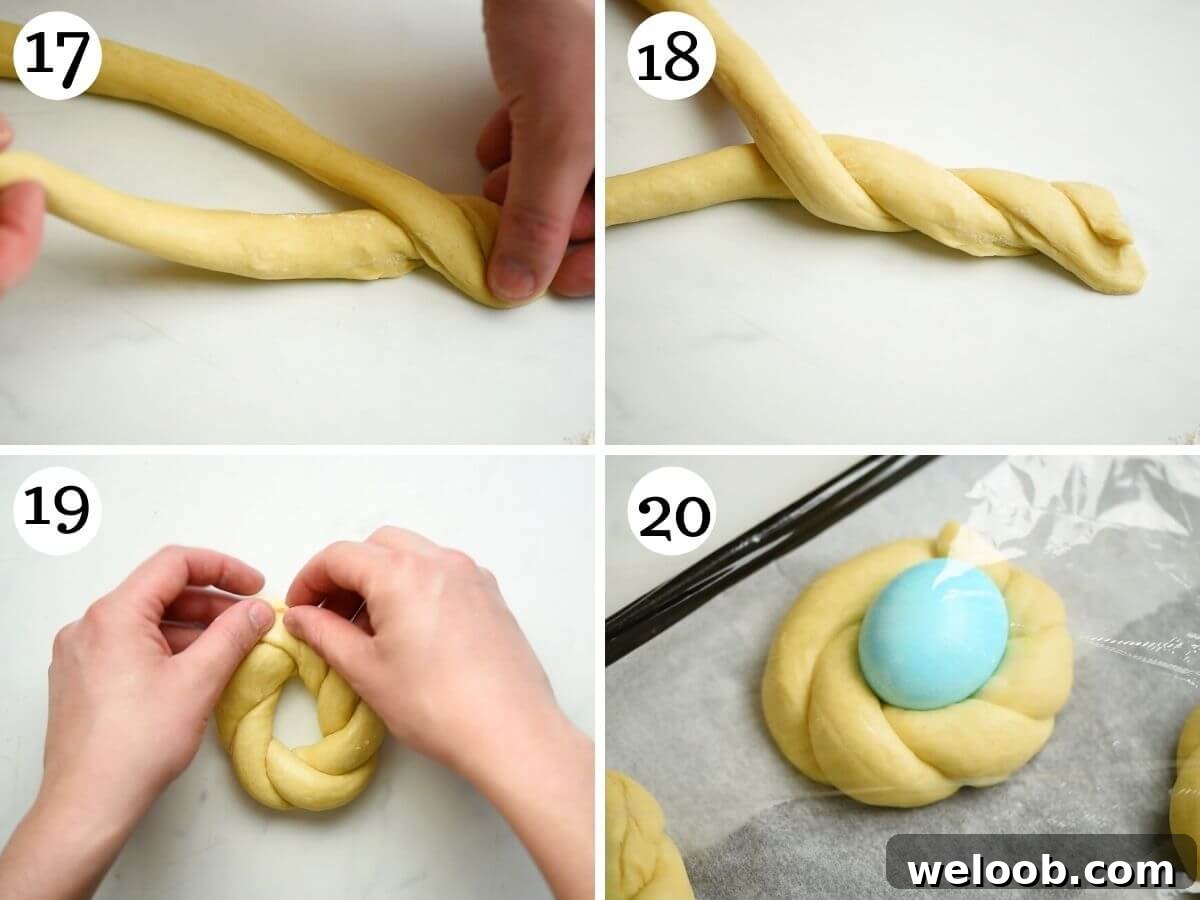
Pinch the tops of two strands together and braid them. Join the ends to form a wreath, place on a parchment-lined baking tray (leave about 2 inches between wreaths), and set a painted egg in the centre. Repeat for remaining pieces.
Cover the tray and let the wreaths rise for about 1 hour.
Preheat the oven to 350°F (180°C). Brush each wreath gently with beaten egg and sprinkle with decorations if desired. Bake for 20–25 minutes, until golden on top.
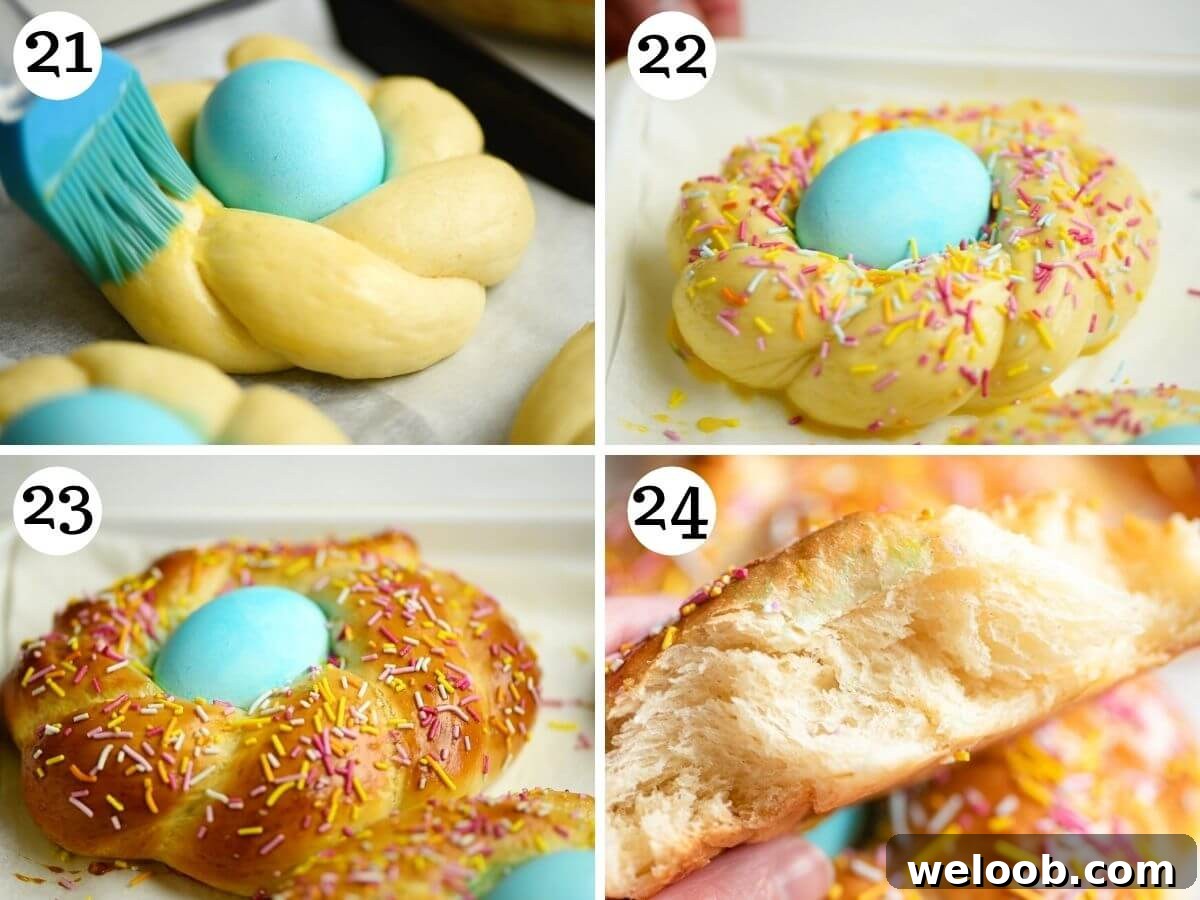
Remove from the oven, allow to cool slightly, then serve. These breads are best enjoyed the same day when they are at their softest.
Below: a close-up showing the soft, fluffy interior.

Top tips and recipe FAQs
- Serve the same day – Like most enriched breads, this is at its best fresh. If it dries out, toast slices or use in French toast the next day.
- Measure flour correctly – If using cups, spoon the flour into the cup and level it off rather than scooping directly to avoid overpacking.
- Use whole milk – It adds richness and a better crumb than lower-fat options.
- Colouring the eggs – Gel food colouring works well and white shells will yield the brightest colours.
- Optional additions – Candied peel, raisins, or a hint of anise or almond extract can be added for variation.
- Leftovers – Transform stale bread into French toast or warm slices in the oven for a second-day treat.
Enjoy it plain or spread with butter or jam for breakfast or a snack.
After the painted eggs have dried, rinse them gently under cold water to remove excess dye, then pat dry before placing them in the dough.
If eggs are cooked separately, chop and use them in salads or sandwiches and keep refrigerated.
Yes. Prepare the dough and refrigerate overnight until it has risen. Shape and proof the next day; cold dough may require a slightly longer rise.
Freeze baked breads for up to 3 months. Thaw fully, then warm in the oven or toast before serving.
More Italian Easter and celebration recipes
- Pizza Rustica recipe
- Italian Lamb Ragu
- Torta Pasqualina
- Cenci di Carnevale (Italian fried pastries)
If you try this Italian Easter Bread, please rate the recipe and share your experience in the comments. I love hearing how your bake turns out!
Step By Step Photos Above
Most of our recipes include step-by-step photos and helpful tips to get great results.
Italian Easter Bread
By Emily

Ingredients
- 3.5 cups (470g) bread flour
- 6 tbsp (85g) unsalted butter, melted
- 1 cup (240ml) whole milk, warmed
- 3 large eggs
- 1/3 cup (70g) granulated sugar
- 1/2 tsp salt
- 2 tsp instant yeast
- 1 tsp vanilla extract
- Zest of 1 lemon
- 8 raw eggs in their shells (to paint)
- Food colouring for painting eggs (optional)
Instructions
- Warm the milk gently and melt the butter.
- Combine flour, sugar, salt and lemon zest in the stand mixer bowl.
- Add yeast, then the whisked eggs, warm milk, melted butter and vanilla.
- Mix briefly with the paddle, then knead with a dough hook for 10 minutes on medium-low. The dough should be sticky but manageable.
- Transfer to an oiled bowl, cover and let rise until doubled, about 2 hours.
Colouring the eggs
- Paint raw eggs with gel or other food colouring. Let dry, then rinse under cold water to remove excess dye and pat dry. White shells give the brightest colours.
Assembling the Easter bread
- Deflate the dough and work on a lightly floured surface. Cut into 16 pieces (8, then halved). Roll two pieces together into ~10-inch strands and braid.
- Form wreaths by joining ends, place on parchment-lined trays, and set a painted egg in the centre. Repeat for all wreaths.
- Cover and proof for 1 hour. Preheat oven to 350°F (180°C).
- Brush each wreath with beaten egg, top with sprinkles if using, and bake 20–25 minutes until golden.
- Cool slightly and serve. Best eaten the same day.
Notes
- Preparing in advance – Refrigerate the dough overnight until it has risen, then shape and proof the following day; allow extra proofing time if dough is cold.
- Measure flour – Spoon and level when using cups to avoid packing too much flour.
- Freezing – Freeze baked bread for up to 3 months. Thaw completely and reheat before serving.
Nutrition
Carbohydrates: 54 g |
Protein: 12 g |
Fat: 13 g |
Saturated Fat: 7 g |
Cholesterol: 96 mg |
Sodium: 189 mg
Nutrition information is an approximation.
Did you try this recipe?
Leave a comment below!