
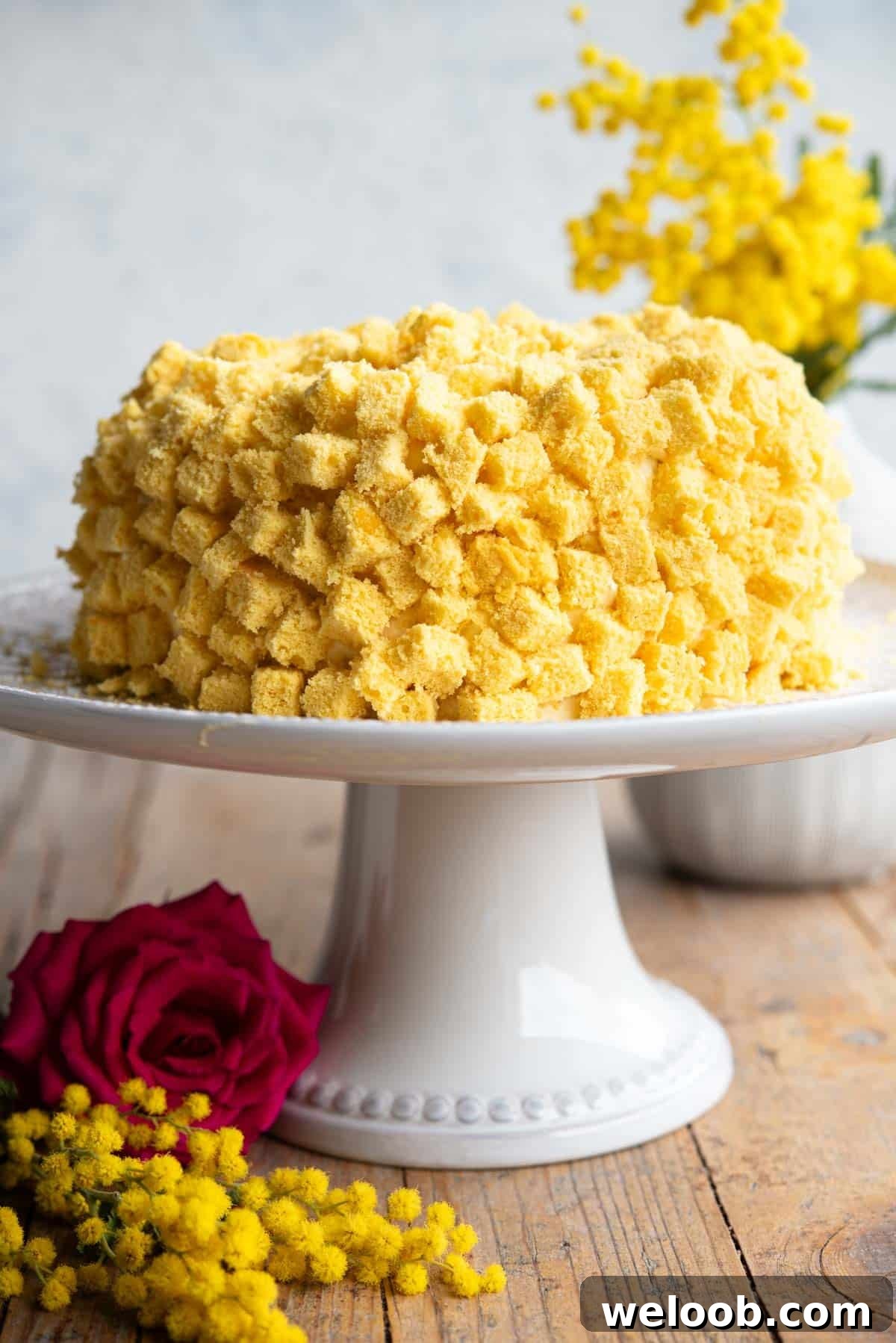
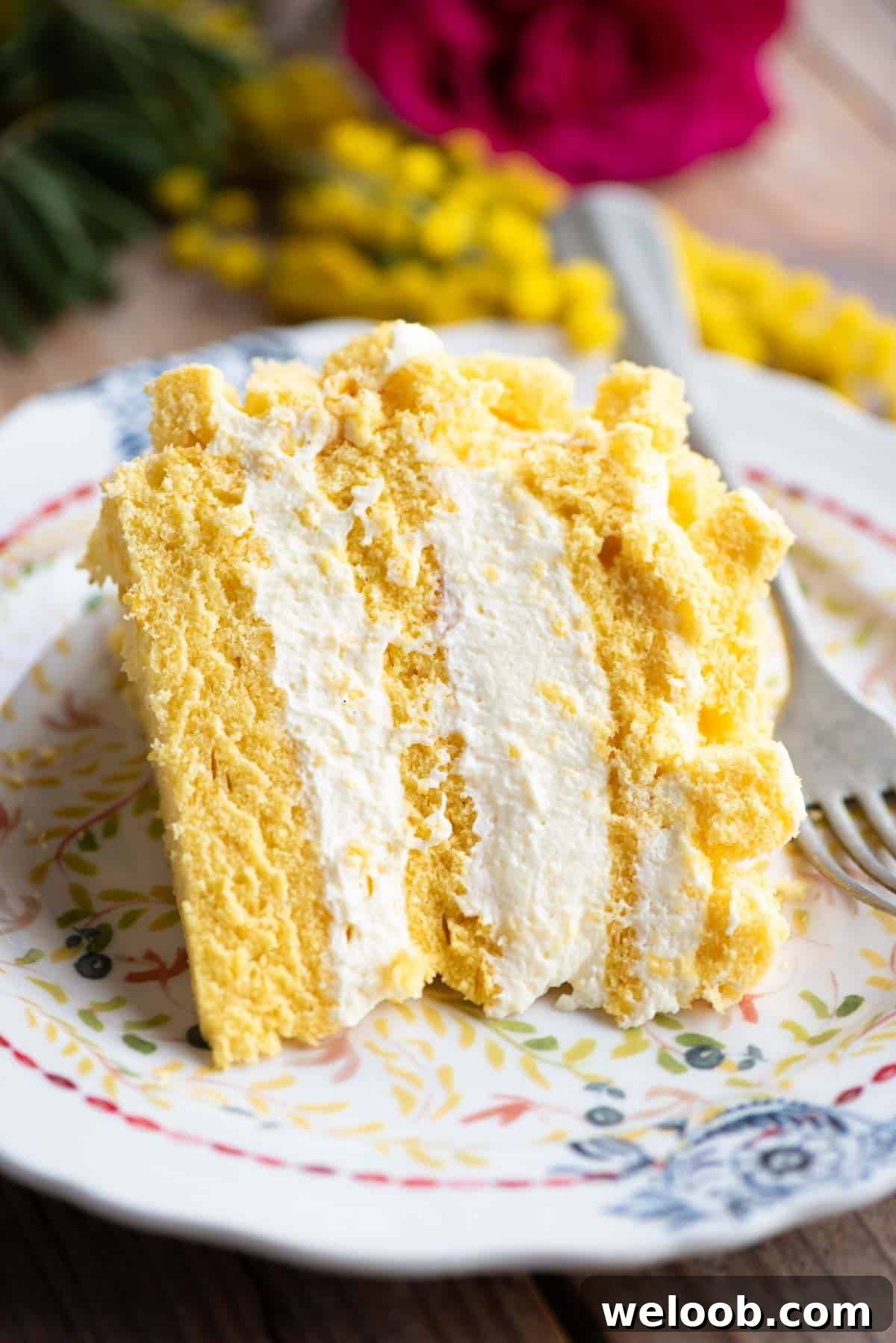
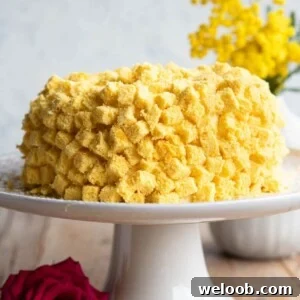
Torta Mimosa is a classic Italian cake created to resemble the yellow mimosa flower and traditionally served for International Women’s Day. It features an airy Pan di Spagna sponge soaked in a lightly sweet syrup, layered with a creamy blend of pastry cream and Chantilly cream, and finished with small sponge pieces that mimic mimosa blossoms.
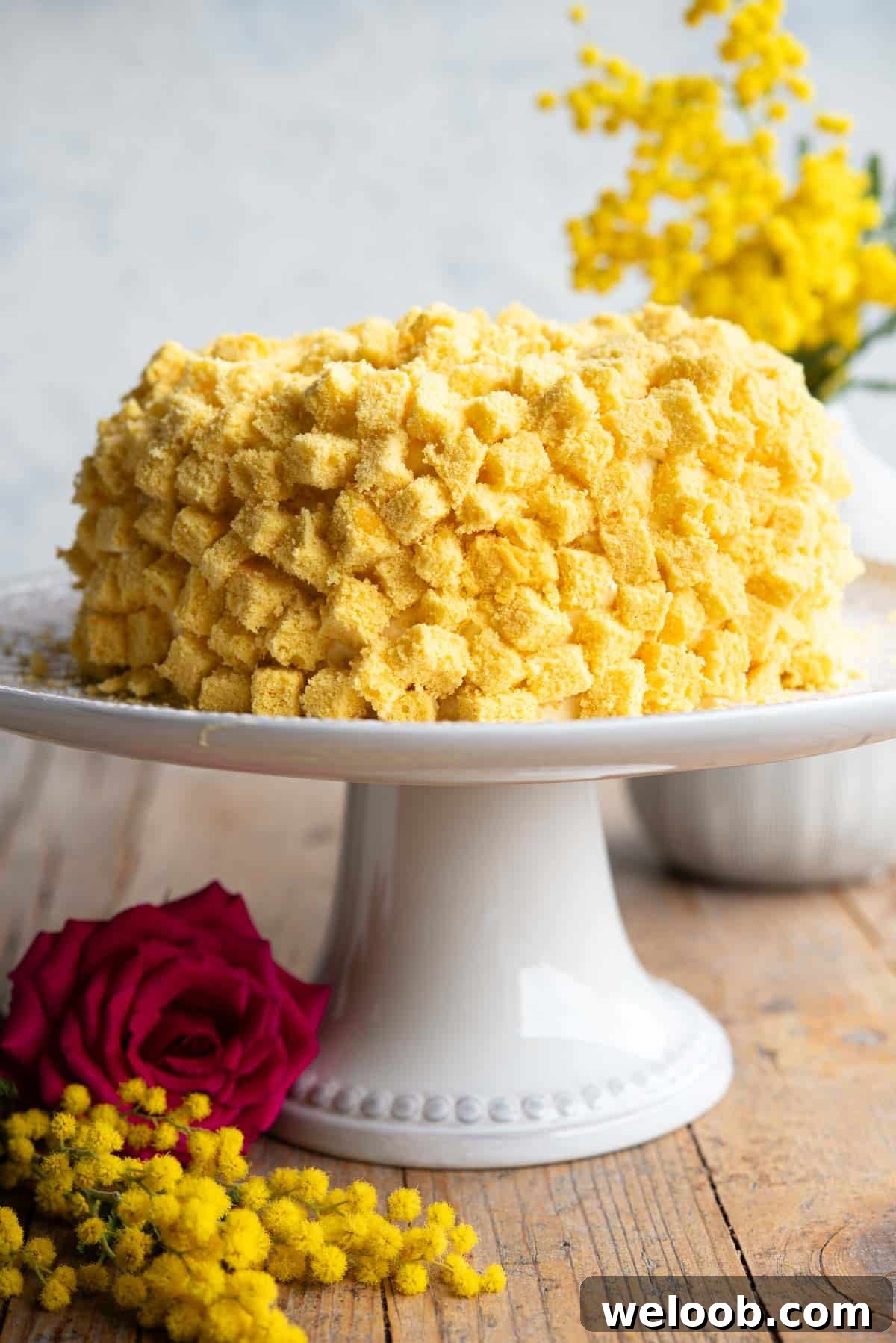
In Italy, small sprigs of mimosa flowers are given to women on March 8th, and during this time you’ll see Mimosa cakes in many bakeries and homes. The cake’s delicate texture and bright appearance make it perfect not only for International Women’s Day, but for spring celebrations, Easter or any special occasion.
The sponge used here is Pan di Spagna, a very light sponge made by whipping whole eggs and sugar until they form a pale, ribbon-like batter. The sponge is enriched with a touch of vanilla and, if desired, naturally yellow yolks to enhance the cake’s color.
After baking, the sponge is brushed with a simple sugar syrup flavored with a splash of liqueur such as Strega or Limoncello (optional). The filling is a harmonious mix of Crema Pasticcera (Italian pastry cream) folded into lightly sweetened whipped cream (Chantilly). The top and sides of the assembled cake are covered in tiny cubes or crumbs of sponge to recreate the mimosa’s fluffy appearance.
Scroll for the full printable recipe below, including ingredient notes, step-by-step photos, tips and a video tutorial.
Ingredients
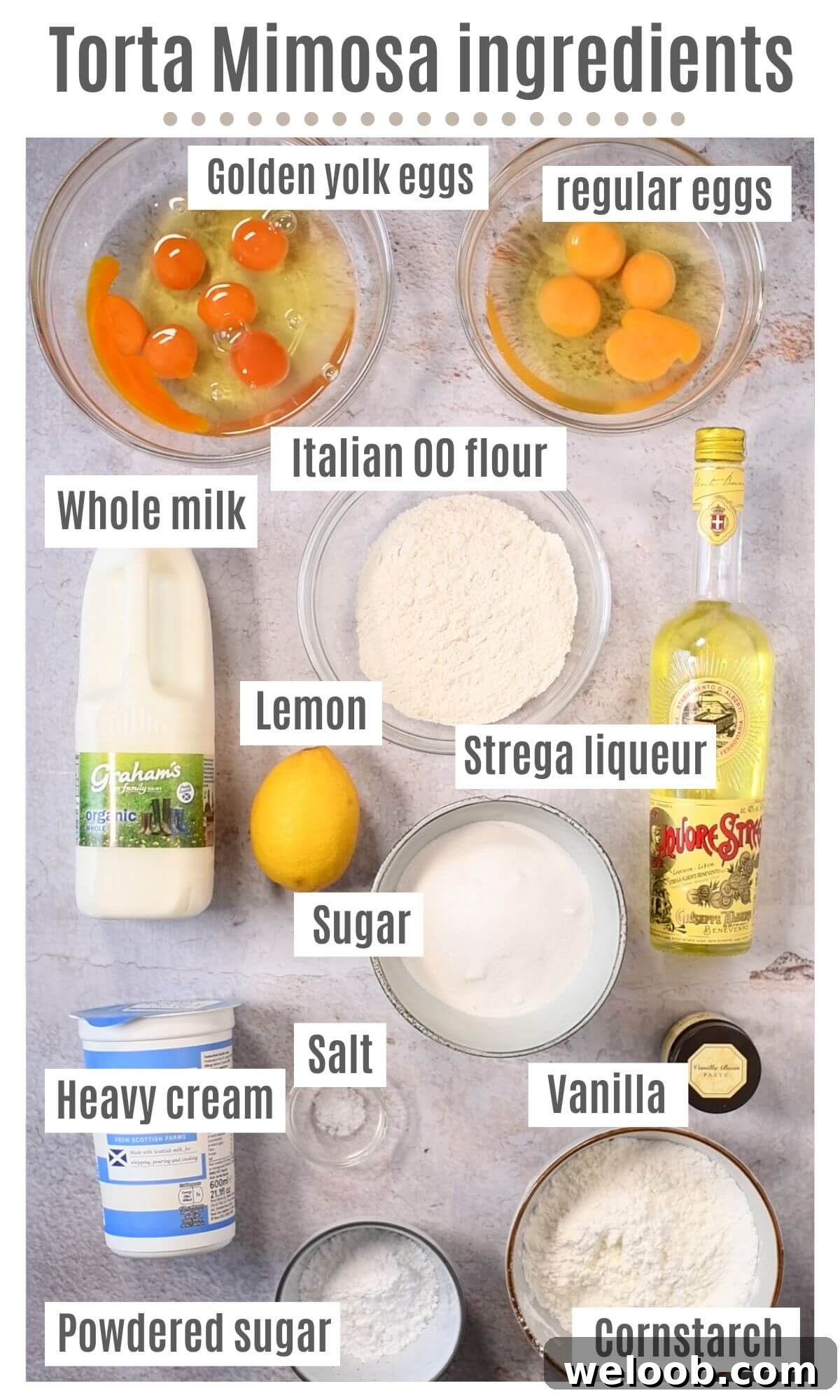
Ingredient notes and substitutions
- Eggs – eggs with deep yellow/orange yolks give the sponge a richer color without food coloring. If you don’t have them, the sponge will be paler but still delicious.
- Sugar – caster (superfine) sugar is ideal for a smoother texture, but regular granulated sugar works as well.
- Flour – Italian 00 flour is shown, but all-purpose flour is an acceptable substitute.
- Vanilla – use vanilla bean paste, scraped seeds from a vanilla pod, or vanilla extract. Avoid artificial vanilla essence for best flavor.
- Liqueur – Strega adds a distinctive flavor; Limoncello is a fresh alternative. Omit alcohol if preferred and use extra sugar water instead.
Step by step photos and instructions
To make the sponge
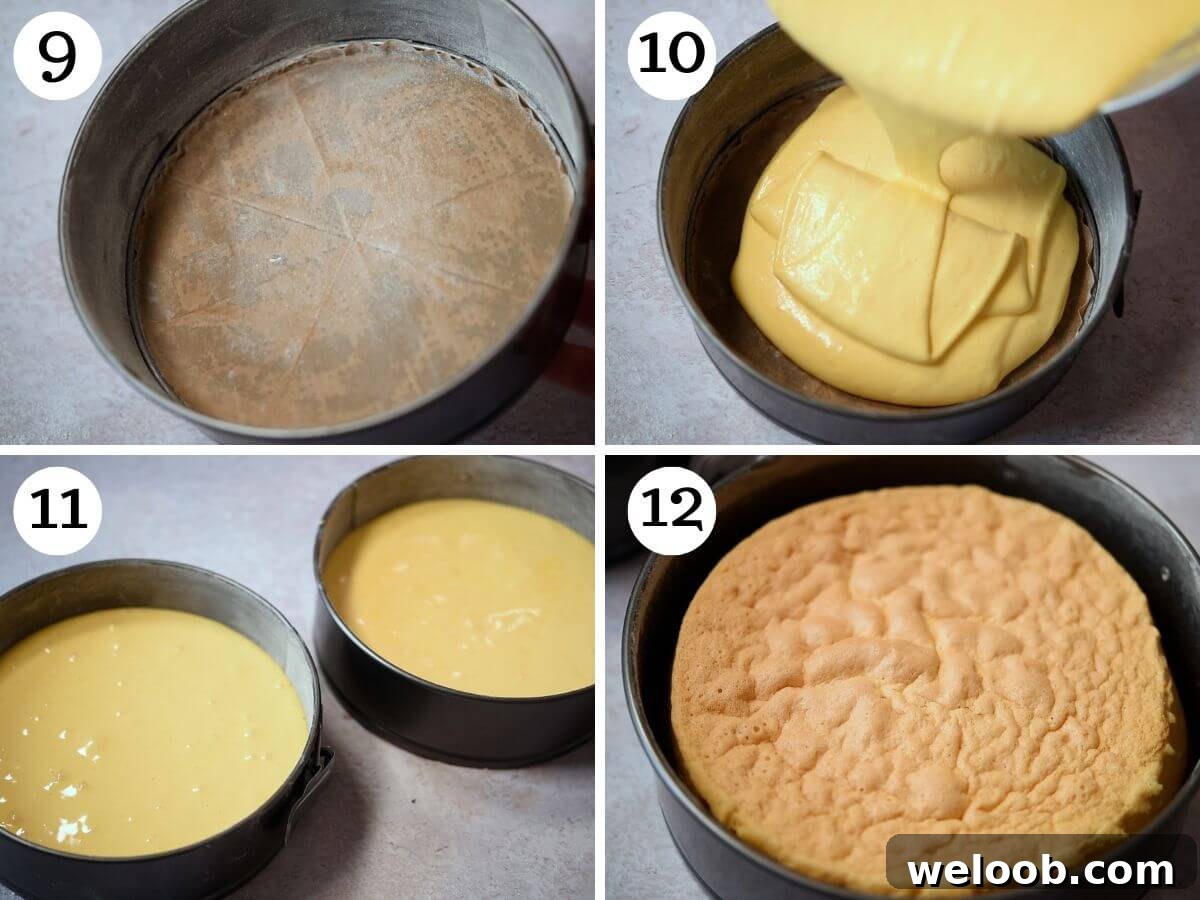
Grease two 8-inch (20cm) cake pans with butter, line the bottoms with baking parchment and dust the sides with flour, tapping out any excess. Preheat the oven to 160°C (320°F) static.
Place 6 eggs, the sugar, vanilla and a pinch of salt in a stand mixer or bowl. Whisk on medium speed for 15–20 minutes until the mixture is pale, thick and forms a ribbon when the whisk is lifted.
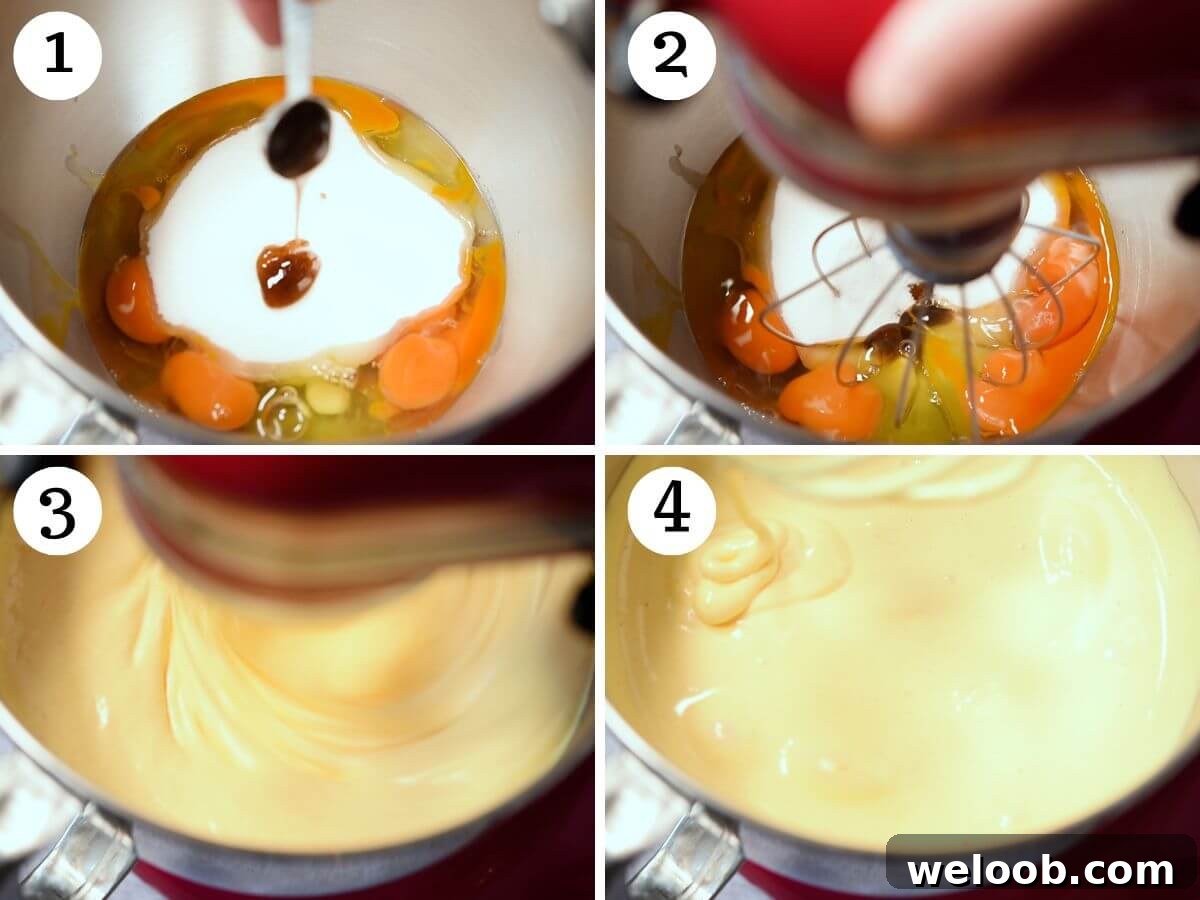
Sift the flour and cornstarch into the batter in small additions (1–2 tablespoons at a time) and gently fold them in, scraping the bowl to avoid flour pockets.
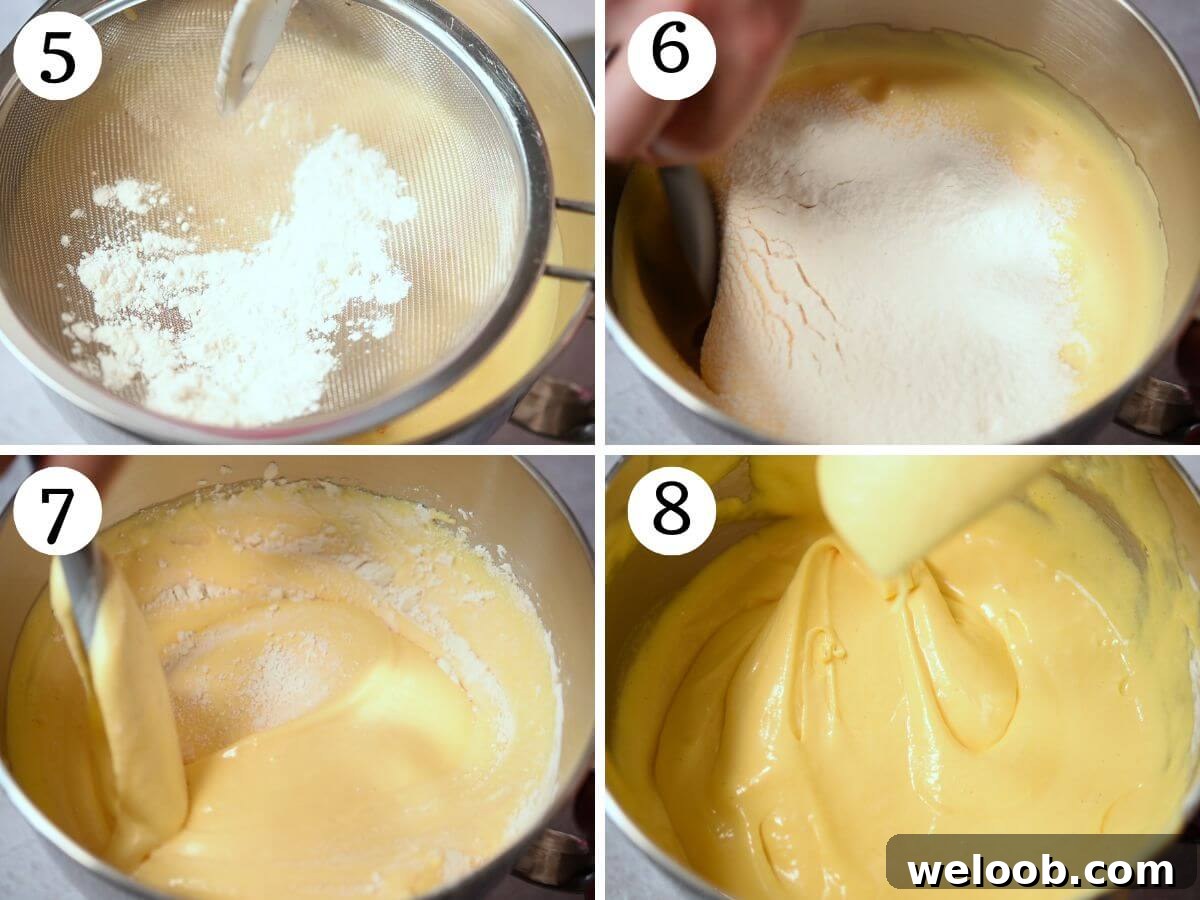
Divide the batter evenly between the prepared tins and bake on the bottom shelf for about 40 minutes. When finished, turn the oven off and leave the cakes inside with the door ajar for 5 minutes, then remove and cool in their tins for 5–10 minutes before turning out onto a wire rack to cool completely.
Make the pastry cream
Tip: prepare the pastry cream while the cakes bake so it has time to cool.
Warm the milk with vanilla and the lemon peel in a saucepan until it reaches a simmer, then remove from heat and let the flavors infuse briefly.
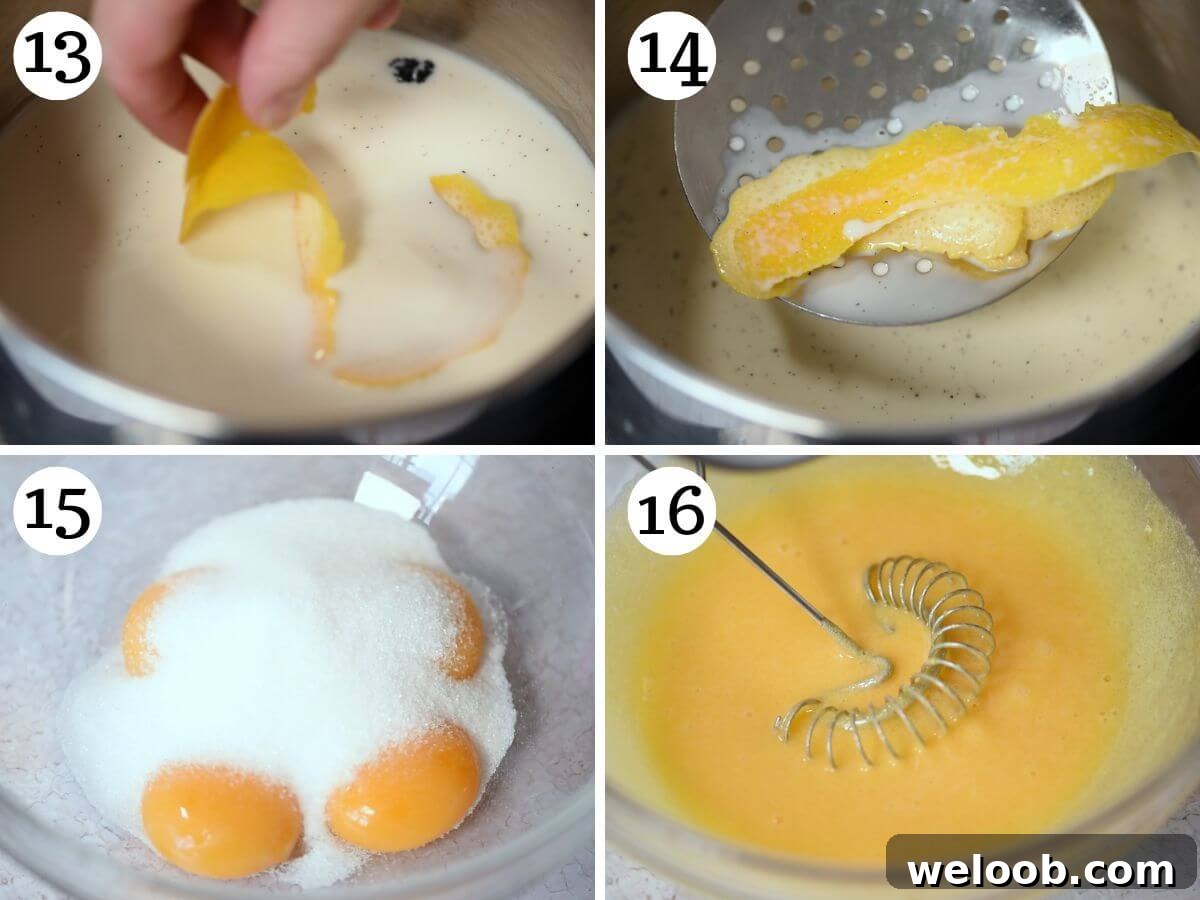
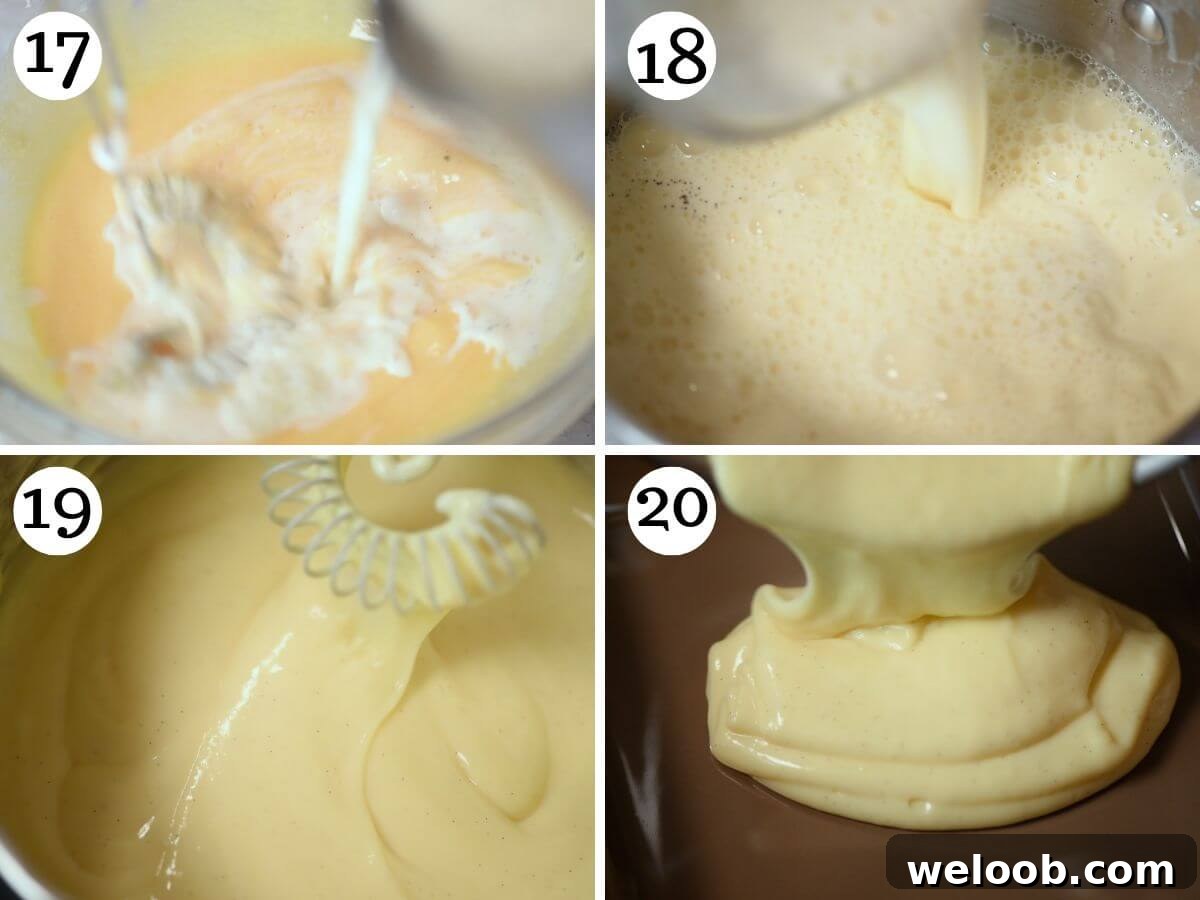
Whisk the egg yolks with sugar until smooth, then add the cornstarch and combine. Strain out the lemon peel, then slowly whisk hot milk into the yolk mixture. Return everything to the saucepan and cook gently over medium-low heat, whisking until the cream is thick and coats the back of a spoon. Transfer to a shallow dish to cool and press plastic directly on the surface to prevent a skin forming.
For the sugar water, simmer 125ml (1/2 cup) water with 2 tablespoons sugar until dissolved, cool, then stir in 2 tablespoons Strega or Limoncello if using.
Make the Chantilly cream
Whip 450ml (2 cups) heavy cream with 5 tablespoons (about 55g) powdered sugar to stiff peaks, taking care not to overwhip. Lightly loosen the chilled pastry cream and fold in the whipped cream in thirds until smooth. Chill until ready to assemble.
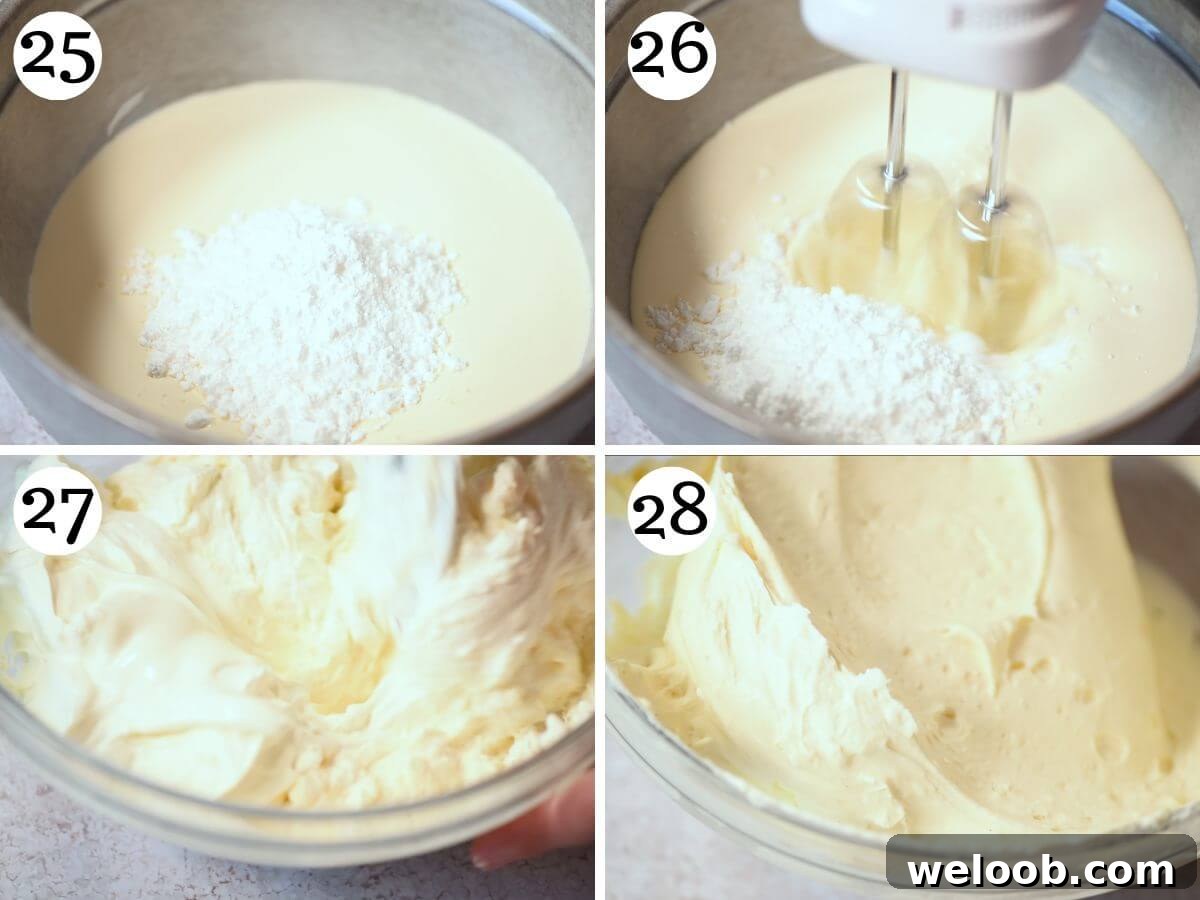
Assembling the cake
Trim the top crust from one sponge and cut it into three even layers. From the second sponge remove the crust and cut into thin slices, then into three lengthwise strips, finally dicing into small 1cm cubes.
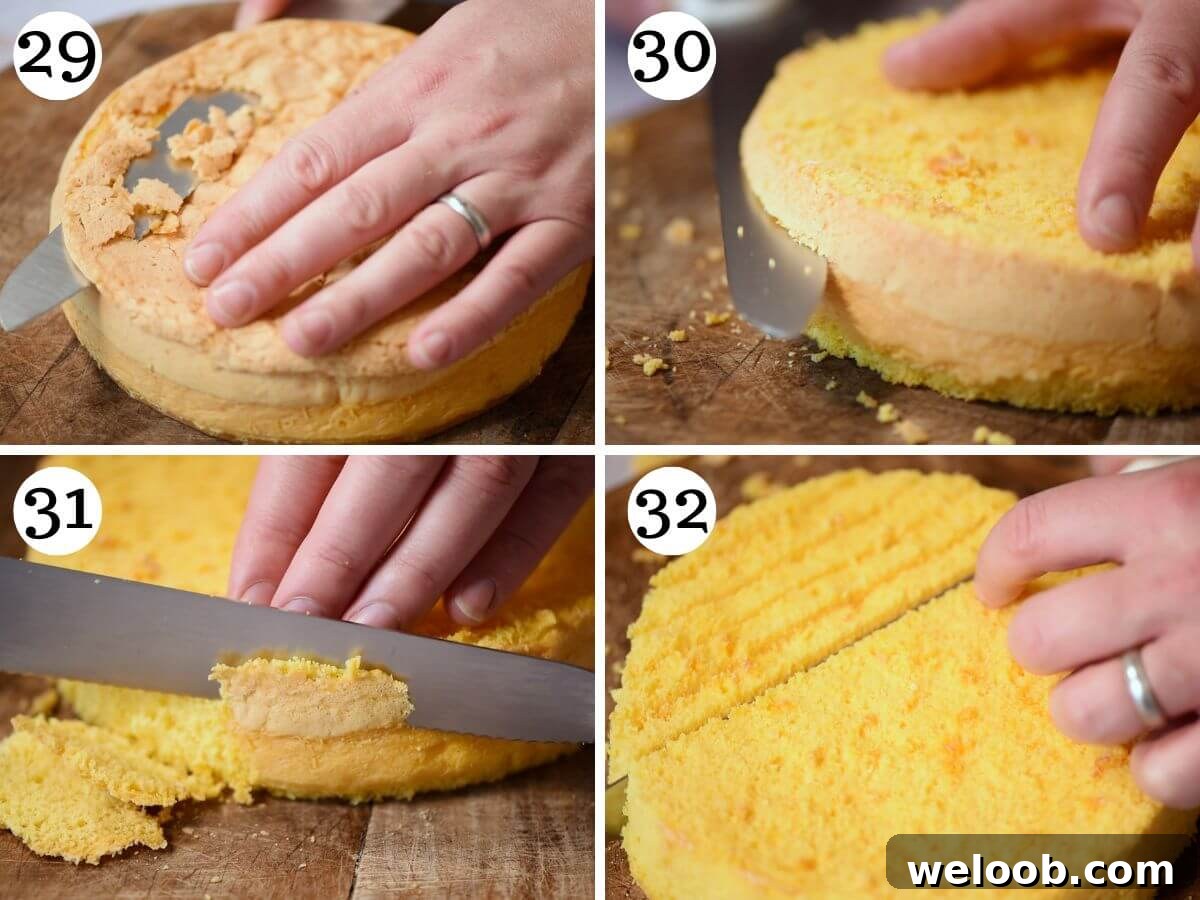
Place the bottom sponge layer on your serving plate, brush with sugar water and spread one third of the filling. Add the next sponge layer, brush with more sugar water and add the second third of the filling, spreading evenly so the cake remains level. Top with the final layer and coat the top and sides with the remaining cream.
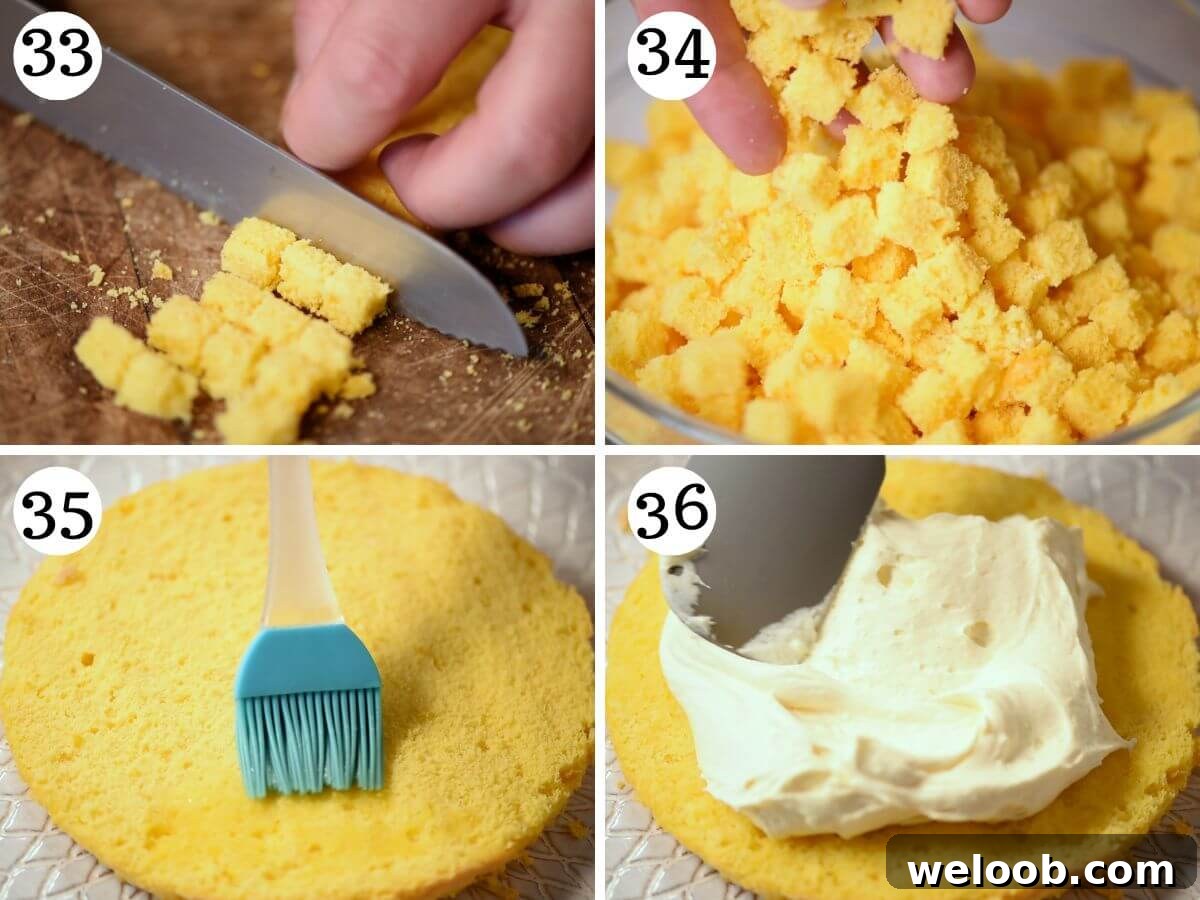
Press the small sponge cubes or fine crumbs over the entire cake until it is completely covered, creating the mimosa effect, then chill until serving.
Recipe tips and FAQs
- Read the full recipe first – the Mimosa cake has several components, so reviewing steps and photos before you start will make the process smoother.
- Yellow sponge – deep yolk eggs give a natural yellow color. If unavailable, a drop of yellow food coloring can be used or simply accept a paler sponge.
- Prepare tins carefully – grease and line bottoms, grease sides lightly and dust with flour, tapping out excess.
- Don’t open the oven door – bake the sponge uninterrupted for 40 minutes to avoid sinking, then leave the door ajar for 5 minutes after switching the oven off.
- Prevent drying – sponge layers stay moist from the syrup, but the small cubes on top can dry out; reserve some syrup to brush them if needed the next day.
- Storage – store the assembled cake in the refrigerator for up to 3 days.
More Italian desserts to try
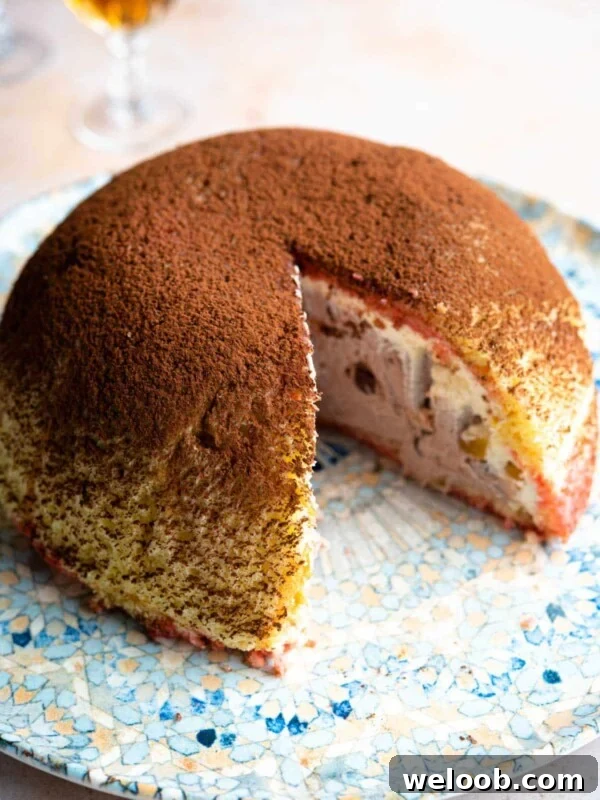
Italian Desserts
Zuccotto (Sponge Cake with Ricotta Filling)
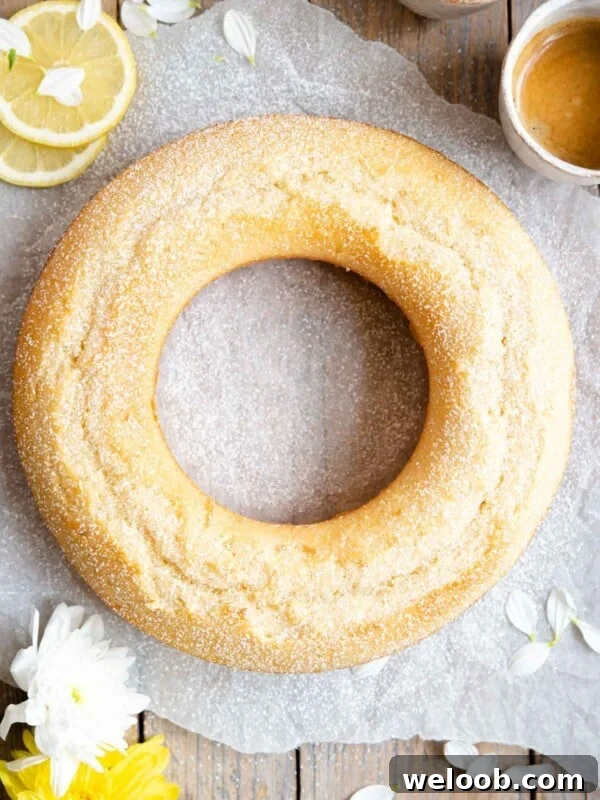
Breakfast
Italian Breakfast Bundt Cake – Ciambella Allo Yogurt
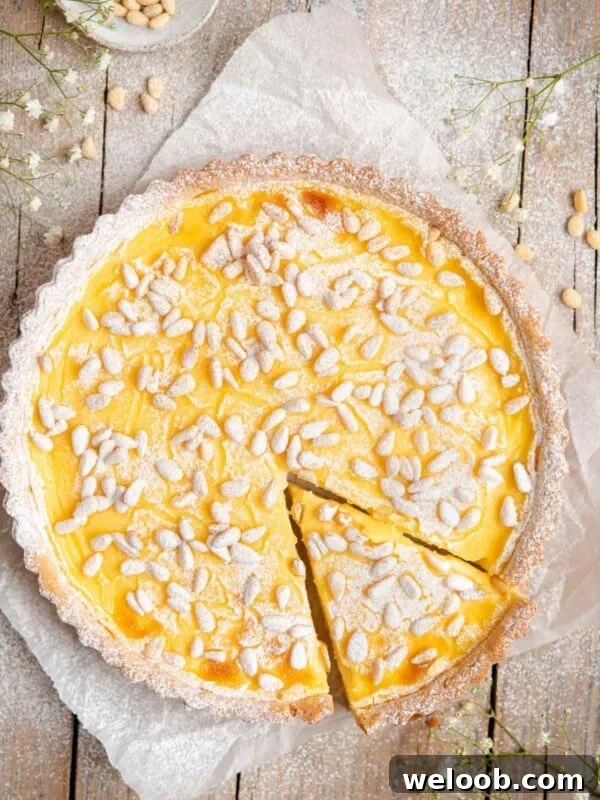
Italian Desserts
Torta della Nonna: Italian Custard Tart
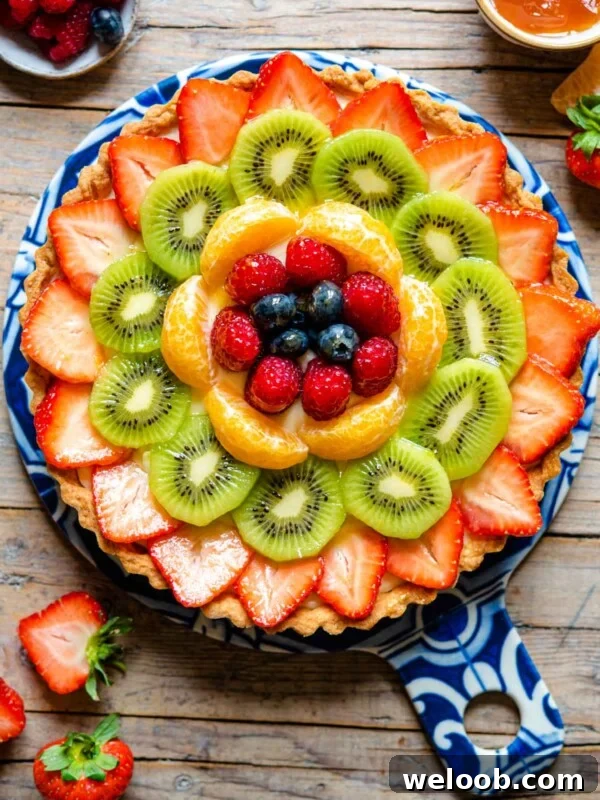
Italian Desserts
Crostata di Frutta (Italian Fruit Tart)
If you try this Mimosa Cake recipe, please rate it and share your feedback in the comments. I enjoy hearing how your bakes turn out.
Step By Step Photos Above
Most recipes include photos and video to guide you through the process.
Torta Mimosa (Italian Mimosa Cake)
By Emily
Equipment
- 2 x 8 inch (20cm) springform or straight-sided cake pans
- Baking parchment
- Stand mixer or electric whisk
Ingredients
For the sponge (Pan di Spagna)
- 6 medium eggs (about 300g)
- 130 g (1 cup) Italian 00 flour or all-purpose flour
- 130 g (1 cup) cornstarch
- 260 g (1.5 cups) caster sugar (or granulated)
- 1 teaspoon vanilla bean paste or extract
- 1 pinch of salt
- Butter for greasing
For the pastry cream (Crema Pasticcera)
- 4 egg yolks
- 70 g (1/3 cup) caster or granulated sugar
- 30 g (1/4 cup) cornstarch
- 500 ml (about 2 cups) whole milk
- Peel of 1 lemon
- 1 teaspoon vanilla bean paste or extract
Chantilly cream
- 450 ml (2 cups) heavy cream (double cream UK)
- 5 tablespoons powdered sugar (about 55 g)
Sugar water
- 125 ml (1/2 cup) water
- 2 tablespoons caster or granulated sugar
- 2 tablespoons Strega or Limoncello liqueur (optional)
Instructions
To make the sponge
- Grease and line two 8-inch cake pans, preheat oven to 160°C (320°F) static.
- Whisk eggs, sugar, vanilla and a pinch of salt on medium speed for 15–20 minutes until pale and ribbon-like.
- Sift flour and cornstarch in small additions and fold gently until combined.
- Divide batter between pans and bake on the bottom shelf for 40 minutes. Turn off the oven and leave door ajar for 5 minutes, then cool in pans briefly before turning out to a rack to cool completely.
Make the pastry cream
- Warm milk with vanilla and lemon peel to a simmer, then remove from heat.
- Whisk yolks with sugar, add cornstarch and combine. Remove lemon peel and temper the yolk mixture with hot milk.
- Return to the pan and cook over medium-low, whisking until thick and glossy. Cool in a shallow dish and cover with plastic wrap.
Make the sugar water
- Heat 125 ml water with 2 tablespoons sugar until dissolved, cool, then add 2 tablespoons liqueur if using.
Make the Chantilly cream
- Whip heavy cream with powdered sugar to stiff peaks. Fold the cold pastry cream into the whipped cream in thirds and chill.
Assembling the cake
- Trim the top of one sponge and slice it into three layers. From the second sponge remove crust and dice into 1cm cubes.
- Brush the bottom layer with sugar water, spread one third of the filling, add the next layer, syrup and another third of filling. Top with final layer and cover the cake with remaining cream.
- Press the sponge cubes evenly over the top and sides to cover completely. Chill before serving.
Notes
- Read the full recipe before starting to ensure a smooth workflow.
- Use deep-yolk eggs for natural color or add a touch of food coloring if desired.
- Bake the sponge uninterrupted and allow it to rest briefly in the turned-off oven to avoid sinking.
- The assembled cake keeps well in the fridge for up to 3 days; the sponge cubes may dry slightly and can be refreshed with reserved syrup.
Nutrition
| Carbohydrates: 69 g
| Protein: 9 g
Nutrition values are approximate.
Leave a comment below!