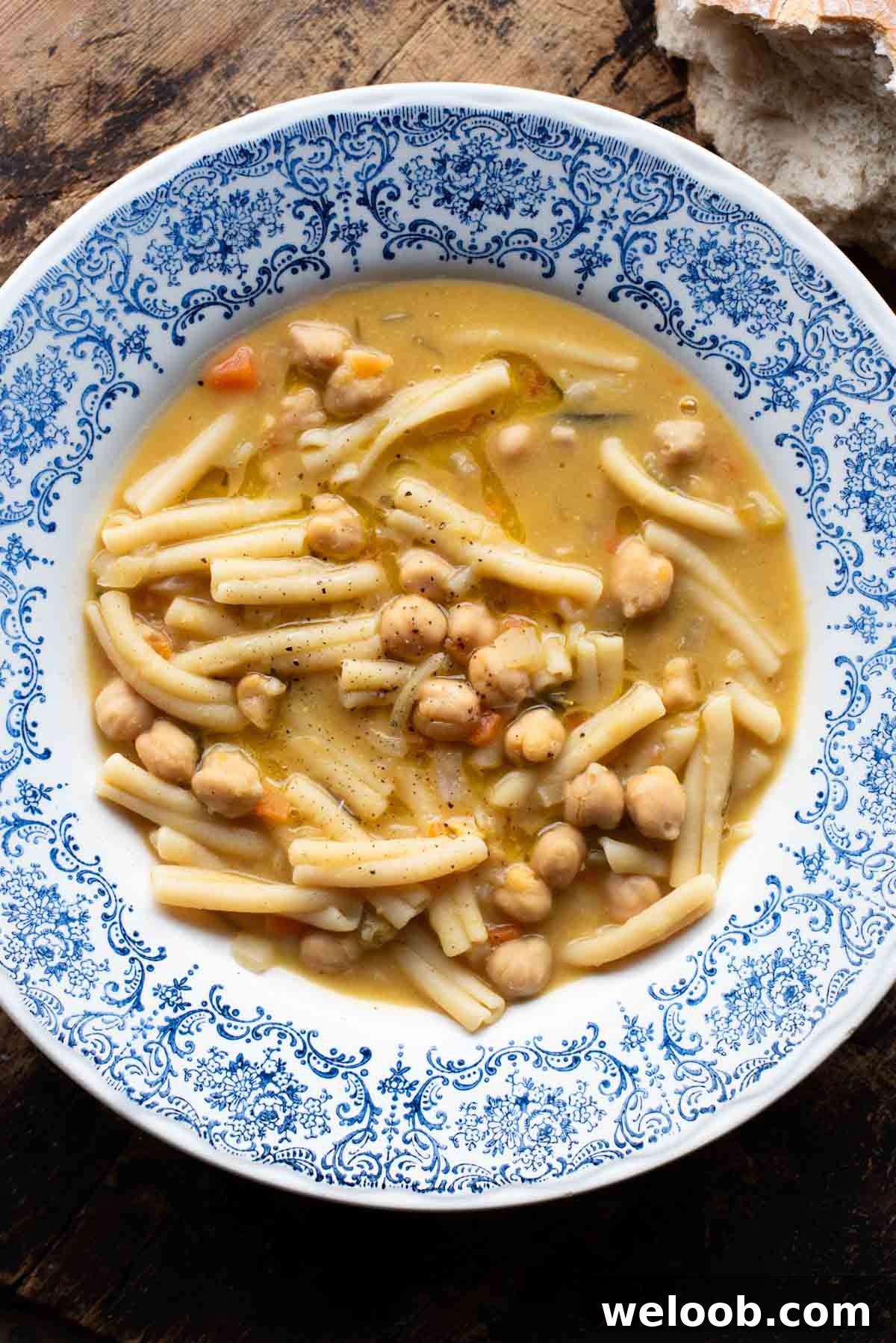
Pasta e Ceci is a warm, comforting Italian soup made from pasta, chickpeas, vegetables and rosemary. Simple to prepare with wholesome ingredients, this dish is ideal for chilly days and delivers rich, homey flavour with minimal effort.
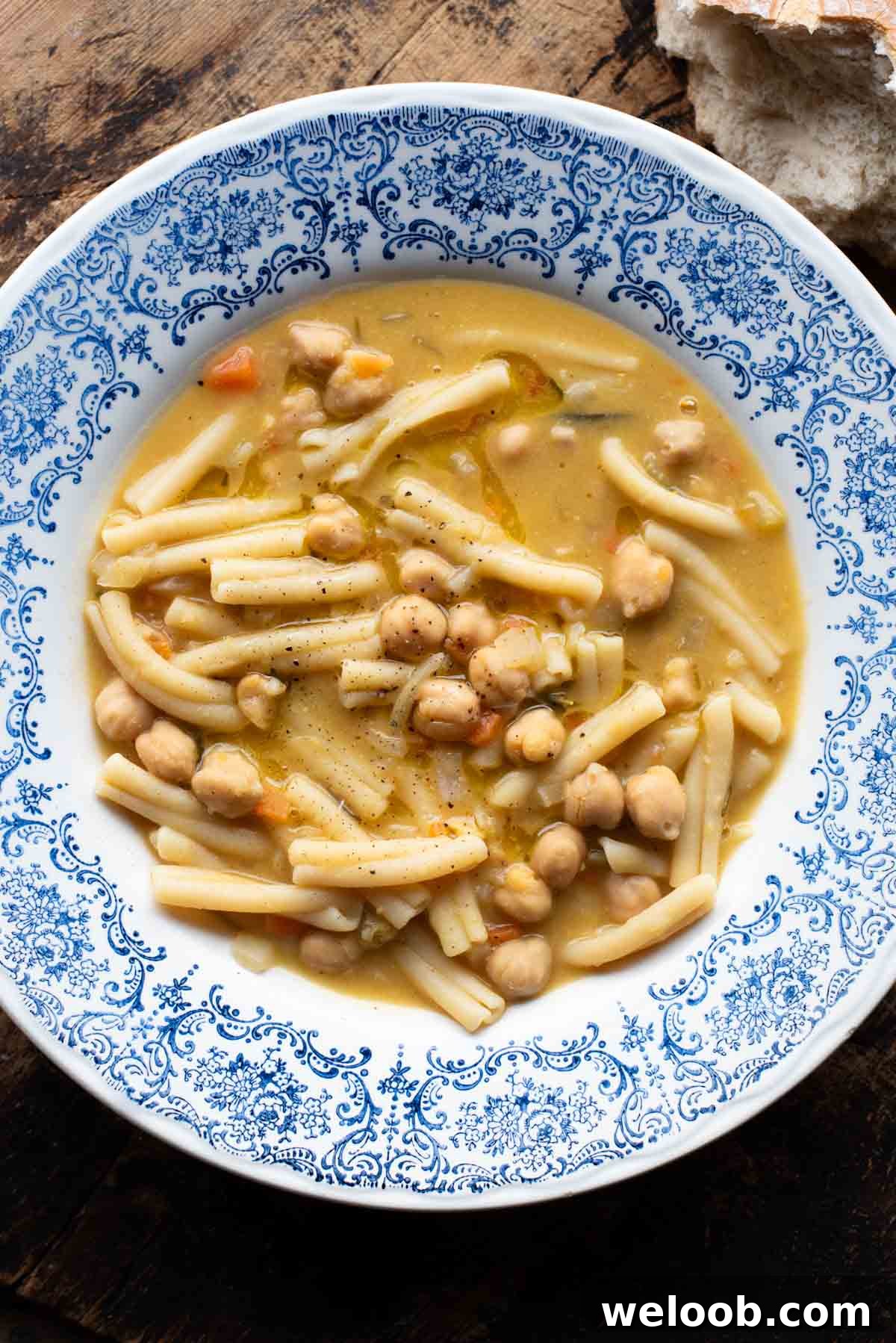
Pasta e Ceci appears in many regional variations across Italy and even within households. The essentials are a short pasta shape, chickpeas and a soffritto (carrot, celery and onion). Some versions include tomatoes, and in Rome anchovies are sometimes added. This rendition keeps things uncomplicated: few ingredients, straightforward technique, and a satisfying, hearty result.
Part of the soup’s appeal comes from pureeing a portion of the chickpeas and stirring them back into the broth. That creates a velvety texture while leaving plenty of whole chickpeas for bite. The final touch of good extra-virgin olive oil and freshly cracked black pepper brings everything together.
See the recipe below for ingredient notes, step-by-step photos, tips, variations and a video. For the printable recipe, scroll to the bottom.
Ingredients
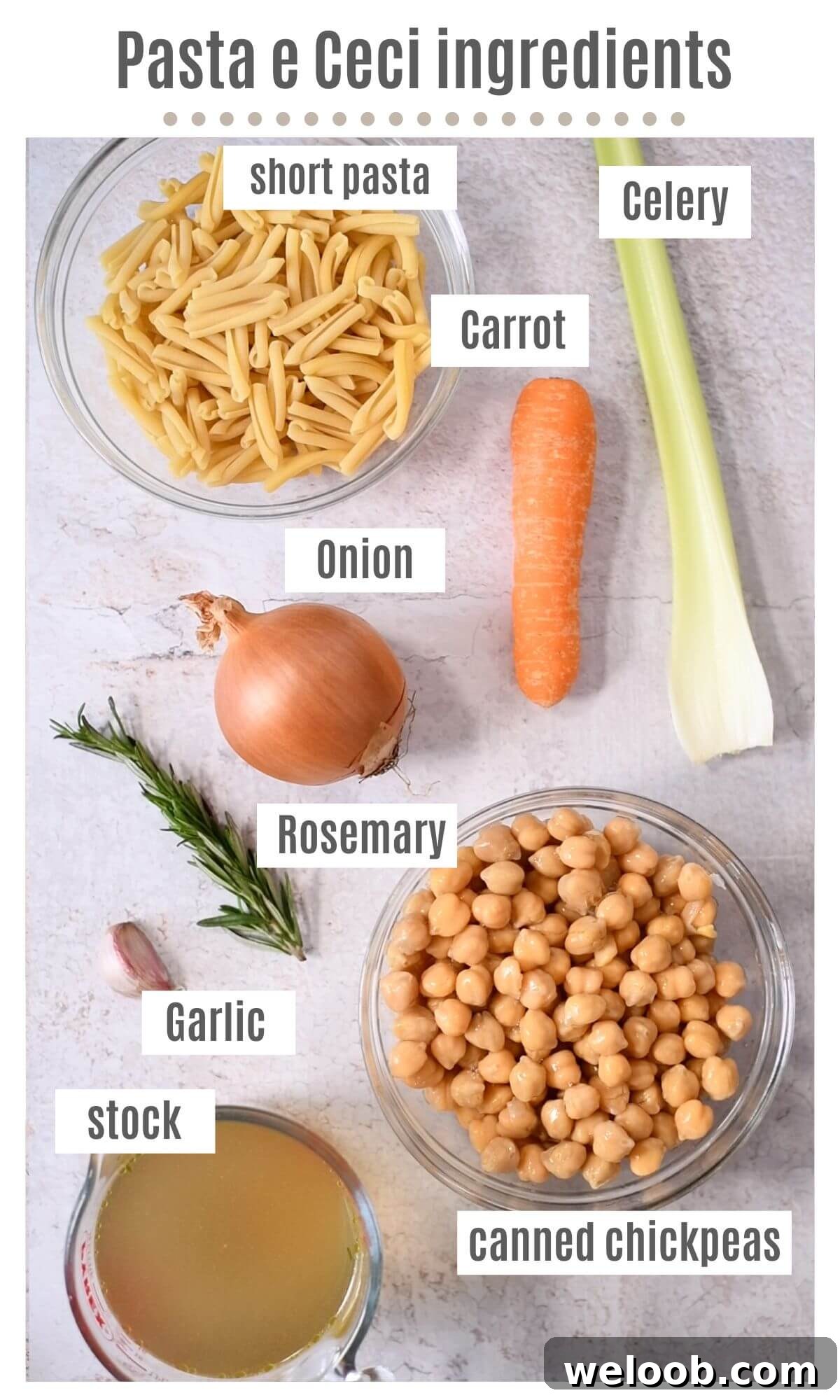
Ingredient notes and substitutions
- Soffritto: carrot, celery and onion create the flavour base. I recommend keeping all three for depth and balance.
- Stock: chicken or vegetable stock both work. Low-sodium store-bought or homemade stock lets you control seasoning; add salt at the end if needed.
- Chickpeas: good-quality chickpeas yield a creamier texture—worth seeking out if you can.
- Pasta: any short pasta is suitable. Casarecce was used here, but Ditalini, Conchiglie or Annelini also work well.
Step-by-step photos and instructions
Finely chop the carrot, celery and onion and place them in a large pot with 1–2 tablespoons of olive oil. Sauté for about 10 minutes until softened but not browned—this gentle cooking builds the base flavour (photo 1).
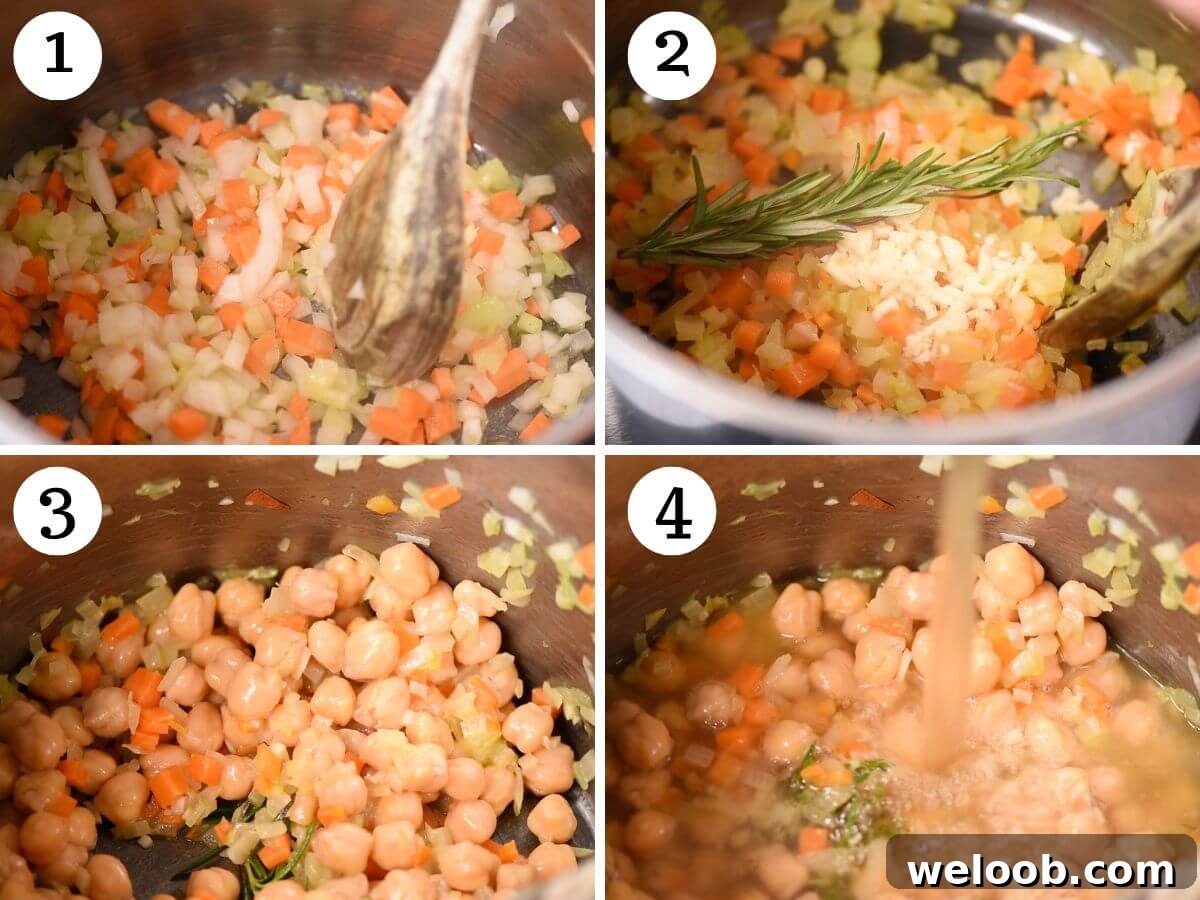
When the vegetables are soft, finely chop the garlic and add it along with a rosemary sprig. Sauté the garlic for about 1 minute, then add the chickpeas and stir to combine (photos 2 and 3).
Pour in the stock, season with a good pinch of salt and pepper, bring to a simmer, then cover and cook for 15 minutes to let the flavours meld (photos 4 and 5).
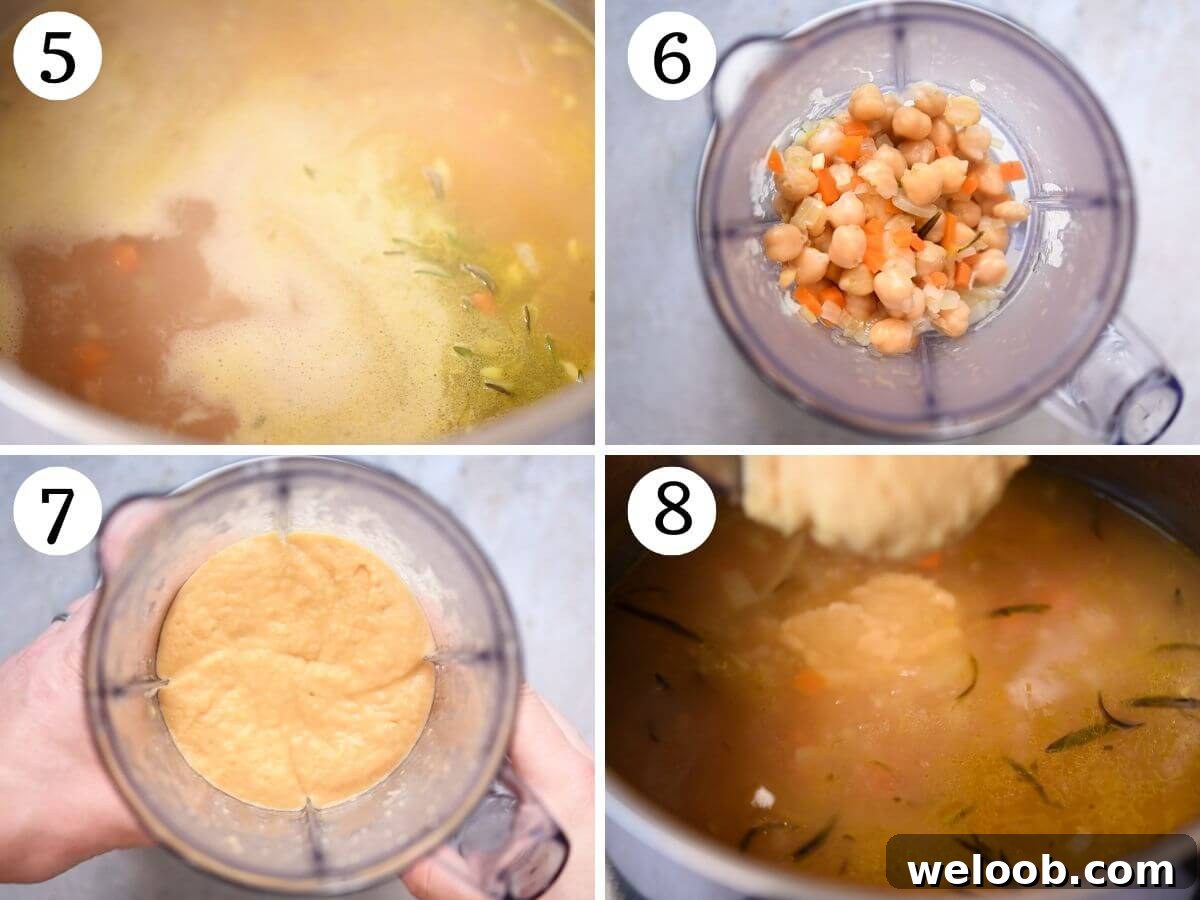
Turn off the heat and remove about 1.5 cups of chickpeas (roughly two ladlefuls). Puree them to a smooth, thick paste with an immersion blender or regular blender, then return the puree to the pot and stir to combine—this thickens the broth while retaining texture from the remaining whole chickpeas (photos 6–9).
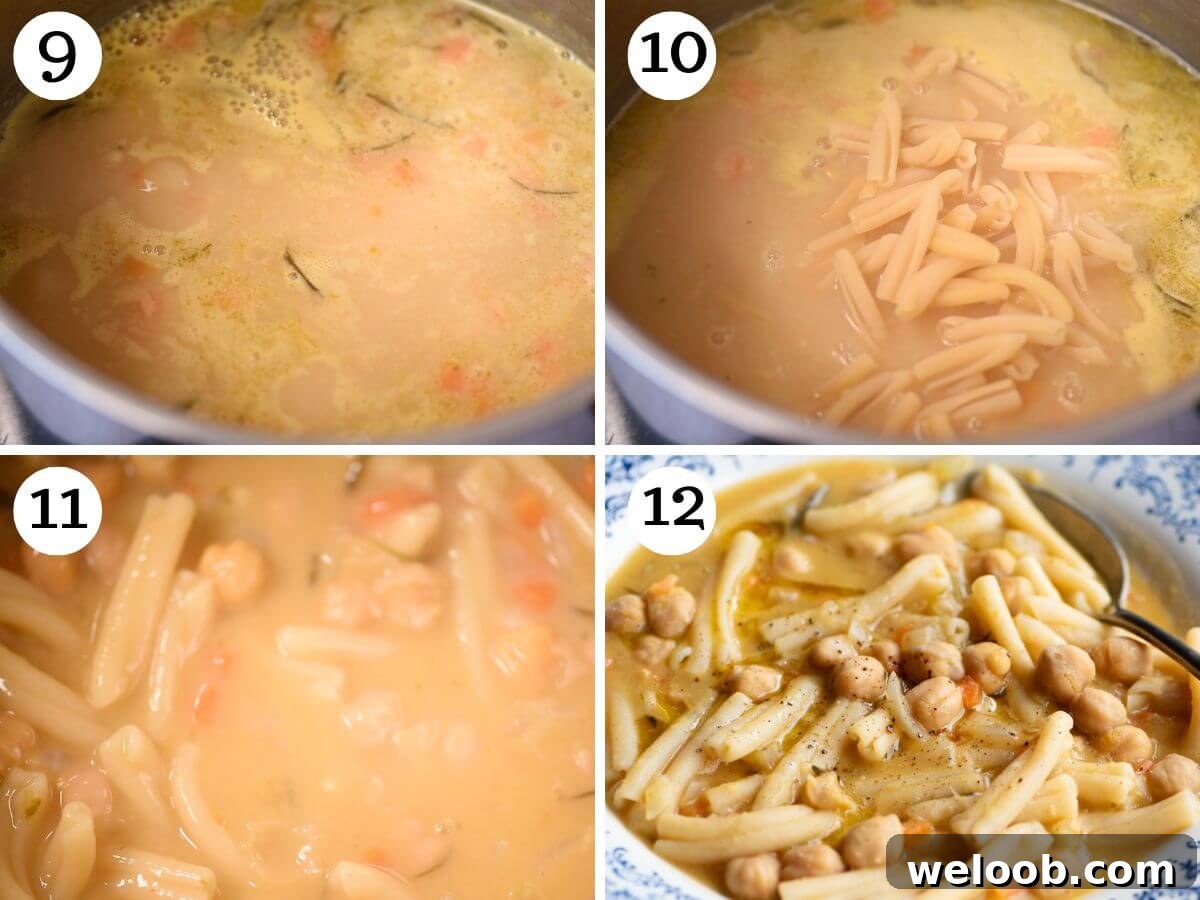
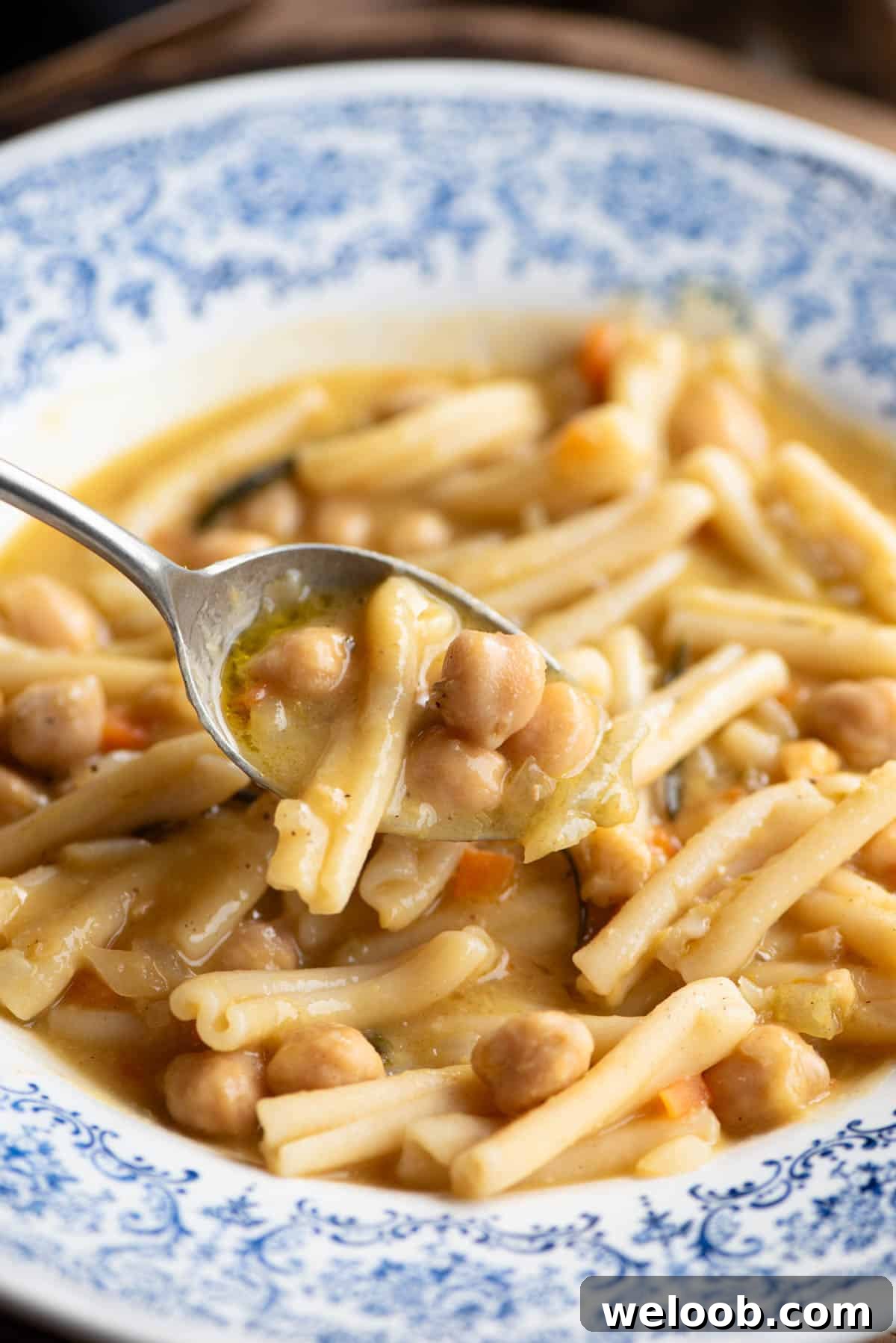
Return the pot to the heat and bring back to a gentle simmer. Add the pasta and cook until al dente. Serve in bowls with a generous drizzle of extra-virgin olive oil and a grind of black pepper (photos 10–12).
Recipe tips and FAQs
- Adjust the consistency: For a creamier, thicker soup, blend more chickpeas or add a little extra pasta (don’t overdo it, as pasta absorbs liquid). To thin, add more stock.
- Season to taste: Start with low-sodium stock and adjust salt and pepper at the end so the seasoning is balanced.
- Add tomato: Stir in 1 tablespoon of tomato concentrate after sautéing the garlic, or add a small amount of passata with the stock for a tomato-forward variation.
- Serve: Finish with a drizzle of high-quality extra-virgin olive oil and serve with crusty bread for dipping.
Short pasta shapes such as Ditalini, Conchiglie or Casarecce are ideal for this soup.
Yes—prepare the soup 1–2 days ahead but do not add the pasta until just before serving to avoid mushy pasta.
Pasta e Ceci is best eaten immediately. Leftovers can be refrigerated for up to one day and reheated; you may need to add extra liquid as the pasta will absorb broth.
More Italian soups to try
Soups
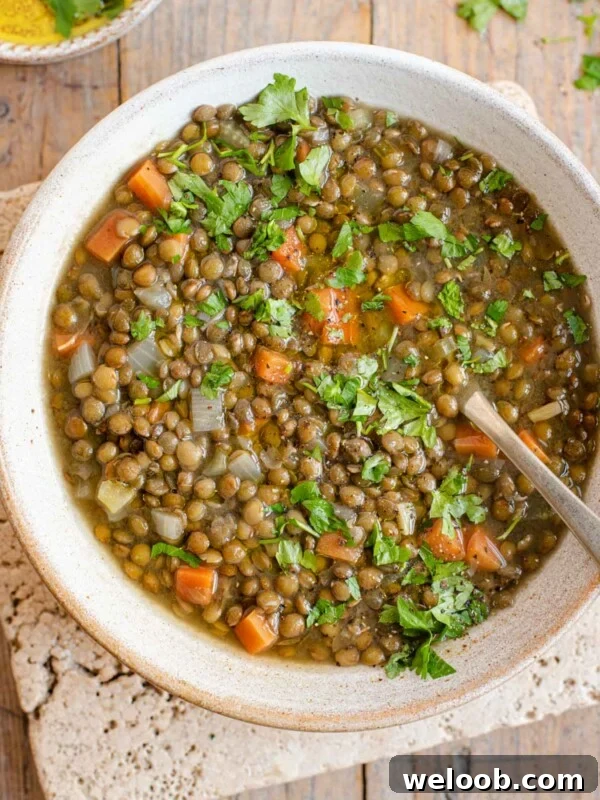
Italian Lentil Soup (Zuppa di Lenticchie)
Soups
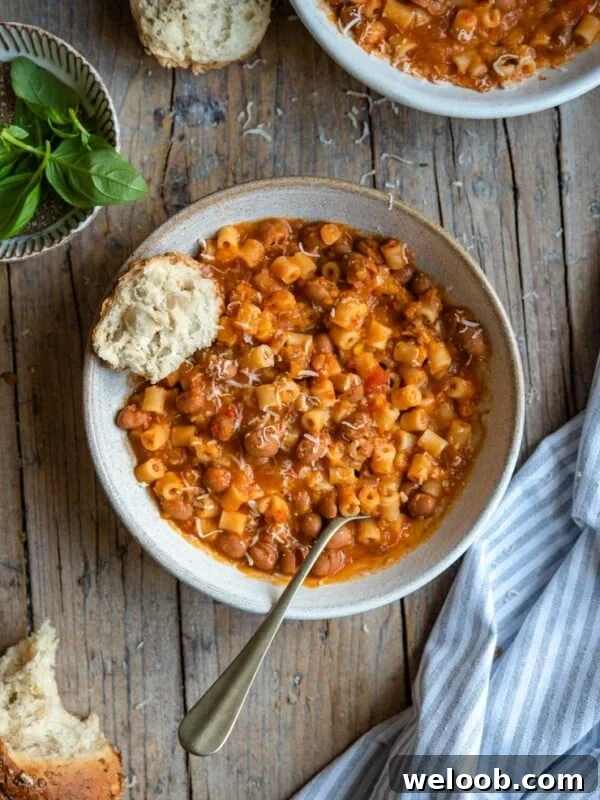
Pasta Fagioli – Pasta & Beans
Soups
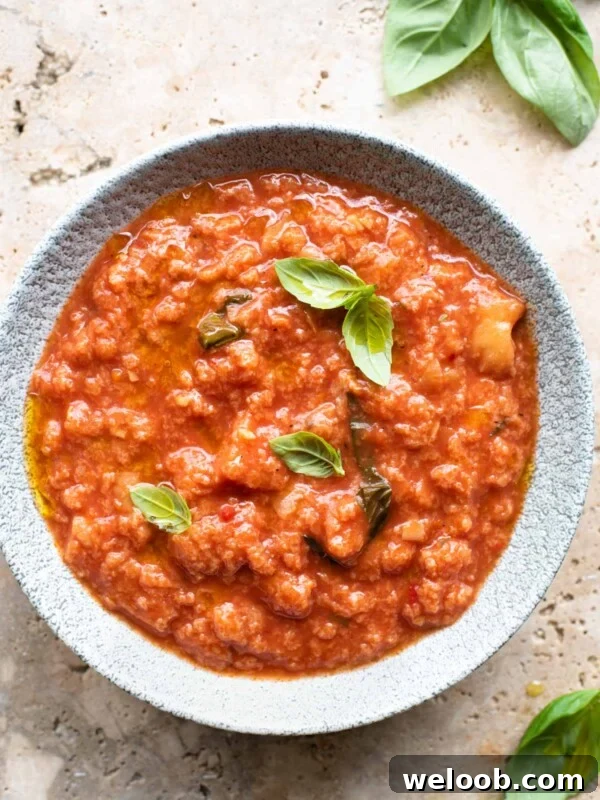
Pappa al Pomodoro (Italian Bread Soup)
Soups
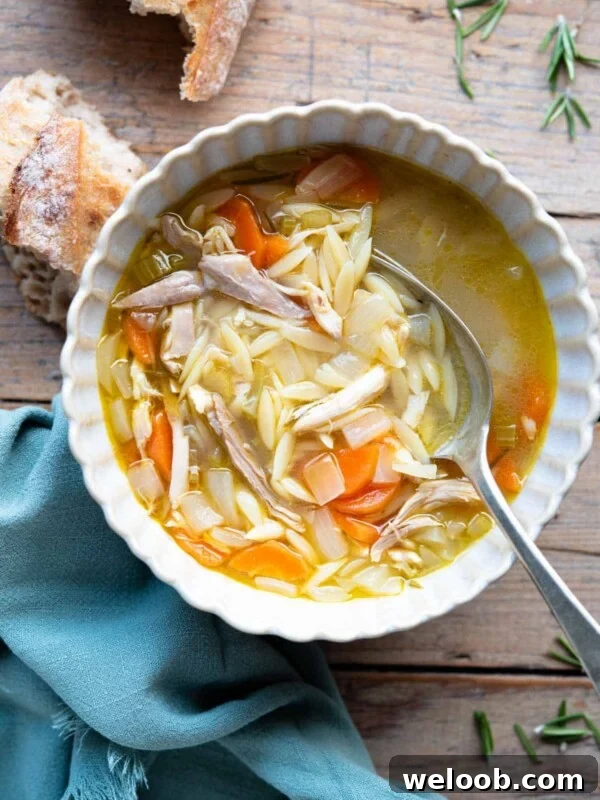
Lemon Chicken Orzo Soup
If you try this Pasta e Ceci recipe, please rate it and leave a comment to share how it turned out. I enjoy hearing from readers—follow the blog on social channels or sign up for the newsletter to get more recipes and updates.
Step By Step Photos Above
Most recipes include step-by-step photos, helpful tips and sometimes video to help you get it right the first time.
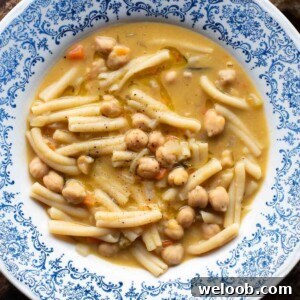
Pasta e Ceci (pasta with chickpeas)
By Emily
Ingredients
- 1 carrot
- 1 stick celery
- 1 onion
- 1 clove garlic
- 1 sprig rosemary
- 1.5 lbs canned chickpeas (700g), drained and rinsed
- 5 cups chicken or vegetable stock (1.2 litres), low sodium recommended
- 7 oz short pasta (200g, e.g. Casarecce)
- salt and pepper, to season
- 2 tablespoons extra-virgin olive oil plus extra for serving
Instructions
- Finely chop the carrot, celery and onion and add to a large pot with 1–2 tablespoons of olive oil. Sauté about 10 minutes until softened but not browned.
- Once softened, add the finely chopped garlic and rosemary. Sauté for about 1 minute, then add the chickpeas and stir to combine.
- Add the stock and a good pinch of salt and pepper. Bring to a simmer, cover and simmer for 15 minutes.
- Turn off the heat and remove about 1.5 cups of chickpeas. Blitz to a smooth, thick purée with a blender, then add back to the pot and stir to combine.
- Bring back to a simmer, add the pasta and cook until al dente. Serve in bowls drizzled with extra-virgin olive oil and topped with black pepper.
Video
Notes
- Adjust the consistency: Blend more chickpeas or add a little extra pasta for a thicker result. To thin, add extra stock.
- Season to taste: Use low-sodium stock and adjust salt and pepper at the end.
- Serving suggestion: Finish with a drizzle of extra-virgin olive oil and serve with crusty bread.
- To add tomato: Stir in 1 tablespoon of tomato concentrate after the garlic, or add a little passata with the stock.
- Prep ahead: The soup can be made 1–2 days ahead, but add pasta only when ready to serve.
- Storage: Leftovers keep in the fridge for up to one day; reheat with extra liquid as needed.
Helpful Info for All Recipes
- I use extra-virgin olive oil unless otherwise noted.
- Vegetables listed are medium unless stated.
- All recipes are tested using a fan (convection) oven where relevant.
Nutrition
Nutrition information is automatically calculated and should be used as an approximation.
Did you try this recipe?
Leave a comment below!