
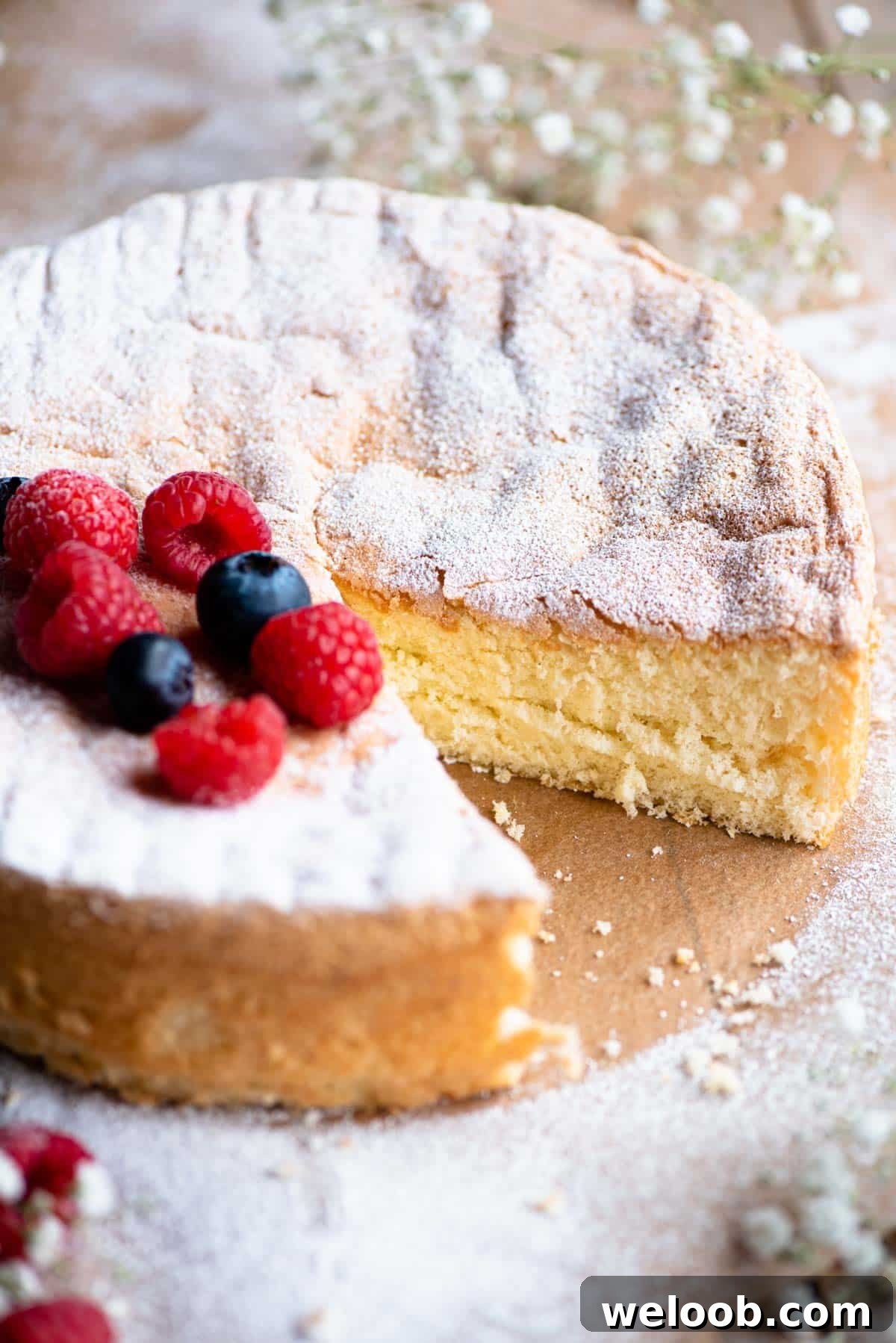
Pan di Spagna — a delicate, light and airy Italian sponge cake made from just four simple ingredients: flour, corn starch, eggs and sugar. This classic Italian sponge is easy to prepare and forms the base for many traditional desserts such as Zuccotto and Cassata.
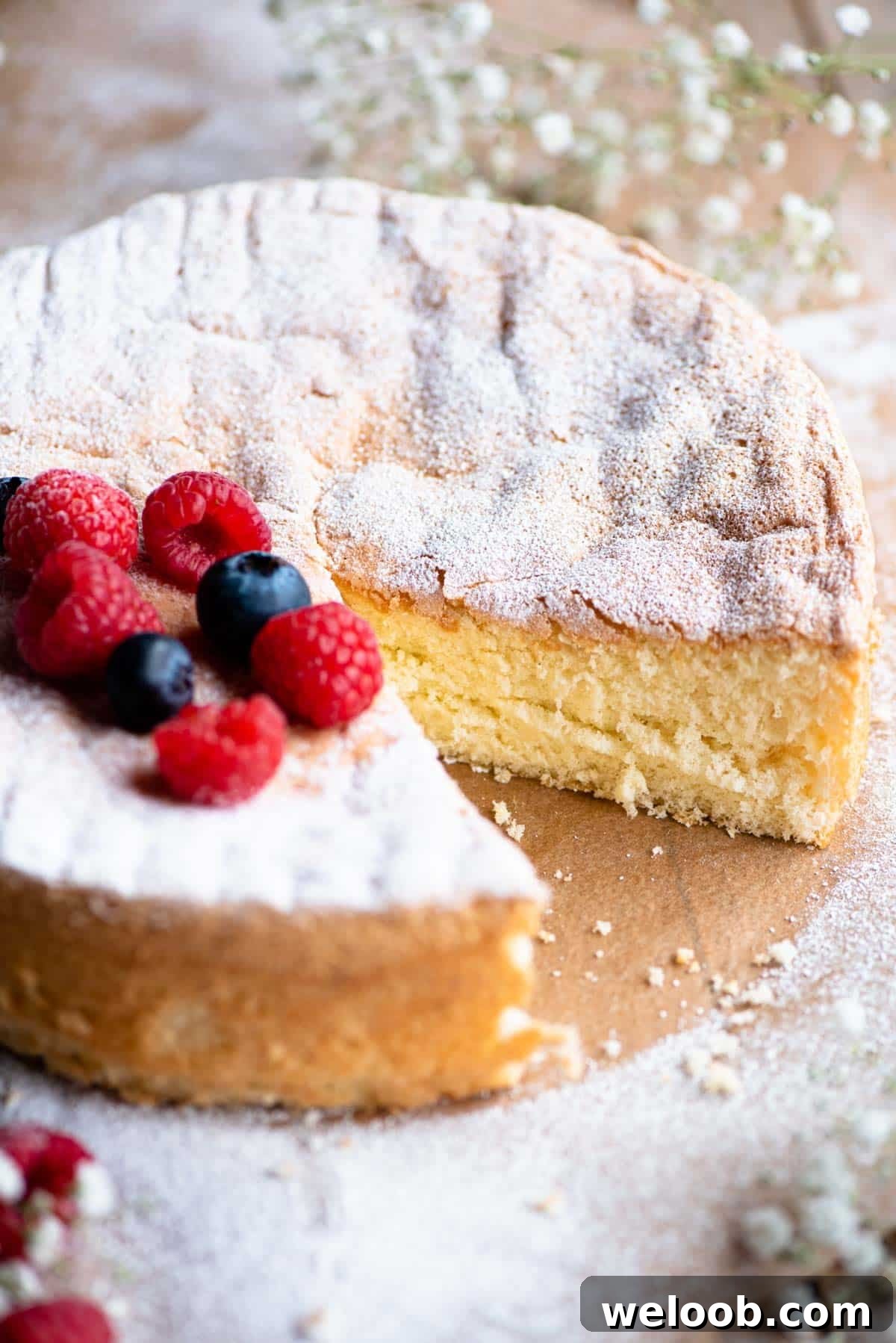
Pan di Spagna is one of Italy’s best-known sponge cakes. It can replace Savoiardi (ladyfingers) in recipes like tiramisu or be used to make Zuppa Inglese, Zuccotto, layered celebration cakes and more.
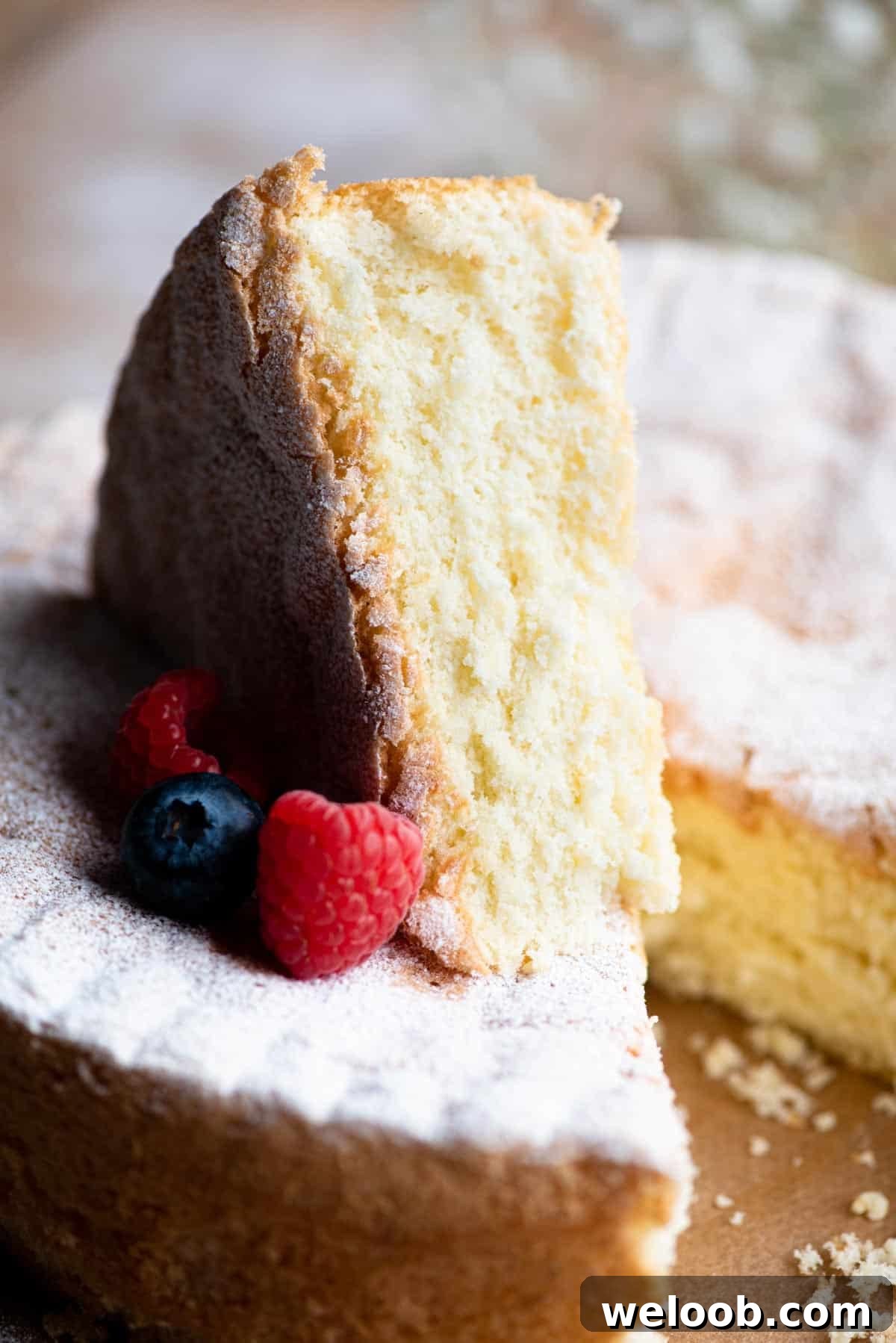
Its soft, cloud-like texture makes it delicious simply dusted with powdered sugar or transformed into impressive layered desserts for special occasions.
Although straightforward to make, a few important tips will help you achieve the ideal texture. Read the notes and tips below before you begin baking.
See the full recipe below with ingredient notes, step-by-step photos, tips, variations and a video. For the printable recipe, scroll to the bottom or use the recipe section.
Ingredients
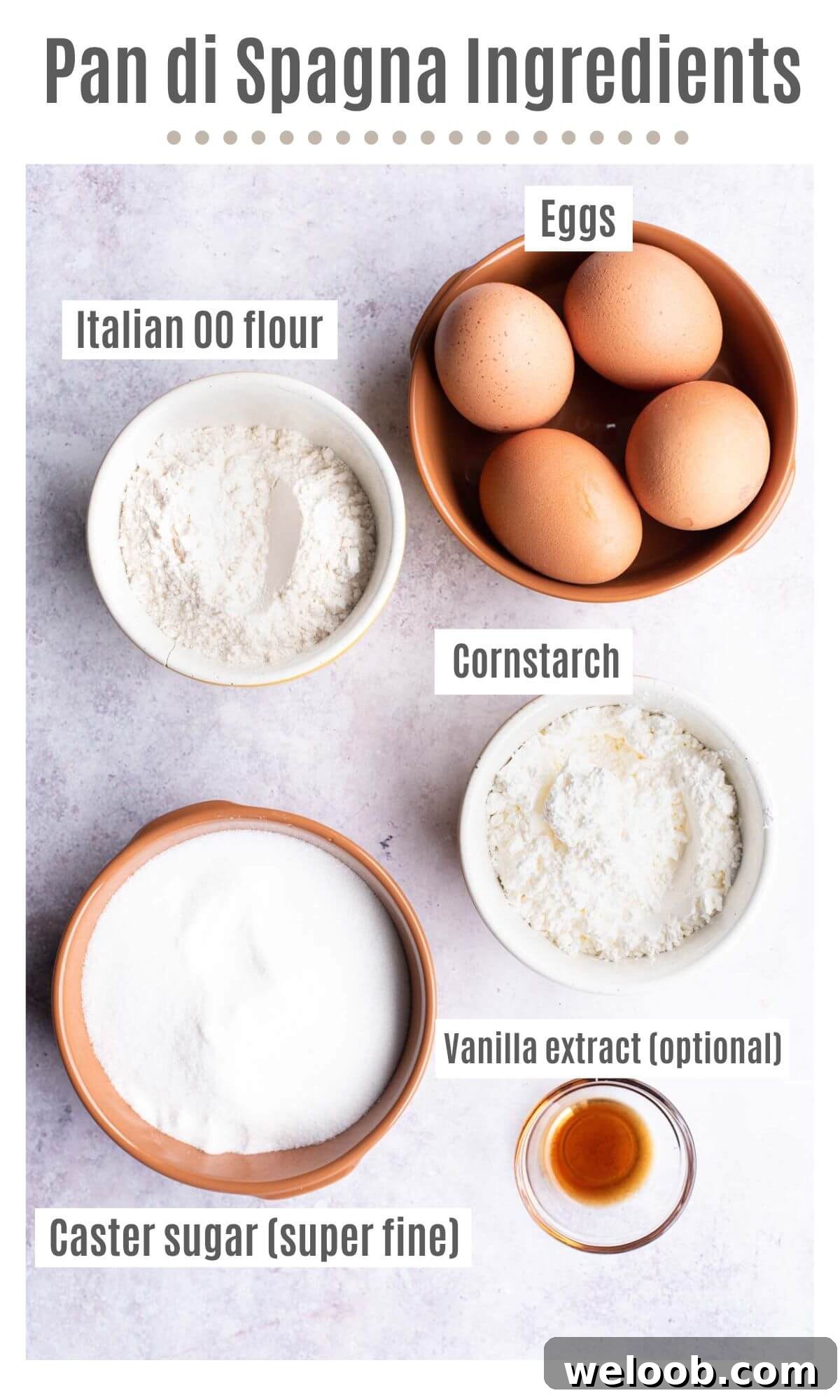
Ingredient notes and substitutions
- Italian 00 flour — you can substitute with all-purpose (plain) flour if needed.
- Corn starch — potato starch (fecola di patate) is traditionally used in some Italian sponges, but corn starch (cornflour) works well and helps keep the cake extra light.
- Eggs — use large, free-range eggs at room temperature. Cold eggs will not whisk up as well.
- Vanilla — use 1 teaspoon of extract or the seeds from a vanilla bean.
- Salt — a pinch of salt enhances the cake’s flavour.
Step by step photos and instructions
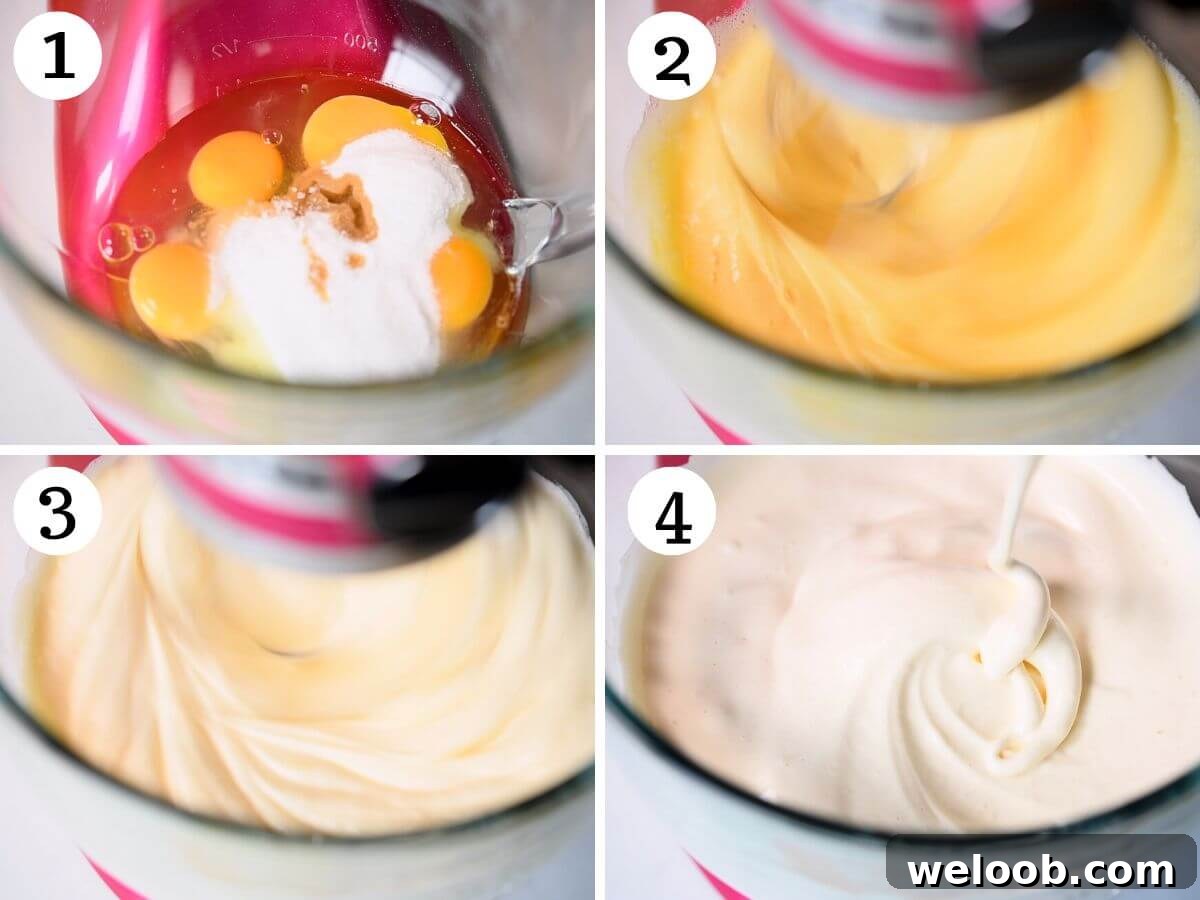
Beat the eggs and sugar — place the eggs, sugar and a pinch of salt in a stand mixer and whisk on medium speed for 15–20 minutes until the mixture becomes thick, pale and fluffy. The mixture is ready when it ribbons and does not disappear immediately (photos 1–4).
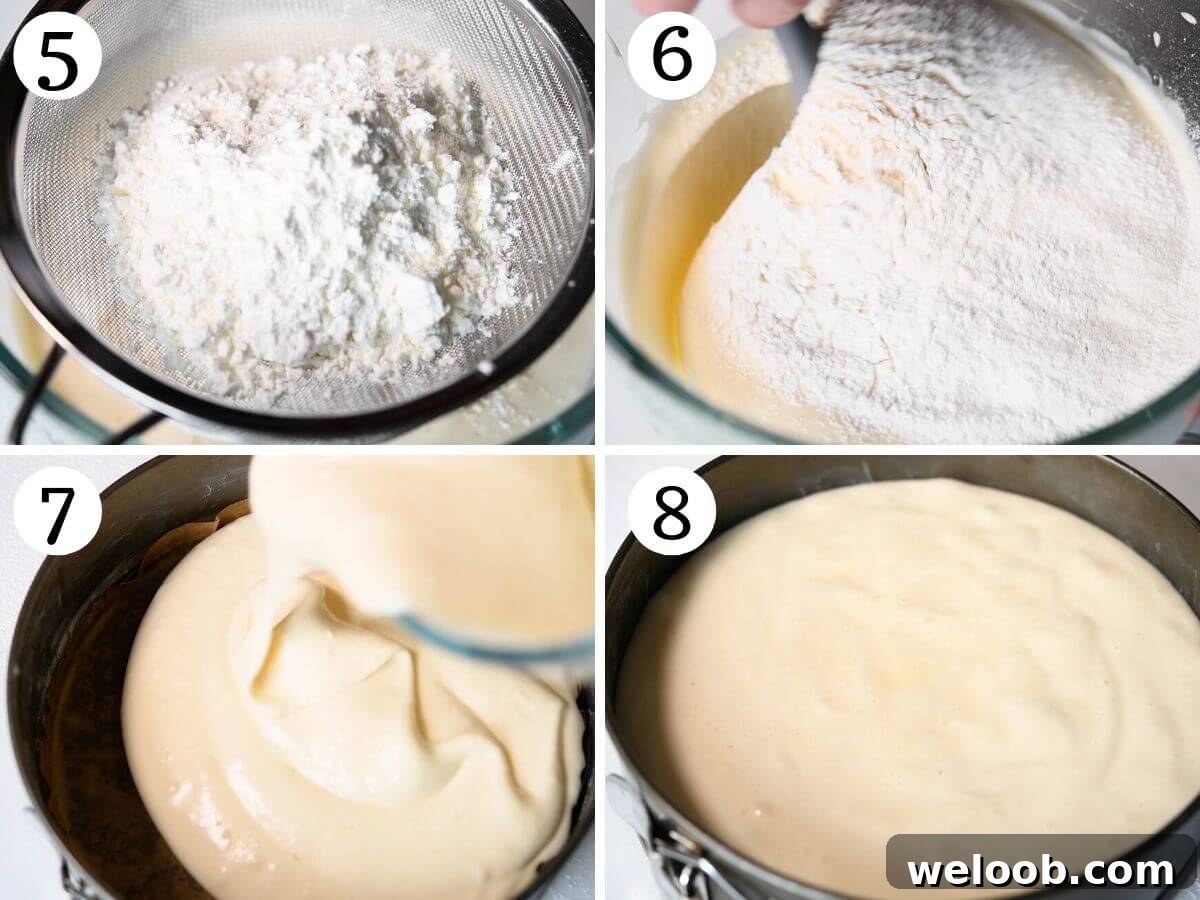
Sift the flours — sift both flours together and fold them into the egg mixture in three additions, folding gently each time to keep as much air as possible (photos 5 & 6).
Transfer to the cake pan — pour the batter into the prepared pan and smooth the top with a spatula. Do not tap the pan on the counter, as that will remove too much air (photos 7 & 8).
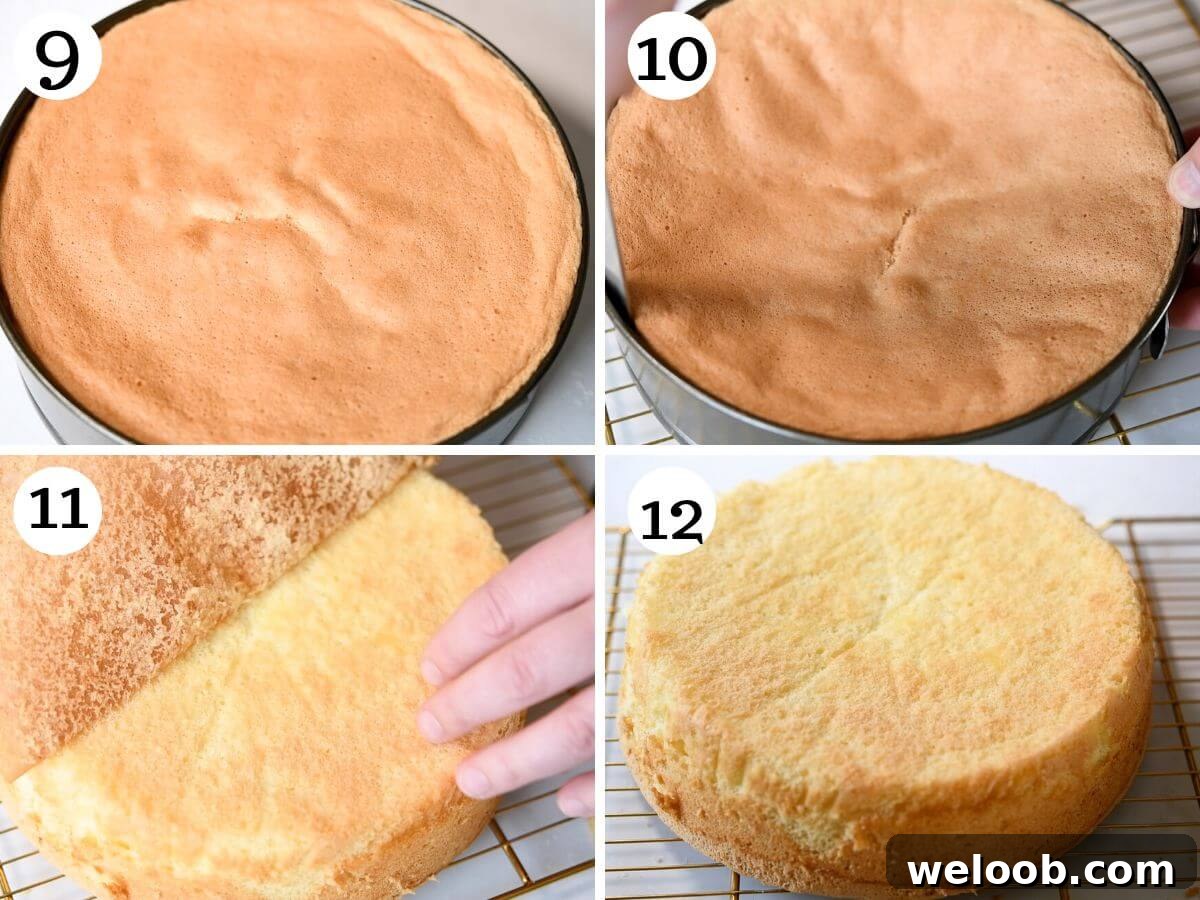
Bake — bake on the lowest shelf for about 35–40 minutes. Allow the cake to rest in the pan for 5–10 minutes, then remove it to a cooling rack to cool completely (photos 9–12).
Recipe tips
- Use a kitchen scale: weighing ingredients, especially flour, gives the most reliable results. Cup measures often overestimate flour.
- Room temperature eggs: warm eggs whip up better and give more volume.
- Beat the eggs well: the sponge rises from well-whisked eggs rather than chemical leavening, so whisk until the mixture is pale and ribbons.
- Sift the flours: sifting and adding in three stages prevents lumps and helps maintain airy texture.
- Fold gently: avoid knocking out the air when incorporating the flours.
- Avoid opening the oven: keep the door closed during baking to prevent the cake from sinking.
- Cooling: cool in the pan briefly, then transfer to a rack to avoid overbaking and drying.
Recipe FAQs
Once cooled, wrap Pan di Spagna tightly in plastic wrap or place it in an airtight container to prevent drying. If the sponge is used in a filled dessert, it will stay moist for longer.
Stored in an airtight container, the plain sponge keeps well for about 3 days. In a dessert with cream or syrup it can last around 5 days when refrigerated.
Pan di Spagna contains no fat or chemical leavening—its rise depends on whipped eggs. Regular sponge recipes often include butter or oil and baking powder, producing a moister, denser crumb.
An 8.5–9 inch (22–23 cm) springform tin works well. Grease it with butter and line the base with parchment for easy removal.
Why is it called Pan di Spagna?
The name Pan di Spagna literally means “Spanish bread.” One story credits a Genoese chef, Giabatta Cabona, who supposedly created the cake for the King of Spain in the mid-18th century. Whether that tale is accurate or not, the sponge has become a beloved staple across Italy.
Variations and ways to use Pan di Spagna
This sponge is versatile. Add vanilla or almond extract for subtle flavour, grate in lemon or orange zest for brightness, or fold in cocoa powder for a chocolate version. Vanilla with lemon is a particularly nice pairing.
Ways to use Pan di Spagna
Use Pan di Spagna in place of ladyfingers for tiramisu or trifles, or to assemble Zuccotto (a ricotta and chocolate dome), Zuppa Inglese (an Italian trifle) and layered cakes.
For filled cakes, pair the sponge with classic Italian creams such as Crema Pasticcera (pastry cream), Crema al Cioccolato (chocolate pastry cream) or Crema al Pistacchio (pistachio cream).
Italian Desserts
Zuppa Inglese (Italian Trifle)
Italian Desserts
Irresistible Chocolate Tiramisu
Italian Desserts
Italian Pastry Cream: Crema Pasticcera
Italian Desserts
Chocolate Pastry Cream (Crema al Cioccolato)
If you try this Pan di Spagna recipe, please rate it and share your results in the comments — I love hearing from readers!
Step By Step Photos Above
Most of our recipes include step-by-step photos, helpful tips and sometimes a video.
Pan di Spagna (Italian Sponge Cake)
Equipment
- 8.5–9 inch springform cake tin
- Baking parchment
- Sieve
- Stand mixer with whisk attachment or electric whisk
Ingredients
- 4 large eggs, at room temperature (don’t use cold eggs)
- 65 g Italian 00 flour (00 recommended, all-purpose ok)
- 65 g corn starch (cornflour)
- 130 g caster (superfine) sugar
- 1 teaspoon vanilla extract (optional)
- 1 pinch salt
- Butter for greasing
Instructions
- Preheat the oven to 320°F (160°C). A static (non-fan) oven is best.
- Grease the tin with butter and line the base with a circle of baking parchment.
- Place eggs, vanilla and a pinch of salt in the mixer bowl. Whisk on medium and add the sugar gradually in three additions.
- Whisk for 15–20 minutes until the mixture is thick, pale and ribbons when lifted.
- Sieve both flours into the egg mixture in thirds and fold gently to avoid knocking out the air.
- Transfer the batter to the tin and bake on the lowest oven shelf for 35–40 minutes, or until a skewer inserted comes out clean.
- Cool in the tin for 5–10 minutes, then remove and cool completely on a rack.
Notes
- Use a kitchen scale: weighing flour ensures consistent results.
- Room temperature eggs: important for maximum volume.
- Don’t overmix: fold gently to retain air.
- Don’t open the oven door: avoid the cake sinking.
- Cooling: remove to a rack after a short rest in the tin to prevent drying.
- Storage: wrap well or store in an airtight container; keeps up to 3 days plain, longer if filled.
Helpful Info for All Recipes
- I typically use extra virgin olive oil in savoury recipes unless stated otherwise.
- All vegetables are assumed medium unless noted.
- Recipes are developed using a fan (convection) oven unless specified.
- Nutrition is automatically calculated and should be treated as an estimate.
Nutrition
Carbohydrates: 20 g |
Protein: 2 g
Nutrition information is an approximation.