
How to Make Silky Pastry Cream for Tarts and Eclairs
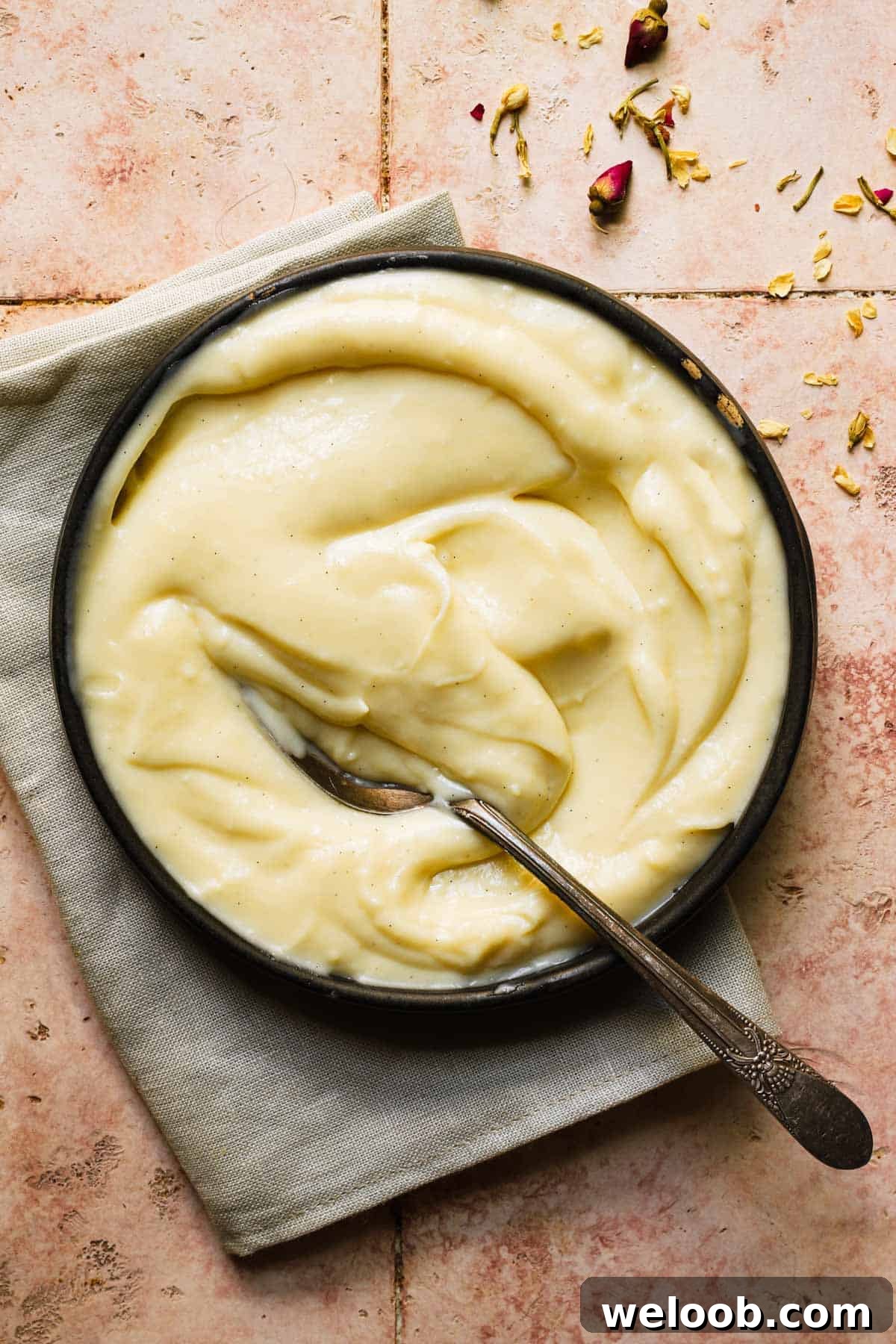
Today we learn how to make crème pâtissière (pastry cream), a rich, silky custard that is essential to many French desserts — from cream puffs to fruit tarts. The secret to consistent success is technique, and this clear, foolproof recipe will guide you through it.
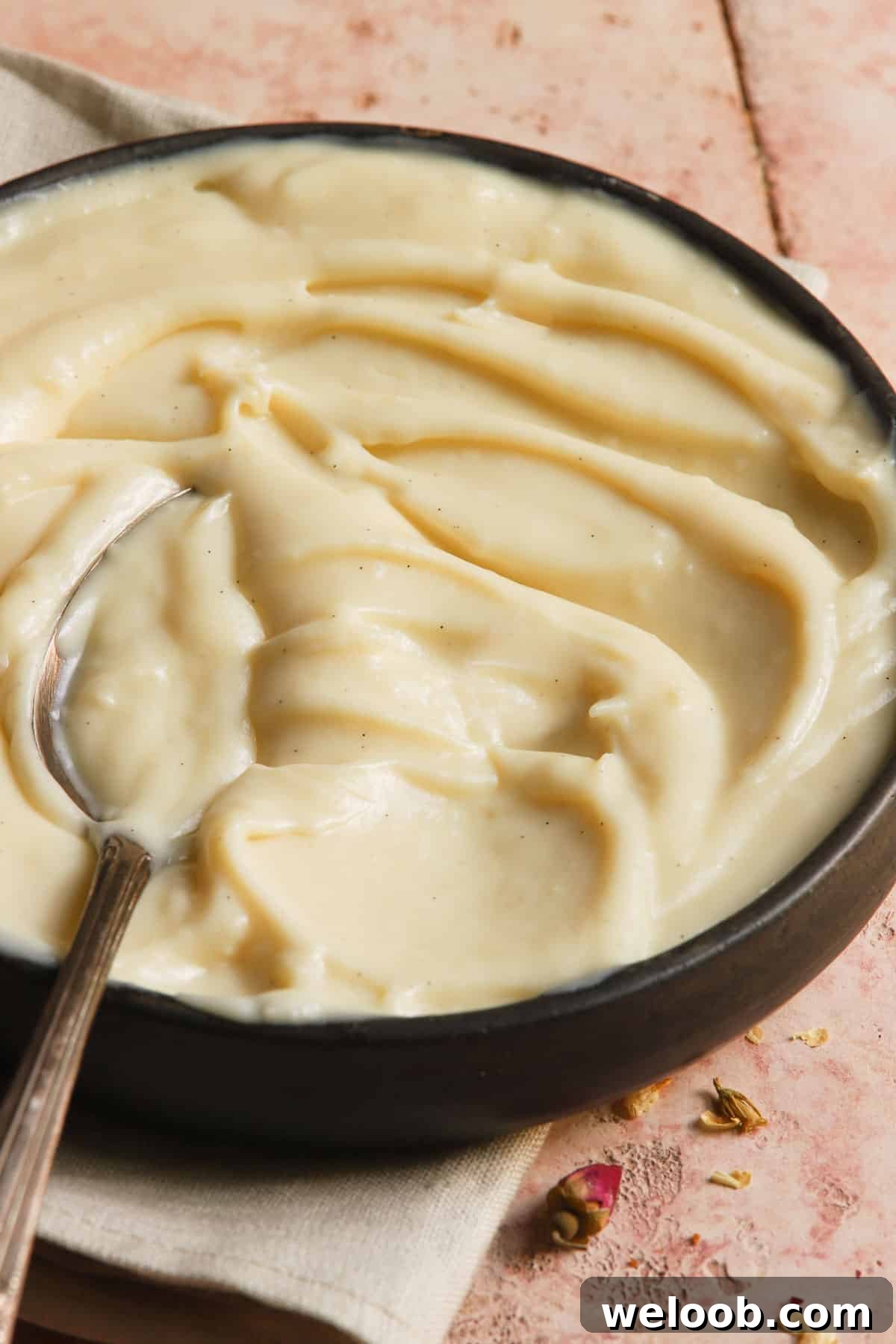
What is crème pâtissière (pastry cream) and how is it used?
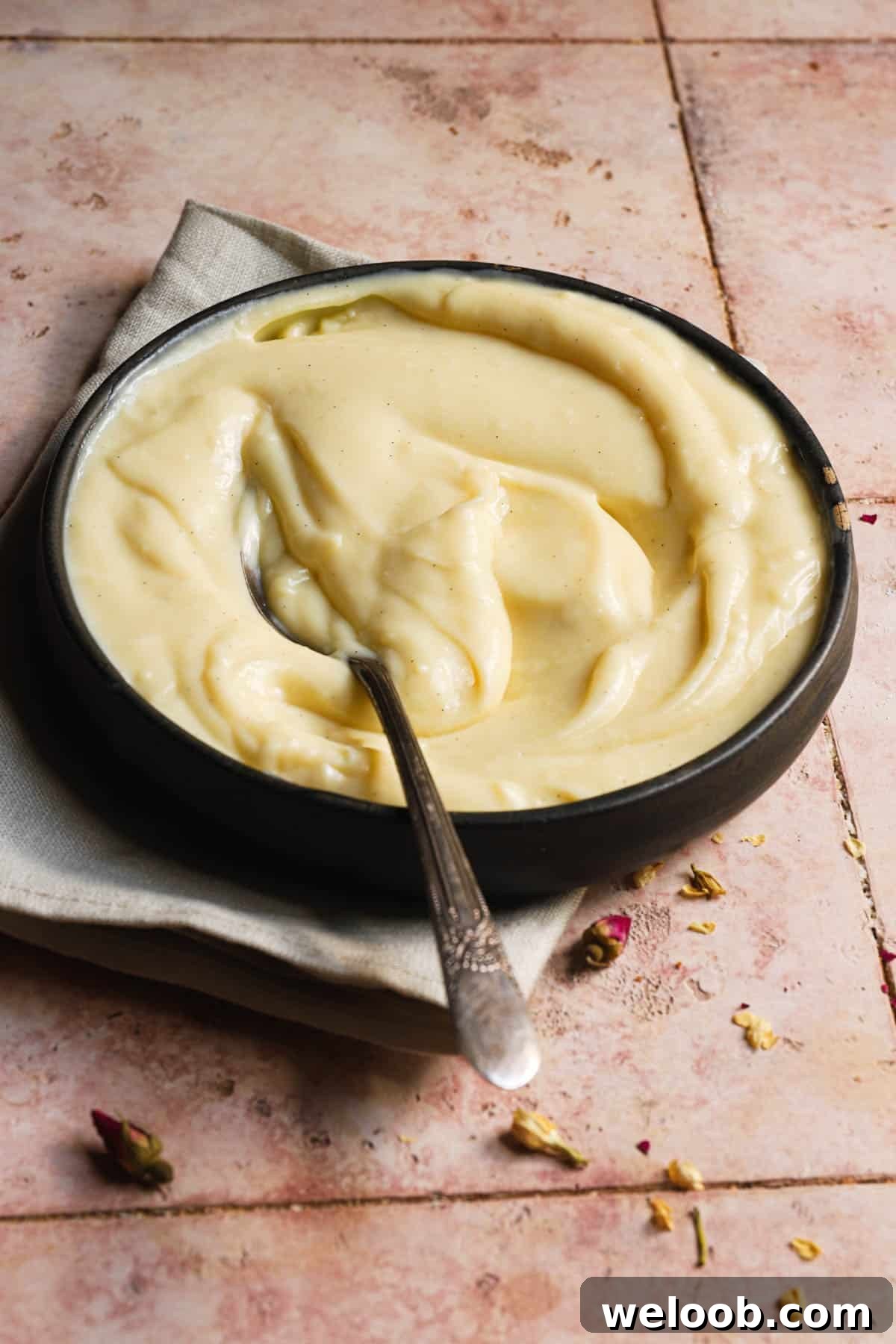
Crème pâtissière, commonly called pastry cream, is a thickened vanilla custard made from milk, eggs (or yolks), sugar and starch. It has a firm yet creamy texture that makes it ideal for filling cakes, tarts, éclairs, cream puffs, doughnuts and many other desserts. It can also be adapted into mousselines, diplomat creams or chocolate and coffee variations, depending on the flavor you want.
The base method is simple: warm the milk base, temper it into beaten eggs mixed with starch, then cook gently until thick. Flavoring options are flexible — vanilla is classic, but chocolate, coffee, citrus zest or flavored liqueurs all work beautifully.
Key ingredients
This recipe uses straightforward pantry ingredients. Choosing high-quality basics will improve flavor and texture.
Eggs and egg yolks
Use two whole large eggs plus two additional large egg yolks. Whole eggs add structure and stability; extra yolks give a silkier, richer mouthfeel. You can adjust the ratio to taste, but the balance below yields a smooth, stable cream.
Half-and-half (or milk)
Half-and-half (a mix of milk and cream) gives a lovely creamy texture without being overly heavy. Whole milk can be used as a lighter substitute; avoid using straight heavy cream in place of the milk portion, as it can make the custard too rich or more prone to separation.
Cornstarch
Cornstarch helps stabilize and thicken the custard, especially when there is a high liquid ratio. It produces a smooth, tender set. Do not substitute with starches that set very firm (like potato starch) unless you want a different texture. Cake flour is an acceptable alternative in small amounts.
Vanilla
Vanilla bean paste or extract gives the classic aromatic note of pastry cream. If you prefer, scrape a vanilla bean into the milk while heating to infuse deep, natural flavor.
How to make crème pâtissière (pastry cream)
Time needed: about 20 minutes active, plus cooling time
Read the steps through before starting. Proper preparation and attention during cooking prevent curdling and ensure a silky result.
-
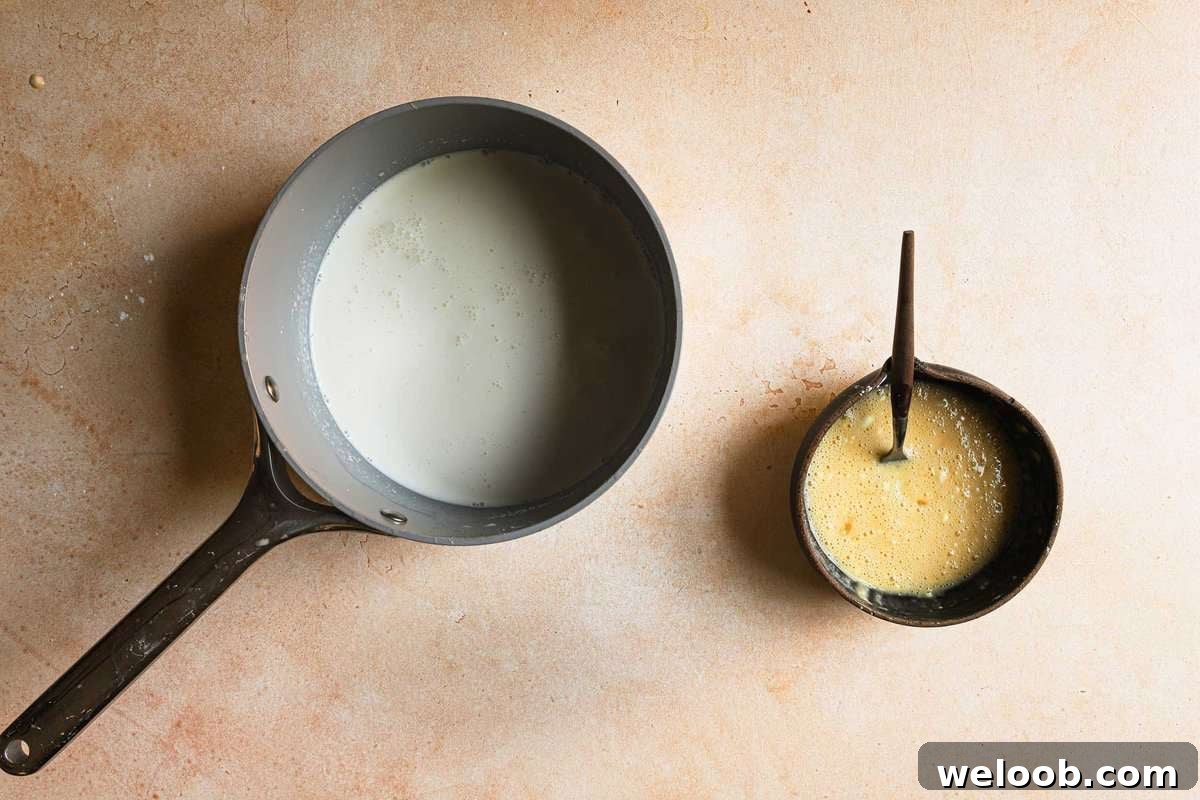
Prep: Measure the ingredients. In a medium bowl, whisk together the two whole eggs, two egg yolks and the cornstarch until smooth. Add 1/4 cup of the half-and-half and whisk to combine; set this mixture next to a fine sieve over a bowl.

- Heat the milk: In a medium saucepan, combine the remaining half-and-half with the sugar, vanilla and salt. Heat over medium until the mixture comes to a full simmer and small bubbles form around the edge.
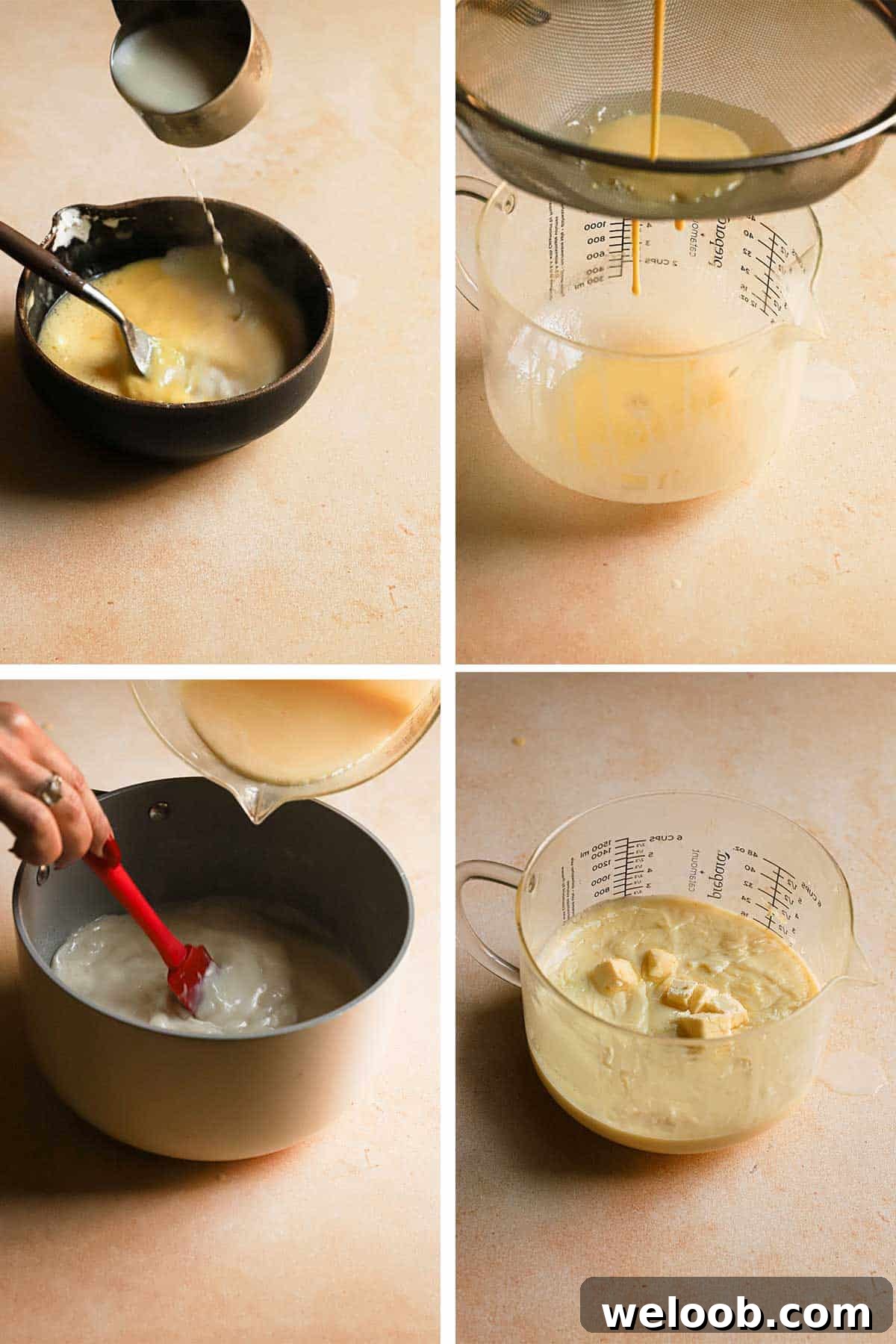
- Temper the eggs: Remove the pan from the heat. Pour about 1/2 cup of the hot milk mixture slowly into the egg-and-starch mixture while whisking constantly to temper the eggs. Pass the tempered egg mixture through the sieve into a bowl to remove any lumps, then return it to the saucepan.
-
Cook to thicken: Place the saucepan back on medium heat and stir continuously with a wooden spoon or heat-resistant spatula, scraping the bottom and sides. Cook until the cream thickens and just begins to boil — this happens quickly once the mix hits the right temperature. If you use a thermometer, it should be around 180°F (82°C). Do not rush; consistent stirring prevents scorching and curdling.
-
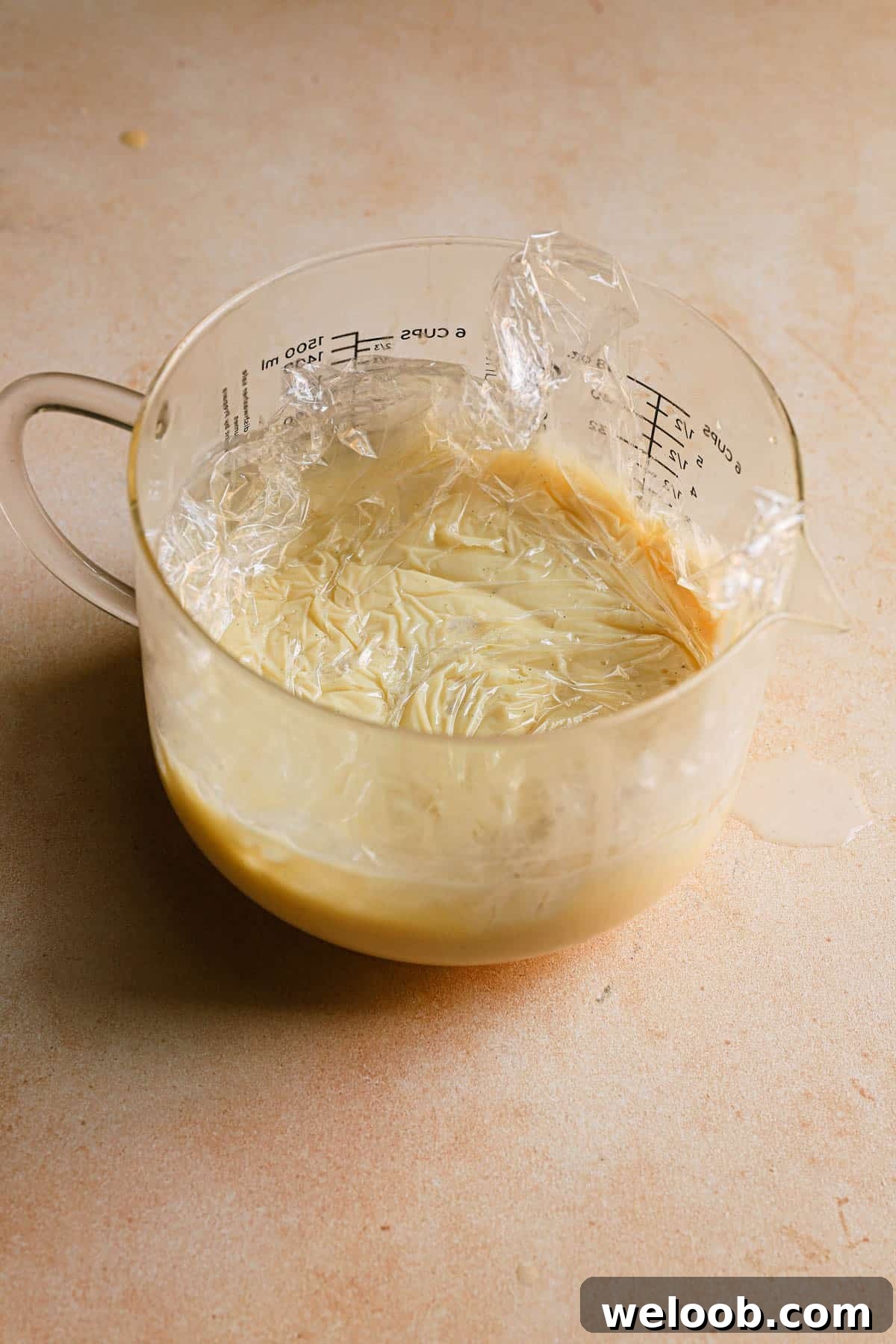
Finish and cool: Remove from the heat and stir in the butter until fully incorporated. Strain the pastry cream again into a clean bowl or container for extra smoothness. Press a piece of plastic wrap directly onto the surface to prevent a skin from forming, then let cool to room temperature before refrigerating.
-
Storage: Refrigerate within one hour. The pastry cream will keep in the refrigerator for up to three days. It can be frozen for up to four weeks; if the texture separates after thawing, re-whip briefly to smooth it out.
Flavor variations and ways to use pastry cream
Pastry cream is a versatile base. Try these simple variations to create different desserts:
- Coffee pastry cream: Whisk 1–2 teaspoons of instant espresso into the milk while heating.
- Chocolate pastry cream: Stir 1/3 cup chopped dark chocolate into the hot pastry cream until melted and smooth.
- Peanut butter pastry cream: Fold in 1/2 cup smooth peanut butter while the cream is still warm for a nutty filling.
- Crème légère / Diplomat: Fold 2 cups of lightly whipped cream into chilled pastry cream for a lighter, mousse-like filling. This is excellent for tarts and cream puffs.
- Citrus-infused: Stir in grated lemon or orange zest with the butter for a bright, fresh flavor.
Common problems and troubleshooting
Grainy or lumpy texture: This usually means the eggs were partially cooked too quickly or the mixture wasn’t sieved. Strain the cream and whip it with an electric mixer to smooth it.
Grayish color: Avoid aluminum cookware or bowls, which can react with eggs and cause discoloration. Use stainless steel, glass or ceramic instead.
Storing and make-ahead tips
Refrigerate within one hour of cooling and use within three days. Freeze in an airtight container for up to four weeks. If the texture seems separated after thawing, whisk or beat until smooth before using.
Creme Patissiere (pastry cream) recipe
Ingredients
- 2 large eggs, at room temperature
- 2 large egg yolks, at room temperature
- 2 tablespoons cornstarch (about 18 g)
- 2 cups half-and-half (about 480 ml)
- 1/3 cup granulated sugar (about 70 g)
- 1 tablespoon vanilla paste (or vanilla extract or seeds from 1 vanilla bean)
- 1/2 teaspoon salt
- 2 tablespoons (about 25 g) unsalted butter, cut into pieces
Instructions
- In a medium bowl, whisk the whole eggs, egg yolks and cornstarch. Add 1/4 cup of the half-and-half and mix until smooth. Set beside a fine sieve over a bowl.
- Rub the vanilla into the sugar in a saucepan, then add the remaining half-and-half and the salt. Warm until it reaches a full simmer.
- Remove from heat and slowly drizzle about 1/2 cup of the hot liquid into the egg mixture while stirring to temper the eggs. Strain the tempered eggs, then pour the mixture back into the saucepan.
- Return to medium heat and stir continuously until the cream thickens and comes to a gentle boil, about 40 seconds at that stage. If using a thermometer, aim for about 180°F (82°C). Do not rush this step.
- Remove from heat, stir in the butter until melted, then strain into a clean container. Press plastic wrap directly onto the surface and cool to room temperature before refrigerating.
Notes
- Refrigerate up to three days or freeze up to four weeks in an airtight container.
- If the custard is lumpy, whip with an electric mixer for 2–3 minutes to smooth it.
- Add flavorings with the butter: 2 tablespoons liqueur, 1/2 cup smooth peanut butter, or 1/3 cup chopped chocolate all work well.
- For a lighter cream, fold 2 cups whipped cream into cold pastry cream (crème légère or diplomat cream).
- Substitute whole milk for half-and-half if desired; adjust egg ratio if using lower-fat milk for best texture.