
Pignoli Cookies: Authentic Italian Pine Nut Cookies
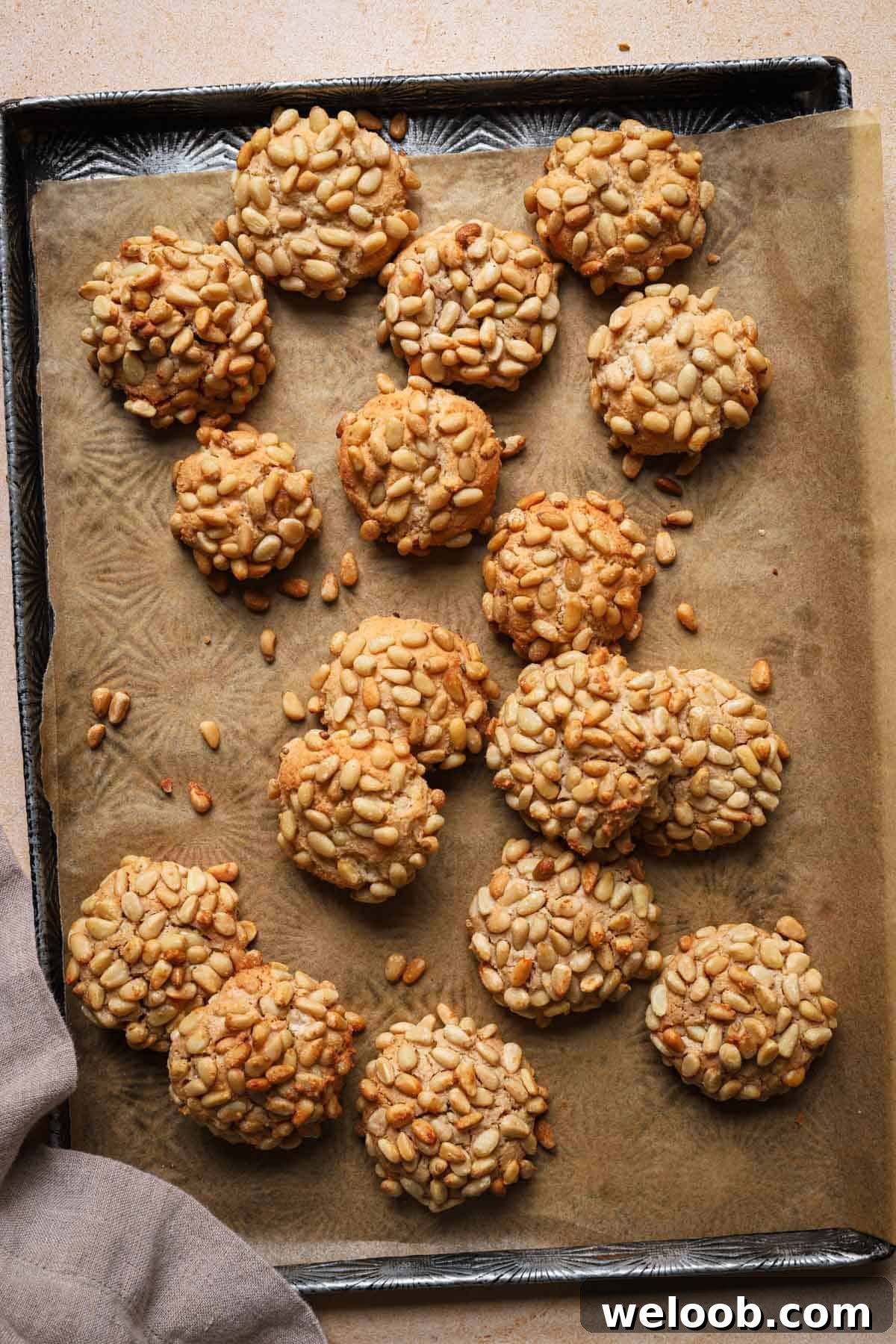
Pignoli cookies are a classic Italian treat known for their chewy almond base and a crisp coating of pine nuts. Their tender, slightly chewy interior and toasted pine-nut exterior make them a beloved Mediterranean cookie.
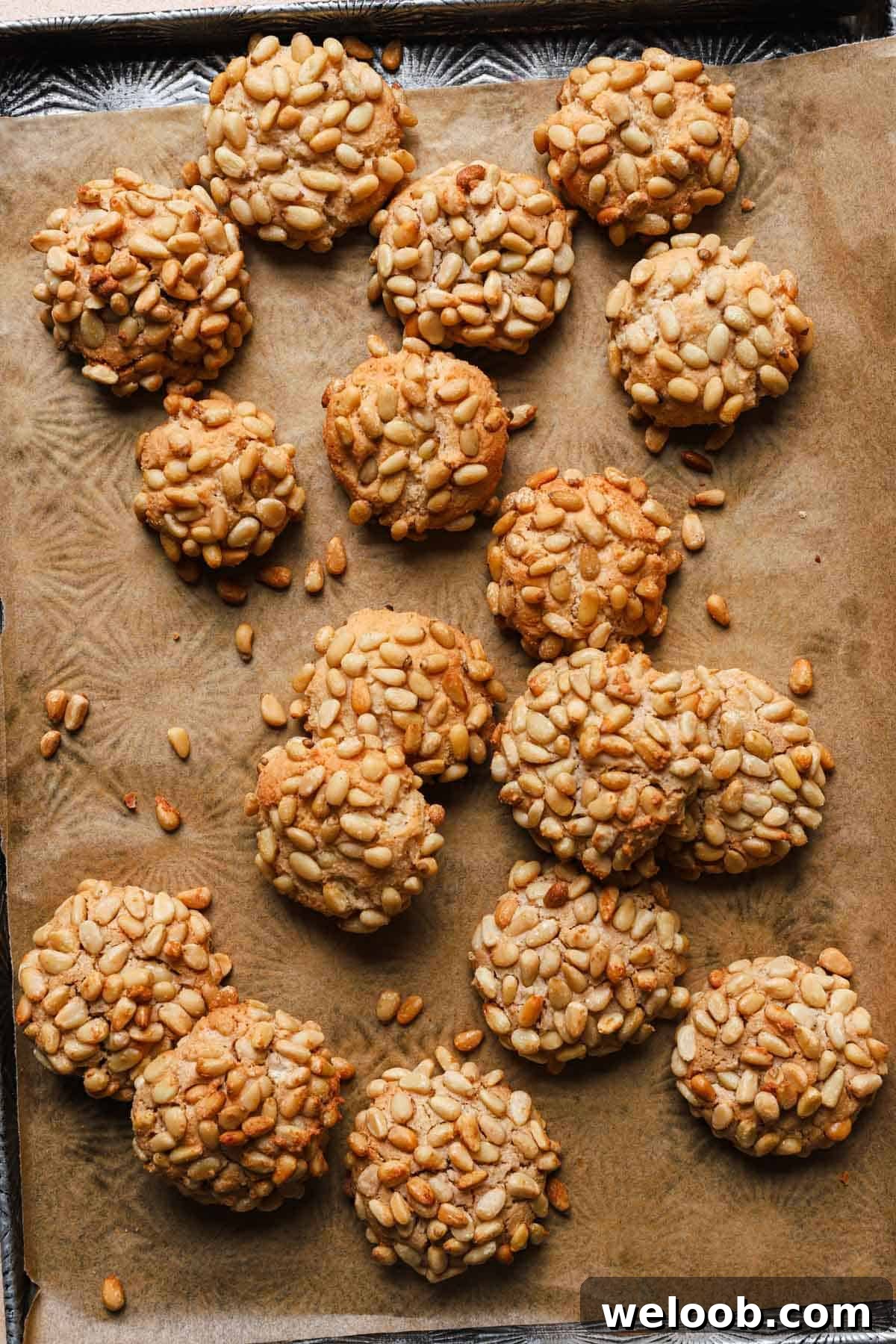
The Secret Behind Pignoli Cookies
Pignoli cookies are a staple of Italian baking, prized for their tender, chewy almond flavor and their outer layer of buttery pine nuts that adds a delicate crunch. Traditionally made with almond paste rather than flour, these cookies achieve a unique texture: soft and chewy inside with a lightly toasted exterior. High-quality almond paste is key — it delivers the almond flavor and keeps the cookies moist while they bake. The pine nuts are not a mere garnish; they contribute a toasty richness and contrasting texture that defines the cookie.
These cookies share the same Mediterranean flavor family as other Italian favorites like Zeppole and Torta della Nonna, but their simplicity and texture make them distinct. Small, slightly domed cookies are typical: easy to share, elegant on a cookie platter, and perfect with a cup of espresso or tea.
Key Ingredients
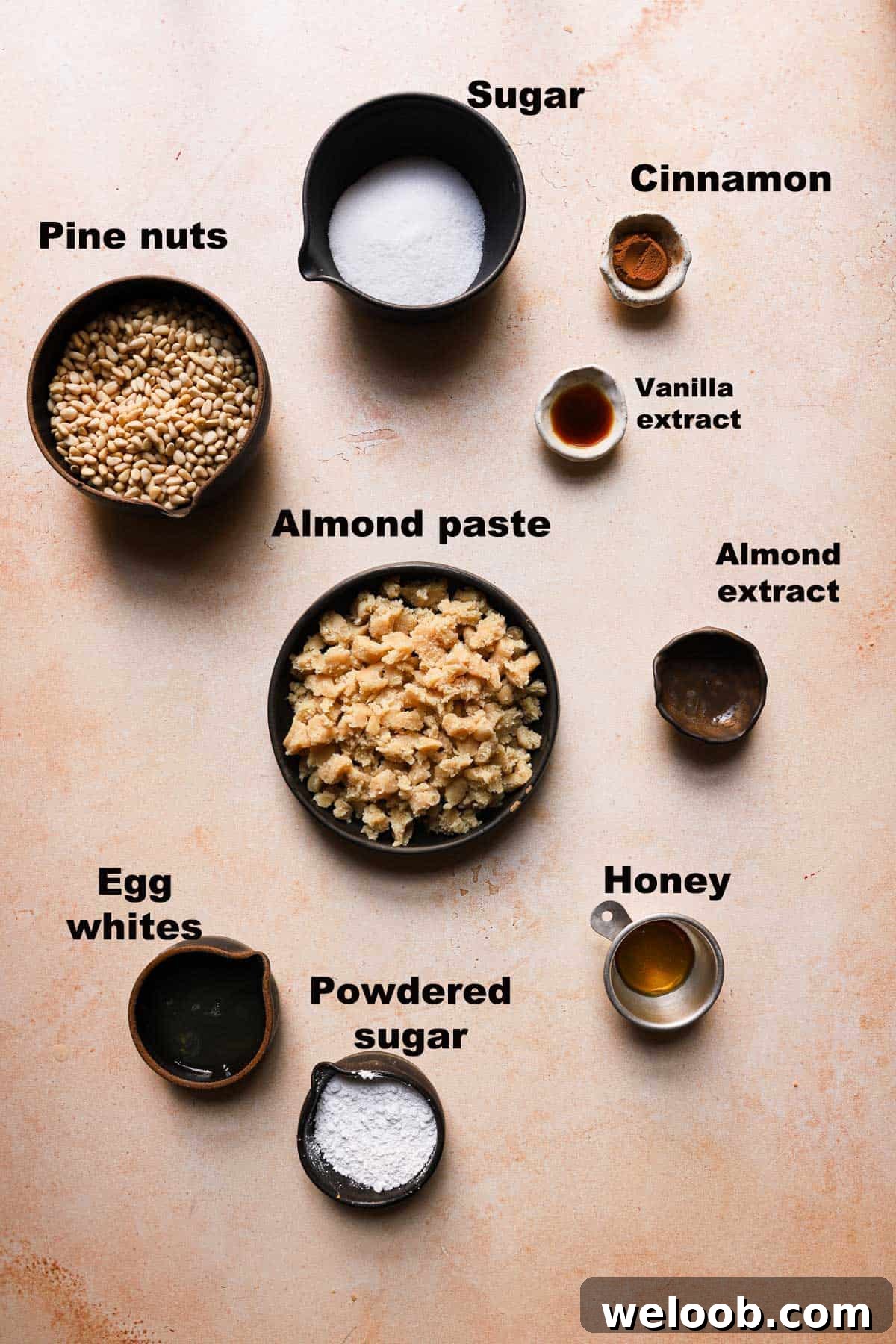
Below is the full ingredient list used in the recipe card. Use the best quality ingredients you can find for the best results.
- Almond paste — Soft, fresh almond paste provides the deep almond flavor and the chewy texture. If you prefer, you can make your own almond paste from almond flour, but do not substitute marzipan (it contains significantly more sugar and less almond intensity).
- Cinnamon — Optional. You can swap a teaspoon of cinnamon for a teaspoon of fresh orange or lemon zest for a brighter citrus note.
- Large egg whites — There is no wheat flour in this recipe; the egg whites bind the dough and contribute to the cookies’ signature chewiness. Use room-temperature egg whites for best mixing and texture.
- Pine nuts — The traditional coating. You may experiment with other nuts, but be aware that flavor and texture will change.
How to Make Italian Pignoli Cookies
This recipe works well when using a food processor, but you can also prepare the dough using a stand mixer with the paddle attachment or a hand mixer. Work quickly so the dough stays easy to handle.
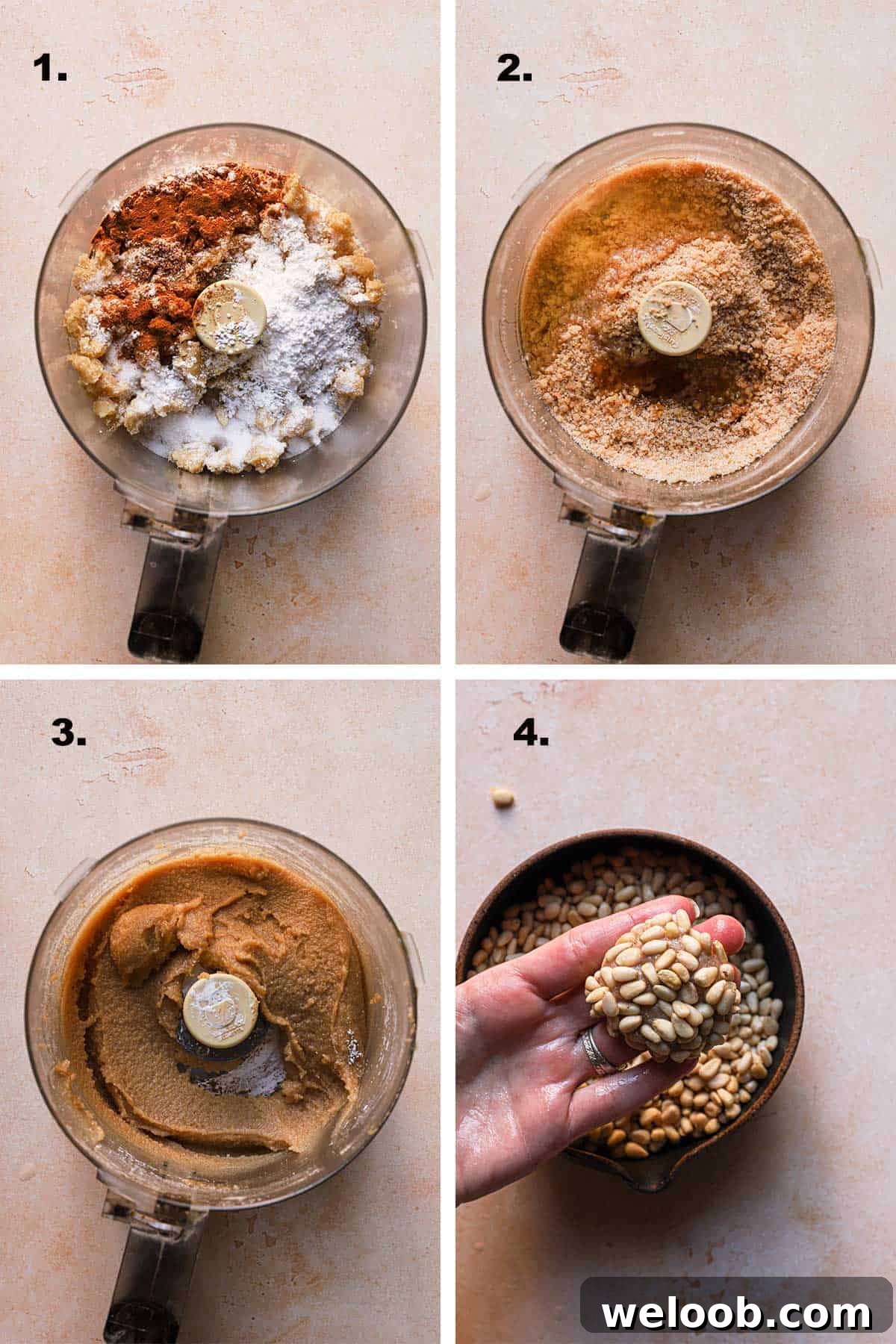
- Cut the almond paste into small pieces (about 1/2 inch) and place them in the bowl of a food processor.
- Add granulated sugar, powdered sugar, and cinnamon, then pulse until the mixture is fine and evenly combined.
- Add the room-temperature egg whites, vanilla, almond extract, and honey. Pulse or process until a sticky, cohesive dough forms.
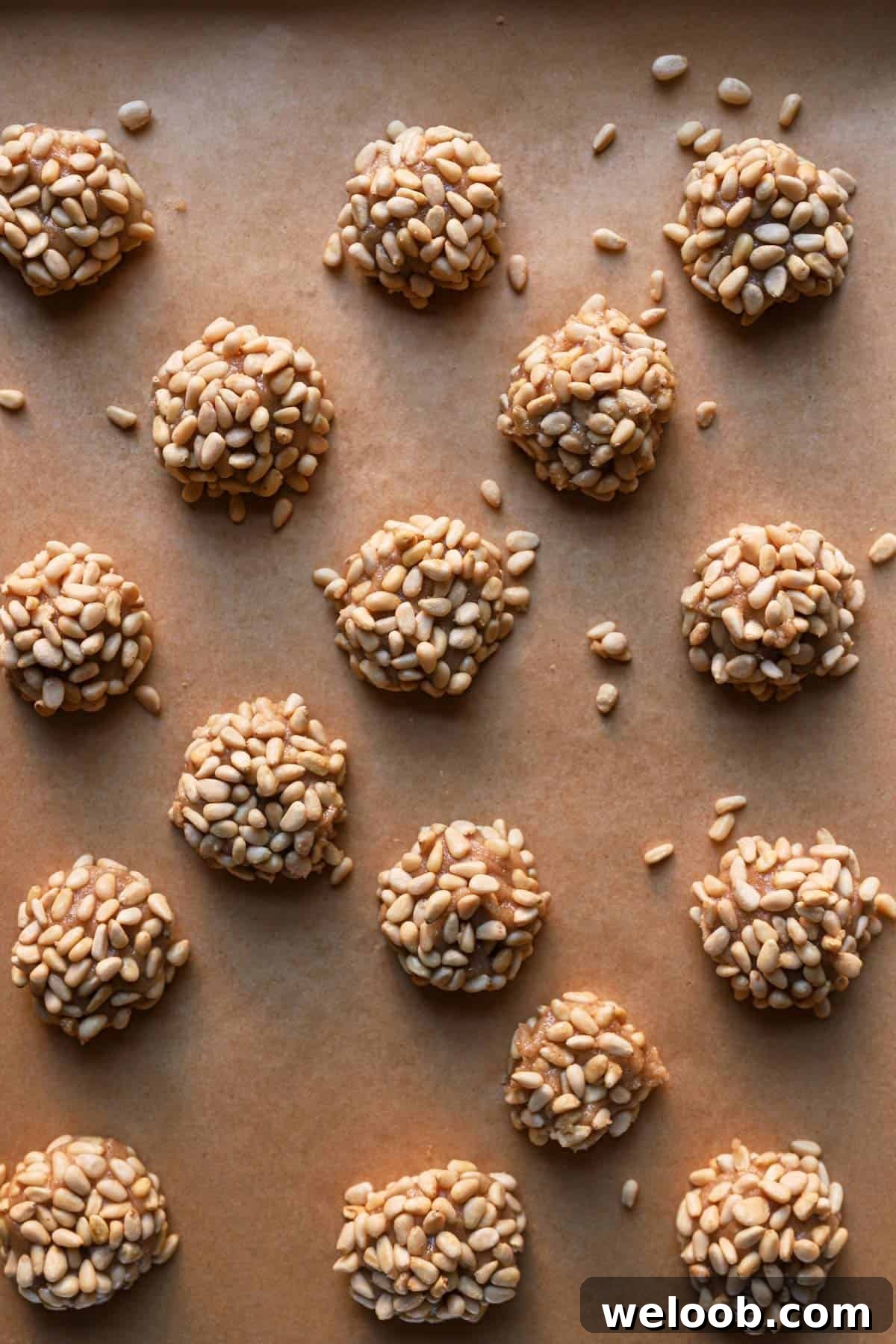
- Pour the pine nuts into a deep, wide bowl. Measure one tablespoon of dough (about 20 g) and roll it between your hands to form a small ball.
- Roll the dough ball in the pine nuts to coat it completely, then transfer to a baking sheet lined with parchment paper. Space the cookies about 1 inch apart.
- Allow the cookie sheet to sit at room temperature for 8 hours or overnight. This resting time helps the surface dry slightly, which creates the classic crisp exterior and chewy center.
- Preheat the oven to 350°F (180°C). Bake the rested cookies for 18–20 minutes, until they puff and the pine nuts are golden brown. Edges should be golden while the centers remain slightly soft.
Recipe: Ingredients
- 2 Cups almond paste (450 g)
- 1/2 Cup + 2 tablespoons granulated sugar (120 g)
- 1/3 Cup powdered sugar (30 g)
- 1 teaspoon cinnamon (optional)
- 2 large egg whites, at room temperature
- 1 tablespoon vanilla extract
- 1 teaspoon almond extract
- 2 teaspoons honey
- 2 Cups pine nuts
Instructions (Concise)
- Process almond paste with both sugars and cinnamon until fine.
- Add egg whites, extracts, and honey; process to a sticky dough.
- Portion one tablespoon of dough, roll into balls, and coat in pine nuts.
- Place on parchment-lined sheet and rest for 8 hours at room temperature.
- Bake at 350°F (180°C) for 18–20 minutes until puffed and golden.
Tips and Troubleshooting
- Fresh ingredients matter: Use fresh almond paste and fresh pine nuts for the best flavor.
- Resting time is important: Allowing the shaped cookies to sit at room temperature helps the surface dry for a crisp exterior and chewy interior.
- Cookie size: Use a cookie scoop for uniform cookies. Small to medium sizes deliver the best chewiness; avoid making them too large.
- Watch baking, not the clock: Overbaking will make them hard. Remove when edges are golden and centers remain slightly soft.
- Sticky dough: If the dough is too sticky to roll, wet your hands slightly and shake off excess water before shaping.
Make Ahead and Storage
- Make ahead: Dough can be prepared and refrigerated for up to 24 hours before shaping and resting. Chilling melds the flavors and can improve texture.
- Room temperature: Store baked pignoli cookies in an airtight container at room temperature for up to five to seven days.
- Freezing: Freeze baked cookies in an airtight container or freezer bag for up to eight weeks. Thaw at room temperature before serving.
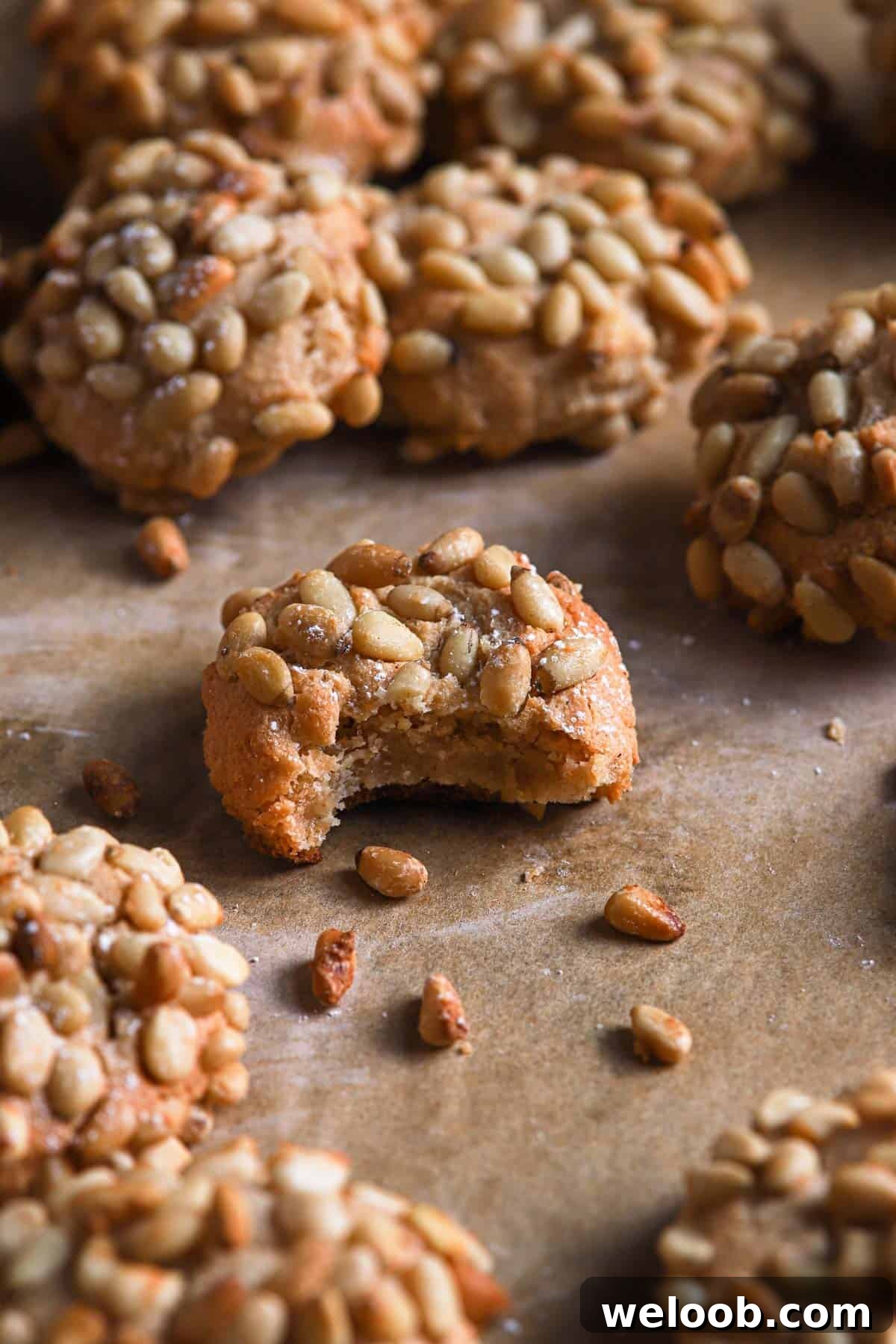
Serving Suggestions and Variations
Pignoli cookies pair beautifully with coffee, tea, or dessert wine. For a citrus twist, add a teaspoon of orange or lemon zest to the dough. If pine nuts are costly or hard to find, try rolling the dough in chopped toasted almonds for a different but still delicious texture and flavor.
For a gluten-free, naturally elegant cookie with deep almond flavor and a toasted nut finish, pignoli cookies are a timeless choice for gatherings, holidays, or everyday baking.
Notes
- Store cookies at room temperature in an airtight container for up to five days.
- To freeze, place baked cookies in a freezer bag and freeze for up to eight weeks.
- If the dough is too sticky to roll, dampen your hands slightly to shape the balls more easily.
- This recipe can be made using a food processor, stand mixer, or electric hand mixer.