
San Sebastian Burnt Cheesecake: Luscious Caramelized Cream
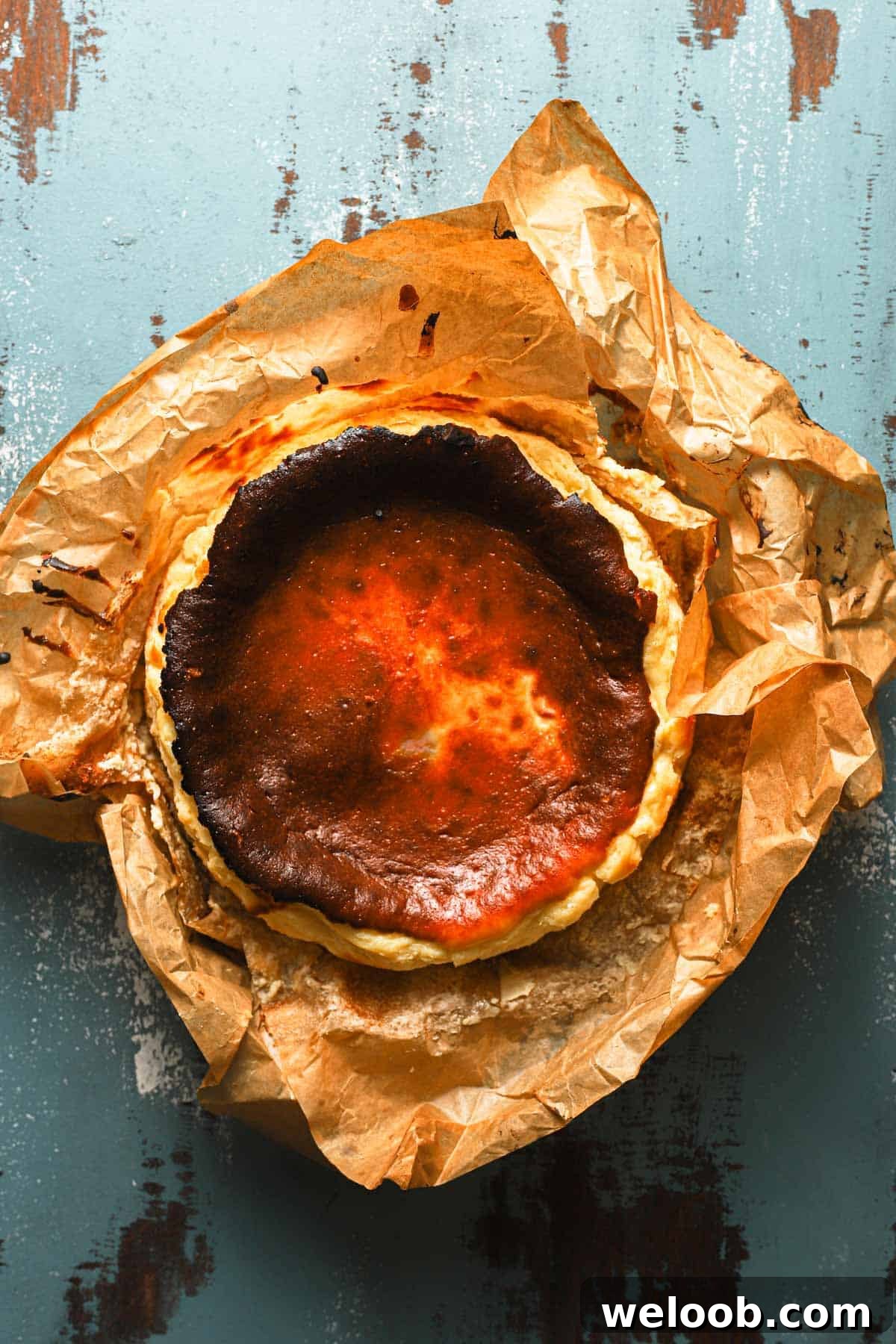
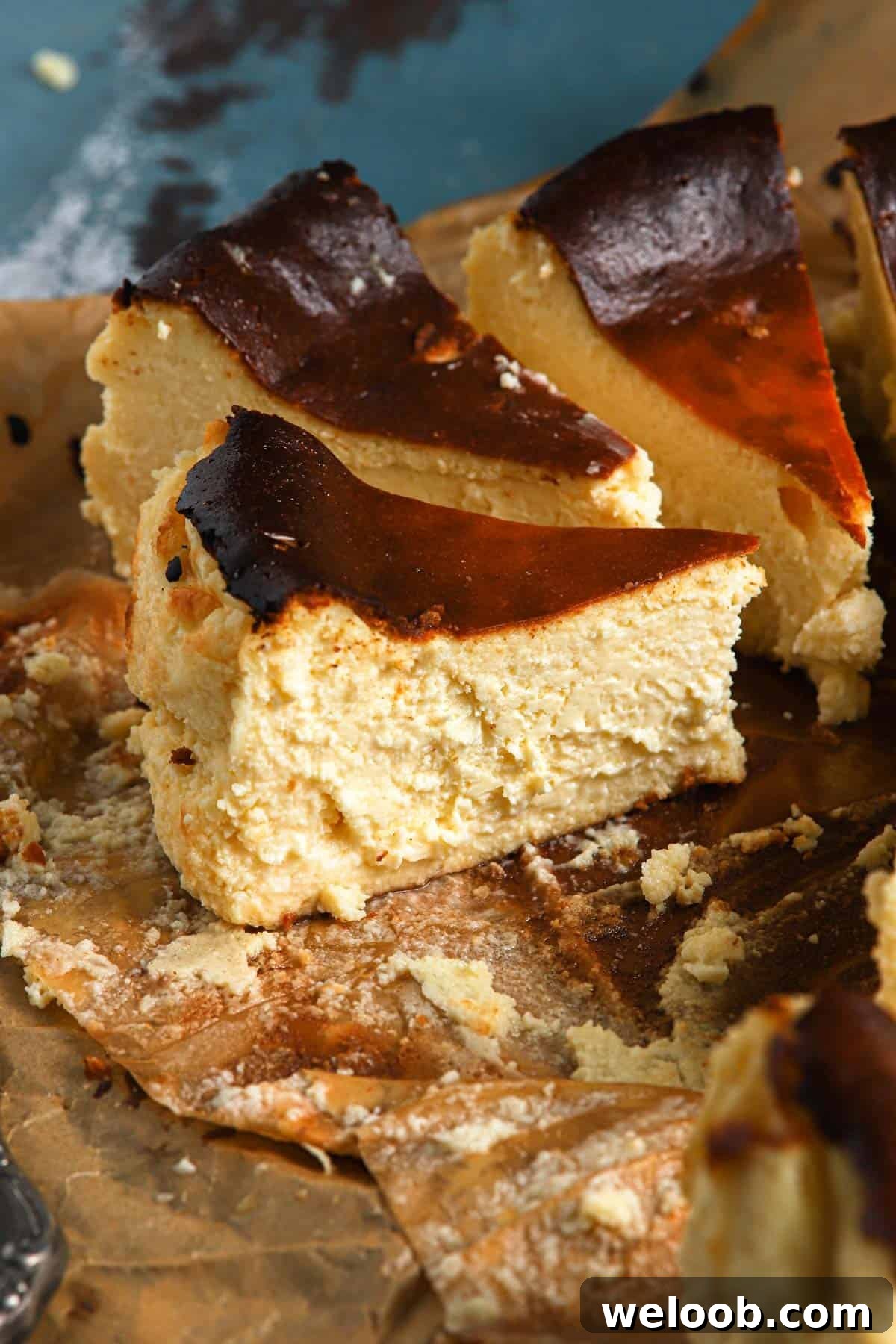
San Sebastian Cheesecake is a tangy, creamy cheesecake with a deeply caramelized, almost burnt top and a soft, custard-like interior—an elegant yet rustic dessert ideal for any gathering.
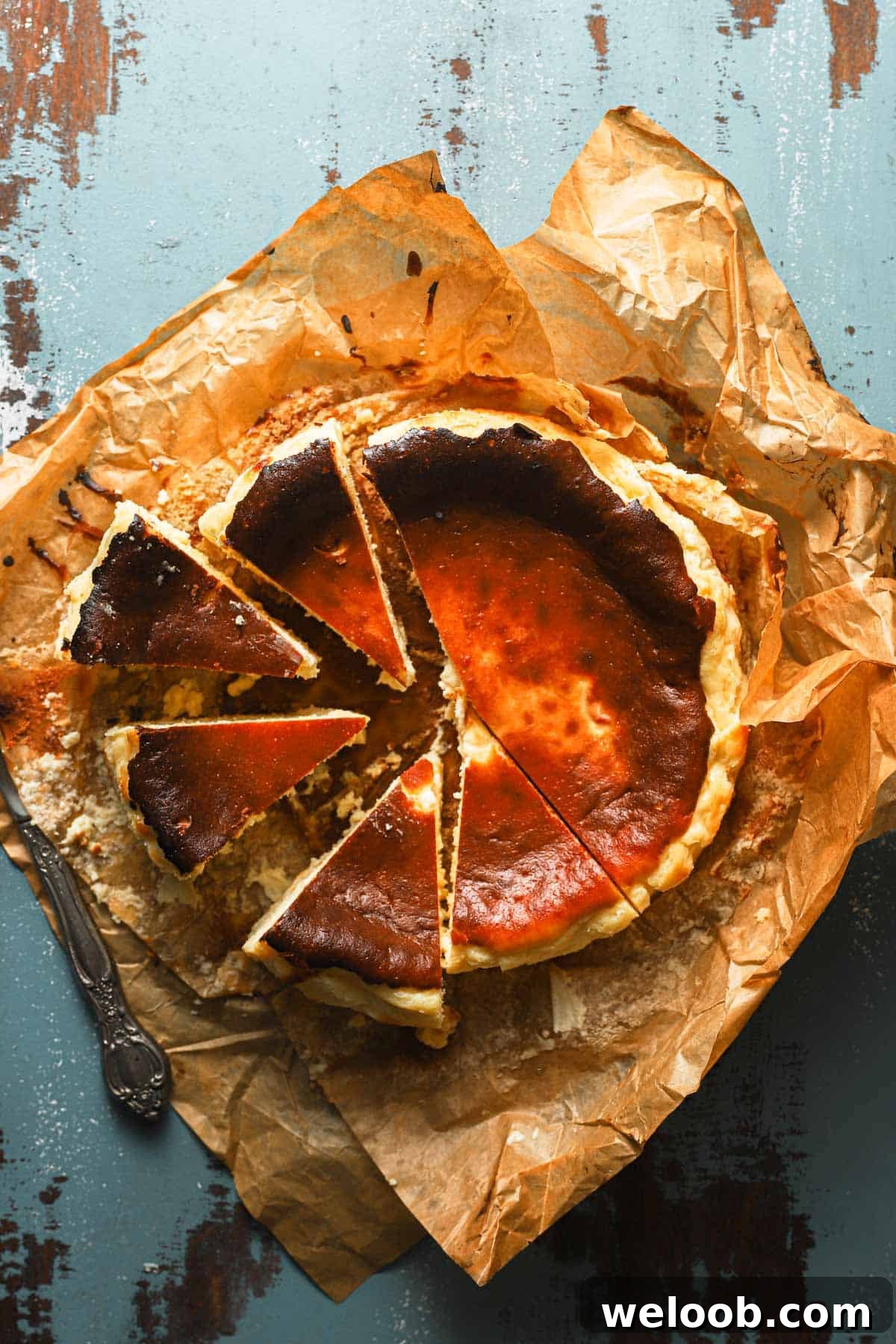
About This Basque Burnt Cheesecake
San Sebastian Cheesecake, often called Basque burnt cheesecake, was made famous by Santiago Rivera at La Viña in San Sebastián, Spain. Unlike classic cheesecakes, this version is baked at a high temperature without a water bath, which creates the signature deeply browned top and a luxuriously creamy center. Its charm lies in its rustic appearance and custard-like texture that contrasts with the caramelized surface.
This recipe uses a handful of common ingredients and relies on technique—room-temperature dairy, gentle mixing, and high heat—to produce a silky interior and a glossy, browned exterior. Read on for ingredient notes, step-by-step instructions, practical tips, flavor variations, and storage advice so you can bake a consistent and delicious Basque cheesecake every time.
Ingredients
See the recipe card below for exact measurements. For best results, bring all refrigerated ingredients to room temperature before starting.
- Granulated sugar
- Flour — a small amount prevents excess liquid without making the cake cakey
- Salt
- Full-fat cream cheese — do not substitute with low-fat or light cream cheese
- Sour cream — can be swapped for heavy cream, but sour cream adds a pleasant tang
- Large eggs and extra egg yolks — yolks enrich the batter and contribute to the cheesecake’s color and texture
- Vanilla extract
Step-by-Step Instructions
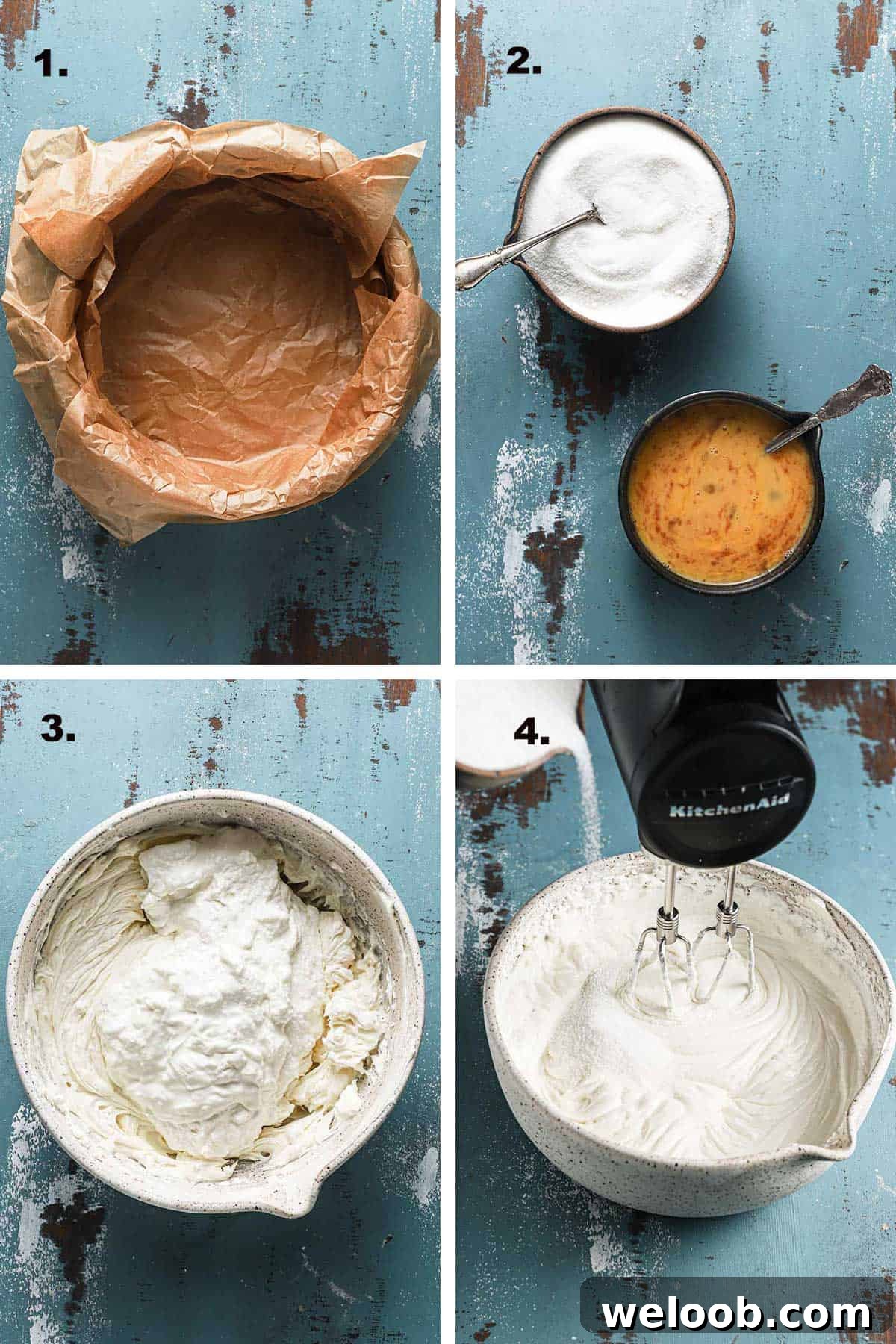
- Preheat the oven to 425°F (about 220°C). Line an 8-inch pan with parchment paper so the sides are fully covered and the paper rises about 2 inches above the rim. A lightly greased springform pan can be used as an alternative.
- In a medium bowl, whisk together sugar, flour, and salt. In a separate measuring cup, combine the eggs, extra yolks, and vanilla.
- Using a stand mixer with a paddle attachment or an electric mixer, beat the cream cheese until smooth, about 30 seconds. Add the sour cream and mix until fully incorporated, scraping the bowl with a rubber spatula as needed.
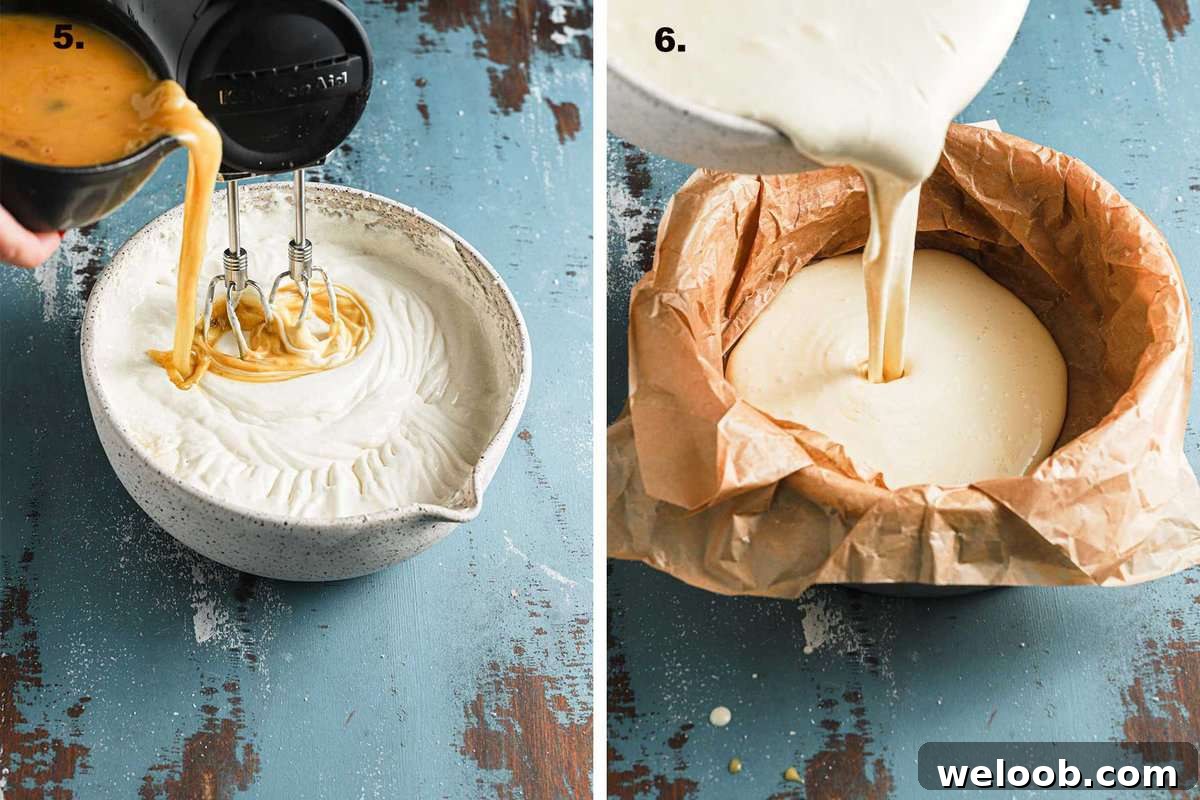
- With the mixer on low speed, slowly add the sugar mixture until combined, then drizzle in the egg mixture gradually while continuing to mix on low. Avoid whipping too much air into the batter.
- Scrape the bowl thoroughly and pour the batter into the prepared pan. Smooth the top gently.
- Bake on the lower-middle rack for 38–42 minutes. The top should be deeply golden to dark brown. The edges will be set while the center still jiggles slightly—the classic indicator that the cheesecake is done.
- Remove from the oven and allow the cheesecake to cool on a rack until it reaches room temperature and the center stops noticeably wobbling. Only then refrigerate or invert to a serving plate.
Tips for Baking the Perfect Burnt Cheesecake
Pan and Preparation
Parchment paper is essential for the classic rustic edges and for removing the cake easily. Make sure the pan is completely lined and the paper extends above the rim so you can lift the cake out cleanly.
How to Tell When It’s Done
Watch the cake rather than relying solely on the timer. The cheesecake is ready when the outer edge is set and the center still has a slight jiggle. Overbaking leads to a curdled texture; underbaking can cause sinking and a runny center when sliced. Fortunately, this style of cheesecake embraces a bit of imperfection—slightly different textures from one bake to the next are part of its appeal.
Cooling
Let the cake cool gradually at room temperature; residual heat continues to set the custard. Only refrigerate once the cake has cooled and the center no longer jiggles. Inverting or cutting too early can ruin the texture.
Color and Oven Notes
Ovens vary—if you don’t get a dark top, check your oven temperature with a thermometer and adjust accordingly. Be mindful of hot spots and rack position. If using convection, consider reducing the temperature slightly to prevent excessive browning.
Flavor Variations and Serving Ideas
The Basque cheesecake is a great base for subtle flavor additions or bold toppings. Here are simple ways to vary it:
- Rub 2 teaspoons of fresh orange or lemon zest into the sugar for a bright citrus note.
- Add 1–2 teaspoons of instant coffee dissolved in the vanilla for a coffee accent.
- Swirl melted chocolate, lemon curd, or a fruit curd into the batter before baking for ribbons of flavor.
- Top chilled slices with stabilized whipped cream and fresh berries for a lighter presentation.
- Drizzle with warm biscoff butter, Nutella, or peanut butter for a decadent finish.
- Spread a generous layer of cherry pie filling on top for a classic, New York–style twist.
Storing, Freezing and Yield
- Storing: Keep the cheesecake covered in the refrigerator for up to 5 days.
- Freezing: Once fully cooled, wrap the cake gently in plastic wrap and place in an airtight container or large freezer bag. Freeze for up to 2 months. Thaw overnight in the refrigerator before serving.
- Yield: This recipe fits an 8- or 9-inch pan and serves about 8–12 people depending on portion size. Baking time may vary slightly with pan size—see notes in the recipe card.
Recipe Card
San Sebastian Cheesecake Recipe
A deeply caramelized top with a silky, custard-like interior—simple ingredients, bold flavor.
Prep Time: 15 mins • Cook Time: 38 mins • Servings: 10 people
Author: Dikla Levy Frances
Ingredients
- 1 1/2 cups granulated sugar (300 g)
- 1 tablespoon flour (7.5 g)
- 1/2 teaspoon salt
- 3 large eggs, room temperature
- 3 large egg yolks, room temperature
- 1 tablespoon vanilla extract
- 2 cups full-fat cream cheese, room temperature (450 g)
- 2 cups full-fat sour cream, room temperature (480 g)
Instructions
- Preheat oven to 425°F (220°C). Line an 8-inch pan with two pieces of parchment paper so the sides are fully covered and the paper extends about two inches above the rim. Alternatively, use a lightly greased springform pan.
- Whisk sugar, flour, and salt together in a medium bowl. In another cup, mix eggs, egg yolks, and vanilla.
- Beat cream cheese with a paddle attachment for about 30 seconds until smooth. Add sour cream and mix until combined, scraping the bowl as needed.
- With mixer on low, slowly add the sugar mixture. Continue on low and gradually add the egg mixture until incorporated. Do not overmix.
- Scrape the bowl clean with a rubber spatula, pour the batter into the prepared pan, and smooth the top.
- Bake for 38–42 minutes on the lower-middle rack. The edges should be set; the center will jiggle slightly.
- Remove from oven and cool completely at room temperature. Refrigerate only after the center no longer jiggles, or invert onto a serving dish when fully cooled.
Notes
- Room-temperature ingredients are key for a smooth batter and even baking.
- Focus on visual and tactile cues: set edges and a slight jiggle in the center indicate doneness.
- If using a 9-inch pan, reduce baking time by about 5–8 minutes.
- Flavor variations include citrus zest, instant coffee, melted chocolate, or fruit curds added to the batter or used as toppings.
- Store covered in the refrigerator for up to 5 days; freeze wrapped for up to 8 weeks and thaw in the fridge overnight.