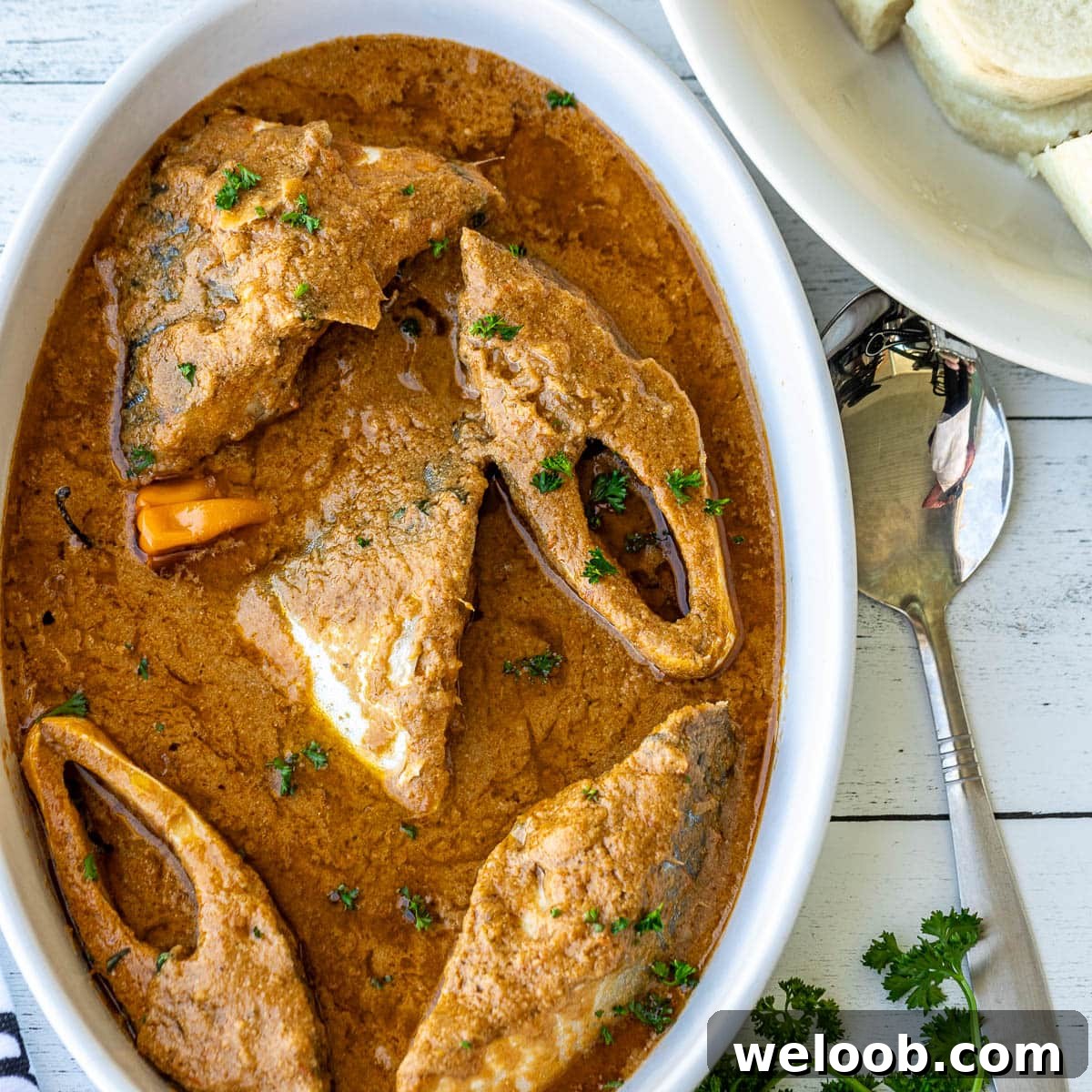
Cameroonian Njangsa Sauce, also called Njangsa Stew, is a creamy, umami-packed sauce that pairs beautifully with boiled plantains, African white yams, or rice.
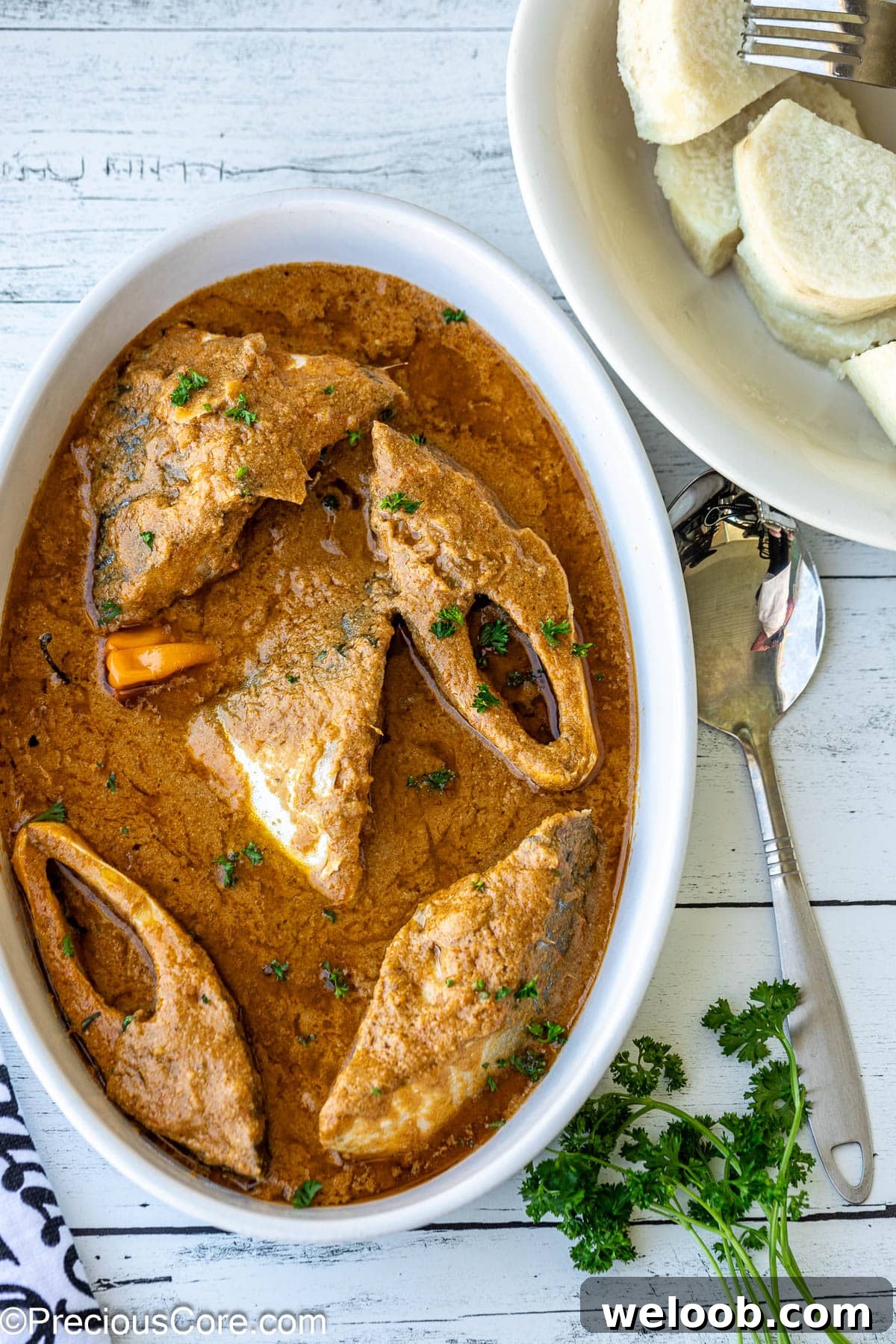
The defining ingredient is njangsa seeds—orange, nutty kernels that give the sauce its creamy texture and distinctive flavor. These seeds are sometimes called njangsang or djangsang and are a staple in Cameroonian cooking.
You can also find njangsa used in other Cameroonian dishes such as pepper soup or as a boost in marinades for roasted fish. Look for whole njangsa seeds at African grocery stores.
This authentic njangsa sauce recipe is simple enough for weeknights yet flavorful enough for special occasions. It’s rich, satisfying, and unmistakably West African.
Table of Contents
- Why You’ll Love This Njangsa Sauce Recipe
- The Ingredients
- How To Cook Njangsa Sauce
- Watch How To Make It
- Variations For Njangsa Sauce
- Frequently Asked Questions About Njangsa
- More Cameroonian Recipes To Try
- Cameroonian Njangsa Sauce Recipe
Why You’ll Love This Njangsa Sauce Recipe
- Bold, layered flavor: The sauce combines nutty njangsa, fresh herbs and aromatics for a rich, savory result.
- Accessible introduction to African cuisine: The method is straightforward and the most time-consuming part is cleaning the fish, which your fishmonger can do for you.
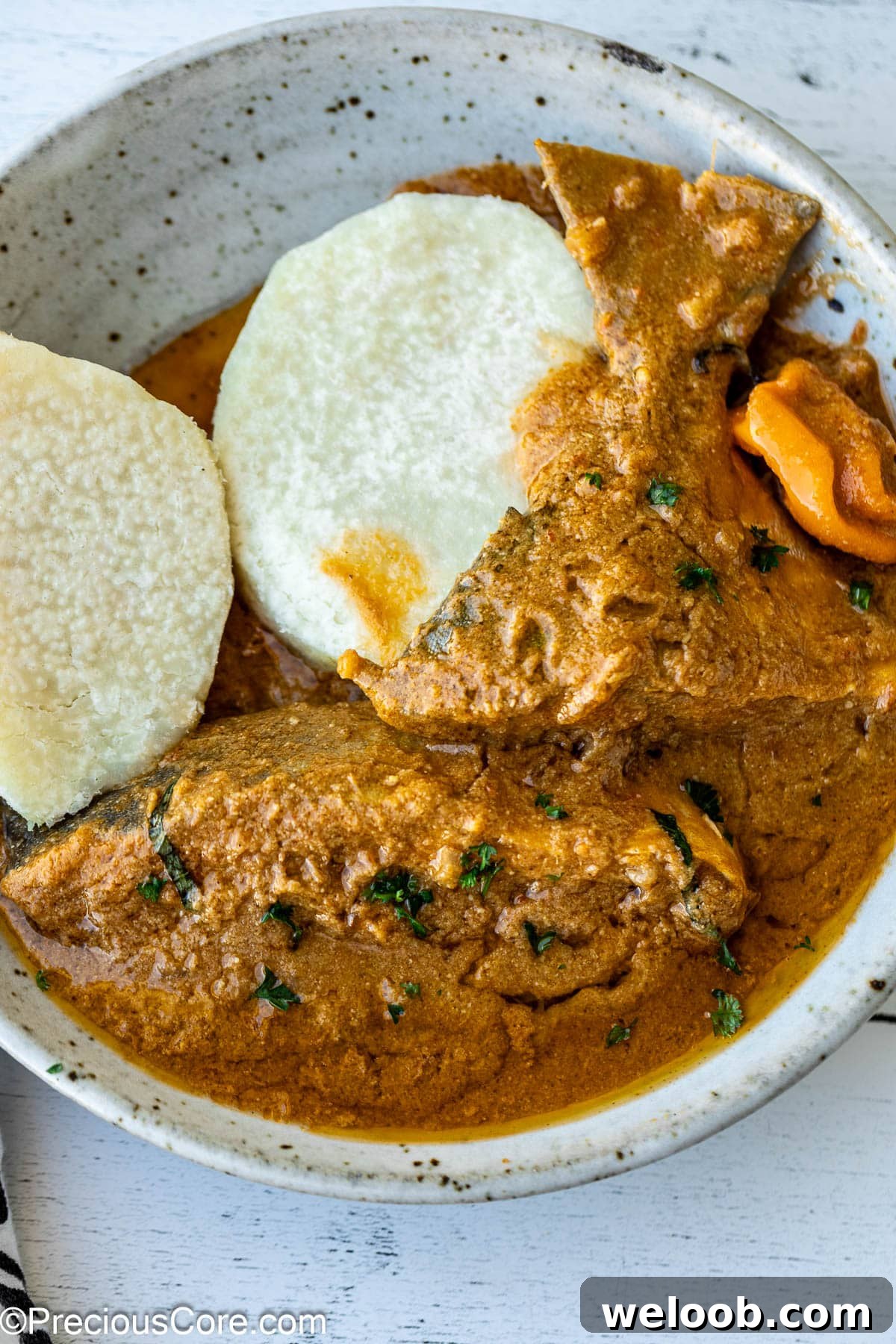
- Versatile: Serve it with rice, boiled or fried plantains, African white yams, taro (cocoyams), potatoes, or any starch you like.
The Ingredients
Ingredients for the fish:
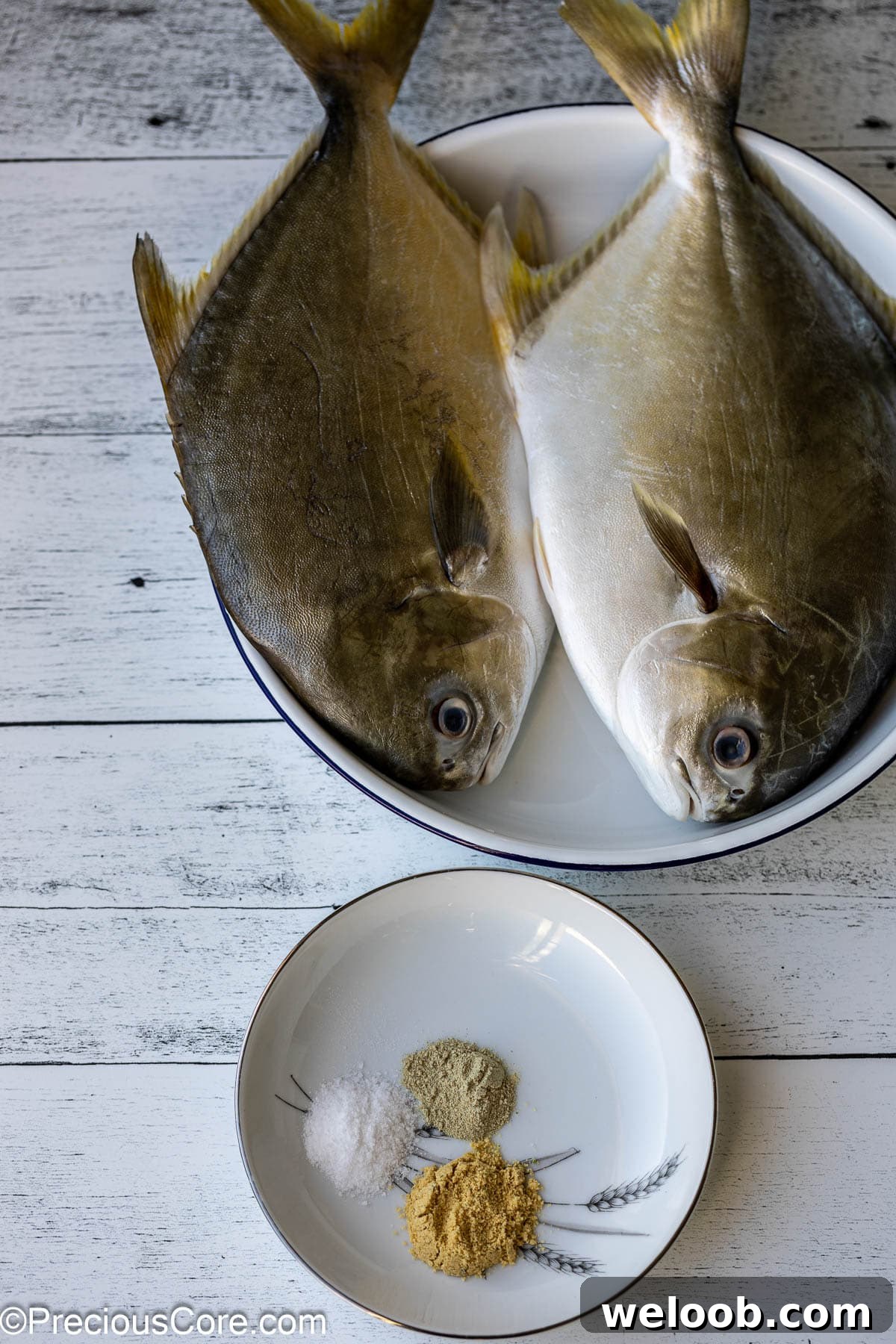
- Fish: Whole fish work best—pompano, mackerel, snapper, trout, sea bass, sea bream, or tilapia. Cooking with the bones adds depth to the sauce.
- Simple seasoning: Salt, ground white pepper and a little chicken bouillon powder or a Maggi cube to season the fish before cooking.
Ingredients for the njangsa sauce:
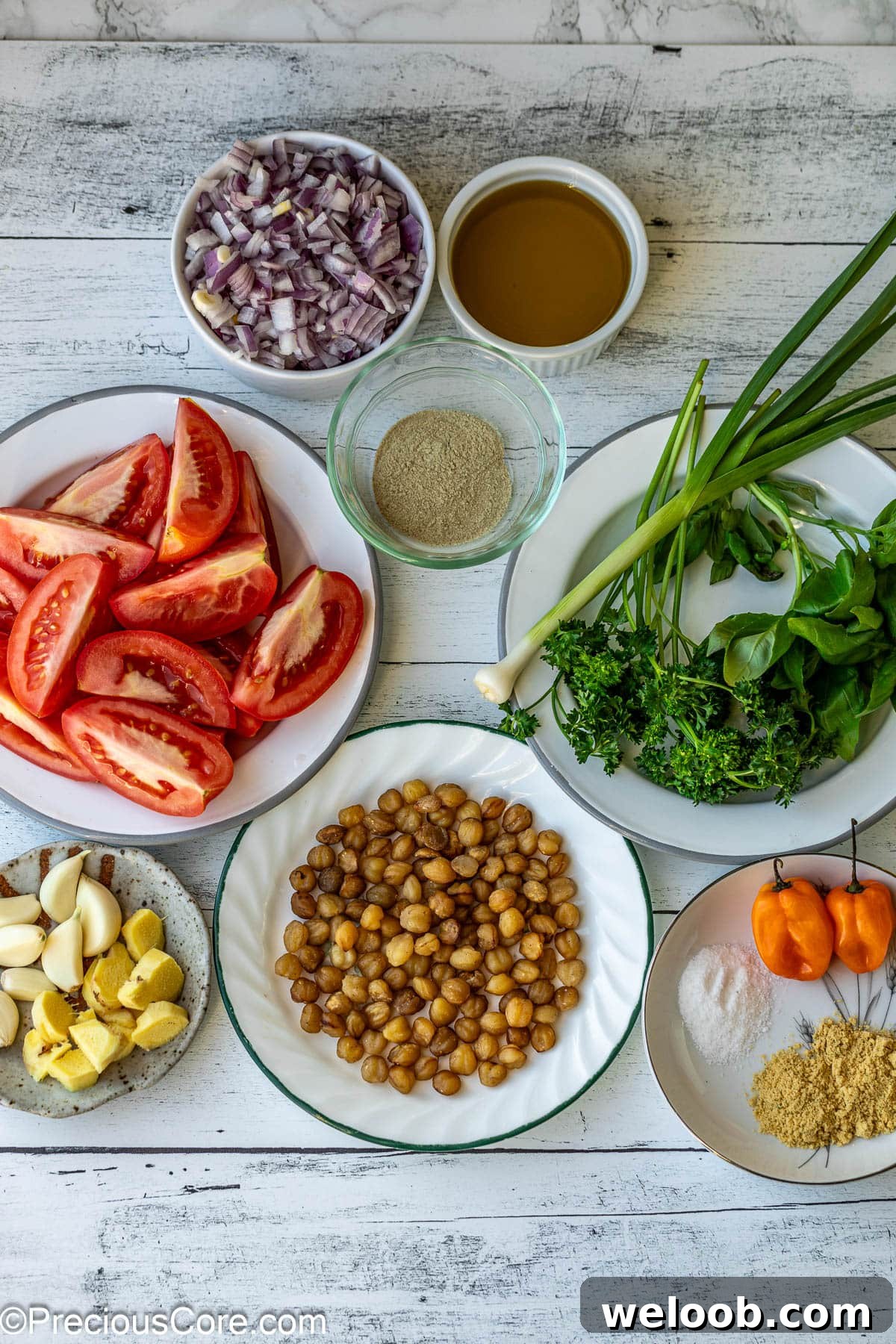
- Njangsa seeds: The central ingredient; seek them at African markets.
- Oil: Use olive oil or a neutral oil such as vegetable, canola or avocado oil.
- Garlic and ginger: Fresh garlic and ginger give the sauce bright aromatic notes.
- Fresh herbs (green seasoning): A blend like parsley, basil, leeks or green onions elevates the sauce. Fresh herbs are encouraged for best flavor.
See the recipe card below for the complete ingredient list with measurements.
Choose fresh fish with firm flesh and no off smell. For convenience, ask your fishmonger to clean and cut the fish into steaks.
How To Cook Njangsa Sauce
Follow these four main steps:
- Prepare the fish: Clean, gut and cut into steaks; season and let rest.
- Sauté aromatics: Heat oil, sauté onions, then cook the blended tomatoes until they reduce and begin to stick slightly.
- Add blended njangsa and herbs: Blend njangsa seeds with garlic, ginger and green herbs; add to the pot with water and seasoning.
- Cook the fish gently: Add the fish, cover and simmer until cooked through, spooning sauce over the fish to baste without stirring.
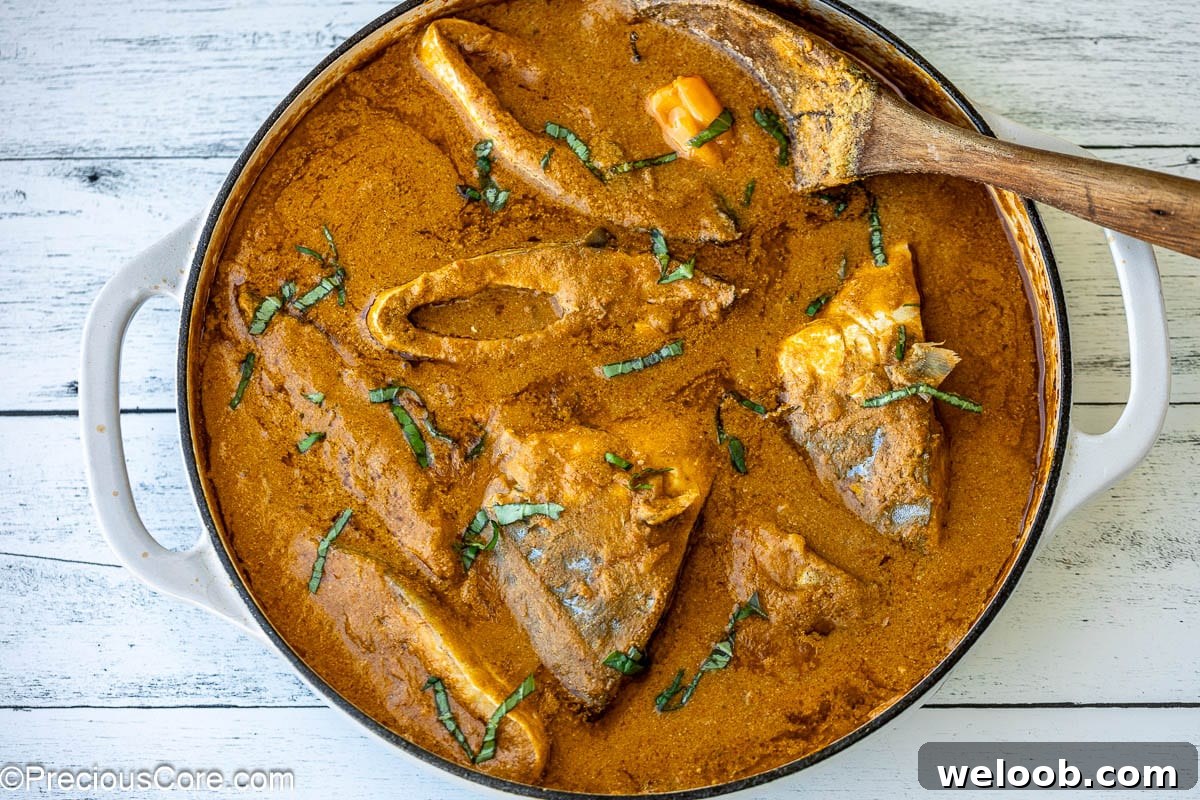
When the fish is in the pot, avoid stirring to prevent it from breaking. Instead, gently spoon sauce over the fish as it cooks.
Watch How To Make It
There is a video demonstration showing how to prepare njangsa sauce. It walks through preparation, blending the seeds and herbs, and the gentle cooking method for the fish.
Variations For Njangsa Sauce
Ways to adapt this njangsa sauce:
- Different proteins: Use bone-in chicken (thighs or drumsticks), pork (pork trotters recommended) or beef. These alternatives require longer cooking times than fish.
- Make it spicy: Add a blended habanero or scotch bonnet with the herbs for extra heat.
- Swap herbs: Try celery leaves, thyme or different green seasoning blends to vary the flavor.
Frequently Asked Questions About Njangsa
Njangsa has an earthy, nutty flavor and, when blended, contributes a smooth, creamy body to soups and stews.
The scientific name is Ricinodendron heudelotii. It goes by regional names across West and Central Africa.
Store whole njangsa kernels in an airtight container in a cool, dry place for up to a year.
More Cameroonian Recipes To Try
Jollof Rice With Chicken
Green Seasoning Recipe
How To Make Puff Puff
If you make this recipe, please leave a star rating below. Your feedback helps others find the recipe and I love hearing from you. Thank you!
Cameroonian Njangsa Sauce
Rate
Print Recipe
Ingredients
FOR THE FISH
- 2 pounds whole fish I used pompano
- ½ teaspoon salt
- 1 teaspoon chicken bouillon powder or 1 Maggi seasoning cube
- ¼ teaspoon ground white pepper
FOR THE SAUCE
- ½ cup olive oil or any neutral oil
- 1 medium onion diced
- 4-5 large Roma tomatoes cut into chunks
- 7 garlic cloves peeled
- 3 inches ginger root peeled and diced
- 4 sprigs parsley
- 4 sprigs basil
- ½ large leek or 1 green onion
- 2 teaspoons ground white pepper
- ½ cup Njangsa seeds from an African market
- 1 teaspoon salt
- 2 teaspoons chicken bouillon powder or 2 small Maggi cubes
- 2 habanero peppers or scotch bonnet
- Sliced basil or minced parsley for garnish
Instructions
-
Prep the fish: Trim fins, cut into steaks, remove entrails and rinse until water runs clear. Your fishmonger can do this for you.
-
Season the fish with salt, white pepper and bouillon powder or a Maggi cube. Set aside while preparing the sauce.
-
Heat oil in a medium pot over medium-high heat. Sauté diced onion until fragrant. Blend tomatoes to a paste and add to the pot. Cook undisturbed 5 minutes, then stir and continue cooking until the tomatoes begin to stick, about 5 more minutes.
-
Blend leek or green onion, parsley, basil, garlic, ginger and njangsa seeds with 1 cup water. Pour this into the pot, rinse the blender with about 3 cups water and add to the pot. Stir in the habanero pepper, remaining salt and bouillon powder.
-
Add the seasoned fish to the pot. Cover and cook 10–15 minutes until the fish is cooked through. Spoon sauce over the fish to baste; avoid stirring to prevent breaking the fish.
-
Adjust seasoning and sauce thickness as needed. Thin with water if you prefer a lighter sauce and re-season to taste.
-
Garnish with sliced basil or minced parsley and serve with boiled rice, plantains or African white yams.
Video
Notes
Tomatoes: Roma tomatoes are ideal for their flesh and lower acidity, but other varieties are fine.
Fresh spices: Fresh garlic, ginger and herbs give the best flavor—take time to prep them well.