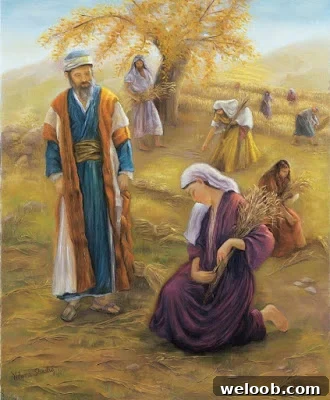
The Bible contains many inspiring stories, and the story of Ruth and Boaz stands out as a timeless example of faithfulness, character, and God‑centered love. For singles seeking guidance, their story offers practical lessons about loyalty, humility, and responsibility.
Ruth’s loyalty is one of the most striking aspects of her character. When she spoke to Naomi she declared, “Your people will be my people, and my God will be your God” (Ruth 1:16). That commitment went beyond words—after her husband’s death she chose not to return to her family or seek comfort elsewhere. She stayed with Naomi and followed her to a new land. Today, many struggle to maintain loyalty in relationships; Ruth’s devotion shows what steadfast commitment looks like.
Ruth also demonstrated remarkable tolerance and emotional maturity. Naomi, like all people, had flaws and moments of weakness, yet Ruth remained patient and supportive. Healthy relationships require the ability to live with another person’s imperfections without holding grudges over small offenses. Learning to be tolerant prepares a person for the give‑and‑take of marriage.
Selflessness marks another key trait of Ruth. She left her own homeland and kin to accompany Naomi into unfamiliar territory. Rather than focusing on her own needs, she prioritized the well‑being of someone else. This kind of sacrificial love mirrors the example taught by Jesus and is essential in any lasting partnership.
Hard work defined Ruth’s day‑to‑day life (Ruth 2:2‑7). She did not wait passively for circumstances to change; she went out into the fields to provide for herself and Naomi. Boaz first noticed her because she was diligent and industrious. For singles, being proactive and industrious not only builds character but also attracts trustworthy partners.
Obedience and respect were also part of Ruth’s strength. When Naomi instructed Ruth to follow a bold plan involving Boaz, Ruth listened and acted without argument. Respecting elders and those with greater experience can open doors to wisdom and blessing. Stubbornness and pride are rarely assets in relationships; humility and deference often bring long‑term rewards.
Turning to Boaz, we find a man of integrity and responsibility. He owned fields and worked them, showing he could provide and carry adult responsibilities. In contrast to those who avoid work and seek to be supported by others, Boaz exemplifies steady provision. Scripture emphasizes the importance of providing for one’s household; this is a basic expectation of mature partnership.
Boaz was also generous. He instructed his workers to leave extra grain in the fields for gleaners, ensuring that the poor and vulnerable could gather food (Ruth 2:22). A partner who cares about the needs of others and shows compassion is more likely to be loving and generous within a marriage.
Furthermore, Boaz preserved dignity and practiced restraint. When he discovered Ruth at his feet, he respected her and sought to learn about her character rather than taking advantage of the moment. True intimacy grows out of knowing and valuing a person, not exploiting physical attraction.
Both Ruth and Boaz had histories, yet neither was defined by their pasts. Many singles allow previous mistakes or difficult circumstances to block future possibilities. The story of Ruth and Boaz shows that God can bring new beginnings regardless of where you have been. Ruth was a widow; Boaz was older than many typical suitors—neither detail prevented God from uniting them and including their line in the ancestry of Jesus (Ruth 3:10).
Ultimately, their relationship worked because both brought humility, faithfulness, and responsibility to the union. The book of Ruth is short but rich with lessons about character, community, and God’s provision. Singles would do well to study it and reflect on which qualities they can cultivate in their own lives.
What qualities from Ruth and Boaz resonate with you most, and which ones are you ready to adopt? Share your thoughts in the comments below.
Stay sweet!
This post first published on this blog on May 28, 2015.