
Classic Greek Salad Recipe with Feta, Tomatoes, and Olives
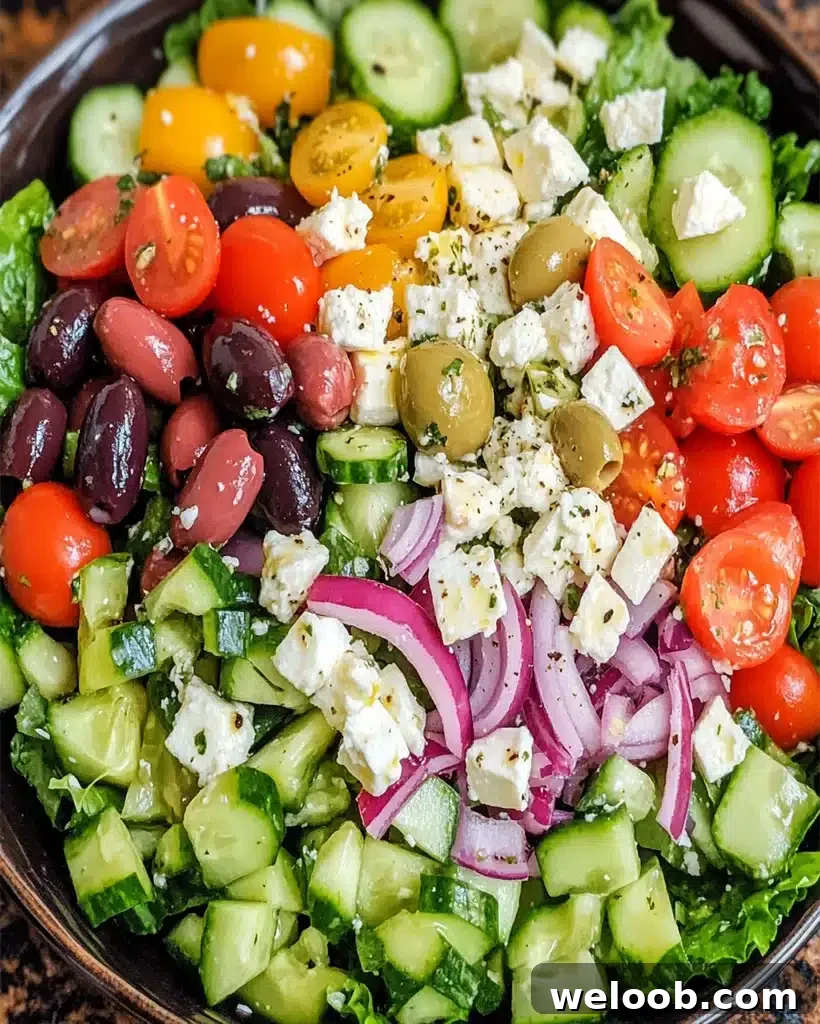
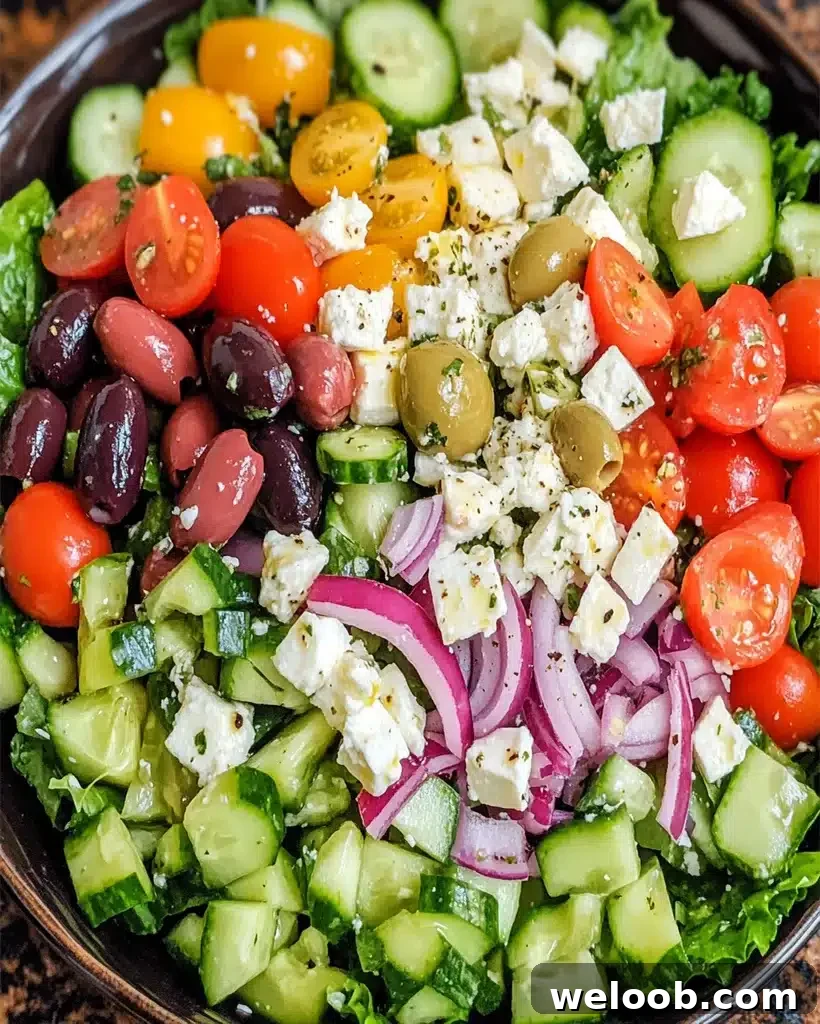
Greek Salad Recipe – Fresh, Easy, and Flavorful Mediterranean Dish
Author: Patri
Description
Bright, simple, and bursting with Mediterranean flavor, this Greek salad recipe combines crisp vegetables, briny Kalamata olives, and creamy feta tossed in a tangy vinaigrette. It works beautifully as a side dish, a starter, or a light main when paired with grilled protein. The recipe is easy to prepare, highly adaptable, and highlights fresh ingredients for a clean, satisfying dish.
Ingredients
Salad Ingredients
- 6–8 cups chopped romaine lettuce (approx. 32 oz bag or 1–2 heads)
- 1/2 cup thinly sliced red onion
- 1/2 cup grape or cherry tomatoes, halved
- 1/2 cup diced cucumber
- 1/2 cup chopped green bell pepper
- 1/2 cup pitted Kalamata olives
- 1/2 cup cubed or crumbled feta cheese
Dressing Ingredients
- 1/4 cup extra virgin olive oil
- 1/8 cup red wine vinegar
- 1 tablespoon lemon juice
- 1 tablespoon honey
- 1 teaspoon dried oregano
- 1 teaspoon Dijon mustard
- 1/4 teaspoon kosher salt
- 1/4 teaspoon freshly ground black pepper
How to Make Greek Salad — Step by Step
- Prepare the base: In a large bowl, combine the chopped romaine, sliced red onion, halved tomatoes, diced cucumber, chopped bell pepper, pitted Kalamata olives, and feta. Toss gently so the ingredients are evenly distributed.
- Make the dressing: In a small bowl, whisk together the olive oil, red wine vinegar, lemon juice, honey, dried oregano, Dijon mustard, salt, and pepper until emulsified. Alternatively, place all dressing ingredients in a jar, seal, and shake vigorously.
- Dress and serve: Pour the dressing over the salad and toss lightly to coat. For a more rustic presentation or to accommodate individual tastes, serve the dressing on the side so guests can add the amount they prefer.
Notes and Helpful Tips
- Use very fresh produce: Crisp vegetables make this salad more flavorful and texturally satisfying.
- Chill briefly: Refrigerate the salad for 10–15 minutes before serving to sharpen the flavors and keep the greens crisp.
- Adjust the dressing: If you like more tang, add a splash of balsamic or extra lemon juice. For a slightly sweeter dressing, increase the honey by a teaspoon.
- Feta texture: Crumbled feta gives a creamy feel, while cubed feta provides distinct bites—choose based on preference.
- Marinated olives: Use marinated Kalamata olives to add depth and a larger flavor profile without extra prep.
- Traditional variation: For a more classic Greek salad, omit the lettuce and rely on tomatoes, cucumbers, onions, olives, and feta.
Serving Suggestions
This Greek salad pairs well with grilled chicken or lamb skewers for a complete Mediterranean meal. Serve alongside crusty garlic bread to soak up any remaining dressing, and offer chilled white wine or lemonade to balance the savory flavors. It also makes a bright accompaniment to roasted fish or as part of a mezze spread.
Nutritional Information
This Greek salad is nutrient-dense and naturally balanced. It’s high in fiber from the vegetables, contains healthy fats from the olive oil and olives, and is relatively low in carbohydrates—making it suitable for many low-carb meal plans.
Estimated nutrition (per serving)
- Calories: 400 kcal
- Fat: 30 g
- Carbohydrates: 10 g
- Protein: 8 g
- Fiber: 5 g
- Vitamin C: ~50% of the Daily Value
- Calcium: ~20% of the Daily Value
Storage and Leftovers
Store leftover salad in an airtight container in the refrigerator for up to two days. To preserve texture, keep the dressing separate and toss just before serving. Reheating is not recommended—this salad is best enjoyed chilled.
Frequently Asked Questions (FAQs)
- Can I prepare this ahead of time? Yes. Chop the vegetables and store them separately from the dressing up to a day in advance; combine just before serving for the freshest texture.
- Can I add protein? Absolutely. Grilled chicken, shrimp, or a scoop of chickpeas all make this salad more filling.
- Is this keto-friendly? The salad is naturally low in carbs and can work well in a keto or low-carb plan when portioned appropriately.
- What can replace feta? Soft goat cheese is a good substitute, or omit the cheese for a dairy-free version.
Related Recipes
- Greek Lentil Soup Recipe – Healthy, Vegan, and Delicious
- Tzatziki Chicken Salad Recipe – Fresh Mediterranean Flavors
Conclusion
This Greek salad recipe brings fresh Mediterranean flavors to your table with minimal effort. It’s adaptable, nutritious, and ideal for warm-weather meals or as a bright side year‑round. Try the traditional version without lettuce or customize the dressing and toppings to suit your tastes. Enjoy and feel free to experiment—this salad welcomes variation.