
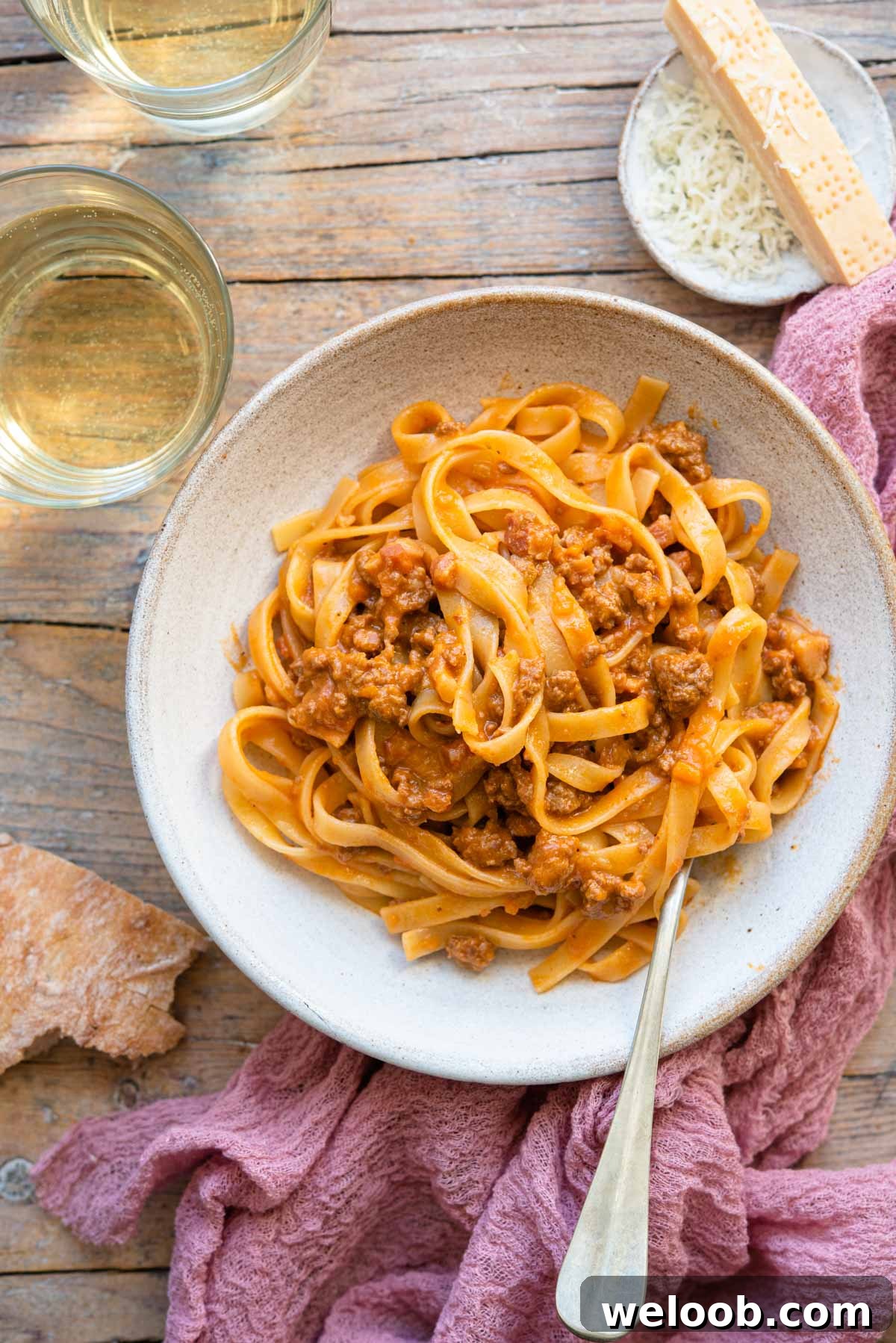
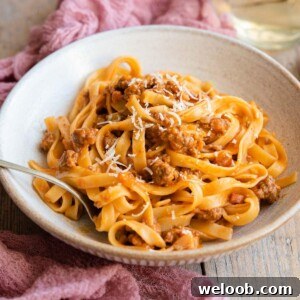
Authentic Bolognese Sauce (Ragù alla Bolognese) is one of the most comforting and satisfying dishes you can make. This rich beef ragù combines pancetta, white wine, strained tomatoes and milk, then is traditionally served with tagliatelle. The technique is straightforward and requires minimal prep, but slow simmering develops the deep, classic flavour.
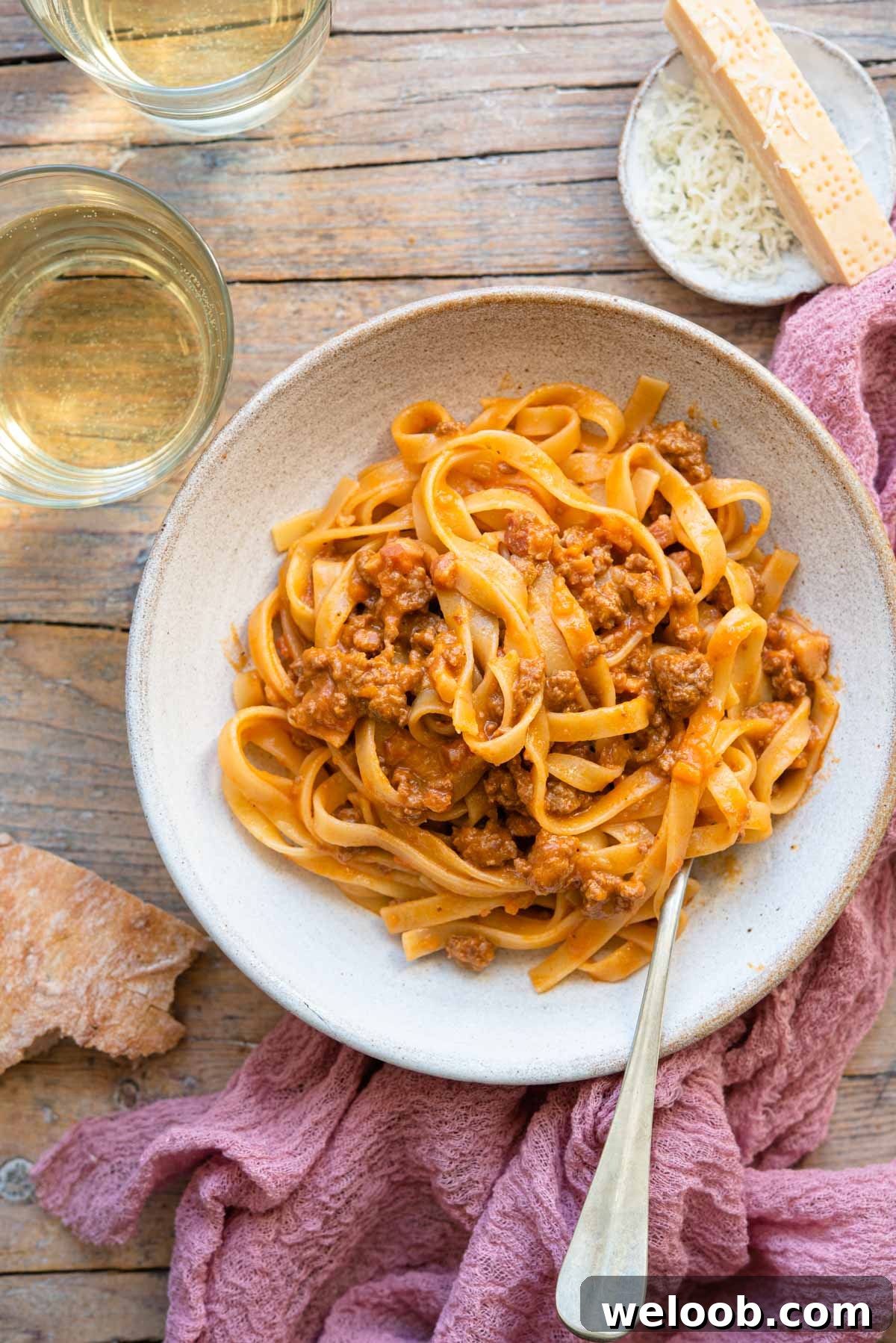
Many versions of “Bolognese” found online or in restaurants differ from the original. The authentic ragù is simple in ingredients but relies on a few important choices and a long, gentle cook to reach its full potential.
In October 1982 the Bologna Chamber of Commerce received the recipe from the Delegazione di Bologna dell’Accademia Italiana della Cucina as the official traditional Ragù alla Bolognese. While home cooks in Bologna each have their own small variations, following this classic approach will give you an unmistakable, traditional result.
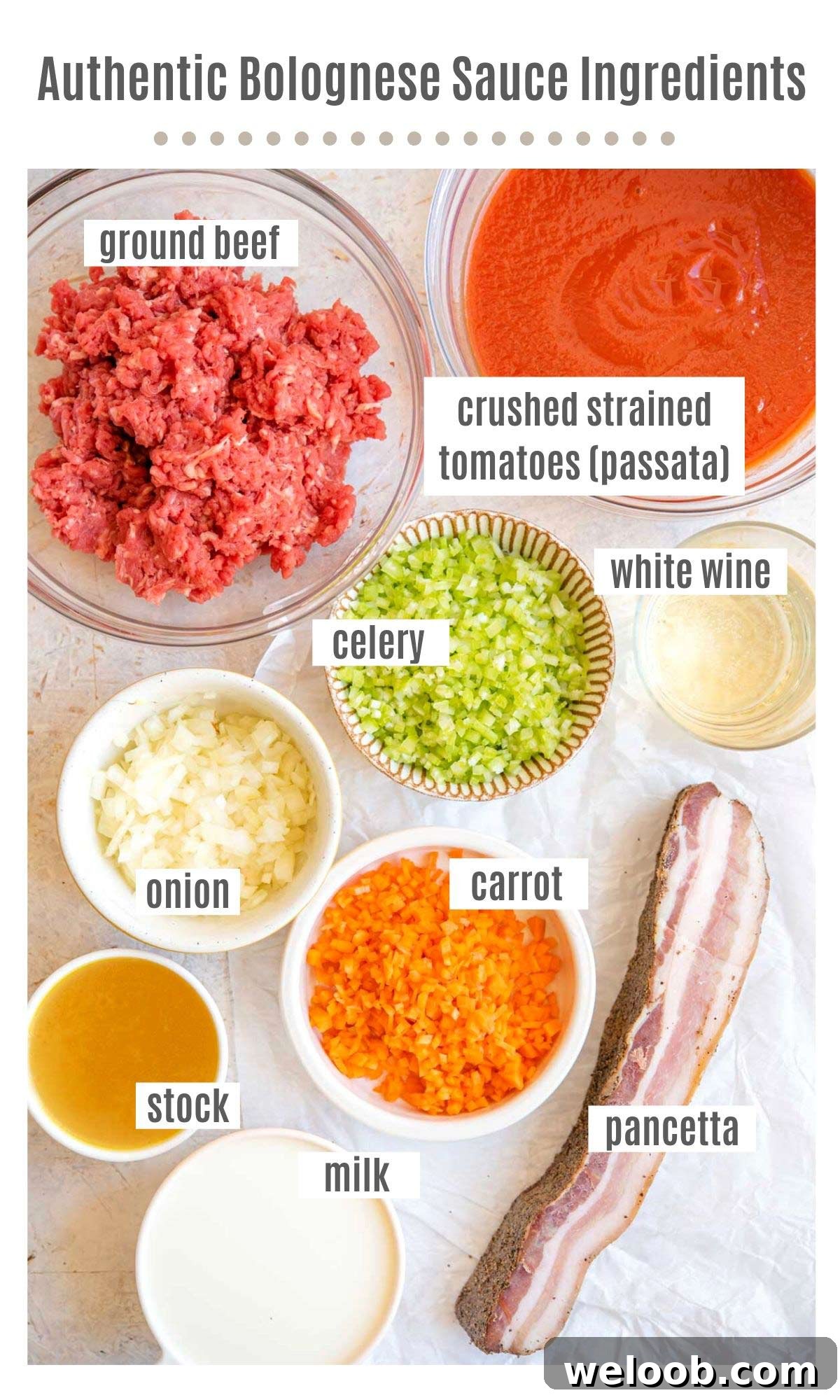
What you need to make it
The ingredient list is short. Choosing good-quality items and following a few key points will make a big difference to flavour.
Ground beef: Use good-quality beef (organic, grass-fed if possible). Don’t pick an ultra-lean mince — some fat carries flavour.
Pancetta: Ideally use a whole piece and chop it finely. Pancetta can be salty, so hold off adding salt until the end and taste the ragù first.
Milk: Milk is essential in the authentic recipe: it softens the tomatoes’ acidity and enriches the sauce. Some cooks add cream when serving with dried pasta, but milk provides the classic balance without becoming overly heavy.
How to make Bolognese Sauce – step by step
1. Finely chop the carrot, celery, onion and pancetta.
2. Warm the olive oil in a large pot. Add the chopped vegetables and pancetta and sauté gently until the vegetables soften without browning, about 5–10 minutes.
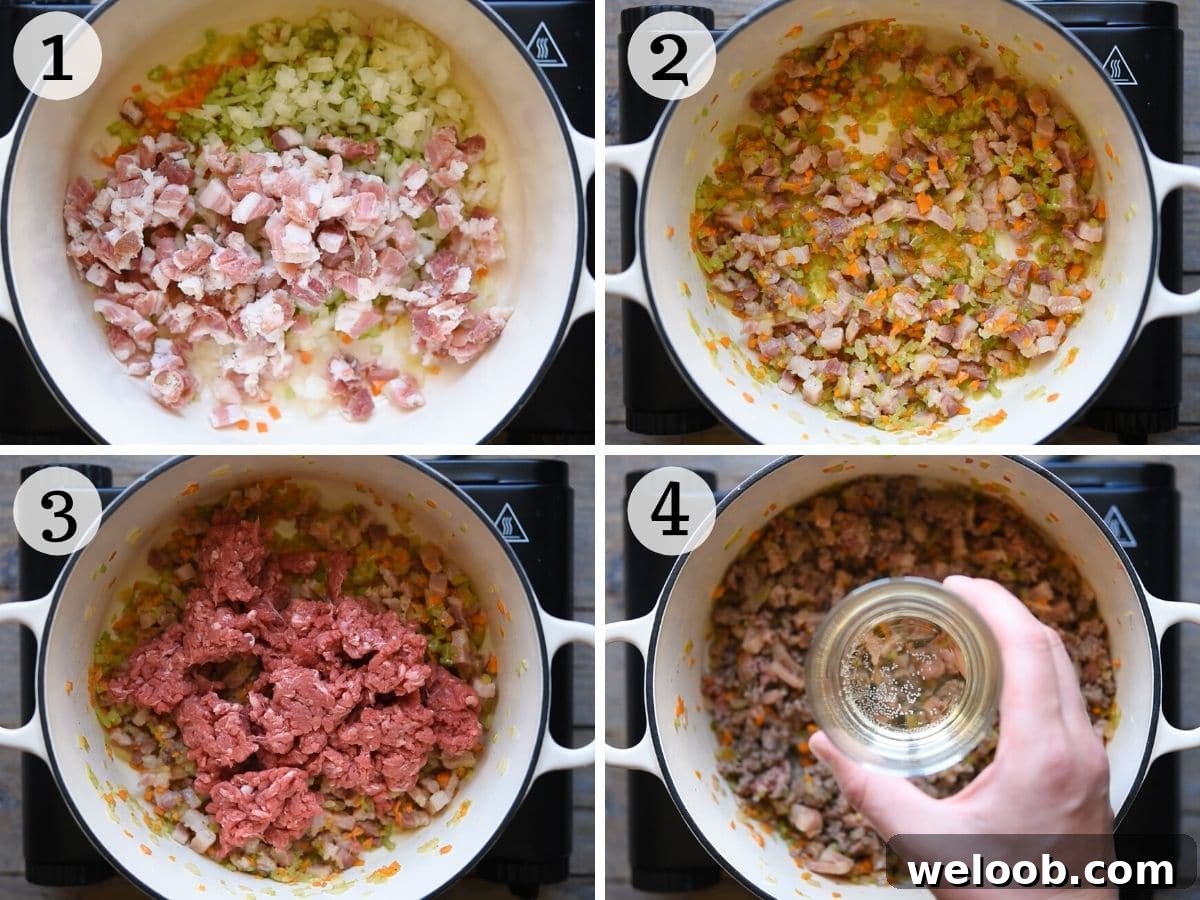
3. Add the ground beef and brown it, breaking it up as it cooks. When browned, pour in the dry white wine and let it reduce by about half.
4. Stir in the strained tomatoes (passata) and the stock. Cover and simmer gently for 2 hours, allowing the flavours to marry and the sauce to develop.
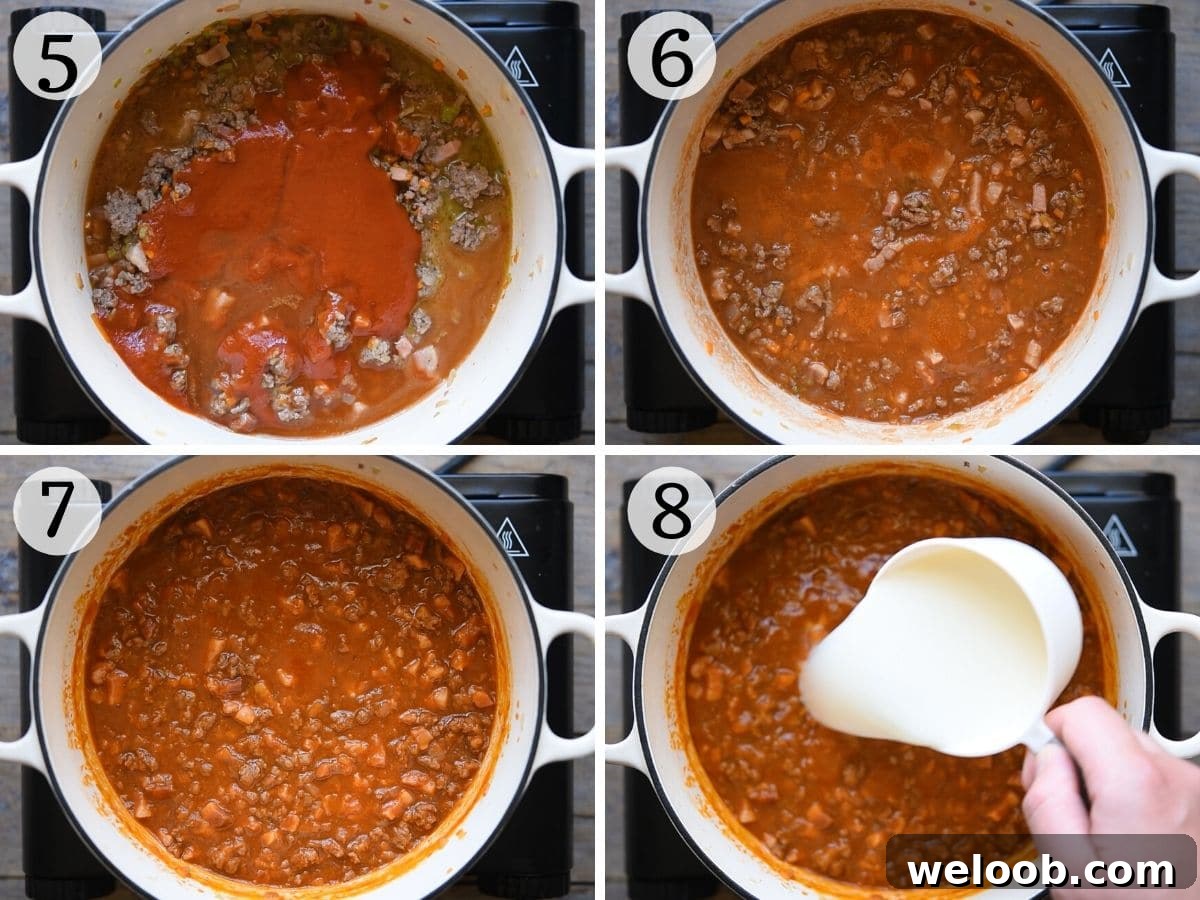
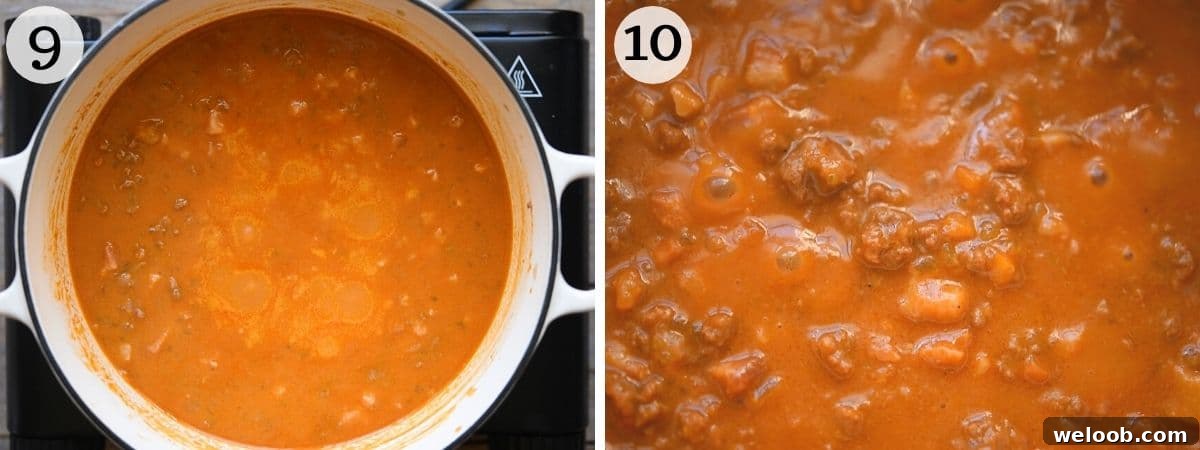
5. After two hours, remove the lid and add the milk. Continue to simmer uncovered for a further hour so the sauce reduces and gains a silky texture. Taste at the end and season with salt and pepper if needed.
6. To serve, toss cooked tagliatelle in the ragù until well coated and serve immediately with freshly grated Parmesan if desired.
Equipment traditionally used
Terracotta Tegame or terracotta pot
The traditional recipe recommends cooking ragù in a terracotta tegame. Terracotta’s porous surface can build flavour over time, but not every pot is suitable for direct heat, so research and test yours first. Using terracotta is traditional but not required — a heavy-based saucepan or Dutch oven works perfectly.
Wooden spoon
A wooden spoon is preferred for stirring: it won’t transfer heat as much as metal, won’t react with acidic ingredients and won’t scratch cookware.
Mezzaluna
A mezzaluna makes quick work of finely chopping vegetables and pancetta, but a sharp knife will do as long as you aim for a fine dice.
How to serve it the authentic way
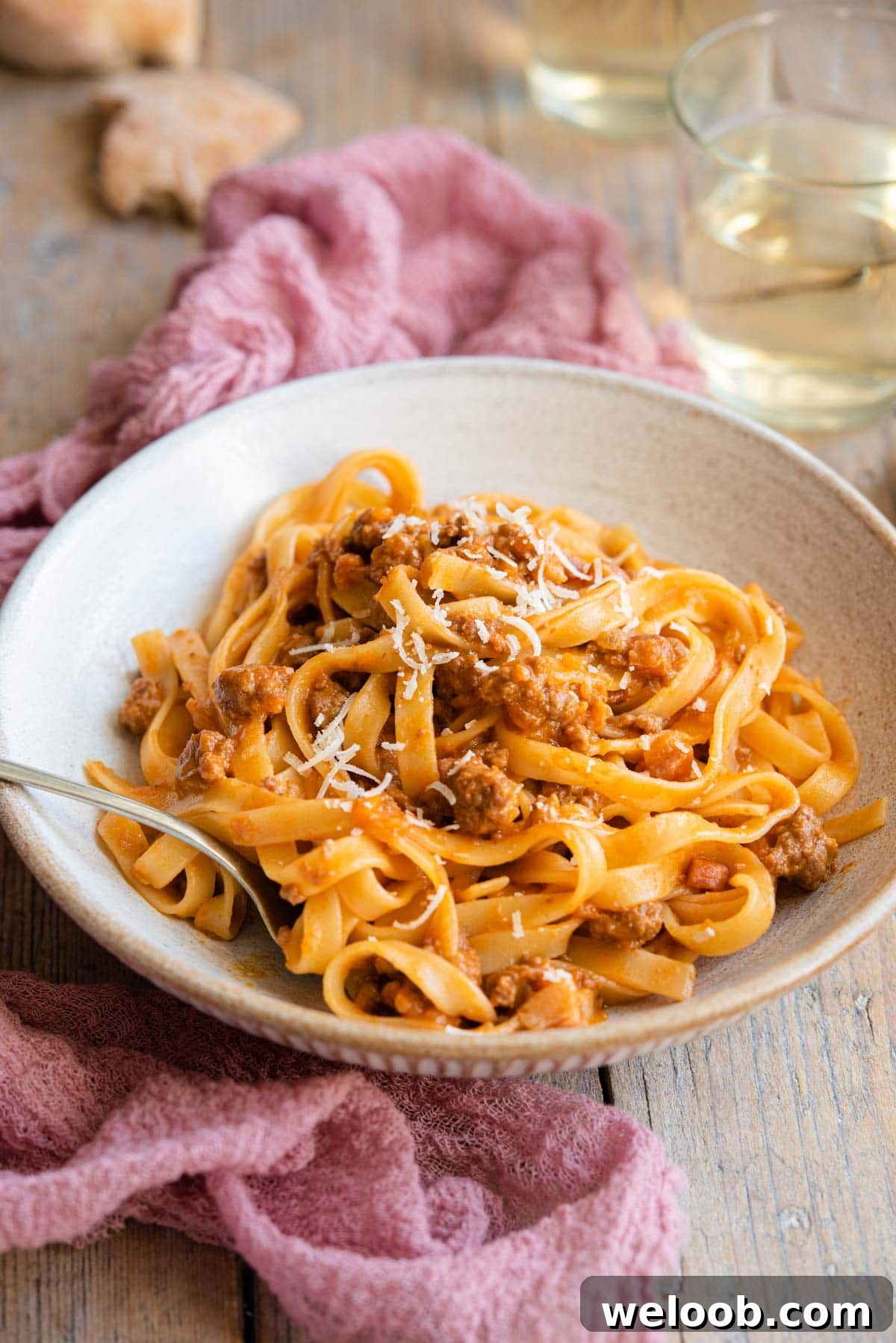
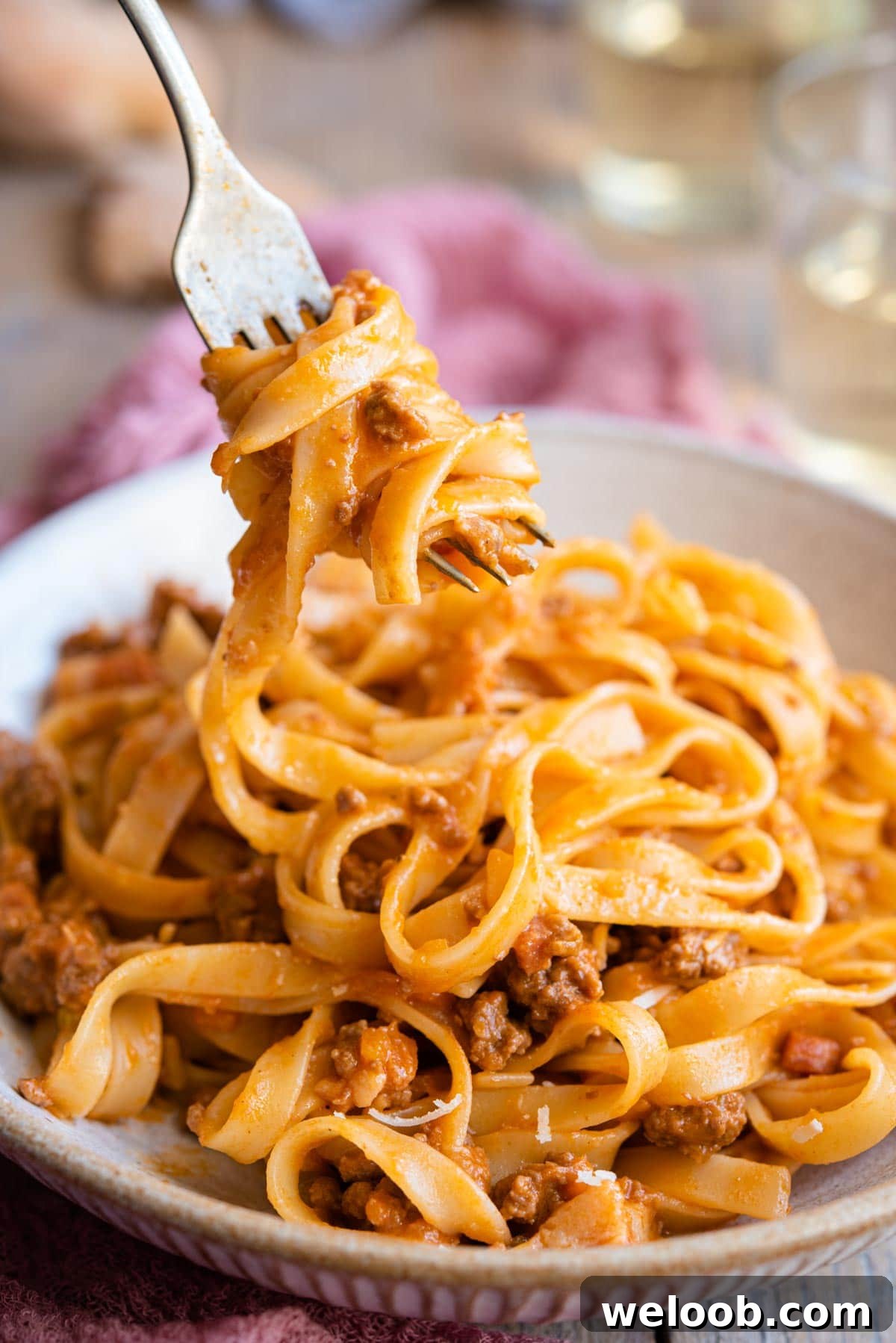
Traditionally, ragù alla Bolognese is served with tagliatelle. It is also the classic filling for Lasagne alla Bolognese, layered with fresh pasta sheets and béchamel sauce. When serving with tagliatelle, finish with freshly grated Parmesan and crusty bread to enjoy every last drop of sauce.
In Italy, pasta is a primo (first course) and portions are smaller; this recipe makes 4 main-course portions or about 8 primo-sized servings.
Top tips and recipe FAQs
- Don’t rush it: This ragù needs a low and slow simmer. Speeding up the process sacrifices depth of flavour.
- Prep in advance: The sauce improves after resting; it’s often better the next day. Make ahead and reheat gently.
- Homemade pasta: Fresh tagliatelle is ideal if you want to go the extra mile, but good-quality dried pasta works well too.
- Avoid unnecessary variations: For a true Bolognese, avoid adding herbs or ingredients not in the traditional recipe.
Ragù is a general Italian term for a slowly cooked meat sauce with many regional variations. Ragù alla Bolognese refers to the specific traditional recipe from Bologna described here.
Traditionally tagliatelle (fresh or dried) is served with Bolognese. The ragù is also the classic filling for lasagne with béchamel.
The sauce keeps well in the fridge for up to four days and freezes nicely. Thaw completely before reheating and re-season if needed.
More Italian sauces you might like
- Italian Beef Ragù
- Venetian Duck Ragù
- Genovese sauce (beef and onion ragù)
- Sausage Ragù with Ricotta Gnocchi
If you try this Authentic Bolognese Sauce, please leave a comment to share how it turned out. I love hearing from readers and learning about your tweaks and serving ideas.
Step By Step Photos Above
Most recipes include step photos and tips to help you get it right the first time.
Authentic Bolognese Sauce
By Emily
Ingredients
- ½ tbsp olive oil
- 2 cups ground beef (300g)
- 1 cup pancetta, finely chopped (150g)
- 1 medium carrot, finely chopped (50g)
- 1 medium celery stalk, finely chopped (50g)
- 1 medium onion, finely chopped (50g)
- ½ cup low-sodium chicken stock (120ml)
- ½ cup dry white wine (120ml)
- 1 cup strained tomatoes / passata (300g)
- 1 cup full-fat milk (240ml)
- 1 lb tagliatelle pasta (500g) to serve
Instructions
- Finely chop the carrot, celery, onion and pancetta.
- Heat the olive oil in a large pot. Add the vegetables and pancetta and sauté until softened but not browned, about 5–10 minutes.
- Add the ground beef and cook until browned. Pour in the white wine and reduce by half.
- Stir in the passata and stock, cover and simmer gently for 2 hours.
- After 2 hours, uncover and add the milk. Simmer uncovered for 1 hour. Taste and season with salt and pepper if needed.
- Cook tagliatelle according to package instructions, toss with the ragù and serve.
Notes
- Don’t rush it: slow simmering builds the classic flavour.
- Make ahead: the ragù tastes even better the next day.
- Homemade pasta: fresh tagliatelle is ideal but good dried pasta works well.
- Storage: refrigerate up to 4 days or freeze. Thaw completely before reheating.
Helpful Info for All Recipes
- I use extra virgin olive oil unless stated otherwise.
- All vegetables are medium-sized unless noted.
- Nutrition is approximate and auto-calculated.
Nutrition
Carbohydrates: 15 g |
Protein: 31 g |
Fat: 50 g
Nutrition information is an approximation.
Leave a comment below!