
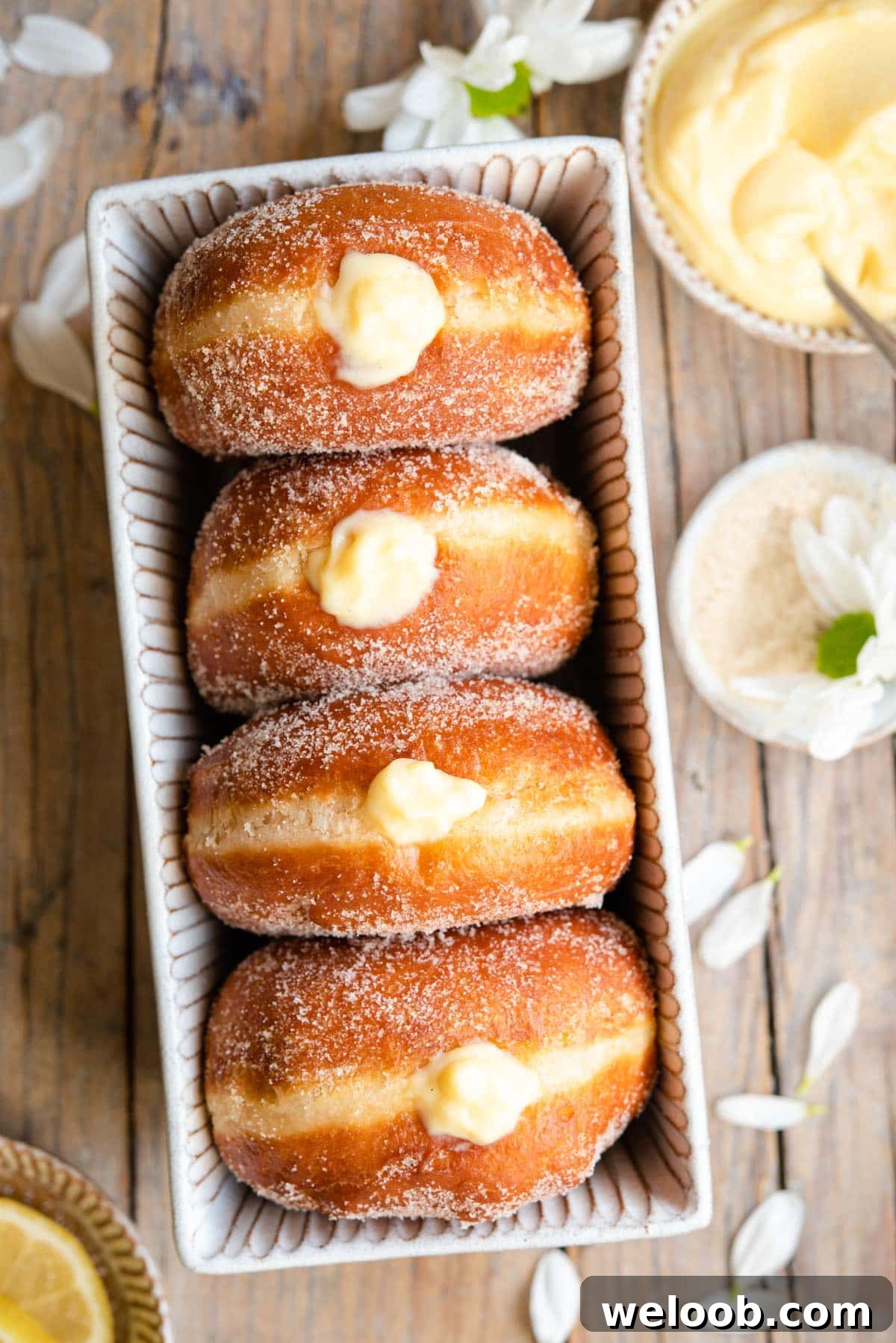
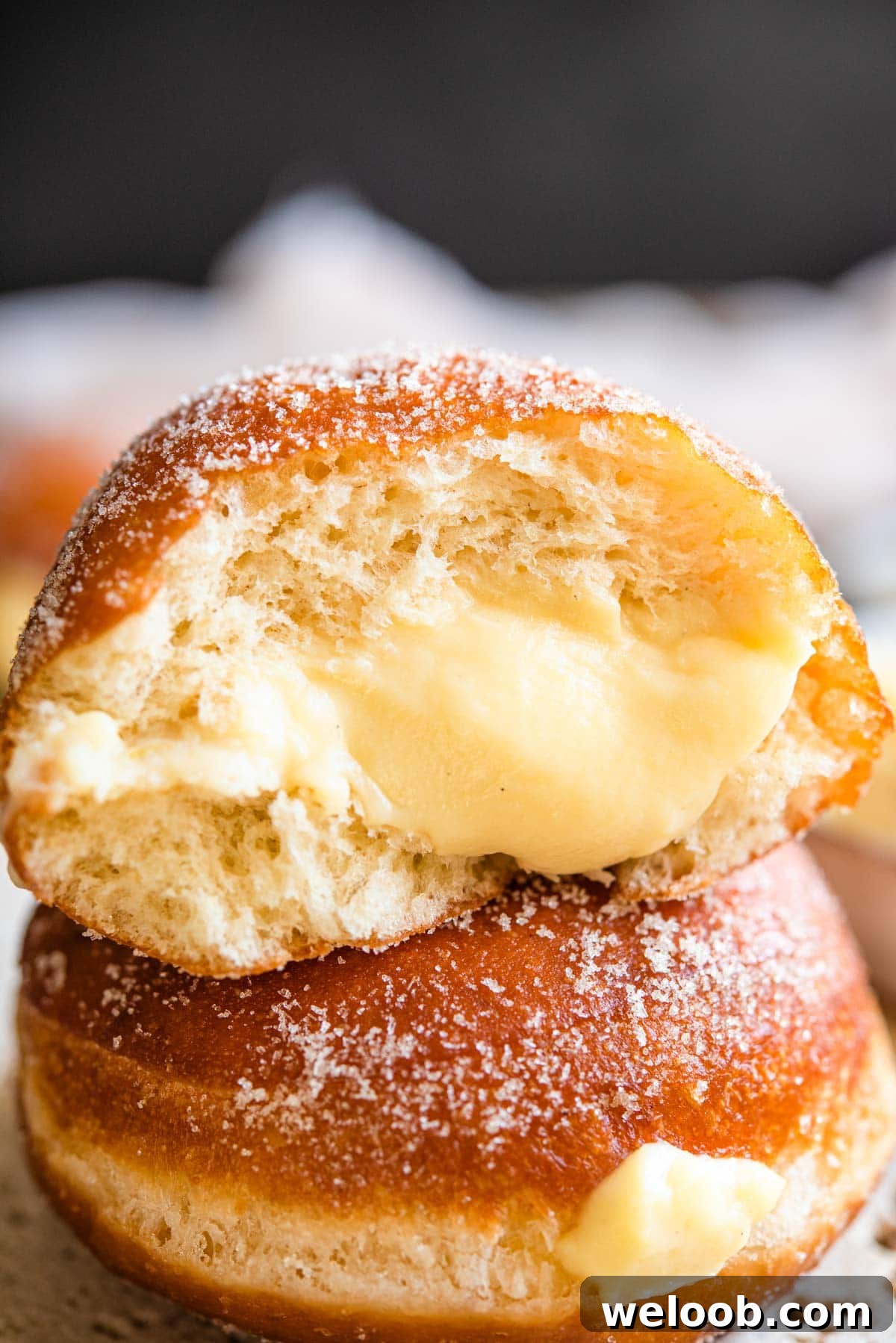
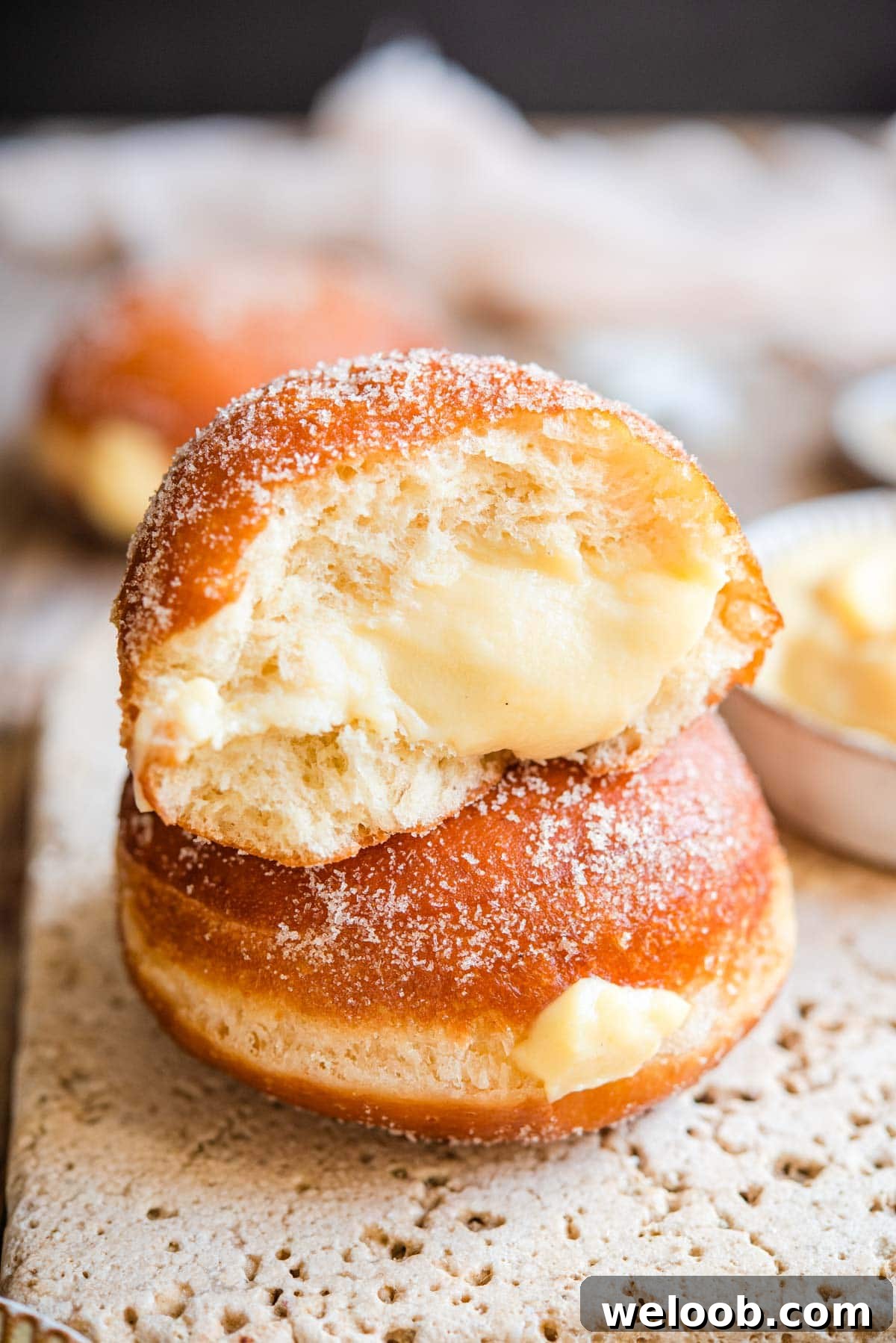
Soft and light Italian Bomboloni Doughnuts rolled in sugar and filled with Italian pastry cream (crema pasticciera). These doughnuts are wonderfully indulgent and make a special treat.
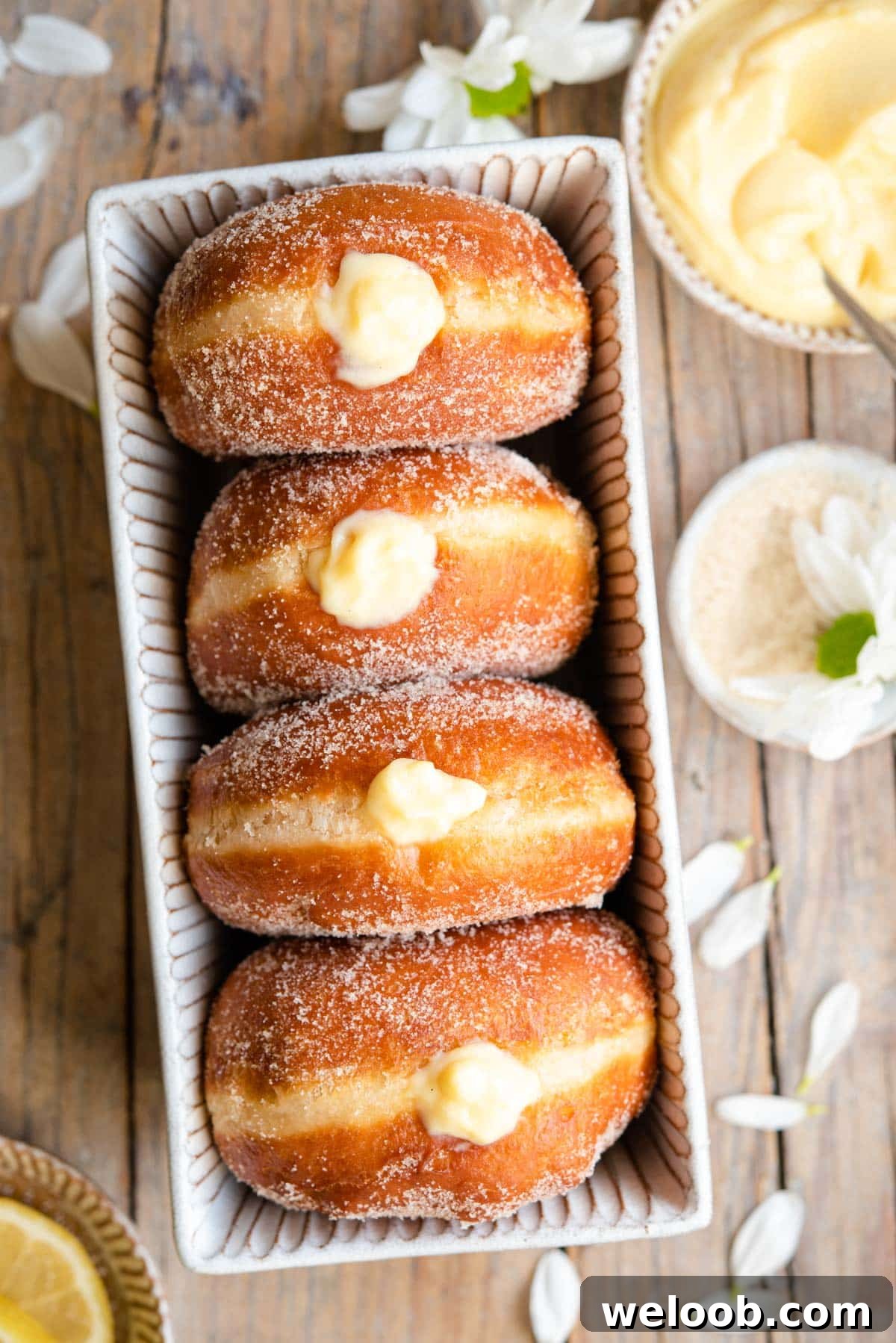
There’s very little that compares to fresh, warm doughnuts — especially when they’re filled with thick, limoncello-scented pastry cream. Crema pasticciera is one of my favourite fillings: it works beautifully in tarts like Torta della Nonna, folded with whipped cream for cakes, or piped into cornetti and bomboloni.
In Italy, bomboloni are often served in cafés for breakfast alongside a cappuccino. Like cornetti con crema, they’re generously filled: substantial in the hand, yet light and airy when you bite into them.
Fun fact: Bomboloni literally means “big bombs,” a fitting name for these round doughnuts packed with irresistible filling.
What you need to make Italian doughnuts
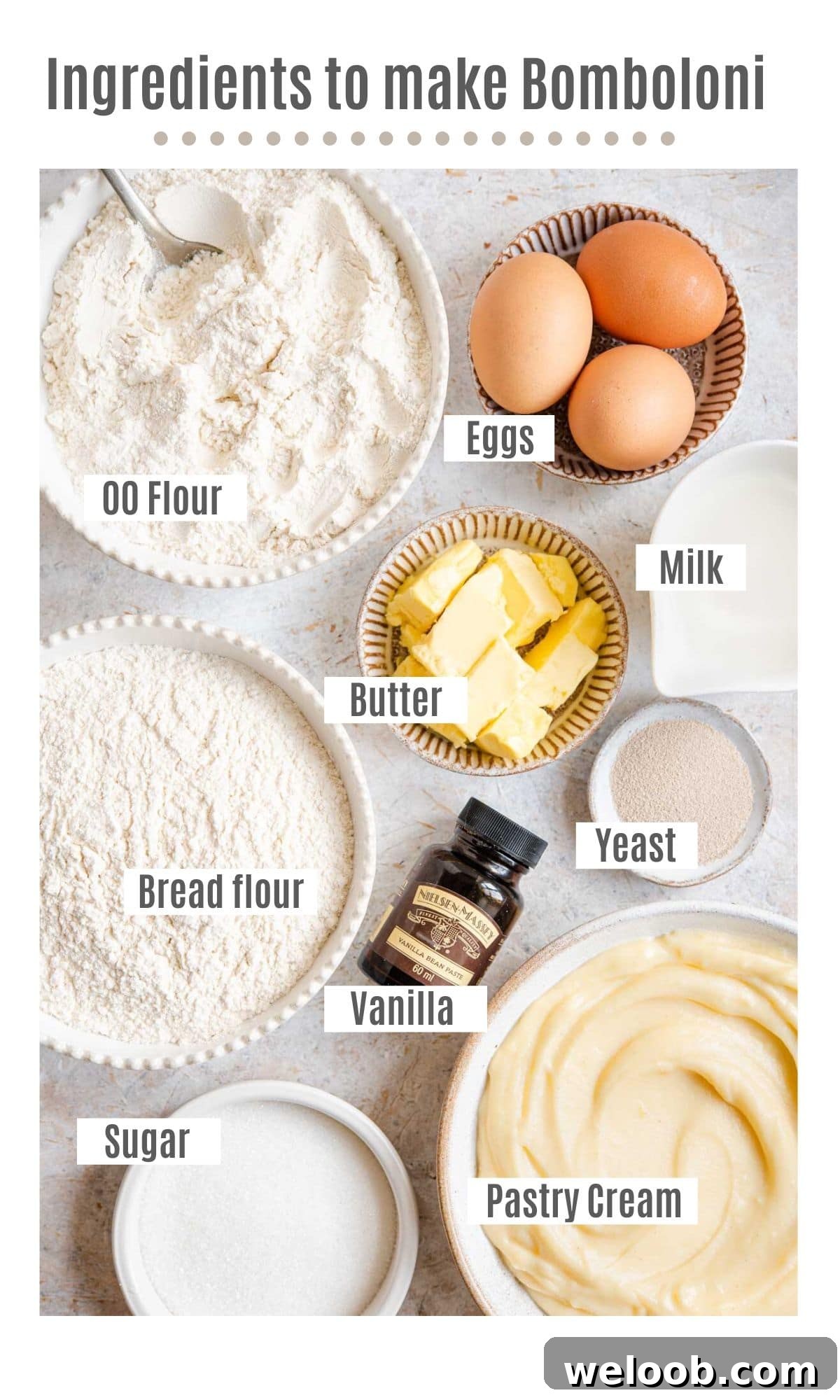
Bomboloni use simple pantry ingredients: flour, eggs, butter, milk, sugar, vanilla, fast action yeast, salt and pastry cream. For an especially light texture, use a mix of Italian 00 flour (or all-purpose) and strong bread flour.
How to Make Bomboloni – Step by Step
How to make the dough
Combine the flours, sugar and yeast in the bowl of a stand mixer. Scatter cubes of softened butter over the dry mix, then add the eggs, lukewarm milk, vanilla and a pinch of salt. Fit the dough hook and knead on low speed for about 10 minutes (KitchenAid speed 2 is a good guide).
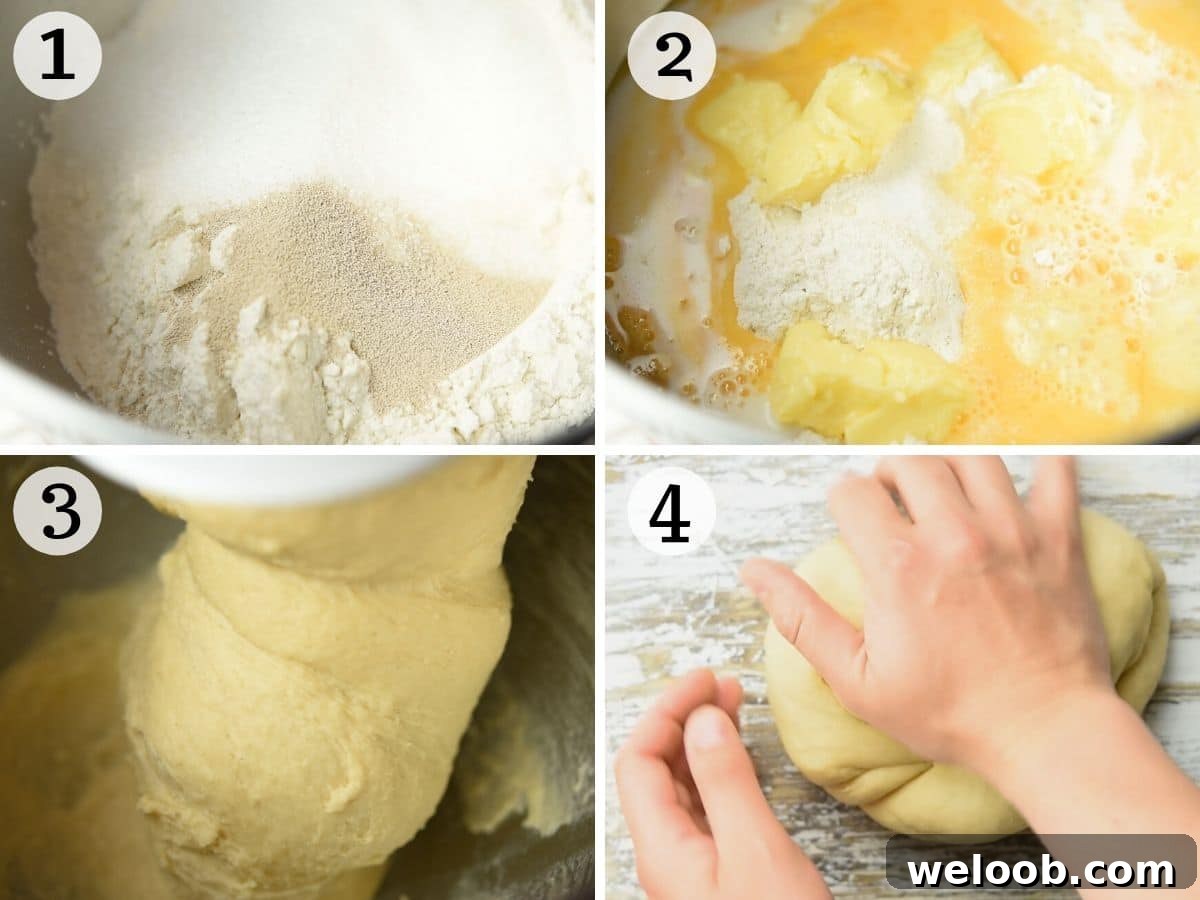
The dough should be smooth, elastic and slightly tacky. Turn it out onto a clean surface (avoid adding extra flour if possible) and shape it into a smooth ball by kneading a couple of times.
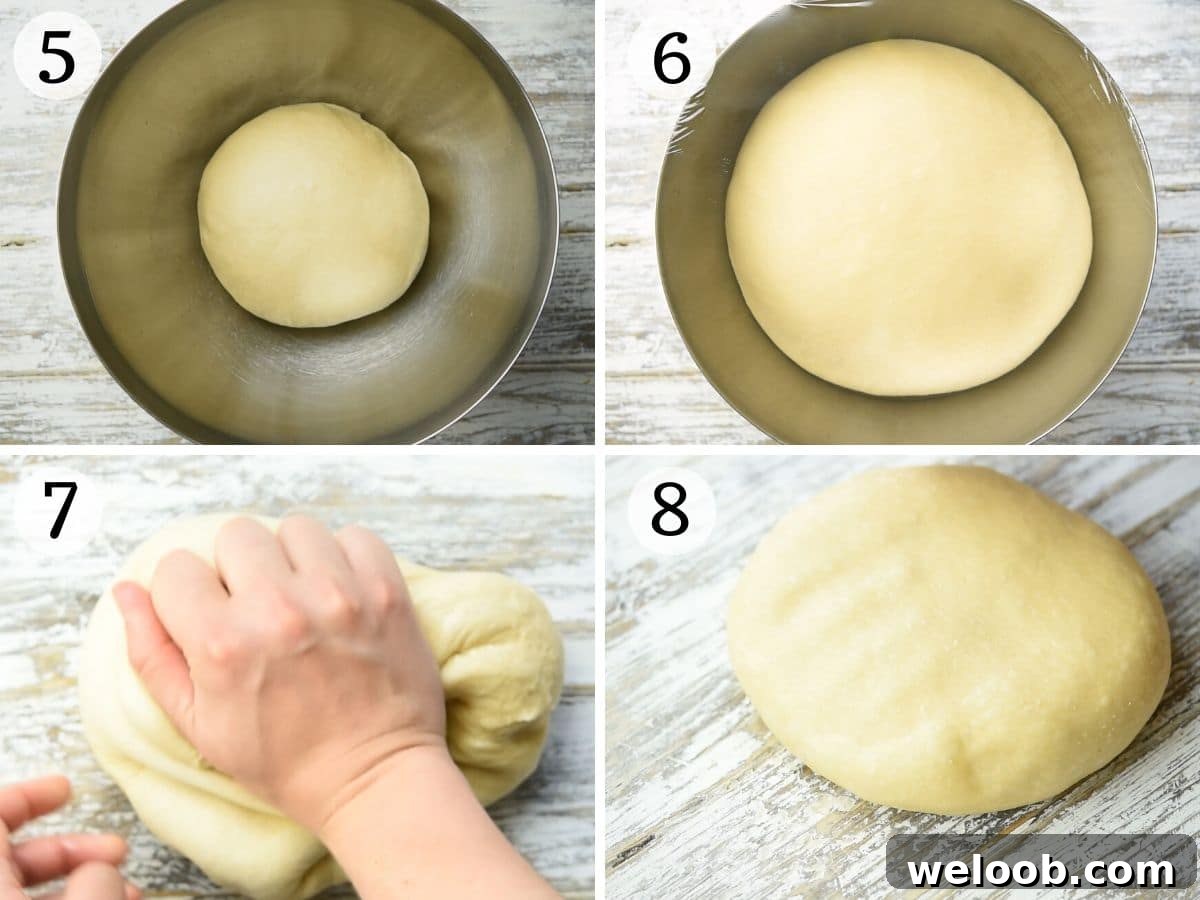
Place the dough in a lightly oiled bowl, cover with plastic wrap and leave to prove for 2–3 hours or until tripled in size. Once risen, knock the air out, knead briefly and roll the dough to a rectangle about 1.5 cm (½ inch) thick.
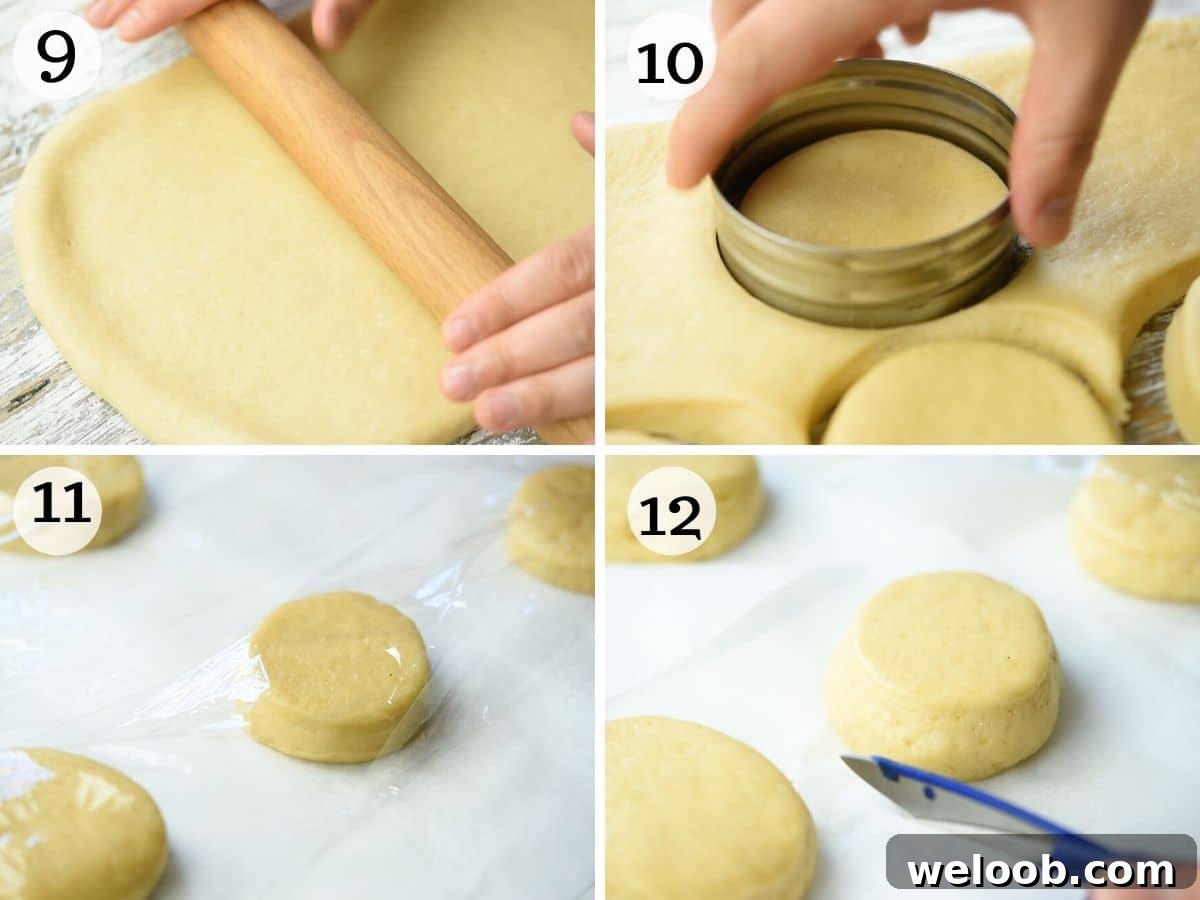
Cut rounds about 3.5 inches (9 cm) in diameter with a cookie cutter or glass. Re-roll scraps or cut them into smaller shapes for frying. Arrange cut rounds on parchment, cover lightly with plastic and leave to prove for 1–1.5 hours, until doubled in size. While they prove, prepare the pastry cream and cool it.
Frying the doughnuts
Heat oil in a deep pot to 170°C / 338°F. Cut the parchment into small squares and place each doughnut on its own square — this keeps the rounds neat and makes it easier to transfer them into the oil.
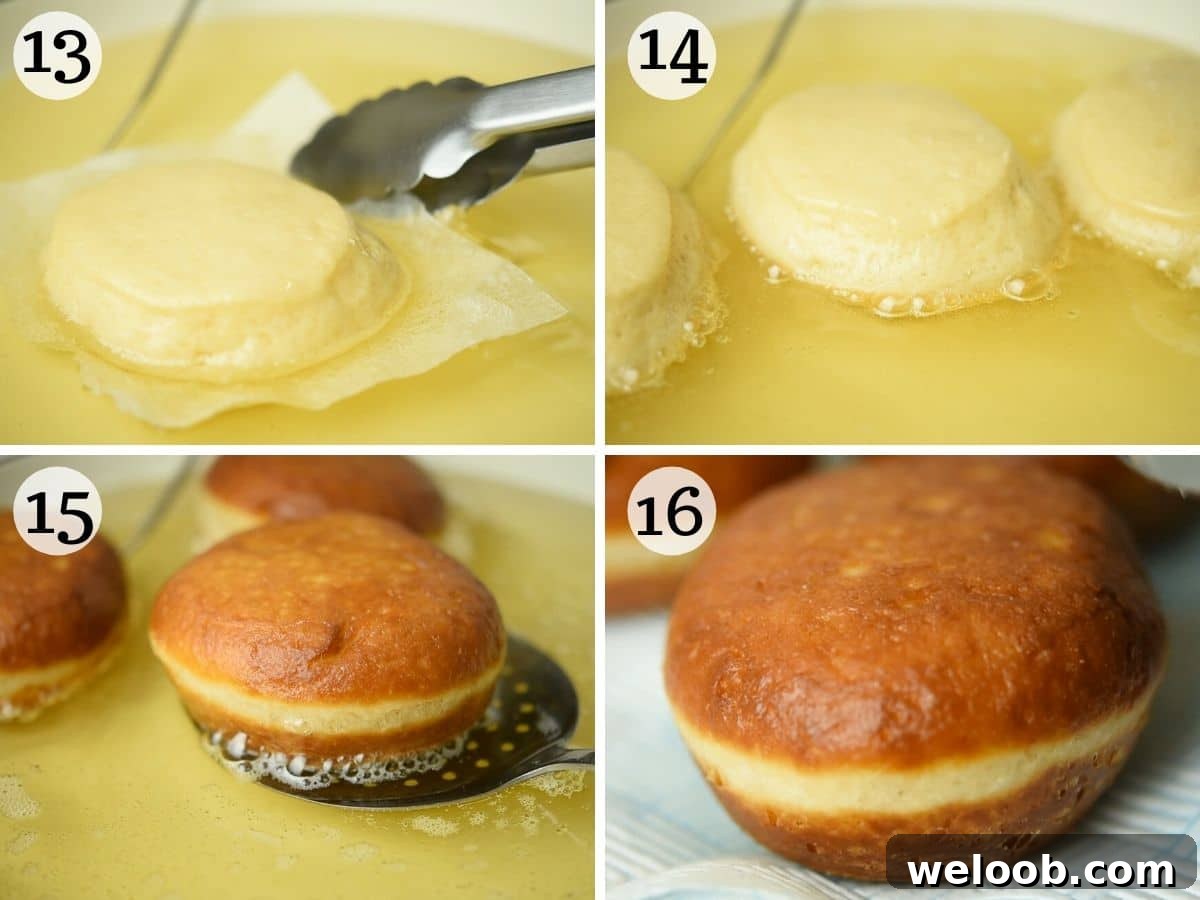
Using tongs, gently lower the doughnuts into the oil and immediately remove the parchment. Fry for 2 minutes on one side, then flip and fry a further 2 minutes. Drain briefly on kitchen paper, then roll the warm doughnuts in caster or confectioners’ sugar. Allow them to cool before filling.
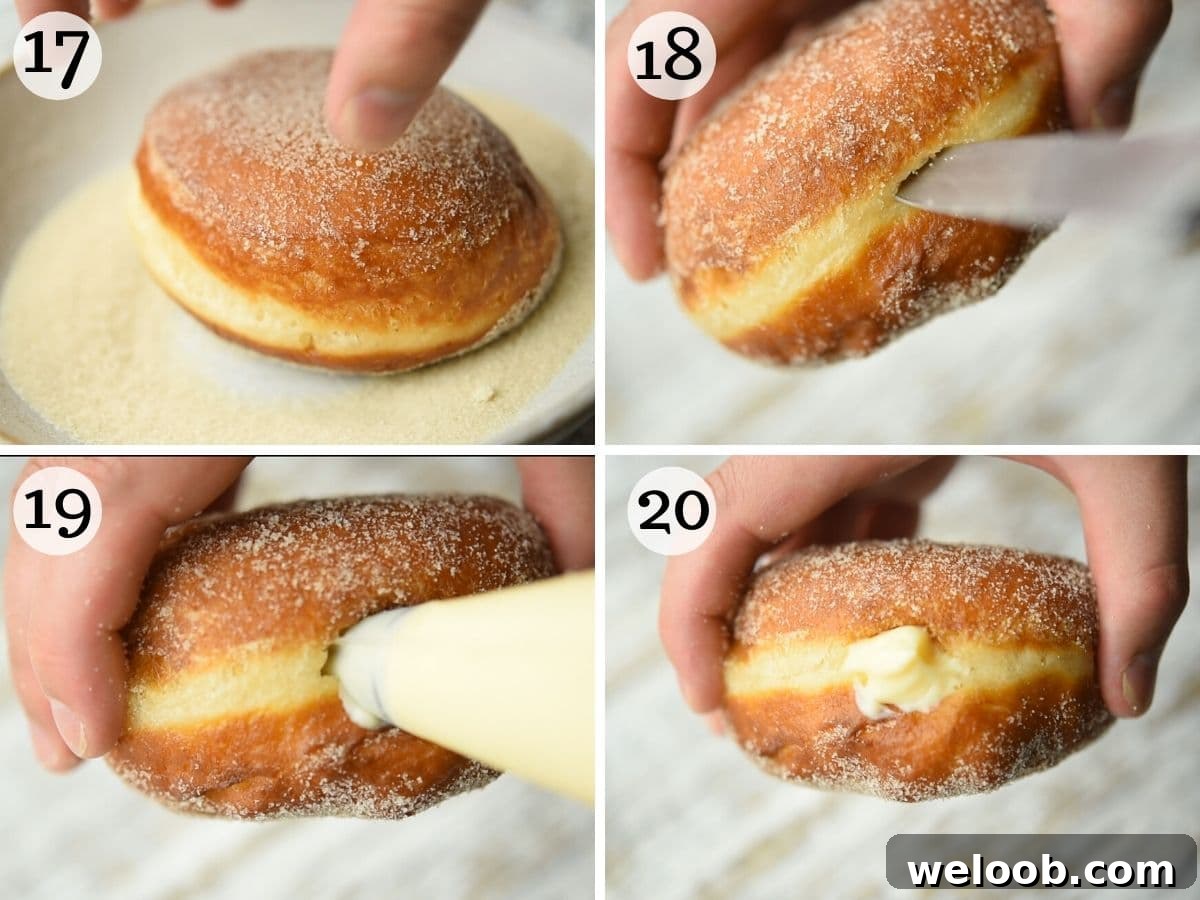
To fill: make a small incision in the side of each doughnut with a knife, fill a piping bag with pastry cream (or your chosen filling), and pipe into the centre until satisfied.
How to make the filling (Crema Pasticciera)
Whisk egg yolks with sugar, vanilla and lemon zest until combined. Add cornstarch and whisk until smooth. Heat the milk until hot, then slowly pour it into the egg mixture while whisking constantly to avoid curdling. Return the mixture to the saucepan and heat gently, stirring continuously for 10–15 minutes, until very thick. Do not raise the heat or the eggs may scramble. When thick, transfer to a clean bowl, press plastic wrap directly onto the surface to prevent a skin, and cool completely before piping.
More filling options
Bomboloni are versatile. Alternatives to pastry cream include:
- Chocolate spread or homemade Nutella-style spread
- Jam: strawberry, raspberry, apricot, or mixed berry
- Whipped cream
- Dulce de leche or caramel cream
Top tips for making and frying Italian doughnuts
- If you measure flour by cups, spoon it into the cup and level it rather than scooping. For accuracy, use a kitchen scale.
- If using a stand mixer, keep the speed low to avoid overworking the dough (KitchenAid speed 2 as a reference).
- Use about 3 inches of oil depth for frying.
- Do not overcrowd the pan; fry in batches so the oil temperature remains steady.
- Drain fried doughnuts on paper for about 2 minutes, then roll in sugar while still warm so the sugar adheres.
- Wait until the bomboloni are cooled before filling them to avoid thinning the filling.
Bomboloni making FAQs
No — a stand mixer speeds up kneading, but you can knead by hand for at least 10 minutes. Mix ingredients in a bowl, then turn onto a lightly floured surface and knead until smooth and elastic.
The white ring forms because the doughnut floats on the oil while frying. If there’s no ring, the dough may be too heavy. Ensure correct proving and a balanced wet-to-dry ratio for a light dough.
Use a neutral oil with a high smoke point such as sunflower or vegetable oil. Avoid strongly flavoured oils or low smoke point oils like extra virgin olive oil.
Fry at about 170°C / 338°F. Do not exceed 175°C / 347°F or they will brown too quickly on the outside. If the oil is too cool, the doughnuts will absorb excess oil and become greasy. A thermometer is recommended.
Bomboloni are best the same day they are made. Unfilled doughnuts can be stored in an airtight container for 1–2 days but will dry out. Filled doughnuts keep better: store in the fridge for 1–3 days in a sealed container.
More Italian desserts you might like
- Mini Cannoli – Perfect for Parties
- Torta della Nonna: Italian Custard Tart
- Quick & Easy Tiramisu – Best Ever Recipe
- White Chocolate Panna Cotta
- Italian Affogato – Ice Cream and Coffee
- Lady’s Kisses – Baci di Dama (Italian Cookies)
If you try this Bomboloni recipe, please leave a comment with how it went — feedback is always welcome.
Bomboloni – Italian Doughnuts
Soft and light Italian bomboloni rolled in sugar and filled with pastry cream (crema pasticciera).
Prep: 3 hrs | Cook: 1 hr | Total: 4 hrs | Servings: 10–12 large doughnuts
Equipment
- Sugar thermometer for frying
- Piping bag and medium nozzle
- Large round cookie cutter (about 3.5 inch / 9 cm)
Ingredients
For the bomboloni dough
- 2 cups strong bread flour (approx. 280g)
- 2 cups 00 flour or all-purpose flour (approx. 280g)
- 3 large eggs, room temperature
- 6.5 tbsp butter, softened (90g)
- 1/2 cup granulated sugar (100g)
- 1/2 cup lukewarm milk (120ml)
- 1/2 tsp vanilla paste or 1 tsp vanilla extract
- 2 1/4 tsp fast action yeast (7g)
- Small pinch of salt
- 2–3 tbsp caster or confectioners’ sugar for rolling
- Sunflower or vegetable oil for frying
For the pastry cream (crema pasticciera)
- 5 egg yolks
- 2.5 cups milk (½ litre)
- ¼ cup cornstarch (30g)
- ⅓ cup sugar (70g)
- ½ tsp vanilla paste or 1 vanilla bean
- Zest of 1 lemon
Instructions (essential steps)
- Check yeast instructions — some need activating in liquid first. If needed, activate in part of the lukewarm milk, not extra liquid.
- Make the dough: combine dry ingredients, add butter, eggs, milk, vanilla and salt. Knead on low speed for 10 minutes until smooth and slightly tacky.
- Prove: place dough in oiled bowl, cover and prove 2–3 hours until tripled. Knock back, roll to 1.5 cm thickness and cut rounds. Prove cut rounds 1–1.5 hours until doubled.
- Fry: heat oil to 170°C / 338°F. Use parchment squares to transfer doughnuts, remove paper after lowering into oil. Fry 2 minutes each side. Drain and roll in sugar while warm. Cool before filling.
- Fill: make a small incision, pipe in pastry cream or chosen filling, and serve immediately for best results.
- Pastry cream: whisk yolks, sugar, vanilla and lemon zest, add cornstarch, temper with hot milk, return to saucepan and cook on low, stirring until very thick. Cool with plastic wrap on the surface to prevent a skin.
Notes: when measuring flour by cups, spoon and level. If the dough feels too wet when using cups, add 1 tbsp flour at a time until tacky but not sticky. Roll dough gently and avoid adding excess flour during shaping.