
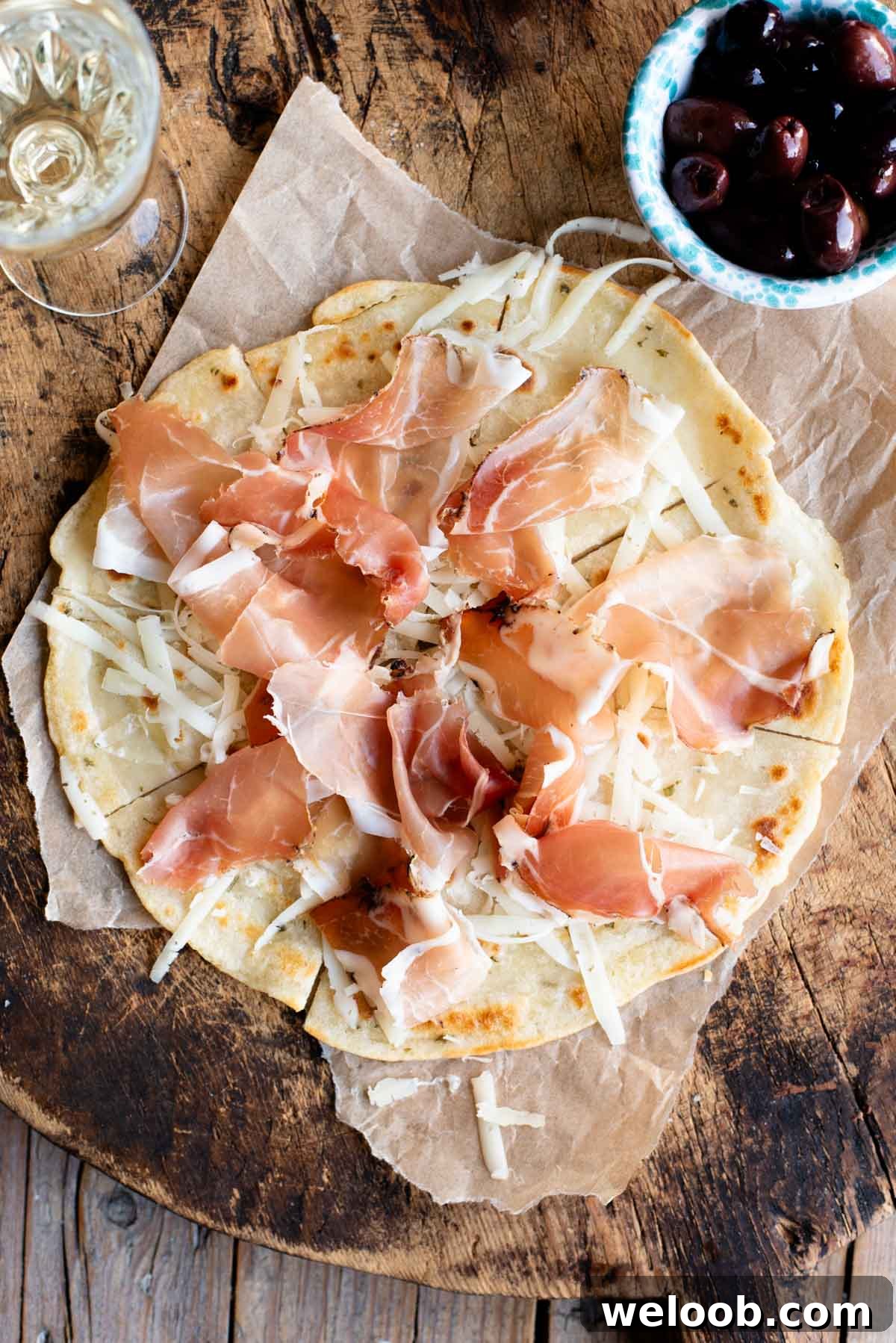
Brustengo di Gubbio is a traditional Umbrian flatbread with a simple batter and irresistible texture. Crisp at the edges and soft in the middle, it makes a perfect addition to an antipasti board or can be enjoyed on its own with grated cheese and cured meats.
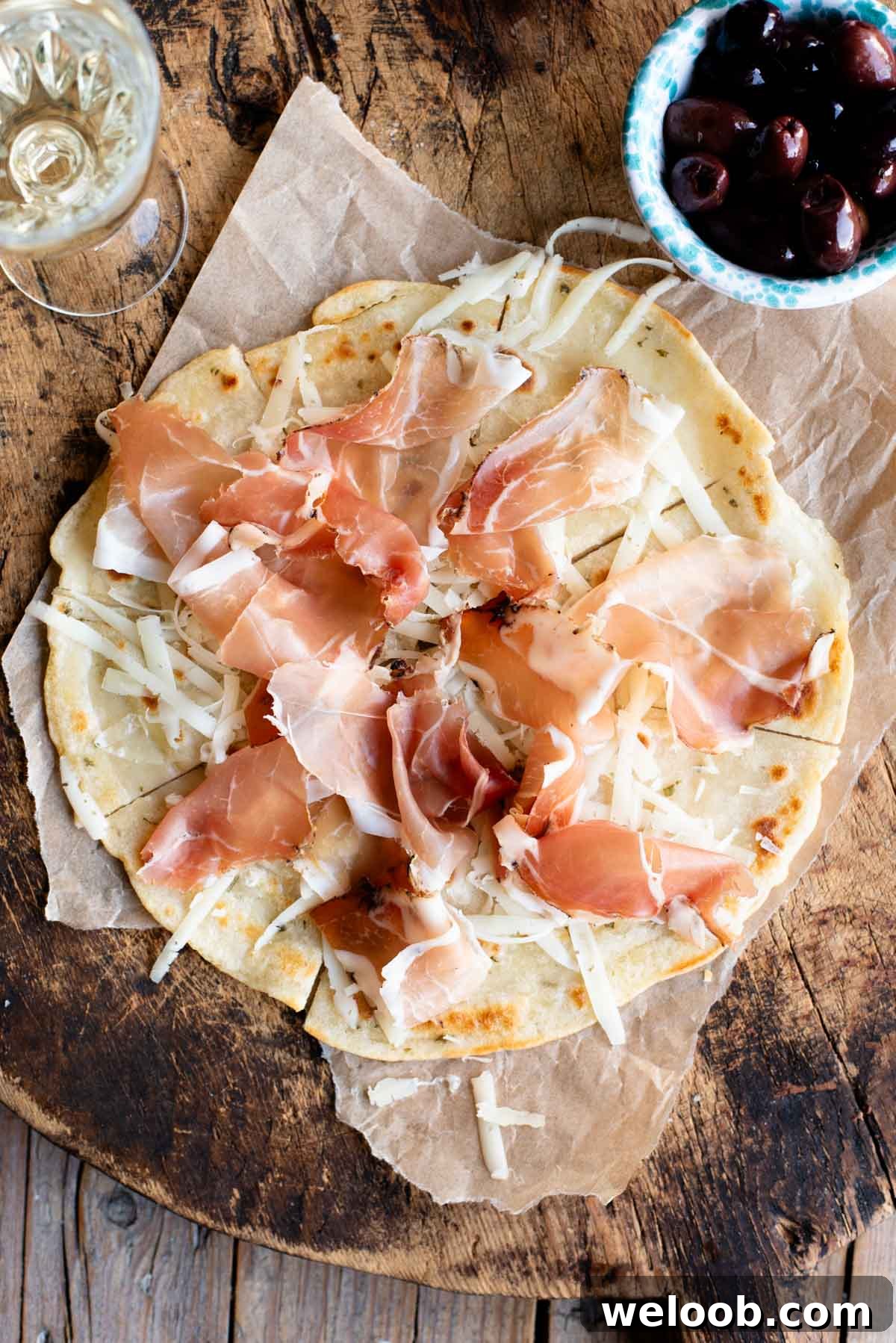
I love small plates and shared bites — an antipasti spread with cheeses, cured meats and breads is one of my favourite ways to entertain. Brustengo is a delightful discovery for anyone who enjoys rustic Italian snacks.
This flatbread comes from Gubbio in Umbria. Somewhere between a crepe and a flatbread, it’s made from a thin batter that cooks quickly to a golden, crisp finish while remaining tender inside.
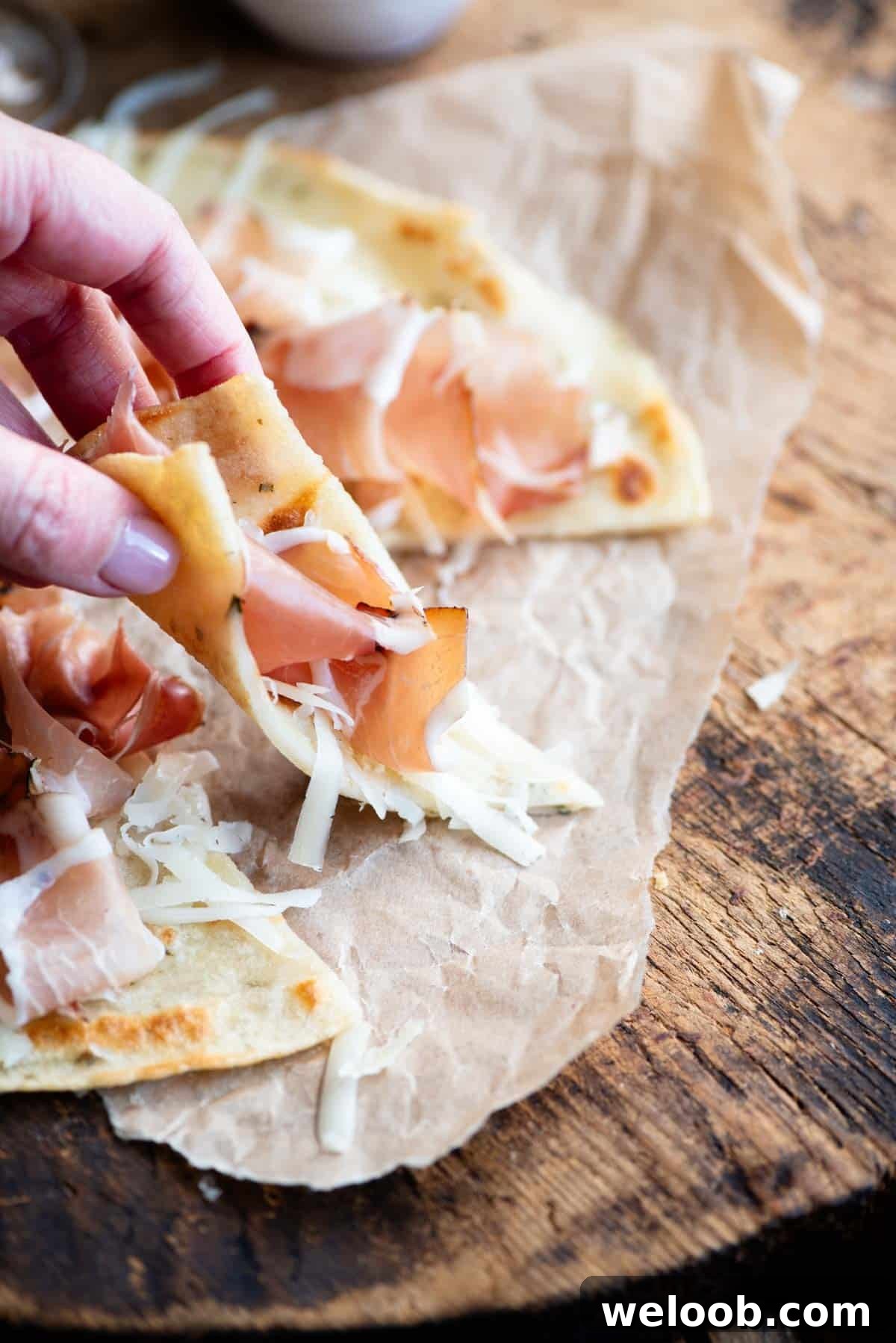
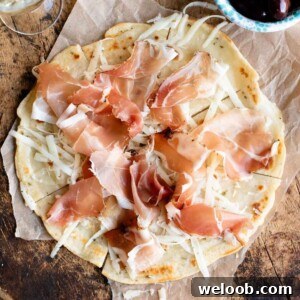
Traditionally, Brustengo is sliced like a pizza and served warm with freshly grated Pecorino and Prosciutto di Norcina, though any good Italian cheese and prosciutto or salami work beautifully.
It’s easy to make at home and pairs with a variety of cheeses and cured meats, making it ideal for sharing.
Ingredients
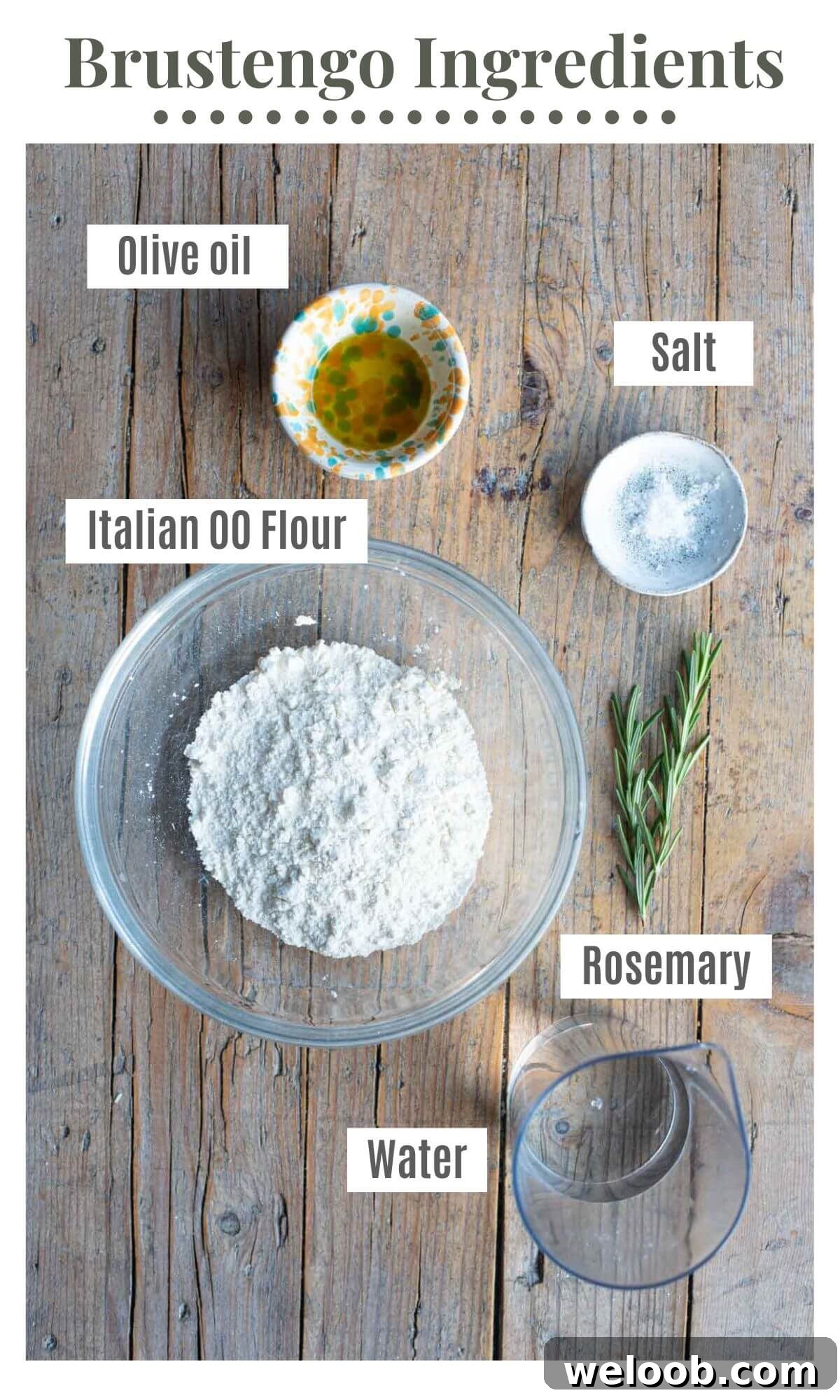
Ingredient notes and substitutions
- Flour – Italian 00 flour is traditional; all-purpose flour can be substituted without issue.
- Water – use cold or room temperature water.
- Rosemary – fresh and finely chopped. Brustengo is delicious with rosemary, but you can omit it or substitute fresh thyme if preferred.
Visual walk-through of the recipe
- Mix the dry ingredients – stir the flour, chopped rosemary and a pinch of salt together in a large bowl until evenly combined.
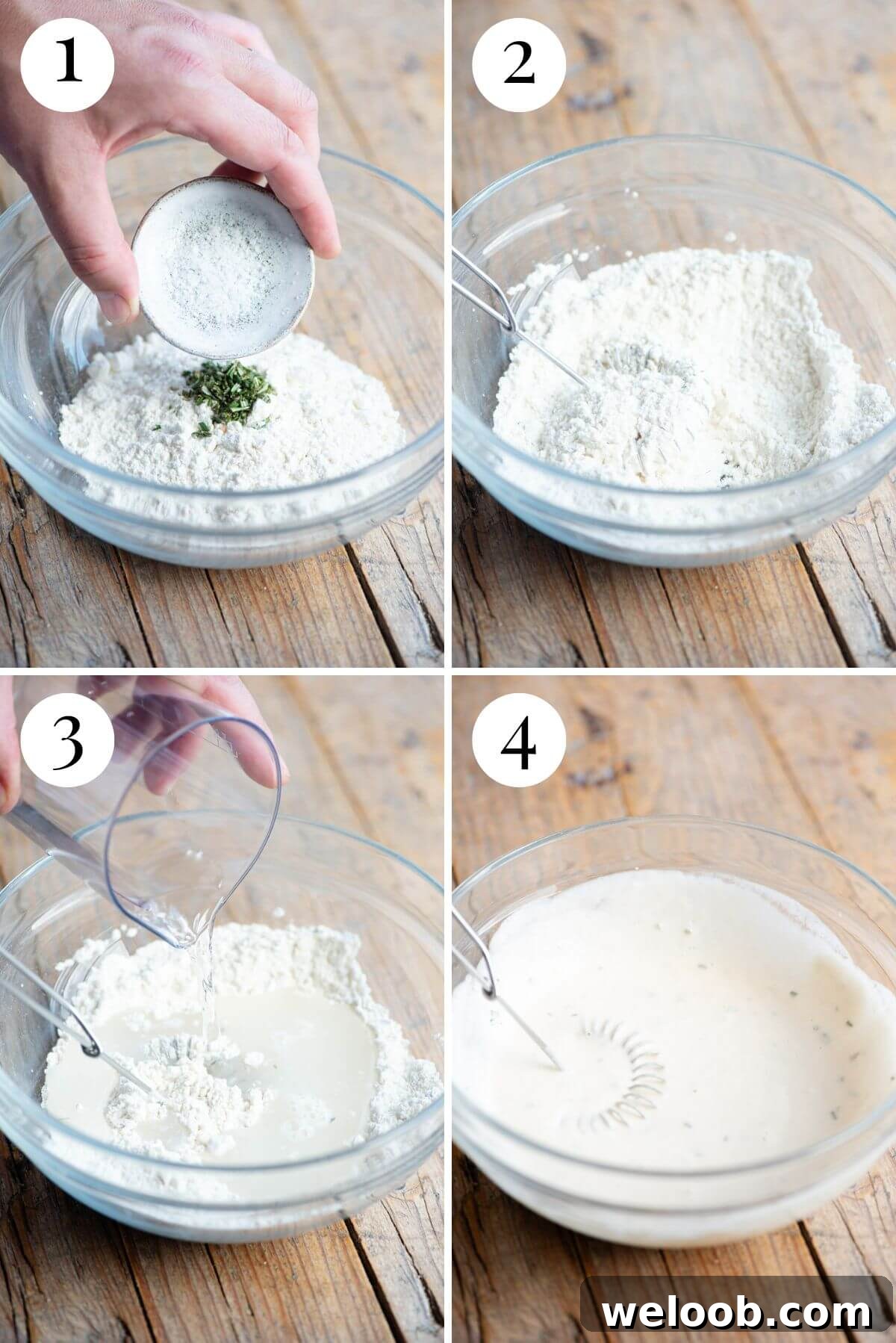
- Add liquid – pour in the water and whisk until the batter is smooth and free of lumps.
- Heat the pan – warm 1/2 tablespoon of olive oil in a medium skillet over medium heat. Pour in about one large ladleful (roughly one third of the batter) and quickly spread it out in a spiralling motion, similar to making a crepe.
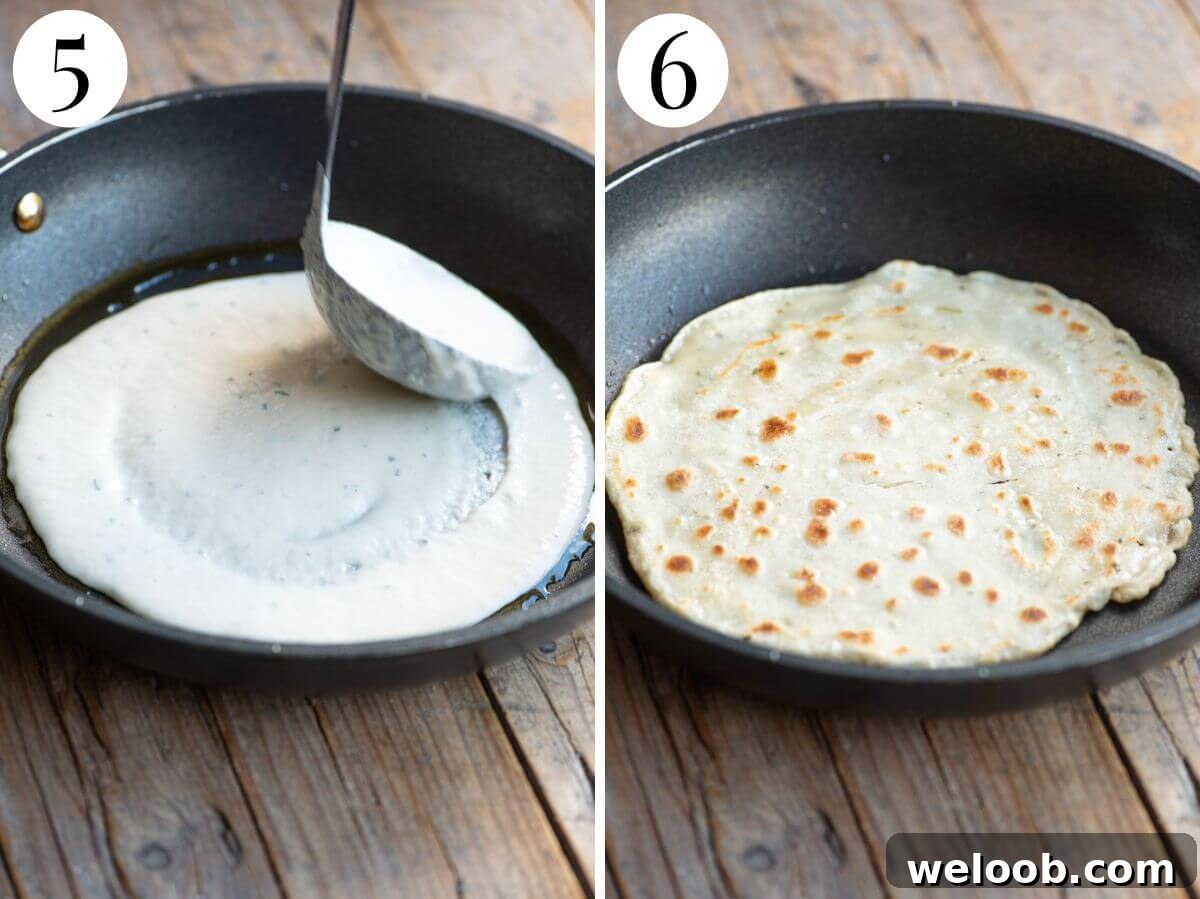
- Cook – cook each flatbread for 2–3 minutes per side, until golden and crispy. Drain briefly on kitchen paper and repeat with the remaining batter, adding more oil as needed.
- Serve – cut the Brustengo into wedges like a pizza, grate over Pecorino or your favourite cheese, and top with prosciutto or salami. Serve warm.
Recipe Tips
- Cheese for serving – freshly grated Pecorino is traditional, but Gorgonzola, Taleggio, Fontina, Toma or Asiago are all excellent choices.
- Prosciutto for serving – Prosciutto alla Norcina is authentic to the region, yet any high-quality prosciutto or cured salami pairs well.
- Frying the Brustengo – maintain medium heat so the outside crisps without burning before the flatbread cooks through.
- Adding herbs – fresh chopped rosemary in the batter adds aroma and flavour; thyme is a good alternative.
Brustengo is best enjoyed warm, straight from the pan, when it’s at its crispiest.
More delicious light bites to try
Breakfast
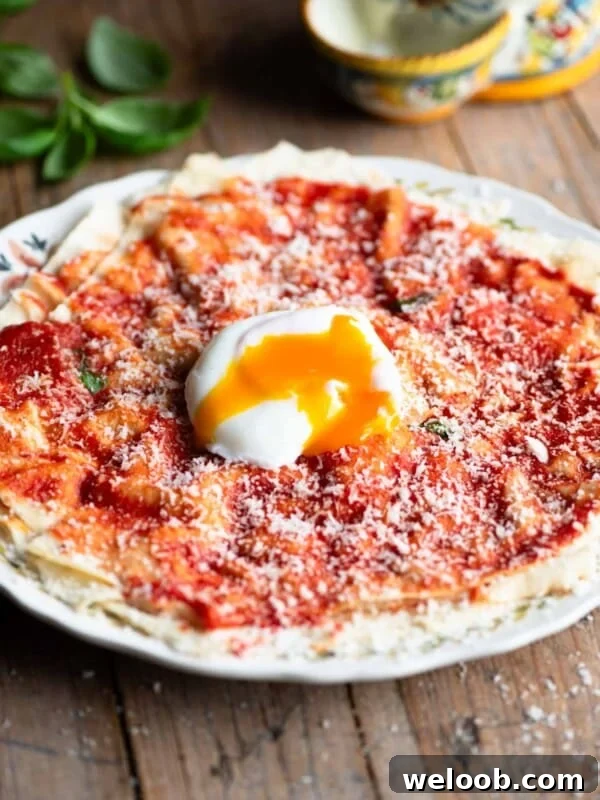
Pane Frattau (Sardinian Bread with Tomato and Poached Egg)
Antipasti
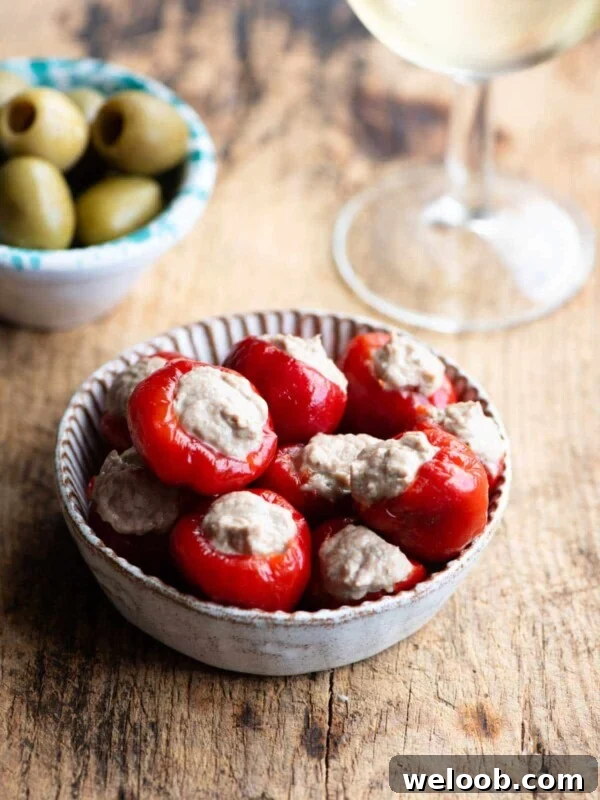
Italian Tuna Stuffed Cherry Peppers
Antipasti
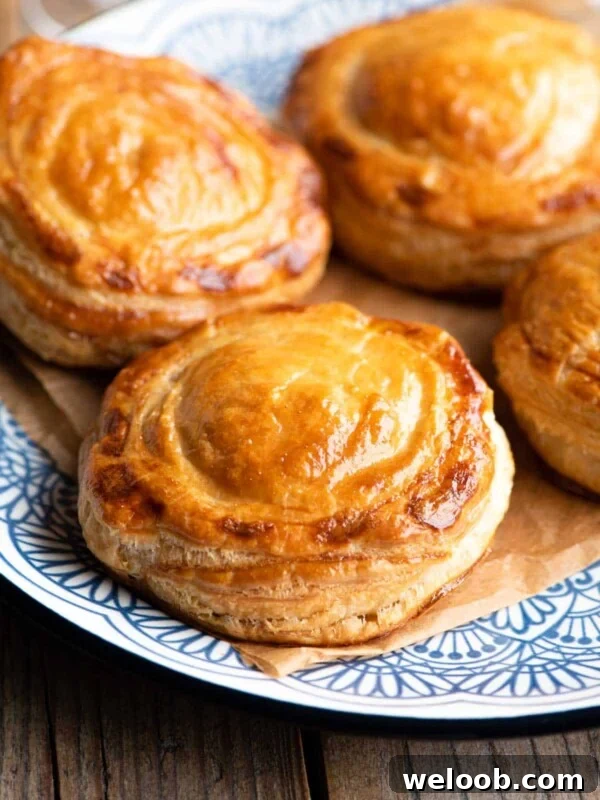
Rustici Leccesi (Tomato and Mozzarella Pastries)
Antipasti
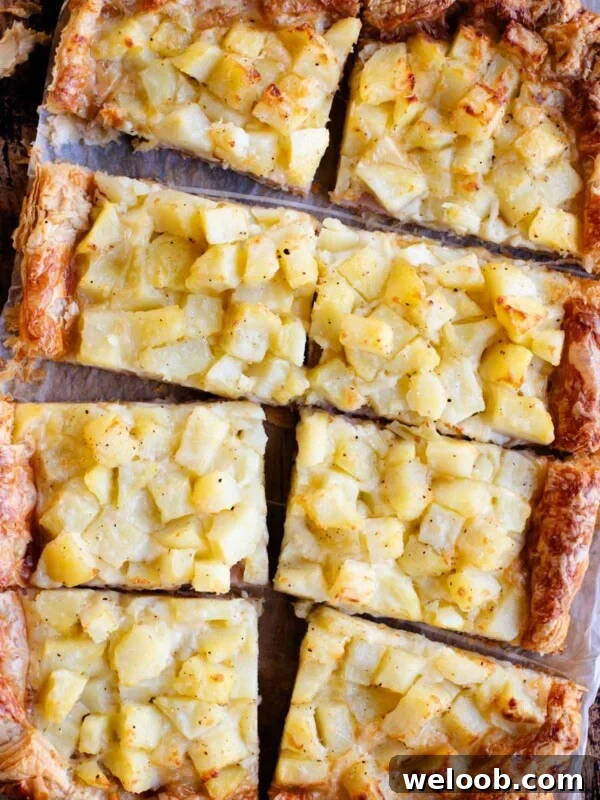
Cheesy Puff Pastry Potato Tart
If you try this Brustengo recipe or any other from the blog, please rate it and leave a comment — I love hearing how your version turned out. Follow the blog on social channels or sign up for the newsletter to receive new recipes and updates.
Step By Step Photos Above
Recipes include step-by-step photos and tips to help you get great results.
Brustengo (Umbrian Flatbread)
By Emily
Ingredients
- 200 g (1.5 cups) Italian 00 flour (or all-purpose flour)
- 300 ml (1 1/3 cups) water
- 1 sprig fresh rosemary, finely chopped (about 1 tsp) — optional
- Olive oil, for frying
- Salt, to taste
Instructions
- Add the flour to a large bowl. Mix in the chopped rosemary and a pinch of salt.
- Add the water and whisk until the batter is smooth and pourable.
- Heat ½ tablespoon of olive oil in a medium pan over medium heat. Pour in about one third of the batter and quickly spread it into a thin round, spiralling outward like a crepe.
- Cook the flatbread for 2–3 minutes per side, until golden and the edges are crisp. Transfer to kitchen paper to drain and repeat with the remaining batter, adding more oil as needed.
- Slice like a pizza and serve warm with grated Pecorino and prosciutto or your preferred cheeses and cured meats.
Notes
- Kitchen scale – metric measurements are recommended for accuracy when weighing flour.
- Cheese – Pecorino is traditional, but other Italian cheeses like Gorgonzola, Taleggio, Fontina, Toma or Asiago also pair well.
- Prosciutto – use Prosciutto alla Norcina for authenticity, or any quality prosciutto or salami.
- Heat control – cook on medium heat so the flatbread browns evenly without burning.
- Herbs – fresh rosemary is classic; thyme is a fine alternative.
- Serving – Brustengo is best served warm, straight from the pan.
Helpful Info for All Recipes
- I typically use extra virgin olive oil unless otherwise noted.
- When using canned tomatoes, I prefer well-known brands for consistent flavour.
- All vegetables are assumed medium-sized unless stated.
- Recipes are tested using a fan (convection) oven unless specified.
- Nutrition information is an estimate and should be used as a guideline.
Nutrition
| Carbohydrates: 25 g
| Protein: 3 g
Nutrition information is automatically calculated and should be treated as an approximation.