
Creamy Blackberry Vanilla Cheesecake Recipe
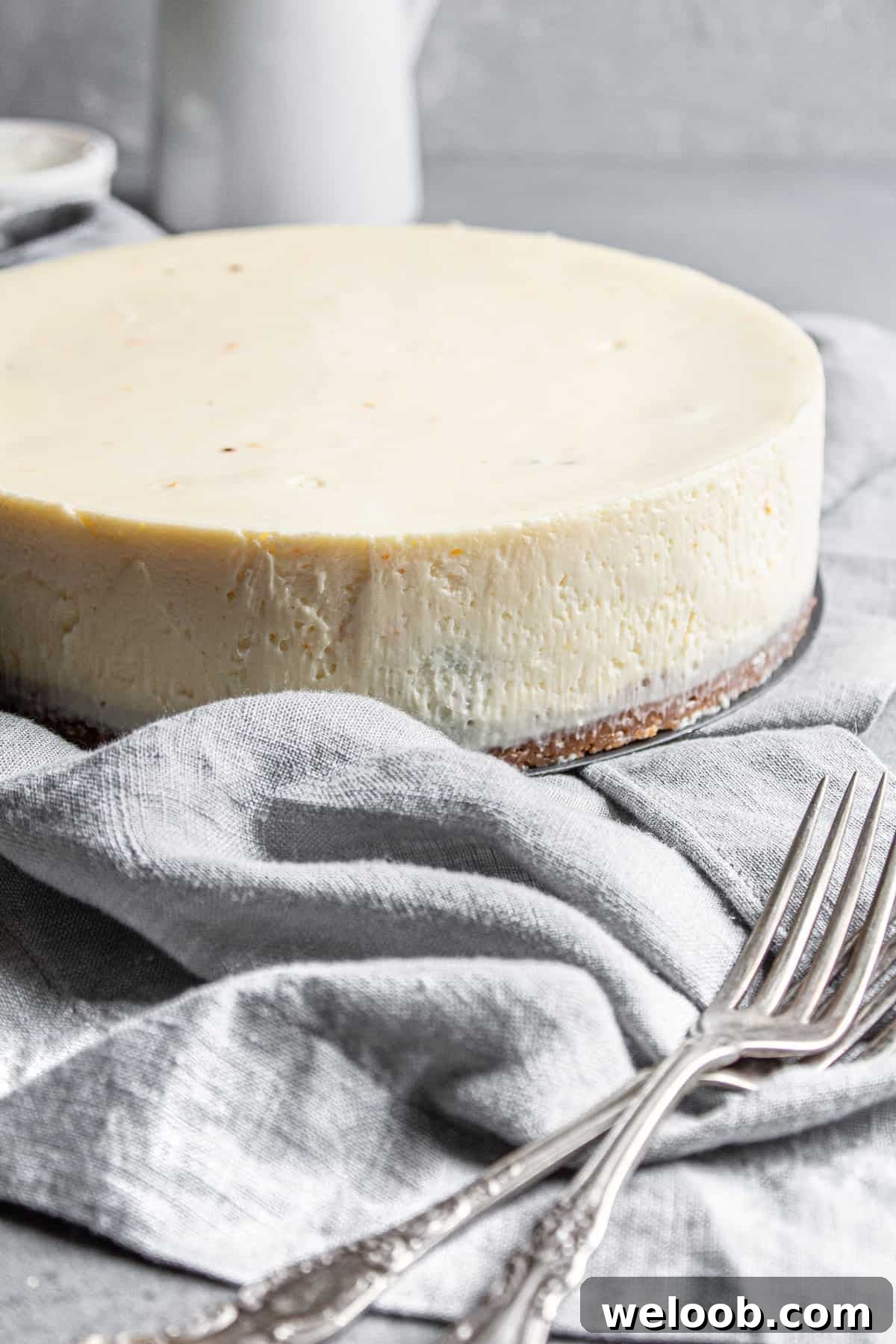
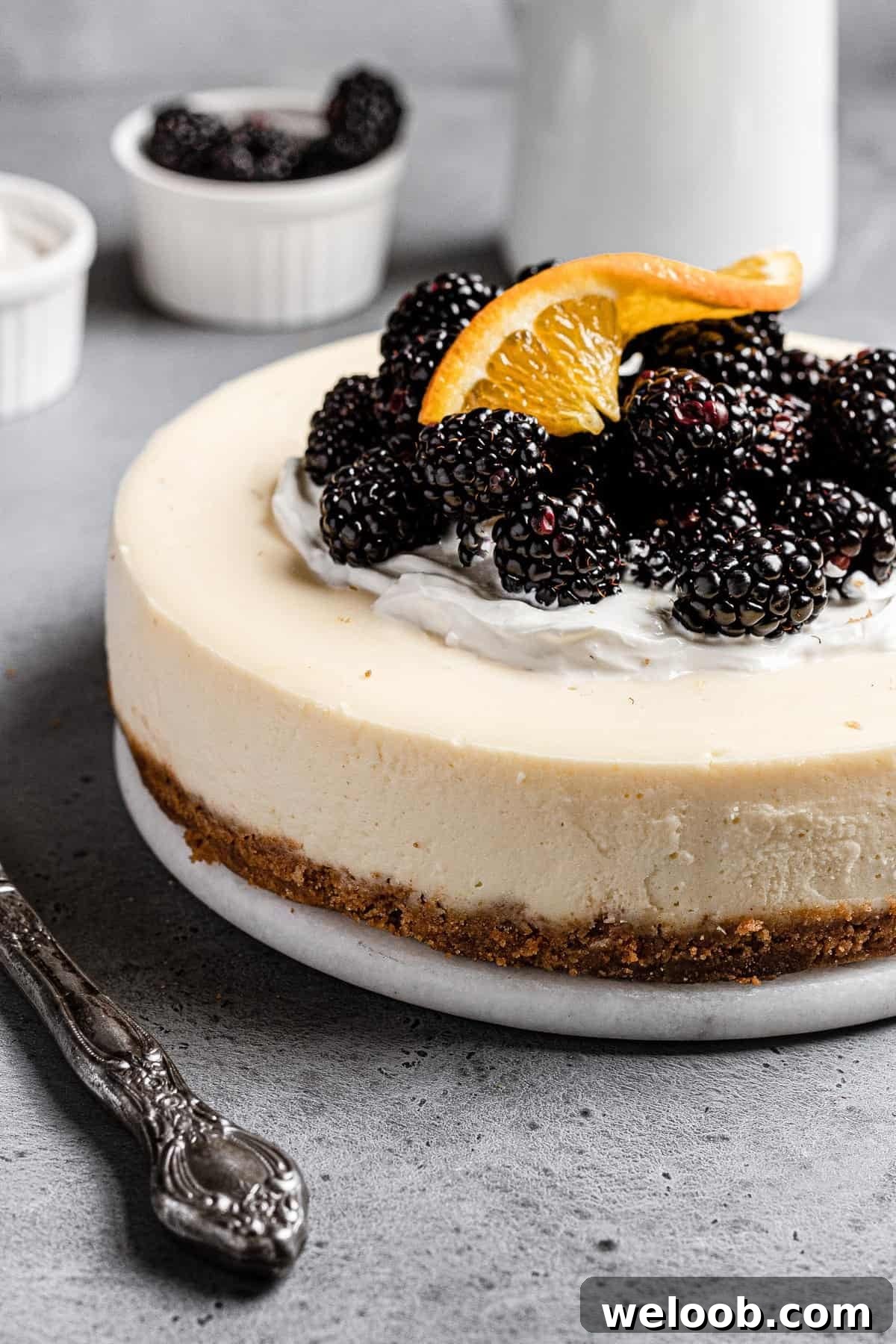
This Blackberry Vanilla Cheesecake is silky, creamy, and soft—filled with fresh blackberries that create a delightful and surprising interior.
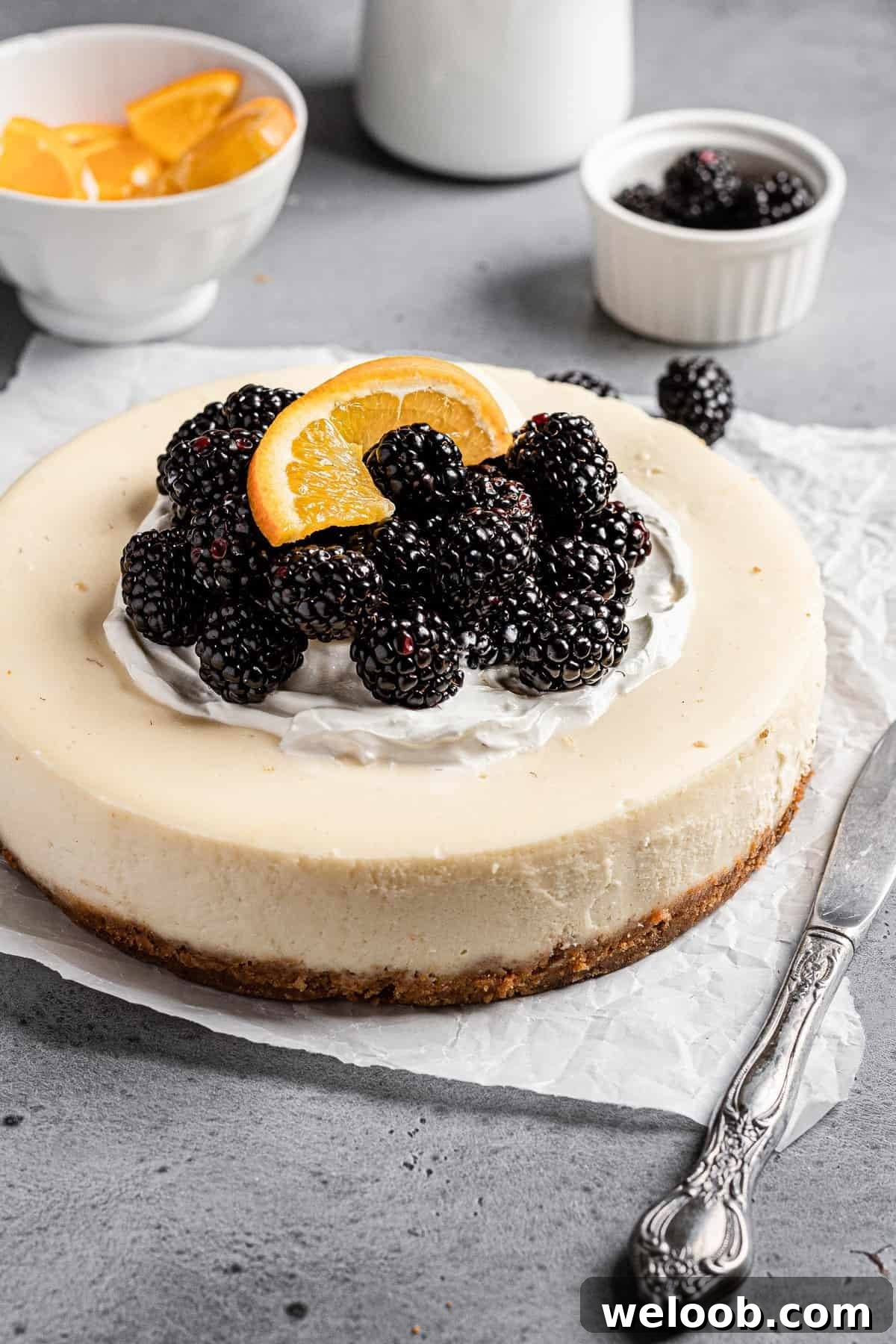
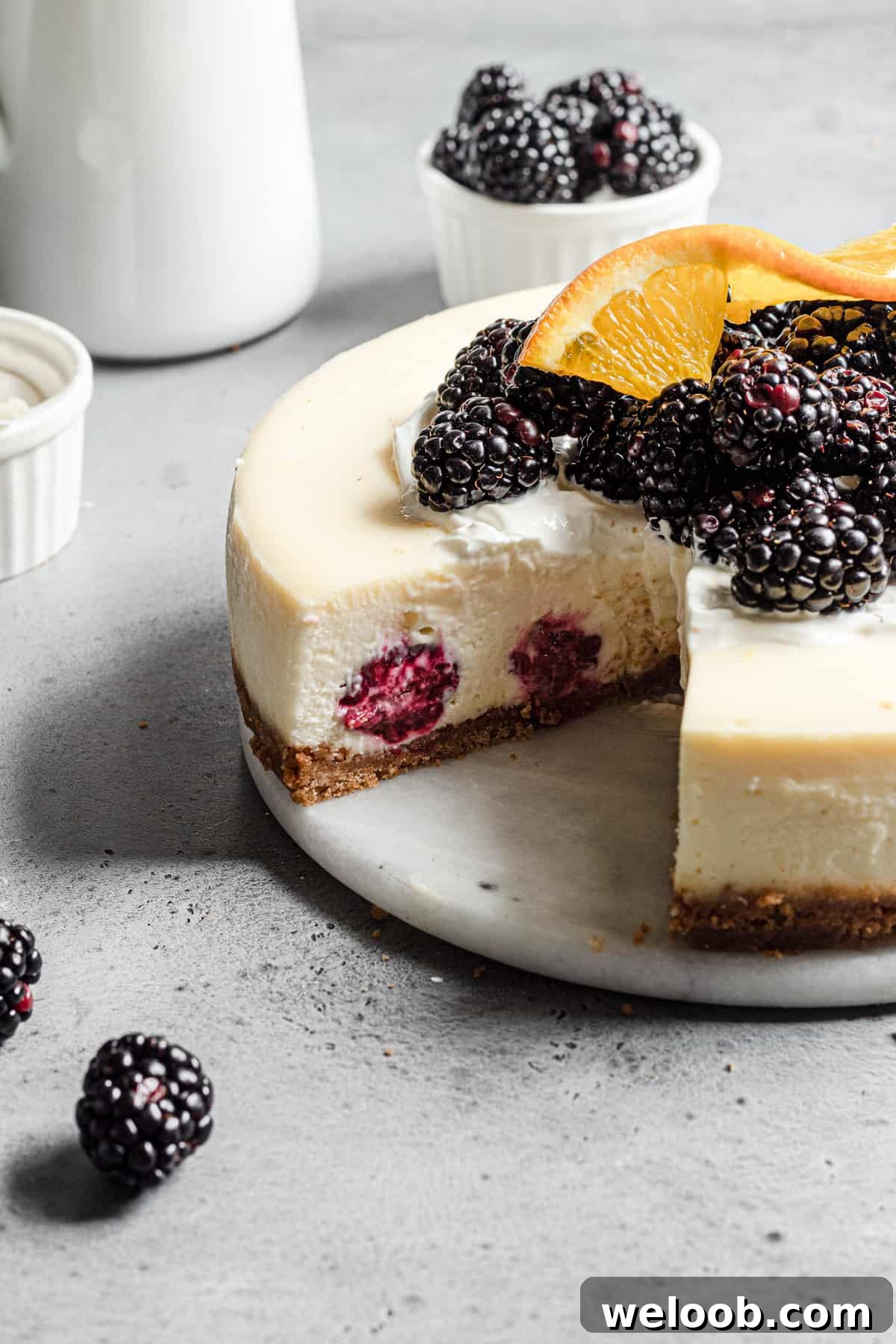
Baking a cheesecake can feel intimidating. Will it crack? How will it look when it cools? Cracks are common and frustrating, but they don’t ruin the flavor. This article explains why cracks happen and how to reduce the chance of them, and then provides a clear, step-by-step recipe for a beautiful blackberry vanilla cheesecake.
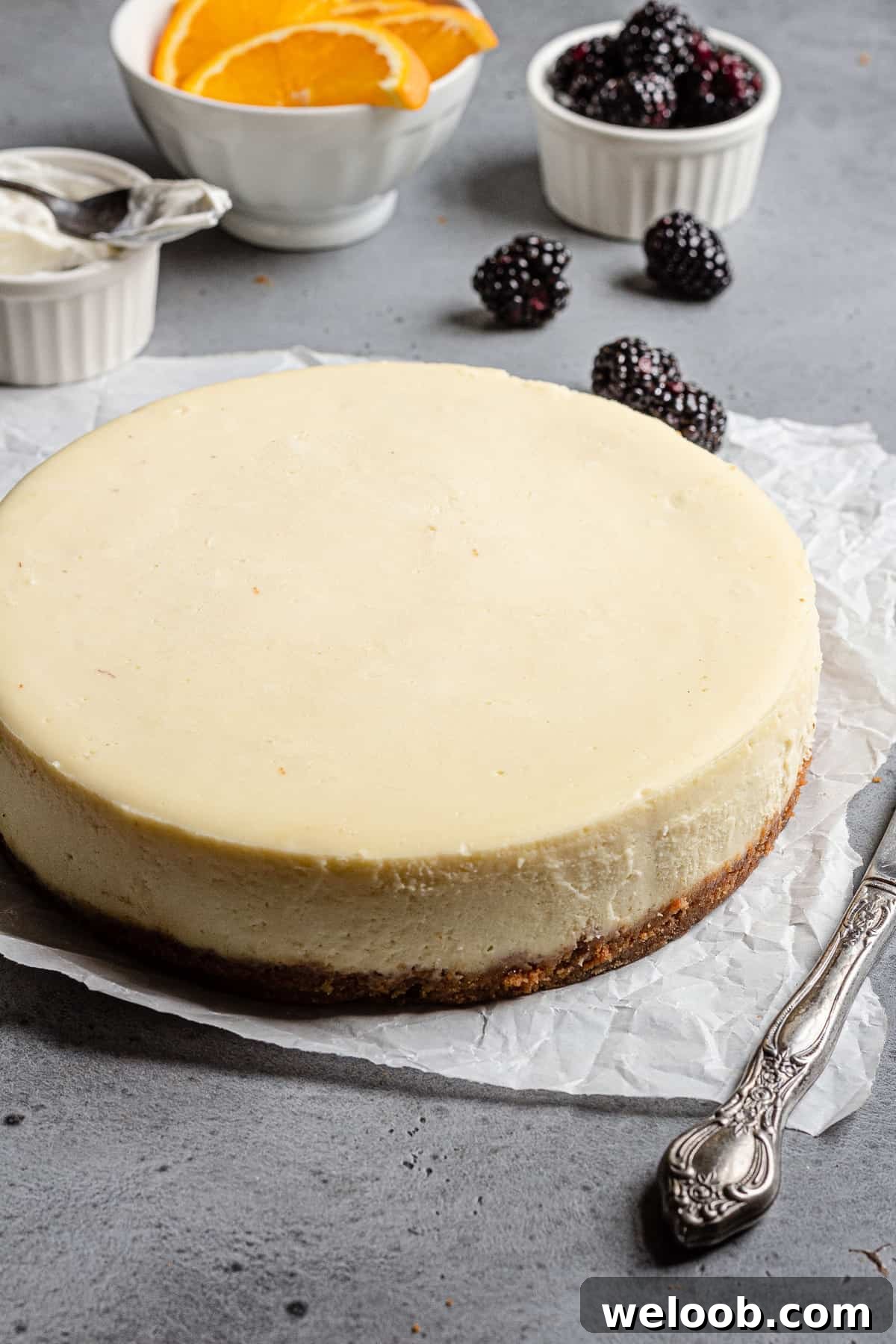
If your cake does crack, don’t worry — it will still taste amazing. Many of the tips below will help you get a smooth top and a silky texture, but remember that texture and taste are the most important parts.
Room-temperature ingredients
Using ingredients at room temperature is one of the simplest ways to achieve a silky cheesecake. When cream cheese, eggs, and sour cream are all roughly the same temperature, the cream cheese mixes smoothly, ingredients blend evenly, and less air is trapped in the batter. That reduces lumps and helps prevent cracking on the surface.
Tip: If your cream cheese is still cold, heat it for about 30 seconds in the microwave to soften it—be careful not to melt it.
Mix the cornstarch and sugar first
Combine the cornstarch with the sugar before adding them to the cream cheese. Mixing them together first helps distribute the cornstarch evenly through the batter and prevents clumping.
Bang the pan
After pouring the batter into the pan, give the pan a firm tap on the countertop to release trapped air bubbles. If you skip this step, air in the batter may escape as the cheesecake cools and cause cracks. If you add blackberries, bang the pan before and after placing the fruit so any air pockets are removed.
Water bath (bain-marie)
A water bath evens baking for custard-based desserts like cheesecakes. Water in the outer pan rarely exceeds simmer temperature (about 180–190°F / 82–88°C), which reduces hot spots and slows baking. This helps the outside cook at a similar pace to the center so the edges don’t become rubbery or overbaked while the middle finishes.
Cooling: Carryover cooking (part 1)
When removed from the oven, baked goods continue to cook until they reach room temperature—a process called carryover cooking. Cheesecakes retain heat and cool slowly, so the center should still jiggle slightly when you turn the oven off; the carryover will finish setting the cake as it cools.
Cooling: Avoid sudden temperature changes (part 2)
Because cheesecakes cool slowly, you should let the cake sit in the turned-off oven with the door closed for a period to allow temperatures to equalize gradually. Removing the cake too quickly exposes it to a sudden temperature change that can make it contract and crack.
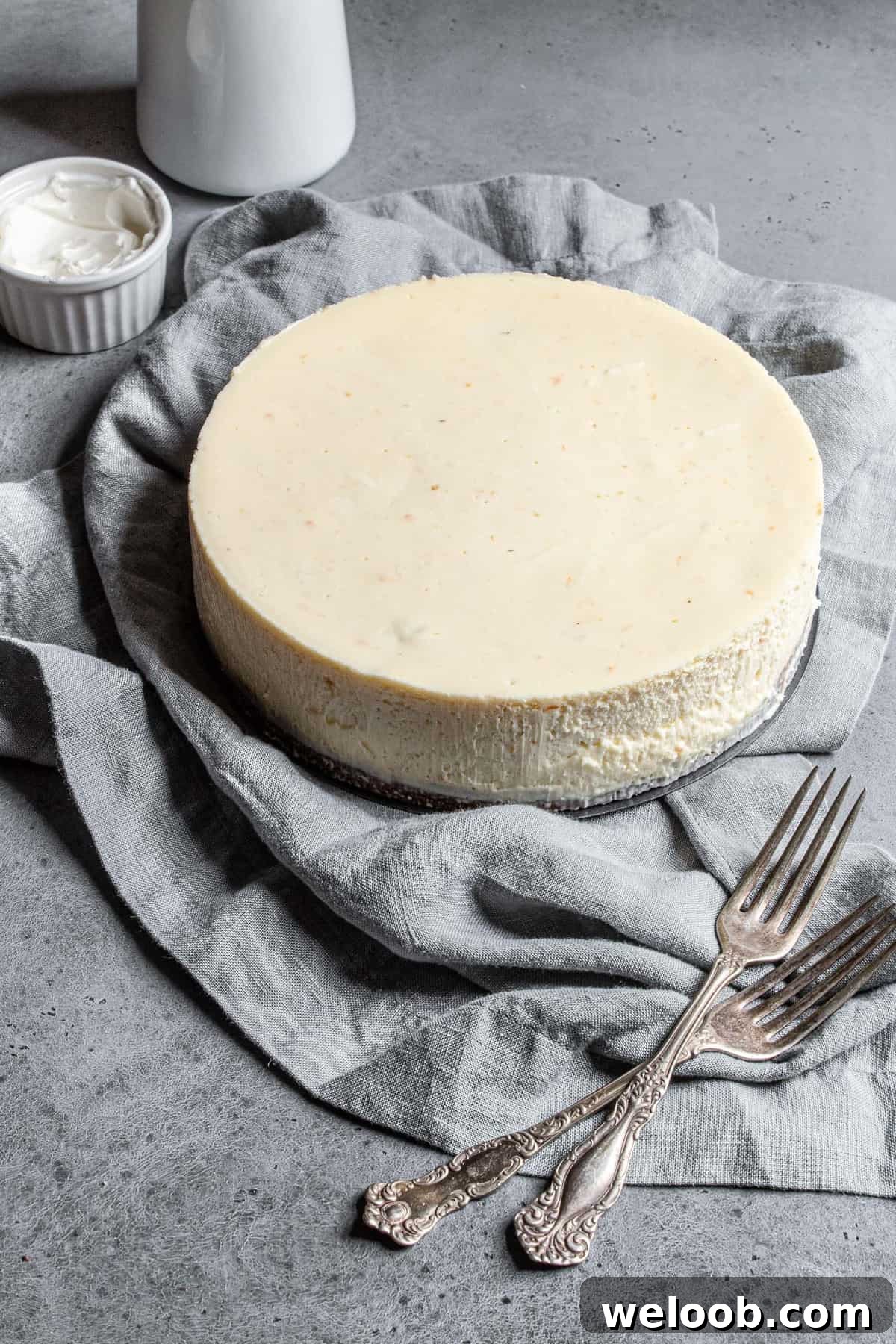
Important to know: An overbaked cheesecake will often crack and be dense, while an underbaked one may sink in the center and be softer. Both are delicious and can be dressed up with whipped cream, fresh fruit, or a fruit filling to improve appearance.
-

Place crust ingredients in a food processor -
Pulse until combined -
Evenly spread crumbs in the pan -
Press crumbs with fingers or the back of a spoon; bake at 350°F for 12 minutes.
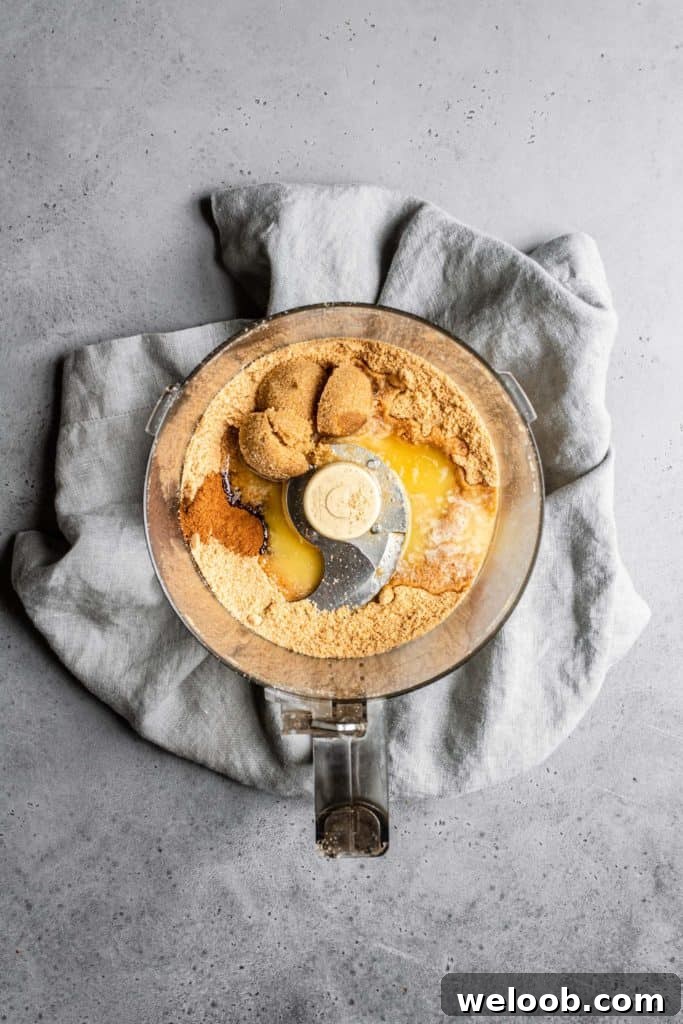
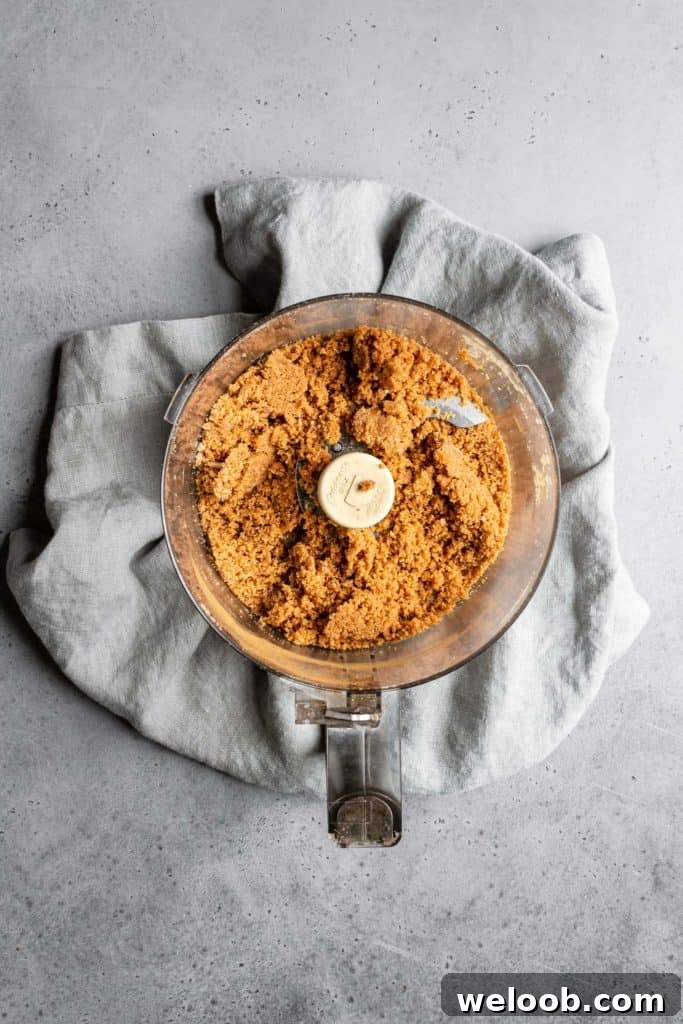
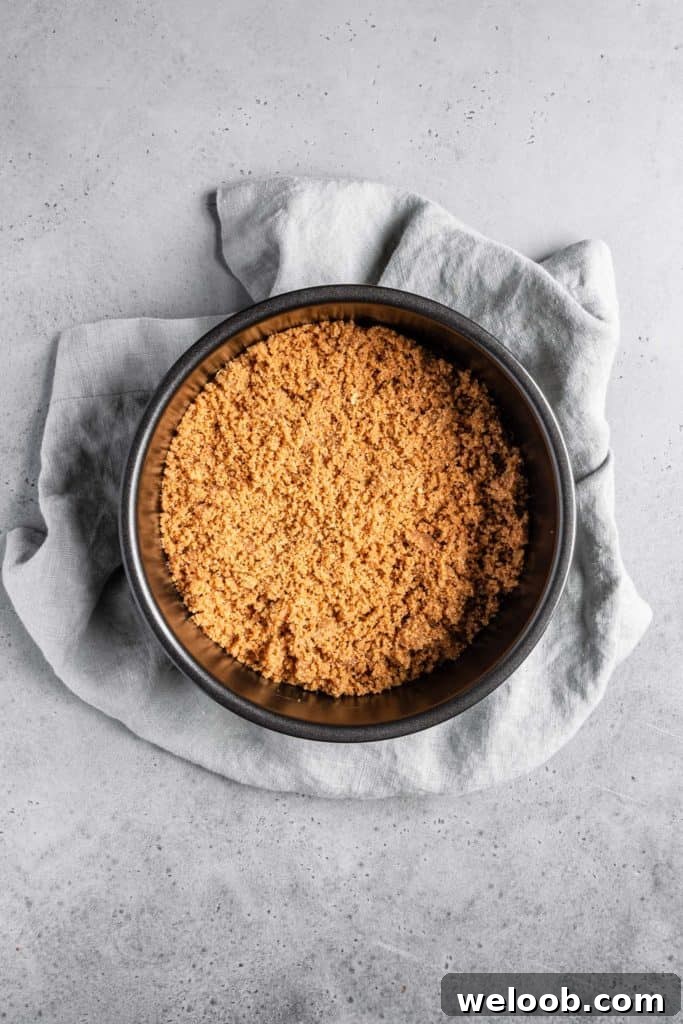
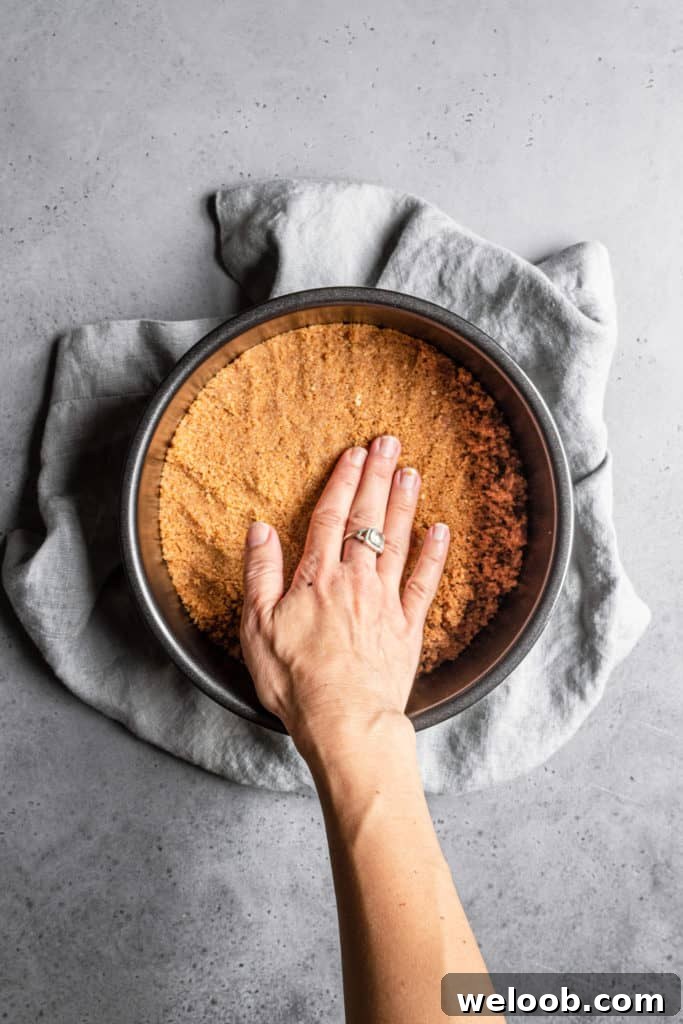
-
Place softened cream cheese in a mixer bowl -
Beat until smooth and lump-free -
Add sugar and cornstarch -
Mix until smooth -
Add sour cream and mix until smooth -
Mix in eggs one at a time until smooth
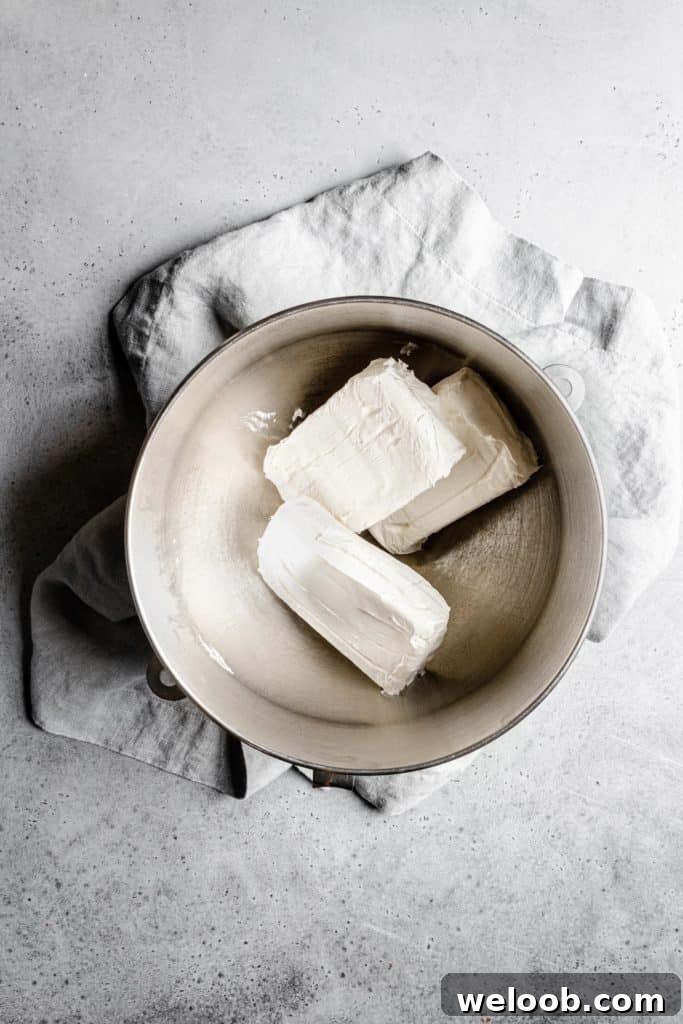
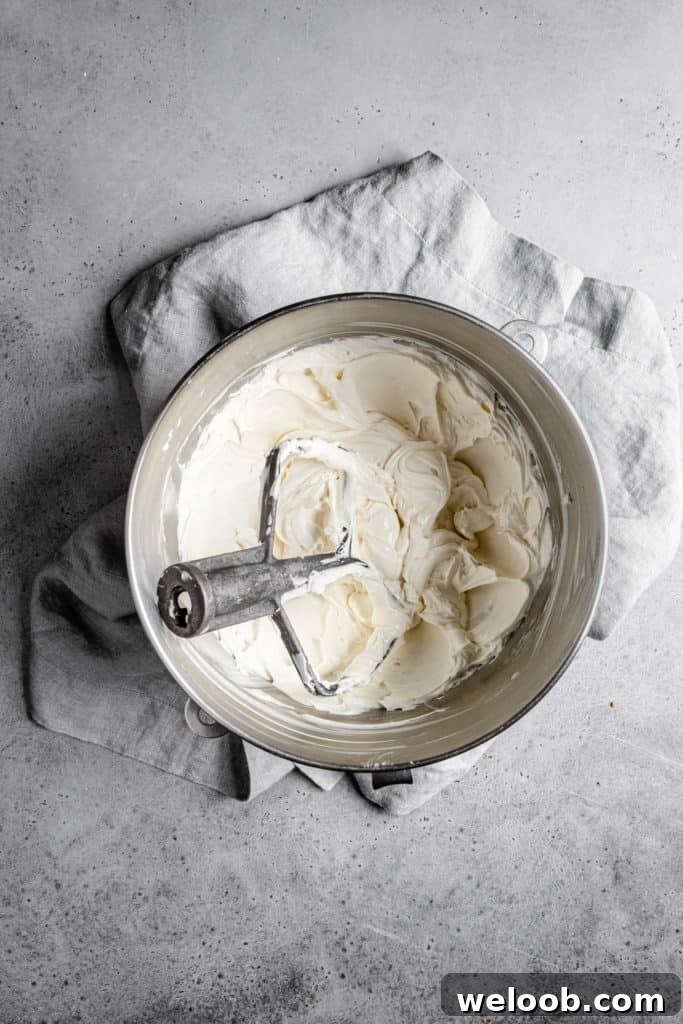
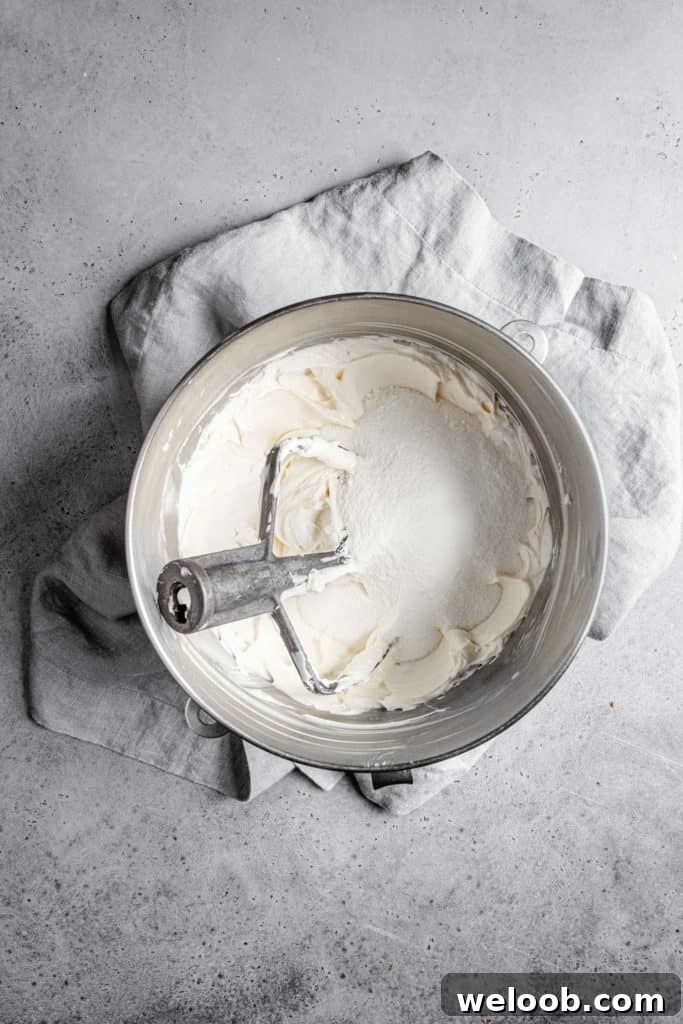
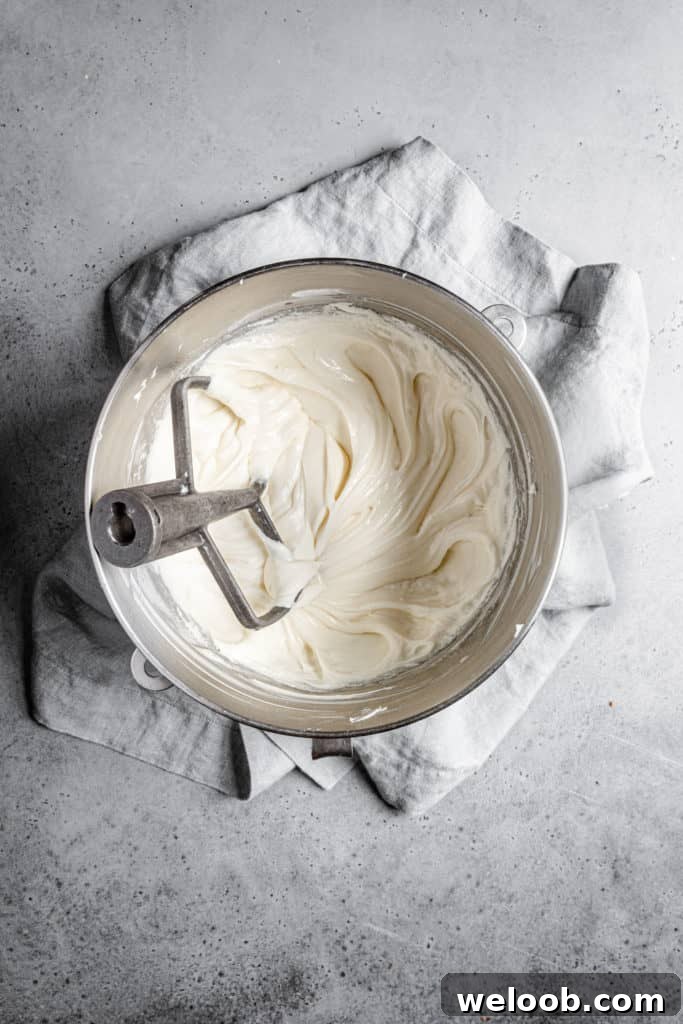
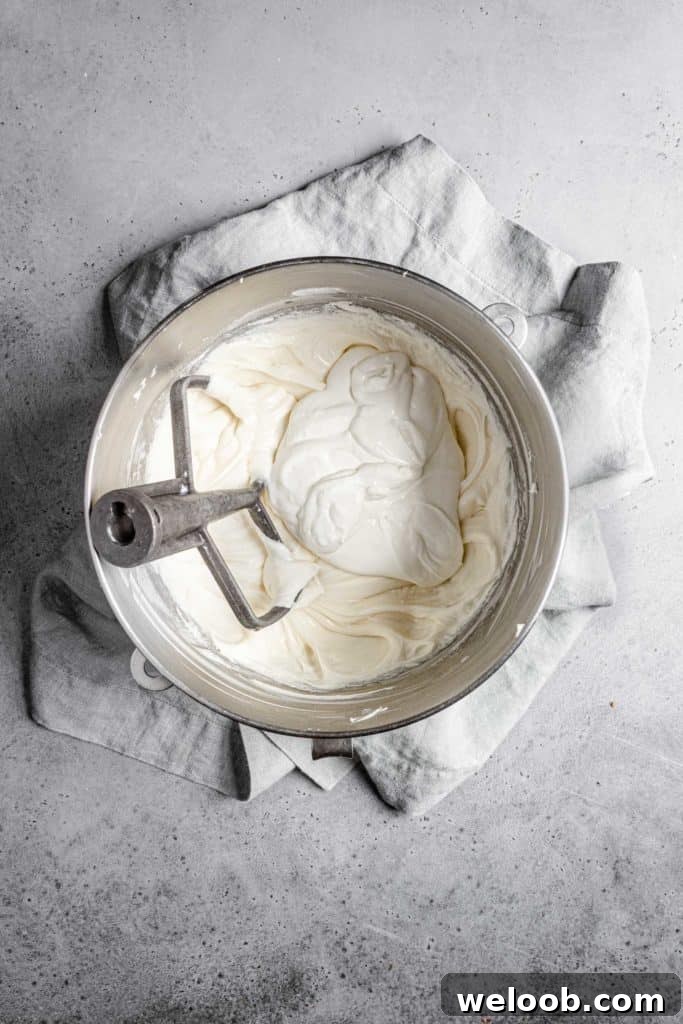
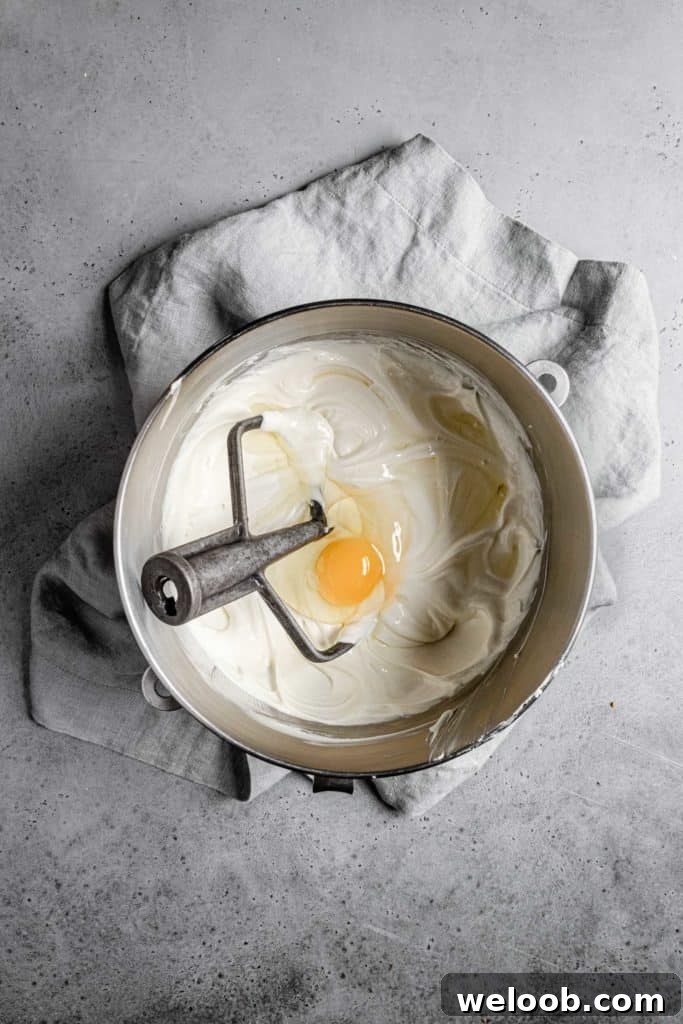
-
Place blackberries, then bang the pan again -
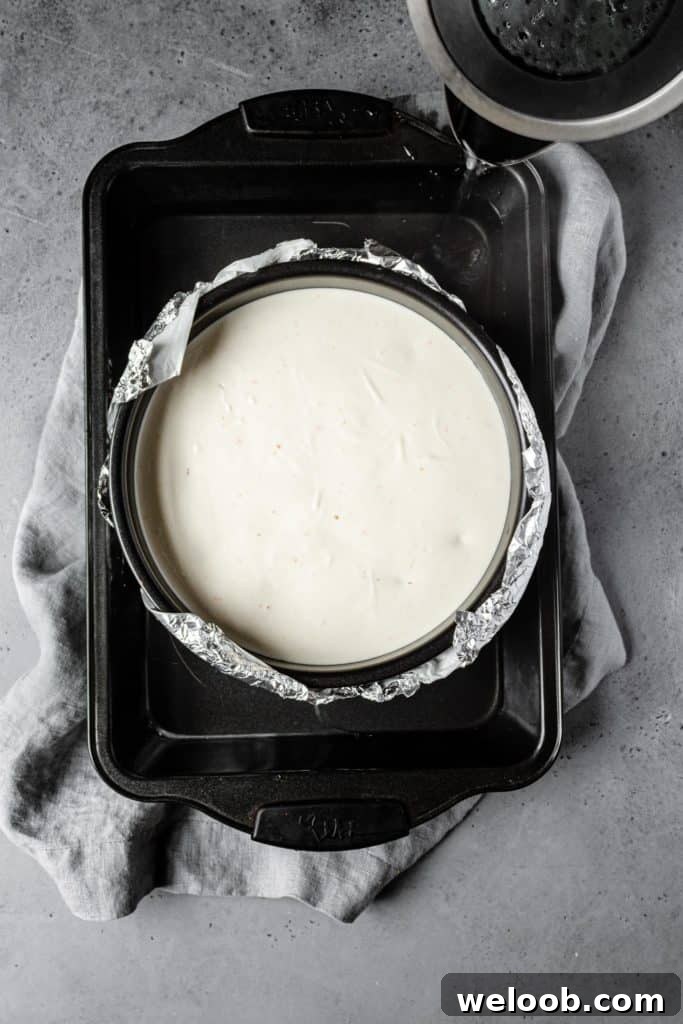
Set the springform pan inside a larger pan -
Pour boiling water into the outer pan -
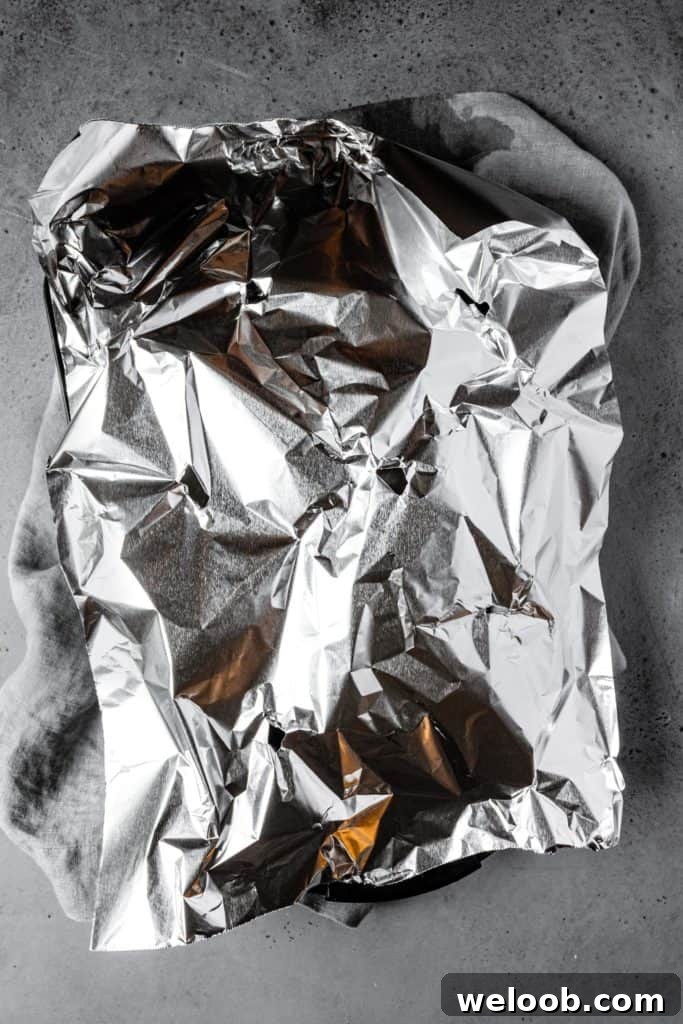
Cover with foil and poke a few holes for steam to escape
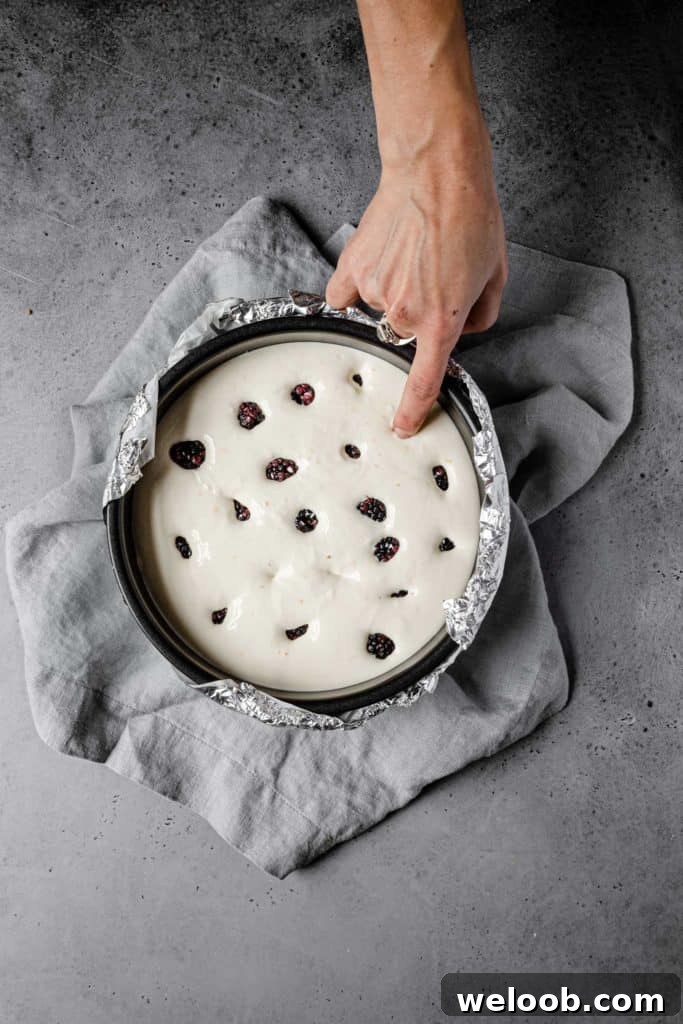
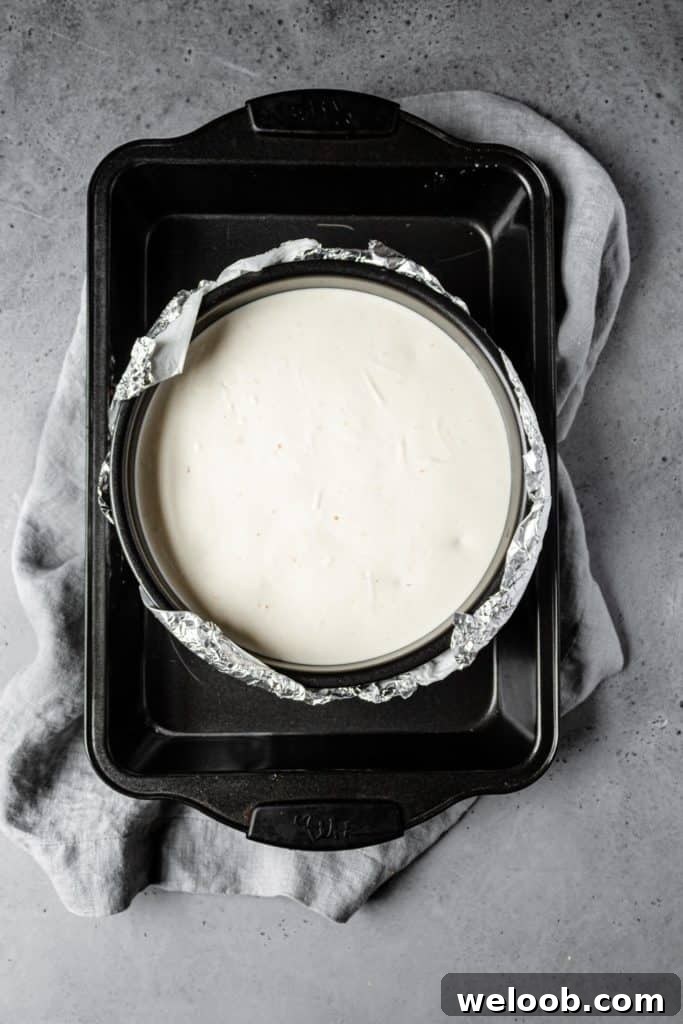
Now let’s talk about the Blackberry Vanilla Cheesecake recipe
- Very important: scrape the sides and bottom of the bowl before adding each new ingredient and once or twice while mixing. Ingredients can cling to the bowl and create lumps if not scraped.
- You can omit the blackberries for a classic vanilla cheesecake.
- For added depth, stir 3 tablespoons of bourbon into the batter along with vanilla and orange zest.
- Any crisp cookie (graham crackers, shortbread) works for the crust. Avoid soft cookies such as ladyfingers or cakey cookies.
- If you skip the water bath, the cheesecake may rise more and then deflate as it cools. Use a taller pan and expect a slightly different texture.
- This recipe yields one 9″ springform cheesecake. If using an 8″ or 10″ pan, adjust the bake time accordingly: a larger pan will finish sooner, a smaller pan will need more time.
Happy baking!
More recipes you might enjoy
- Pistachio Orange Blossom Cookies
- Lemon Mint Cake
One more thing…
If you bake this recipe, tag @OneSarcasticBaker on Instagram — it’s always fun to see your creations! If you found this recipe inspiring, save this pin to your dessert or cheesecake boards.
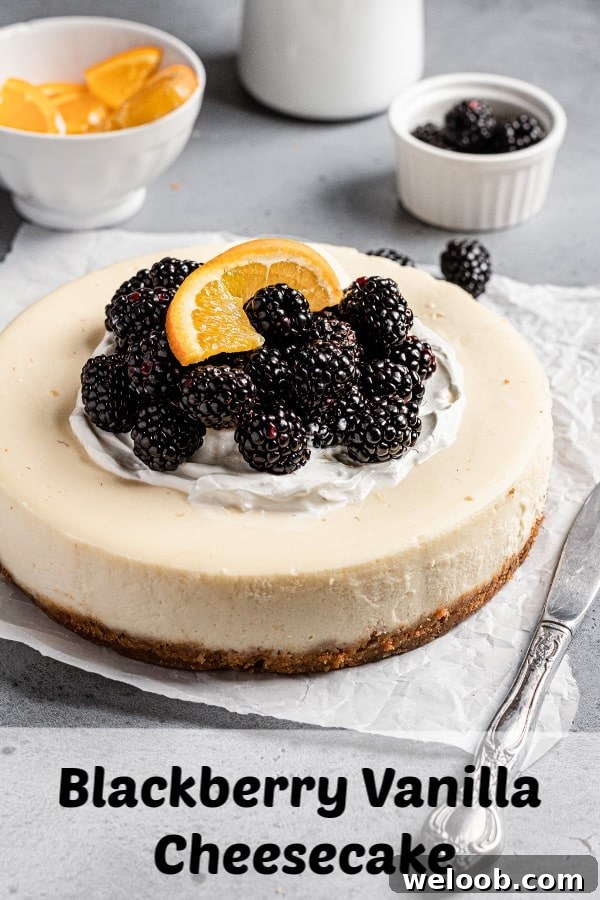
Blackberry Vanilla Cheesecake
Prep time: 40 minutes · Cook time: 45 minutes · Yields: one 9″ round springform pan
Author: Dikla Levy Frances
Ingredients
Cookie crust
- 1 cup cookie crumbs (about 140 g / 5 oz)
- 3 TBS light brown sugar (about 3.5 g / 1.5 oz)
- 1/2 tsp cinnamon
- Pinch of salt
- 4 TBS unsalted butter, melted (about 60 g / 2 oz)
Vanilla cheesecake
- 3 packages full-fat cream cheese (8 oz / 225 g each; total 680 g / 24 oz)
- 1 cup sugar (200 g / 7 oz)
- 2 TBS cornstarch
- 1 cup full-fat sour cream (211 g / 7.5 oz)
- 3 large eggs
- 2 tsp vanilla extract or 1 TBS vanilla bean paste
- Zest of 1/2 an orange
- Pinch of salt
- 2 cups fresh blackberries (about 170 g / 6 oz)
Instructions
To make the crust
- Preheat the oven to 350°F (175°C). In a food processor, combine cookie crumbs, brown sugar, cinnamon, a pinch of salt, and melted butter. Pulse until evenly mixed.
- Press the crumbs evenly into the bottom of a 9″ springform pan using your fingers or the back of a spoon.
- Bake the crust for 12 minutes. Let it cool slightly.
- Wrap the outside and bottom of the springform pan with a layer of aluminum foil and parchment (foil directly on the pan bottom) to protect it from water. Place the wrapped pan inside a larger roasting pan that will hold water up to halfway up the cheesecake pan.
Vanilla cheesecake
- Reduce the oven temperature to 325°F (165°C).
- In a small bowl, mix the sugar and cornstarch together.
- Using a stand mixer fitted with the paddle attachment, beat the room-temperature cream cheese on medium speed for about one minute until smooth and lump-free. Scrape down the sides and bottom of the bowl as needed.
- Add the sugar-cornstarch mixture and mix until smooth, scraping the bowl again.
- Mix in the sour cream until incorporated and smooth.
- Add eggs, one at a time, waiting until each is fully incorporated before adding the next. Scrape the sides and bottom after each addition.
- Stir in vanilla (or vanilla bean paste), orange zest, and a pinch of salt. Mix about 30 seconds to combine.
- Pour the batter over the pre-baked crust. Bang the pan firmly on the counter to release air pockets. Gently press the blackberries into the batter and bang the pan again to remove any remaining air.
- Place the springform pan in the center of the larger pan and carefully pour boiling water into the outer pan until it reaches halfway up the sides of the cheesecake pan. Be careful not to splash water into the batter.
- Cover the pans loosely with aluminum foil and poke 4–5 small holes in the foil so some steam can escape while baking.
- Bake for about 40–45 minutes, or until the center (about 1.5″ from the edge) still jiggles like jelly when gently shaken.
- Turn the oven off and leave the cake inside with the door closed to cool slowly for 1–3 hours.
- When completely cool, remove the cheesecake from the oven. Run a warm knife blade around the edge to loosen it from the pan before removing the springform ring.