
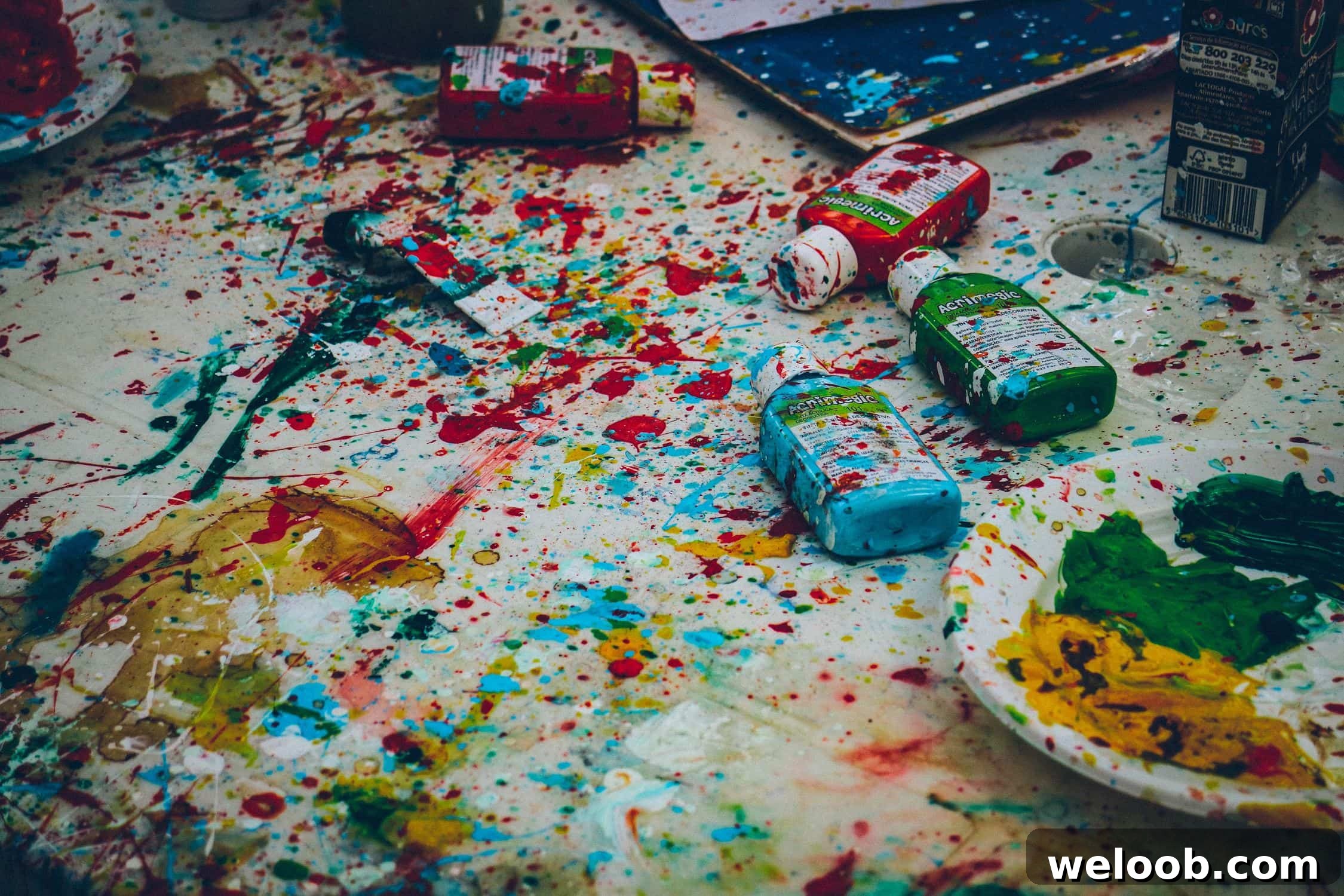
The mess. It is everywhere.
Right now, my kitchen is strewn with oil splatters as I write. My three-year-old decided to “cook” and poured water into a pan of oil on the stove. Hoping to fix it, I put the pan back on the heat to evaporate the water—but there was far too much. The result was an oil-splatter party, with grease landing in places it should never reach. I tried to clean it up, but the oil soaked into surfaces and crevices. The mess felt overwhelming. Where are a million paper towels when you need them?
The mess follows me into the living room, where tiny toys on the rug threaten my every step. It clings to the kitchen table, where crumbs and little particles insist on returning no matter how many times I wipe. The floor is a patchwork of crumbs, single socks, and stray items that don’t belong anywhere but are there because I have kids.
And the papers—oh, the papers. Sheets covered in drawings of every color, evidence of my daughter’s endless creativity. She’s a budding artist who can spend hours sketching, coloring, and inventing scenes on page after page.
For a long time I resented the mess. I got angry, frustrated, and impatient. Why can’t everything stay tidy? Why are there always dishes to wash? Why, why, why?
Then I felt a gentle nudge in my heart: the mess is part of growth. If I don’t let my children explore, they won’t learn. If I insist on everything being pristine at all times, I deny them the chance to try new things—many of which produce chaos.
If I never let them help in the kitchen, how will they learn to cook? Their attempts often mean ingredients hit the floor or splatter across the counter—far messier than if I cooked alone. If I don’t let them wash dishes, they won’t learn how; yet when they do, soap and water go everywhere. More mess. Why does it always feel like the mess has chosen me?
Still, each messy episode teaches something. Each spill, splatter, and ruined stack of papers is practice. The mess is the classroom where my children learn. There will be potty accidents before they master the toilet. There will be kitchen disasters before they become capable cooks. There will be spills, oil splatters, and all the small frustrations that come with raising little humans.
Knowing this helps. I find comfort in the idea that my children are growing amid the chaos. They change a little every day, one mess at a time. I want them to become neat, responsible adults, but I accept that mistakes and accidents are part of the process.
I still get angry sometimes, but I’m learning to embrace the mess instead of letting it consume me. Anger won’t speed up learning. What helps is recognizing the purpose behind the chaos and doing what mothers do: teach and clean up. The mess delivers a message—an invitation to learn—and my role is to guide my kids through it.
Expecting a life without mess when you have children is like expecting the sun not to set: unrealistic. So we must adapt. We must find peace in the disorder and see it for what it is: evidence that our children are exploring, experimenting, and growing.
What messy situations drive you crazy at home? And if you have any tips for removing oil from cabinets, floors, the stove, and tight crevices, I’d love to hear them.
P.S. I wrote this two years ago, and it still rings true today.