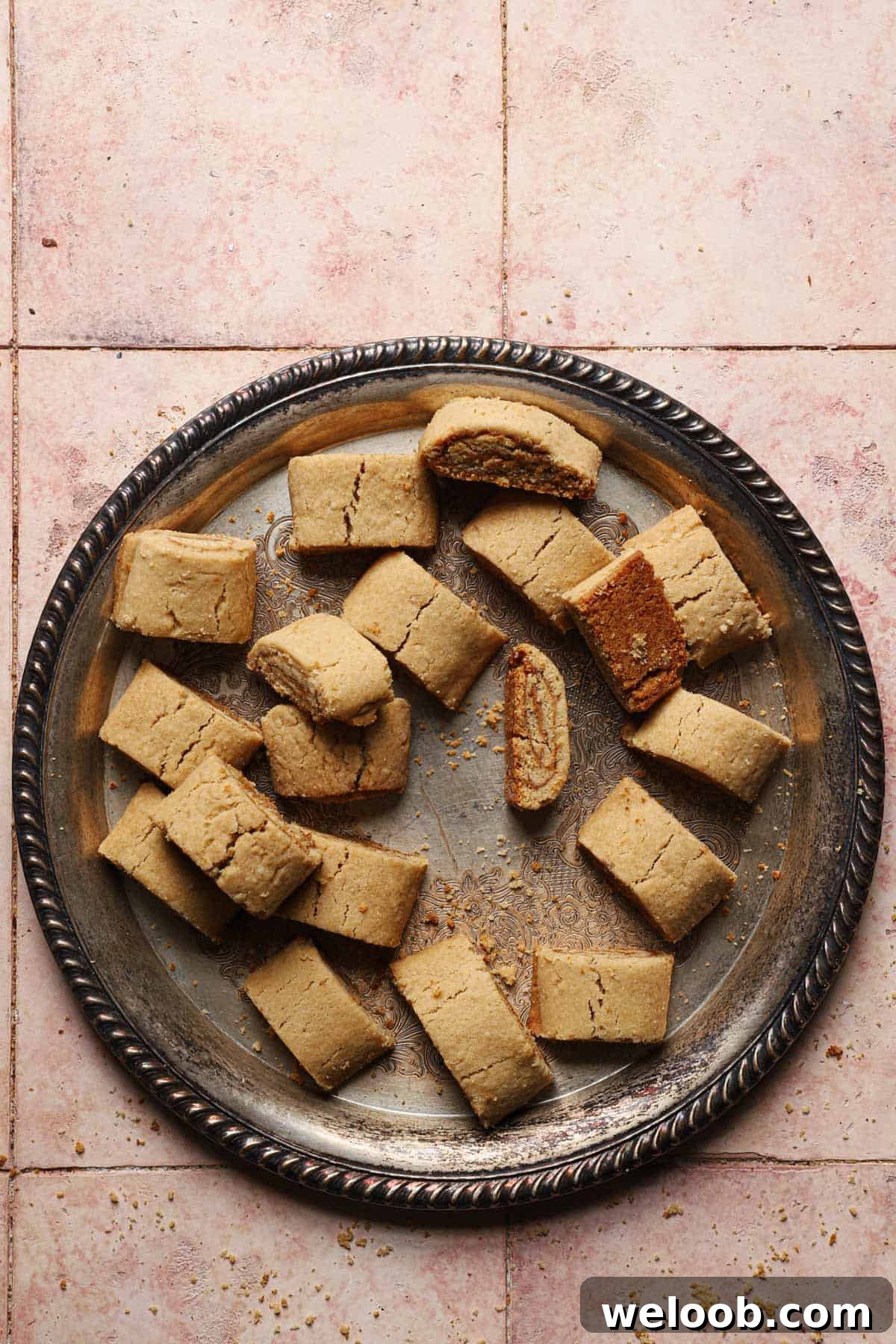
Homemade Biscoff Butter Cookie Recipe
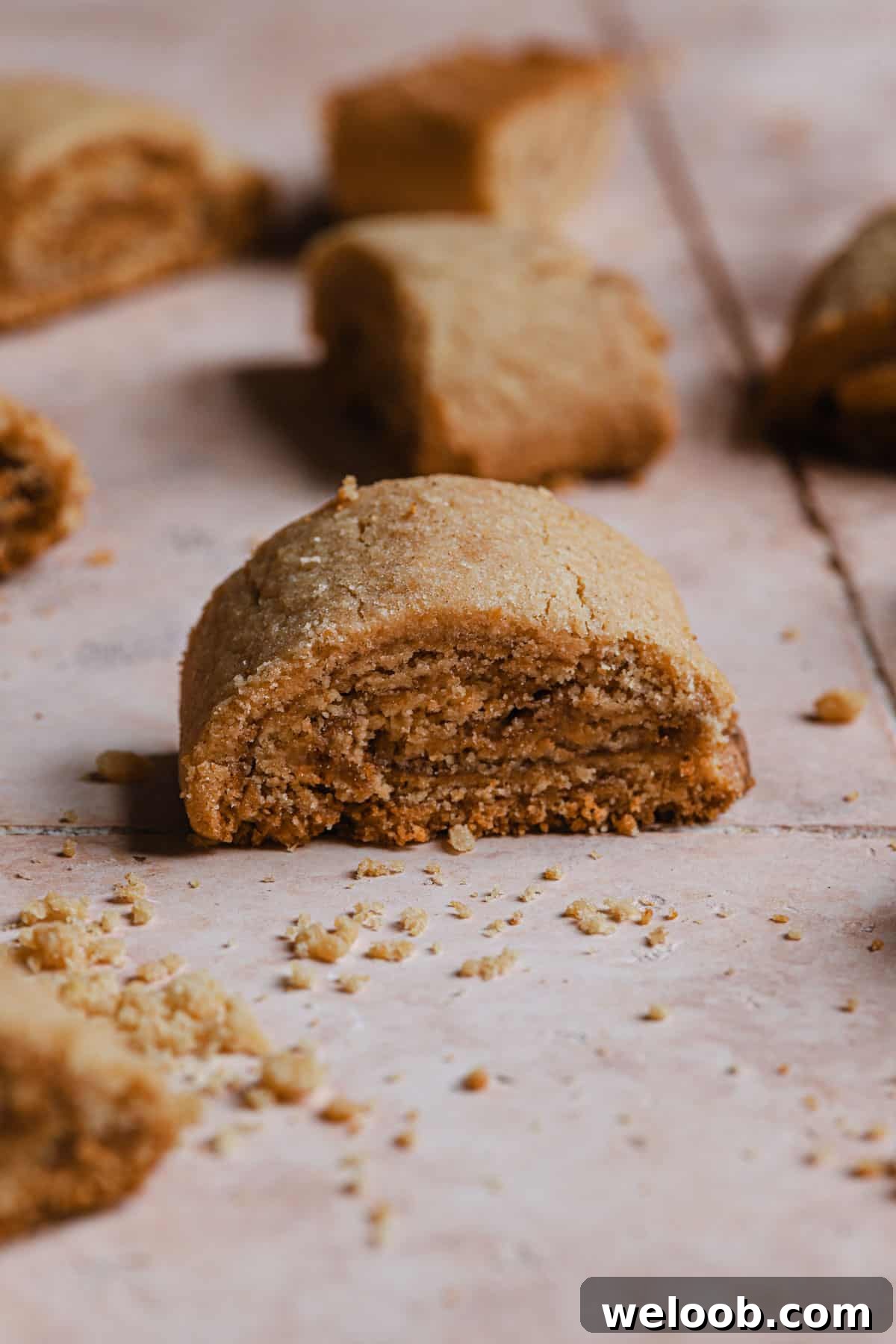
Take a moment to savor these Biscoff cookie butter cookies. They bake up tender, crumbly, and melt-in-the-mouth, packed with the deep caramel-cinnamon flavor of Biscoff cookie spread. This may become your new favorite cookie.
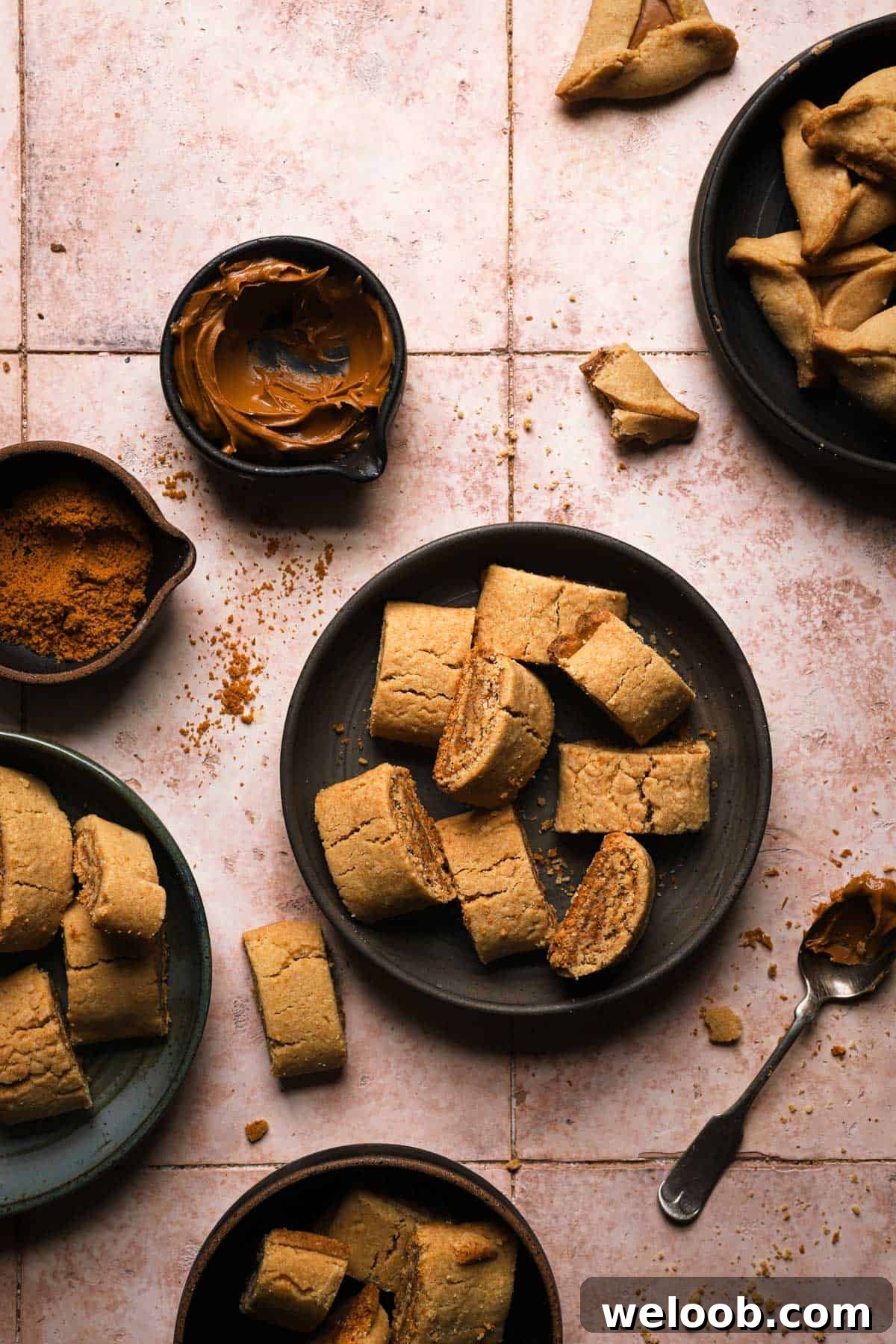
Biscoff cookie butter (also called cookie spread or speculoos butter) is made from crushed Lotus/Speculoos cookies, so its flavor is concentrated — warm cinnamon notes with deep caramel and brown-sugar undertones. That intense, spiced sweetness makes it perfect for baked goods. Bakers use it in everything from ice cream and cheesecake to brownies and layer cakes; here it stars in a simple, versatile cookie recipe you can shape as rolled rugelach-style cookies or triangle-shaped hamantaschen.
What does Biscoff cookie butter taste like?
Biscoff cookie spread is made from spiced shortbread cookies (speculoos or Lotus cookies). The spread captures that cookie’s toasted, caramelized, and cinnamon-forward profile. Because the cookies are finely ground into a spread, the taste becomes very concentrated: richer, more deeply caramelized, and more aromatic than a single cookie.
Why this Biscoff cookie butter cookie recipe?
This recipe highlights what bakers love: simplicity, tactile mixing and shaping, and unmistakable cookie-butter flavor. It’s approachable for home bakers yet flexible enough to adapt to different fillings and shapes.
- Easy and simple. You only need a large bowl, a rolling pin, and a baking sheet.
- Therapeutic. Working the dough by hand, rolling, filling and shaping is satisfying and calming.
- Versatile. Swap the Biscoff for peanut butter, Nutella, or tahini to change the profile.
- Multi-purpose. This dough works equally well for rolled cookies, rugelach-style logs, or triangle hamantaschen.
- Delicious. The finished cookies are buttery, tender, and melt in your mouth with concentrated cookie-butter flavor.
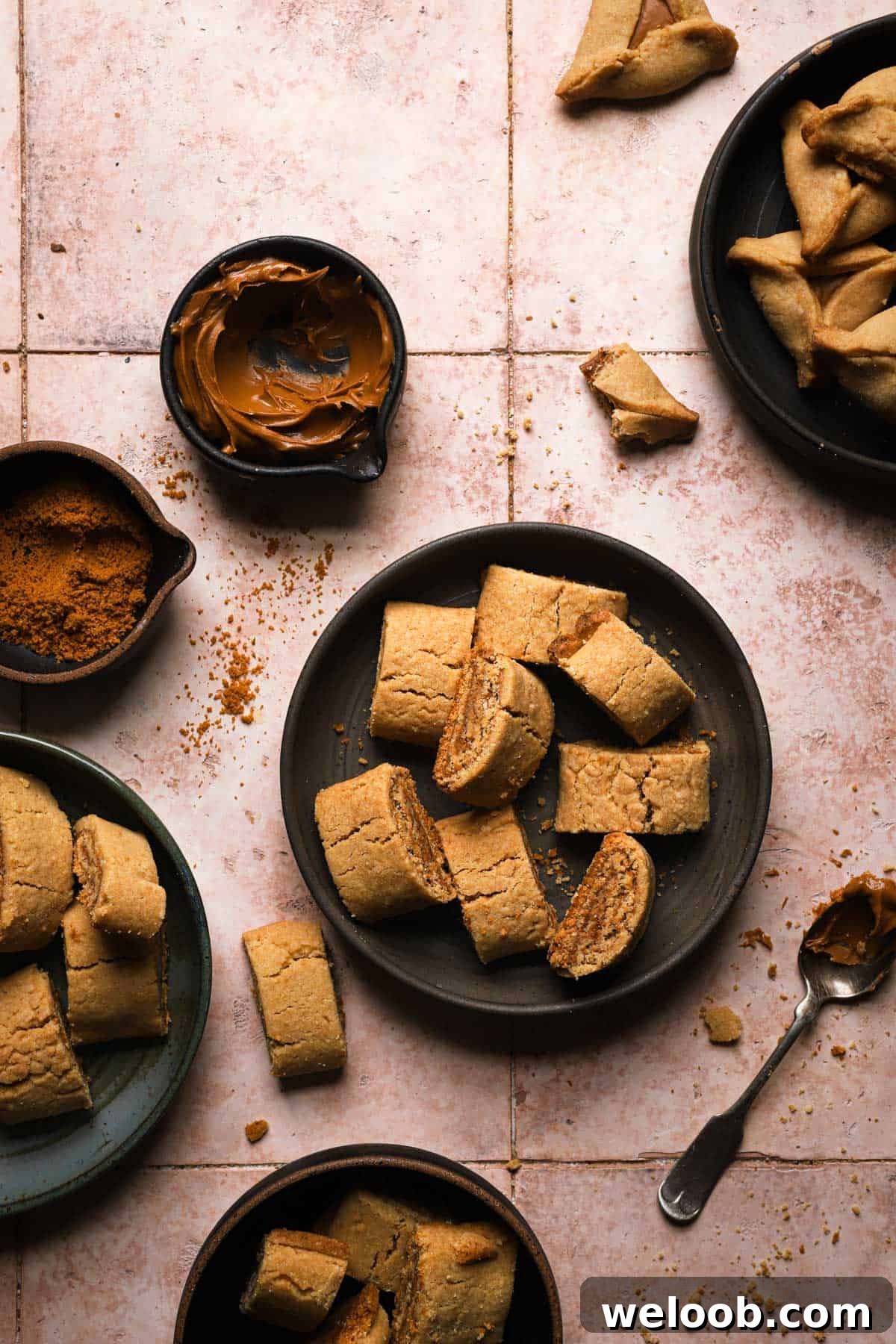
Ingredients for these cookie butter cookies
Bring all ingredients to room temperature before you start — this makes a big difference in texture. The full measurements are listed in the recipe card below.
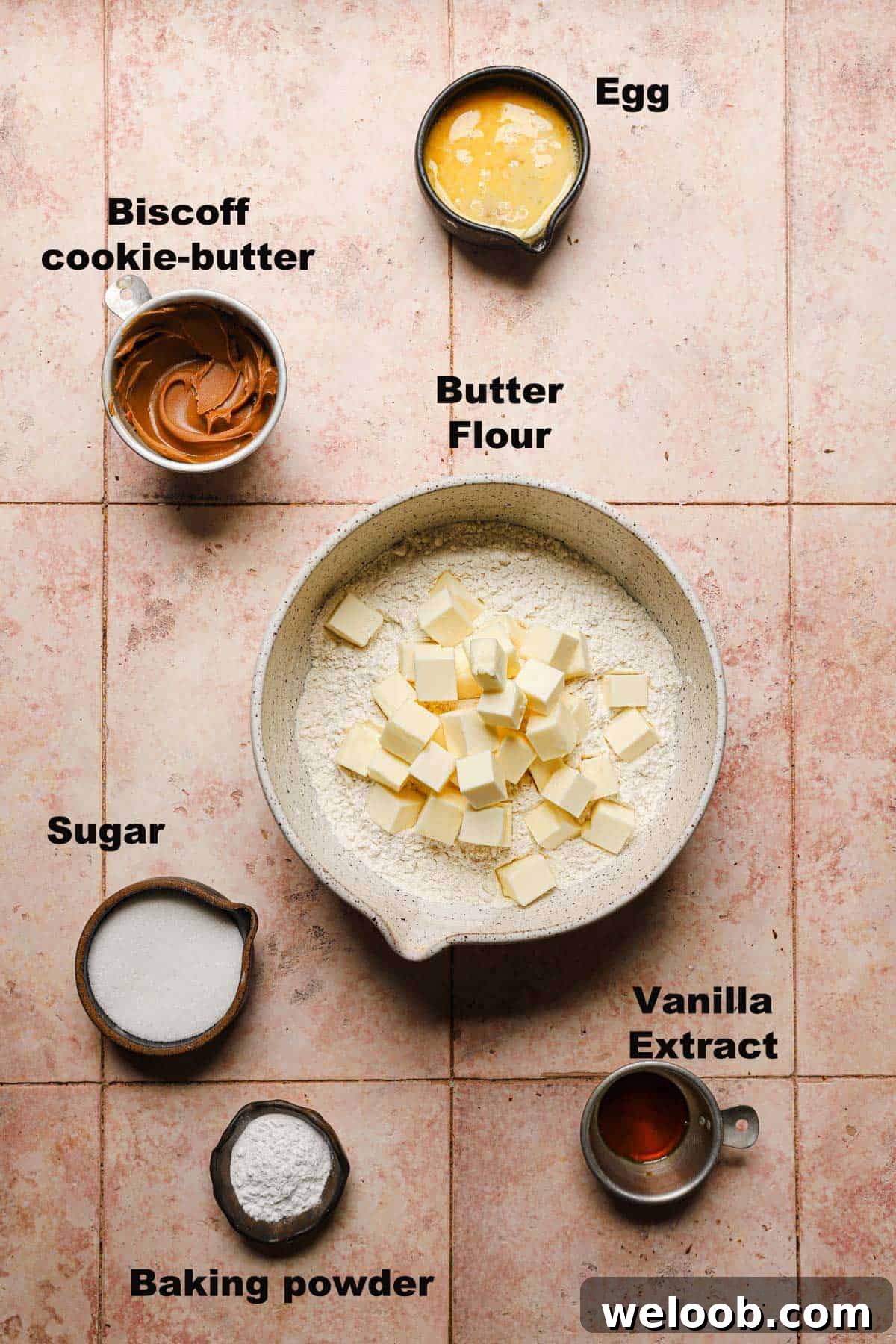
- All-purpose flour
- Baking powder
- Granulated sugar
- Unsalted butter, cut into 1/4″ pieces and softened
- Biscoff cookie butter (cookie spread) — used in both dough and filling
- Egg, beaten
- Vanilla extract
- Crushed Biscoff cookie crumbs
Substitutions
- To make dairy-free: use a vegan or plant-based butter substitute.
How to make these Biscoff cookie butter cookies
You can shape the same dough two ways: rolled logs (rugelach-like) or hamantaschen triangles. The dough is prepared the same; only shaping and baking times differ.
Making the dough
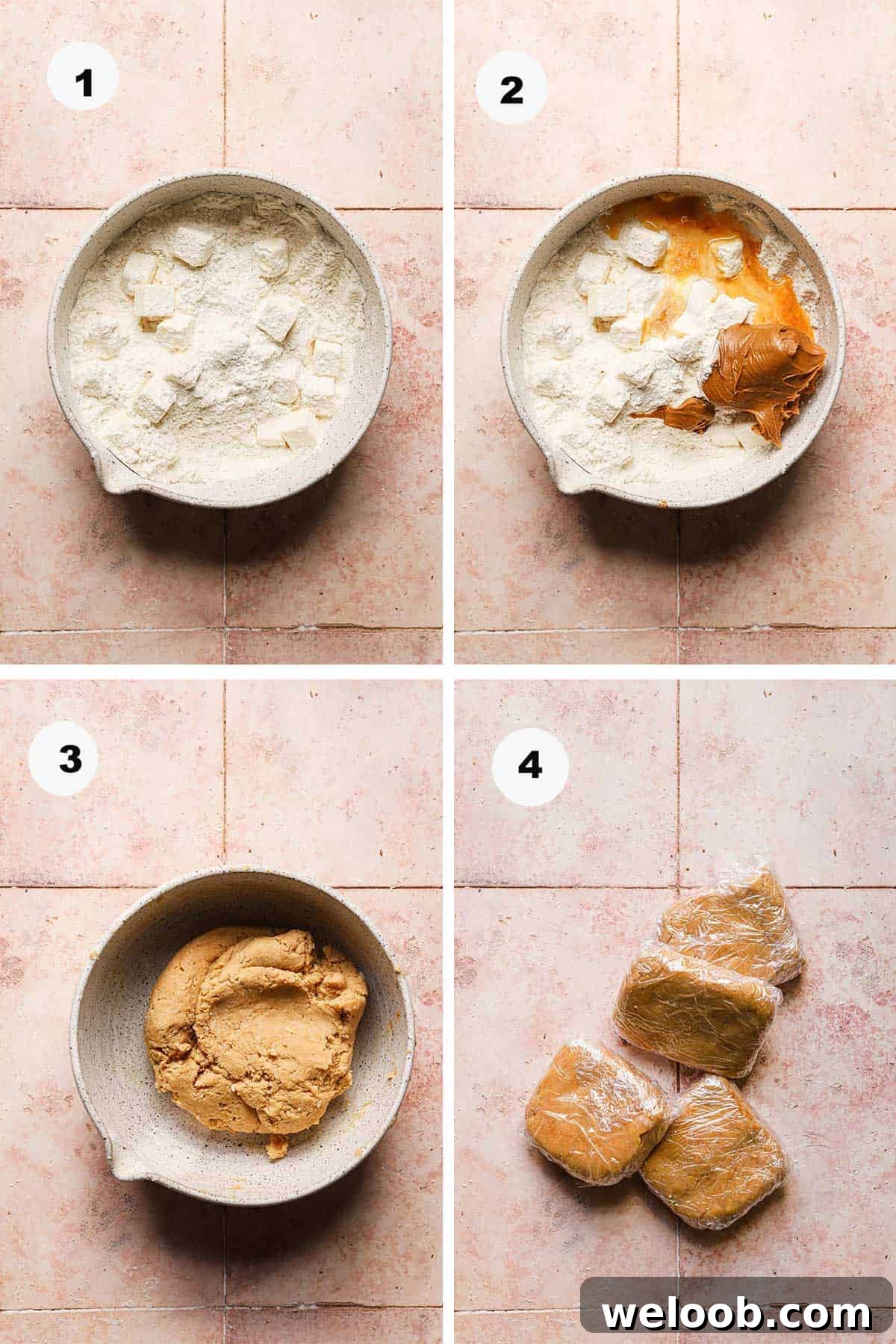
- Sift the flour and baking powder into a large bowl. Stir in the sugar.
- Add the butter pieces and toss them into the dry ingredients until the mixture resembles coarse crumbs.
- Add the cookie butter, beaten egg and vanilla. Use your hands to combine until a smooth, soft dough forms with no visible butter clumps.
- Divide the dough into four equal portions, wrap each in plastic wrap, and chill for 30–60 minutes.
Shaping — Rugelach-style logs
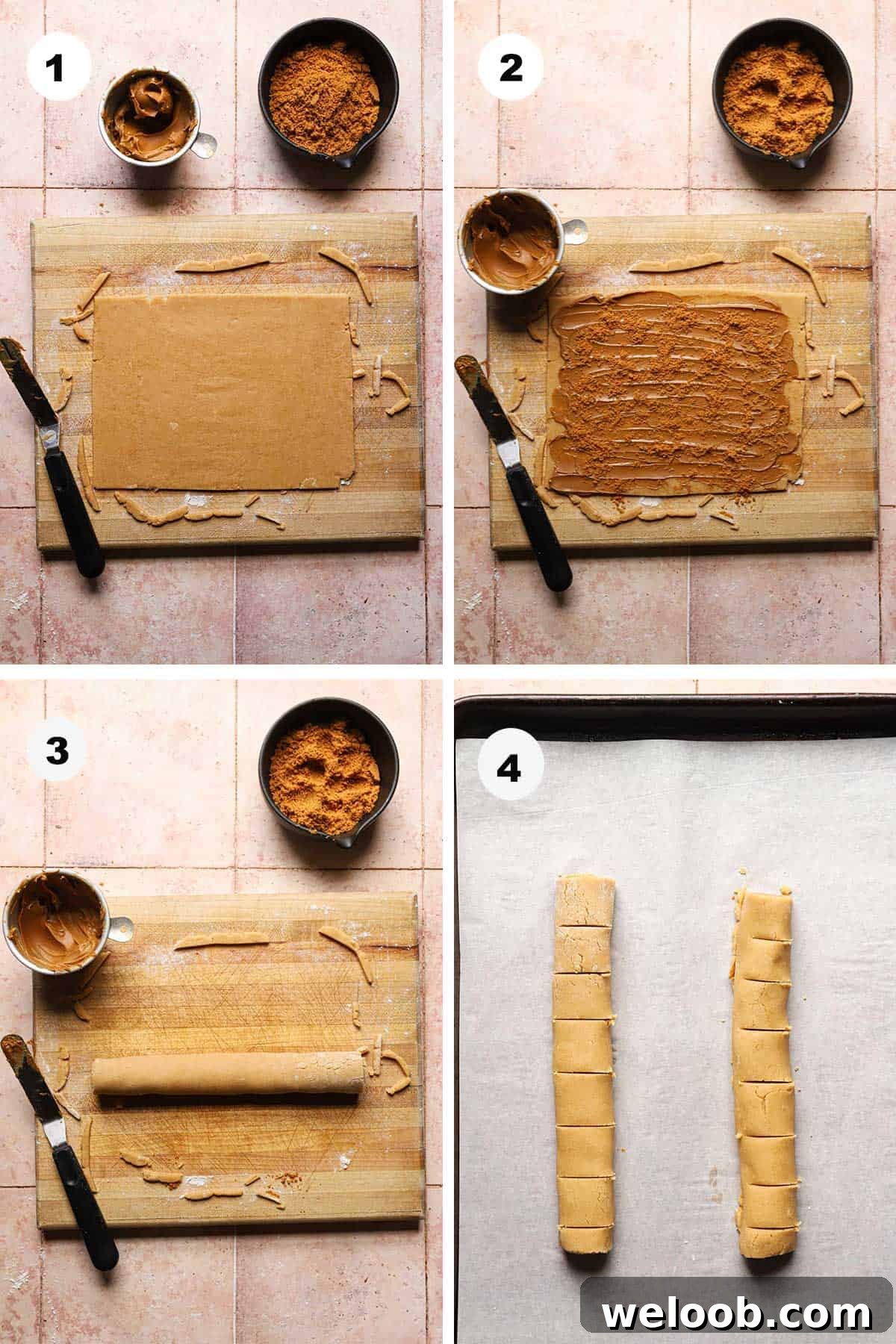
- On a lightly floured surface, roll one dough portion into a roughly 9″ x 7″ rectangle.
- Spread about 3 tablespoons of Biscoff butter over the dough and sprinkle crushed Biscoff crumbs evenly.
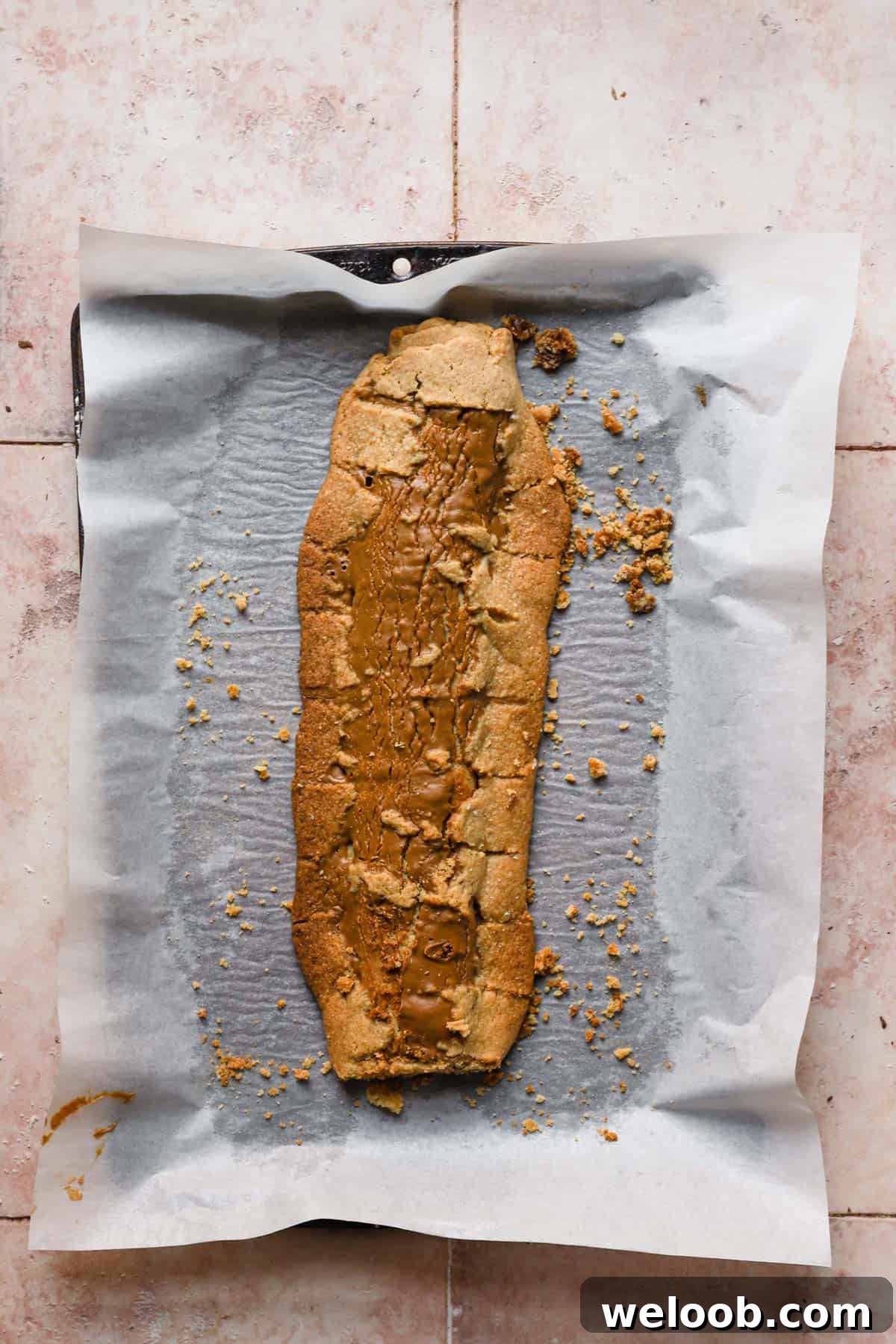
- Roll the wider side inward to form a log. Lift onto a parchment-lined baking sheet and trim ends if you want neat logs.
- Slice the log into cookies after a brief rest or after baking, depending on the method described in the recipe card.
Shaping — Hamantaschen (triangle) cookies
For triangle-shaped filled cookies, roll slightly thicker and cut rounds instead of rolling into logs.
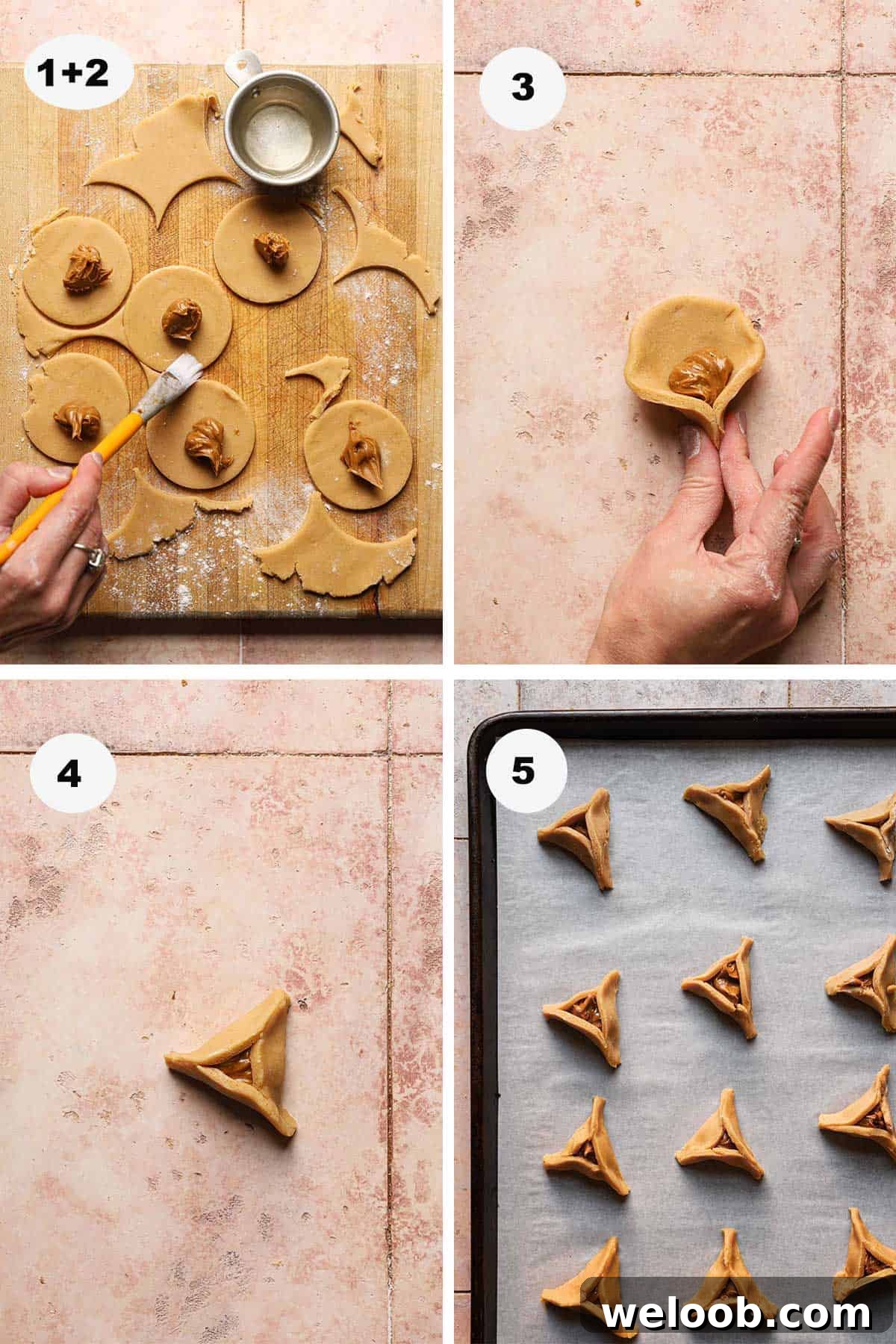
- Roll chilled dough 1/3″–1/2″ thick. Use a 3″ round cutter to cut circles.
- Place ~1/2 teaspoon of Biscoff butter in the center of each circle. Lightly brush the edge with water or beaten egg.
- Lift three edges and pinch them together to form a triangle. Place cookies on a lined sheet and bake as directed below.

Variations
This dough welcomes many fillings and add-ins:
- Swap the Biscoff for peanut butter, Nutella, or tahini.
- S’mores-style: replace some filling with chocolate spread, add graham-cracker crumbs and mini marshmallows.
- Add texture: sprinkle white chocolate chips, chopped nuts, or mini marshmallows before rolling.
Storing
Store baked cookies in an airtight container at room temperature for up to 4 days, or in a cookie jar for up to 7 days.
Freezing: Wrap groups of 5–7 cookies in plastic, place in a freezer bag and freeze up to 4 weeks.
Unbaked hamantaschen can be frozen layered with parchment in a wide container for up to 3 months. Bake from frozen, adding 3–4 minutes to the baking time.
Expert tips and troubleshooting
Follow these tips for consistent results:
- Weights are more accurate than cups—use a kitchen scale if you have one.
- Don’t overfill: use about 3 tablespoons of filling per 9″x7″ sheet before rolling; larger amounts may cause the logs to spread.
- Avoid rolling dough too thin; thin dough can tear or break during shaping.
- To use a stand mixer: pulse flour, baking powder and sugar with butter until the mixture resembles wet sand, then add remaining ingredients and mix until a dough forms.
- Roll gently; too much force can tear the dough or make it stick to the rolling pin.
MORE RECIPES YOU MIGHT LIKE
Chocolate Rolled Cookies, Black Forest Cupcakes, Rugelach.
DID YOU TRY THIS RECIPE?
If you try this recipe or another from this baking blog, please take a moment to rate and comment at the end of the recipe. Your questions, ideas and feedback are much appreciated.
Biscoff Cookie Butter — Recipe
Tender, buttery and crumbly Biscoff cookie butter cookies loaded with Biscoff flavor.
Prep time: 15 mins
Cook time: 22 mins
Servings: 32 cookies
Author: Dikla Levy Frances
Equipment
- 1 large bowl
- 1 rolling pin
- 2 large baking sheets
- Parchment paper
Ingredients
- 3 cups all-purpose flour (360 g / 13.5 oz)
- 1 tablespoon baking powder
- 1/4 cup granulated sugar (50 g / 2 oz)
- 14 tablespoons unsalted butter, soft and cut into 1/4″ pieces (200 g / 7 oz)
- 1/2 cup Biscoff butter for the dough (120 g / 4 oz)
- 1 large egg, beaten
- 1 tsp vanilla extract
- 1 cup Biscoff butter for filling (240 g / 8 oz)
- 1/2 cup crushed Biscoff cookie crumbs
Instructions
- In a large bowl, sift the flour and baking powder. Add the sugar and mix to combine.
- Toss the butter pieces into the flour mixture until it looks like coarse crumbs. Add the cookie butter, beaten egg and vanilla.
- Use your hand to work the ingredients until a soft yet firm dough forms. Divide into 4 equal parts. Wrap each portion and refrigerate for 30–60 minutes.
- Preheat the oven to 350°F (175°C) and line a large baking sheet with parchment paper.
- For rugelach-style logs: Dust a clean surface with flour and roll one dough portion into a 9″x7″ rectangle. Spread about 3 tablespoons of Biscoff butter over the rectangle and sprinkle with crushed Biscoff crumbs. Roll from the long side to form a log. Place the log on the prepared sheet and cut into 1″ slices or bake whole and slice after a short rest. Bake for 20–22 minutes on the middle rack, until lightly browned and puffed. Cool 5 minutes, then slice if needed.
- To make hamantaschen: Roll each dough piece to 1/3″ thickness. Use a 3″ round cutter to cut circles. Place about 1/2 teaspoon of Biscoff butter in the center of each circle. Brush edges with water or beaten egg, lift three sides and pinch into a triangle. Bake on a lined sheet for about 12 minutes. Cool and dust with powdered sugar if desired.
Notes
- All ingredients should be at room temperature for best texture.
- Do not overfill cookies or roll the dough too thin; they will spread or break.
- Trim dough edges before rolling for straighter logs.
- Roll gently to avoid sticking and tearing.