
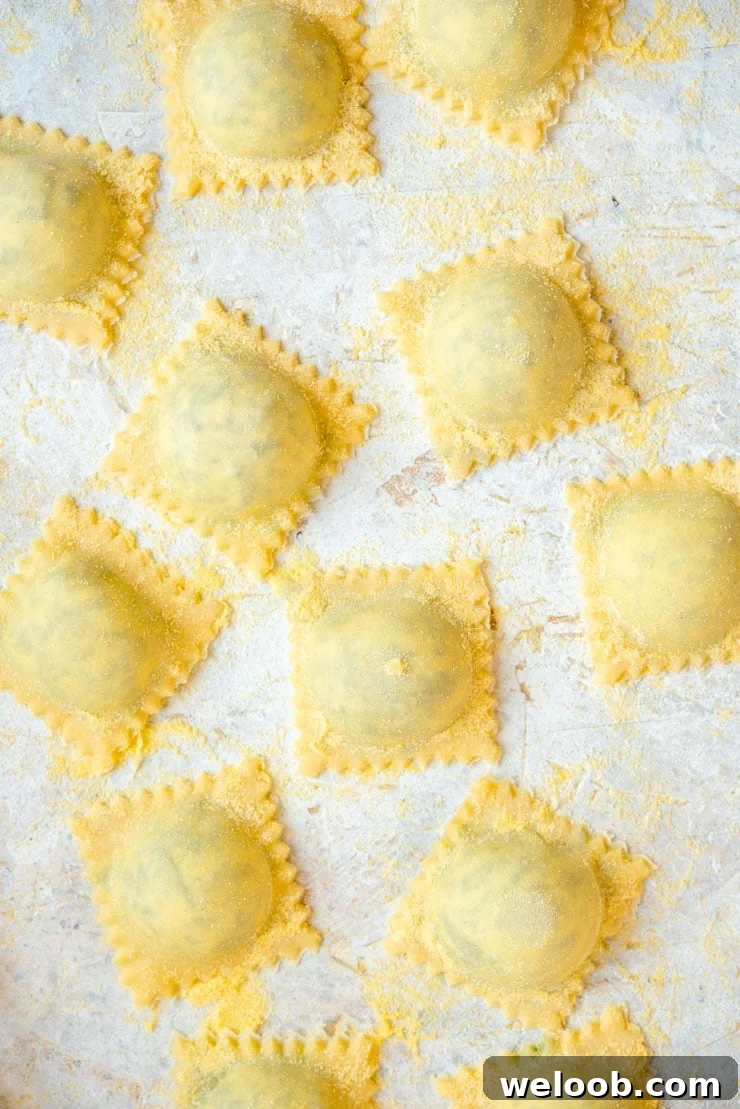
This is the ultimate guide to making homemade ravioli from scratch. It includes step-by-step photos, practical tips on tools and fillings, and clear instructions so your ravioli turn out perfectly every time.
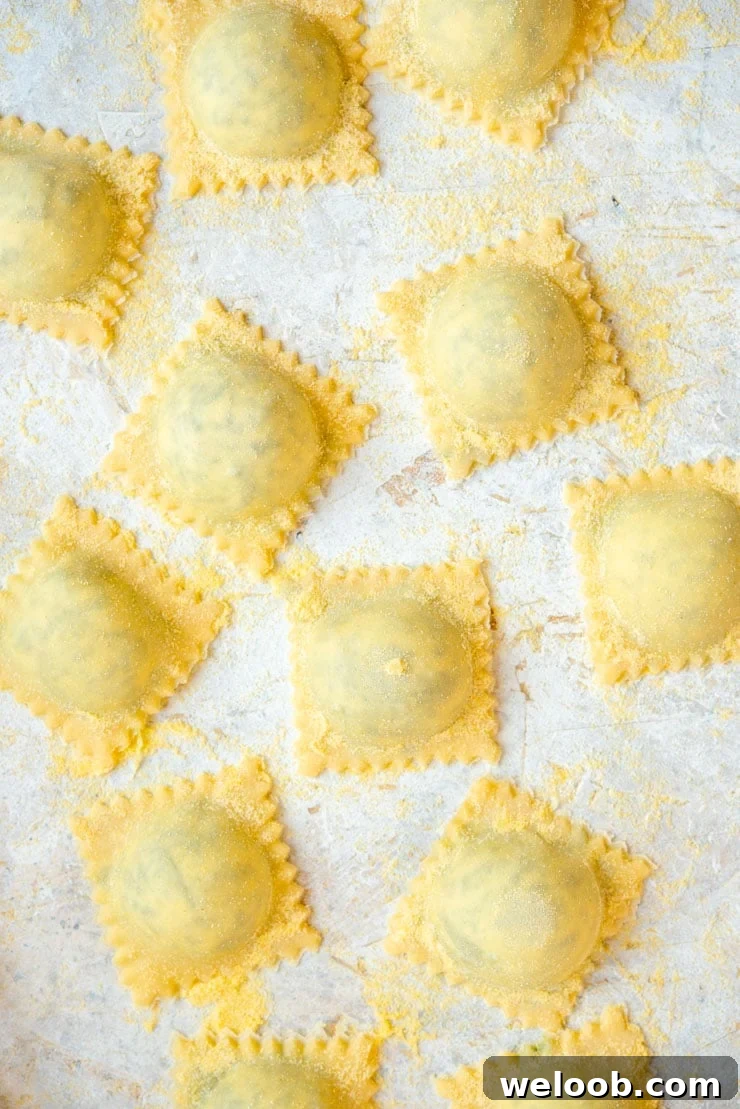
Making ravioli at home takes some time and attention, but the results—silky fresh pasta filled with flavorful fillings and finished with a complementary sauce—are well worth the effort. With practice the process becomes faster and more intuitive.
This guide covers everything: essential tools, how to make and roll the dough, filling suggestions, three methods to shape and seal ravioli, sauce pairing advice, freezing and storage tips, and my top recommendations to help you succeed.
Table of Contents
- Tools you need to make ravioli
- Making the pasta dough
- How thin should I roll my pasta dough?
- How to choose a filling
- How to fill and seal ravioli – 3 ways
- Tips on choosing the best sauce
- Can you make ravioli in advance?
- Top tips for making ravioli
- More homemade pasta recipes
- Full Recipe
Tools you need to make ravioli
There are three main tool approaches depending on the shape and finish you want:
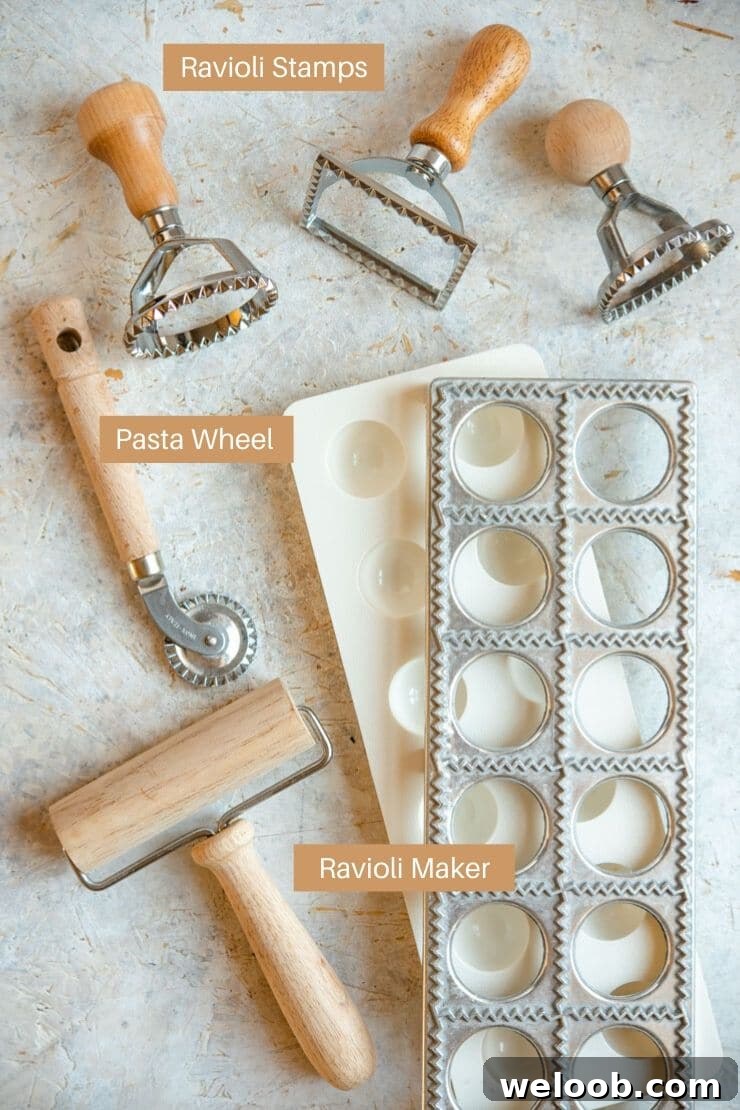
- Ravioli wheel / pasta wheel: a small crimped wheel for cutting hand-filled ravioli into individual shapes.
- Ravioli stamps / cutters: square or round stamps that cut neat shapes around filled pockets.
- Ravioli maker: a mold that helps form uniform, evenly spaced ravioli quickly.
Making the pasta dough
The foundation of great ravioli is excellent pasta dough. Use an egg pasta dough for the best texture and flavor.
A pasta machine speeds up rolling and gives consistent thickness, but you can also roll dough by hand with a rolling pin. If you use a machine, I recommend rolling progressively through the settings to avoid tearing.
How thin should I roll my pasta dough?
A good starting point on a multi-setting pasta machine is a medium-thin setting so the pasta has a pleasant bite and is easy to handle. Many cooks aim for the third-thinnest setting on a nine-setting machine, or about setting 7 if your numbers run the other way. If in doubt, roll as thin as you can without tearing; the ideal thickness depends on your filling and personal preference.
How to choose a filling for your ravioli
Good filling texture is crucial. Keep these points in mind:
- Not too wet: the filling should be paste-like or similar in consistency to ricotta or cream cheese. Wet fillings make the pasta sticky and can cause the ravioli to fall apart.
- Not too coarse: avoid fillings with sharp or rough pieces that could puncture the pasta. Smooth, well-blended fillings are best.
Filling ideas to try:
- Mushroom with parmesan cream (rich and earthy)
- Roasted butternut squash with sage
- Spinach and ricotta
- Burrata or stracchino for creamy, soft centers
- Prosciutto with a mild cheese
How to fill and seal ravioli – 3 ways
Using a ravioli maker
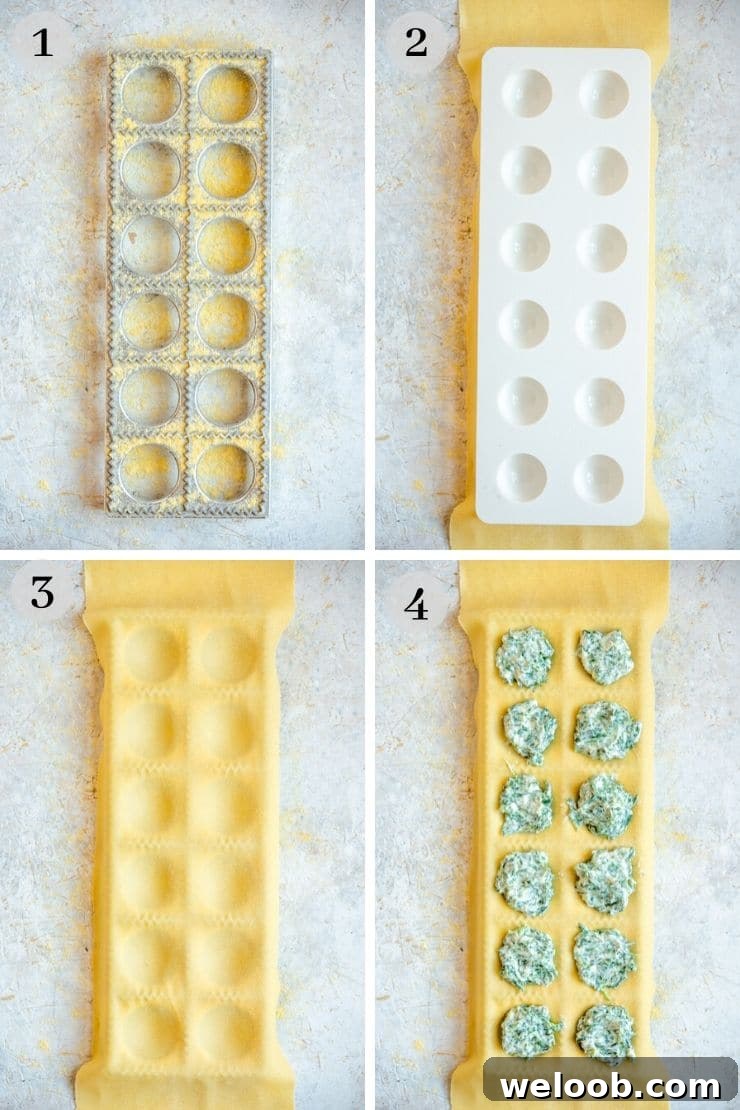
Dust the mold lightly with semolina or 00 flour to prevent sticking. Lay one sheet of pasta over the mold with a small overlap at the edges. Press the dimples gently to form pockets, add about 1 heaped teaspoon of filling per pocket, then cover with a second sheet of pasta. Press to expel air, then roll a small roller over the top to seal and cut the shapes. Remove excess dough and invert the mold to release perfectly formed ravioli.
Using a ravioli stamp
Dust a clean surface with semolina. Lightly press the stamp onto one pasta sheet to mark the layout without cutting. Place about 1 heaped teaspoon of filling in each marked center. Cover with a second sheet of pasta and cup your hands around each mound, pressing to seal and push out any air. If the edges won’t adhere, dab a little water to help seal. Finally, press and cut with the stamp to release each ravioli.
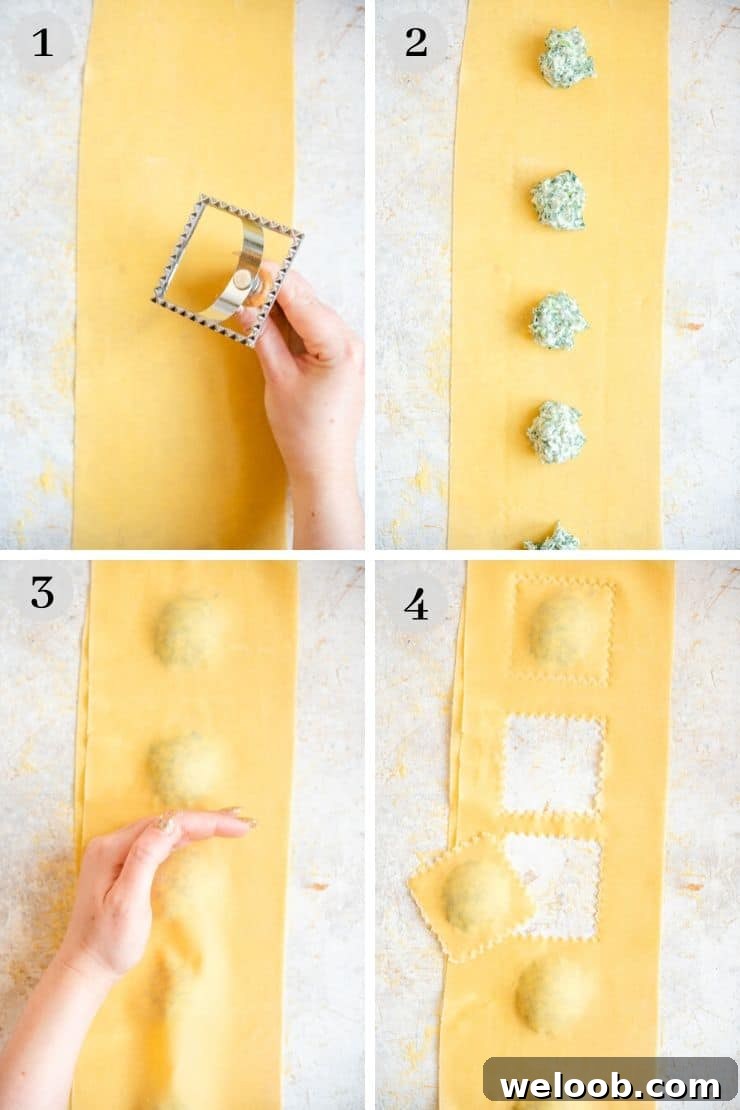
The free-hand method (with a pasta wheel)
On a semolina-dusted surface, space mounds of filling about two finger-widths apart on one pasta sheet. Cover with a second sheet and cup around each filling, pressing to seal and expel air. Use a pasta wheel, pizza cutter or knife to cut individual ravioli and trim edges. A wheel gives crimped edges; a knife or cutter will work if you don’t have a wheel.
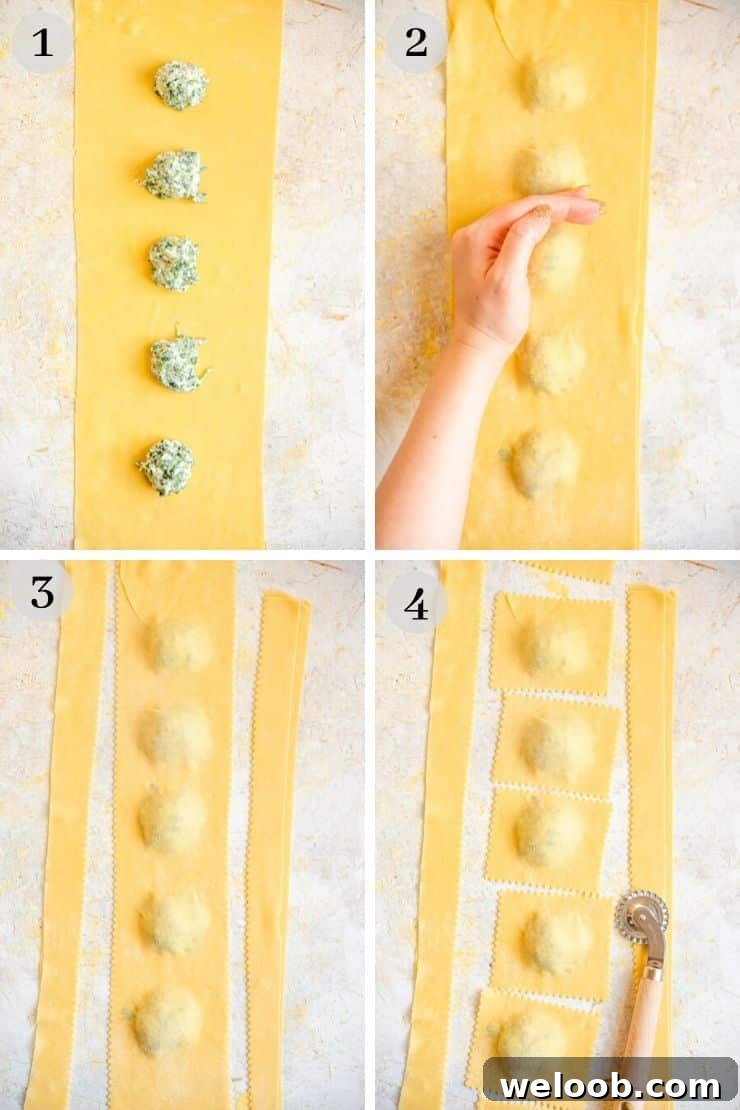
Tips on choosing the best sauce
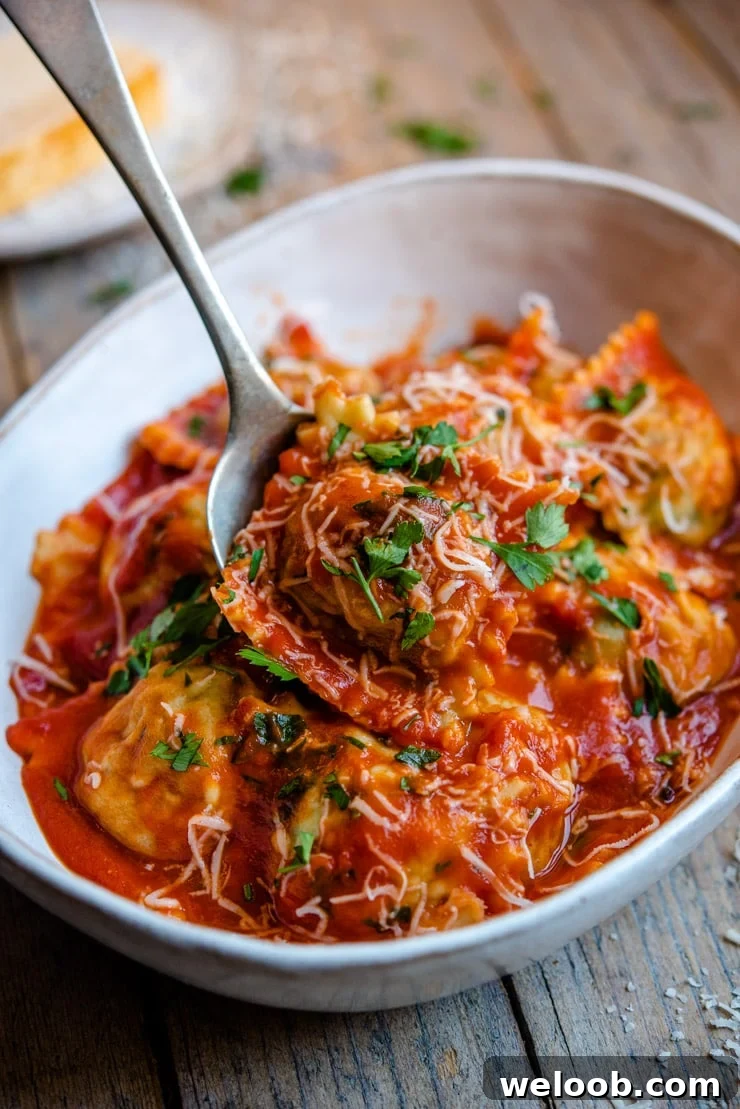
Sauces for ravioli can range from a light tomato sauce to simple browned butter and sage, garlic butter, cream-based sauces, or a meaty ragu. The key is balance: choose a sauce that complements and doesn’t overwhelm the filling. For delicate fillings like ricotta or burrata, prefer light butter-and-herb or cream sauces. For richer fillings like mushroom or meat, a robust cream sauce or ragu works well.
Can you make homemade ravioli in advance?
If you plan to cook within a few hours, place ravioli on a semolina-dusted board or plate and cover with a clean kitchen towel. For longer storage, freeze them:
To freeze: Arrange ravioli in a single layer on a baking sheet or tray and freeze until firm, then transfer to a resealable bag. This prevents sticking.
To cook from frozen: Do not thaw. Cook directly from frozen in plenty of salted boiling water—thawing first often makes them stick together.
Top tips for making homemade ravioli
- Keep plenty of semolina on hand to dust work surfaces and prevent sticking.
- You can use plain flour instead of semolina, but it can dry the pasta faster.
- Ensure fillings are smooth and not overly wet or coarse to avoid leaks and breaks.
- A pasta machine speeds up and improves consistency, but you can work with a rolling pin and patience.
- All the shaping tools help speed things up, but a rolling pin, knife, or cookie cutter can produce great results with extra care.
More homemade pasta recipes to try
- Lobster ravioli with vodka cream sauce
- Mushroom ravioli with parmesan cream sauce
- Butternut squash ravioli with sage and brown butter
- Homemade agnolotti (step-by-step)
If you try this homemade ravioli guide or any other recipe, share how it went in the comments. I love hearing about your results and adaptations.
Step By Step Photos Above
Most recipes include step-by-step photos and helpful tips to make them successfully.
How to Make Ravioli
By Emily
Equipment
- Pasta wheel
- Ravioli stamp
- Ravioli maker
Ingredients
- 1 batch homemade egg pasta dough
- Semolina flour, for dusting
- Filling of choice (see notes for ideas)
Instructions
Using a Ravioli Maker
- Dust the ravioli mold with semolina or 00 flour to prevent sticking.
- Lay a pasta sheet over the mold, ensuring slight overlap at the edges.
- Press the dimples to form pockets, then add about 1 heaped teaspoon of filling per pocket.
- Cover with a second pasta sheet, press to remove air, then roll with a mini roller to seal and cut.
- Remove excess dough and invert the mold to release filled ravioli.
Using a Ravioli Stamp
- Dust a clean surface with semolina and lay one pasta sheet down.
- Lightly press the stamp to mark the filling positions without cutting.
- Place about 1 heaped teaspoon of filling in the center of each mark.
- Cover with a second sheet, cup and press to seal and remove air; dab water if edges won’t stick.
- Cut out each ravioli with your chosen stamp.
The Free Hand Method (with a pasta wheel)
- Space filling mounds about two finger-widths apart on a pasta sheet.
- Use about 1 heaped teaspoon of filling per ravioli (adjust to size).
- Cover with a second sheet, cup and press to seal while pushing out air.
- Cut into individual squares with a pasta wheel, pizza cutter, or knife and trim if needed.
Notes
- Keep plenty of semolina flour to stop ravioli from sticking while you work.
- Plain flour can be used but dries pasta faster than semolina.
- Fillings should be smooth and not overly wet or coarse to prevent leaks.
- My go-to pasta dough recipe and more detailed instructions can help if you need a base dough.
- The listed tools make the process easier but you can succeed with basic kitchen tools and patience.
- Nutrition shown is calculated without the filling and is an approximation.
Filling and sauce ideas
- Mushroom ravioli with parmesan cream sauce
- Lobster ravioli with vodka cream sauce
Helpful Info for All Recipes
- I use extra virgin olive oil unless noted otherwise.
- Vegetable sizes and oven settings referenced assume medium vegetables and a fan (convection) oven where applicable.
Nutrition
Calories: 104 kcal (approx., without filling)
Leave a comment below!