

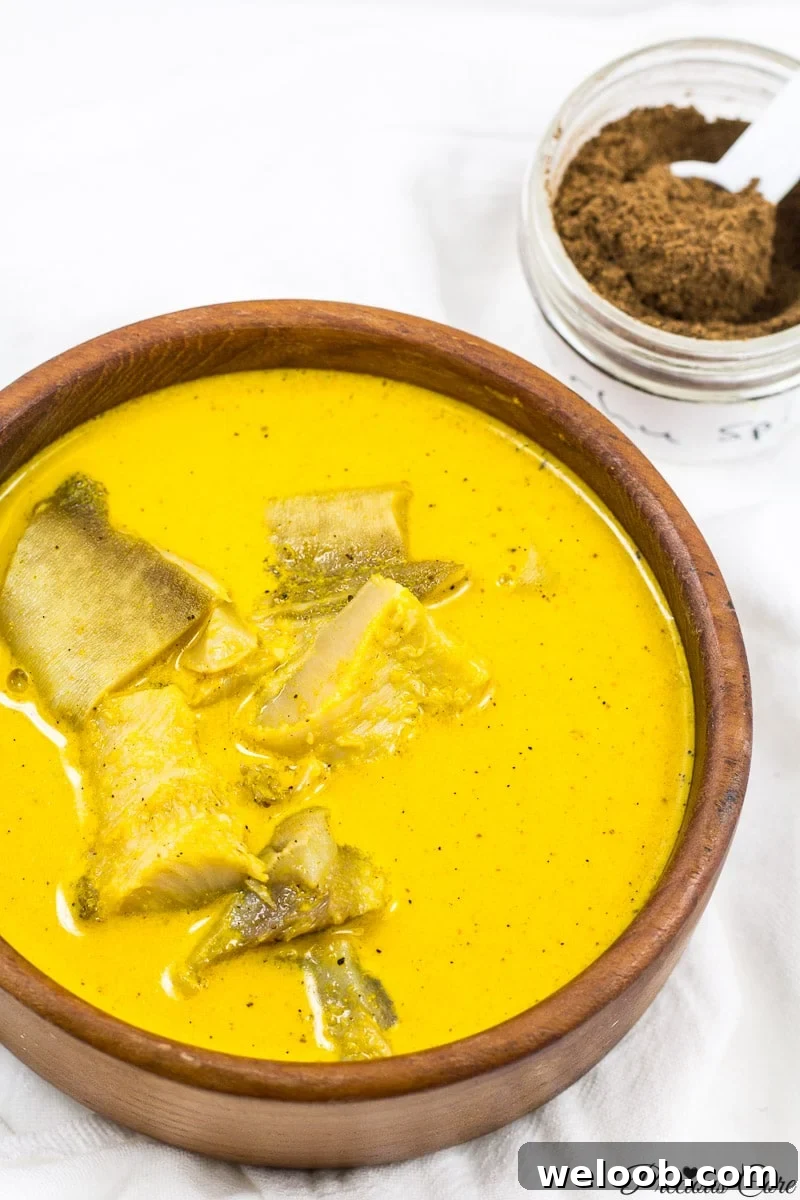
Achu is a traditional dish from villages in Cameroon’s North West region and is especially associated with the Bamenda people. It’s also enjoyed by the Bamileke communities in the western region. The yellow soup is often called “Ndza Nikki” and in French it’s known as “sauce jaune.”
The meal begins with cocoyams (taro) boiled until tender, then pounded or processed into a smooth white paste called achu fufu. That paste is served with either a dark green soup made from cocoyam leaves (sometimes with groundnuts) or a light yellow soup. The yellow soup is the more common pairing; it’s made with kanwa (a form of limestone or potash), palm oil and a special spice blend. When kanwa isn’t available I use baking soda as an alternative because it shares a similar alkaline component.
Some people avoid kanwa for health reasons and instead use “nikki,” an ash produced by burning plantain peels. In this recipe I used nikki, though in the accompanying video I demonstrate the version made with baking soda.
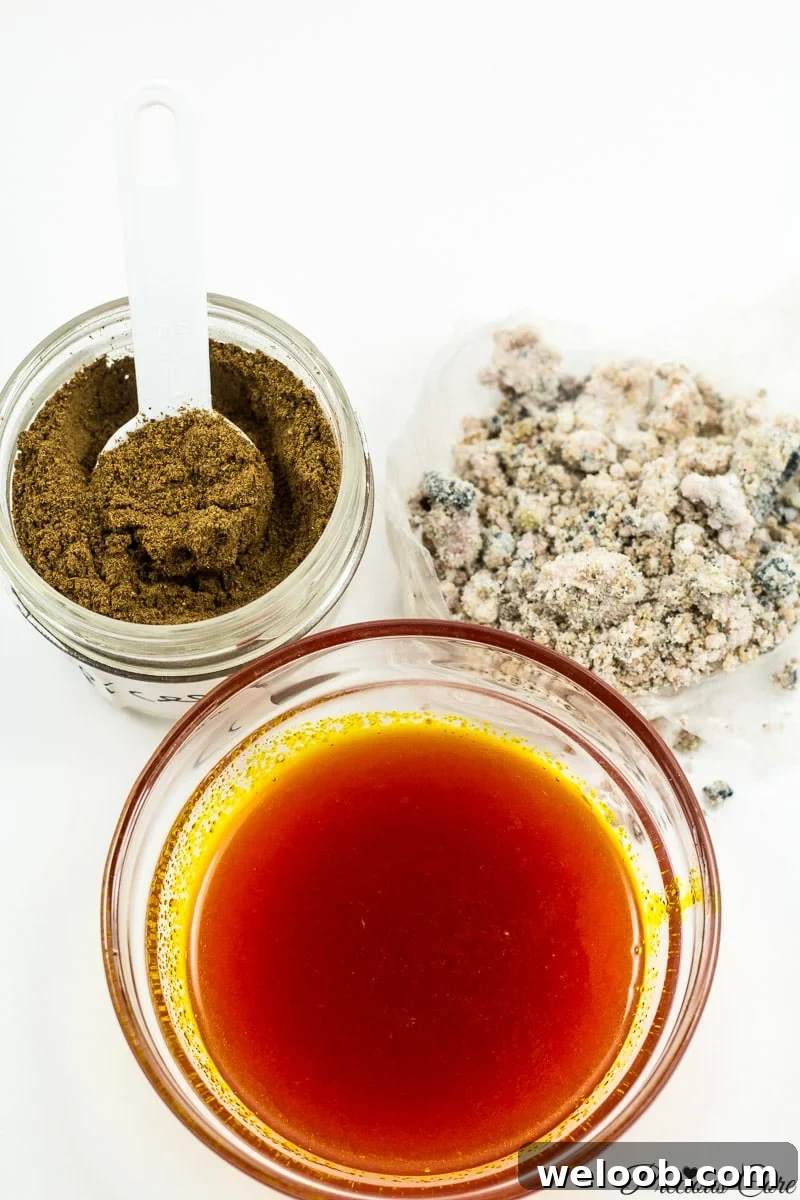
The spice mix for achu soup is unique and traditionally made by roasting and grinding several seeds and spices on a grinding stone. To make life easier I usually buy a premade achu spice blend. If you live abroad look for it in African stores, especially those run by Cameroonians, or ask a friend traveling from Cameroon to bring some. I often rely on friends for ingredients—I have no shame in asking for a little help when authentic items are scarce.
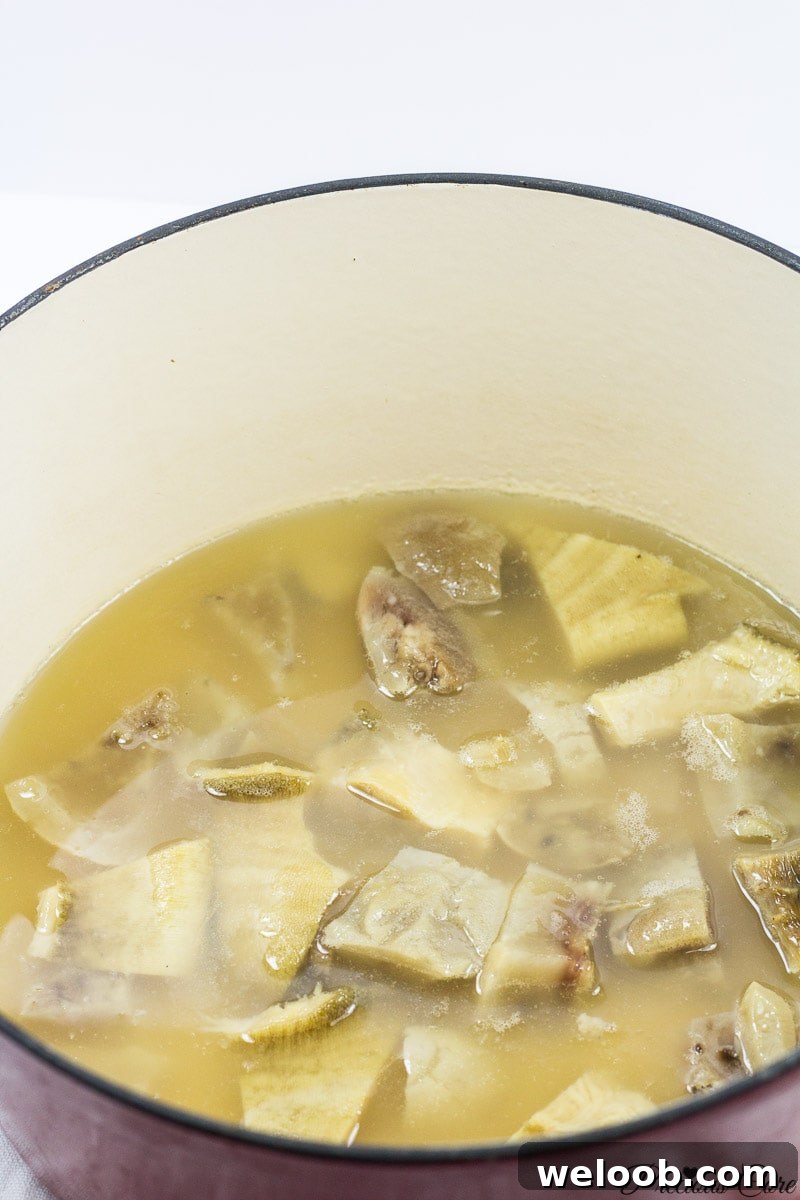
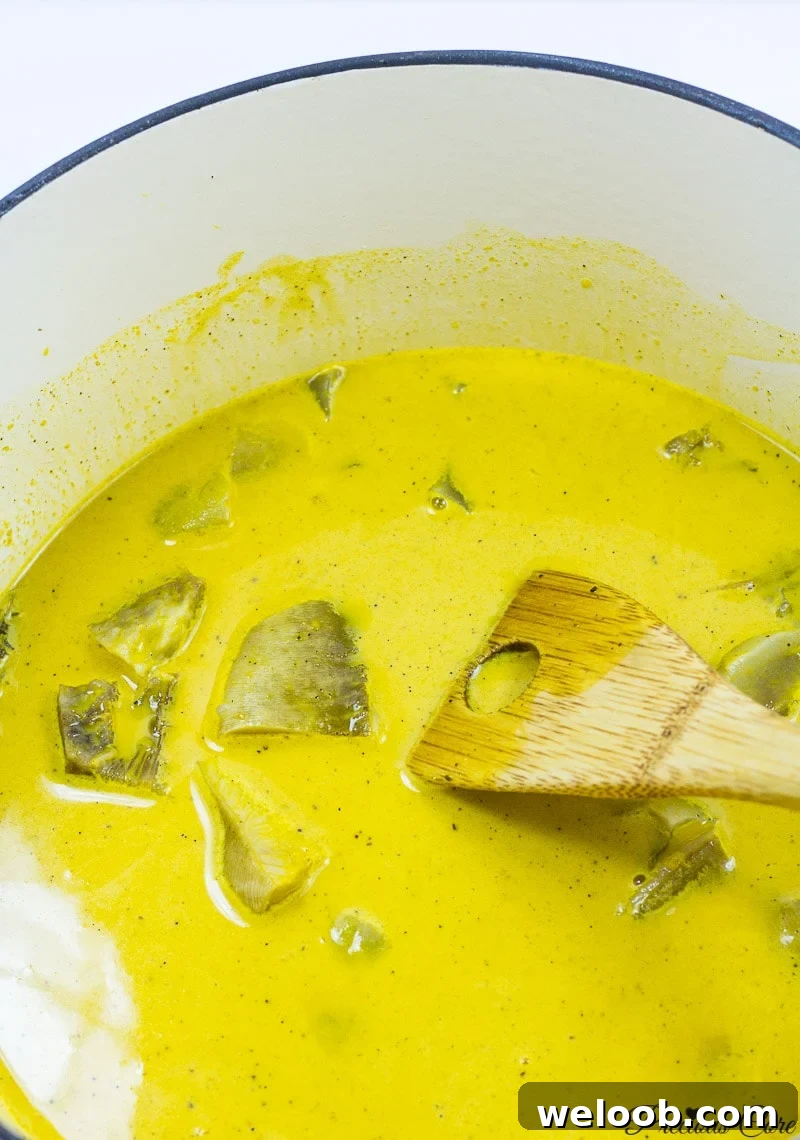
Making achu soup is straightforward. Combine warm palm oil with beef stock, the spice blend, nikki or baking soda, seasoning cubes and any optional hot pepper. The soup isn’t traditionally cooked on high heat but rather fully incorporated so the oil and stock emulsify. The classic method is to pour the mixture from one pot to another or scoop and pour until the stock and oil marry into a smooth, unified sauce.
I prefer a modern shortcut: blend the warm stock and other ingredients (except the meat) in a blender until smooth and evenly combined, then return the mixture to the pot with the meat. It achieves the same texture more quickly—thank you, blenders!
Achu soup is light but intensely flavorful: spicy, aromatic and deeply satisfying. It’s traditionally eaten with the hands: form a mound of achu on your plate, carve a well in the center and pour the soup into that well. You eat by scooping the paste with one finger around the mound and dipping it into the soup — a method affectionately called “one finger round the world.” The dish is best enjoyed with clean hands and good company.
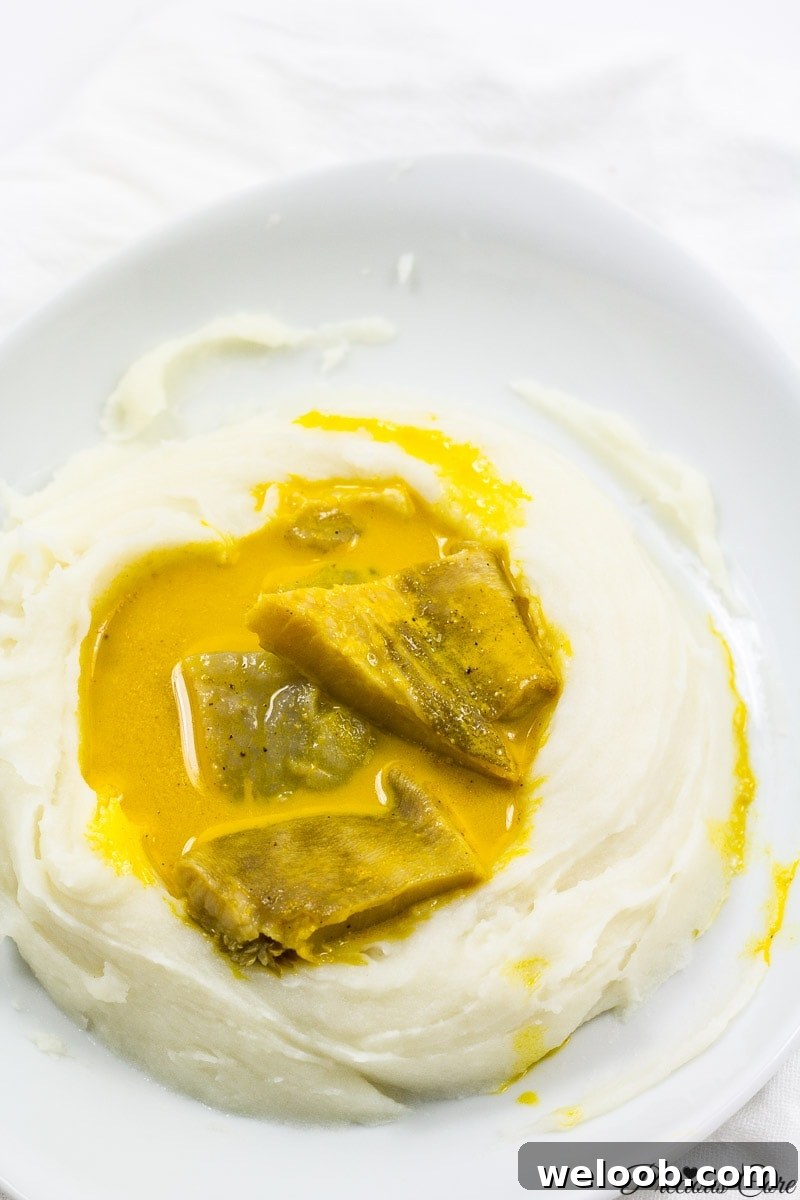
When I was younger I dismissed achu as plain countryside food, but now I can’t get enough. The flavors bring back memories and connect me to my father and home. Sometimes I just want to sip the soup straight from the bowl. Food has a powerful way of evoking belonging and comfort.
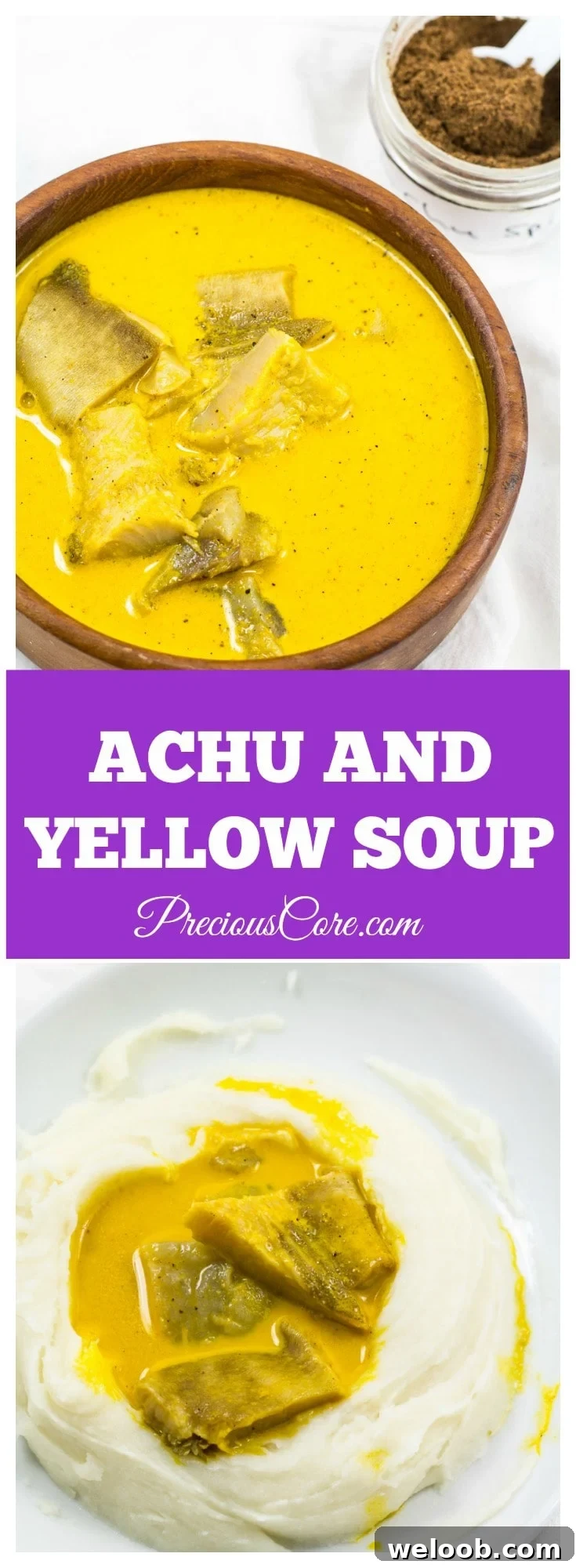
Pair achu with other favorites like egusi pudding or njama njama for a complete meal. Below you’ll find the recipe details and notes to help you prepare it at home.
Let’s cook!
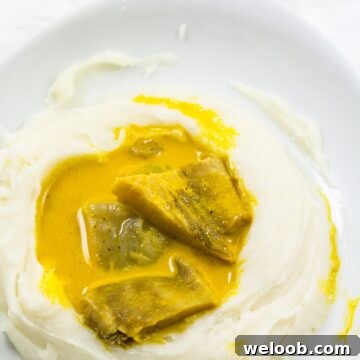
Achu and Yellow Soup
Pin Recipe
Rate
Print Recipe
Ingredients
For the Achu Soup
- 3 pounds boiled meats/fish of choice (blend of beef, beef skin, tripe, smoked or fried fish and mushrooms works well)
- 4 cups beef stock (from the boiled meats)
- 1/2 cup palm oil
- 2 teaspoons baking soda (or kanwa/nikki)
- 2 teaspoons powdered achu spices
- 2-4 small seasoning cubes (Maggi)
- Salt to taste
- 1 hot scotch bonnet pepper – optional
For the Achu
- 4 pounds small cocoyams (taro). You may add unripe achu bananas or some large cocoyams if you like.
Instructions
To make the achu soup
-
Warm the palm oil in a skillet for about one minute. Do not bleach it.
-
Place the warm palm oil, beef stock, powdered achu spices, baking soda or nikki, seasoning cubes and optional pepper in a blender (leave the meat/fish aside). Pulse until the mixture is well blended and has a yellow hue. Taste and adjust salt if necessary. You may notice some bubbles on top; that’s fine.
Pour the blended soup over the cooked meat/fish and mix gently. Alternatively, keep the meat separate and serve it alongside the soup.
To make the achu
-
Wash the cocoyams and place them in a pot with their skins on. If using large cocoyams and achu bananas, arrange the large pieces at the bottom, add small cocoyams, then top with the bananas.
-
Boil until the cocoyams are soft and the skins come off easily.
-
While still warm, peel and process the cocoyams into a paste using a food processor or by pounding in a mortar. If using achu bananas, process them first and mix them with the warm cocoyams so the mixture stays warm.
-
Shape the paste into a mound on a serving plate, place the soup in the center well, and serve. You can also wrap portions in warmed banana leaves or aluminum foil for storage or presentation.
Notes
To reheat, warm the soup gently in a saucepan, stirring occasionally. Do not let it boil or get too hot, as the oil may separate from the stock.
The soup may thicken after standing; a little warm stock or water can be added to loosen it before serving.
Nutrition
Additional Info
If you make this, please share a photo and tag me on Instagram @preciouscore.
Which meal connects you to home?