
How to Make Meringue from Scratch: Crisp, Cloud-Like Recipe
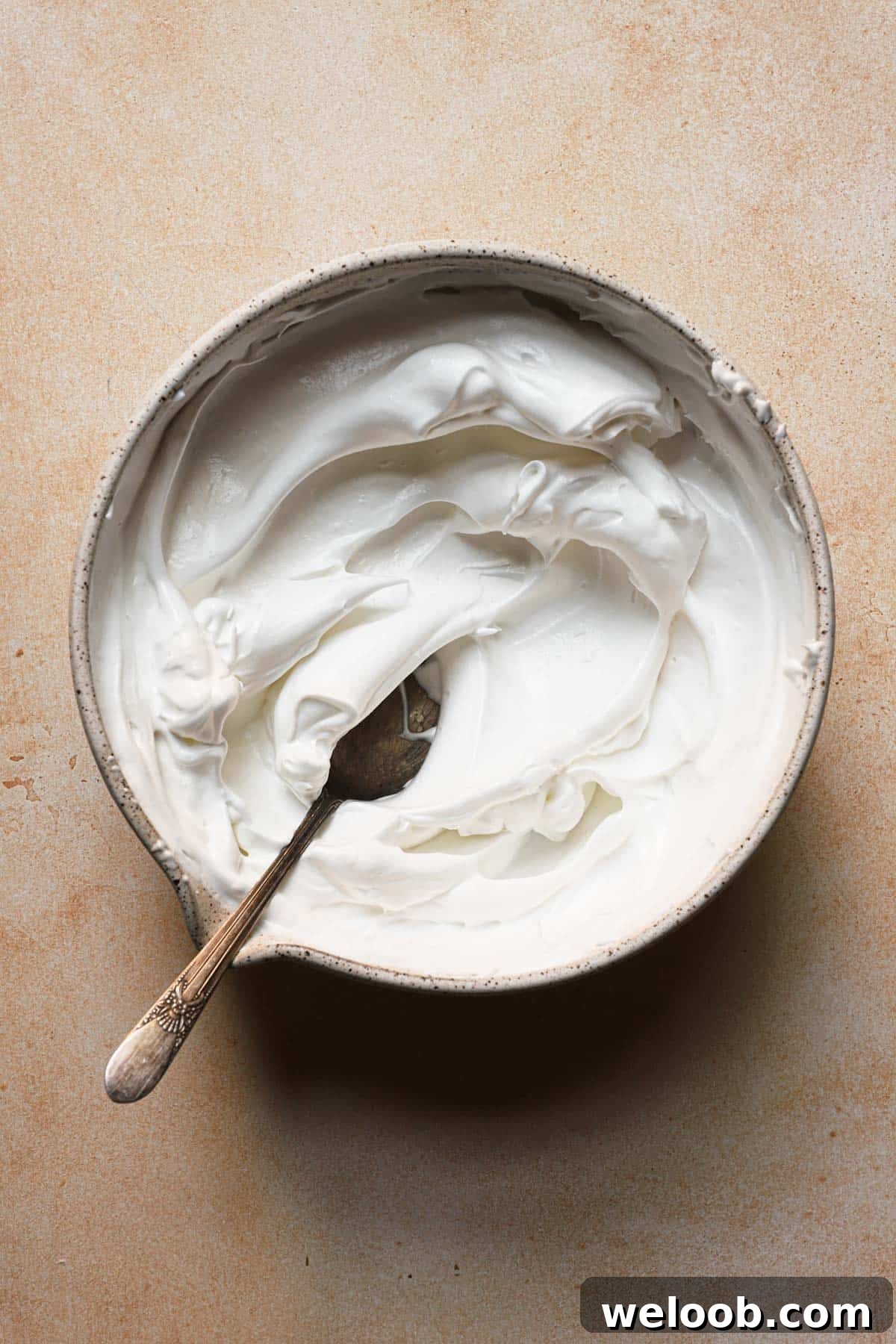
Meringue is a culinary marvel: with just egg whites and sugar you can create delicate, airy confections that serve as pavlova bases, pie toppings, or crisp meringue cookies. Mastering basic meringue technique is an essential skill for any home baker who wants reliable results for toppings, fillings, or standalone treats.
What is Meringue?
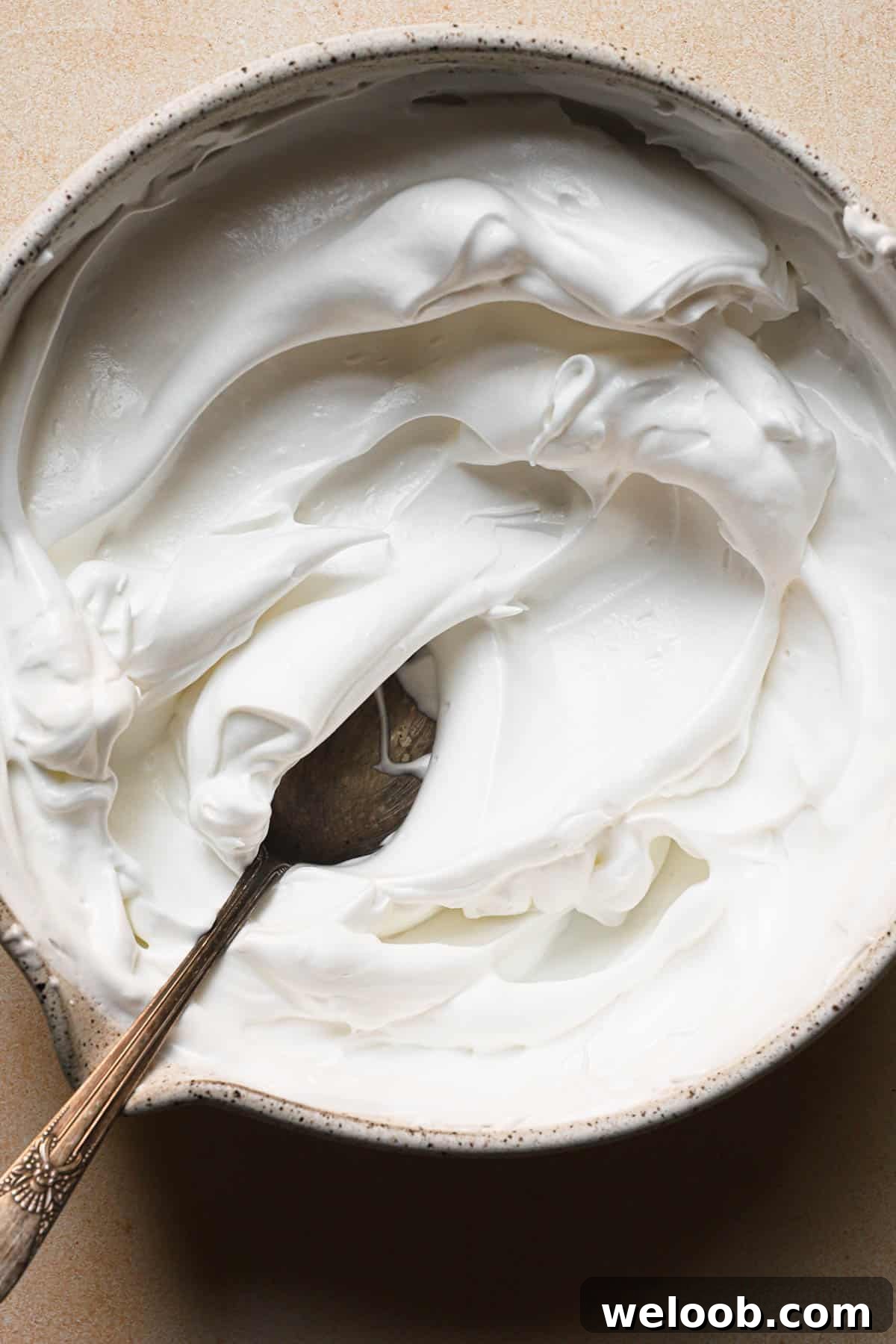
Meringue is a light foam made by whipping egg whites with sugar until they form a stable, glossy foam. The process traps air in the protein network of the egg whites, producing a high-volume structure that can be baked into crisp cookies, used as a fluffy topping for pies, or folded into batters and creams.
From a scientific perspective, whipping unfolds and stretches the proteins in egg whites so they form long chains that surround and trap air. Adding sugar stabilizes those stretched proteins and helps retain moisture, creating a glossy, elastic foam. Whipping too little leaves a loose foam; whipping too much breaks the protein network and causes weeping or a grainy, collapsed texture.
Ingredients
- Egg whites: Use fresh egg whites for best elasticity and volume. Avoid carton egg whites for whipping; they are pasteurized for cooking and usually won’t form a proper foam. A typical ratio is roughly 1 part sugar to 1–2 parts egg whites by weight, depending on the style of meringue.
- Granulated sugar: Sugar sweetens and strengthens the foam. Add it gradually after soft foam has formed. Adding sugar too early can inhibit volume and create a grainy texture. Granulated sugar works well for crisp baked meringues; superfine sugar dissolves faster and yields a smoother finish.
- Cream of tartar (potassium bitartrate): This acid stabilizer helps the foam hold its structure and prevents crystallization. If you don’t have cream of tartar, a small splash of lemon juice or white vinegar can be used, but cream of tartar gives more consistent results.
Why Cream of Tartar Matters
Cream of tartar lowers the pH of the egg whites, which strengthens the protein bonds and helps the foam remain elastic and less prone to weeping. Alternatives such as vinegar or lemon juice add acidity but may alter flavor; for the most reliable, neutral result, cream of tartar is recommended.
How to Make Meringue
Time needed: about 10–15 minutes active time
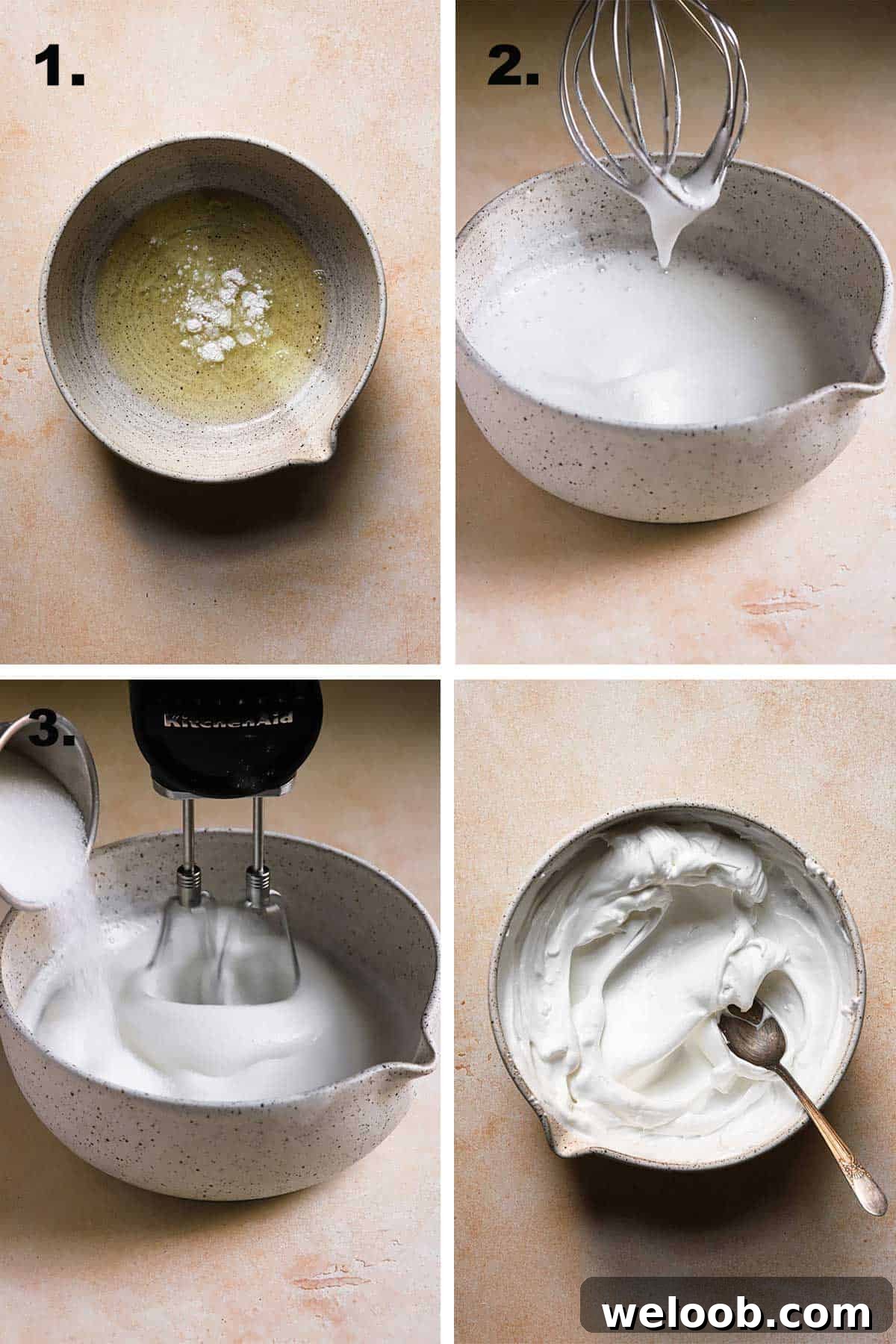
- Measure and prepare: Place egg whites and cream of tartar in a clean glass or stainless steel bowl. Start whipping at low speed until frothy, then raise to medium-high.
- Add the sugar: Once soft foam forms, add sugar gradually—about one tablespoon at a time—while the mixer runs. This allows the sugar to dissolve and the foam to remain smooth and glossy.
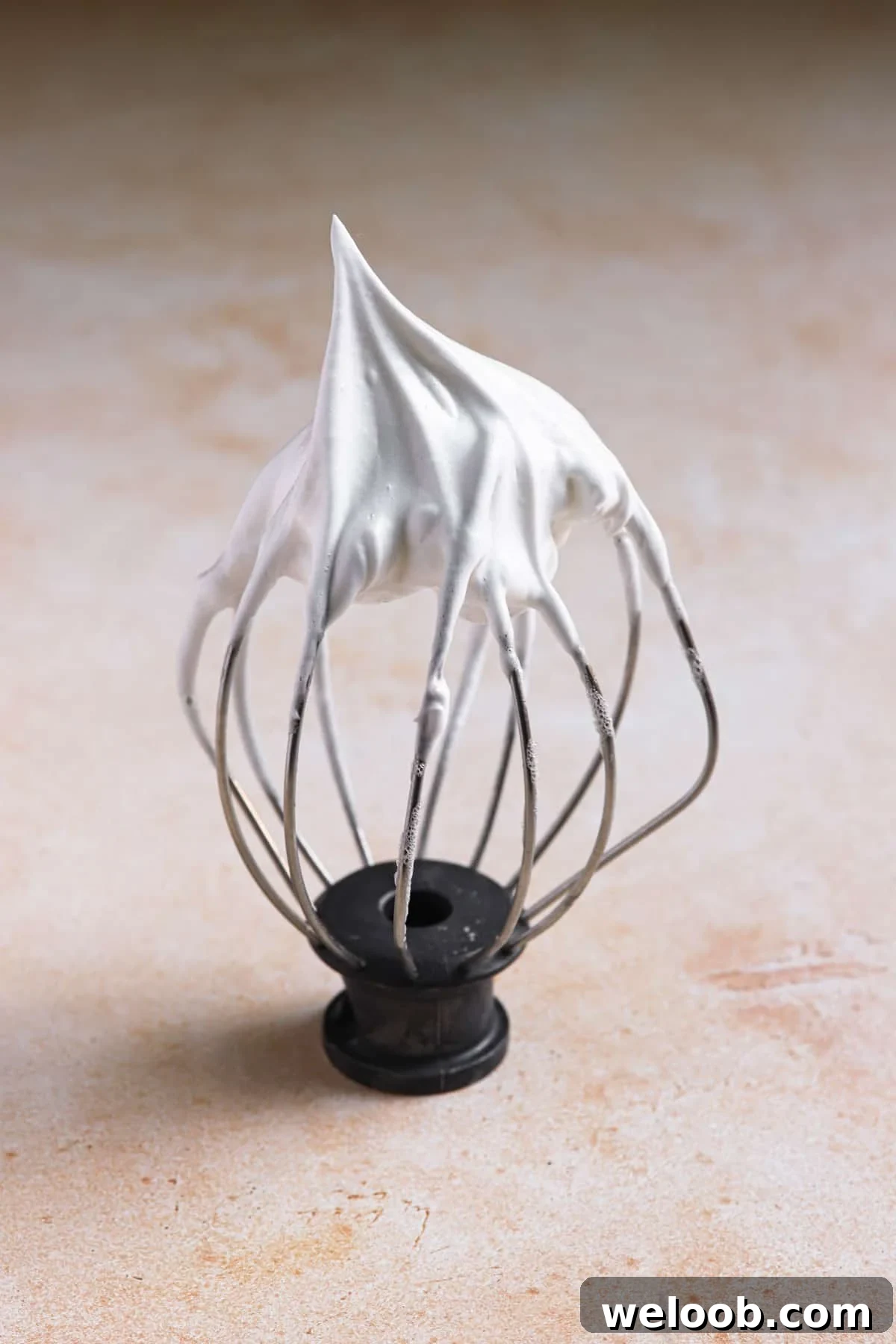
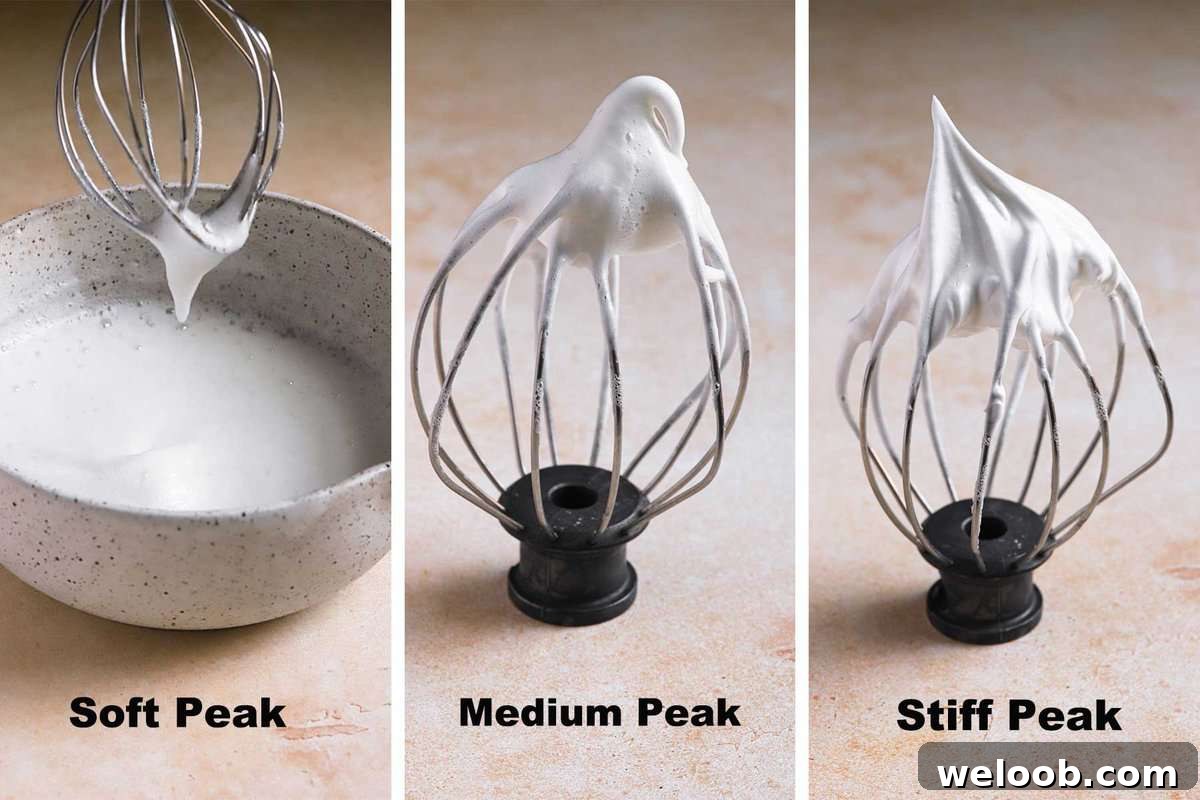
- Whip to desired peaks: Stop when the meringue reaches the texture required by your recipe. Soft peaks are billowy and lightly hold shape; medium peaks hold more form but still droop slightly; stiff peaks are glossy and stand upright. Avoid overwhipping—an overwhipped meringue becomes dull, dry, and granular and may weep syrup.
Different Types of Meringue
There are three classic meringue methods, each suited to different uses:
French meringue: The simplest and quickest. Egg whites are whipped and sugar is added gradually. It’s ideal for folding into batters, piping cookies, or topping pies when you’ll bake the meringue quickly. It is the least stable of the three types.
Italian meringue: Made by pouring hot sugar syrup (cooked to about 240°F / soft-ball stage) into whipped egg whites while continuing to beat. This creates a very stable, cooked meringue ideal for buttercreams, mousses, and glossy toppings that don’t require additional baking.
Swiss meringue: Egg whites and sugar are gently heated over a double boiler to about 130°F, then whipped until thick and glossy. Swiss meringue is smooth and stable and works well for buttercreams and baked toppings.
Expert Tips
- Separate eggs while cold to reduce risk of yolk contamination. Contrary to some advice, chilled egg whites whip well and are fine when using an electric or stand mixer.
- Make sure the bowl and whisk are perfectly clean and free of oil. Any fat will prevent proper foam formation. Wiping the bowl with a paper towel dampened with lemon juice or vinegar removes residual oil.
- Use a glass, stainless steel, or copper-lined bowl. Avoid plastic bowls because they can retain grease.
- Start whipping at low speed and increase gradually. This promotes smaller, more stable bubbles and helps sugar incorporate evenly.
- Add flavorings sparingly: vanilla extract or vanilla bean paste are common choices. Avoid oil-based extracts and avoid adding citrus zest directly to the whites, which can affect stability.
- If piping shapes or decorative swirls, use a pastry bag and appropriate piping tip for a clean finish.
- Save yolks for custards, pastry cream, lemon curd, challah, or other recipes so nothing goes to waste.
Storing and Humidity
Meringue is best used soon after whipping; it will deflate and release liquid if left too long. Humid weather can ruin both unbaked and baked meringues because sugar absorbs moisture. Baked meringue cookies or mini pavlovas should cool completely and be stored in an airtight container at room temperature for up to five days; keep them away from humidity.
Basic Meringue Recipe
Ingredients
- 4 large egg whites (about 120 g)
- 1/2 teaspoon cream of tartar
- 1/2 cup granulated sugar (about 100 g)
- 1 teaspoon vanilla extract or vanilla bean paste
Instructions
- Place the cold egg whites and cream of tartar in a clean glass or stainless bowl. Beat on low speed until frothy, then increase to medium-high.
- With the mixer on medium, add the sugar gradually—one tablespoon at a time—waiting about 10 seconds between additions so the sugar can dissolve.
- Add vanilla and continue whipping until the meringue reaches the desired consistency: soft, medium, or stiff peaks. Avoid overbeating.
- Use immediately as a pie topping, fold into batters, or pipe and bake at a low temperature for crisp meringue cookies, depending on your recipe.
Notes
- Separating eggs when cold helps avoid yolk contamination. If a bit of yolk gets in, carefully remove it with a clean spoon—fat prevents foaming.
- Wipe bowls with lemon juice or vinegar to remove grease. Choose non-plastic bowls for best results; copper-lined bowls give extra stability if available.
- Start beating slowly and add sugar gradually for a glossy, smooth meringue. If your meringue becomes grainy or watery, it may be overwhipped or the sugar did not dissolve fully.
More Guides and Techniques
If you enjoy working with meringue, consider exploring related techniques such as stabilizing whipped cream, tempering chocolate, or laminated dough. These complementary skills expand your repertoire for pastries, desserts, and showstopping bakes.
Author: Dikla Levy Frances