HOW TO STEW CANDA/PONMO/BEEF SKIN
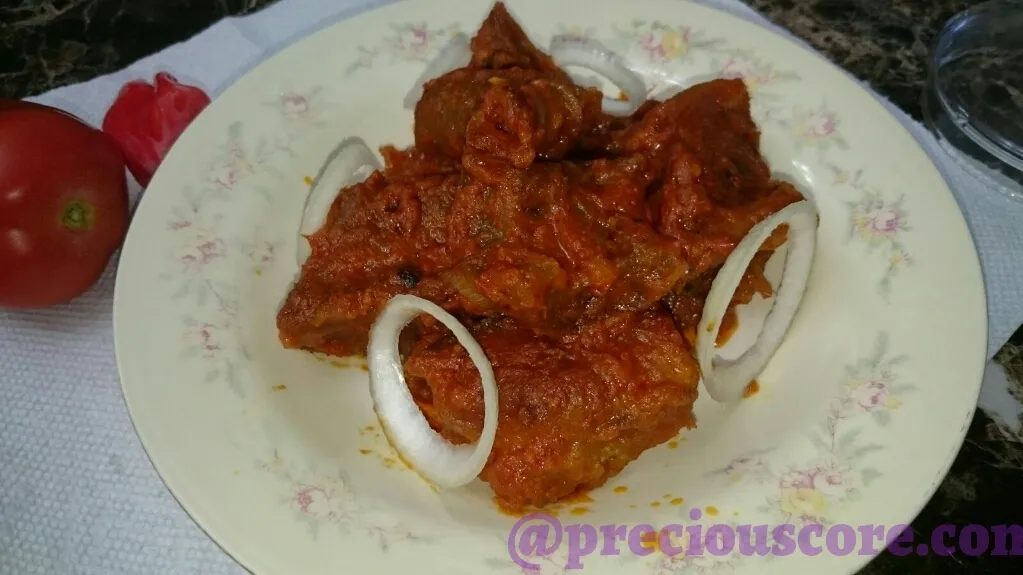 To make this deliciousness, you’ll need:2 pounds of beef skin (canda)- about 1 kg1 cup of blended and/or tomato paste (we used crushed tomatoes from a can)5 cloves of garlicAbout an inch of ginger1 red habanero pepper2 small seasoning cubes (Maggi or Knorr)- preferably chicken flavor 1 medium sized onionSalt to taste1/2 cup vegetable oilHere is what you need to do. -Prepare your Canda. We bought Canda that hadn’t been burnt so we had to process it at home, using a DIY (Do it Yourself) technique we learnt from 9jafoodie. Cut the meat and place on a baking tray lined with foil paper. If you wish, you could remove the fleshy part in the interior but we prefer to have that in. (If you have brown already processed beef skin, please skip this stage and get to the part where you boil the meat.)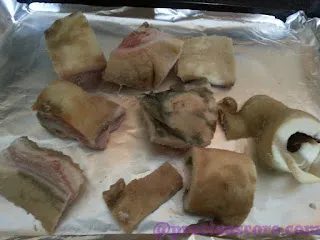
Place into a preheated oven at 350 Degrees Farenheit.
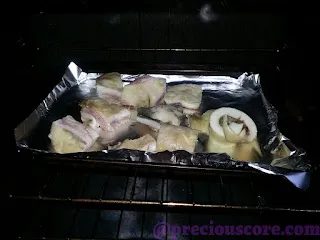
Let it stay in the oven until it gets brown. This should take about 15 minutes. It replaces the traditional method of warming the skin over flames. If your skin is meatless, it will curl up to give you that authentic Canda look. Placing it in the oven also enhances its taste as it gives it a smoky flavour.
Place the slices into a pot and put in water and bring to boil. Please put in a little water at the time and keep checking your pot because you want to have only a little water left when the meat is fully cooked.
When it starts boiling, chop part of the onions and throw in. Season with salt and chicken cubes.
Let it boil until it is really soft. Hard Canda is stressful to chew so make sure the meat is really soft- makes life so easy! By the time it is done, there should be a little stock left like in the pic below. Please note that we added water a couple of times before coming to this point. This stock is needed for the dish to be really flavourful so DON’T throw it away.
Peel garlic and ginger and put in blender with pepper and some water.
Blend into a paste.
Here is the can of crushed tomatoes from which we used a cup. If you want to make do with just fresh blended tomatoes please do so.
Heat pot, pout in oil and saute onions.
Add in tomatoes and start frying.
Fry until the tomatoes look crisp and start sticking to the pot.
Add in blended spices. Note: frying ginger and garlic in oil gives a very desirable flavour to food.
Add in Canda with its stock and stir well.
Let it simmer for about 5 minutes as you stir from time to time.
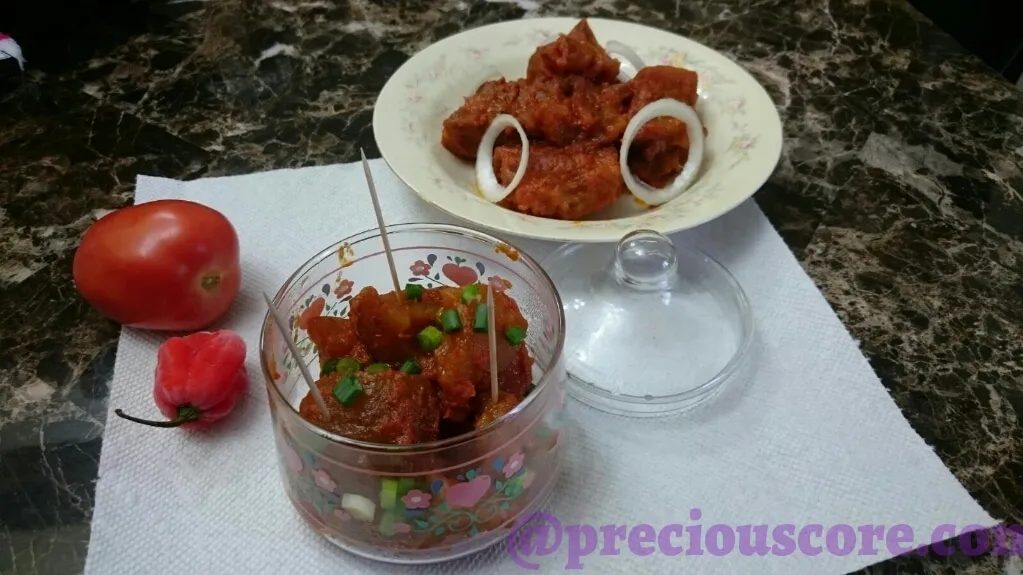
And that our friends, is the way you make the perfect Stewed Canda. If you wish, garnish with onions.
Serve it on its own as an appetizer or as a main dish with fried plantains or rice.
NOTES
You should ideally cut your Canda into bite-size pieces so one piece can be eaten at a time when picked with a toothpick. We had big pieces to let our Canda look as close as possible to the street version.