Cameroonian Njangsa Sauce
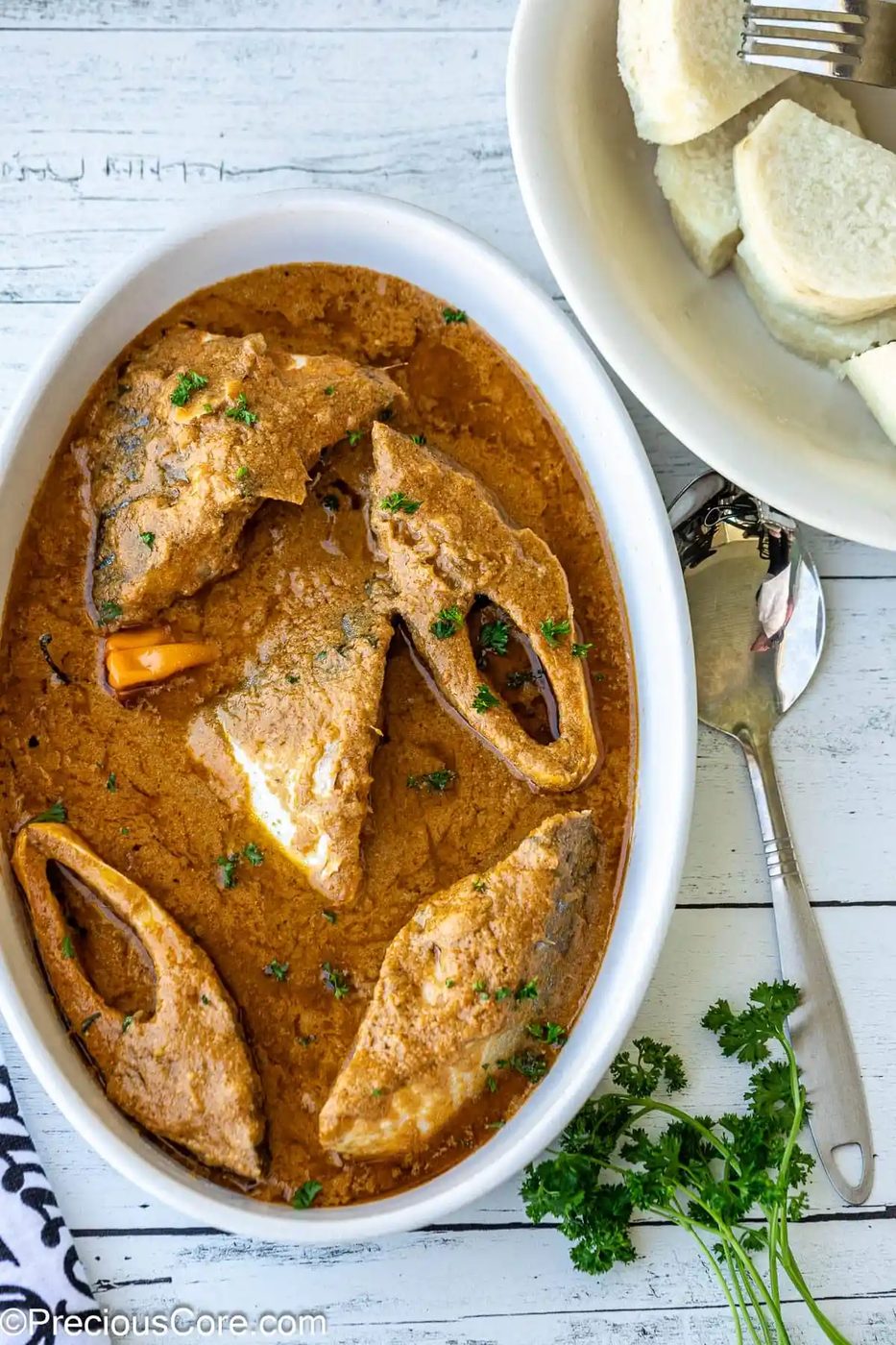
Worth cooking
- Great flavor! The flavor of this sauce is worth making again and the creamy texture is just notable! Cameroonian food always packs a ton of flavor due to the brilliant use of herbs and spices, and this is no exception.
- Great way to try African cuisine: If you are looking for a great introductory recipe to African cuisine, this Njangsa stew is perfect. It’s not hard at all to execute and the most labour intensive part is cleaning the fish (which you can have your fish monger do).
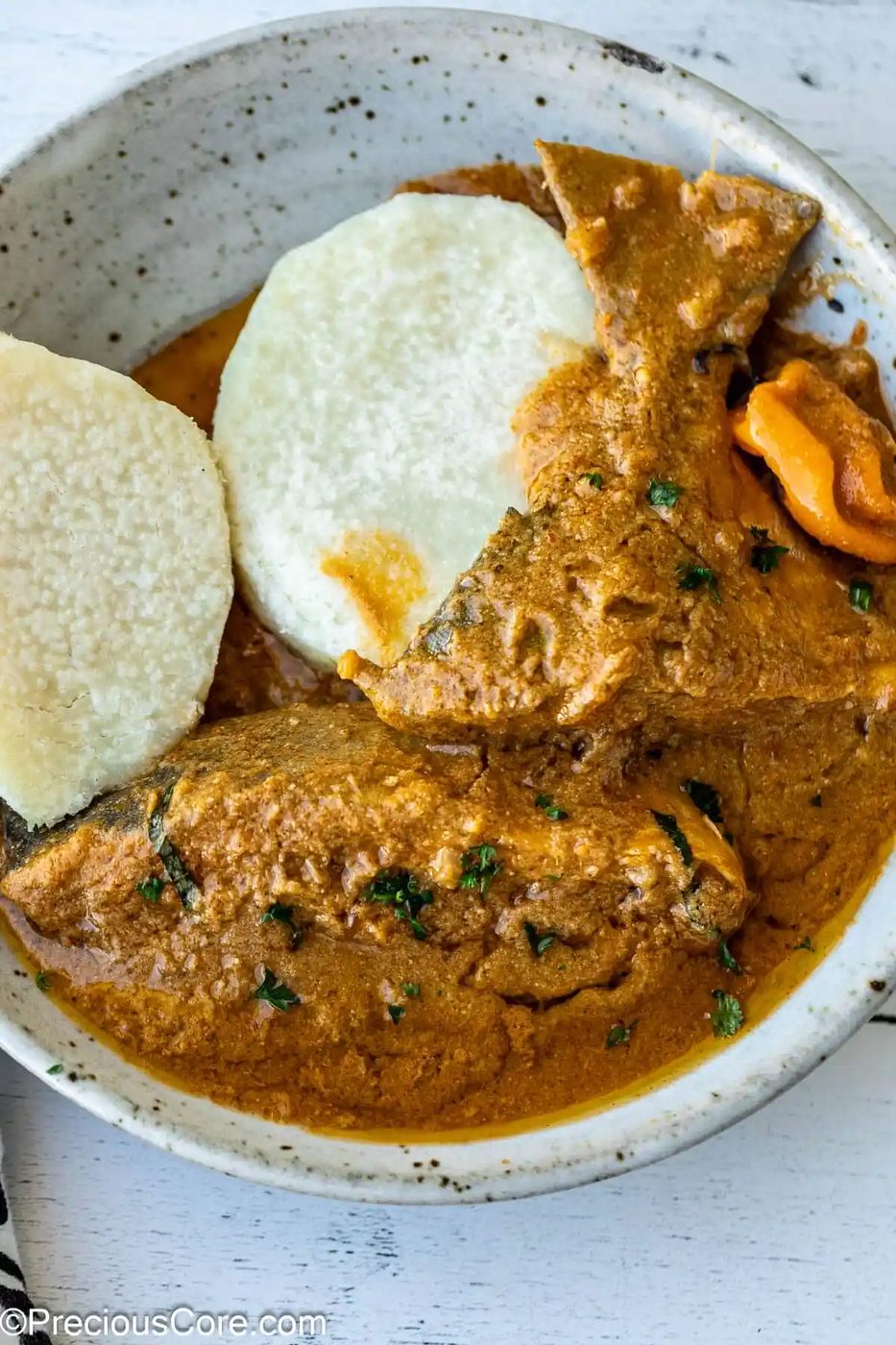
- Versatility: You can pair it with rice, boiled plantains or sweet fried plantains, African white yams (quite different from American yams), boiled taro (cocoyams), potatoes, and more!
The Ingredients
Here is everything you need for the fish:
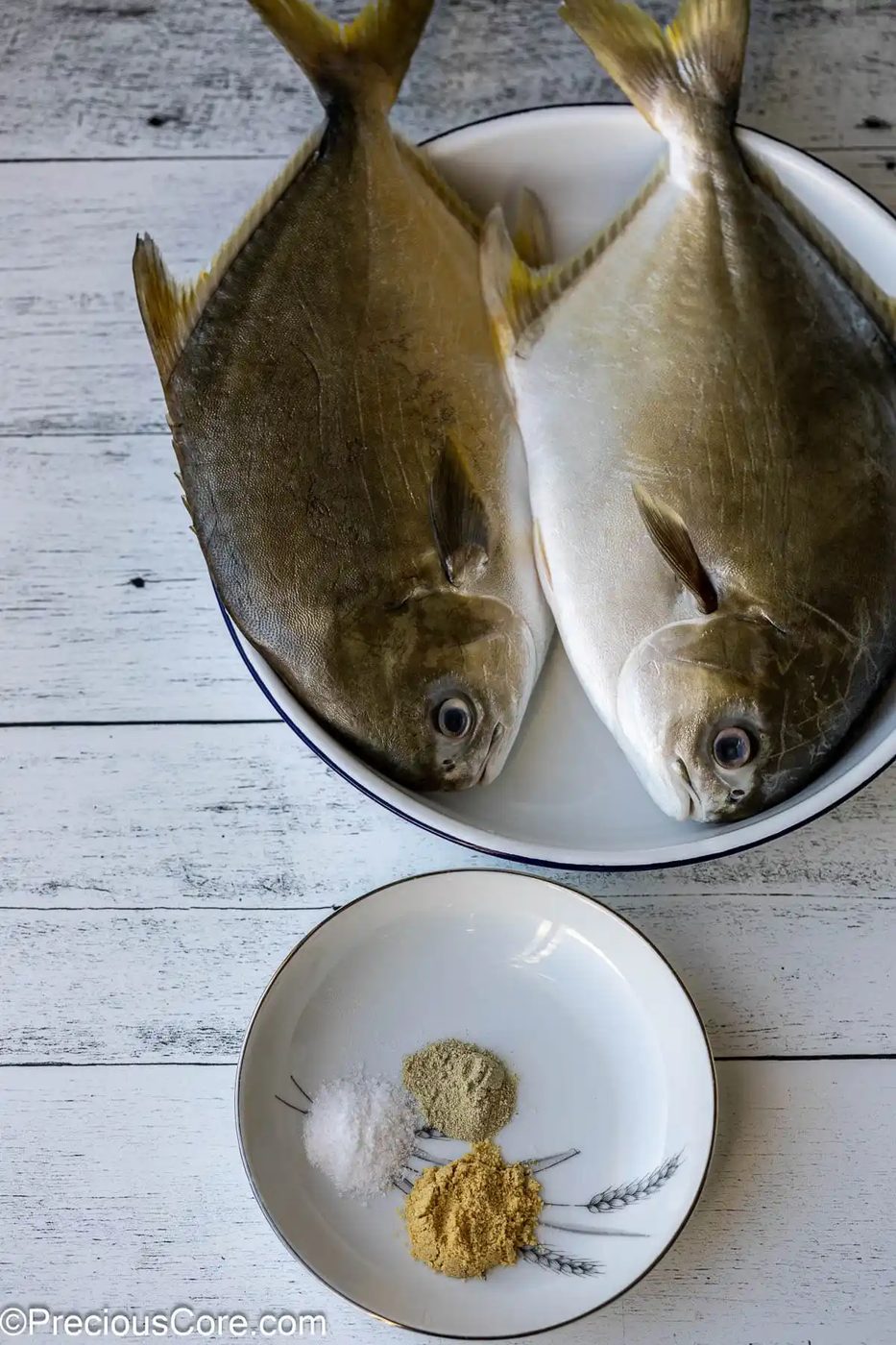
- Fish: We used whole pompano because it works well with this stew but you can use other kinds of whole fish like mackerel, snapper, trout, sea bass, sea bream, or tilapia. The flavor of whole fish is unbeatable! The bones of the fish lend tons of flavor to the sauce as it simmers.
- Seasoning: A simple seasoning of salt, white pepper and chicken bouillon powder (or Maggi seasoning cube) gives the fish a good start with seasoning before it enters the pot.
Here is everything you need for the Cameroonian njangsa sauce:
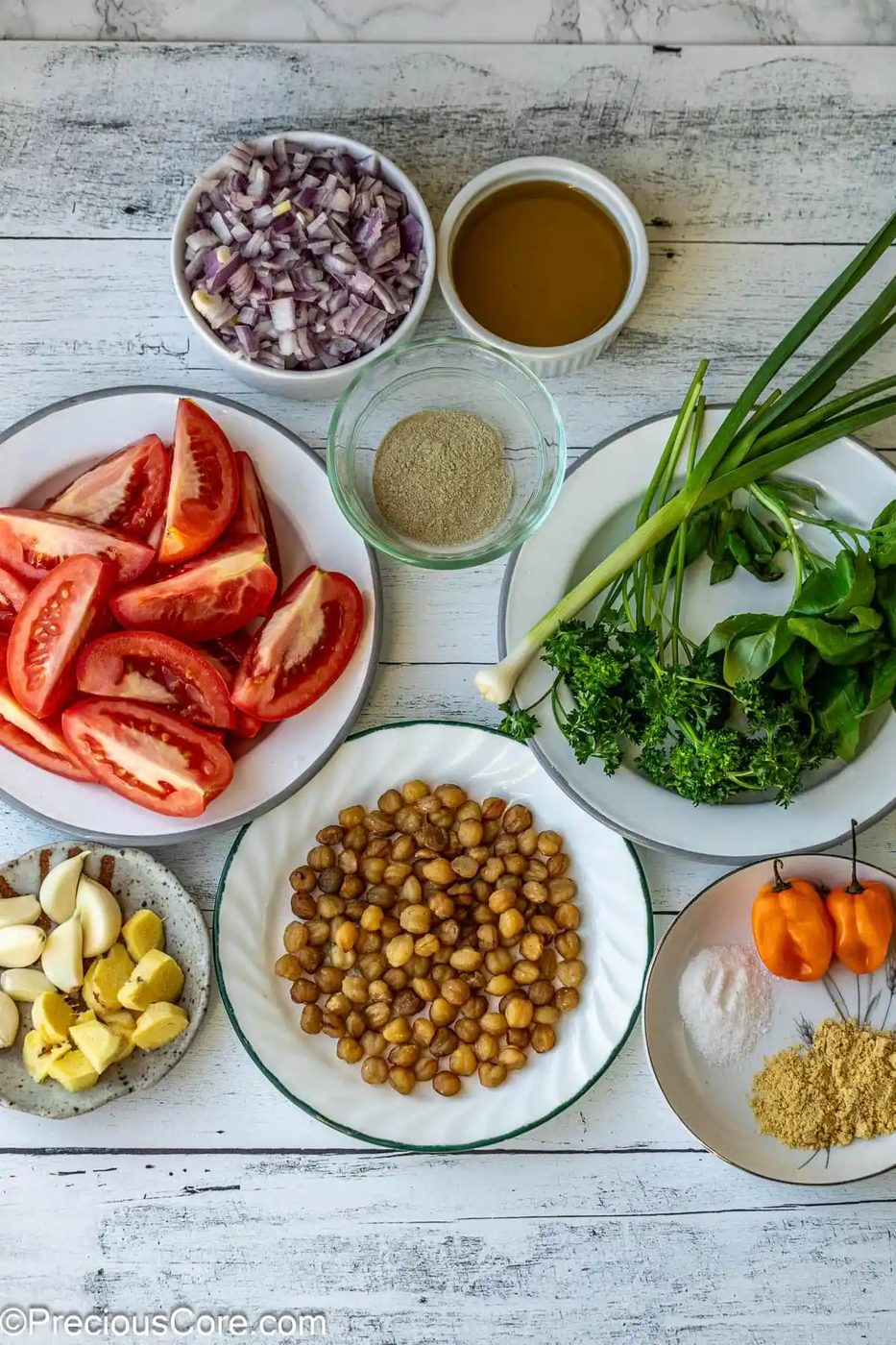
Njangsa seeds are the chickpea-like kernels on the white plate.
- Njangsa: Search Google for nearby African markets and call them to ask if they have njangsa seeds. This is the key ingredient that gives this stew its unique taste.
- Oil: We used olive oil, but you could use other kinds of flavorless oil, like vegetable oil, canola oil, avocado oil, and more.
- Garlic and Ginger: Fresh spices are best for this recipe as they really complement the flavor of the fish. Take time to peel fresh garlic and ginger for the best flavor.
- Fresh Herbs: Known in Cameroon as “green spices”, this combination of herbs like parsley, celery, leeks or green onions, and more takes every meal up a notch. Check out our Green Seasoning Recipe.
For the full list of ingredients with measurements, check out the recipe card below.
Make sure you select fresh fish for this recipe. The flesh should be firm to the touch and it shouldn’t have any foul smell. Also, for easy prep, have your fishmonger clean, gut and cut the fish into steaks.
How To Cook Njangsa Sauce
Follow these easy 4 steps to cook Njangsa sauce:
- Clean and gut the fish.
- Sauté the onions and cook down the tomatoes.
- Add in blended njangsa seeds, herbs and spices, then add water and seasoning.
- Add the prepared fish and simmer until the fish is cooked through.
Once the fish is in the pot, avoid stirring so as to avoid breaking up the fish. Instead, gently spoon some of the sauce over the fish.
How it comes together
SubscribeOther ways
Here are some ideas for switching up this njangsa sauce:
- Protein: Instead of fish, use bone-in chicken, like chicken thighs and drumsticks. Also, you can make this recipe with pork (we recommend pork trotters) or beef. Note that if you change the protein used, it will take longer to cook since fish cooks faster than the other kinds of protein mentioned.
- Make it spicy: Want a spicy sauce? Blend one habanero pepper together with the herbs and spices, and add to the sauce.
- Different herbs: Add different kinds of herbs like celery leaves or thyme to the spice blend. This green seasoning is great for njangsa sauce!
- Yield: 6 servings
- Prep: 20 minutes
- Cook: 25 minutes
- Total: 45 minutes
Ingredients
FOR THE FISH
- 2 pounds whole fish, we used pompano
- ½ teaspoon salt
- 1 teaspoon chicken bouillon powder, or 1 Maggi seasoning cube
- ¼ teaspoon ground white pepper
FOR THE SAUCE
- ½ cup olive oil, or any neutral tasting oil
- 1 medium onion, diced
- 4-5 large Roma tomatoes, cut into chunks
- 7 garlic cloves, peeled
- 3 inches ginger root, peeled and diced
- 4 sprigs parsley
- 4 sprigs basil
- ½ a large leek, or 1 green onion
- 2 teaspoons ground white pepper
- ½ cup Njangsa seeds, obtainable from an African market
- 1 teaspoon salt
- 2 teaspoons chicken bouillon powder, or 2 small Maggi seasoning cubes
- 2 habanero peppers, or scotch bonnet peppers
- Sliced basil or minced parsley for garnishing
Method
- Prep the fish: Trim the fins of the fish with kitchen scissors and cut the fish into steaks. Remove the entrails and rinse thoroughly until the water runs clear. You could have your fish monger clean and gut the fish for you.
- Season the fish with the salt, white pepper, chicken bouillon powder or one small Maggi seasoning cube. Let it rest while you work on the sauce.
- Add oil to a medium pot set on medium-high heat, then let the oil heat up until shimmering. Add the diced onions, and sauté for about a minute until fragrant. Blend the tomatoes into a paste and add to the pot. Let them cook undisturbed for 5 minutes. Stir the tomatoes and let them continue to cook until they start sticking to the bottom of the pot. Another 5 minutes.
- Blend together the leeks or green onion, parsley, basil, garlic, ginger, and njangsa seeds with a cup of water. Pour the blended spices into the pot with tomatoes. Rinse the blender with about 3 cups of water and add to the pot. Stir well to combine. Add the habanero pepper with the remaining salt and bouillon powder. Stir to combine.
- Add the seasoned fish steaks to the pot. Cover and let it cook for about ten to fifteen minutes until the fish is completely cooked through. Spoon some of the sauce over the fish as they cook. Avoid stirring as this might break the fish.
- Taste and adjust seasoning or thickness if needed. If you want a lighter sauce, thin it out with water then taste to see if it needs a pinch of salt.
- Garnish with fresh sliced basil or minced parsley. Serve with boiled rice, plantains or African white yams.