
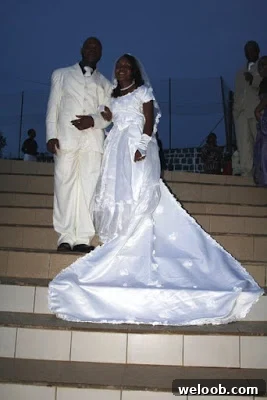
Hello everyone—today marks my sixth wedding anniversary. To celebrate, I’m sharing my wedding night story, originally published on my sister Commy Mussa’s blog, SISTERS SPEAK 237. Below I describe what happened after this photo:
The moment everyone had been waiting for arrived. The pastor announced in a warm voice:
The hotel interior was pleasant, with artwork decorating the walls. A brown-skinned receptionist greeted us at the desk as we asked for a room. My mind kept returning to the single three-letter word that seemed to matter most.
The room matched my expectations. Red sheets covered the bed, and the space felt calm and private—seemingly perfect for a romantic evening.
The next afternoon, family members who saw us dressed in matching clothes began to ululate with joy, unaware that we had not consummated the marriage.
I felt deep disappointment in myself and wondered what I was missing. We tried again over the following week with the same result. Then my husband returned to his job as a marine electrical engineer in Equatorial Guinea and was gone for two months.
My disappointment grew into confusion and doubt. After examining myself I worried that nothing that big could possibly fit or stay. I even feared I had been bewitched by someone with ill intent. Thoughts raced through my mind.
All our attempts left me sore but without success. I asked myself why something depicted in novels, movies, and casual conversations as wonderful had turned into a painful, baffling experience. Those sources had been my informal sex education.
Growing up, my mother’s warning when I began menstruating was, “If a boy touches you now, you will get pregnant.” That was the sum of her instruction. My father never spoke about it at all. In school, a biology teacher covered reproduction and introduced terms like “erection,” “penis,” and “vagina,” but the awkwardness of the classroom made the lesson rough and brief.
In church, I was taught to preserve my virginity as a gift for my husband. Youth group messages often repeated that keeping one’s virginity was a moral duty and the greatest wedding-night gift.
So on my wedding night I entered the hotel room still wearing my bridal tiara, believing I had followed every instruction—but the gift I’d saved would not be “opened.” Our attempts at penetration failed, and the night passed without intercourse.
Two months later, after more patience and attempts, we finally had a breakthrough—an experience that mixed pain and pleasure. I was relieved the difficulty had been resolved, but I still wondered how common such problems were.
Sometime after, a friend told me she’d had a similar experience. She and her fiancé had also tried repeatedly and even considered surgery as a solution. We laughed together at how our fears had grown larger than reality.
I understand why some parents, pastors, and role models avoid talking about sex with young people—they fear encouraging the wrong behavior. But age-appropriate conversations are important. What you tell a three-year-old should be very different from what you tell a thirteen-year-old or a thirty-year-old.
A small child might need to learn correct names for body parts. A teenager should understand puberty and changing sensitivity. An adult needs practical, detailed information about sexuality and what to expect physically and emotionally.
As a young Christian woman, I wish I had learned that sex can be a natural, positive part of marriage and had received clearer, practical information about my body. Lacking that knowledge turned the unknown into fear and made a normal experience feel like an aberration.
Ignorance invites anxiety, and anxiety can prevent women from enjoying healthy sexual experiences. Now that I know more, I plan to educate my daughters so they don’t inherit the same confusion and fear.