
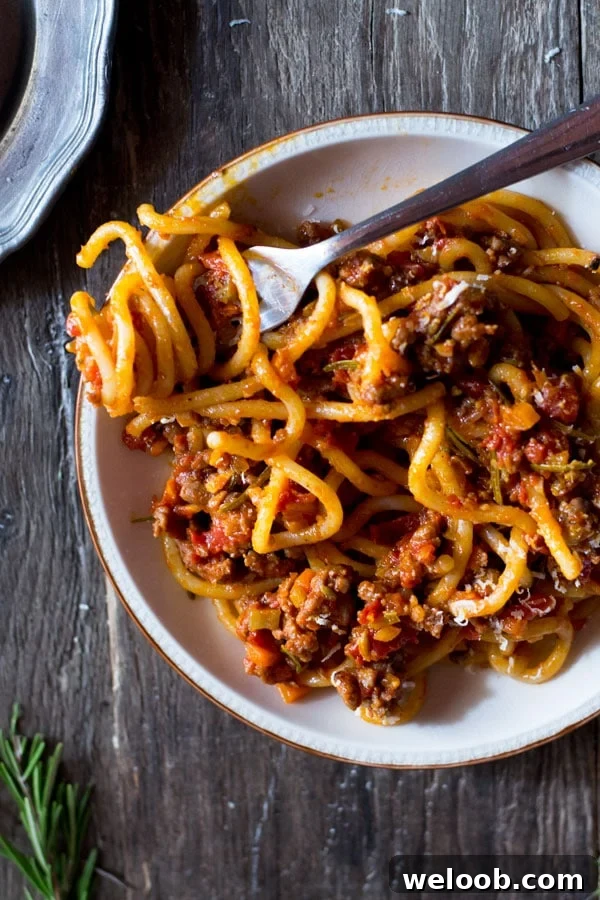
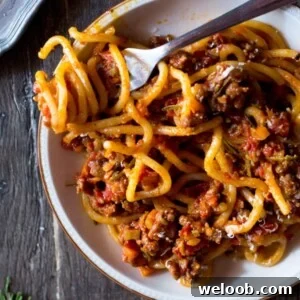
A rich, flavour-packed Tuscan sausage ragu made with quality Italian sausages, fennel seeds, red wine and plum tomatoes, cooked until deep and served with Pici pasta.
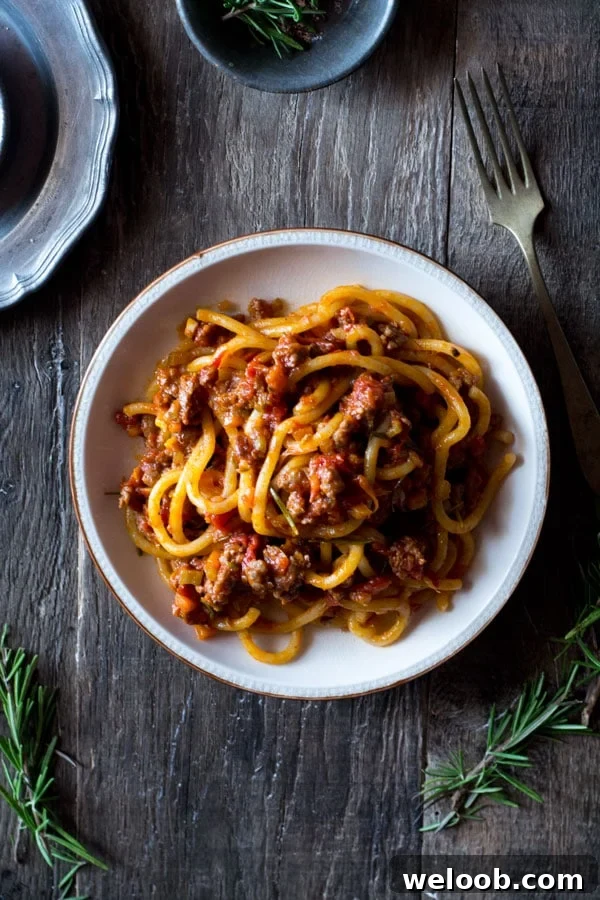
This Tuscan sausage ragu is one of my favourite recipes. I’ve been making it for years, long before I moved to Italy and started sampling regional dishes on holidays.
It’s simple and straightforward to prepare. While it does need time to simmer, it doesn’t take all day—just enough for the flavours to deepen and the sauce to become rich and comforting.
Tuscan Sausages
The sausages are the star of this dish, so use the best-quality Tuscan or Italian sausages you can find. In Italy, sausages are typically well seasoned and full of flavour, so you often won’t need to add much salt.
Traditional Tuscan sausages usually feature fennel seeds, rosemary, red wine and garlic rather than chili flakes (unless you choose salsicce piccante). Look for sausages with natural ingredients and no preservatives for the most authentic taste.
Il Soffritto
The ragu begins with il soffritto: finely chopped carrot, celery and white onion sautéed gently in olive oil. Cook these vegetables slowly for about 10 minutes until soft and translucent but not browned. This base builds depth of flavour in the sauce and can be prepared ahead for quick weeknight meals.
How to make il soffritto
Finely chop roughly equal amounts of carrot, celery and white onion—about 1 medium carrot, 1 celery stalk and 1 small white onion for this recipe. Sauté the vegetables in a large pan with a tablespoon of extra-virgin olive oil over low–medium heat, stirring occasionally until softened and fragrant.
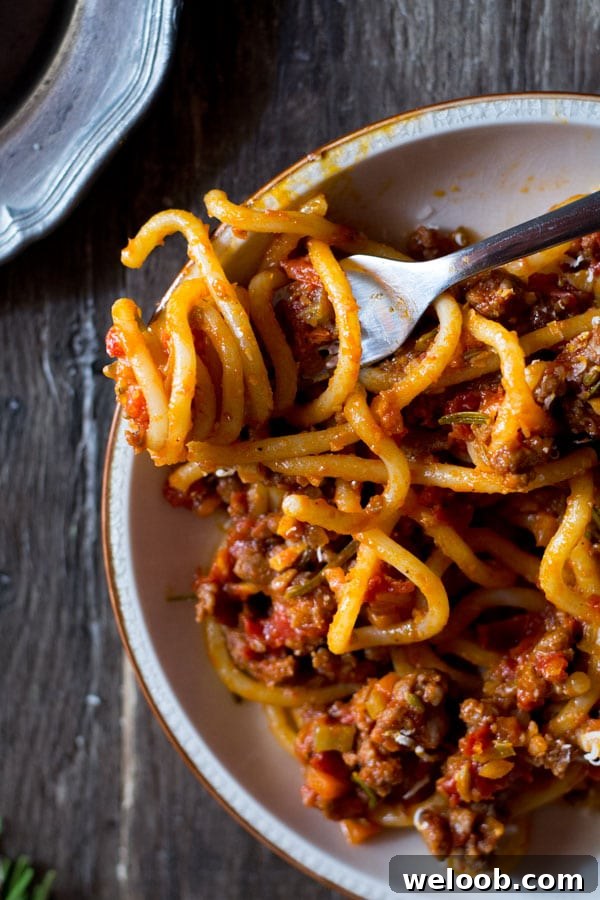
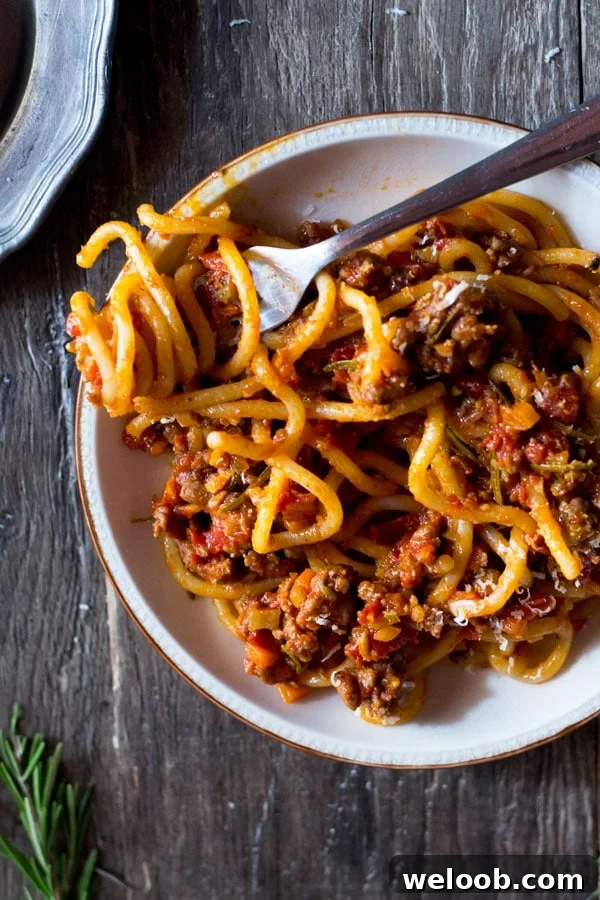
Pici pasta is an ideal match for this ragu. Pici are thick, hand-rolled strands similar to fat spaghetti; they hold sauce beautifully and are traditionally used for dishes like Cacio e Pepe (often called Pici e Pepe). Pici’s texture works wonderfully with the meaty, aromatic ragu.
This ragu is versatile: make it ahead the day before, freeze it for quick dinners, or serve it for a cozy weekend meal. It’s equally at home on a casual weeknight or a relaxed date night with a glass of red wine.
For more easy pasta recipes try;
- Mafalde pasta with butter and parmesan
- Farfalle pasta with pancetta, chili and garlic
- Creamy butternut squash pasta
- Spicy sausage pasta bake
- Bucatini with roasted red pepper cream sauce
If you’ve tried this Pici with Tuscan sausage ragu or any other recipe, please share how it went in the comments—I love hearing from readers.
Step By Step Photos Above
Most of our recipes include step-by-step photos and helpful tips to get it right first time.
Pici with Tuscan Sausage Pasta
By Emily
Ingredients
- 1 lb (490g) Tuscan or Italian sausages
- 1 medium carrot, finely chopped
- 1 celery stalk, finely chopped
- 1 small white onion, finely chopped
- 2 cloves garlic, minced
- 1 tsp fennel seeds
- 1 large sprig rosemary
- 1 tbsp olive oil
- 1/2 cup (120ml) red wine
- 28 oz (800g) canned plum tomatoes
- 3/4 cup (200ml) water (plus extra if needed)
- Salt and pepper, to taste
- 1 lb (500g) pici pasta
Instructions
- Very finely chop the carrot, onion, celery and garlic and set aside. Remove the sausages from their casings and add the meat to a large pan over medium heat. Break the sausage apart with a wooden spoon and brown. Once browned, remove the sausage meat to a plate and drain excess fat from the pan.
- Add 1 tbsp olive oil to the pan and reduce heat to medium–low. Add the chopped carrot, celery and onion and sauté slowly for about 10 minutes until the vegetables are soft and the onions are translucent but not brown.
- Return the sausage meat to the pan, add the garlic and cook for 1 minute. Pour in the red wine and stir for a minute to deglaze. Add the canned tomatoes, water, a good pinch of pepper, the fennel seeds and the rosemary sprig.
- Let the ragu simmer gently for 45–50 minutes, stirring occasionally. Add a splash of water if the sauce reduces too much.
- When the ragu is ready, reduce the heat to the lowest setting. Bring a large pot of salted water to a boil and cook the pici according to package instructions. Use a spaghetti spoon to transfer the cooked pasta directly into the ragu, toss to coat, then serve in large bowls with grated Parmesan.
Notes
This recipe was developed using metric measurements; imperial conversions are approximate.
Helpful Info for All Recipes
- I always use extra-virgin olive oil unless stated otherwise.
- For canned tomatoes, I prefer well-known quality brands for best flavour.
- All vegetables are medium-sized unless specified.
- Recipes are tested using a fan (convection) oven when appropriate.
Nutrition
Nutrition information is an approximation.
Did you try this recipe?
Leave a comment below!