
Pistachio Chiffon Cake Recipe: Light, Airy and Nutty
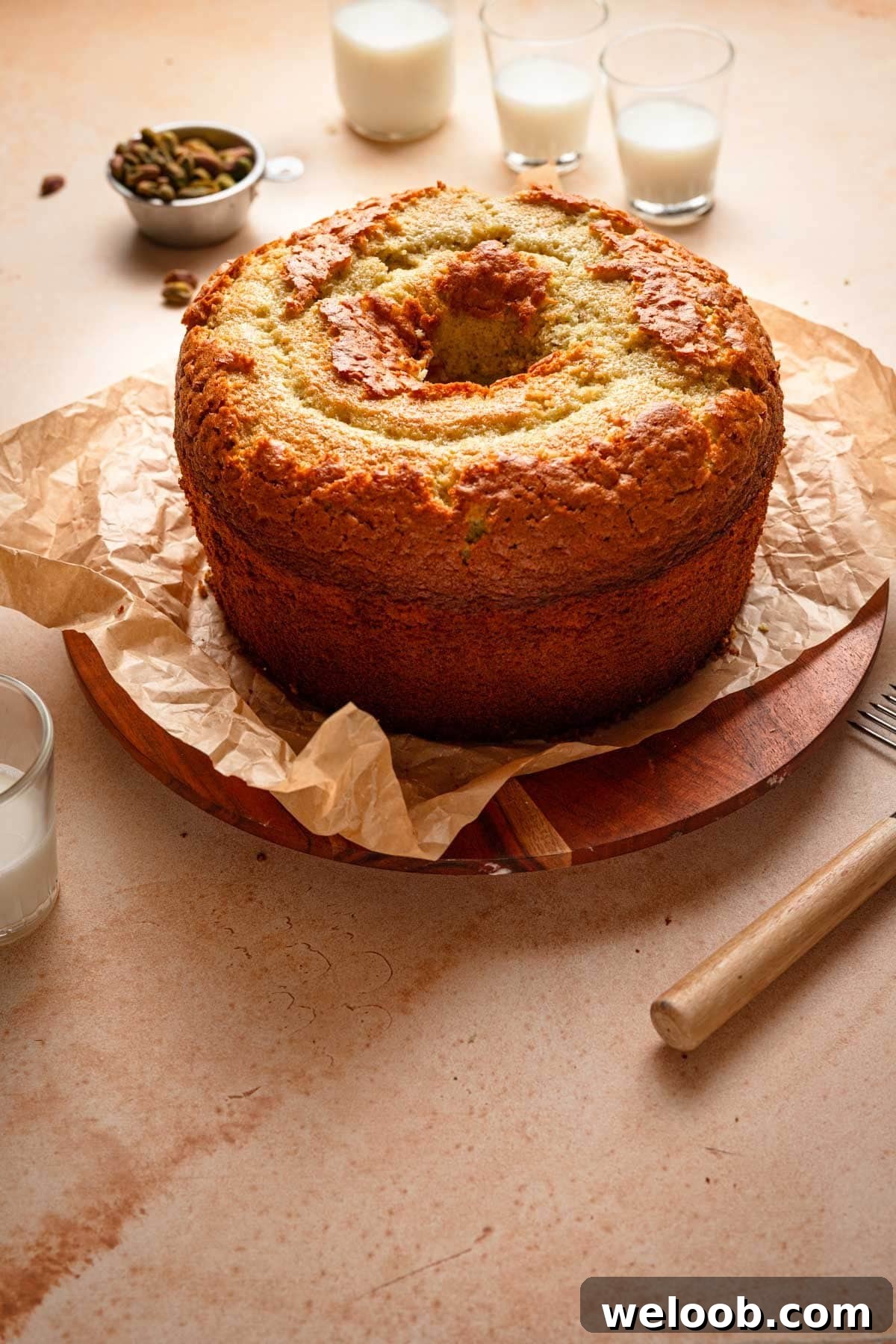
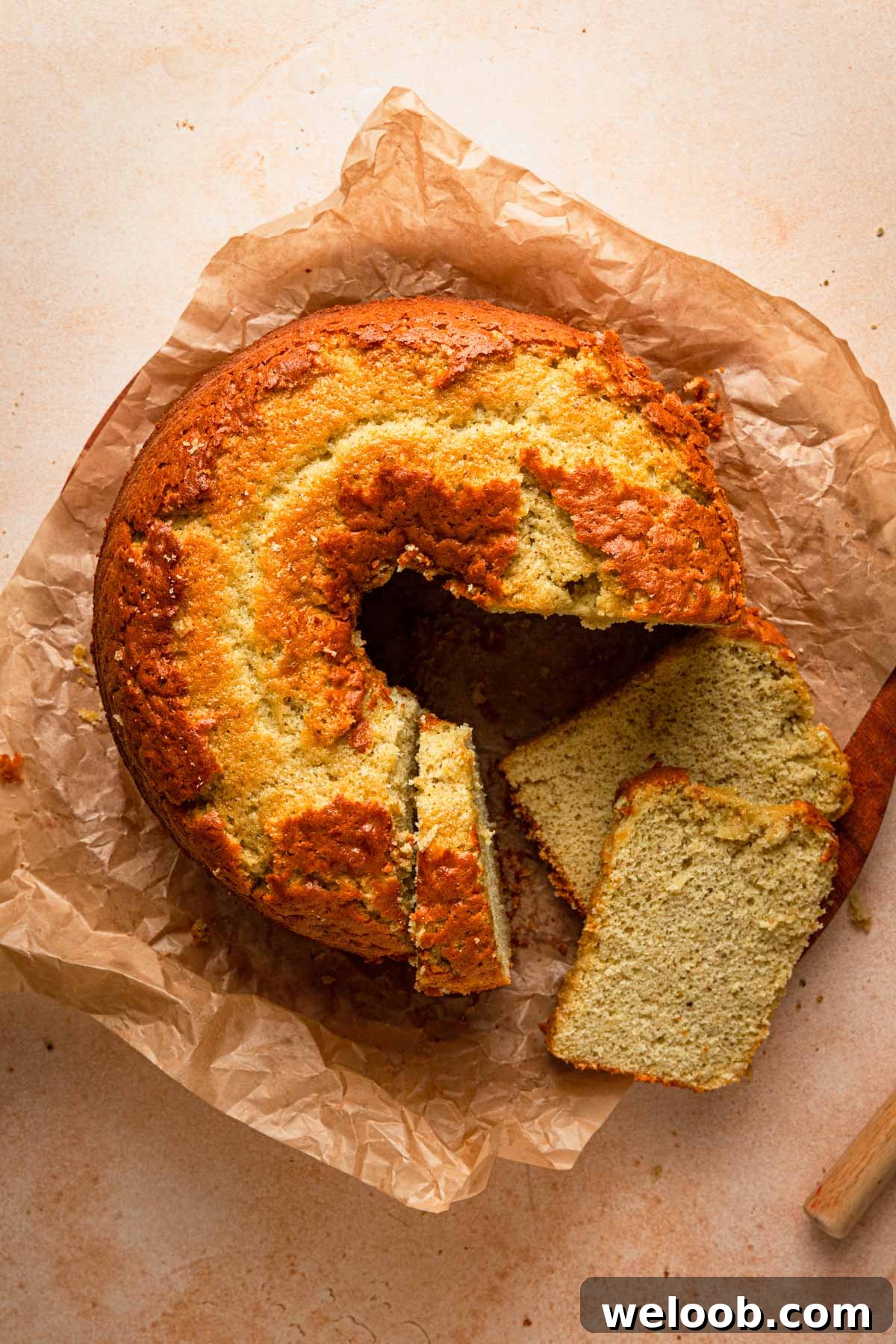
Pistachio Chiffon Cake is as impressive as it is delicious: a tall, light, and airy cake infused with the subtle, nutty flavor of pistachio.
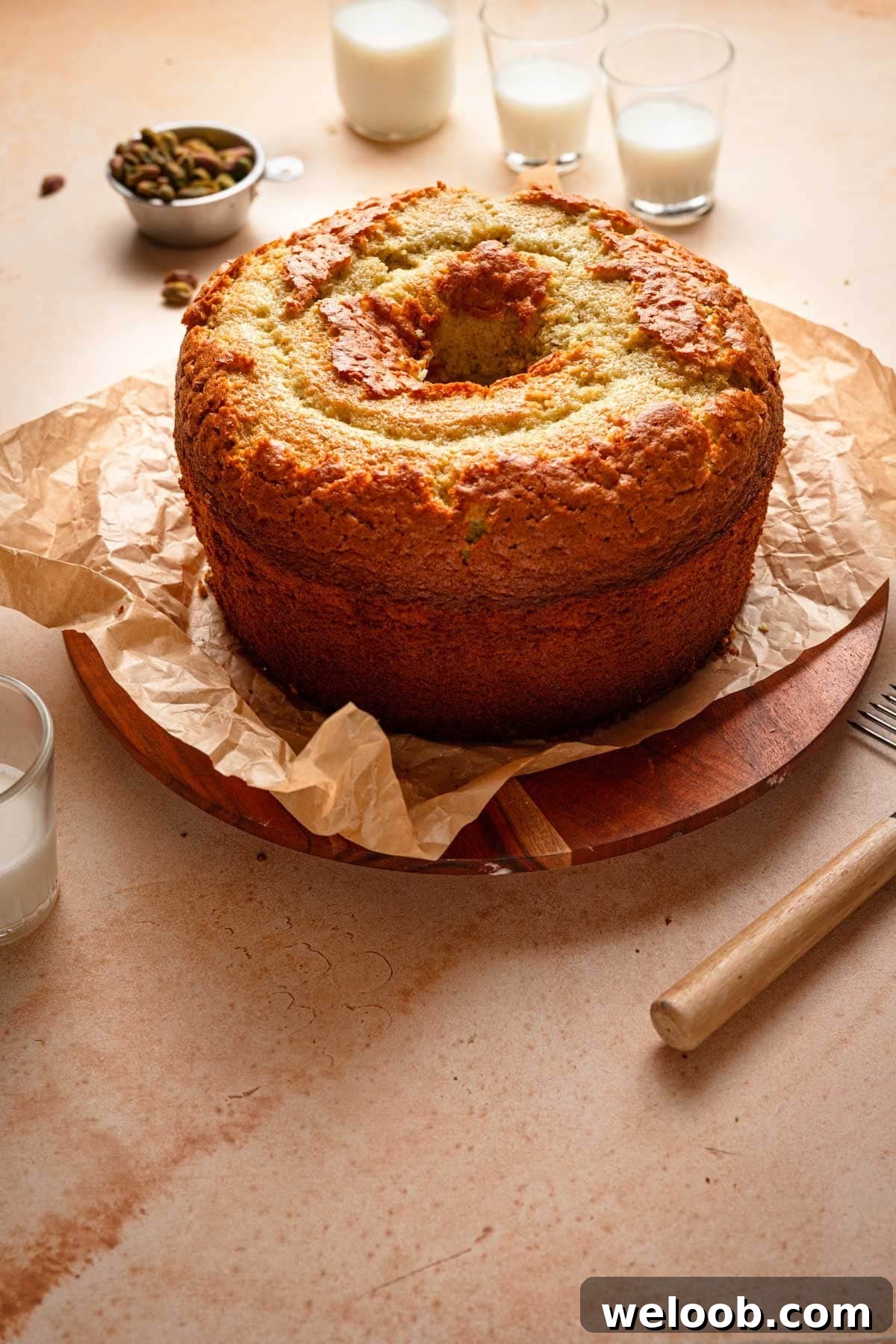
Chiffon cake strikes a beautiful balance: it’s tall and airy like a classic angel food cake, yet tender and moist like a pound cake. A generous amount of pistachio cream brings distinctive flavor and a delicate green hue, creating an elegant cake with a soft crumb and pronounced nutty notes. This version yields a show-stopping tall cake that’s perfect for gatherings or as a special everyday treat.
Ingredients
The full recipe with measurements is provided below in the recipe card. Here’s a concise overview of the key ingredients and useful substitutions.
- Pistachio cream. The main flavor source — it gives the cake its pistachio taste, color, and extra richness. Use a smooth pistachio spread or homemade pistachio cream.
- Cake flour. Cake flour produces a lighter, softer crumb than all-purpose flour because it contains less protein. If needed, you can substitute a mix of all-purpose flour with cornstarch (not preferred for best texture).
- Eggs. Egg yolks enrich the batter; whipped egg whites form a meringue that lifts the cake and gives it its airy structure.
- Vegetable oil and milk. Oil keeps the cake moist and tender; choose a neutral-flavored oil like canola. Milk provides moisture and can be replaced with water or a mild fruit juice in a pinch.
- Granulated sugar. Sugar supports structure and moisture. Avoid reducing it drastically — that can reduce volume and moistness. If you find the cake too sweet, a small splash of apple cider vinegar in the batter can balance flavors without affecting texture.
Make It
Chiffon cake may look sophisticated, but it’s straightforward when you follow a few key techniques. Read the tips carefully before you begin for the best results.
- Separate eggs while cold. Cold eggs separate more cleanly; separate whites from yolks before they warm up to reduce the chance of yolk accidentally getting into the whites.
- Bring yolk mixture to room temperature. After combining yolks with oil, let the mixture sit for about 30 minutes so it warms slightly — this helps the batter blend more evenly with the meringue.
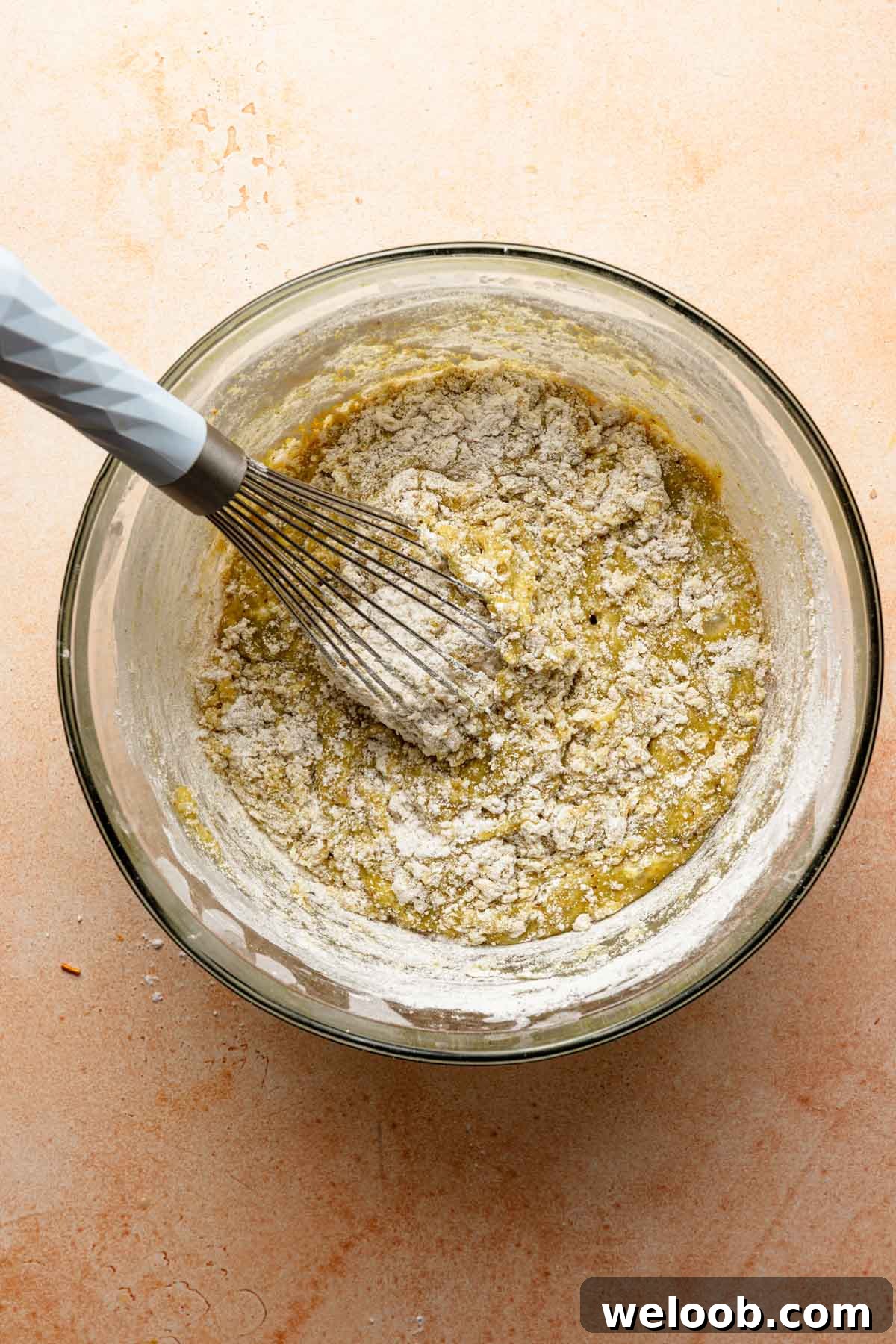
- Mix yolk ingredients by hand. Use a whisk or spatula to combine the yolk mixture with dry ingredients; an electric mixer can overwork this part and incorporate too much air, leading to collapse.
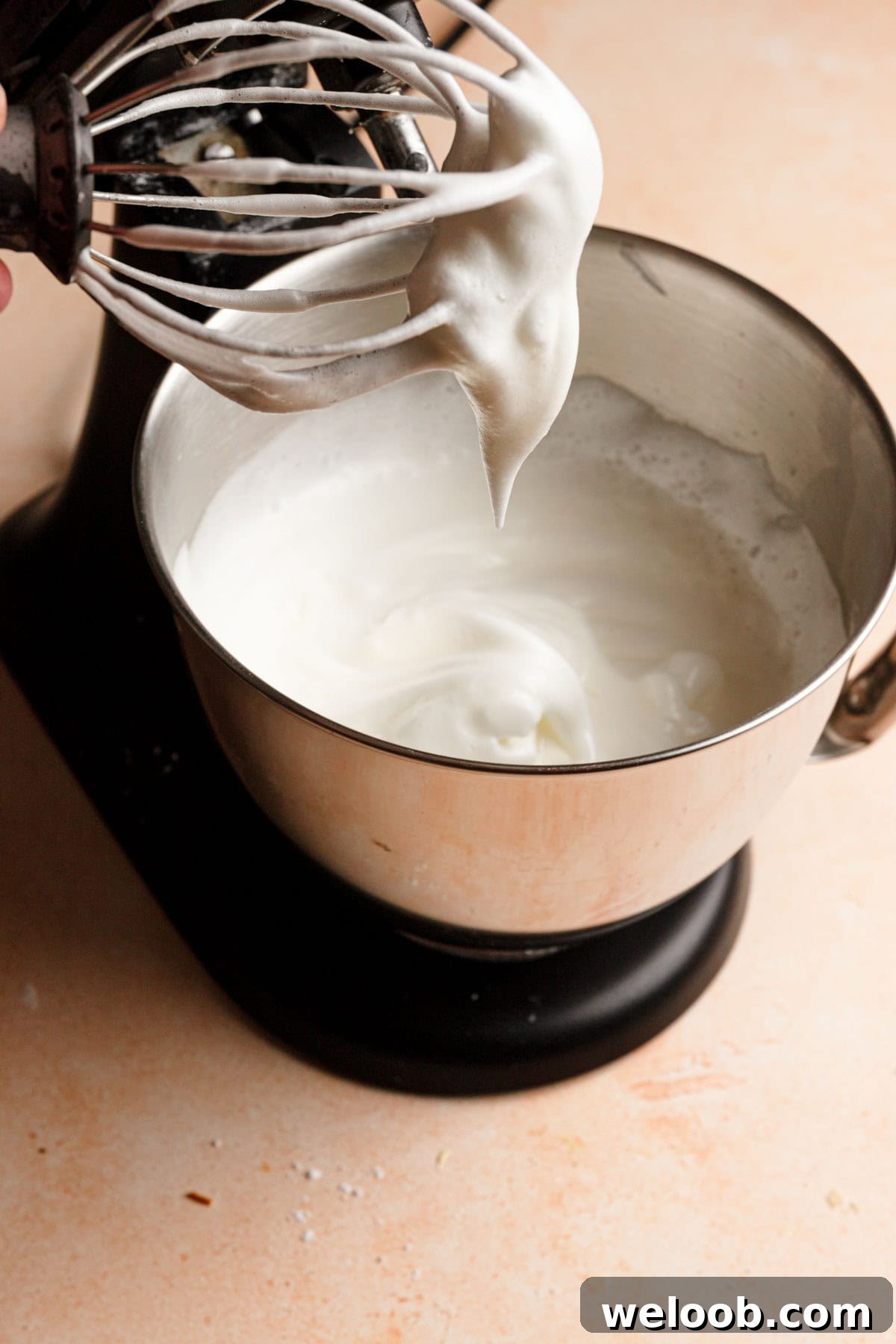
- Whip the meringue carefully. Beat egg whites gradually and add the second portion of sugar in small additions. Aim for medium-stiff peaks: glossy and opaque, thick but still with a slight drip when the whisk is lifted.
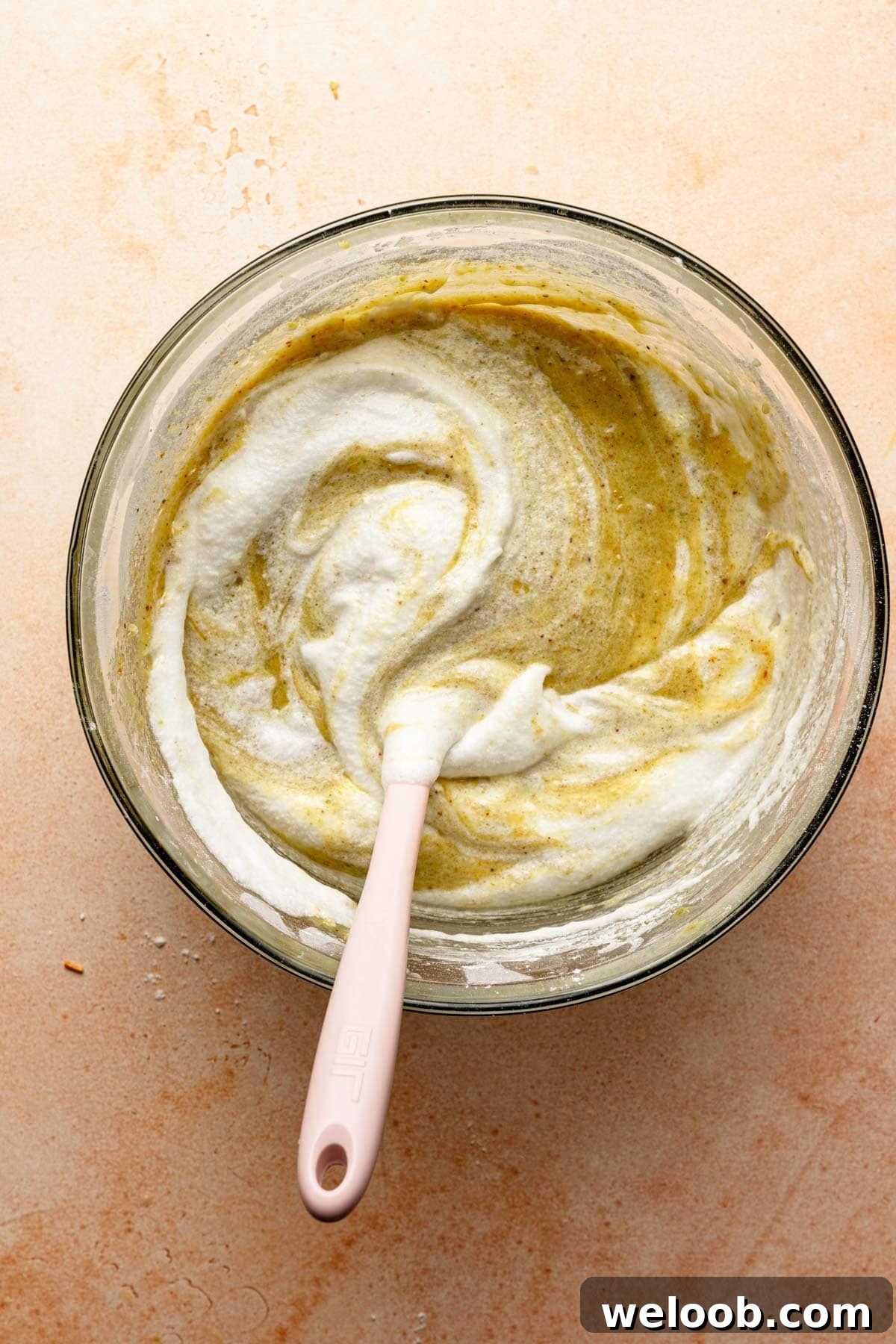
- Fold gently. Incorporate the meringue into the yolk batter in thirds, folding with a spatula to preserve as much air as possible while eliminating streaks of egg white.
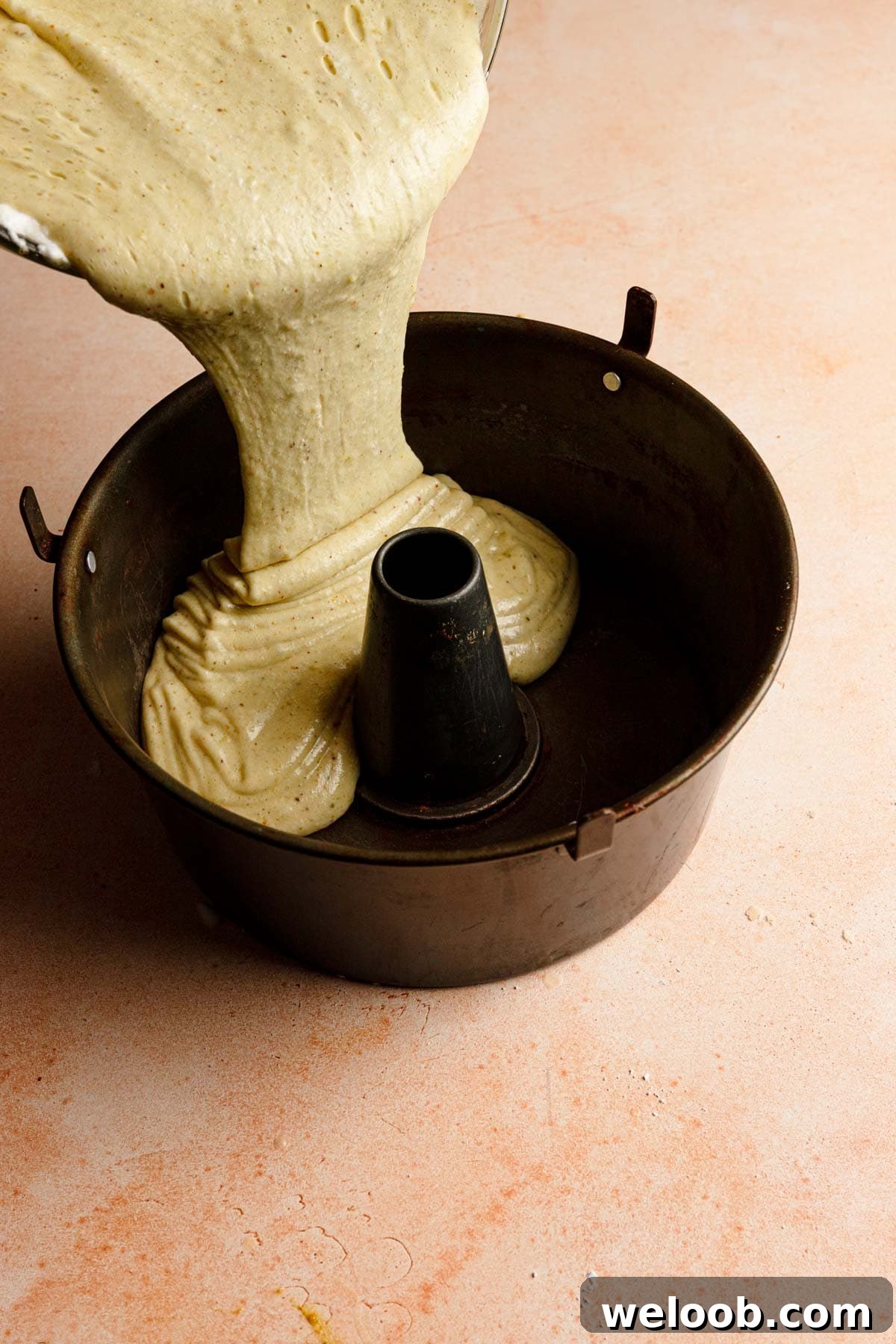
- Do not grease the pan. A chiffon cake needs to cling to the pan’s sides to climb and set; greasing will cause it to slide and compress. Use a straight-sided tube pan with a removable bottom for best results.
- Avoid opening the oven early. Leave the oven door closed for at least the first 40 minutes so the cake can set without sudden temperature changes that might cause collapse.
Yield and Storing
This recipe makes one 9.5-inch tube cake, yielding about 12–15 slices depending on thickness. You can also divide the batter between two or three 9-inch round pans to make layer cakes — line the bottoms with parchment but do not grease the sides.
Store the cake at room temperature, covered, for up to five days. To freeze leftovers, wrap tightly in plastic wrap, place in a freezer bag, and freeze for up to three weeks. Thaw in the refrigerator or at room temperature before serving.
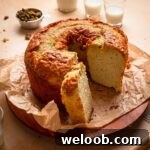
Pistachio Chiffon Cake | Tall and impressive
Prep Time: 20 mins | Cook Time: 55 mins | Servings: 15 people
Author: Dikla Levy Frances
Ingredients
- 8 large egg yolks, at room temperature
- 3/4 cup (180 ml) unflavored vegetable oil (such as canola)
- 1 cup (300 g) pistachio cream
- 1/2 cup (120 ml) milk, at room temperature
- 2 1/4 cups (270 g) cake flour
- 1 cup (200 g) granulated sugar (first portion)
- 2 teaspoons baking powder
- 8 large egg whites
- 1/2 cup (100 g) granulated sugar (second portion)
Instructions
- Preheat your oven to 320°F (160°C). Prepare a 9.5-inch tube pan but do not grease it.
- In a medium bowl, sift the cake flour, then whisk in the baking powder and the first portion of sugar (1 cup / 200 g). Set aside.
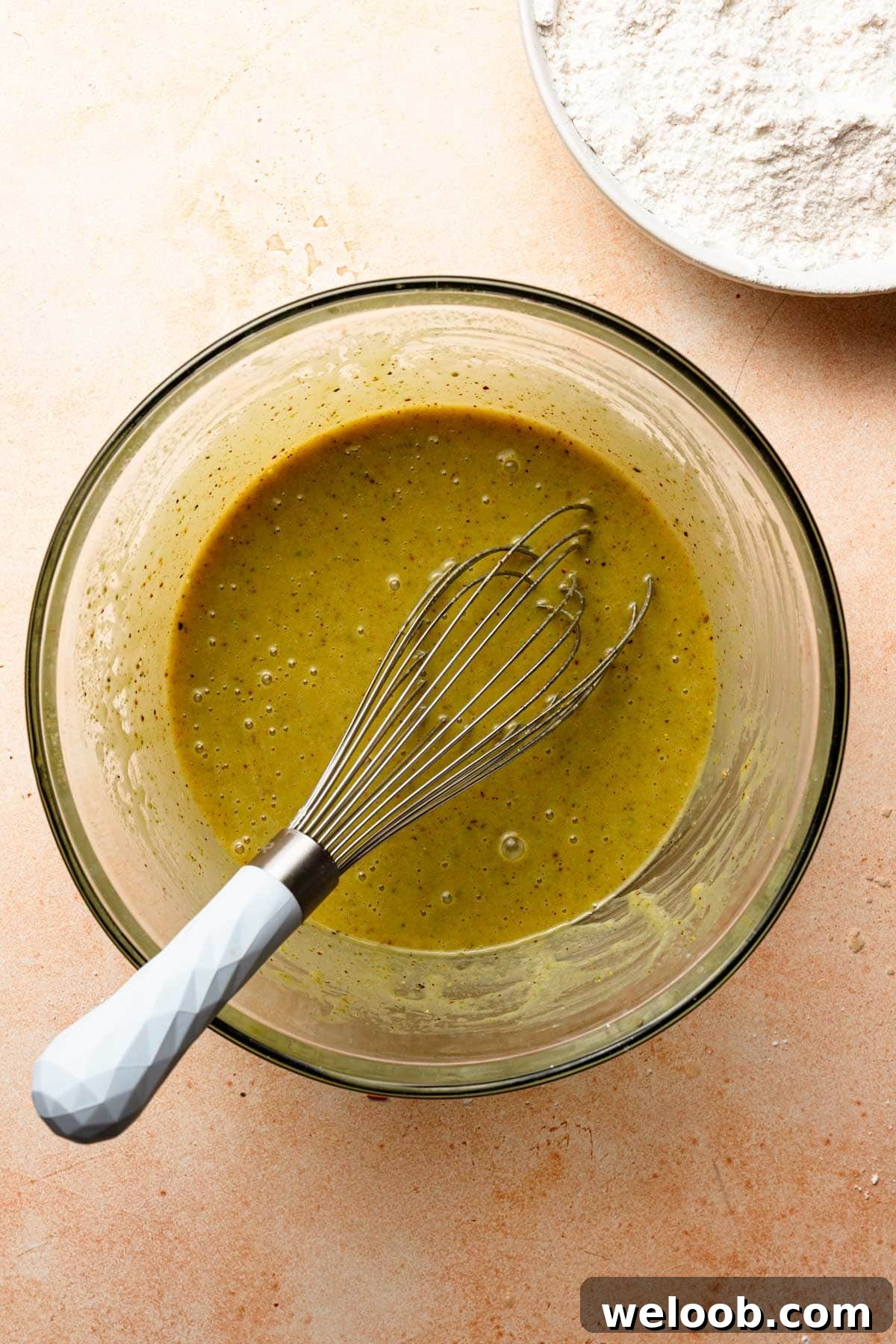
- In a large bowl, whisk together the egg yolks, vegetable oil, milk, and pistachio cream until smooth. Do this by hand rather than with an electric mixer.
- Place the egg whites in the bowl of a stand mixer and whip with the whisk attachment until frothy, about 30 seconds.
- Gradually add the second portion of sugar (1/2 cup / 100 g) to the whites in about four additions, waiting roughly 10 seconds between each addition. Continue whipping until you reach medium-stiff peaks: glossy, opaque, and still slightly fluid when lifted.
- Stir the flour mixture into the yolk mixture just until no dry flour remains.
- Fold the meringue into the yolk batter in three additions. Use a gentle lift-and-fold motion to preserve air.
- Pour the batter into the ungreased tube pan and bake on the middle rack for 50–55 minutes. The cake is done when the top no longer jiggles and a toothpick inserted into the center comes out clean.
- Immediately invert the pan onto a bottle neck or the pan’s feet to cool upside down. This keeps the cake from collapsing as it cools and sets the tall shape.
- Once completely cool, run a thin knife along the inner and outer edges of the pan to loosen the cake. Carefully remove the outer ring and the base, then lift the cake onto a serving plate.
- Store at room temperature, covered, for up to five days. To freeze, wrap well in plastic and place in a freezer bag for up to three weeks.
Notes
- This recipe yields one 9.5-inch tube cake (about 12–15 slices).
- To make a layer cake, divide the batter between two or three 9-inch round pans; line the bottoms with parchment paper but do not grease the sides.
- If any yolk gets into the whites, they may not whip properly. Separate eggs while cold and handle whites carefully to avoid contamination.