
Tempered Chocolate Explained: Why It Shines and Snaps
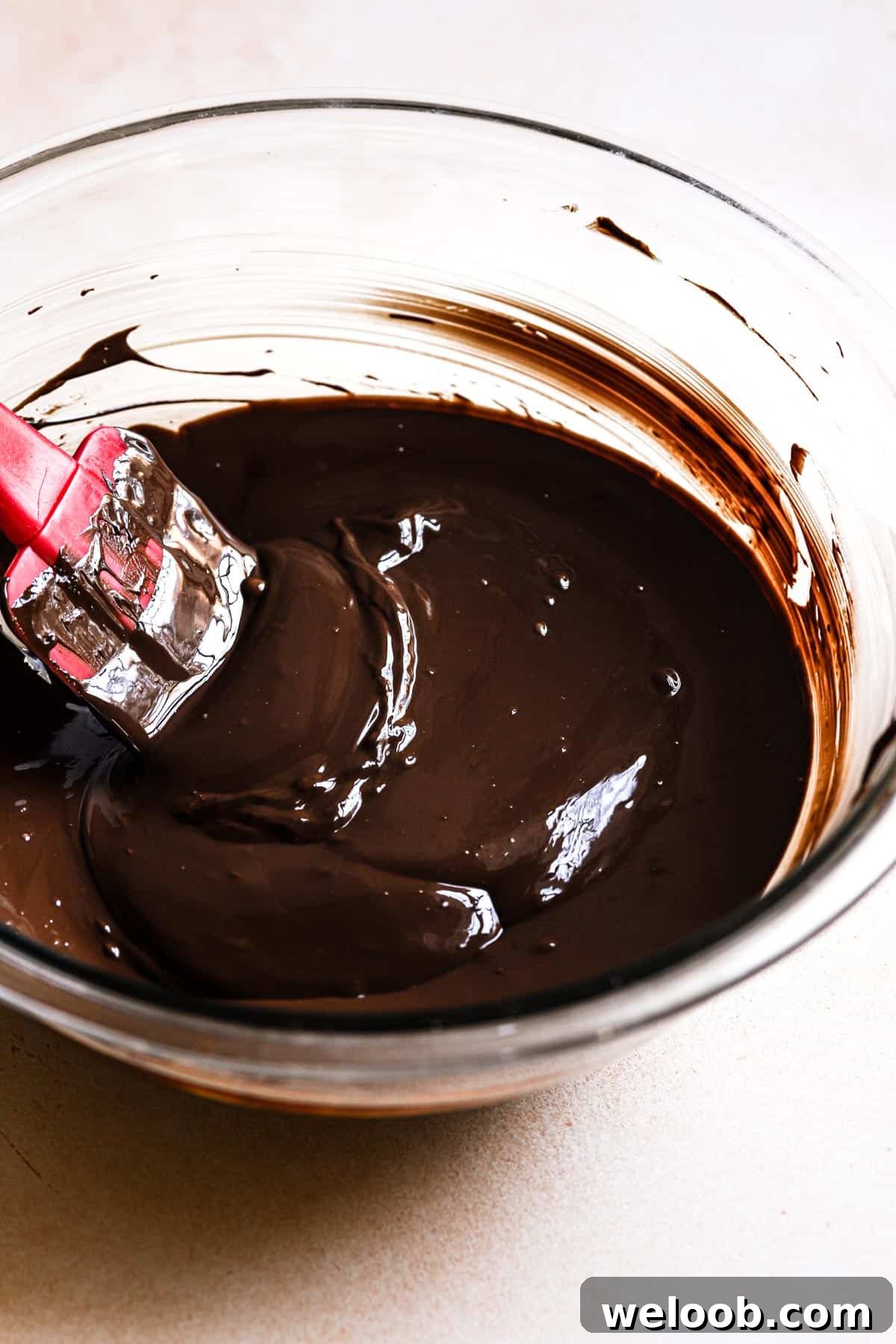
During my research into what tempered chocolate is, I discovered that working with chocolate is an art—and chocolatiers are true artists.
It’s easy to tell tempered and untempered chocolate apart. In this post we’ll look closely at how tempering works and how you can try it yourself.
Learn how to temper chocolate using three straightforward methods.
More articles on chocolate: What Is Unsweetened Chocolate, What Is Dutch Process Cocoa Powder, What Is Cocoa Powder, What Is Dark Chocolate?, What Is White Chocolate?
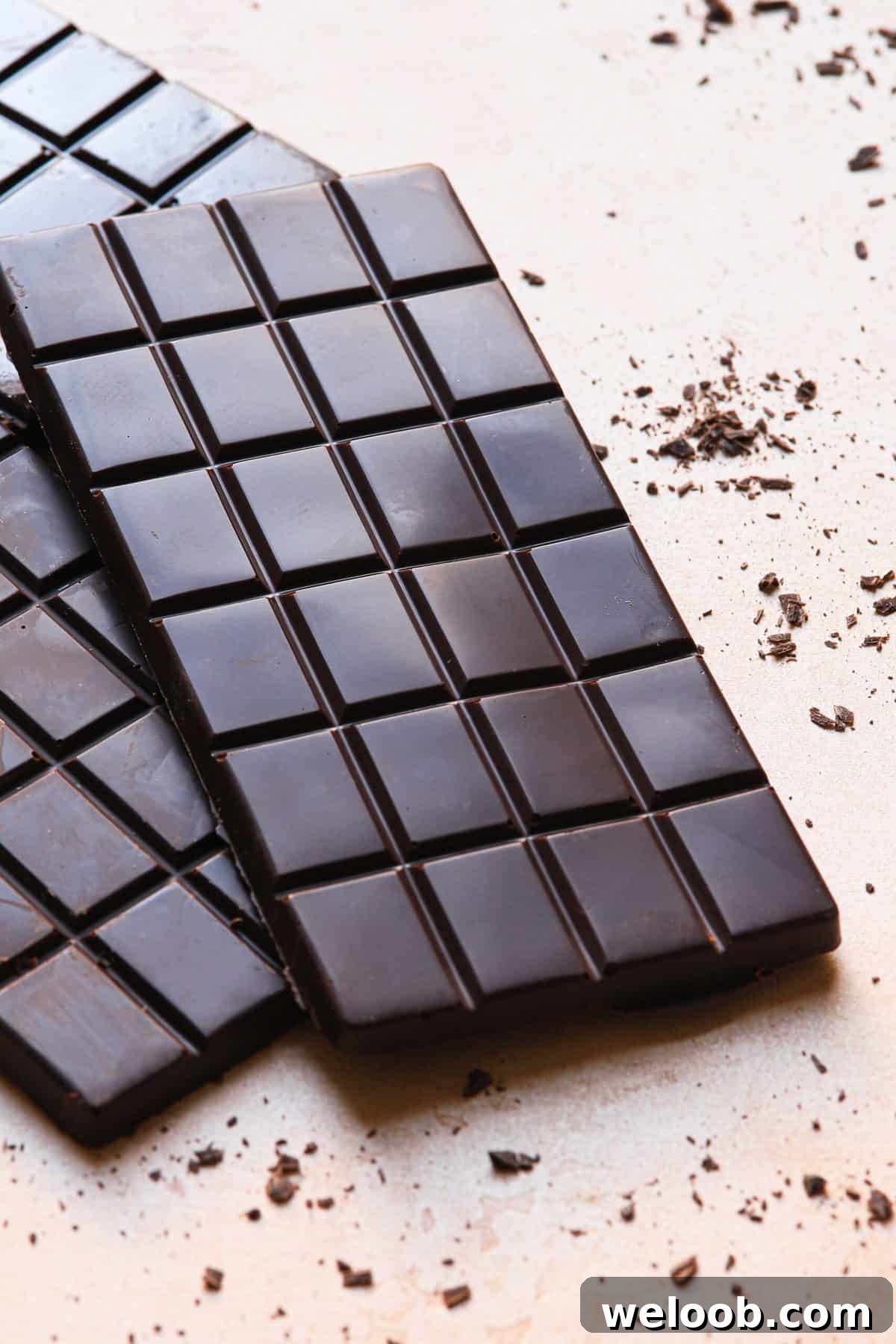
The properties of tempered chocolate
Well-tempered chocolate—whether dark, milk, or white—has characteristic qualities that distinguish it from untempered chocolate:
- Solid at handling temperature: properly tempered chocolate stays firm in your hand instead of melting quickly. Its effective melting point is around body temperature.
- No stretch or elasticity: it remains dimensionally stable when used for coatings or decorations.
- A clean snap: tempered bars break with a distinct, crisp sound when snapped.
- Glossy surface: tempered chocolate develops a smooth, shiny finish with no streaks or dull spots.
If you enjoy baking science, consider pre-ordering my Baking Science cookbook.
Phase behavior of chocolate
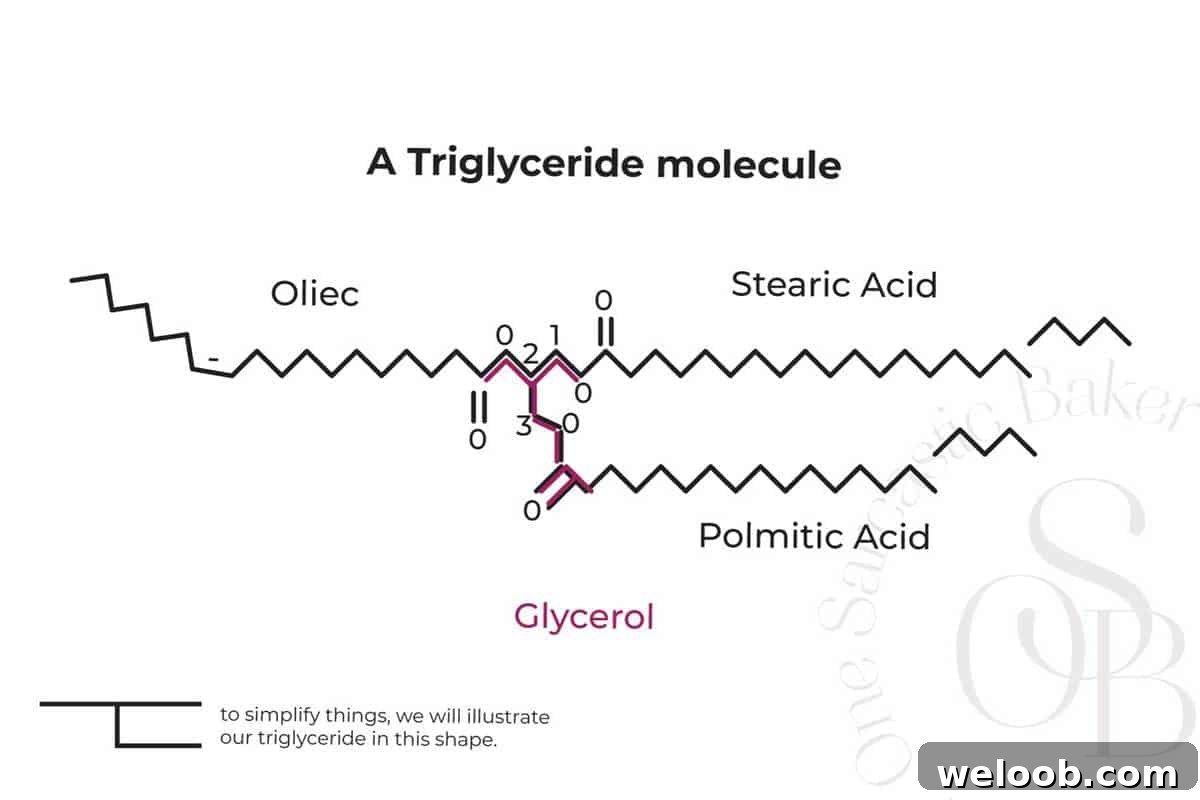
Chocolate is made mostly from cocoa butter, a fat composed of triglycerides. A triglyceride molecule consists of three fatty acid chains attached to a glycerol backbone. In cocoa butter, those fatty acids commonly include palmitic, stearic, and oleic acids. How these triglyceride molecules interact and arrange themselves as temperature changes is called the phase behavior of chocolate.
Cocoa butter can crystallize in several different forms. There are six recognized crystalline forms (or phases), and each forms and melts over a specific temperature range. The way molecules stack in each phase determines the chocolate’s texture, stability, and melting characteristics. The most desirable crystalline structure for finished chocolate is known as form V (beta crystals), which produces the glossy, firm texture we expect.
Phases V & VI
When chocolate is fully melted there are effectively no crystals—molecules are free and separated. As it cools, triglycerides begin to bond and stack, forming different crystal types and transitioning through the phases. Forms V and VI are the most stable: form V (beta) provides the ideal eating qualities—gloss, snap, and the right melting behavior—while form VI is even more stable but forms over longer times and higher temperatures.
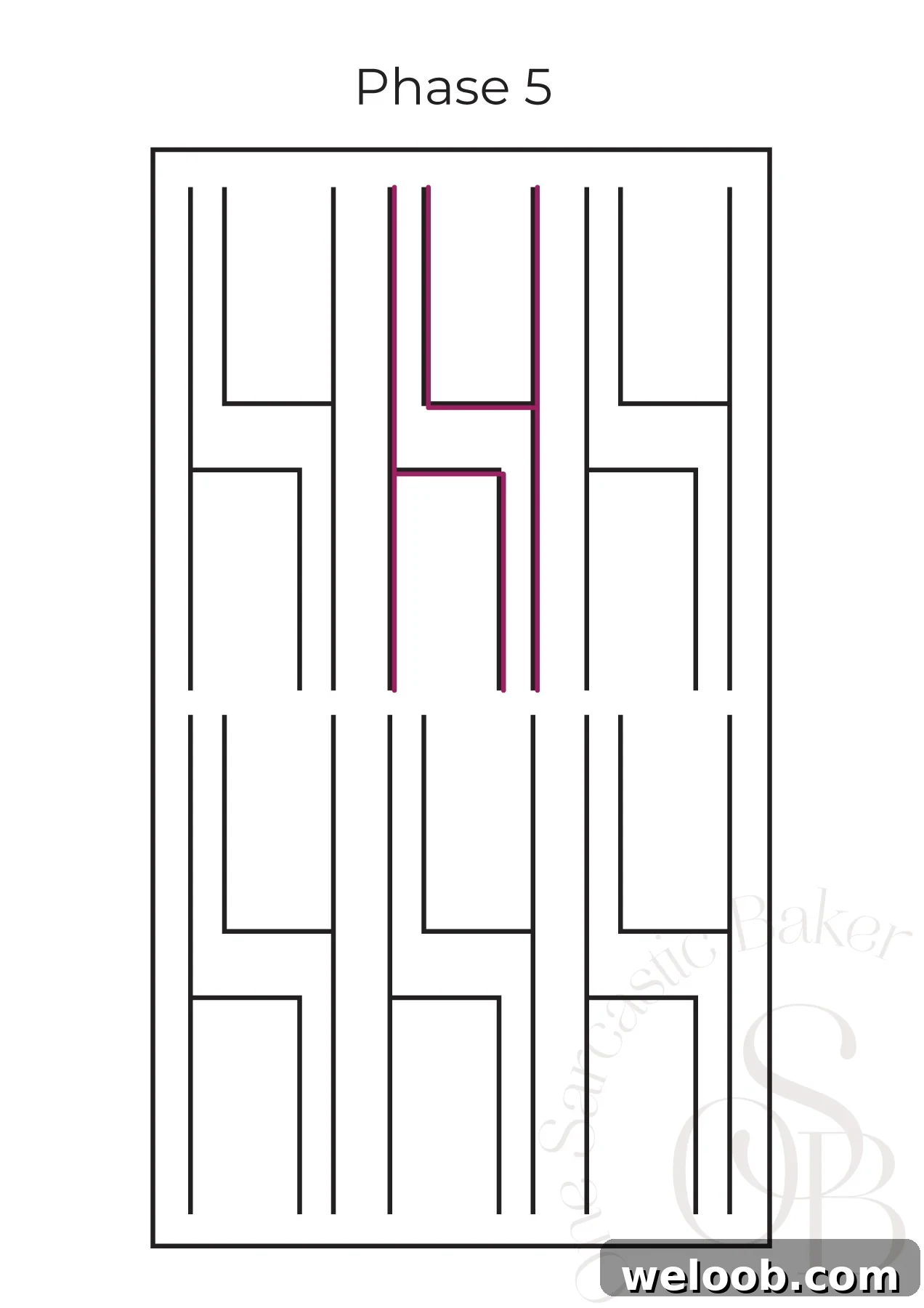
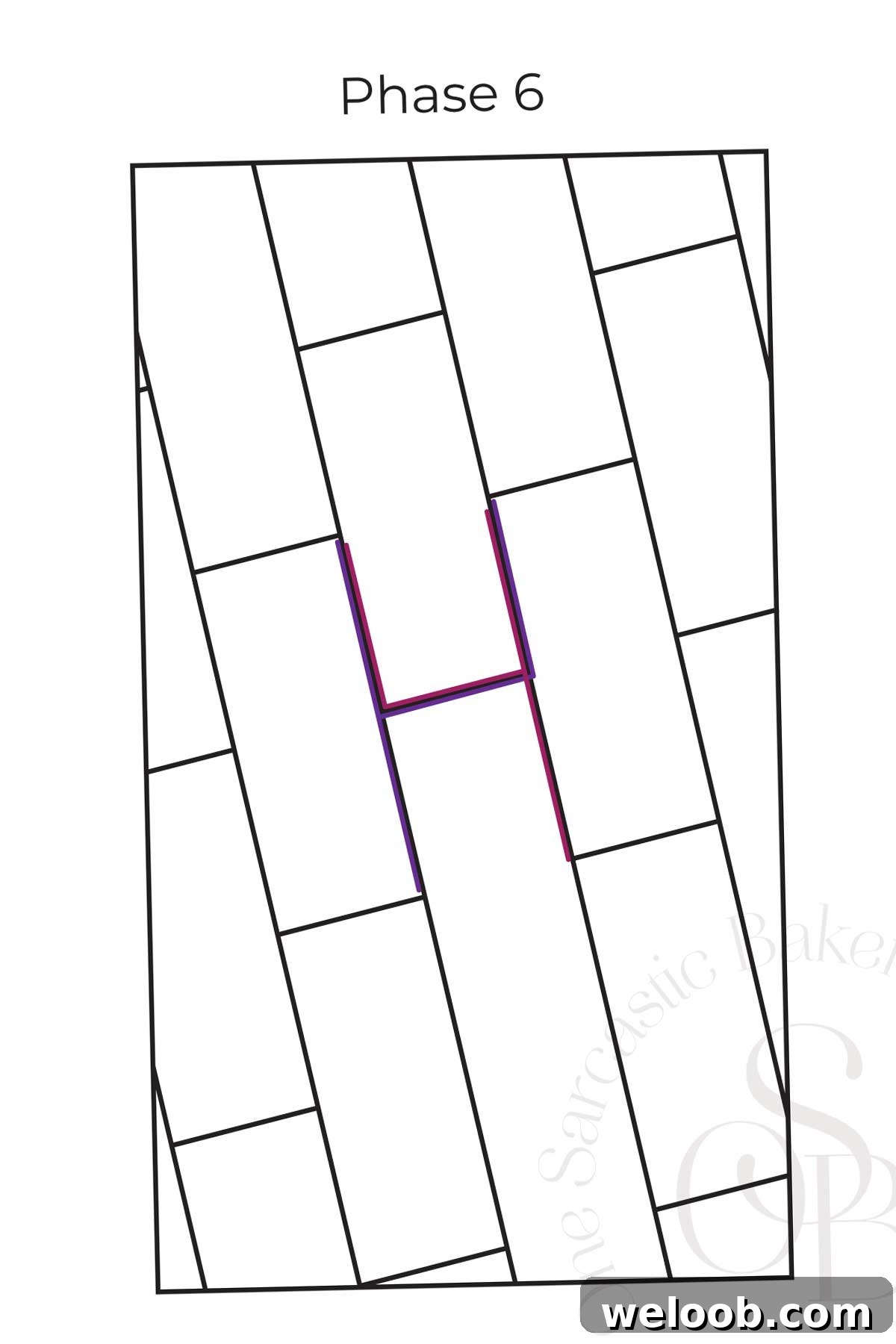
Left alone, melted chocolate will eventually form form V crystals on its own, but this natural process can take days or even weeks. Tempering is the practical technique used to encourage the formation of form V crystals quickly so you can get polished, stable chocolate in minutes rather than days.
Tempering is essentially about creating or introducing nuclei—tiny seed crystals of the preferred form—that draw other triglyceride molecules into the correct arrangement.
Phase behavior of chocolate chart
| Crystalline phase | Melting temperature | Properties |
| Form I (1) | 16–18 °C / 60.8–64.4 °F | Soft, elastic, melts easily; texture can be sticky or brittle. |
| Form II (2) | 22–24 °C / 71.6–75.2 °F | Soft, somewhat elastic, melts readily. |
| Form III (3) | 24–26 °C / 75.2–78.8 °F | Firm but lacks the characteristic snap. |
| Form IV (4) | 26–28 °C / 78.8–82.4 °F | Firm and can show some snap, but not ideal. |
| Form V (5) | 32–34 °C / 89.6–93.2 °F | Glossy, firm, with the best snap; melts near body temperature. |
| Form VI (6) | 34–36 °C / 93.2–96.8 °F | Very hard and exceptionally stable; develops slowly over time. |
Chocolate tempering
There are two common tempering approaches: the industrial method used in factories and the seeding method suitable for home cooks. Both rely on the same principle—establishing the correct nuclei so the chocolate forms stable form V crystals.
A nucleus is essentially a seed crystal of form V that encourages surrounding triglyceride molecules to adopt the same crystal arrangement.
Industrial method
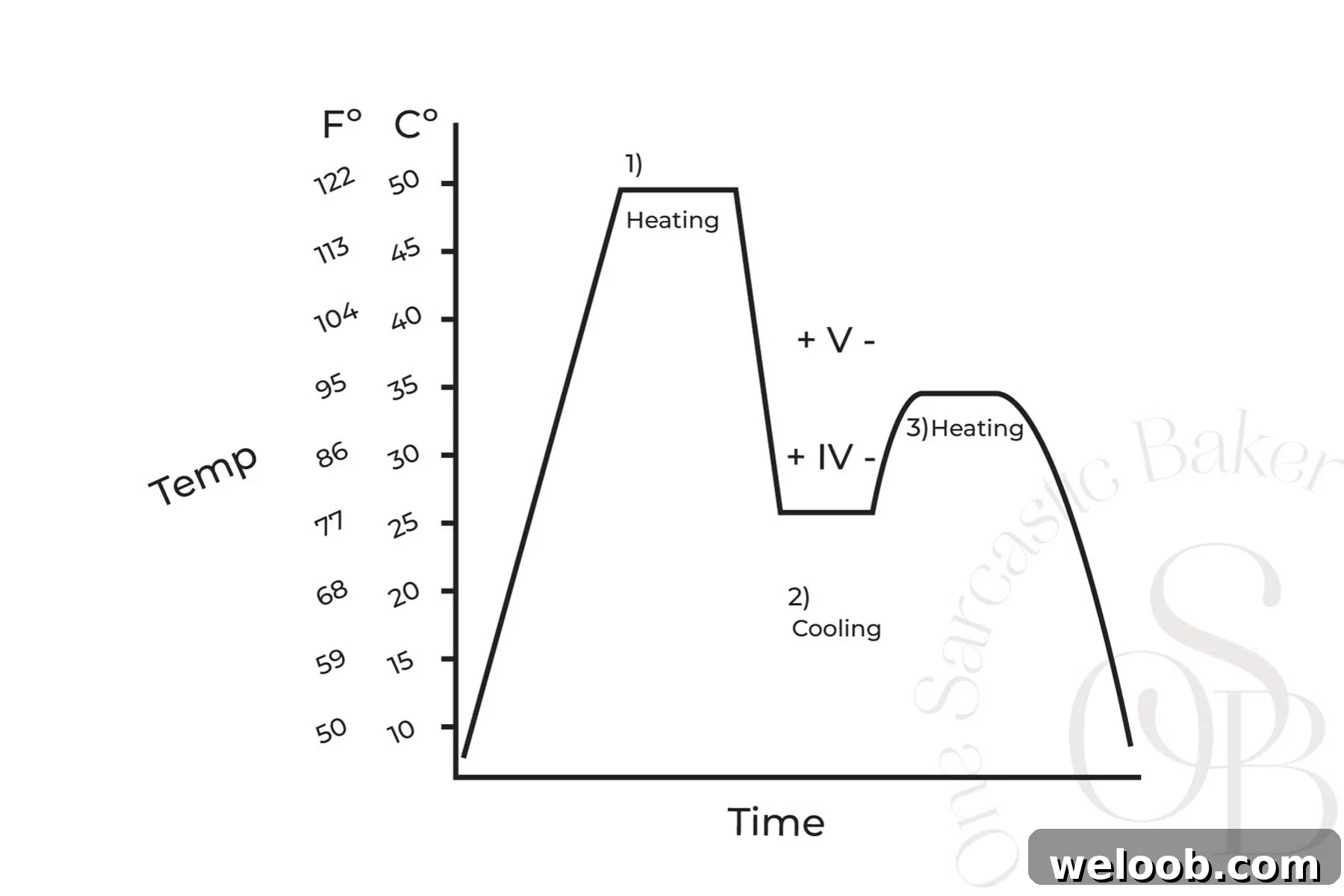
Industrial tempering follows a three-step temperature cycle:
Heating → Cooling → Heating
- Heating: melt the chocolate above the melting point of all crystal forms to erase existing crystal structures.
- Cooling: cool to just below the melting point of form IV. This allows some form IV and a few form V crystals to form—these initial crystals act as nuclei.
- Heating: reheat slightly to a temperature just below the melting point of form V, which melts the undesirable form IV crystals and leaves predominantly form V crystals.
This method requires specialized equipment like tempering machines, though controlled sous-vide baths can reproduce a similar cycle at home.
Seeding method
The seeding method is simple and practical for the home baker. Instead of relying on a controlled cool-then-heat cycle, you introduce already-tempered chocolate as seeds to the melted chocolate. The process is:
Heating → Seeding → Cooling
- Heating: melt the chocolate to a temperature that clears all crystals.
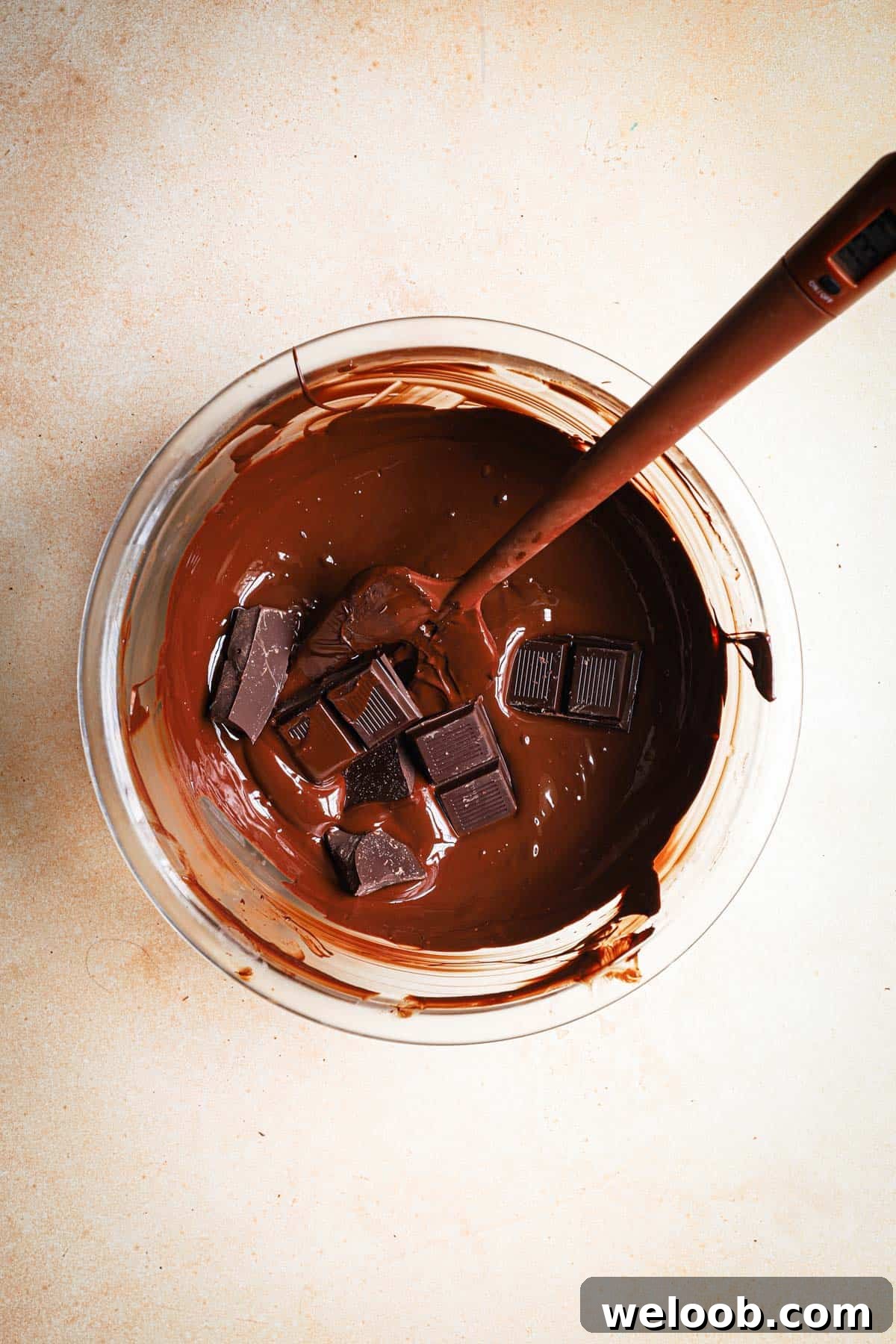
- Seeding: stir in finely chopped tempered chocolate. Those pieces act as nuclei for form V growth.
- Cooling: continue stirring and cooling until the mixture reaches the target form V temperature range (about 32–34 °C / 89.6–93.2 °F).
You can seed using several techniques—microwave, double boiler, or even a food processor—using simple tools like glass or stainless bowls, hot water, and chopped chocolate. For reliable results use a precise thermometer and follow the target temperatures carefully. I recommend several thermometer options in my post on How to temper chocolate.
What is chocolate bloom?
Chocolate bloom is the pale or white coating that can appear on the surface of chocolate over time. It’s caused by cocoa butter or sugar migrating to the surface when chocolate experiences temperature fluctuations or uneven storage conditions. Bloom affects appearance and texture but not safety; properly tempered chocolate resists bloom longer because its crystals are more stable.
Conclusion and important notes
This overview has covered the essentials of what tempered chocolate is, how the phase behavior of cocoa butter determines chocolate’s properties, and the practical methods used to produce form V crystals quickly. With this knowledge you can temper chocolate at home and produce glossy, snappy coatings and confections.
- Tempering is the controlled formation of stable cocoa butter crystals to produce glossy, firm chocolate.
- Chocolate can form six crystal types; each forms at different temperatures and produces different textures.
- Form V (beta) provides the best combination of gloss, snap, and mouthfeel for finished chocolate.
- Not all products labeled “chocolate” temper well—candy melts, some chips, and imitation chocolates may lack sufficient cocoa butter or contain stabilizers that prevent proper tempering.
- Choose your tempering technique and temperatures with the specific chocolate you are using in mind; dark, milk, and white chocolates require slightly different handling.
- Tempering is one of the final steps in chocolate work before molding, enrobing, or decorating.
- Cocoa beans grow in rainforest climates, and changing environmental conditions can affect growers and supply chains.
I hope this explanation helped you understand the science behind tempering chocolate. Now put that knowledge to use and try making treats like chocolate-covered graham crackers or chocolate-covered pecans.
Stay curious, and Happy Baking!
Here are more chocolate recipes you might like
S’mores Pies
Chocolate Drop Cookies
Biscoff Brownies
Brownie Cake
Orange Chocolate Cake