
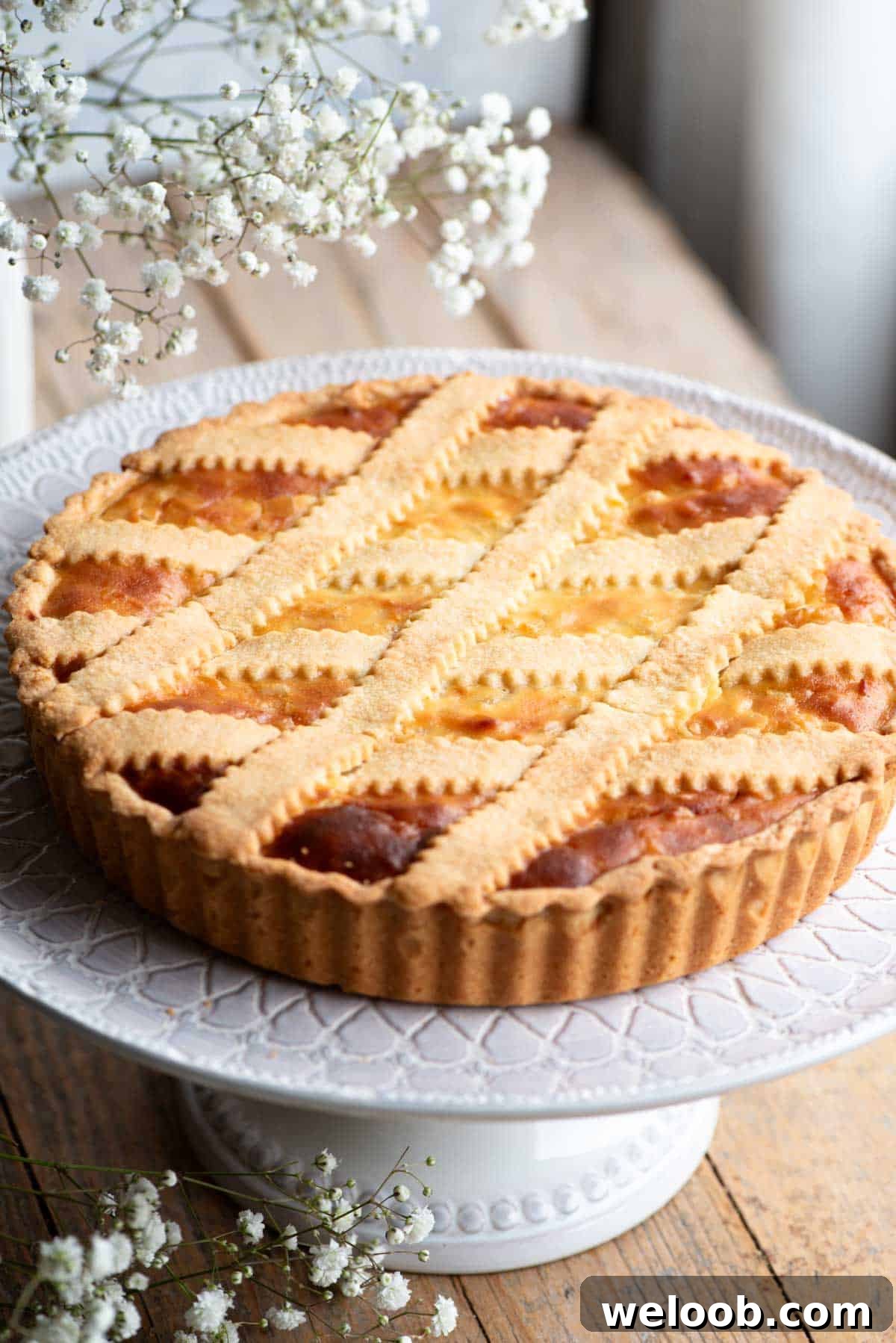
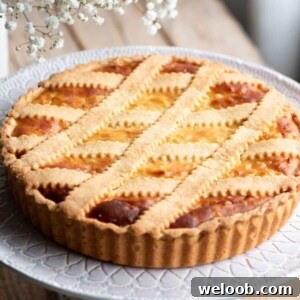
Pastiera Napoletana is a classic Neapolitan Easter pie with a fragrant, creamy filling made from grano cotto (cooked wheat berries), ricotta, candied citrus and orange blossom water.
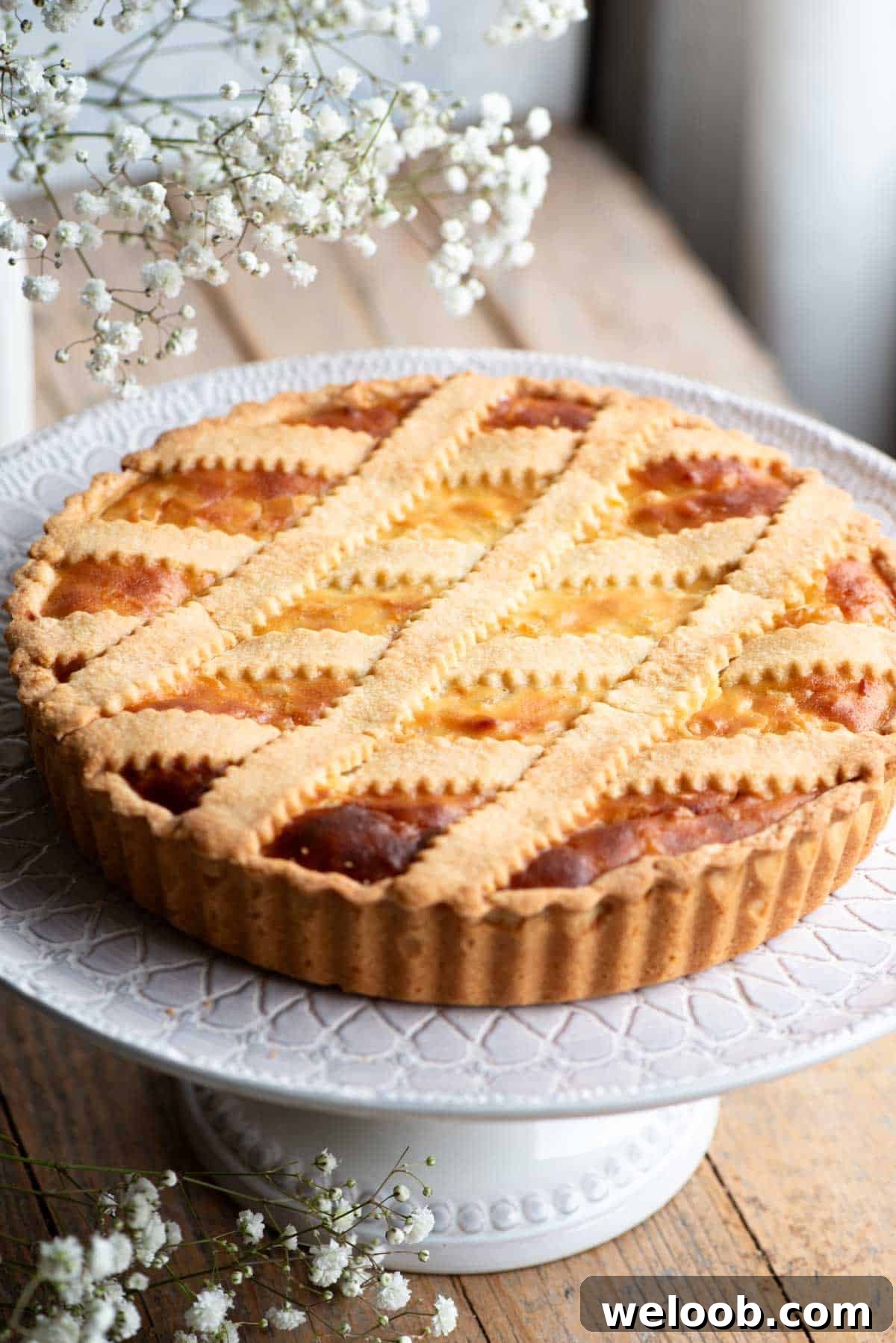
If you haven’t tried Pastiera Napoletana before, I highly recommend it. In Naples, this dessert is synonymous with Easter and many pasticcerie across Italy sell it during the holiday season.
One key ingredient is grano cotto — jars of cooked wheat berries commonly sold in Italy. If you can’t find it in your usual supermarket, check Italian food stores or order it online, especially around Easter.
The cooked wheat is combined with well-drained ricotta, cinnamon, vanilla, candied citrus and a hint of orange blossom water to create a delicately scented, creamy filling that becomes more harmonious after a day or two.
Making Pastiera involves a few stages—preparing the pasta frolla (shortcrust pastry), cooking the grano cotto mixture, and assembling the ricotta filling—but each step is straightforward and rewards a little patience.
Although it’s a dessert, Pastiera is traditionally enjoyed with a morning cappuccino on Easter. Buona Pasqua!
Ingredient notes and substitutions
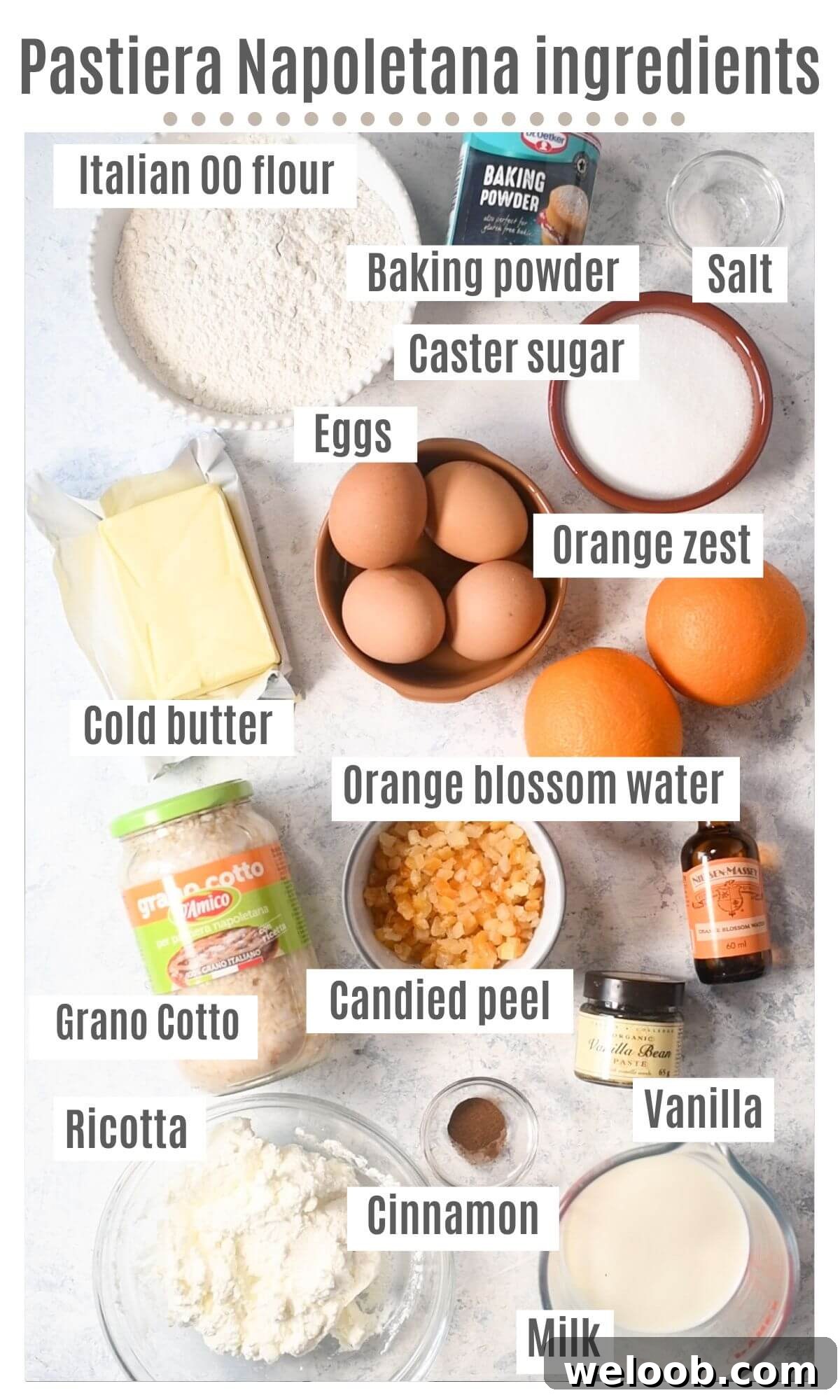
- Pasta frolla (pastry): Use a classic shortcrust pastry made quickly in a food processor. Keep the butter cold for a tender, flaky crust.
- Grano cotto: Cooked wheat berries sold in jars; an essential component for authentic texture and flavour. Find it at Italian delis or online.
- Ricotta: Drain well to avoid a watery filling. Drain overnight in a sieve set over a bowl in the refrigerator.
- Orange blossom water: Finds in specialty stores. If unavailable, use a small amount of orange extract or omit it — less can be more.
- Candied citrus: Traditionally a mix of candied citron (cedro) and orange. If citron is unavailable, use candied orange and/or lemon.
- Sugar: Caster sugar works best for its fine texture, but granulated sugar is an acceptable substitute.
Preparation tips
- Easter timeline: Traditionally, Pastiera is prepared on Good Friday to be enjoyed on Easter Sunday. The flavours develop over time, so preparing components a day or two ahead gives the best result.
- Drain the ricotta: Drain for 24 hours if possible; overnight will also work. This produces a creamier, denser filling.
- Make pastry in advance: Prepare the pasta frolla the day before and keep it chilled. Remove it from the fridge about 30 minutes before rolling.
Visual walk-through of the recipe
Step-by-step photos appear above to guide you through the process. The full written recipe and tips follow in the recipe card below.
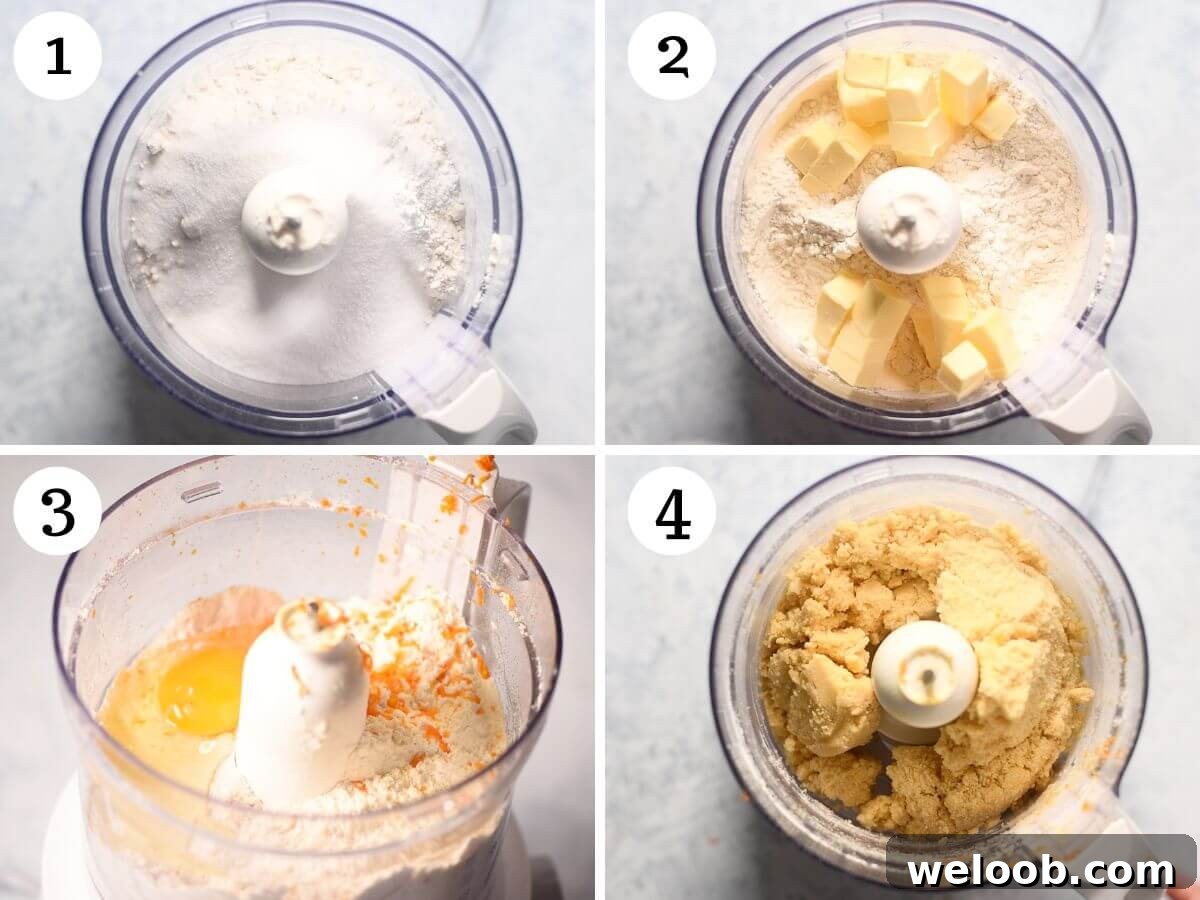
To make the pasta frolla
Combine flour, sugar, salt, baking powder and cold butter in a food processor and pulse until the mixture resembles coarse breadcrumbs. Add the egg and orange zest, then pulse until the dough just comes together. Shape into a disc, wrap and chill for at least 1 hour.
To make the grano cotto mixture
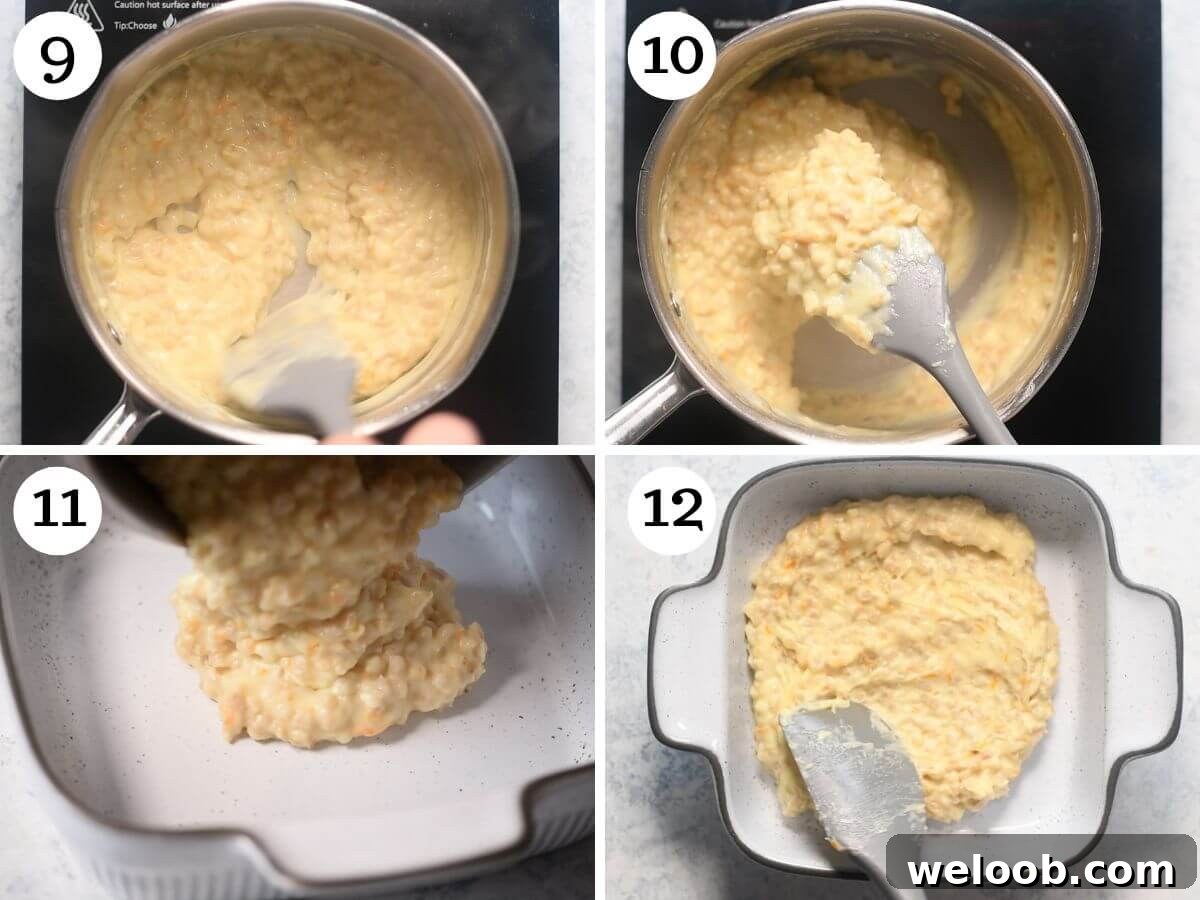
Combine grano cotto, milk, butter, orange zest and sugar in a saucepan over medium-low heat. Cook, stirring with a wooden spoon, for 20–25 minutes until the mixture becomes thick and creamy. Spread the cooked wheat in a dish to cool completely before mixing with the ricotta filling.
To make the ricotta filling
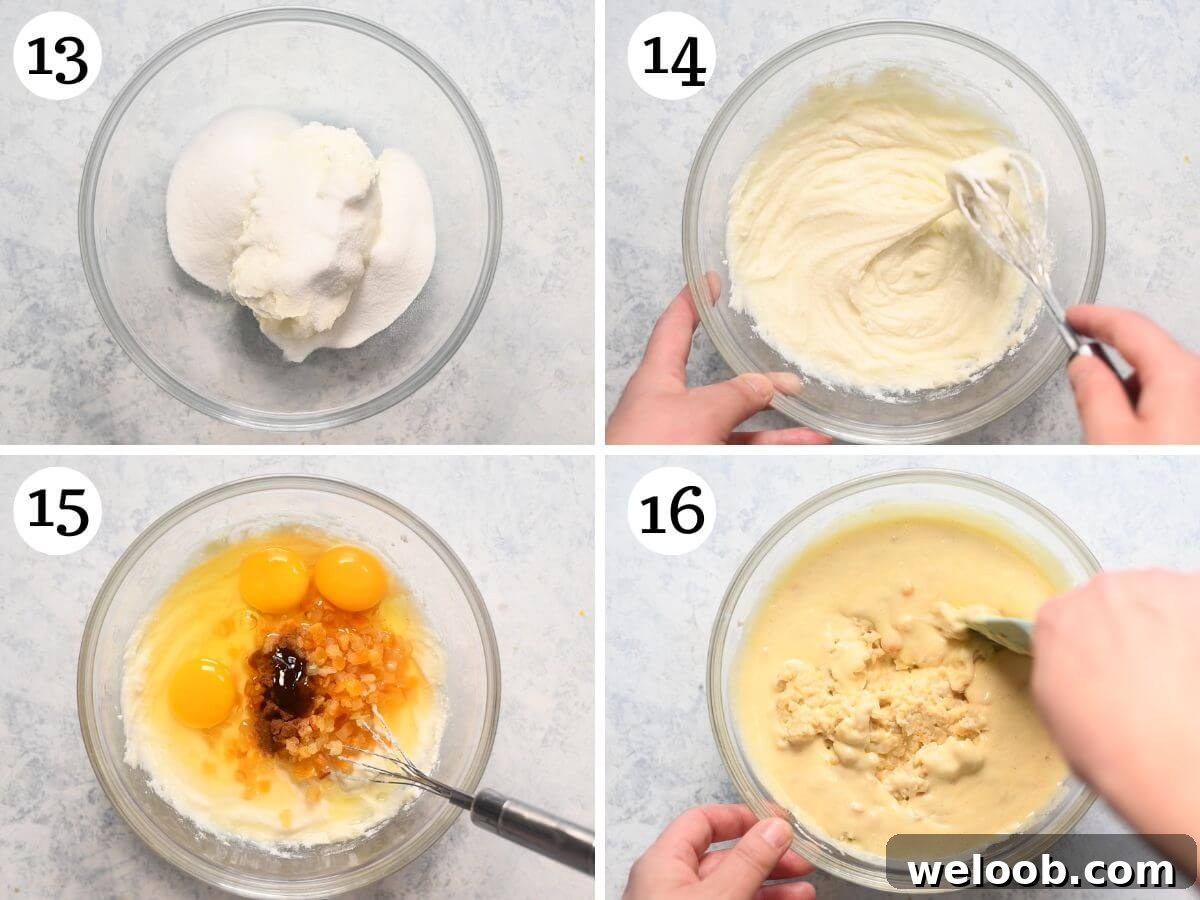
Whisk the drained ricotta with sugar until smooth. Add cinnamon, vanilla, orange blossom water and eggs, whisking until combined. Stir through the candied fruit. Chill briefly, then fold in the cooled grano cotto mixture so the filling is evenly combined.
Assembly
Remove the chilled pasta frolla from the fridge about 30 minutes before rolling so it is easier to handle. Preheat the oven to 350°F (180°C). Dust your work surface and roll the pastry to about 3mm thick.
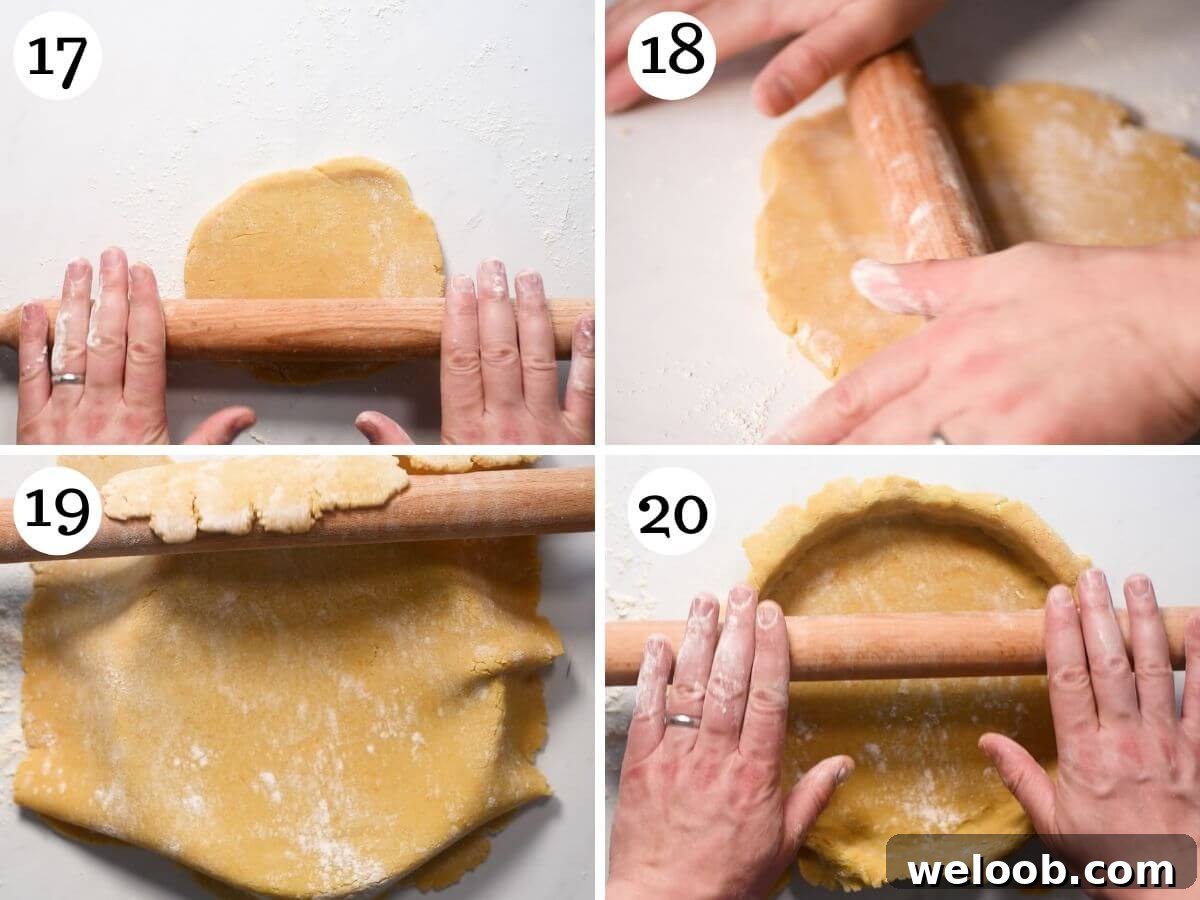
Tip: Roll the pastry a few times, rotating and dusting the surface to prevent sticking. Transfer the pastry to the tart tin, folding the edges in and trimming with the rolling pin.
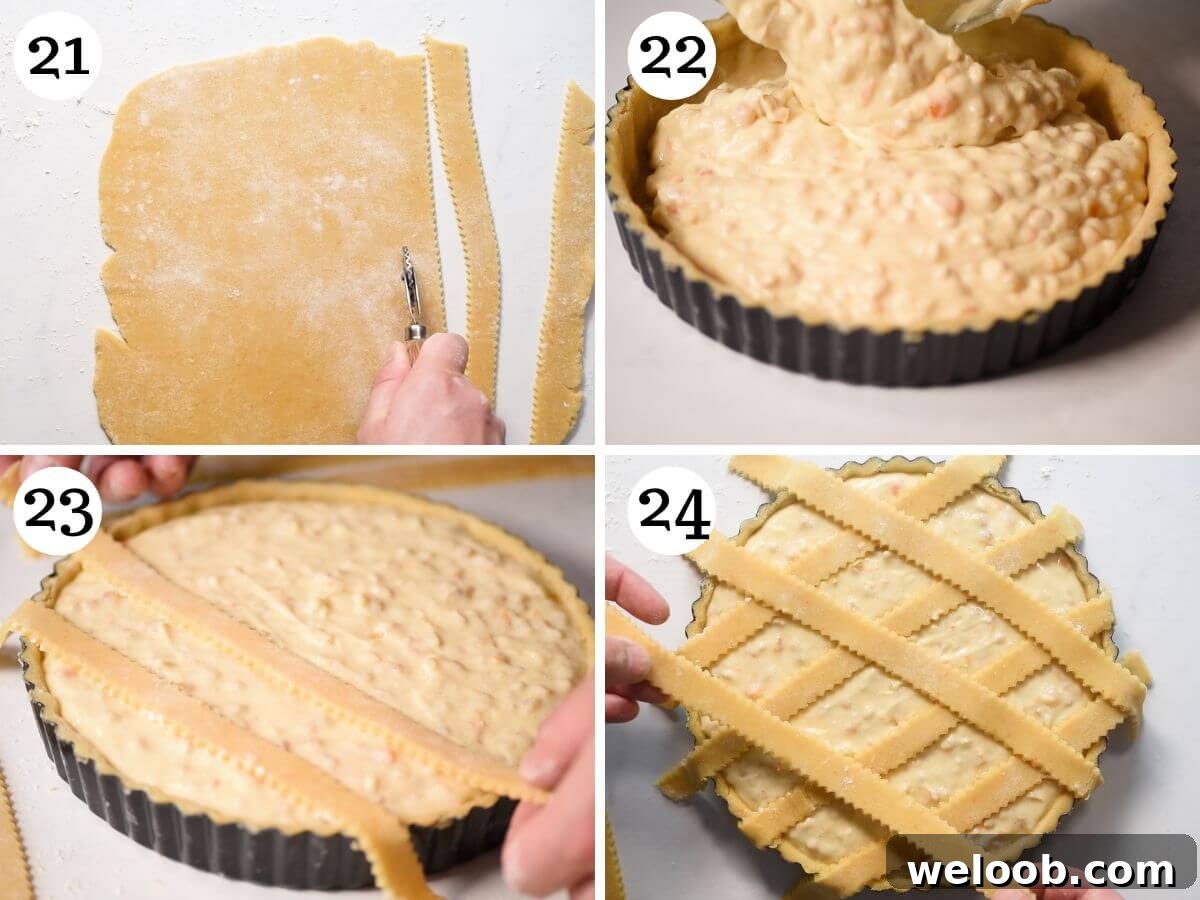
Re-form the leftover pastry into a ball, roll it out again and cut seven strips to decorate the top. Pour the filling into the tart shell and arrange the strips in a diamond lattice pattern (four across the base and three across the top). Bake on a tray for 50–60 minutes, until golden and set.
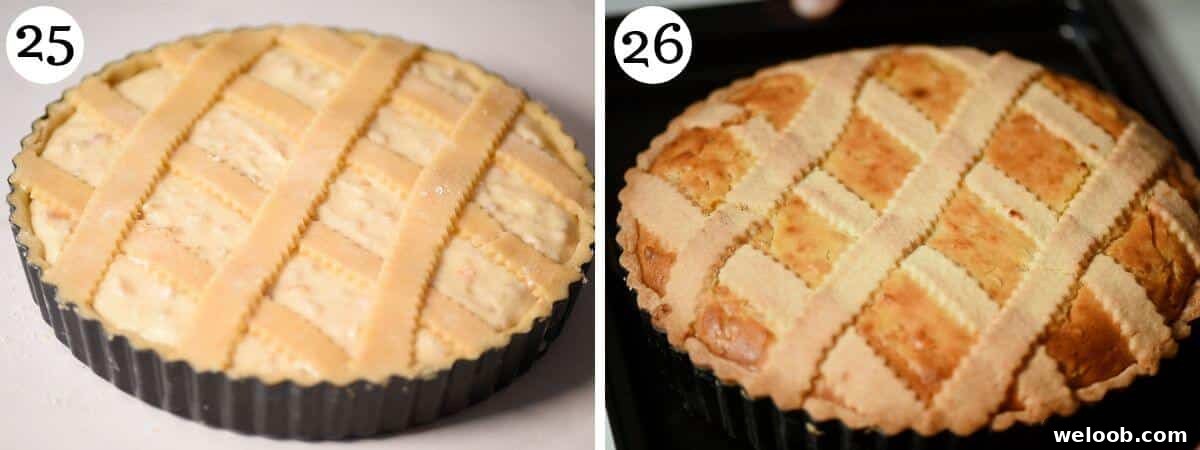
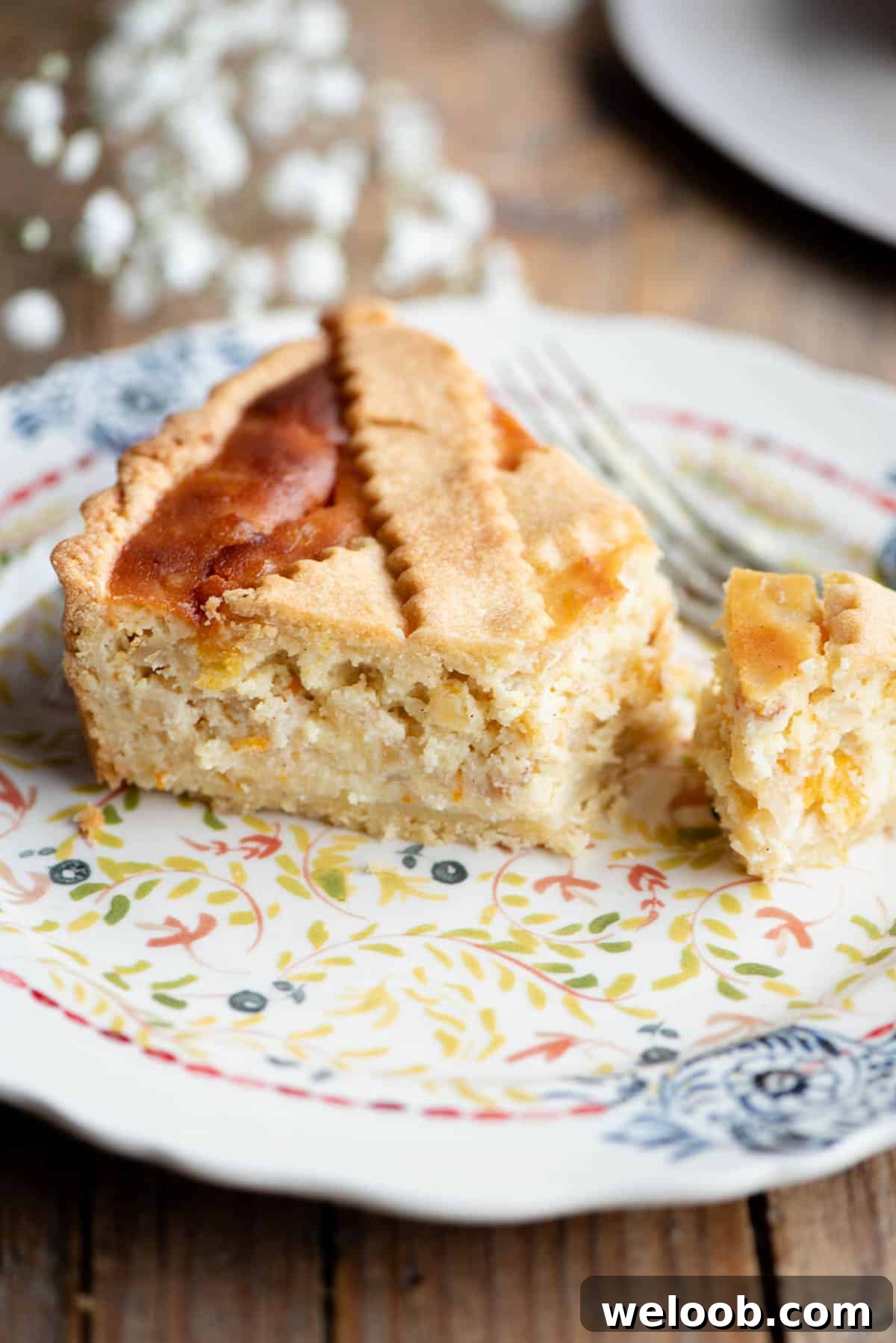
Allow the Pastiera to cool completely in the tin before removing. It tastes best 1–3 days after baking, so store in the fridge and bring to room temperature before serving.
Fun fact!
The lattice (7 strips): A traditional Pastiera is decorated with seven pastry strips (four and three). Local legends give different meanings to the number seven, one being that it represents historic streets of Naples.
More Italian Easter recipes
Antipasti
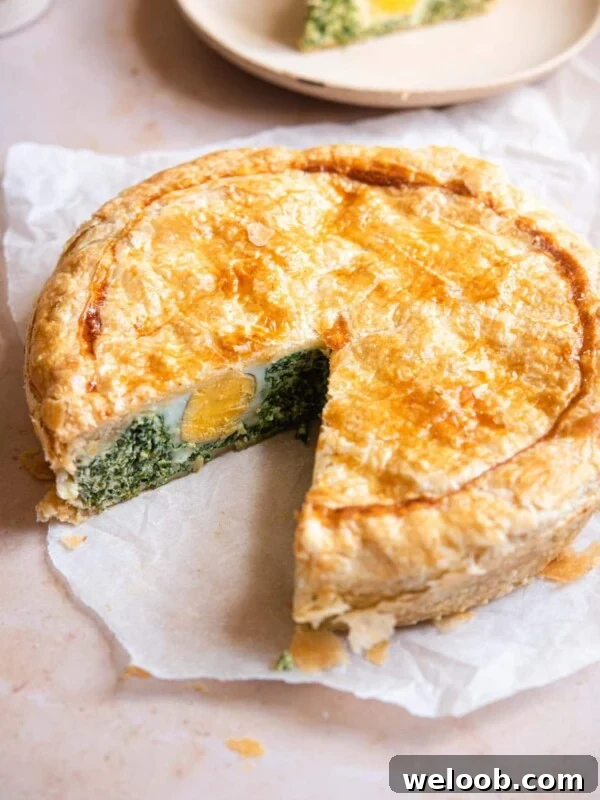
Torta Pasqualina (Spinach & Ricotta Egg Pie)
Antipasti
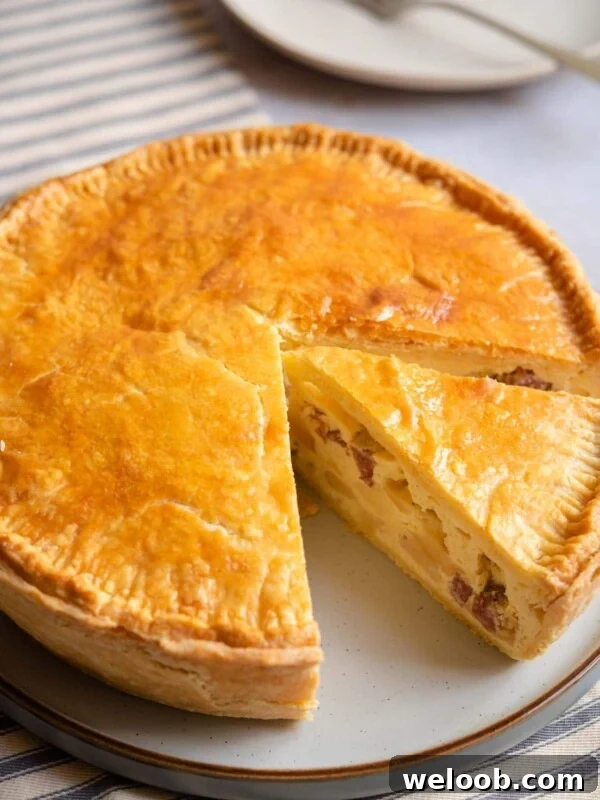
Pizza Rustica (Italian Easter Pie)
Pasta
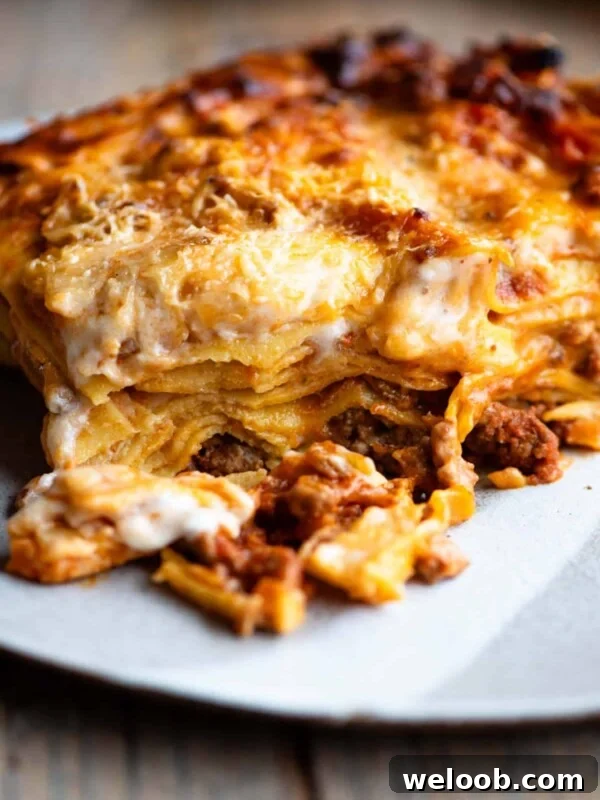
Italian Lamb Lasagna with Pecorino Bechamel
Italian Desserts
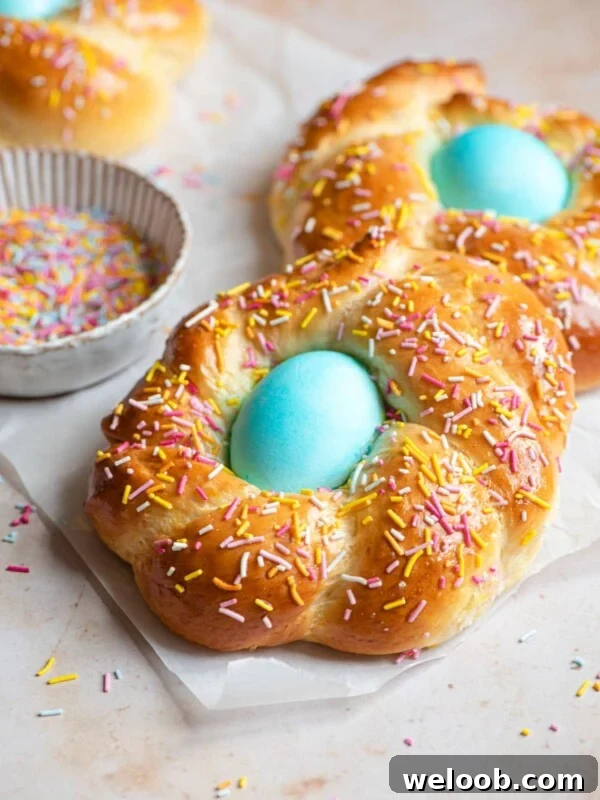
Italian Easter Bread (Pane di Pasqua)
If you make this Pastiera Napoletana, please rate the recipe and leave a comment to share your experience. I love hearing from readers. Follow the blog on social channels or subscribe to the newsletter to receive more recipes.
Step By Step Photos Above
Most recipes include step-by-step photos and helpful tips to make them successfully.
Pastiera Napoletana
By Emily
Equipment
- 9 inch tart tin with loose bottom
Ingredients
Pasta Frolla (pastry)
- 250 g (2 cups) Italian 00 flour or all-purpose flour
- 80 g (1/2 cup) caster sugar
- 1/4 teaspoon baking powder
- 120 g (8.5 tablespoons) cold unsalted butter
- 1 large egg
- Zest of 1 orange
- Pinch of salt
Ricotta Filling
- 400 g (2 cups) ricotta, well-drained
- 150 g (3/4 cup) caster sugar
- Pinch of cinnamon
- 1 teaspoon vanilla bean paste (or extract)
- 1 teaspoon orange blossom water (see notes)
- 100 g (3/4 cup) candied fruit
- 3 large eggs
Grano Cotto mixture
- 290 g (1.5 cups) grano cotto (cooked wheat berries)
- 200 ml (6.7 fl oz) whole milk
- 25 g (2 tablespoons) butter
- Zest of 1 orange
- 1 tablespoon caster sugar
Instructions
Preparation tips
- Drain the ricotta for at least 24 hours to remove excess moisture.
To make the pasta frolla
- Pulse flour, sugar, salt, baking powder and cold butter in a food processor until it resembles breadcrumbs.
- Add the egg and orange zest, pulse until the dough clumps. Shape into a disc, wrap and chill for at least 1 hour.
Grano Cotto mixture
- Combine grano cotto, milk, butter, orange zest and sugar in a saucepan over medium-low heat.
- Cook for 20–25 minutes, stirring, until thick and creamy.
- Spread in a dish to cool completely.
To make the ricotta filling
- Whisk drained ricotta with sugar until smooth. Add cinnamon, vanilla, orange blossom water and eggs; whisk to combine. Stir in candied fruit.
- Chill briefly, then fold in the cooled grano cotto mixture.
Assemble and bake
- Remove pasta frolla from the fridge 30 minutes before using. Preheat oven to 350°F (180°C). Roll pastry to about 3mm thick.
- Line the tart tin, trim the edges and save scraps. Re-roll scraps and cut seven strips for the lattice.
- Pour the filling into the shell and arrange strips in a diamond pattern (four and three). Bake 50–60 minutes until golden.
- Cool completely in the tin, then refrigerate. Best eaten 1–3 days later; serve at room temperature.
Notes
Recipe tips and storage
- Pasta frolla: Shortcrust pastry can be crumbly; patch any tears when assembling — the final bake will hide them. Avoid overworking the dough.
- Orange blossom water: Use sparingly if you’re unsure; a teaspoon is usually enough to add fragrance without overpowering the filling.
- Prep ahead: Make the pastry and drain the ricotta a day in advance to simplify assembly.
- Storage: Once baked, Pastiera keeps in the refrigerator for 4–5 days.
Helpful Info for All Recipes
- I generally use extra virgin olive oil unless stated otherwise.
- All vegetables are medium-sized unless noted.
- Recipes are tested using a fan (convection) oven.
Nutrition
Nutrition information is an approximation.
Did you try this recipe?
Leave a comment below!