
What Is White Chocolate? Ingredients, Flavor and Facts
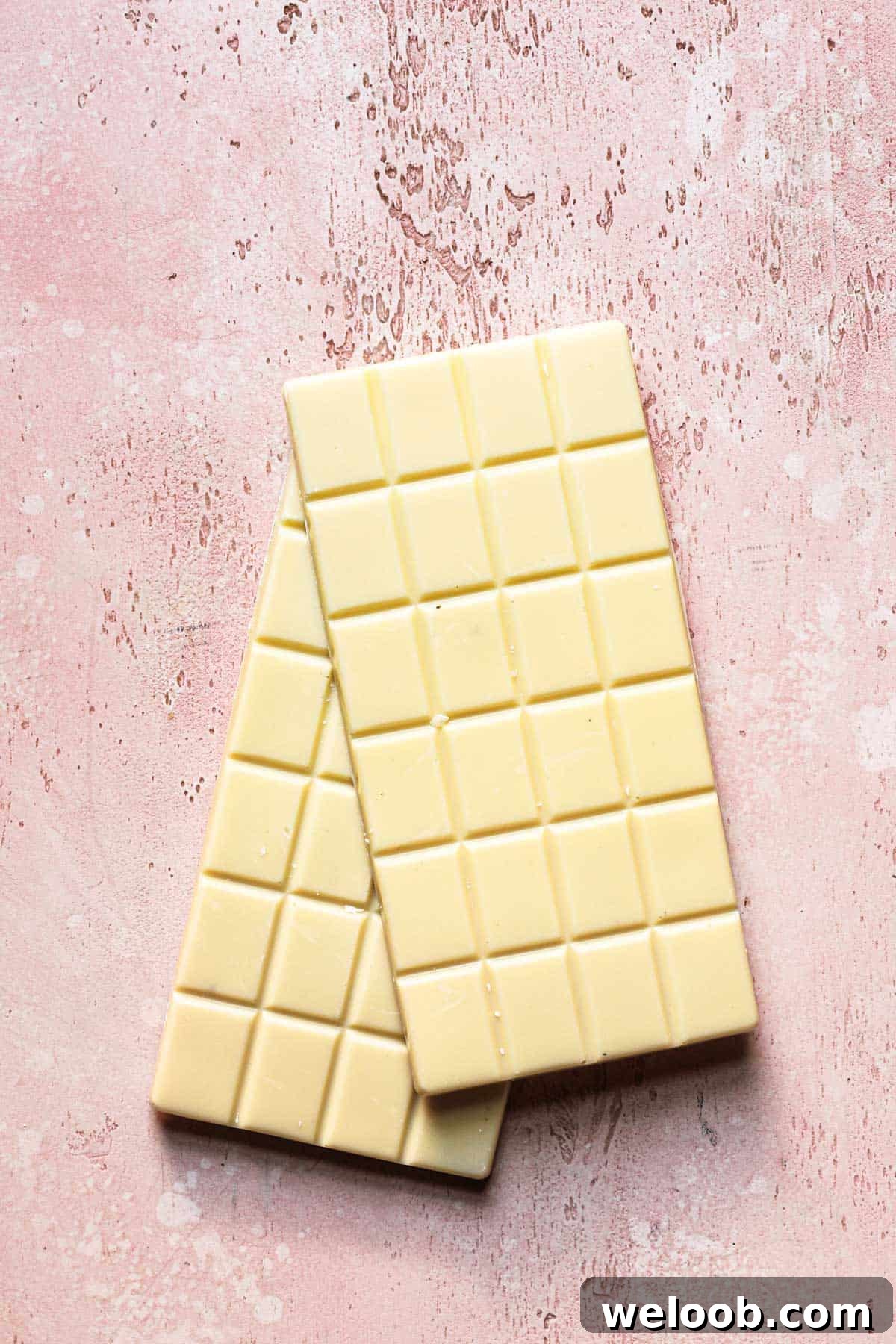
The question “What is white chocolate?” sounds simple, but it has sparked debate among chocolate lovers and bakers for years.
Whether you love it or dismiss it, understanding what white chocolate is—and how it behaves in recipes—will improve your baking and help you choose the best products for your needs.
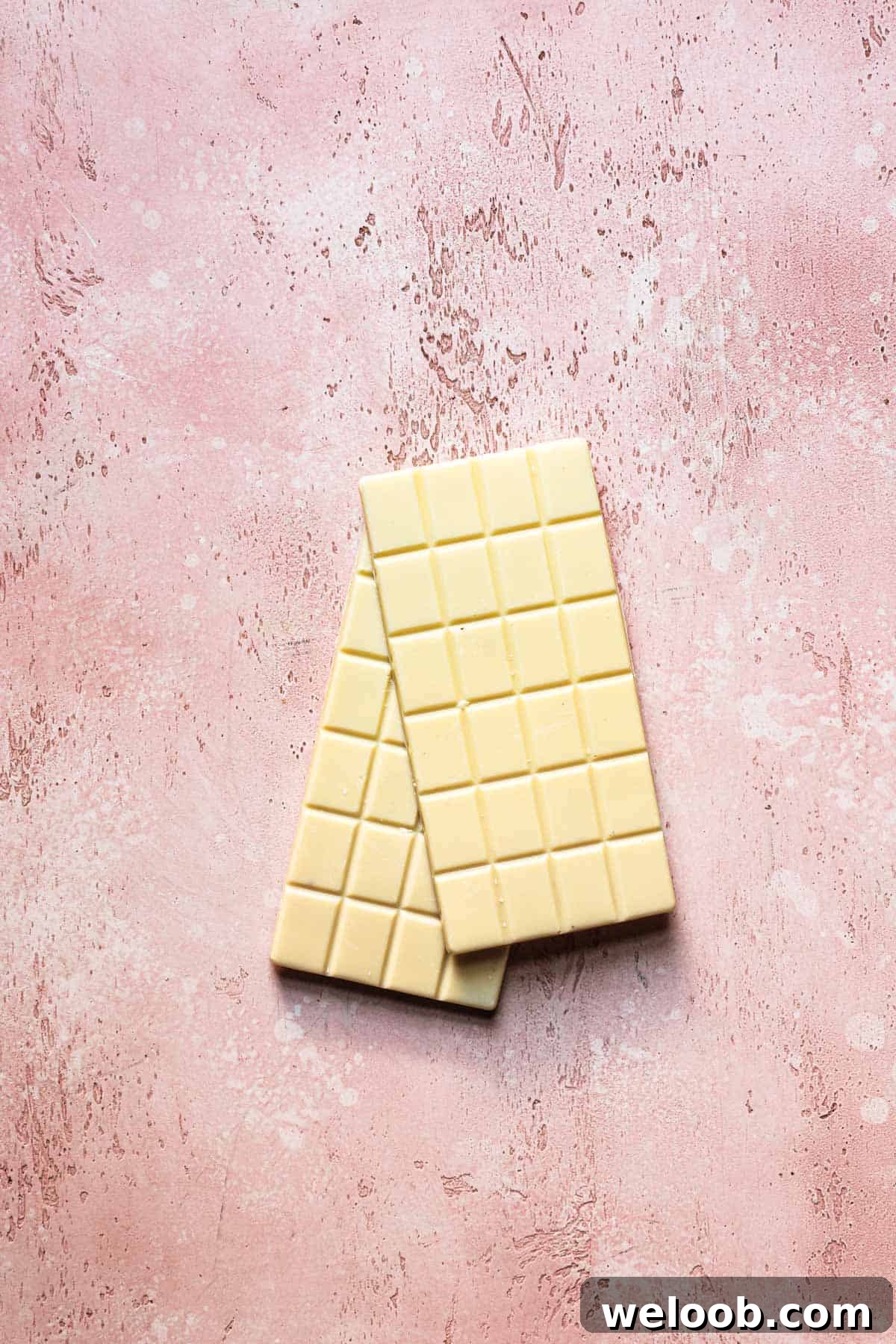
Is White Chocolate Real Chocolate?
Yes—by U.S. law, white chocolate is a form of chocolate. The Food and Drug Administration defines white chocolate by minimum ingredient percentages: at least 20% cocoa butter, at least 17.5% milk solids, and no more than 55% sugar or sweeteners. Legally, when sugar is added to processed cocoa products, the result qualifies as a chocolate product.
Despite the legal status, white chocolate contains no cocoa solids (the powdered component that gives dark and milk chocolate their color and many of their flavors). Because it lacks cocoa solids, some chocolate purists hesitate to call it “real” chocolate, even though its production and tempering process closely mirror that of milk and dark chocolate.
Why Is It Called Chocolate?
The defining ingredient is cocoa butter—the fat extracted from cocoa beans. Cocoa butter is the same essential fat used in all chocolate, which is why the product carries the chocolate name. The term “white chocolate” is also more appealing than “cocoa butter bar,” so marketing played a role in the name sticking.
What Is White Chocolate Made Of?
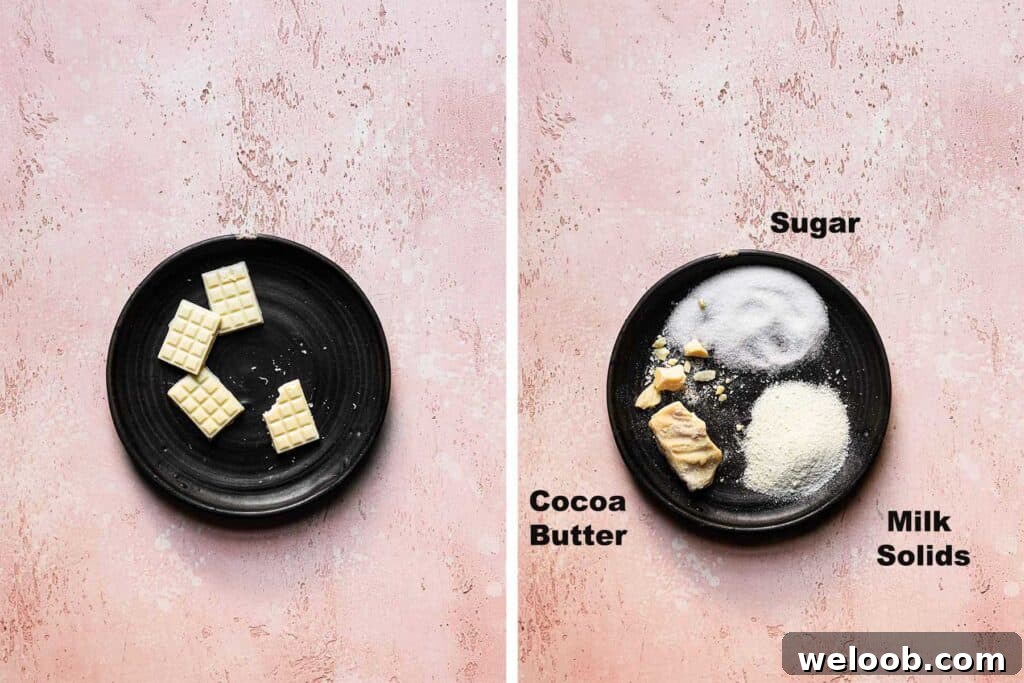
Ingredients vary by brand, but to meet legal standards white chocolate typically contains:
- Cocoa butter: minimum 20%. Note that a product’s total fat content may include other fats if a manufacturer adds them.
- Milk solids: minimum 17.5%, which provide the characteristic dairy flavor.
- Sugar (or sweeteners): up to 55% of the formula.
Commercial bars often also include lecithin (an emulsifier), vanilla or natural flavors, and a few percent milk fat. These components combine to give white chocolate its creamy mouthfeel and pale ivory color.
How Is White Chocolate Made?
Production starts with cacao nibs (roasted pieces of cocoa bean). Pressing the roasted nibs yields a warm paste often called chocolate liquor, which contains both cocoa solids and cocoa butter. The cocoa butter is then separated from the solids. The solids become cocoa powder, while the cocoa butter is blended with milk solids, sugar, and additional ingredients, then refined and tempered into white chocolate.
Who Invented White Chocolate?
White chocolate first appeared in the market in the late 1920s and early 1930s. Hershey’s is credited with developing a commercial white chocolate product to make use of cocoa butter left over from cocoa powder production.
What Does White Chocolate Taste Like and What Is It Used For?
White chocolate tastes like sweet, creamy milk with subtle vanilla notes when vanilla is present. Its mild, dairy-forward flavor pairs exceptionally well with tart or floral ingredients—think raspberries, passion fruit, citrus, and even anise. Because it melts at a low temperature and offers a pale color, bakers use it to enhance texture, add richness, and provide contrast in layered desserts.
Baking With White Chocolate
White chocolate is a powerful tool in the kitchen even if you aren’t a fan of eating it straight. Here are the main reasons bakers choose it:
- Flavor: Its milky-sweet profile enhances vanilla and balances tart or bitter notes from fruits like passionfruit or grapefruit.
- Texture: High cocoa butter content allows white chocolate to melt smoothly at body temperature, adding silkiness to ganaches, mousses, and batters.
- Color: Its light hue blends into batters without darkening them, making it ideal for pale or brightly colored desserts.
Practical Baking Tips
When incorporating white chocolate into recipes, remember it contributes fat, sugar, and milk solids—so adjust your recipe accordingly if you’re substituting or increasing its amount. Real white chocolate has a pale ivory color; a very bright white bar may indicate added vegetable fats rather than cocoa butter.
- Fat: Cocoa butter is the desirable fat because it melts cleanly and gives that signature snap and mouthfeel. If vegetable fats like palm kernel oil appear high on the ingredient list, the product will behave differently in baking and on the palate.
- Sugar: White chocolate can contain up to 55% sugar. If you reduce or add white chocolate in a recipe, compensate for sweetness by adjusting added sugar or introducing a touch of acid (lemon, fruit purée) to balance flavors.
- Milk Solids: These create the dairy flavor. Because white chocolate must contain milk solids to meet legal definitions, standard white chocolate is not vegan. For a stronger milk flavor in your baking, a tablespoon or two of dry milk powder can help.
- Other Ingredients: Look for lecithin (emulsifier) and flavorings like vanilla, which improve texture and depth of flavor.
Caramelized White Chocolate Explained
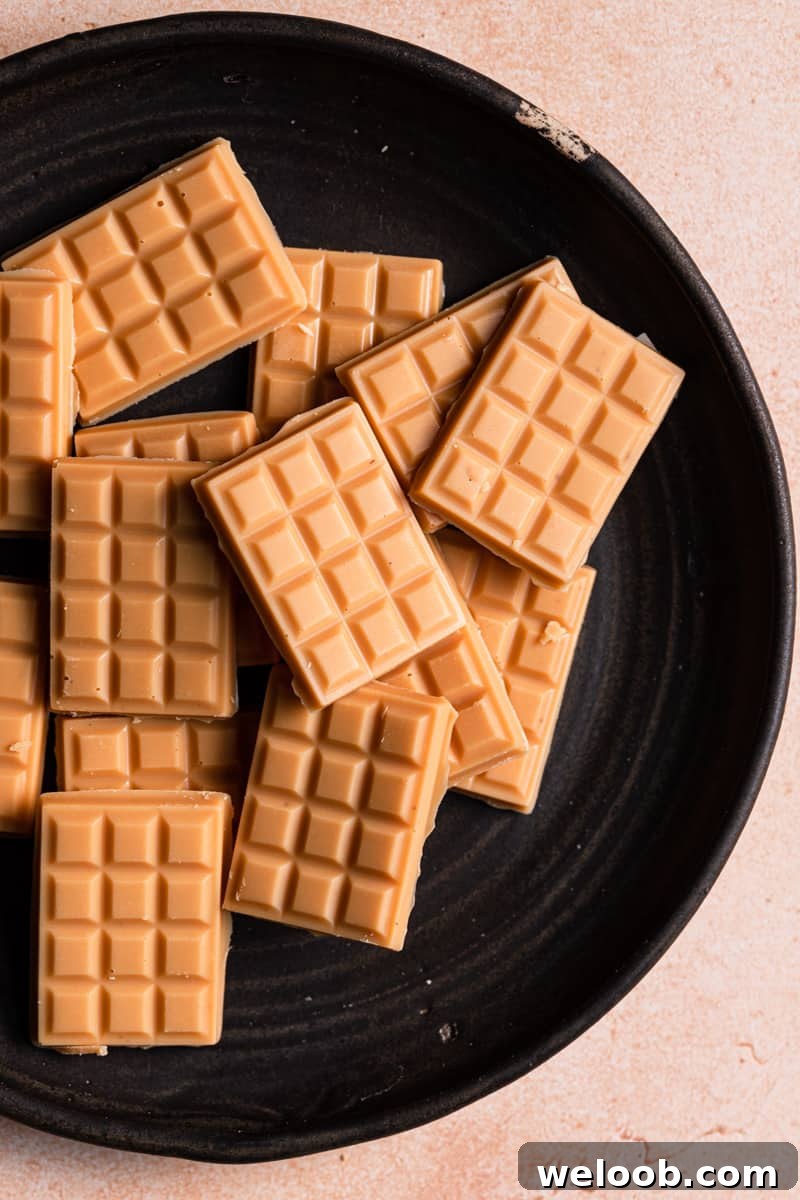
Because white chocolate contains no cocoa solids, you can caramelize it in the oven to develop nutty, toffee-like flavors and a golden color. This process deepens its profile and opens new uses in confections and drinks.
To caramelize: chop the white chocolate and spread it in an even layer on a parchment-lined baking sheet. Bake at a low oven temperature—around 225°F (107°C)—stirring with a heatproof spatula every 10–15 minutes until the chocolate melts and turns a uniform golden brown. Once browned, remove it from the oven and pour into molds or cool for use in recipes. Note that caramelized chocolate will no longer be suitable for conventional tempering; it will have altered crystallization and shine.
Storing White Chocolate
Cocoa butter determines white chocolate’s melt behavior, snap, and creamy texture. It also means the chocolate responds to temperature: in a cool range it performs well, but between about 61–64°F (16–18°C) it can develop a slightly mealy texture. Store white chocolate at a stable, cool room temperature to preserve its best qualities—many recommend roughly 26–28°C (78.9–82.4°F) in warmer climates, but avoid high humidity and temperature swings that cause bloom or texture changes.
Ideas and Recipes
White chocolate shines in many desserts: try it in raspberry loafs, white forest cakes, marble cakes, white chocolate-raspberry muffins, or a silky white chocolate ganache. You can also fold chips into cookies or use melted white chocolate as a dip or drizzle for brownies and other treats.
If you have questions or want recipe ideas, leave a comment below the original post or explore other baking guides for practical tips on working with chocolate and cocoa butter.