
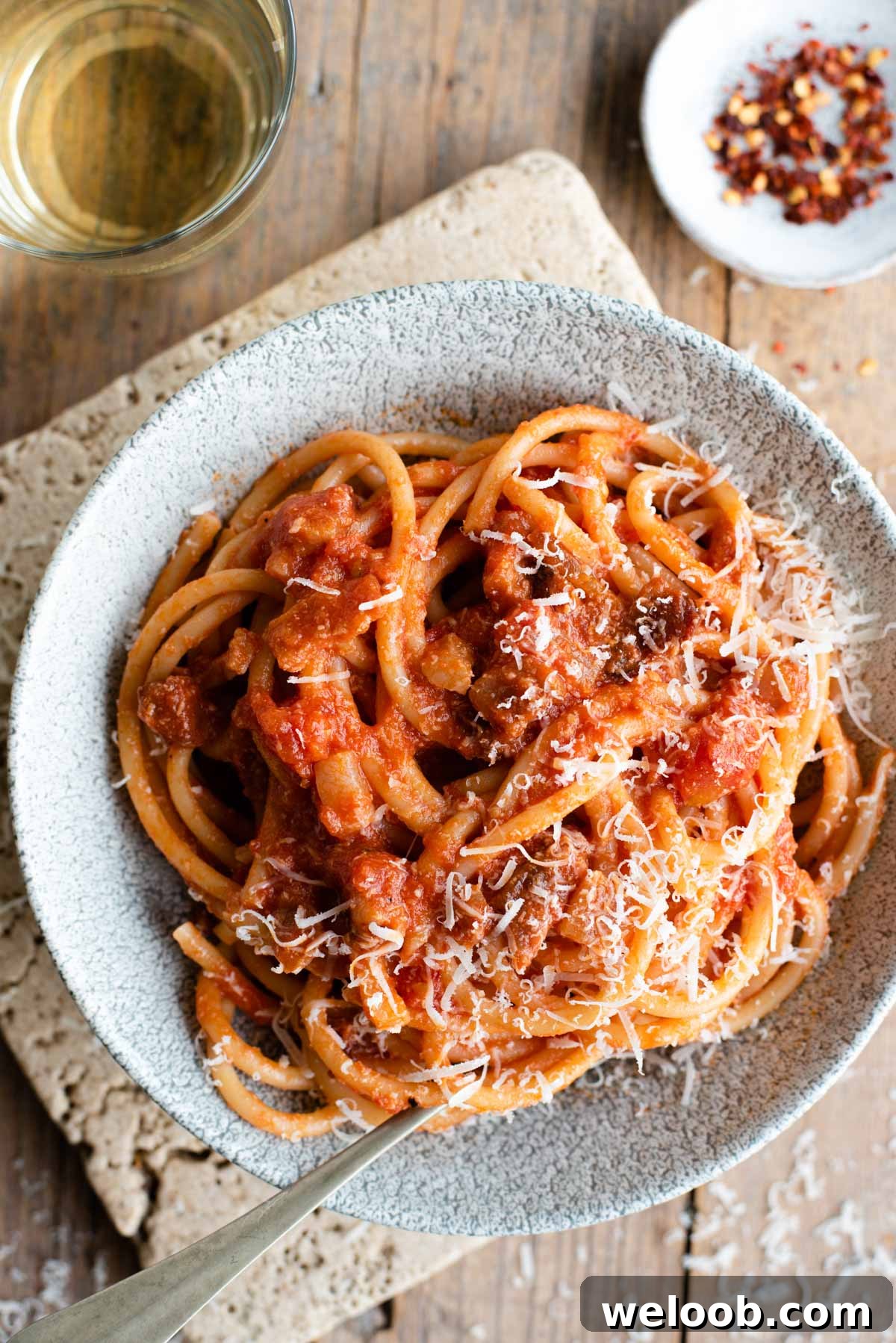
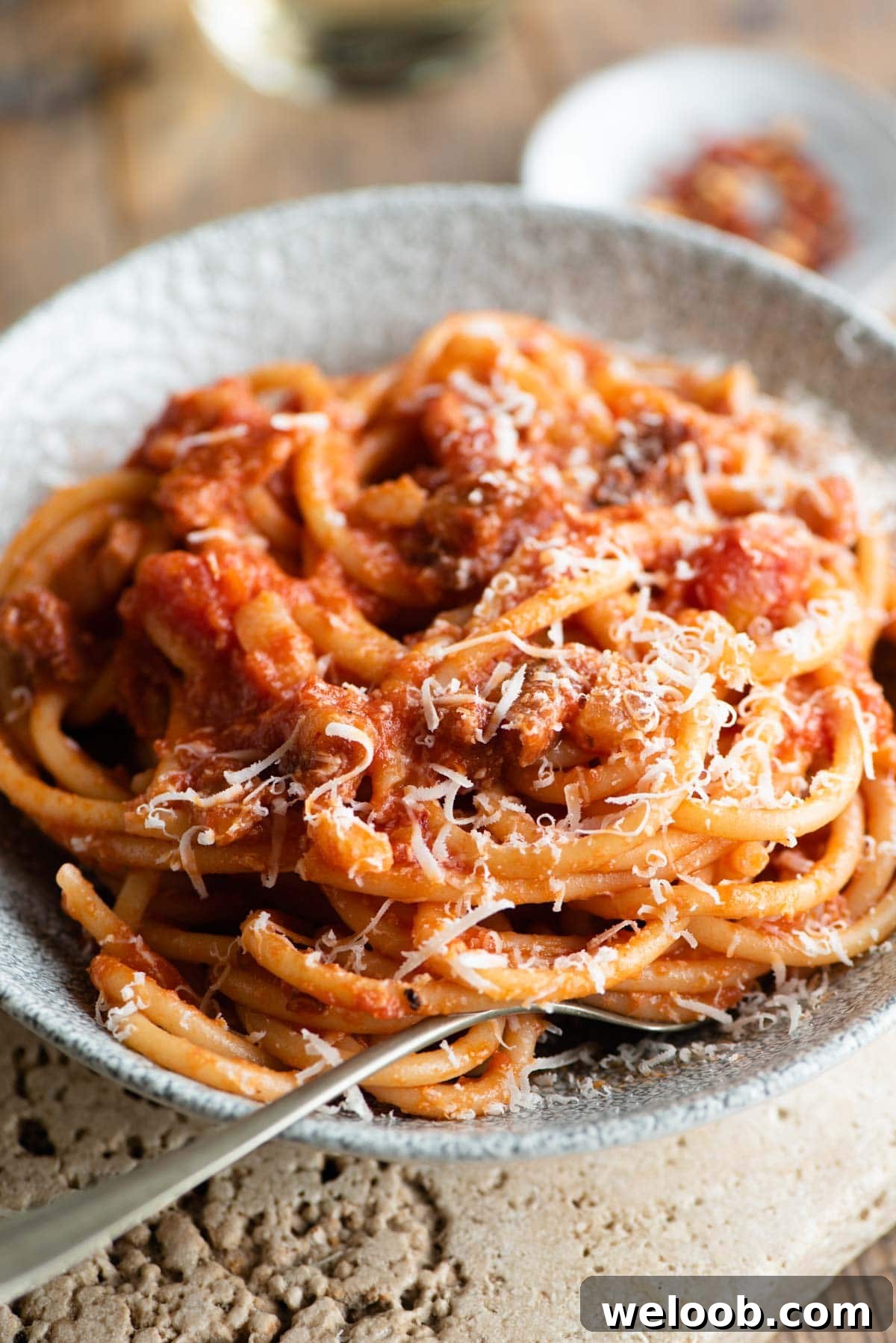
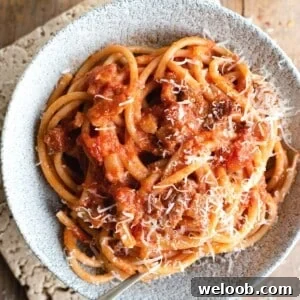
Learn how to make an authentic Bucatini all’Amatriciana. This classic Italian pasta is remarkably flavorful, made simply with tomato, guanciale and Pecorino Romano. Ready in about 20 minutes, it’s an ideal comfort meal for busy weeknights.
Bucatini all’Amatriciana comes from Amatrice in Lazio and is now a staple of Roman cooking alongside Spaghetti alla Carbonara, Pasta alla Gricia and Cacio e Pepe. These recipes are closely related: start with Cacio e Pepe, add cured pork to make Gricia, add eggs for Carbonara, or replace eggs with tomato to make Amatriciana.
Mastering each of these dishes is essential for lovers of authentic Italian food. They’re quick to prepare, deeply satisfying, and rely on a few high-quality ingredients for the best results. Use the best tomatoes, cheese and guanciale you can find — they make a huge difference. Below you’ll find ingredients, helpful tips, step-by-step instructions and photos. Buon appetito!
Ingredients – what you need
The photo below illustrates the main ingredients for a traditional Bucatini all’Amatriciana, plus notes to help you choose the best options.
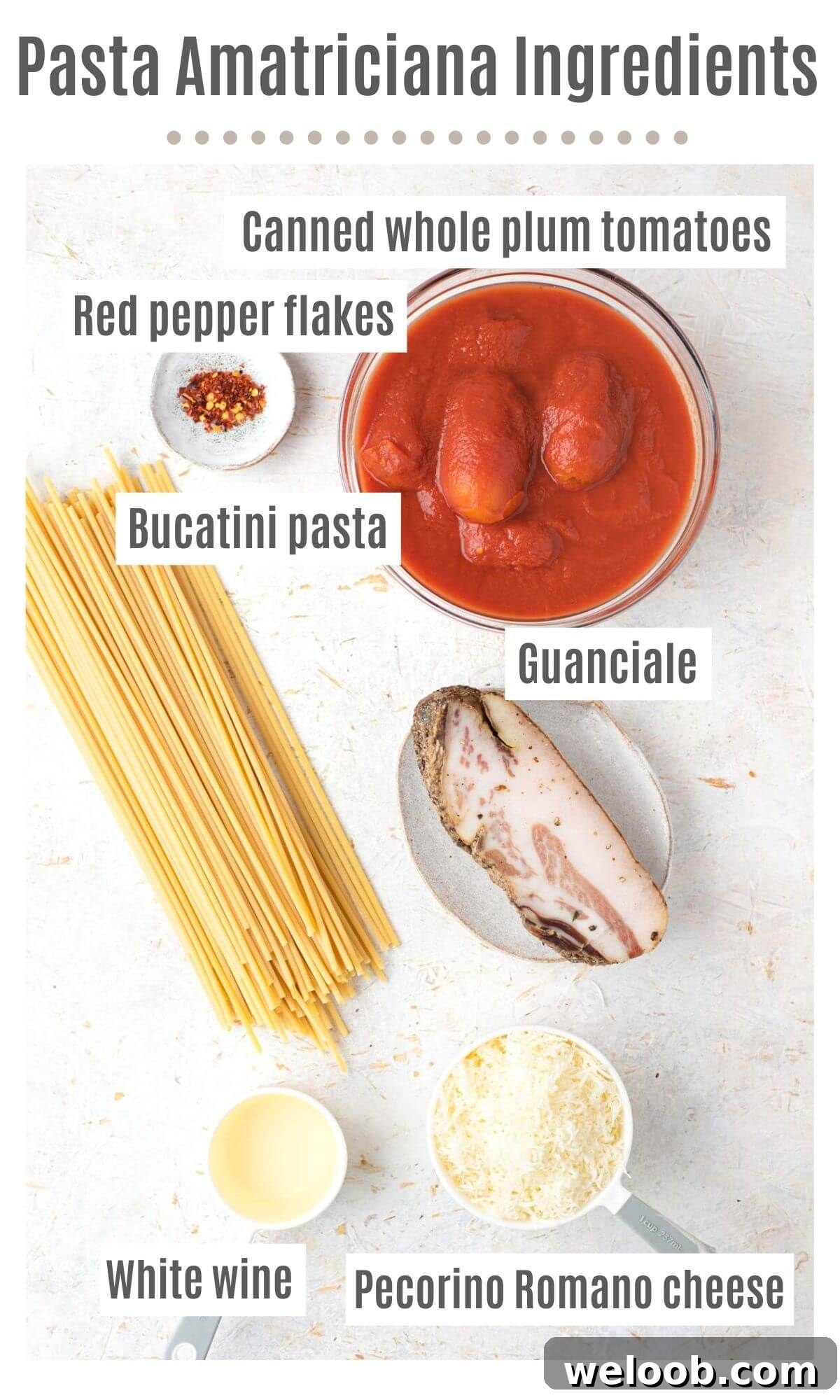
- Bucatini – thick, hollow spaghetti that captures sauce inside the noodle. If unavailable, use spaghetti or a short tube pasta like rigatoni.
- Tomatoes – fresh or canned plum tomatoes work. High-quality canned whole plum tomatoes (eg. Mutti or Cirio) give the best flavor.
- Guanciale – cured pork cheek with rich flavor and fat. Pancetta can substitute, but guanciale is traditional. Trim and slice as described below.
- White wine – a dry white such as Pinot Grigio, Verdicchio or Gavi to deglaze the pan and add brightness.
- Red pepper flakes – a pinch adds subtle heat; adjust to taste.
- Pecorino Romano – finely grated Pecorino is essential for authentic Amatriciana. Parmesan will change the final taste.
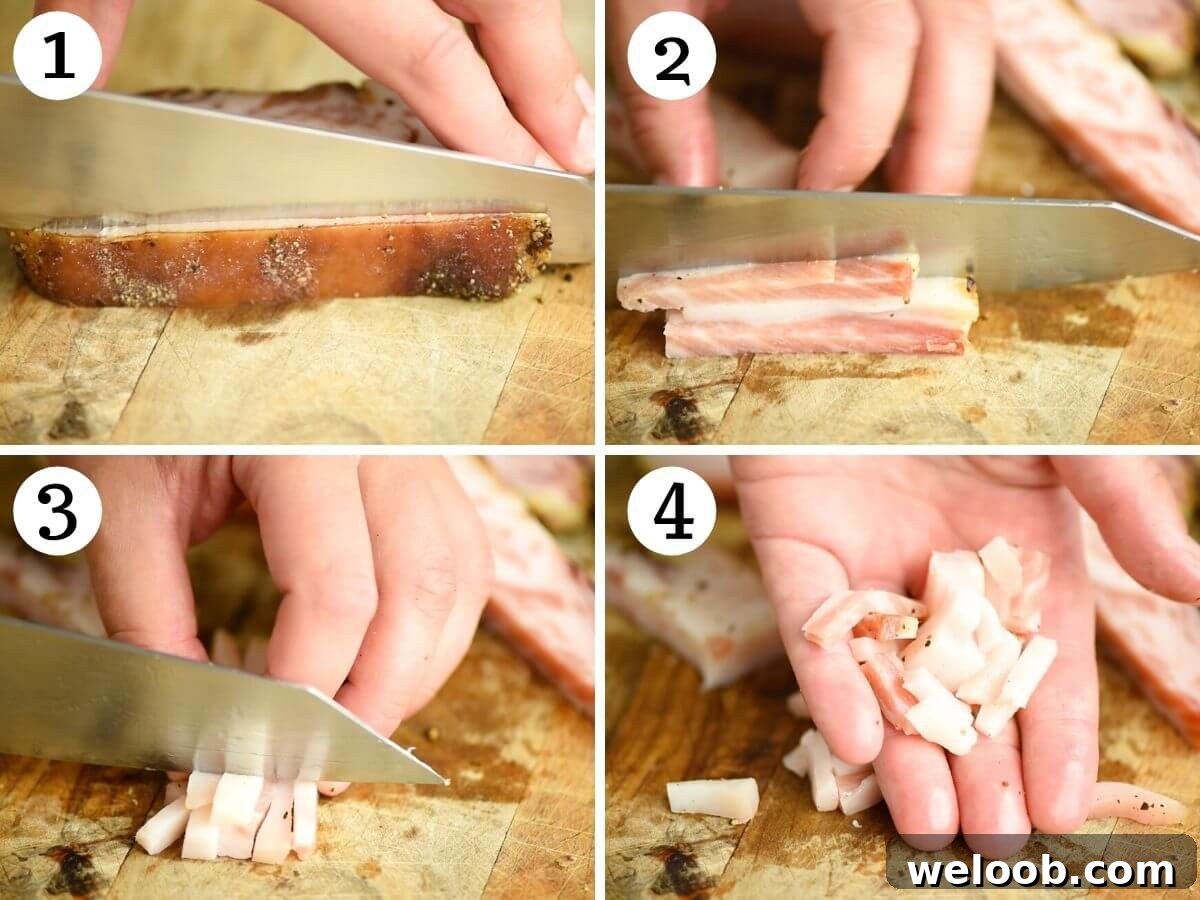
How to cut guanciale
Guanciale has a thicker skin on one side and a dark seasoned coating. Trim off the tough skin (you can save it for flavoring soups). The dark curing layer is edible but may feel gritty in sauce, so trim as you prefer.
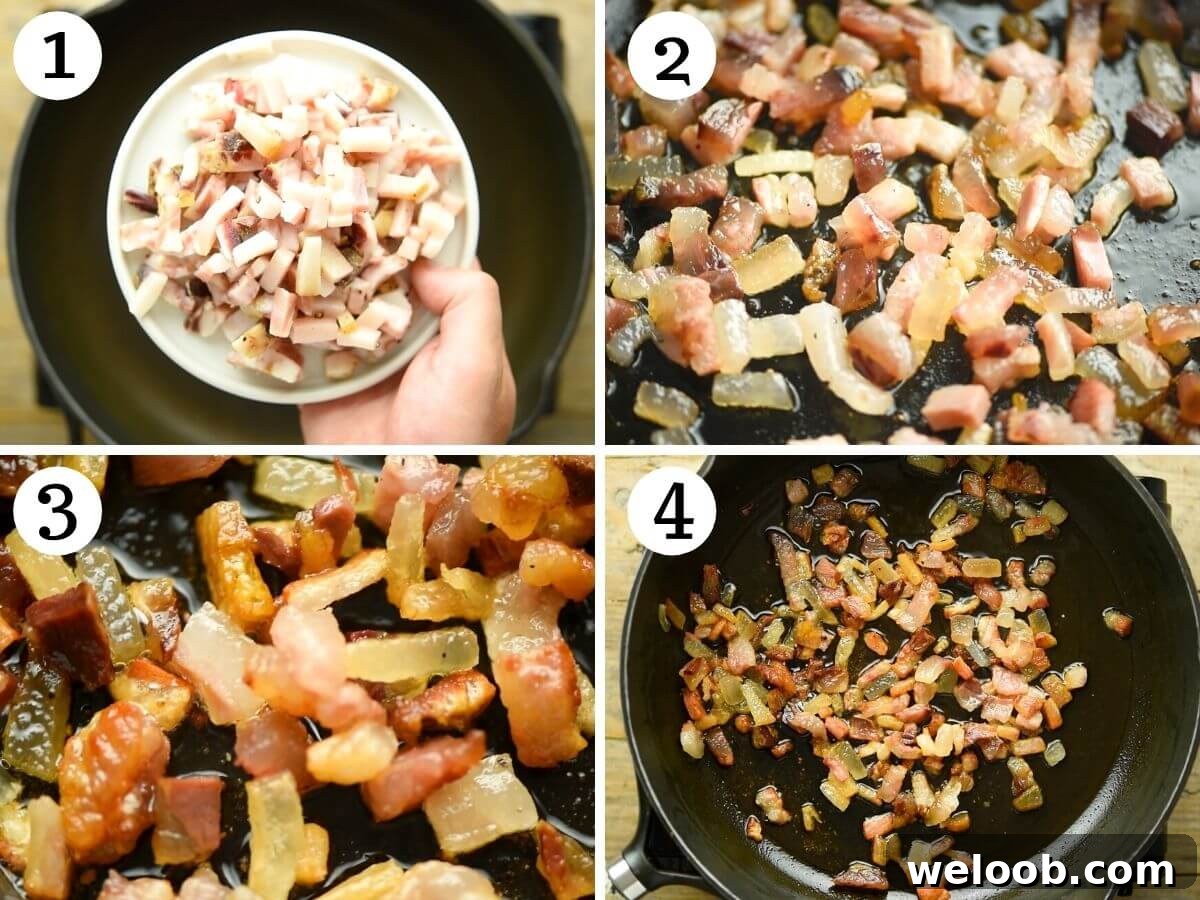
After removing skin and any unwanted seasoning, cut the guanciale into cubes or strips about 1/4 inch (½ cm) thick so each bite contains some tasty rendered fat and crisped meat.
Step by step photos and recipe instructions
Fry the guanciale – Heat a large skillet over medium heat and add the chopped guanciale. Cook until the fat renders and the pieces turn crisp and golden.
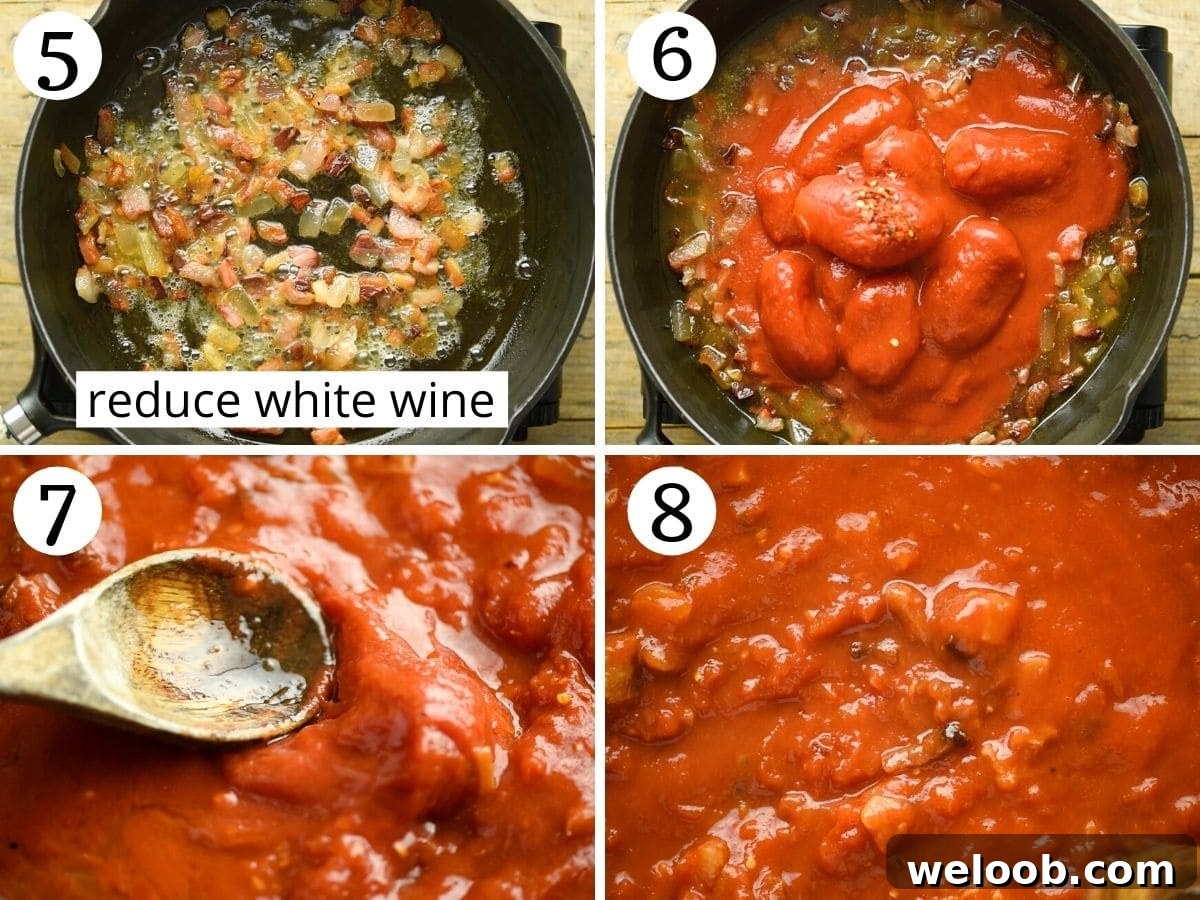
Make the sauce – When the guanciale is crisp, pour in the white wine and simmer until the liquid reduces by half. Add red pepper flakes and the tomatoes, breaking the tomatoes up with a spoon or spatula. Let the sauce simmer for about 10 minutes so the flavors meld.
Boil the pasta – While the sauce simmers, cook the bucatini in well-salted boiling water until al dente (follow package directions and reduce by 2–3 minutes for a firmer bite). Reserve about 1/2 cup (125 ml) of the pasta cooking water before draining.
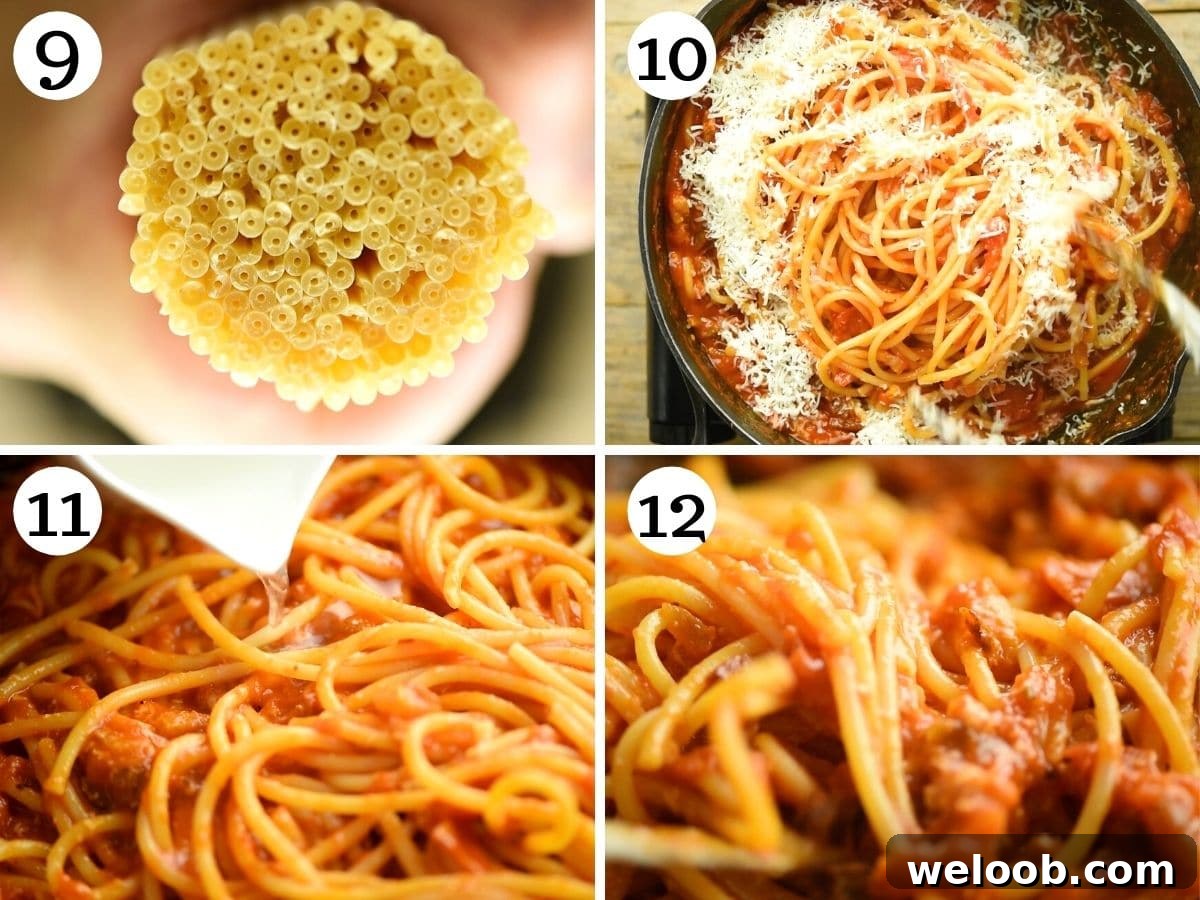
Combine and finish – Add the drained pasta to the tomato and guanciale sauce and toss to coat. If the sauce seems too thick, add a splash of reserved pasta water to emulsify and loosen it. Stir in the grated Pecorino Romano and toss until the pasta is evenly coated. Serve immediately.
Recipe tips and FAQs
- Use guanciale if possible – it delivers the authentic flavor of Amatriciana and is also traditional in Carbonara and Gricia.
- Use reserved pasta water – a little starchy water helps bind and smooth the sauce if it reduces too much.
- Season carefully – guanciale can be salty. Taste the sauce before adding extra salt once the pasta and cheese are combined.
Yes. You can prepare the sauce ahead of time (hold off on adding Pecorino) and refrigerate it for 2–3 days. Reheat until hot, cook the pasta, then combine with the sauce and cheese just before serving.
Absolutely. If bucatini is unavailable, Amatriciana is commonly served with spaghetti or short shapes like mezze maniche or rigatoni.
More classic Italian pasta recipes to try
- Spaghetti alla Carbonara
- Pasta alla Gricia
- Penne all’Arrabbiata
- Spaghetti Aglio e Olio
- Pasta alla Norma (Eggplant Pasta)
If you try this Bucatini all’Amatriciana, please rate the recipe and share your feedback in the comments. I love hearing how your version turned out. Follow the blog on social channels or subscribe to the newsletter for more recipes and tips.
This post was first published on 17 March 2018 and has been updated for clarity and usability.
Step By Step Photos Above
Most of our recipes include photos and tips to help you get perfect results.
Bucatini all’Amatriciana
By Emily
Ingredients
- 14 oz (400g) bucatini pasta (or spaghetti/rigatoni)
- 1.5 cups (150g) guanciale
- 1 cup (70g) Pecorino Romano, grated
- 28 oz (800g) canned whole plum tomatoes
- 1/3 cup (80ml) dry white wine
- 1/2 tsp red pepper flakes
- Salt and pepper, to taste
Instructions
- Bring a large pot of salted water to a boil.
- Trim the thick skin from the guanciale. Optionally trim some of the dark seasoned layer, then cut into 1/4 inch (½ cm) cubes or strips.
- Heat a large pan over medium heat and fry the guanciale until the fat renders and the pieces are crisp.
- Add the white wine and simmer until reduced by half. Stir in the tomatoes, break them up, add red pepper flakes and simmer 10 minutes.
- Cook the pasta until al dente, saving 1/2 cup (125 ml) of the pasta water.
- Toss the pasta with the sauce, adding reserved pasta water if needed. Stir in grated Pecorino Romano until well coated and serve immediately.
Notes
- Guanciale preferred: for authentic flavor, use guanciale rather than pancetta when possible.
- Pasta water: use a splash to loosen and emulsify the sauce as needed.
- Salt carefully: taste before seasoning; guanciale can be quite salty.
- Make ahead: sauce can be made up to 2–3 days in advance if you skip the Pecorino. Reheat before serving.
- Storage: keep leftovers refrigerated for up to 2 days.
Helpful Info for All Recipes
- I generally use extra virgin olive oil unless noted otherwise.
- For canned tomatoes, trusted brands deliver better flavor.
- All vegetables listed are medium unless specified.
- Recipes are developed using a convection (fan) oven where applicable.
- Nutrition values are approximate and automatically calculated.
Nutrition
Carbohydrates: 84 g |
Protein: 24 g |
Fat: 35 g
Nutrition information is approximate.
Did you try this recipe?
Leave a comment below!