
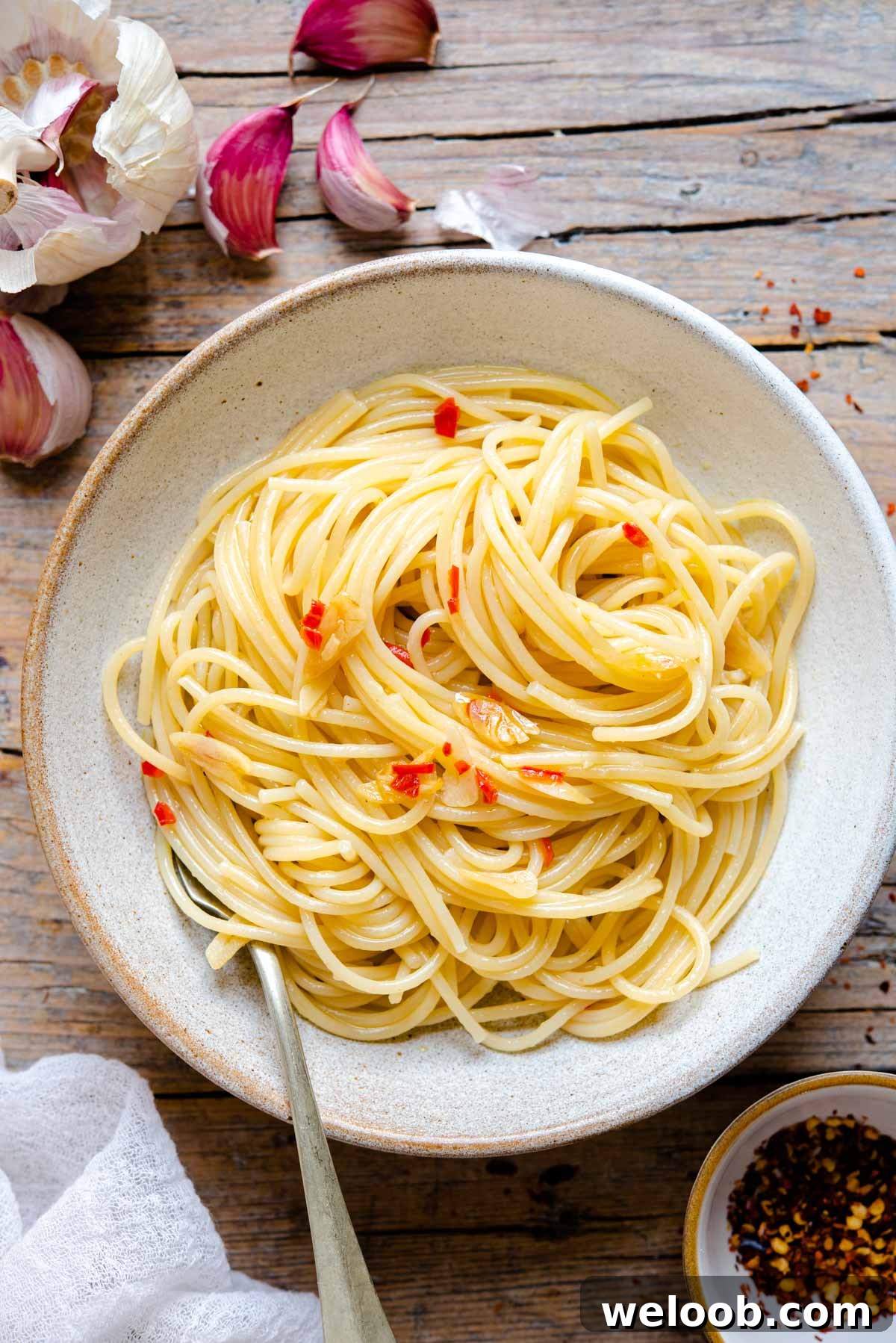
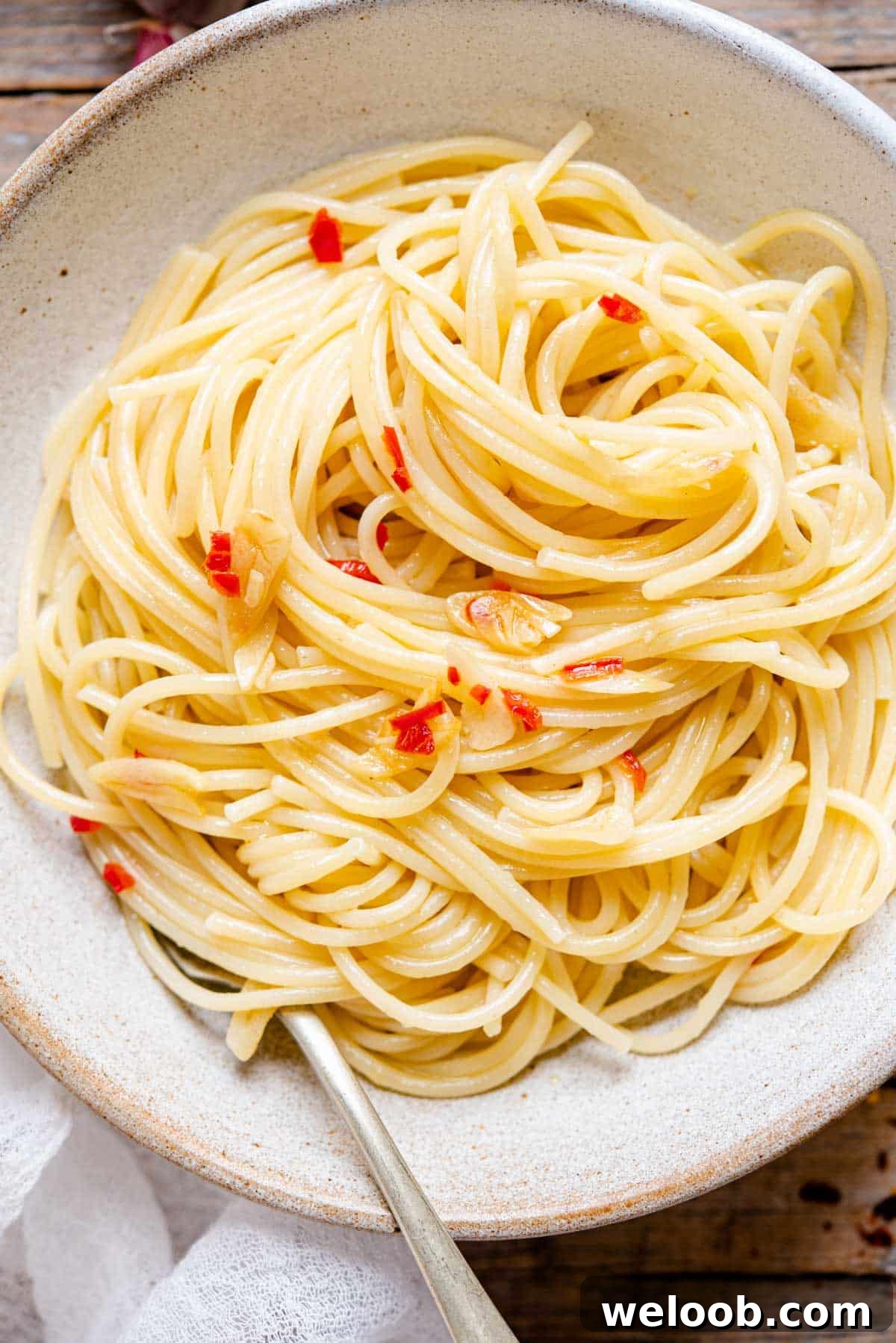
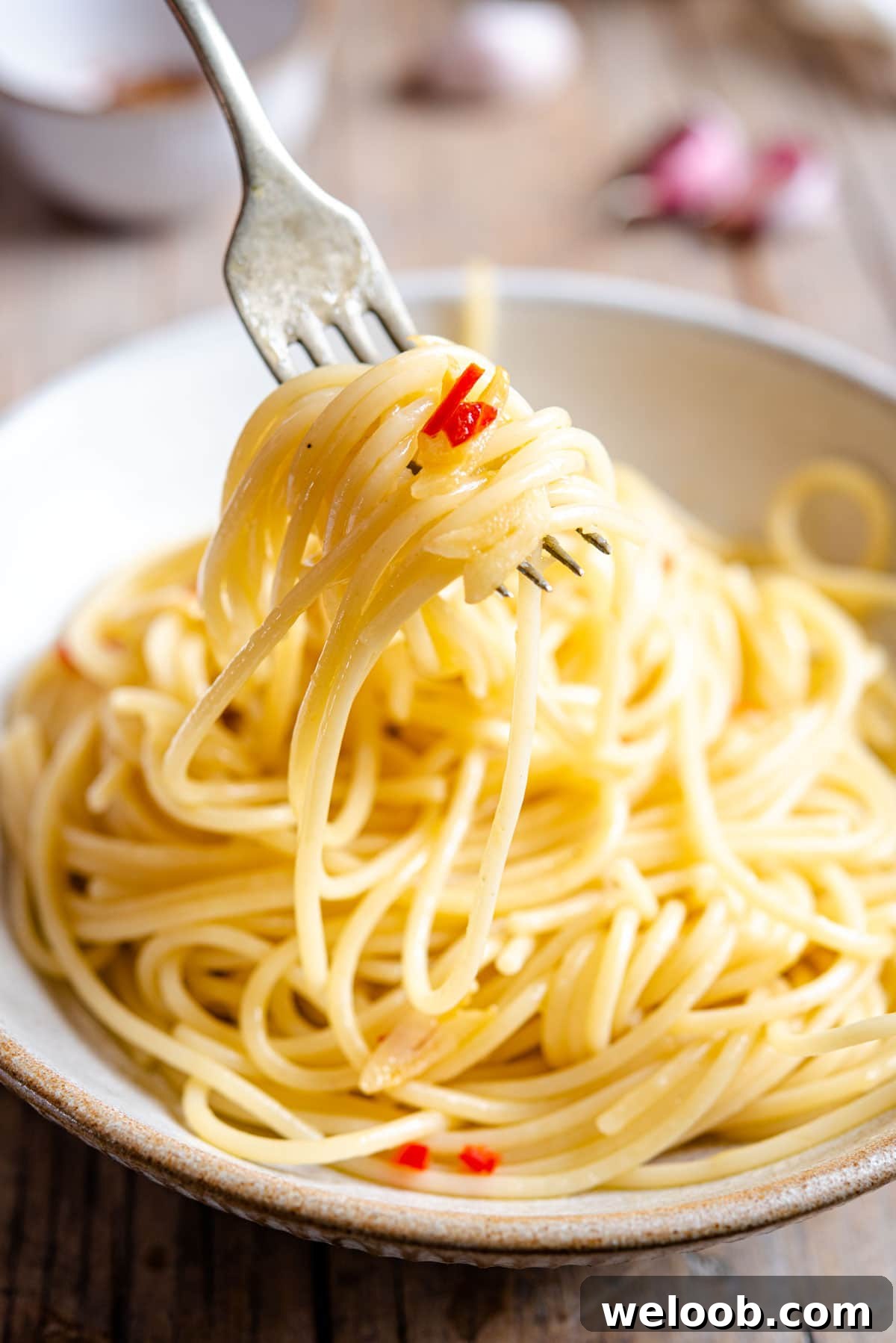
Spaghetti Aglio e Olio is a classic Italian pasta dish made from just a few simple pantry staples: spaghetti, fresh garlic, good extra virgin olive oil and peperoncino. It’s inexpensive, quick to prepare and can be on the table in around 10–15 minutes, making it perfect for busy weeknights or a comforting, no-fuss meal.
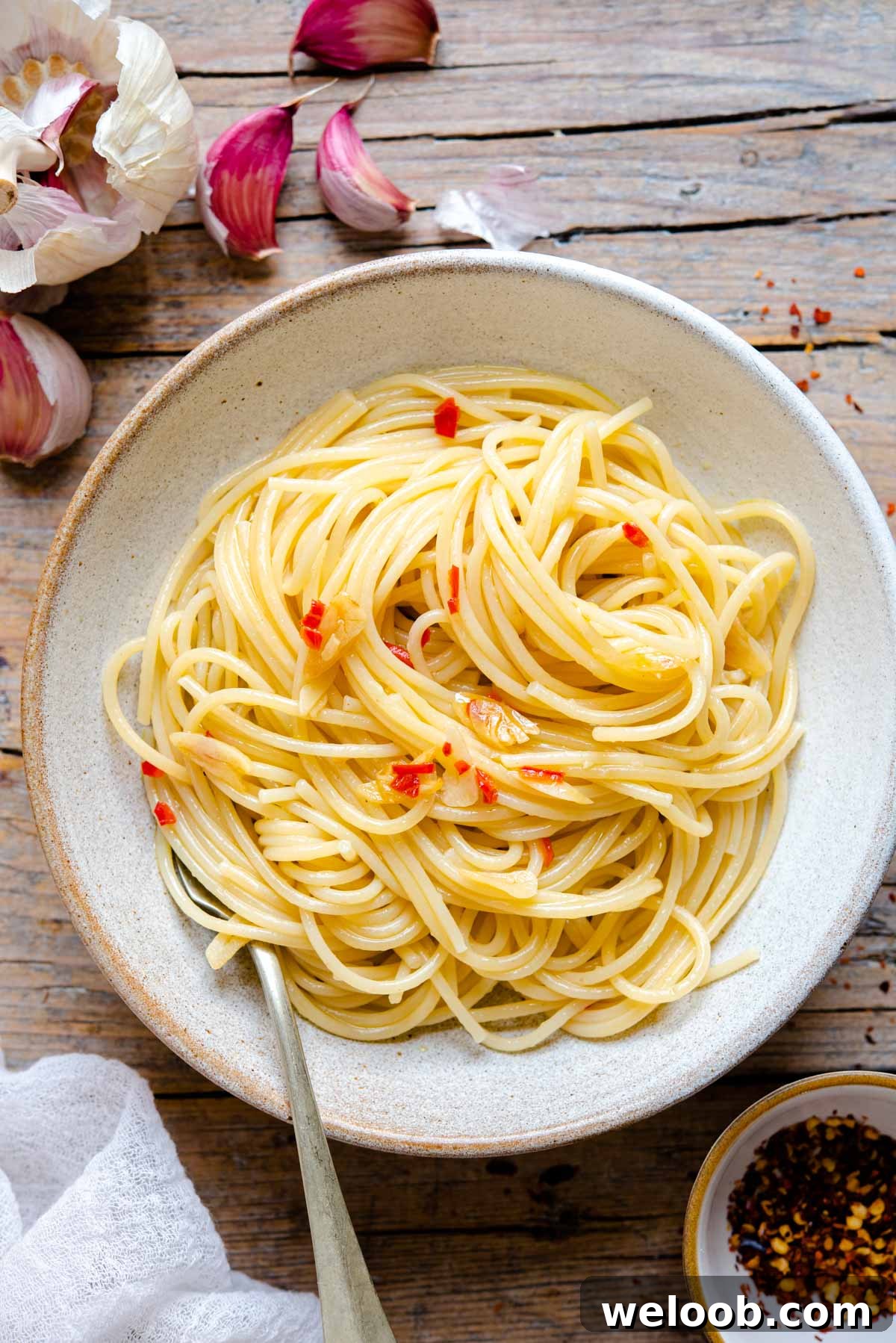
This recipe is ready from start to finish by the time the pasta cooks, similar to other Italian favourites such as Spaghetti alla Carbonara, Penne all’Arrabbiata or Cacio e Pepe. While some variations add parsley, parmesan or breadcrumbs, the authentic version relies on the clarity and balance of its few ingredients.
All you need is good-quality spaghetti, freshly sliced garlic (aglio), extra virgin olive oil (olio) and a little peperoncino for heat.
Cooking with Peperoncino
This dish uses red chilli (peperoncino) for a gentle kick rather than overwhelming heat. You can use fresh red chilli or dried red pepper flakes and adjust the amount to suit your tolerance.
If you use fresh chilli, remove the seeds to reduce the heat—most of the capsaicin is concentrated there—so you get flavour without excessive spice.
How to make Spaghetti Aglio e Olio – step by step
Bring a large pot of salted water to a boil and cook the spaghetti until al dente (follow the packet instructions; typically around 8–10 minutes).
While the pasta cooks, heat a generous amount of extra virgin olive oil in a wide skillet over medium-low heat. Add thinly sliced garlic and the chopped fresh chilli or red pepper flakes.
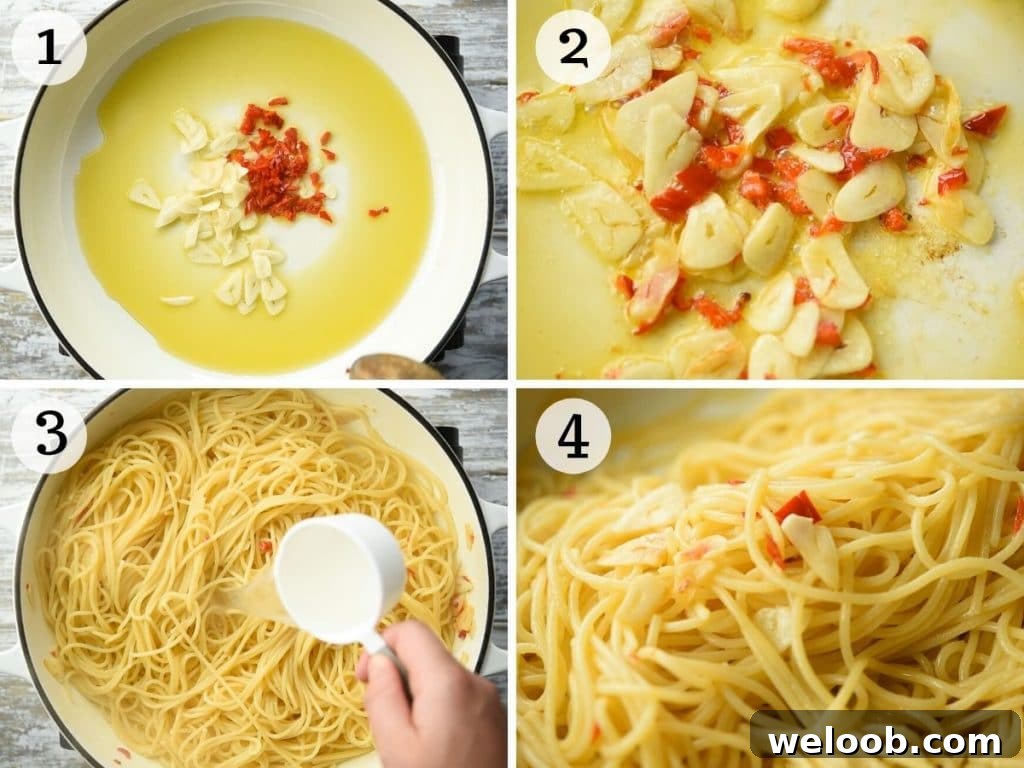
Sauté the garlic and chilli gently for 1–2 minutes until fragrant. Be careful not to let the garlic brown, as that will make the oil taste bitter.
Reserve about 1/3 cup (80 ml) of the pasta cooking water, then drain the spaghetti. Add the drained pasta to the skillet, pour in the reserved pasta water and toss thoroughly so the spaghetti is evenly coated in the garlic-chilli oil. Finish with an extra drizzle of olive oil and a pinch of salt, then serve immediately.
Top tips for making this recipe
- Quality ingredients matter. Use a trusted pasta brand and a good extra virgin olive oil for the best flavour.
- Sauté the garlic and chilli over medium-low heat and watch them closely. Garlic burns quickly and will make the sauce bitter—if it burns, start again with fresh oil and garlic.
- Use fresh garlic for the clean, robust flavour—garlic powder won’t replicate the same result.
- This dish is best served right away. It comes together quickly, so there’s usually no need to prepare it far in advance beyond slicing the garlic and chilli.
- If you have leftovers, add a little extra olive oil to prevent sticking. Leftover Aglio e Olio can be enjoyed cold or at room temperature as a simple pasta salad.
More easy Italian pasta recipes you might like
- Ricotta Pasta Sauce: 2 Ways
- Spaghetti alla Molisana (Pancetta, Herbs and Chilli)
- Pasta With Puttanesca Sauce (Spaghetti Alla Puttanesca)
- Pasta Amatriciana – Bucatini, Tomato And Guanciale
- Penne all’Arrabbiata – Spicy Italian Tomato Pasta
If you try this Spaghetti Aglio e Olio or any other recipe from the site, please leave a comment to let me know how it turned out—I love hearing from readers.
Step By Step Photos Above
Most of our recipes include step-by-step photos, helpful tips and sometimes video to help you get great results.
Spaghetti Aglio e Olio
By Emily
Ingredients
- 14 oz Spaghetti (400g)
- 4 cloves garlic
- 1 tbsp fresh red chilli or ½–1 tsp red pepper flakes
- 5 tbsp extra virgin olive oil plus extra for serving
- ⅓ cup reserved pasta water (80ml)
- Salt, to season
Instructions
- Bring a large pot of salted water to a boil and cook the spaghetti according to packet instructions until al dente (about 8–10 minutes).
- Thinly slice the garlic cloves and finely chop the red chilli, or measure out red pepper flakes if using.
- Warm the olive oil in a large skillet over medium-low heat. Add the garlic and chilli and sauté gently until fragrant, about 1–2 minutes—do not let the garlic brown.
- Reserve ⅓ cup (80 ml) of the pasta cooking water, then drain the spaghetti. Add the spaghetti to the skillet with the garlic-chilli oil, toss to combine, then add the reserved pasta water and a pinch of salt. Toss until the pasta is well coated.
- Turn off the heat and serve immediately with an extra drizzle of olive oil.
Video
Notes
- Use high-quality ingredients—good olive oil and a reliable pasta brand make a noticeable difference.
- Sauté garlic and chilli gently on medium-low heat and don’t leave them unattended. Burnt garlic turns bitter—if it burns, discard and start over.
- Always use fresh garlic for the best flavour; garlic powder won’t provide the same result.
- Serve this pasta immediately for the best texture and flavour.
- For leftovers, add an extra drizzle of olive oil to prevent sticking and enjoy cold or at room temperature as a simple pasta salad.
Helpful Info for All Recipes
- I always use extra virgin olive oil in recipes unless stated otherwise.
- When I use canned or jarred tomatoes I prefer trusted brands for consistent flavour.
- Vegetable sizes are assumed to be medium unless noted.
- Recipes are tested using a fan (convection) oven where relevant.
- Nutrition information is automatically calculated and should be used as an approximation.
Nutrition
Nutrition information is automatically calculated and should be used as an approximation.