
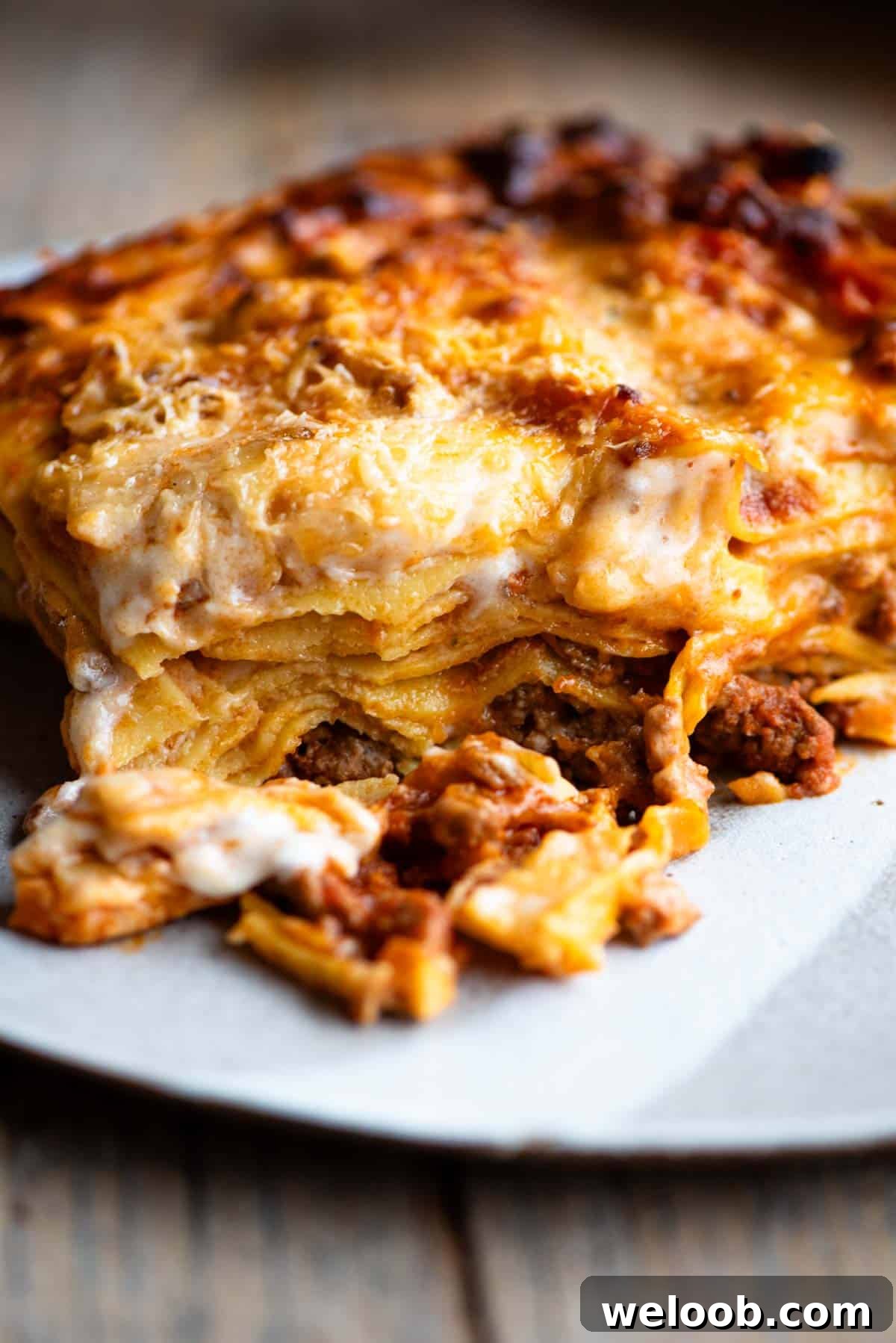
An incredibly delicious Lamb Lasagna made with a slow-simmered ragu, layers of fresh homemade pasta and a creamy Pecorino bechamel. This comforting, crowd-pleasing dish is ideal for family dinners and special occasions like Easter.
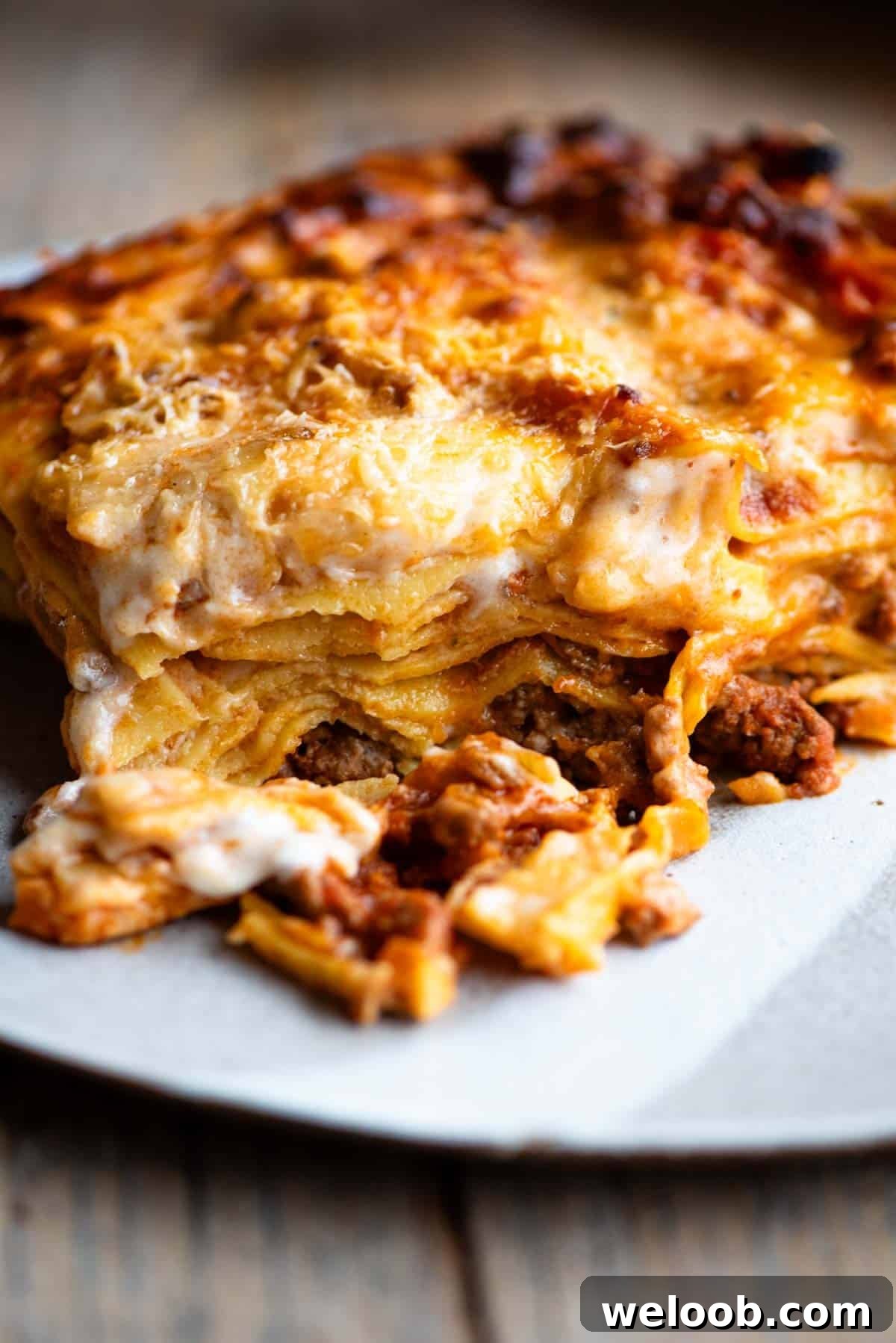
If you want a memorable way to serve lamb this Easter, this lamb lasagna delivers. It combines a rich, slowly cooked ragu with tender fresh pasta sheets and a silky Pecorino bechamel for a luscious finish.
Making lasagna takes time—especially if you make the pasta from scratch—but the result is deeply rewarding. If you prefer, you can use store-bought fresh lasagna sheets, but homemade pasta adds a special touch.
Enjoy the process: take your time, pour a glass of wine, play your favourite music, and savour the aromas as the sauce simmers. Buon appetito e Buona Pasqua!
See the recipe below including ingredient notes, step-by-step photos, tips and a video tutorial. For the printable recipe scroll to the bottom or use the recipe section.
Ingredients
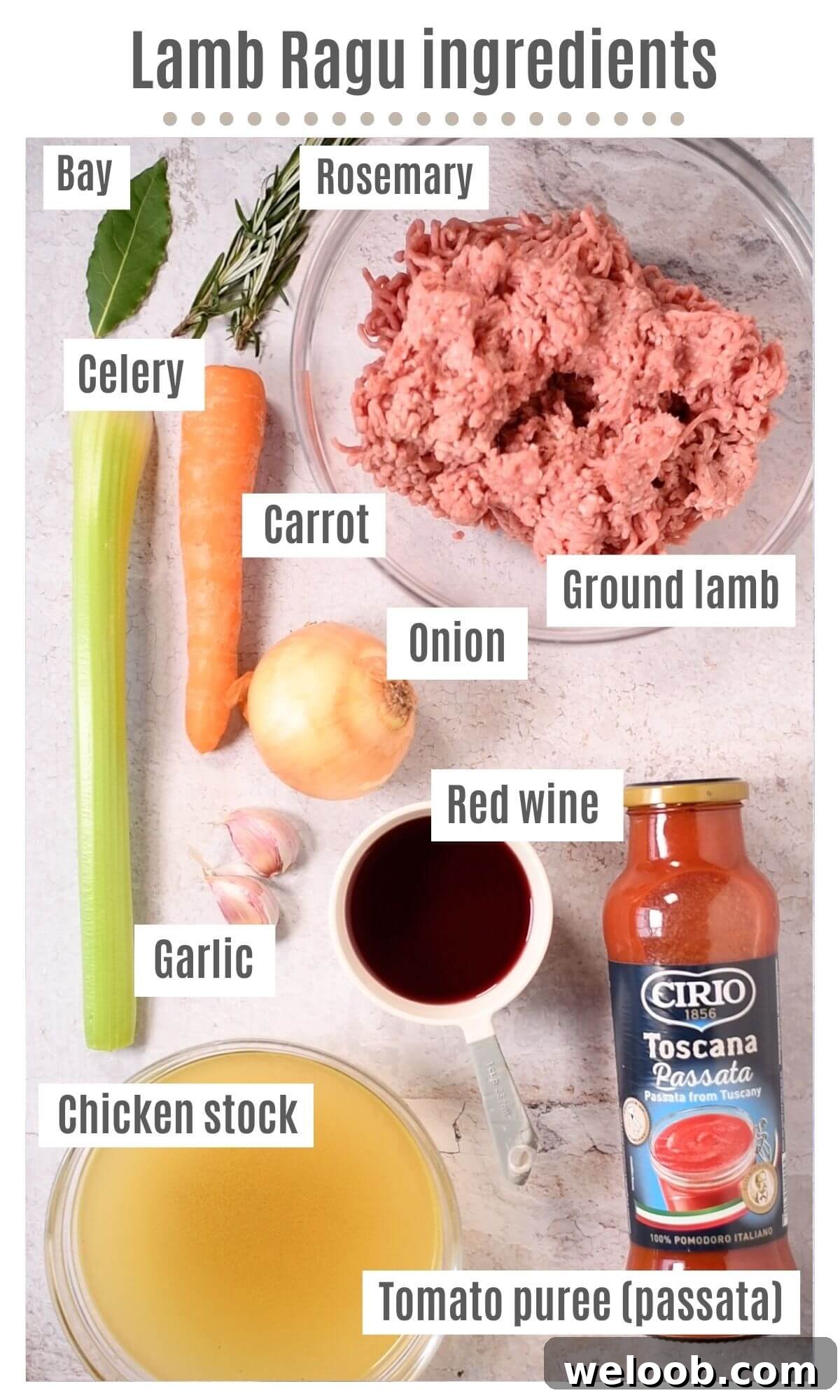
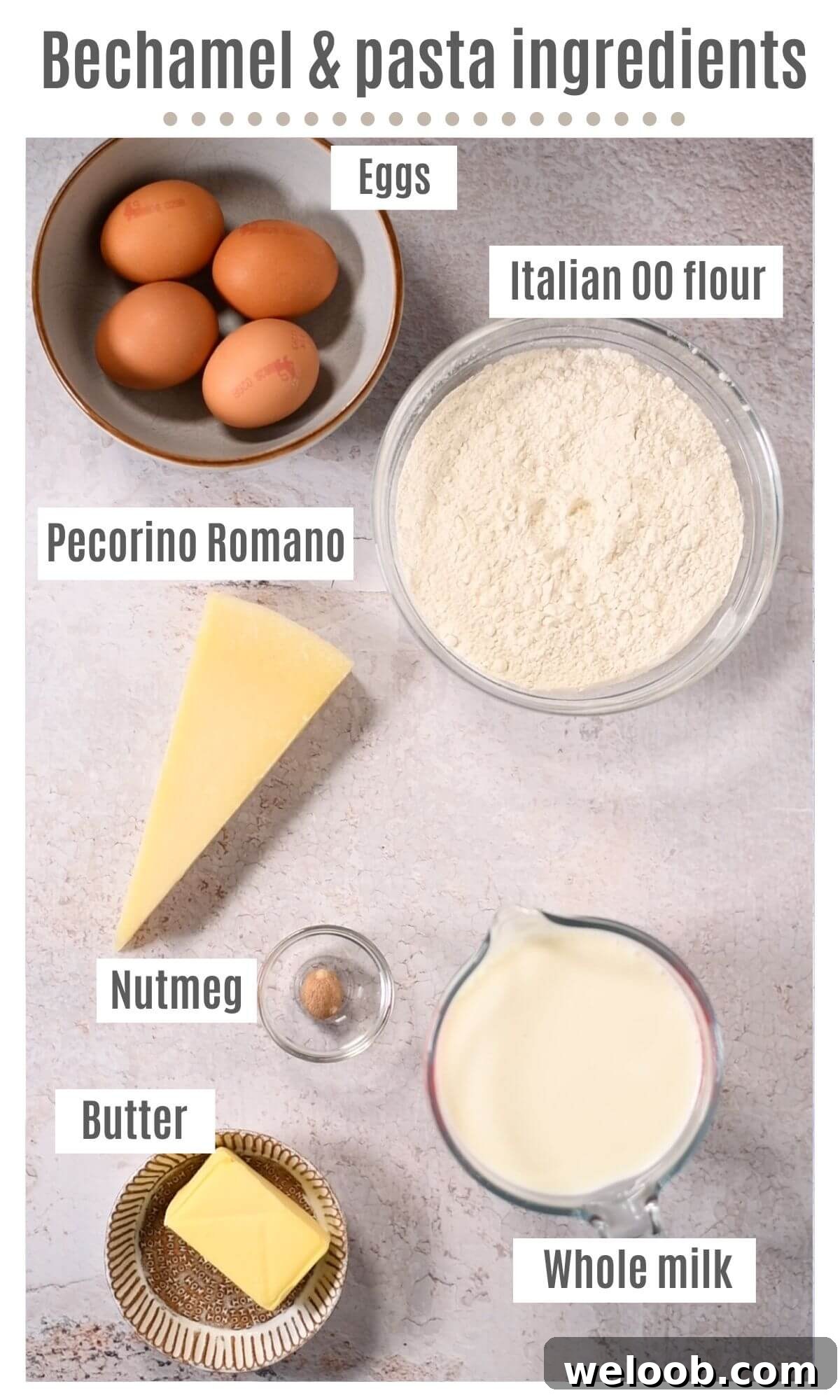
Ingredient notes and substitutions
- Ground lamb – choose good quality mince. Lamb is naturally fatty, so you will drain off some fat after browning.
- Soffritto – carrot, celery and onion provide the flavour base for the ragu.
- Garlic – use fresh cloves for the best flavour.
- Wine – red wine is recommended for depth, though white wine or no wine at all will also work.
- Tomato – passata (tomato purée) gives a smooth sauce, but crushed tomatoes are an acceptable substitute.
- Stock – low-sodium chicken stock lets you control the final seasoning.
- Herbs – fresh rosemary and bay leaf add traditional aroma.
- Pasta dough – Italian 00 flour and good eggs produce tender sheets; fresh store-bought lasagna sheets are a convenient alternative.
- Bechamel – make with whole milk, butter, flour and a pinch of nutmeg for a rich texture.
- Pecorino Romano – its sharp, salty character complements lamb; Parmigiano Reggiano can be used if preferred.
Step-by-step photos and instructions
To make the ragu
Finely chop the carrot, celery and onion and set aside.
Heat a drizzle of olive oil in a large pan and brown the lamb. Remove browned lamb with a slotted spoon and pour the rendered fat into a separate bowl to discard once solidified.
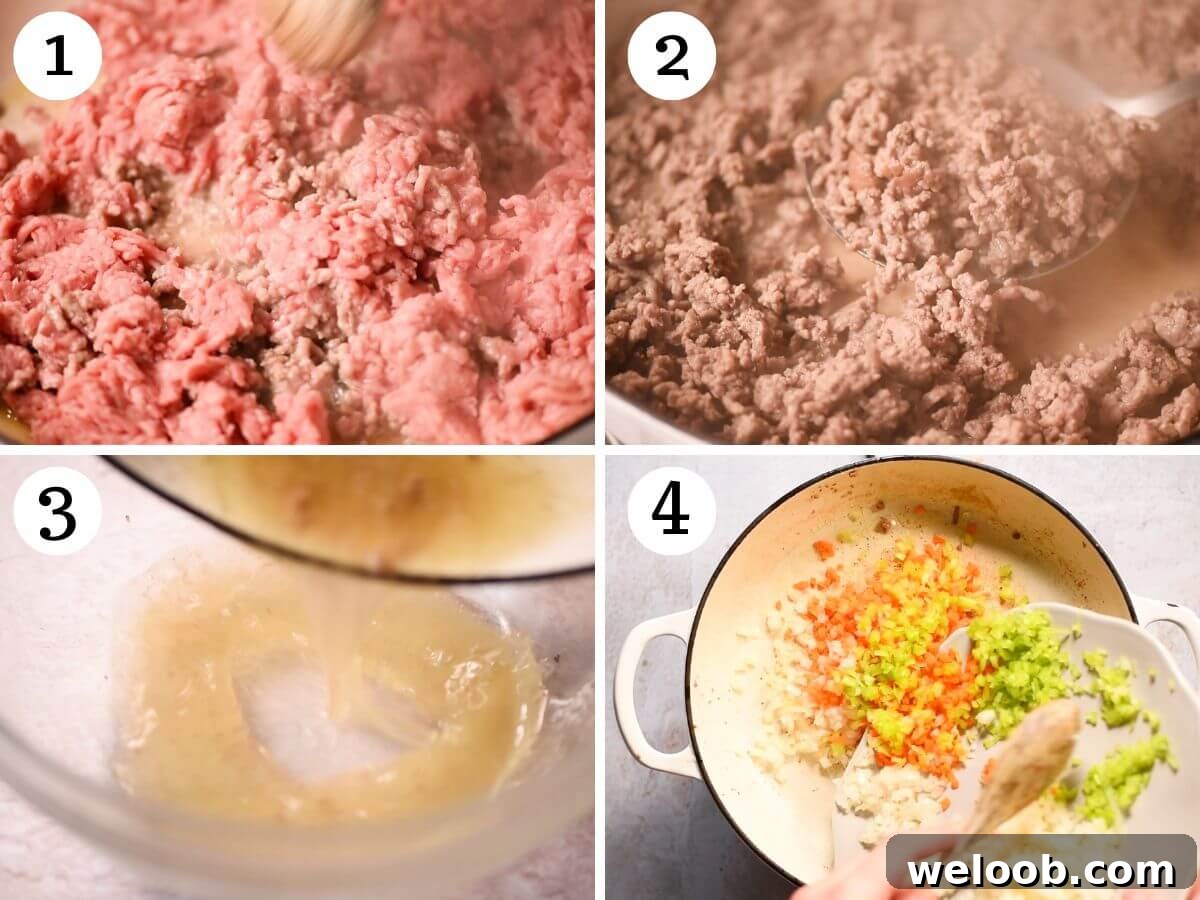
Add about 1 tablespoon of olive oil to the pan and gently sauté the soffritto over medium-low heat until soft but not browned, about 10 minutes.
Add the garlic and cook for 1 minute, then return the drained lamb to the pan. Pour in the red wine and reduce for 2–3 minutes until the alcohol smell has gone.
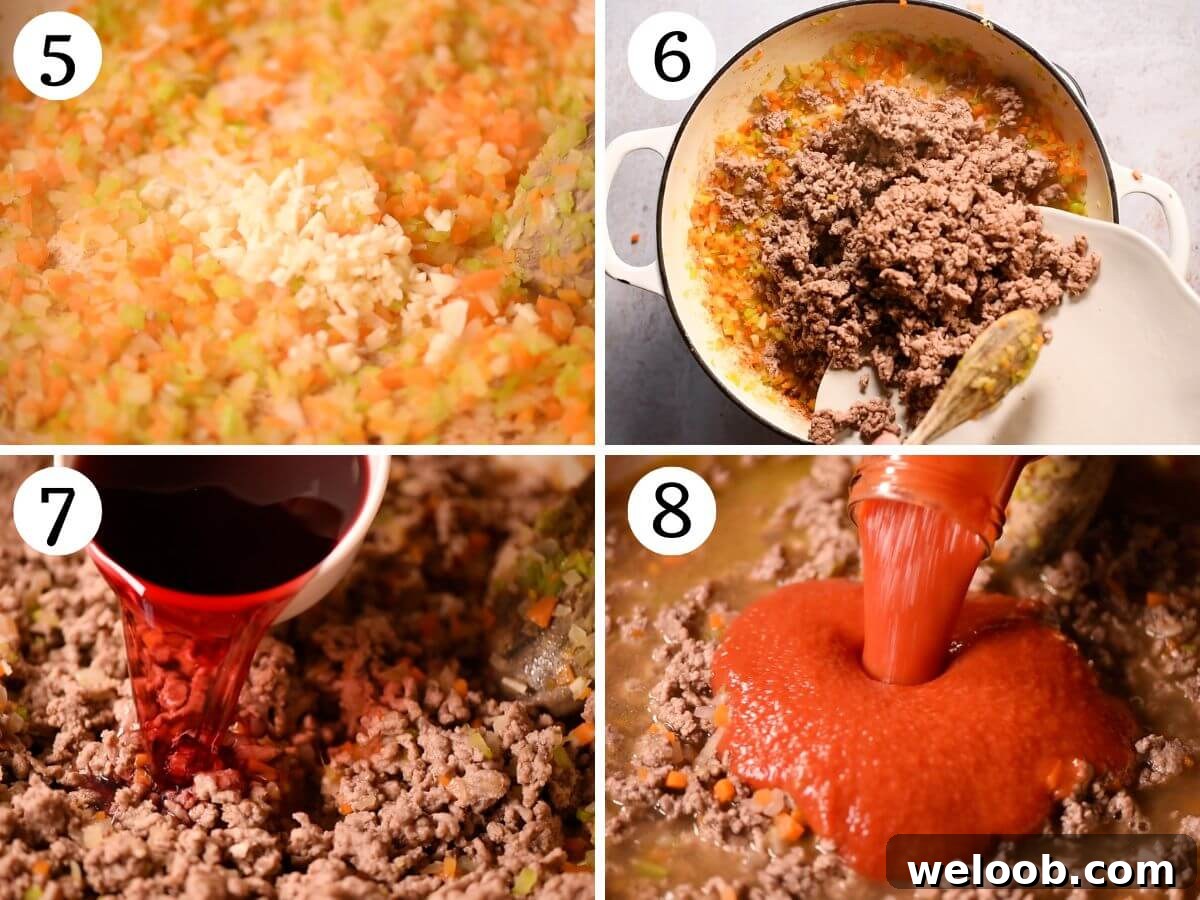
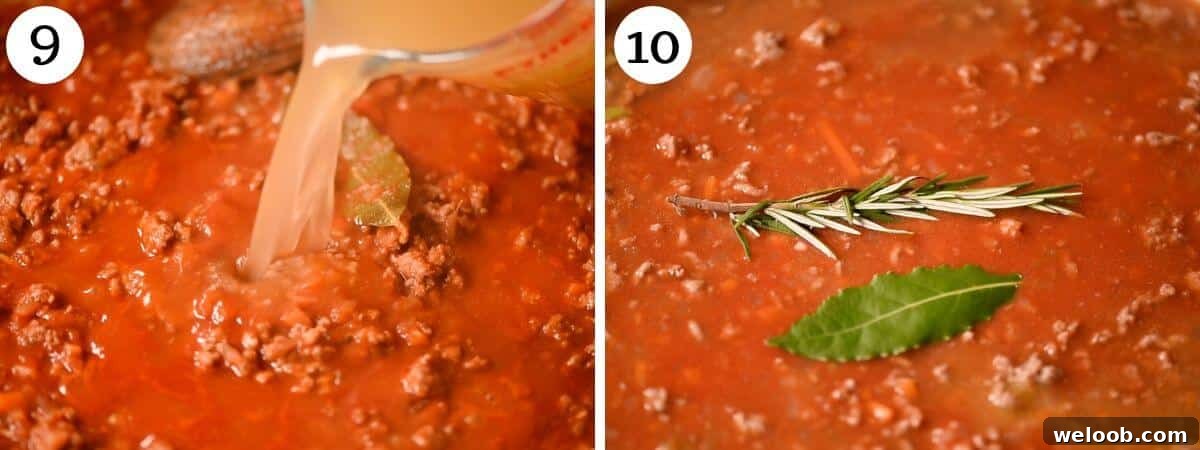
Add the tomato passata, half the chicken stock, a bay leaf and a rosemary sprig. Stir, then simmer uncovered for about 4 hours, adding the remaining stock halfway through. Add a little extra water if the sauce reduces too much.
Make the pasta dough
Make a well of flour on a clean surface and add the eggs in the centre. Lightly beat the eggs with a fork, then gradually incorporate flour until a rough dough forms.
Knead the dough by hand for about 10 minutes until smooth and elastic. If the dough is sticky, add a little more flour; if it’s dry, wet your hands and continue kneading. Wrap the dough in plastic wrap and rest for at least 30 minutes.
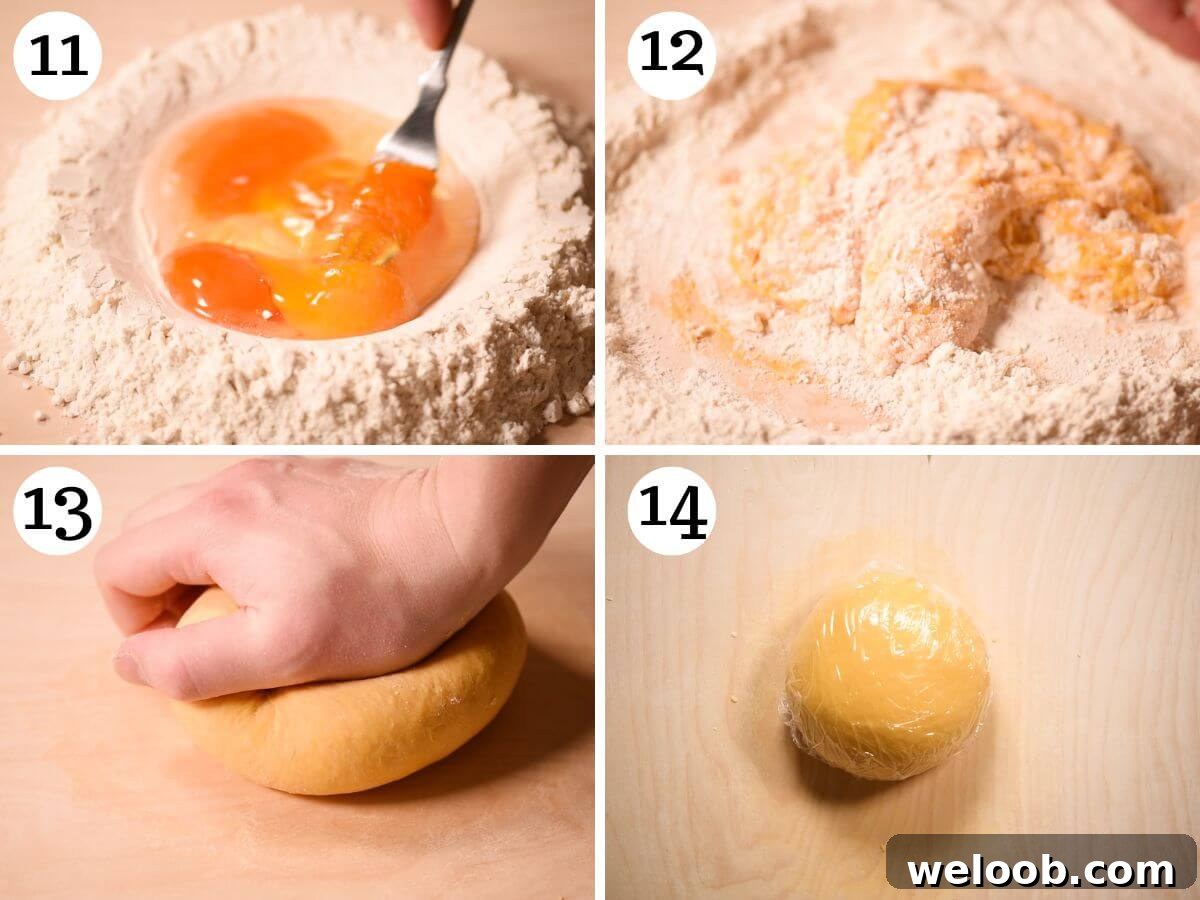
Make your bechamel
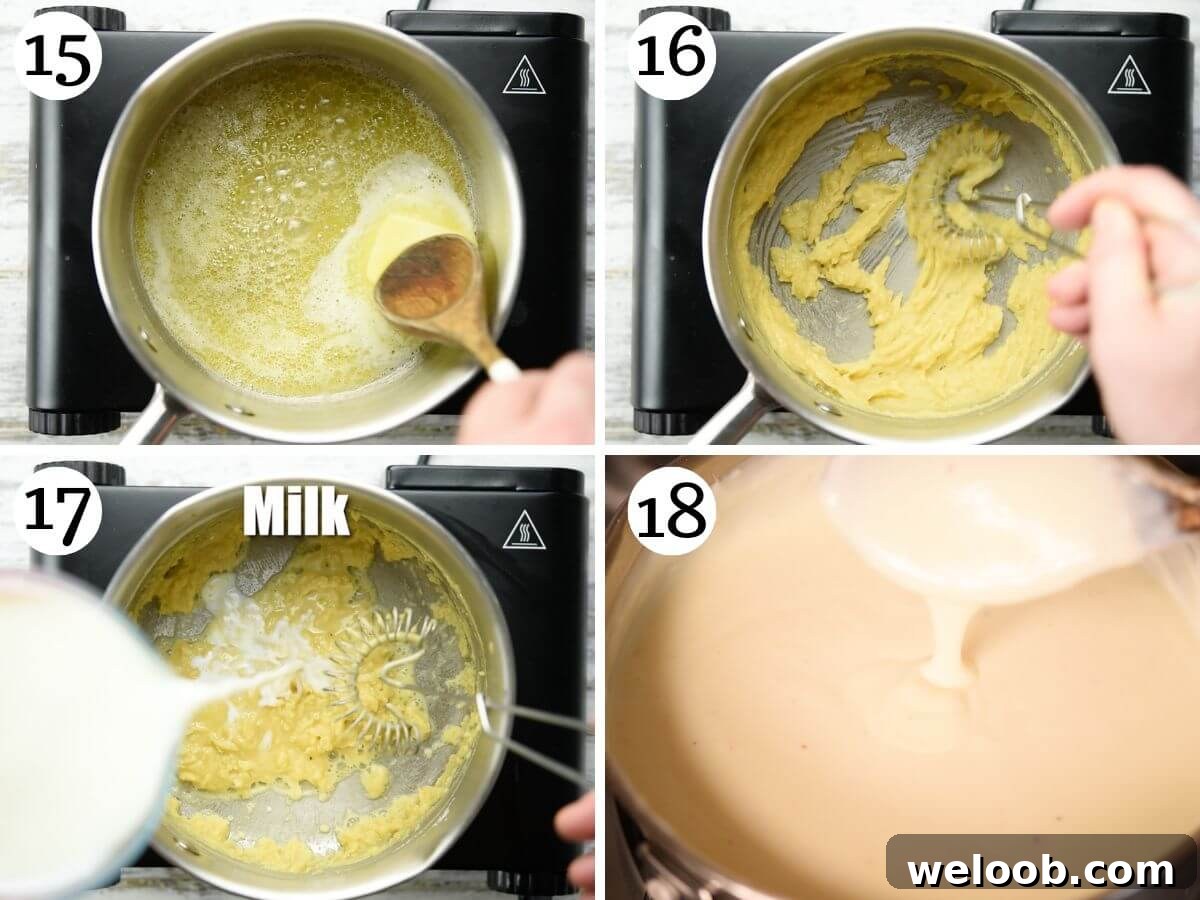
Melt the butter in a saucepan over medium heat. Stir in the flour and cook for about 1 minute to form a roux.
Slowly whisk in half the milk until smooth, then add the rest and whisk until thickened and lump-free. Season with salt, pepper and freshly grated nutmeg, then stir in the grated Pecorino until melted. Set aside.
Roll out and blanch the pasta
Bring a large pot of salted water to a boil.
Set your pasta machine to the widest setting. Cut the rested dough in half; keep one half wrapped while you work with the other.
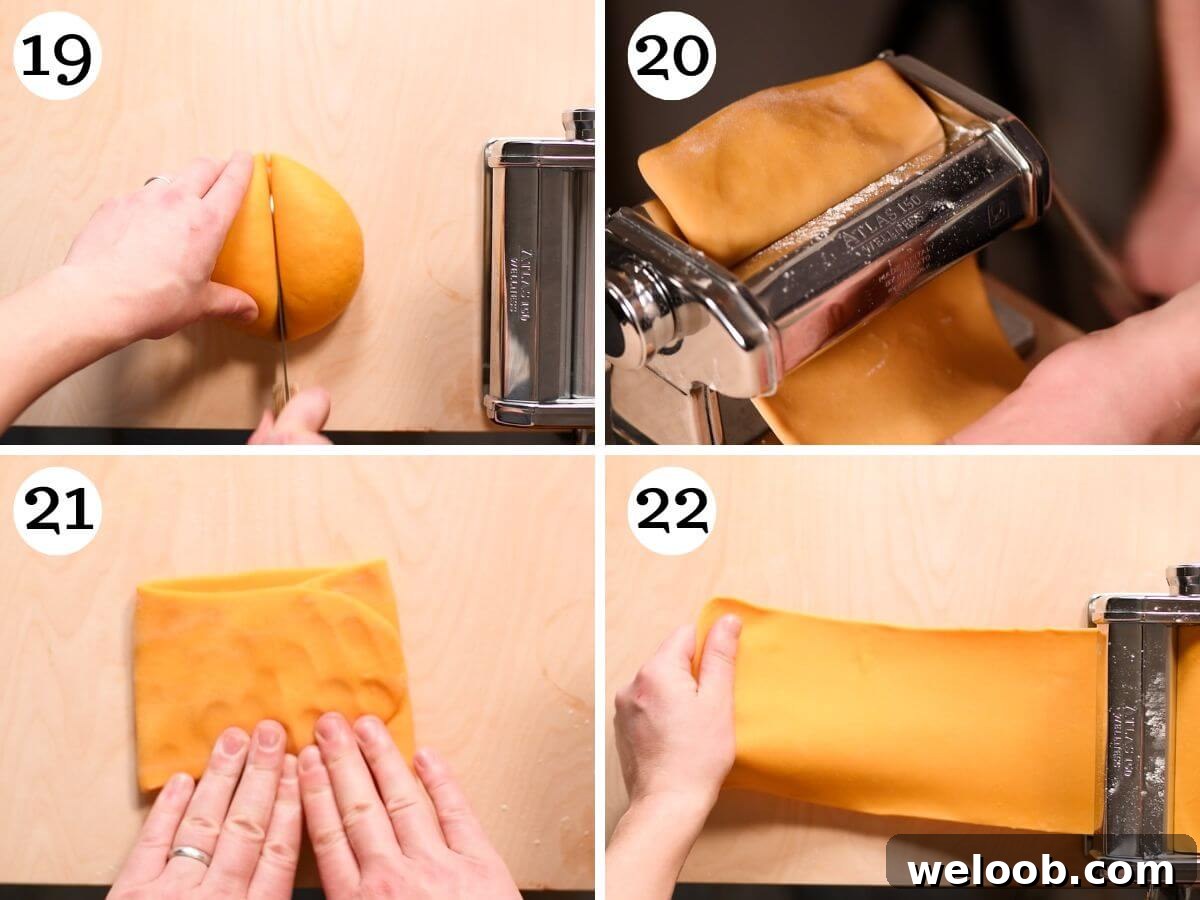
Pass the dough through the machine at the widest setting several times, folding it like a leaflet between passes to develop structure. Then roll the sheet through progressively narrower settings until you reach the third-to-last setting (often number 7).
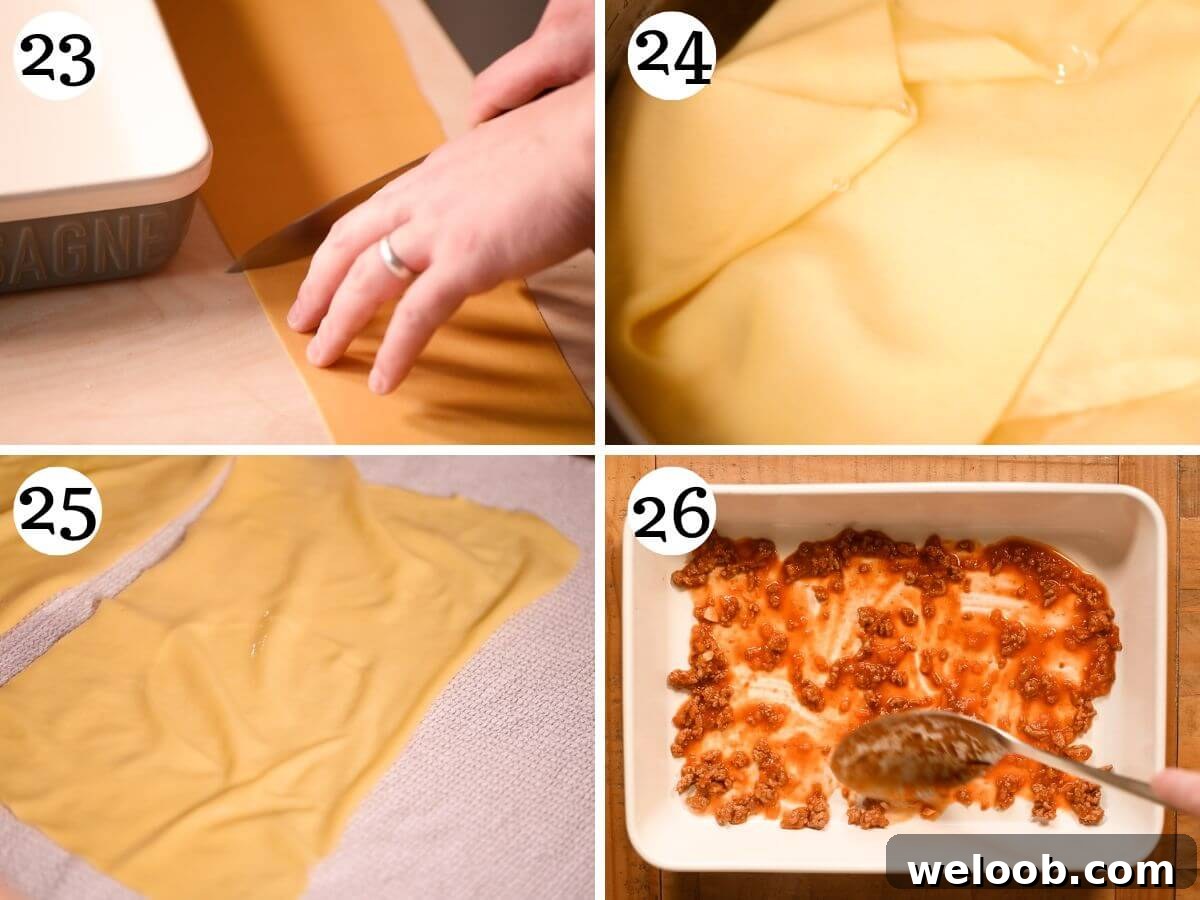
Cut sheets to fit your baking dish. Blanch 2–3 sheets at a time in the boiling water for 1 minute, then transfer to a clean kitchen towel to dry for a few seconds. Repeat with the remaining dough.
Layer the lasagna
If baking immediately, preheat the oven to 200°C (400°F).
Spread a thin layer of ragu on the bottom of your baking dish and place the first pasta layer on top. Trim any excess sheets.
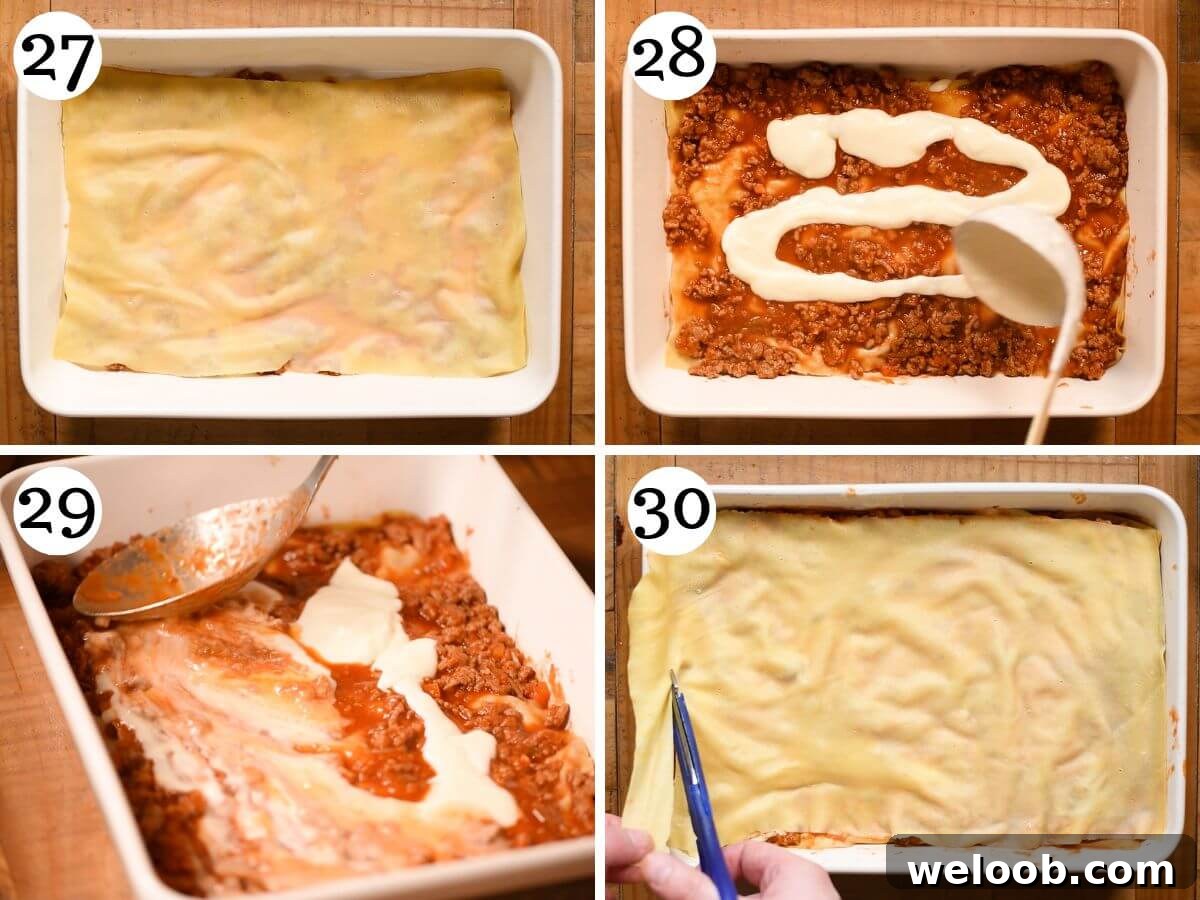
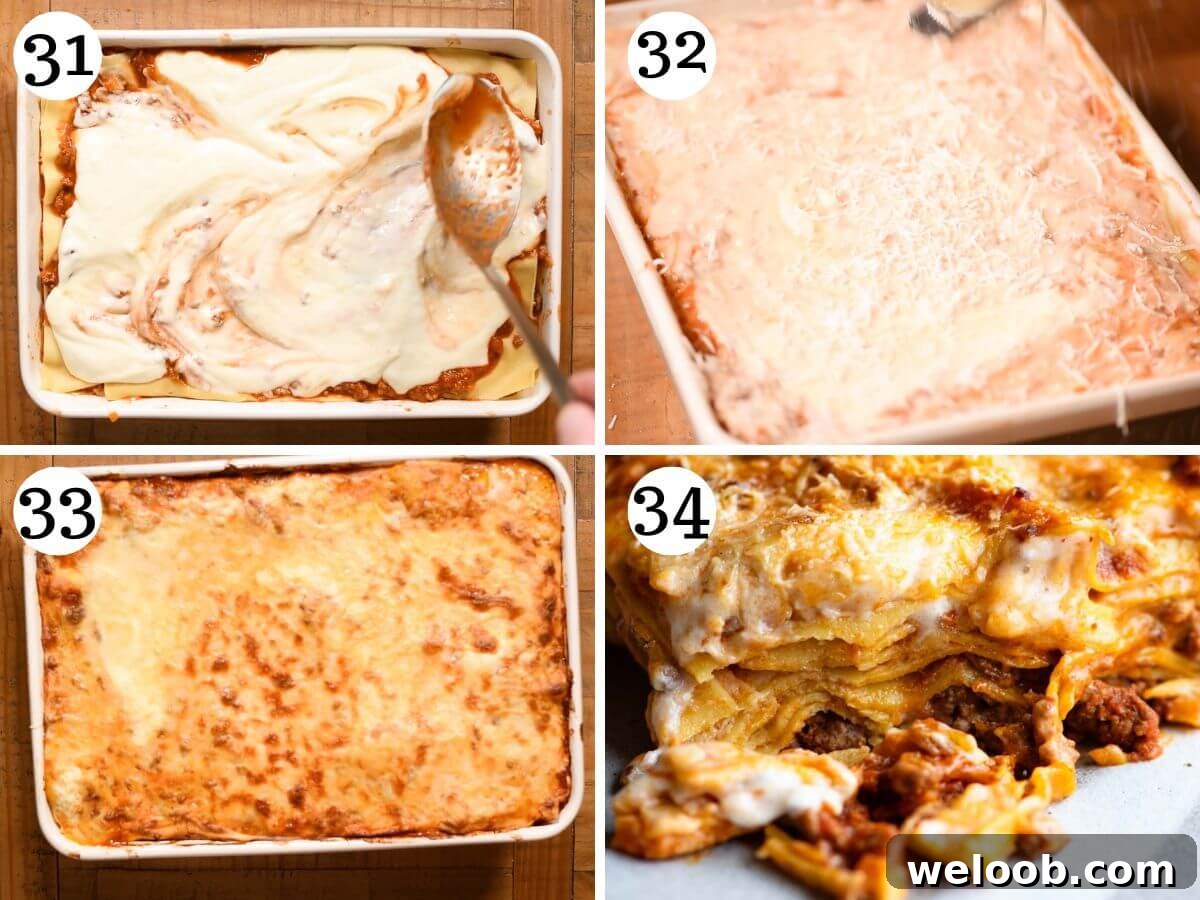
For each layer, spread a generous spoonful of ragu, followed by a ladleful of bechamel. Repeat to build about six layers, finishing with a final layer of ragu and a generous covering of bechamel. Grate Pecorino over the top.
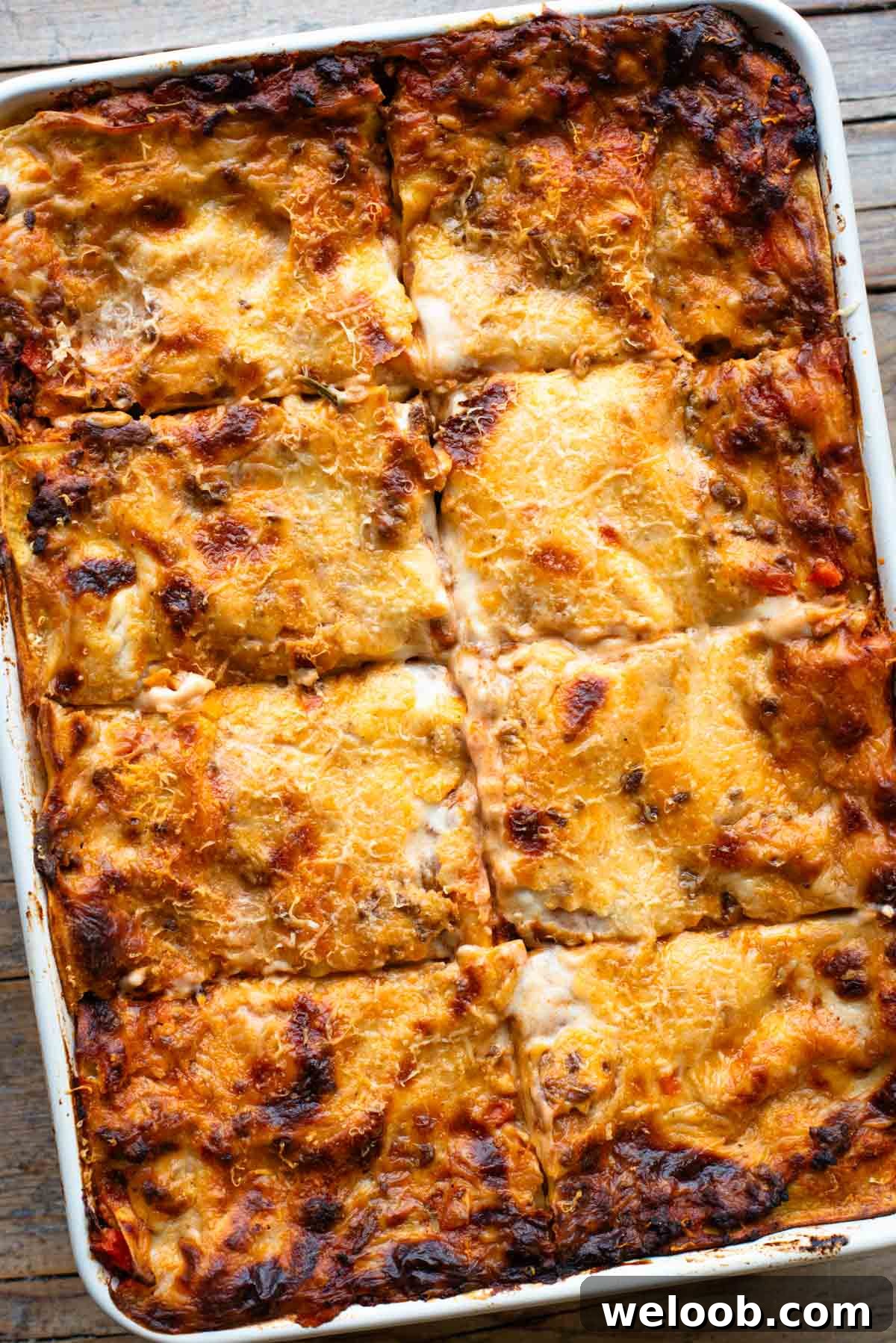
Bake uncovered for 30–40 minutes until golden and bubbling. Let the lasagna rest for 10 minutes before slicing and serving.
Recipe tips and FAQs
- Make the ragu ahead – prepare the ragu the day before. Slow-cooked sauces taste even better after resting overnight.
- Drain the fat – when browning lamb you’ll need to remove excess fat. Pour the rendered fat into a separate bowl to cool and discard, rather than down the drain.
- Pasta sheets – fresh store-bought lasagna sheets are a time-saver if you prefer not to make dough.
- Use a kitchen scale – weighing flour yields more consistent pasta results.
Yes. Make the ragu a day ahead. You can assemble the lasagna and refrigerate it for up to 1 day before baking.
Yes. Once cooled you can freeze the entire lasagna or individual portions. Thaw completely before baking. Alternatively freeze the ragu and bechamel separately and thaw before assembling.
More Italian Easter recipes to try
Antipasti
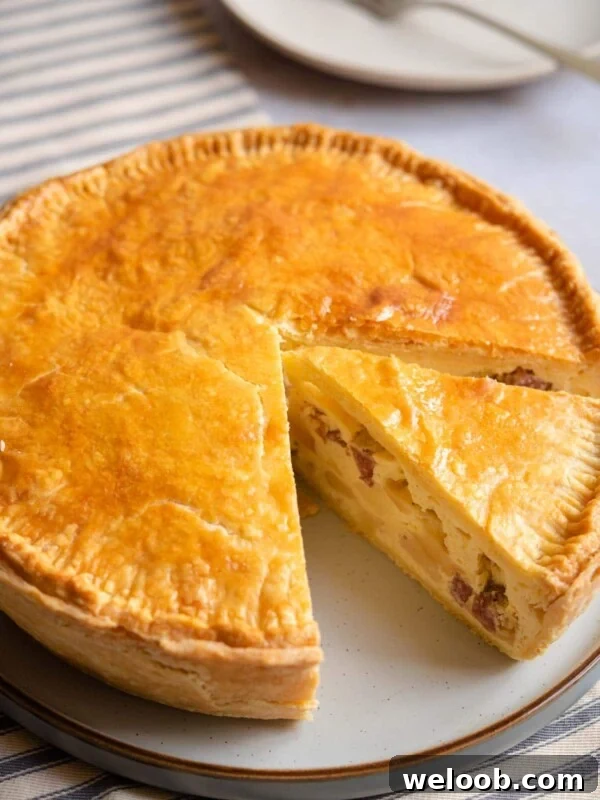
Pizza Rustica (Italian Easter Pie)
Antipasti
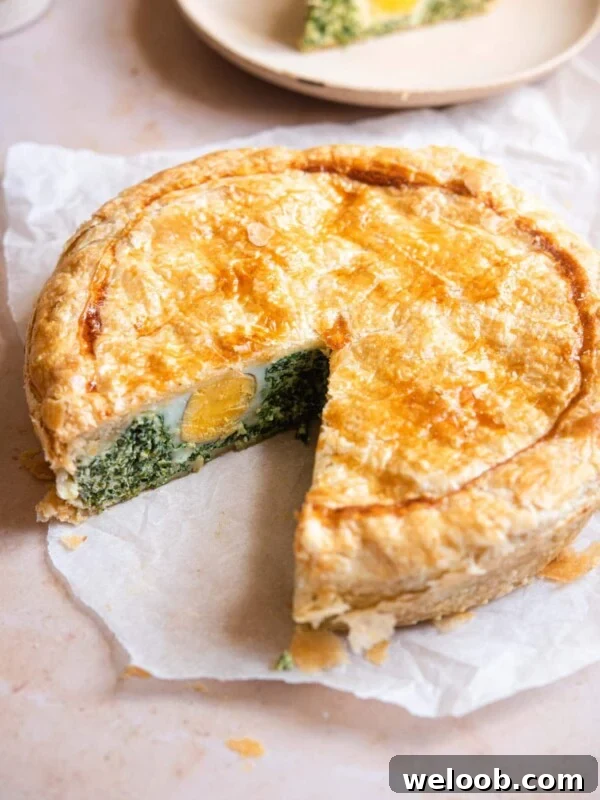
Torta Pasqualina (Spinach & Ricotta Egg Pie)
Mains
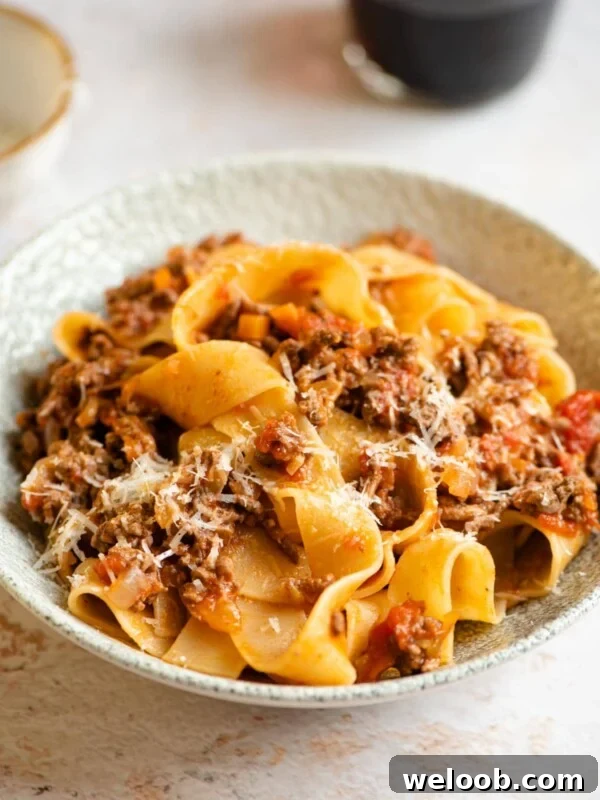
Italian Lamb Ragu (Ragu di Agnello)

Italian Desserts
Italian Easter Bread (Pane di Pasqua)
If you try this Lamb lasagna recipe or any recipe from the site, please rate it and leave a comment to share how it turned out. I love hearing from readers!
Step By Step Photos Above
Most recipes include step-by-step photos, tips and video guidance.
Italian Lamb Lasagna with Pecorino Bechamel
By Emily
Equipment
- Pasta machine or rolling pin
- 9×13 inch baking dish
- Clean kitchen towels (for blanching pasta)
- Plastic wrap (cling film)
Ingredients
Ragu
- 800g (1.7 lbs) lamb mince (about 20% fat)
- 1 large carrot
- 1 large onion
- 1 large celery stalk
- 2 cloves garlic
- 240ml (1 cup) red wine
- 700g (about 2 and 1/3 cups) tomato passata
- 1250ml (5 and 1/4 cups) chicken stock
- 1 bay leaf
- 1 sprig rosemary
Pasta dough
- 3 medium eggs (about 220g)
- 1 egg yolk
- 300g Italian 00 flour (about 2 cups plus 2 tbsp)
Pecorino bechamel
- 5 tbsp (70g) butter
- 5 tbsp (70g) flour
- 1 litre (4 cups) whole milk
- Pinch freshly grated nutmeg
- 70g (1 cup) freshly grated Pecorino Romano
- Salt and pepper to taste
Instructions
Preparation notes
- I recommend making the ragu the day before to allow the flavours to develop.
To make the ragu
- Chop carrot, celery and onion finely and set aside.
- Brown lamb in a large pan, remove with a slotted spoon and reserve the fat to discard later.
- Sauté the soffritto in a tablespoon of olive oil over medium-low heat until softened (about 10 minutes).
- Add garlic for 1 minute, return the lamb, add wine and reduce until the alcohol smell disappears.
- Add passata, half the stock, bay leaf and rosemary. Simmer uncovered for about 4 hours, adding remaining stock halfway through.
Make the pasta dough
- Make a flour well, add eggs to the centre and combine until a dough forms. Knead for 10 minutes.
- Adjust hydration with flour or a little water if needed. Wrap and rest for at least 30 minutes.
Make your bechamel
- Melt butter, whisk in flour and cook for 1 minute to make a roux.
- Gradually whisk in milk until thick and smooth. Season and stir in Pecorino until melted. Set aside.
Roll out and blanch the pasta
- Boil a large pot of salted water.
- Roll dough through a pasta machine from the widest setting to the desired thinness, cut sheets to fit your dish.
- Blanch sheets 2–3 at a time for 1 minute, then transfer to a clean towel to dry briefly.
Layer the lasagna
- Preheat oven to 200°C (400°F) if baking straight away.
- Start with a thin ragu layer in the baking dish, add pasta, then alternate ragu and bechamel until about six layers are assembled.
- Top with grated Pecorino and bake uncovered for 30–40 minutes until golden and bubbling. Rest 10 minutes before serving.
Notes
- Prepare the ragu the day before – flavours improve with time.
- Drain the fat – reserve and discard hardened fat rather than pouring down the sink.
- Lasagna sheets – fresh store-bought sheets are a convenient option.
- Use a kitchen scale – weighing flour helps make consistent pasta dough.
- Leftovers – keep refrigerated for 2–3 days or freeze for longer storage.
Nutrition
Carbohydrates: 45 g |
Protein: 32 g |
Fat: 40 g
Nutrition information is an approximation.
Did you try this recipe?
Leave a comment below!