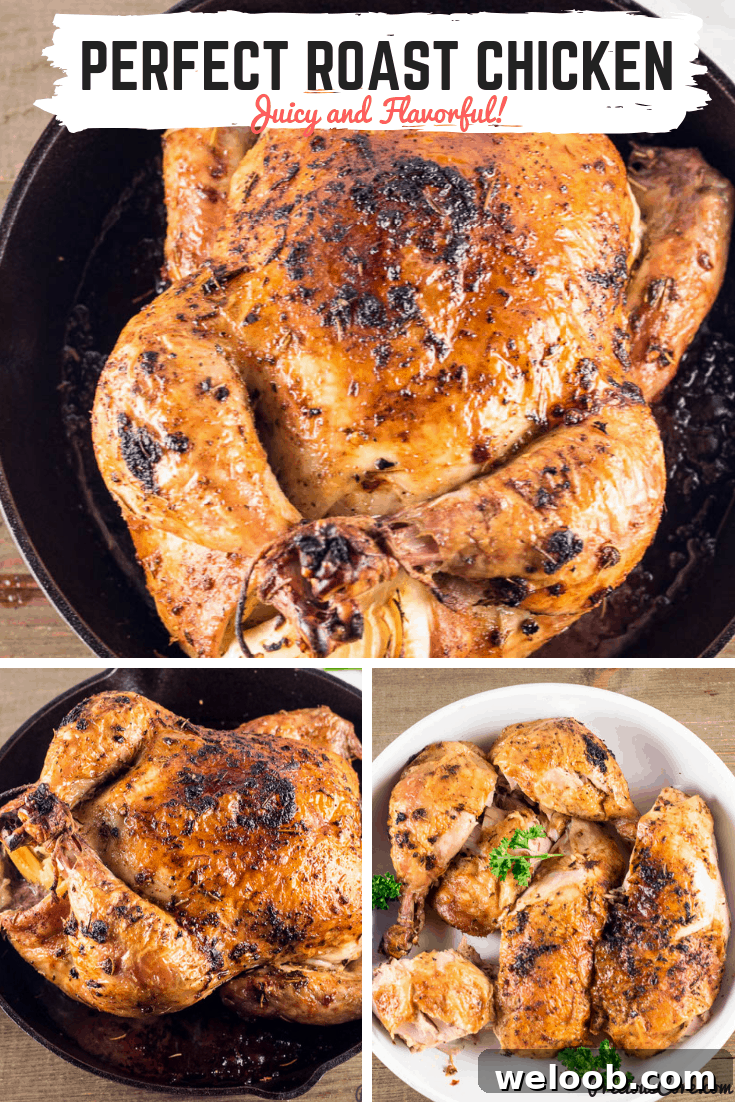
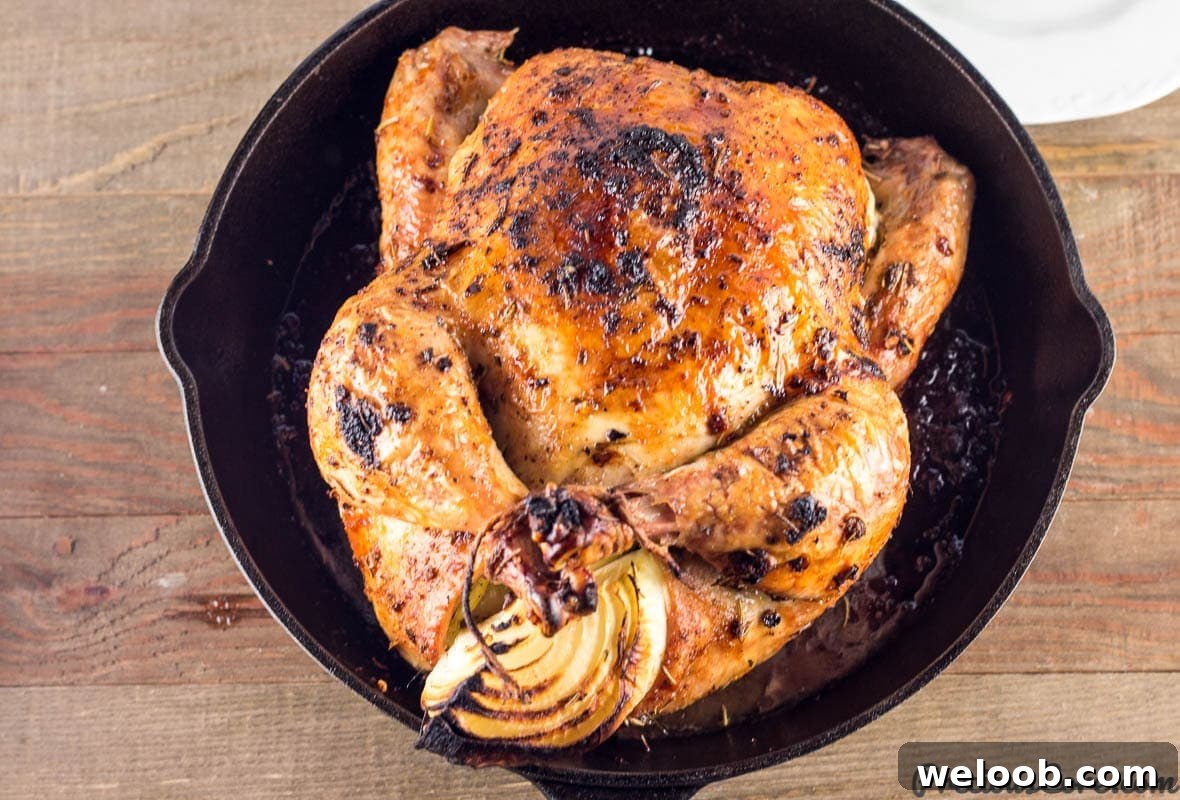
A perfectly roasted whole chicken is a dinner-time classic. Below I share clear, practical tips for roasting a whole chicken so you can get a golden, juicy roast every time.
For serving ideas, see the section below on what to serve with roast chicken.
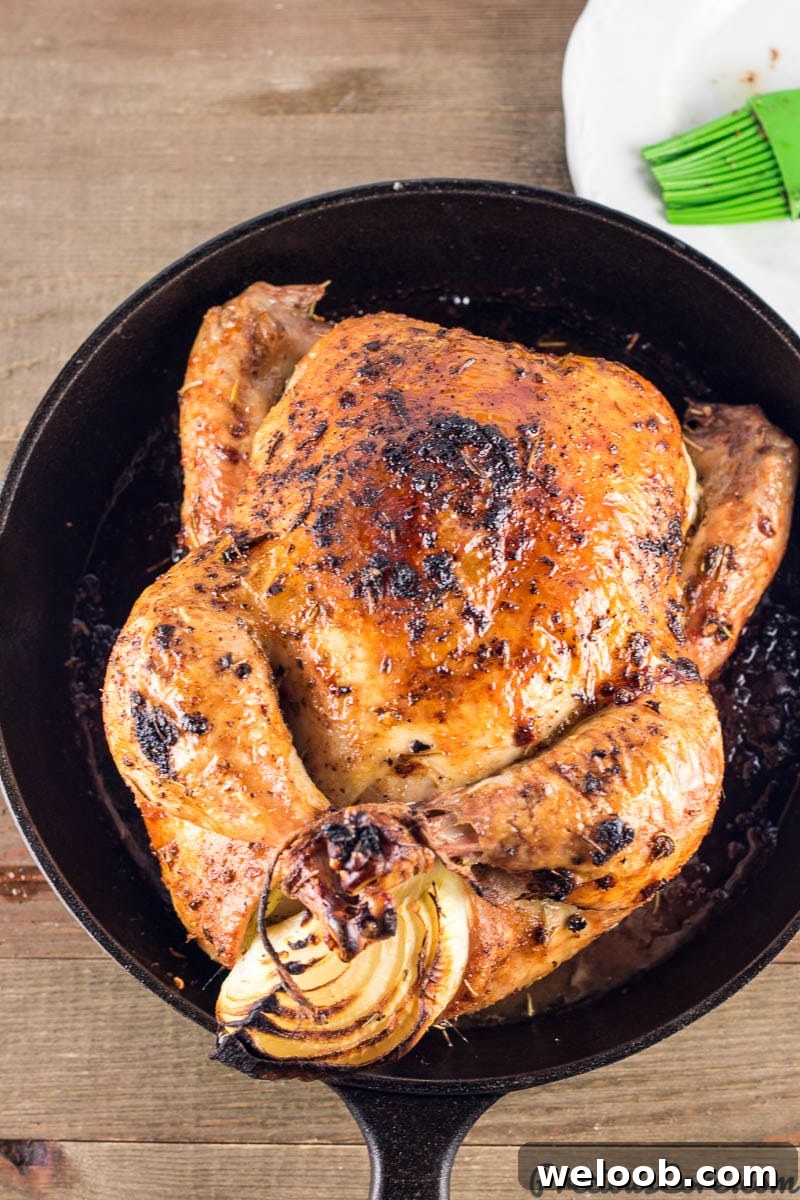
I always smile when a perfectly roasted chicken comes out of the oven. With a reliable roast chicken recipe you only need a couple of simple sides and dinner is ready. Properly roasted, the skin is crisp, the breast meat stays moist and the dark meat is succulent.
This roast pairs well with roasted potatoes, mashed potatoes, garlic butter green beans, or garlic herb rice.
Table of Contents
- Why You’ll Love This Recipe
- The Perfect Roast Chicken
- What Kind of Chicken Should I Use?
- Herbs and Spices For Chicken
- Variations
- Top Tips For Roasting A Whole Chicken
- How Long to Roast a Whole Chicken
- Sauce Ideas For Roast Chicken
- Frequently Asked Questions
- Watch How To Roast a Whole Chicken
- What To Serve With Roast Chicken
- More awesome chicken dinner recipes
- Perfect Roast Chicken – Recipe
Why You’ll Love This Recipe
This roast chicken is approachable and rewarding. Highlights include:
- Beginner-friendly: The steps are simple and straightforward, so even first-timers can succeed.
- Complete meal option: Roast potatoes and vegetables alongside the bird to make an easy one-pan dinner.
- Beautiful presentation: A whole roasted bird with golden skin makes an impressive centerpiece—garnish with lemon halves, zest, and tomatoes for a pretty platter.
- Deliciously flavored: A butter-and-herb rub adds deep flavor and helps the skin crisp—this isn’t bland roast chicken.
- Great for meal prep: Leftover roast chicken stores well and can be used in soups, wraps, tacos, and more.
If you like roast chicken, try my herb-roasted chicken variation for a different herb profile.
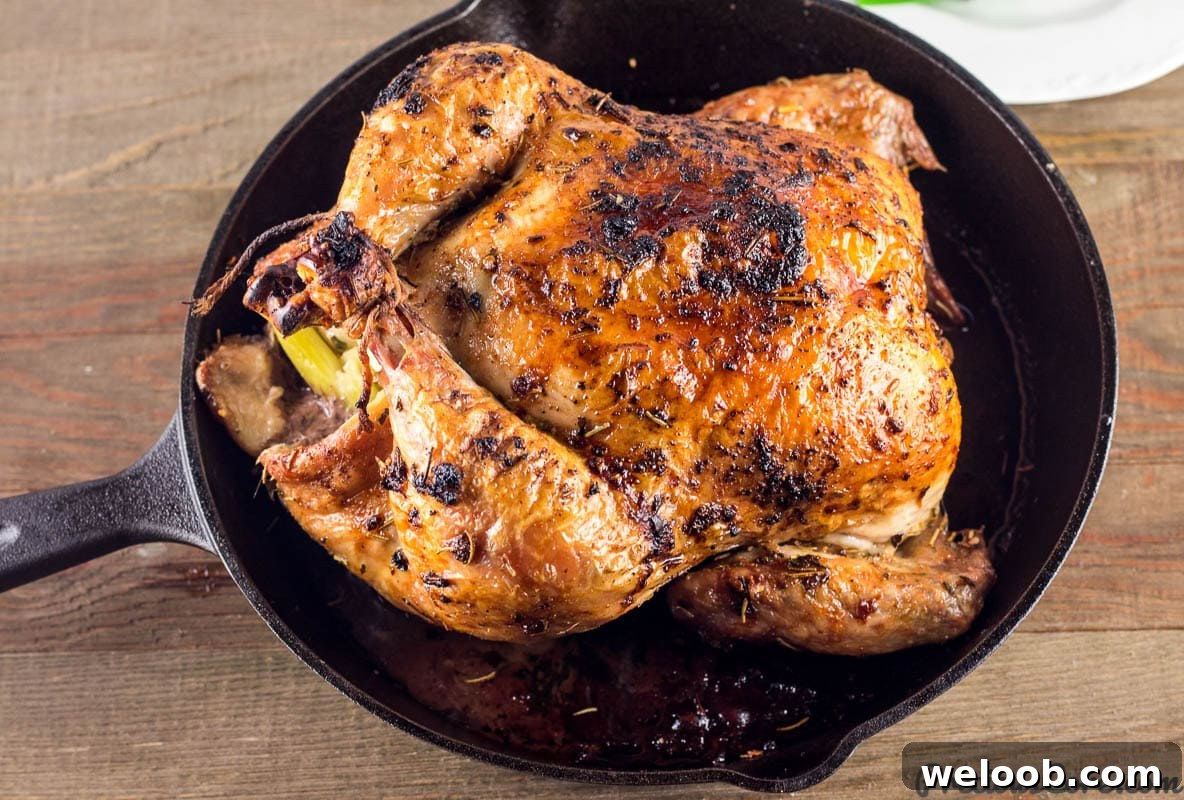
The Perfect Roast Chicken
When done right, the roast chicken has crisp, golden skin, juicy white meat and flavorful dark meat. This recipe focuses on straightforward technique and a simple herb-butter rub so the chicken stays moist and tastes great.
Leftovers are versatile: use shredded chicken for tacos, stir-fries, salads, soups, or sandwiches. Both breast and thigh meat are useful for different dishes.
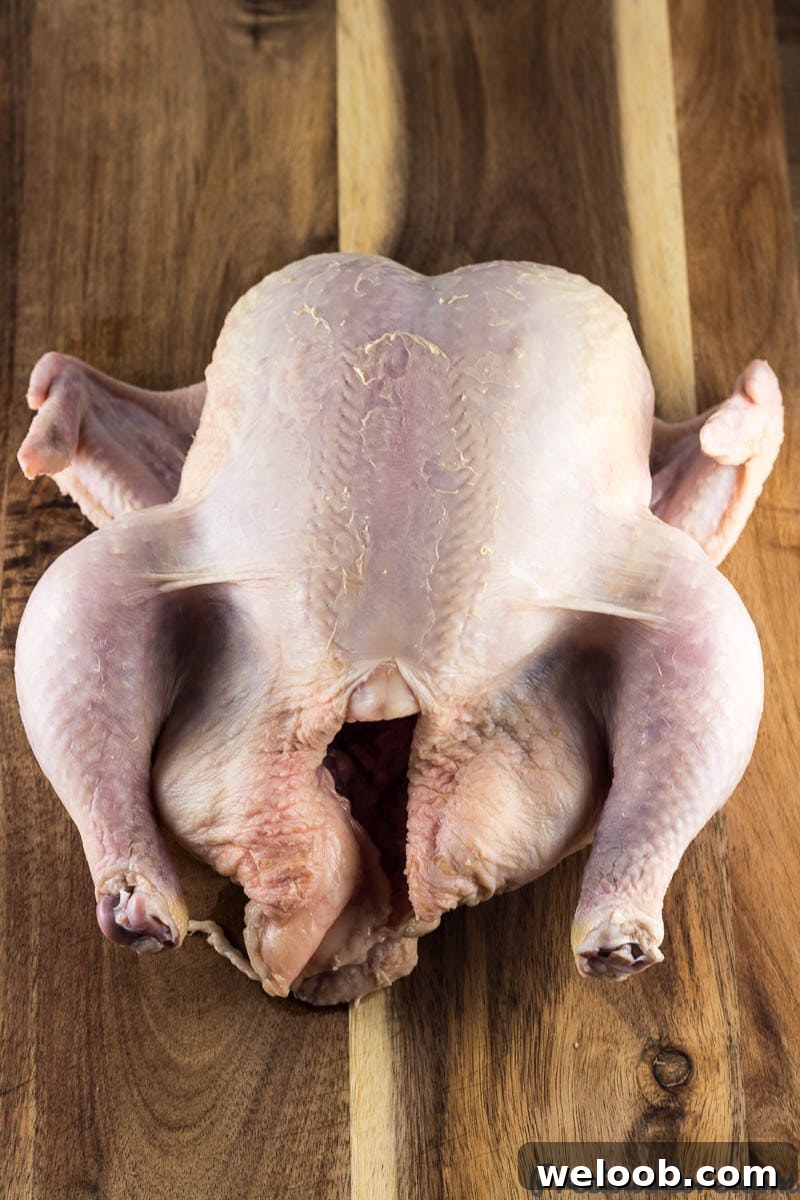
What Kind of Chicken Should I Use?
Choose a tender, fresh whole chicken for roasting. In some regions older, tougher birds are common; those are better for long braises or stews. For this roast, pick a standard roasting chicken so the meat cooks tender and juicy.
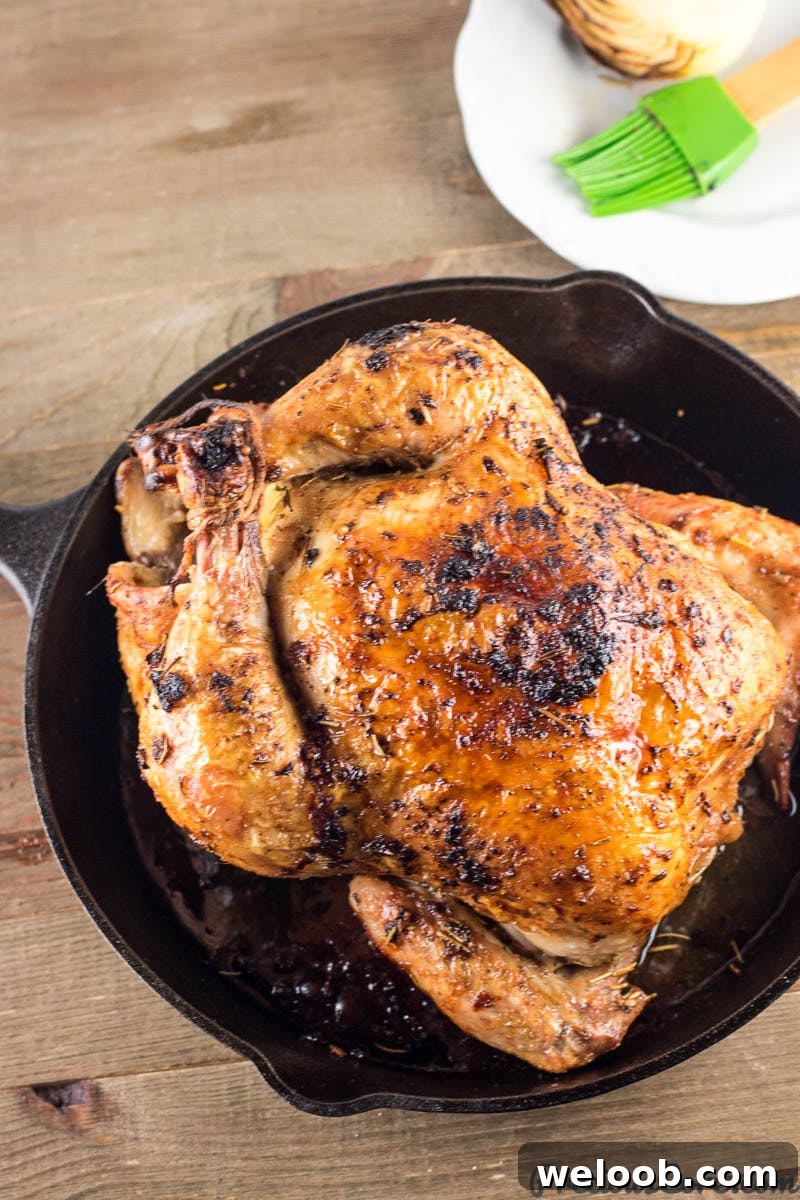
Herbs and Spices For Chicken
A simple mix of garlic, parsley or cilantro, rosemary, salt and pepper works beautifully. Fresh thyme is a nice addition if you have it. Use fresh or dried herbs as available.
Instead of olive oil, I recommend using melted butter in the rub. Butter adds flavor and helps the skin brown and crisp.
See the recipe card below for a full ingredient list with measurements.
Variations
- Stuffing: Make a traditional stuffing and place it in the cavity before trussing. Check the stuffing temperature when testing doneness.
- Simple cavity aromatics: Fill the cavity with garlic cloves, lemon wedges, or herb bundles instead of a heavy stuffing.
- Spicy: Add spicy seasonings or an Indian spice blend to the rub for heat.
- Fruit: Roast with apples, pears, or citrus for a fruity note—pair with sage, rosemary and root vegetables in autumn.
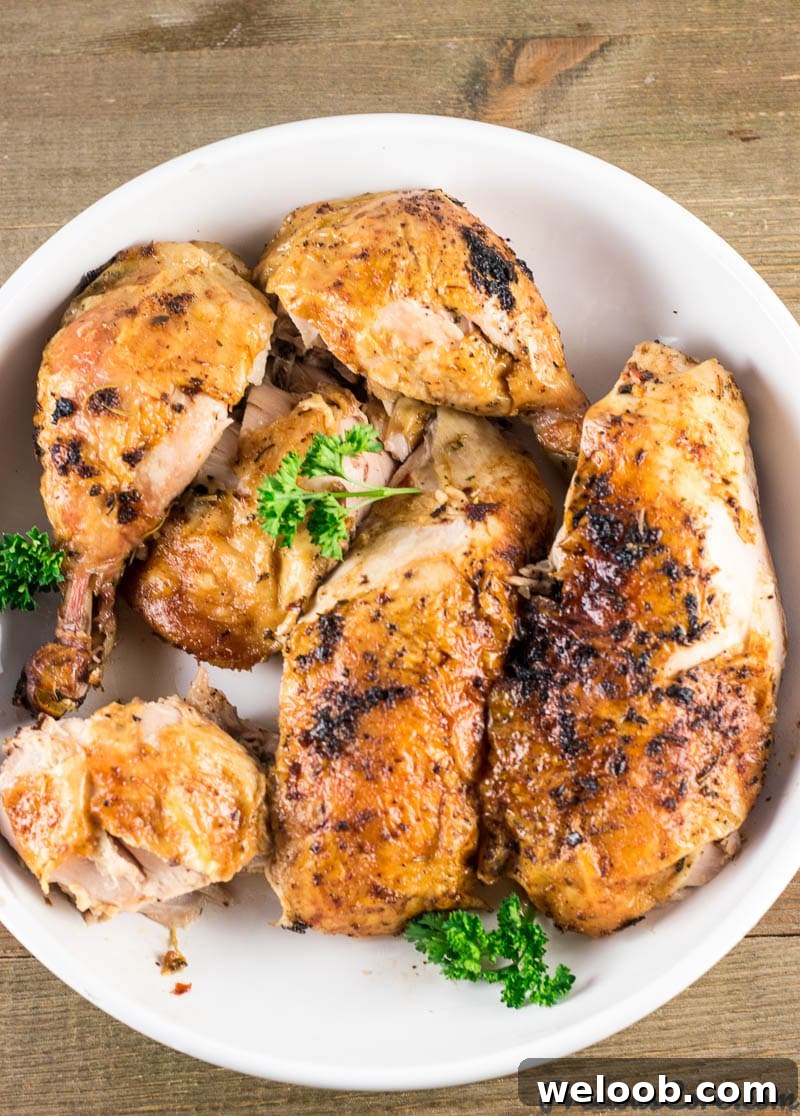
Top Tips For Roasting A Whole Chicken
1. Pat the chicken very dry with paper towels before seasoning—dry skin browns better.
2. Use melted butter in the spice rub for flavor and crisp skin.
3. Rotate the roasting pan after the first hour so the bird cooks evenly.
4. Truss the legs and tuck the wings to help the bird cook evenly and keep wing tips from burning.
5. Baste with pan juices after roasting and just before serving to make the skin glossy and flavorful.
6. Use an instant-read thermometer in the thickest part of the thigh; target 165°F (73°C) for safe, fully cooked meat.
7. Remove the chicken from the fridge and let it come to room temperature for about an hour before roasting for more even cooking.
Let the chicken rest for about 15 minutes after roasting so the juices redistribute before carving.
How Long to Roast a Whole Chicken
A good guideline is 15 minutes per pound at 425°F (220°C). For example, a 5-pound chicken needs about 75 minutes. Oven performance and chicken size vary, so use time as a guide and confirm doneness with a thermometer. Roasting at higher heat helps create a crisp crust.
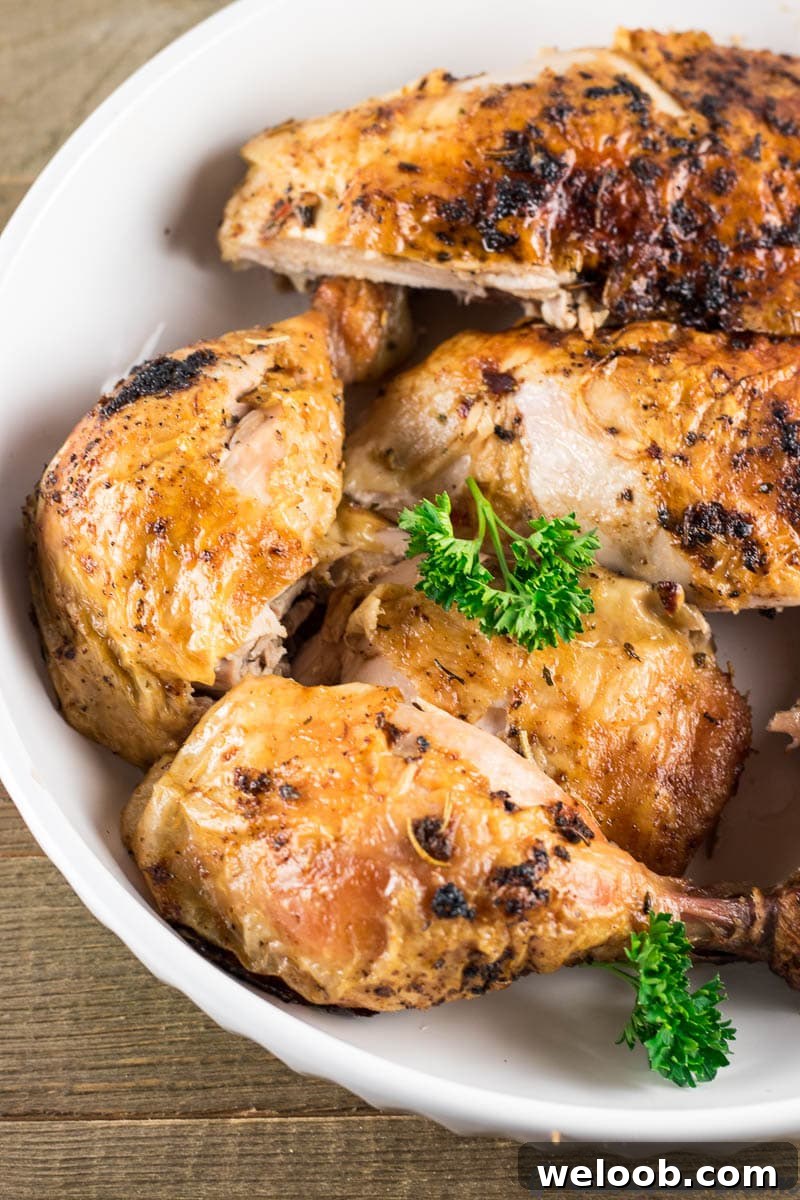
This roast is versatile and reliable—perfect for everyday dinners or special occasions. A simple sauce or pan gravy will elevate it further.
Sauce Ideas For Roast Chicken
A bright herb sauce made from parsley, celery, basil, garlic, onion and a hot pepper can be blended into a paste, seasoned, and gently simmered. Alternatively, use the pan drippings as a simple jus—reduce slightly, finish with a splash of lemon juice, and serve alongside the carved bird.
Try serving this roast with a savory pepper sauce for extra flavor.
Frequently Asked Questions
High heat helps seal in juices, basting with pan juices adds moisture, and letting the bird rest before carving lets the juices redistribute.
I recommend roasting uncovered so the skin crisps and browns. You can tent loosely with foil near the end if the skin is browning too quickly.
Both temperatures work, but 425°F gives a crisper skin and faster cooking. Lower temperatures take longer and can produce less-crisp skin.
Watch How To Roast a Whole Chicken
What To Serve With Roast Chicken

Easy Roasted Potatoes
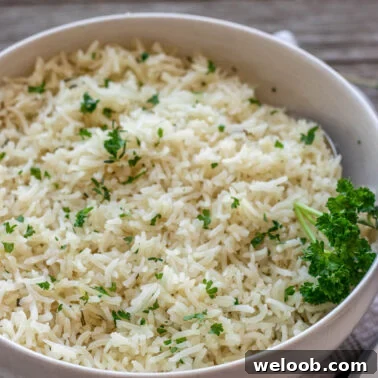
Garlic Herb Rice
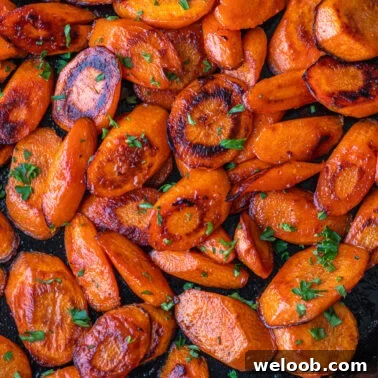
Fried Carrots
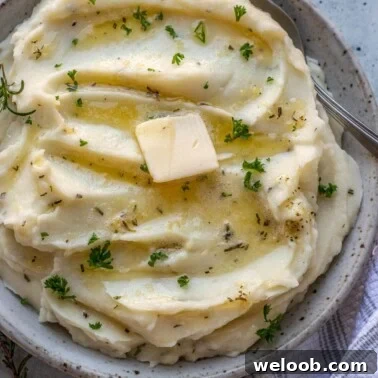
Rosemary Garlic Mashed Potatoes
More awesome chicken dinner recipes:
- Chicken in White Sauce
- African Beef Stew
- Poulet Yassa (Chicken Yassa)
- Marry Me Chicken
- Pan Seared Chicken Tenders
- Chicken Drumsticks in Creamy Sauce
If you make this recipe please leave a rating. Your feedback helps others find the recipe and I love hearing from you. Thank you!
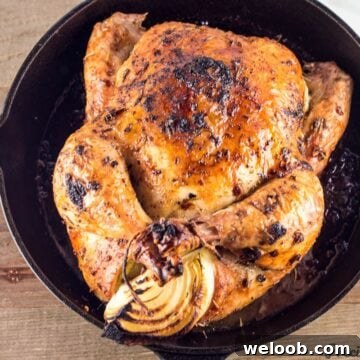
Perfect Roast Chicken – How to Roast a Whole Chicken
Ingredients
- 5 pound whole chicken (2.5 kg)
- 2 tablespoons unsalted butter, melted
- 1 teaspoon garlic powder
- 1 teaspoon dried parsley
- 1 teaspoon dried basil
- 1 teaspoon dried rosemary
- 2 teaspoons chicken bouillon powder (or two 4 g stock cubes)
- 1/2 teaspoon red pepper flakes (optional)
- 1/4 teaspoon salt
- 1/4 teaspoon ground white or black pepper
- 1 onion, peeled and halved
- 1 large celery stalk, cut into pieces
Instructions
- Remove a thawed chicken from the refrigerator and bring to room temperature for about an hour before cooking.
- Preheat the oven to 425°F (220°C).
- Rinse the chicken and pat it dry with paper towels.
- Mix melted butter with parsley, garlic powder, bouillon powder, dried rosemary, and red pepper flakes if using.
- Rub salt and pepper all over the chicken, then rub the butter-herb mixture over the outside and a little inside the cavity. Place onion and celery into the cavity. Tie the legs with kitchen twine and tuck the wings under the bird.
- Place the chicken on a cast-iron skillet, roasting pan, or heavy-duty foil pan. Roast in the preheated oven for about 1 hour 15 minutes, or until juices run clear and an instant-read thermometer reads 165°F (73°C) in the thickest part of the thigh (avoiding the bone).
- Let the chicken rest about 15 minutes to reabsorb its juices, then carve and serve.
Notes
2. Adjust salt to the size of your chicken; bouillon powder is already salty.
Nutrition
*This post was first published in November 2016 and has been updated with additional tips, adjusted temperature and time, new photos and a recipe video.