
Swiss Meringue Buttercream: Step-by-Step Guide to Silky Frosting
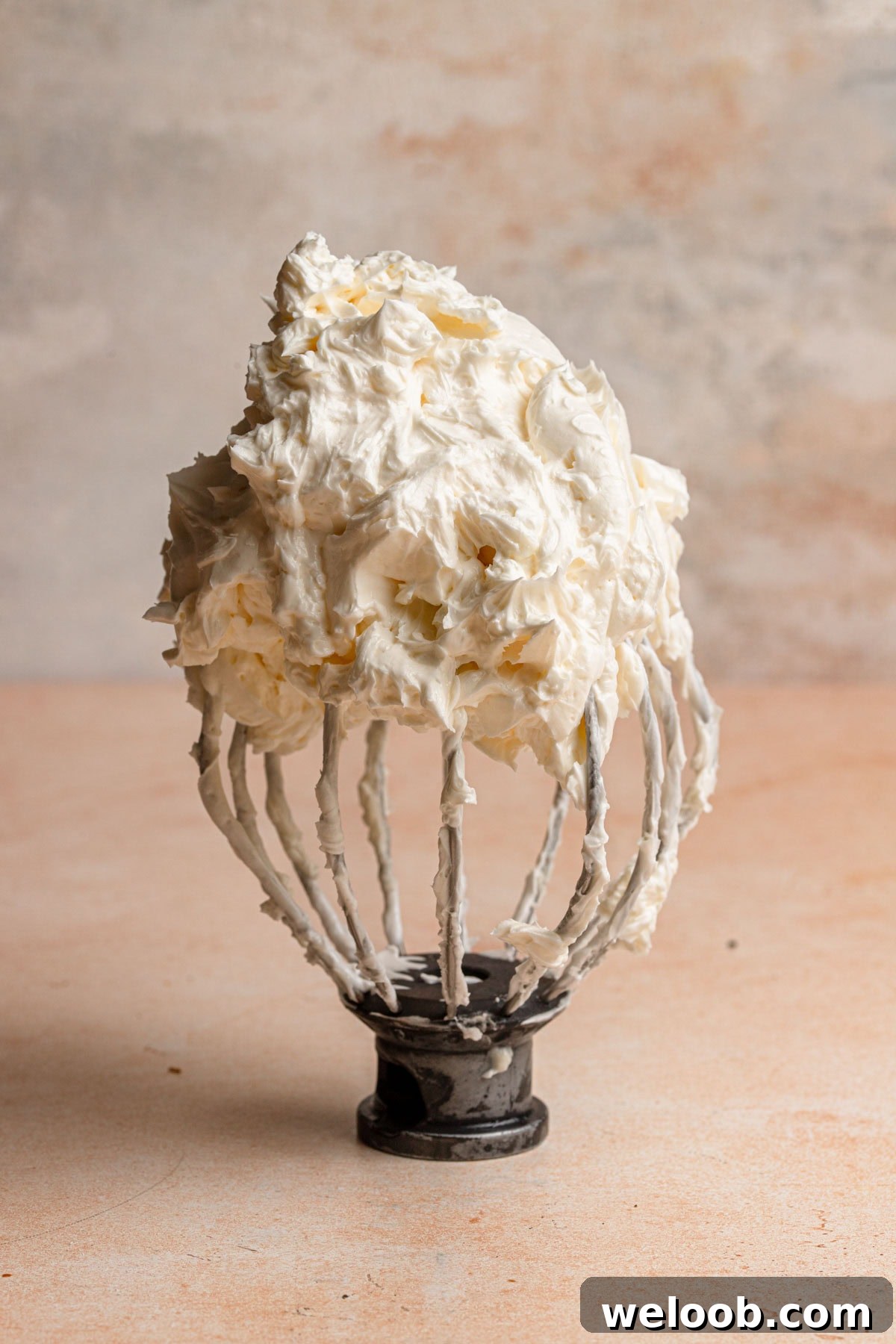
Swiss meringue buttercream is a silky, light, and airy frosting made from a gently cooked meringue folded with butter. It spreads smoothly, pipes beautifully, and provides a less-sweet alternative to American buttercream. This guide breaks the process down step by step, with troubleshooting tips and practical advice to help you make it with confidence.
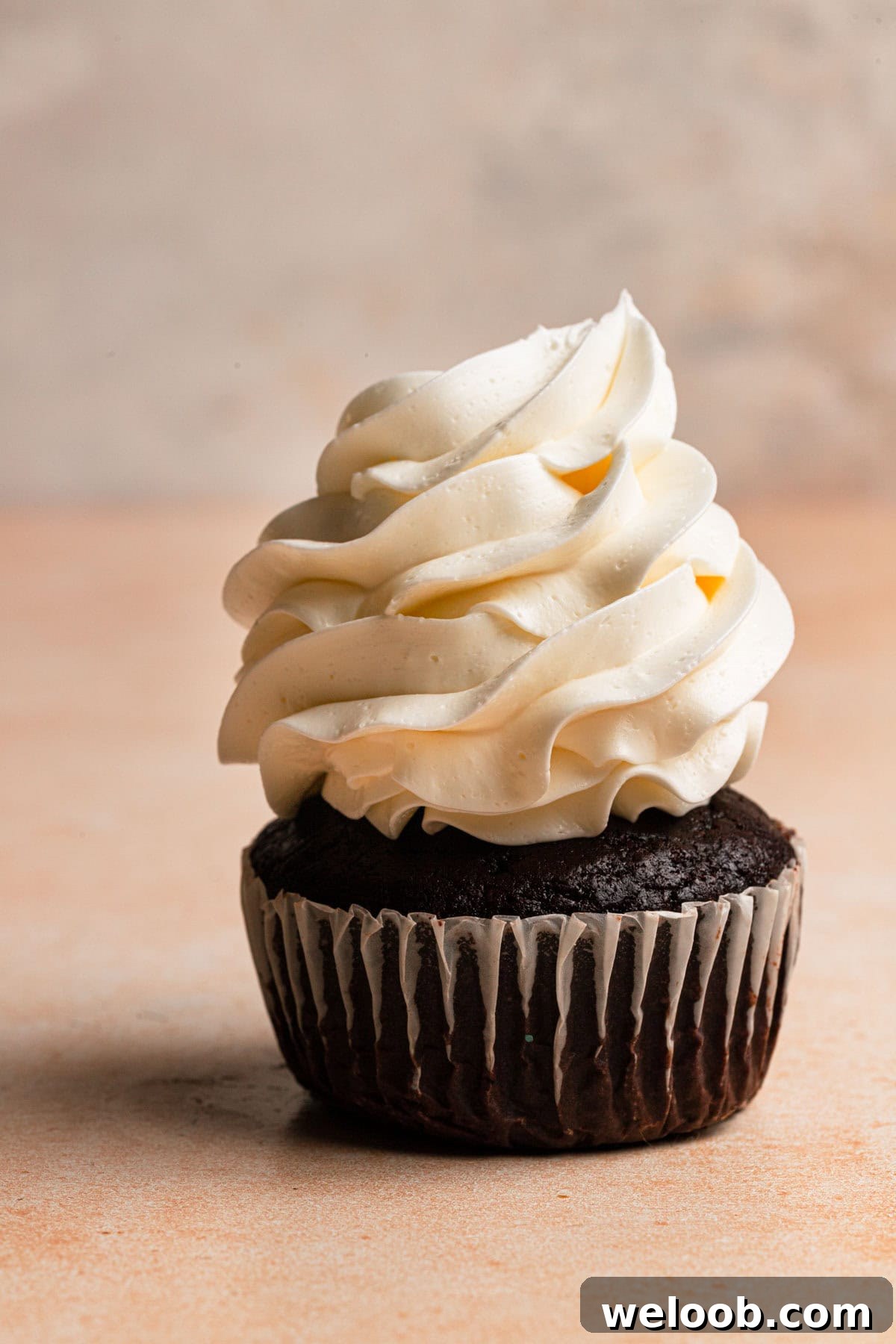
Swiss meringue buttercream requires an extra step compared with simple American buttercream, but the result is worth it. The texture is exceptionally smooth and creamy, easy to apply, and it doesn’t dry out or taste overly sweet. Chilled and firmed, it is stable enough to cover with fondant. It’s a versatile frosting ideal for layer cakes, cupcakes, and decorative piping.
This buttercream pairs beautifully with classic vanilla cakes, chocolate cakes, or can be flavored and colored to suit any recipe. Follow the steps below for reliable results.
What Is Swiss Meringue Buttercream?
Buttercream is a family of frostings whose primary ingredient is butter. American buttercream is quick and sweet, made mostly from butter and powdered sugar. Swiss meringue buttercream is made by adding butter to a stable meringue. The meringue is created by heating egg whites and granulated sugar together over a double boiler until the sugar dissolves and the mixture reaches a safe temperature, then whipping it until glossy and thick. Cold butter is incorporated little by little into the warm meringue to produce a silky, airy, and balanced frosting that is less sweet and more refined in texture.
Ingredients
- Egg whites. They create the light, stable meringue. Separate eggs when they are cold from the refrigerator for easier separation, then bring the whites to room temperature before whipping.
- Granulated sugar. Use regular white sugar so it dissolves properly during the gentle heating step.
- Unsalted butter. Use unsalted butter at room temperature so you can control the salt level in the final frosting.
- Vanilla extract. Vanilla enhances the flavor of the buttercream. Vanilla bean paste adds visual specks and deeper aroma.
- Cream of tartar. Optional—just a pinch helps stabilize the meringue and can improve volume and structure.
Make It
The complete recipe with measurements is listed below in the recipe card. The following sections walk through the process with clear steps and troubleshooting advice.
Visual steps can be especially helpful: heat the egg whites and sugar evenly, whip to a stable meringue, then incorporate butter slowly to avoid separation.
Make The Meringue
- Separate the eggs. Ensure all equipment is clean and completely free of grease—even a small amount of yolk or fat will prevent the meringue from forming properly. Wipe bowls and utensils if needed.
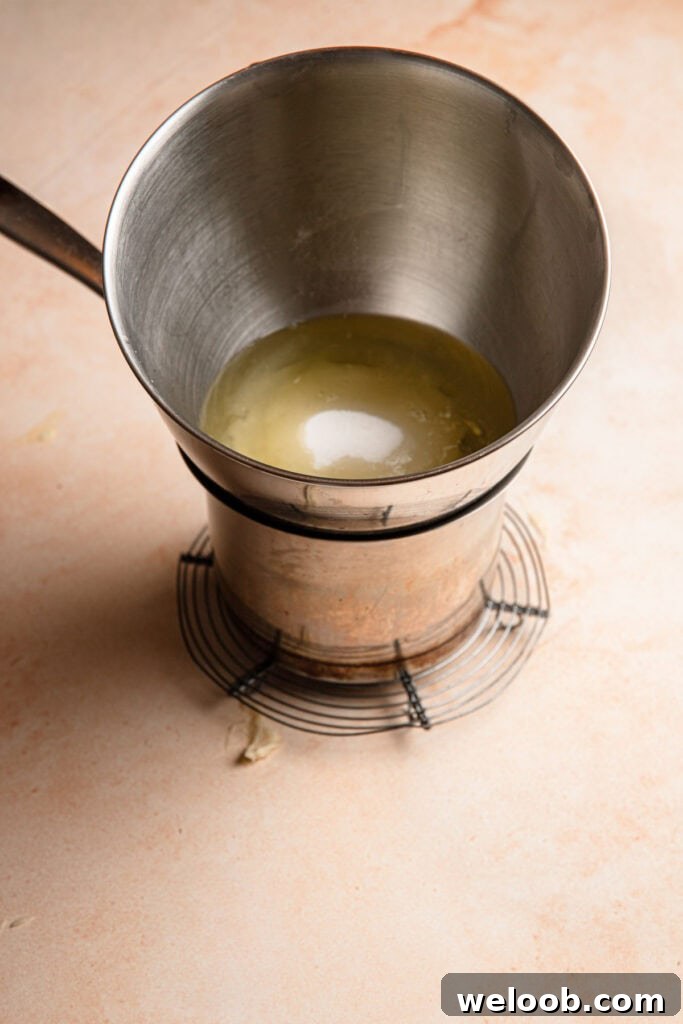
- Set up a double boiler. Use a medium, deep pan with about 1–2 inches of water and bring it to a gentle simmer. Place a heatproof bowl on top so the bottom does not touch the water; direct contact can overheat and cook the eggs.
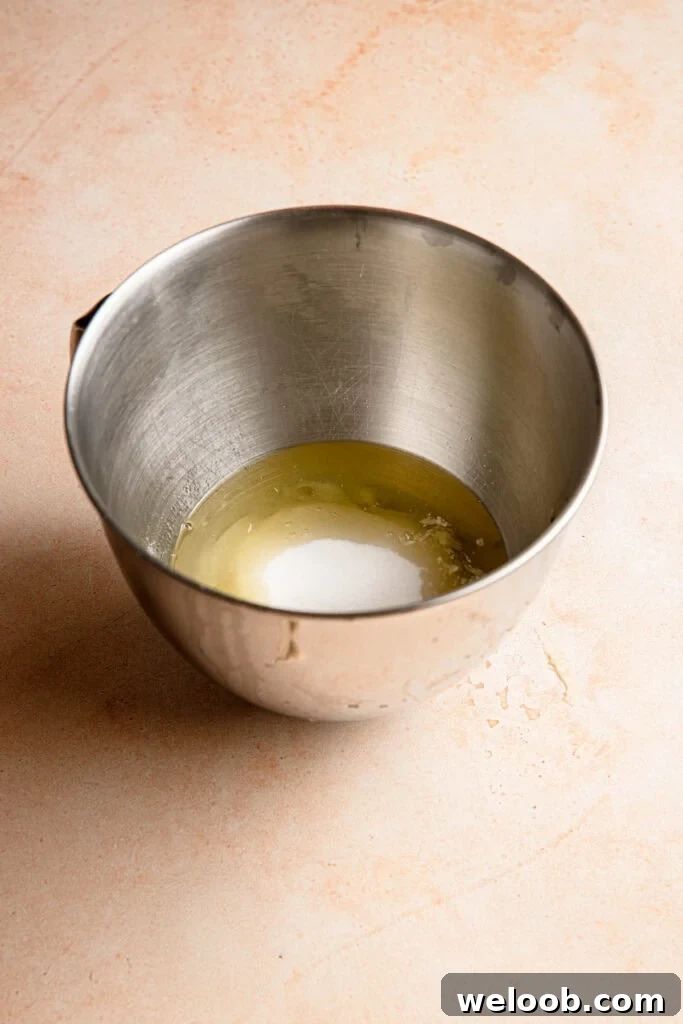
- Heat whites and sugar. Combine egg whites, granulated sugar, and a pinch of salt (and cream of tartar if using) in the bowl. Whisk constantly over the simmering water until the sugar dissolves and the mixture reaches 150–160°F (65–71°C). If you don’t have a thermometer, rub a small amount between your fingers—if it feels smooth and no sugar grains are felt, it’s ready.
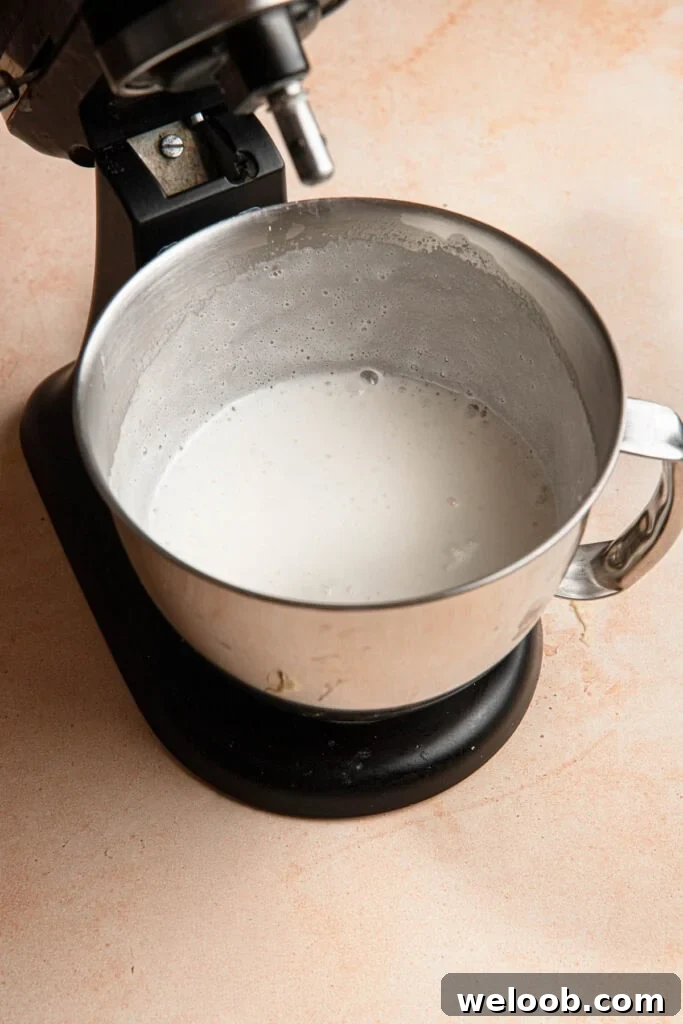
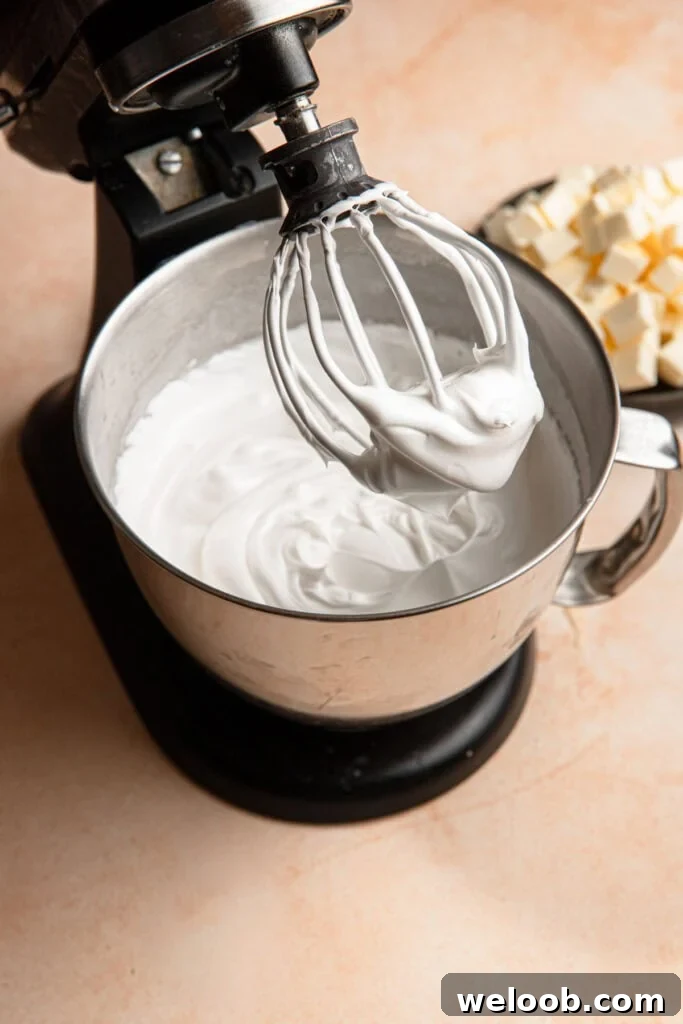
- Whip the mixture. Remove the bowl from heat and transfer to a stand mixer fitted with the whisk attachment. Whip on high until the mixture becomes glossy, bright white, and thick—this usually takes several minutes.
Make The Buttercream
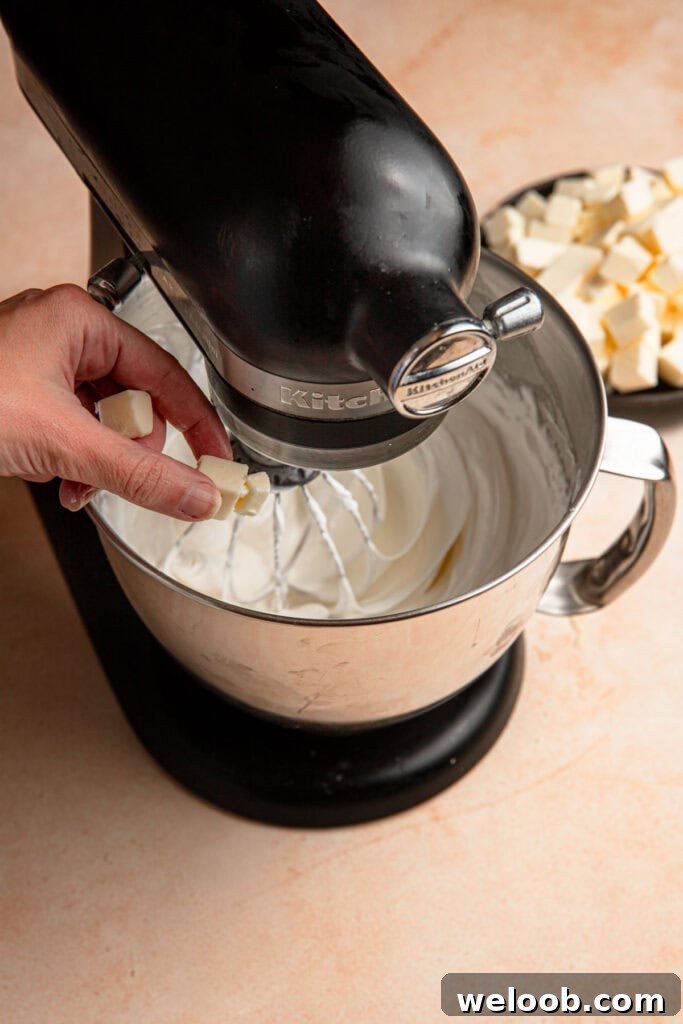
- When the meringue is thick and has cooled to about 100–105°F (38–40°C), begin adding the room-temperature butter one piece at a time. Wait about 10 seconds between pieces for each to incorporate fully. Adding butter too quickly can cause the mixture to separate.
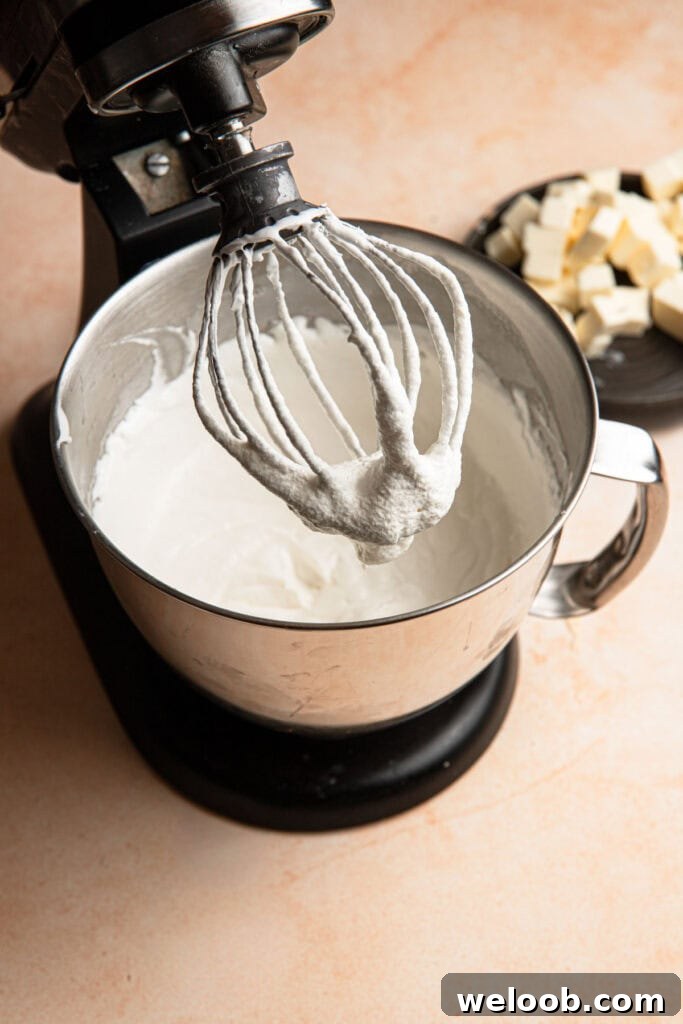
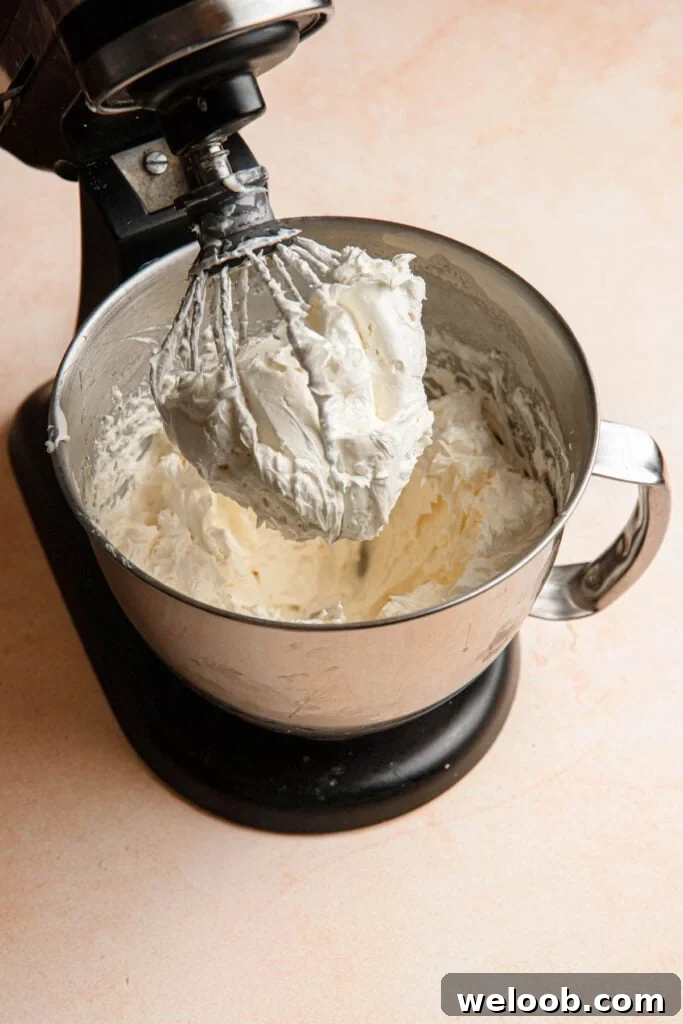
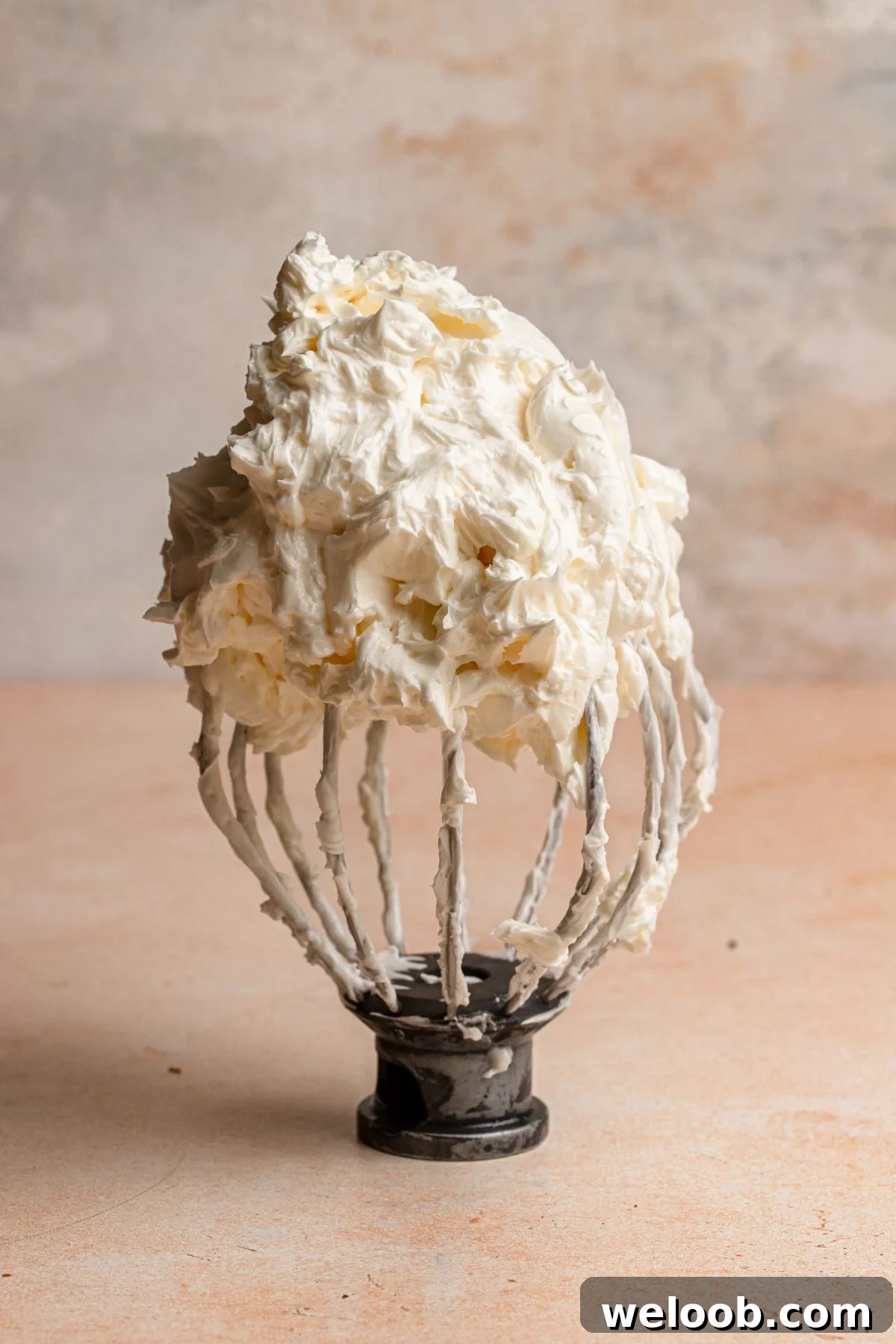
- After all the butter has been added, whip on high until the mixture is smooth, silky, and spreadable. This can take several minutes; be patient.
- Mix in vanilla or other extracts to taste. The buttercream is now ready to use for filling, frosting, or piping.
Troubleshooting
- Buttercream is too thin. If the meringue is still warm and the butter melts, the frosting can appear thin. Continue whipping on high—the temperature will drop and the texture should firm up within a few minutes.
- Buttercream looks curdled. This often happens if butter is added too quickly. Don’t panic: keep mixing. The emulsion usually comes back together into a smooth cream.
Coloring and Flavoring Buttercream
Coloring
After the buttercream is finished, add a few drops of gel or paste food coloring and mix until even. Different brands react differently, so test a small portion first if you need a precise shade.
Flavoring
Flavor extracts like almond, lemon, or strawberry can be added to taste. You can also fold in melted chocolate, fruit purée, or concentrated pastes—adjust quantities gradually and taste as you go. For subtle flavors, begin with a small amount and increase if needed.
Yields
This recipe yields about 2 cups of buttercream—enough to fill and frost an 8-inch two-layer cake or to frost approximately 12 standard cupcakes.
Serving and Storing
Swiss meringue buttercream firms when refrigerated and should be applied and served at room temperature for the best texture and flavor.
Frosted cakes and cupcakes can be kept at room temperature for up to 48 hours. Refrigerate for longer storage—up to one week is acceptable. If refrigerated, allow the cake to return to room temperature before serving so the buttercream softens and reaches its ideal consistency.
Leftover buttercream can be placed on a large piece of plastic wrap, wrapped tightly, then stored in a freezer bag and frozen for up to three months. Thaw overnight in the refrigerator, then re-whip in a stand mixer to restore a smooth texture before using.

Easy Swiss Meringue Buttercream
Ingredients
- 6 Large Egg whites
- 1/4 teaspoon Cream of tartar (optional)
- 1 1/4 Cup (250 g) Granulated sugar
- 2 Cups (450 g) Unsalted butter, room temperature, cut into 1-inch pieces
- 1 teaspoon Vanilla extract
Instructions
- Place the egg whites, cream of tartar (if using), and sugar in a large heatproof bowl or the bowl of a stand mixer.
- Set the bowl over a deep pan with 1–2 inches of simmering water. Ensure the water does not touch the bottom of the bowl and that the bowl sits snugly on the pan.
- Cook over medium-low heat while whisking constantly until the sugar has dissolved, the mixture is warm (150–160°F) and appears opaque.
- Remove the bowl from the heat and transfer to a stand mixer fitted with the whisk attachment.
- Whip on high until you have a thick, light, and stable meringue and the temperature has dropped to about 100–105°F or feels pleasantly warm to the touch.
- Add the butter one piece at a time, waiting about 10 seconds between additions for each piece to incorporate. The meringue may deflate or look curdled—this is normal; continue.
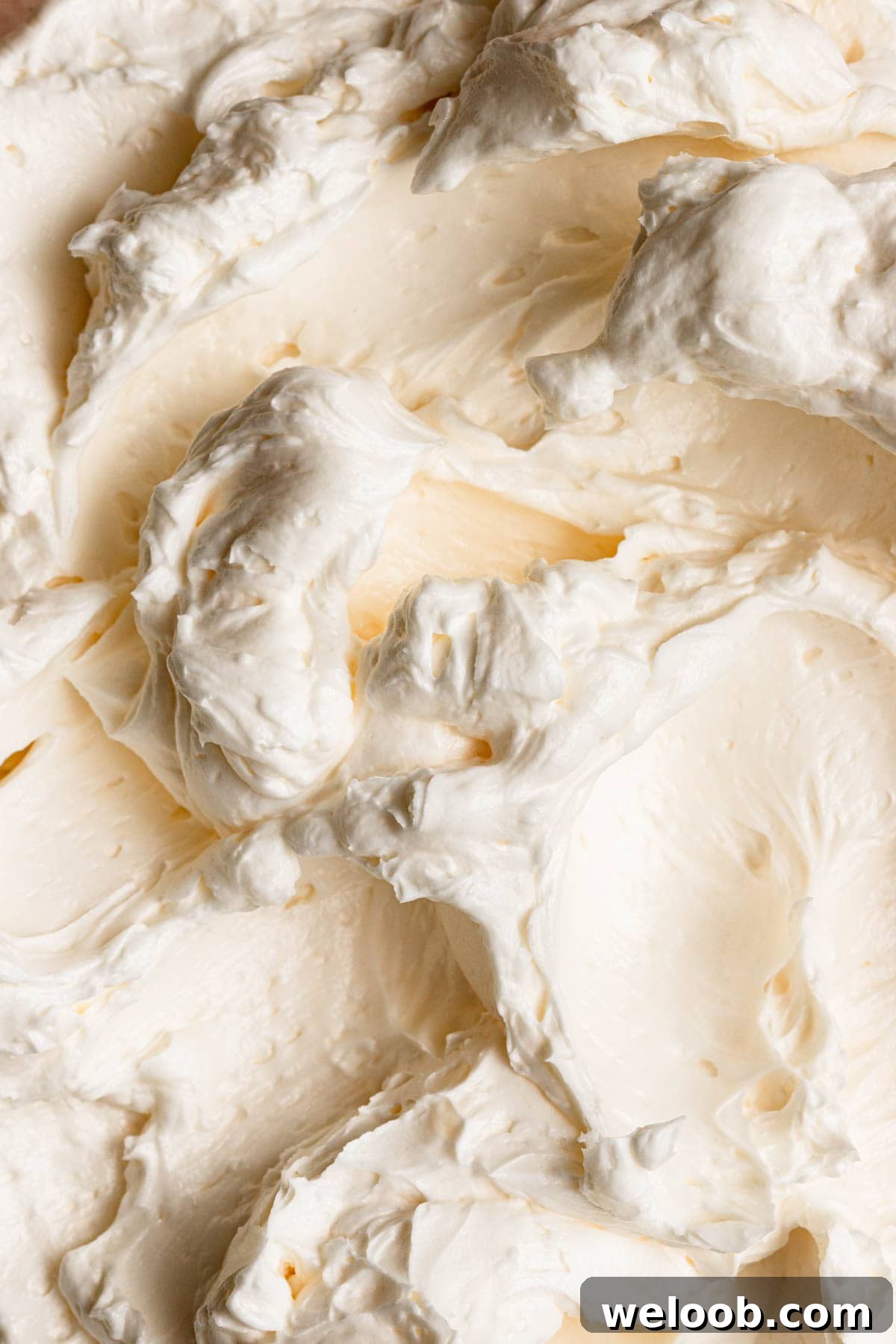
- Keep mixing until the buttercream is thick, smooth, and creamy. Stir in vanilla to finish.
Notes
- Separate eggs when cold to reduce the chance of yolk breaking into the whites.
- Fat prevents meringue from forming. Ensure bowls and utensils are spotless; wipe with a paper towel dampened with lemon juice if needed to remove invisible residues.
- Buttercream firms in the refrigerator; bring to room temperature before serving for best texture.
- Storage for frosted desserts: keep at room temperature up to 48 hours or refrigerate up to 1 week.
- Leftovers: wrap tightly in plastic wrap, then freeze in a freezer bag for up to 3 months. Thaw overnight in the refrigerator and re-whip for smooth texture.