
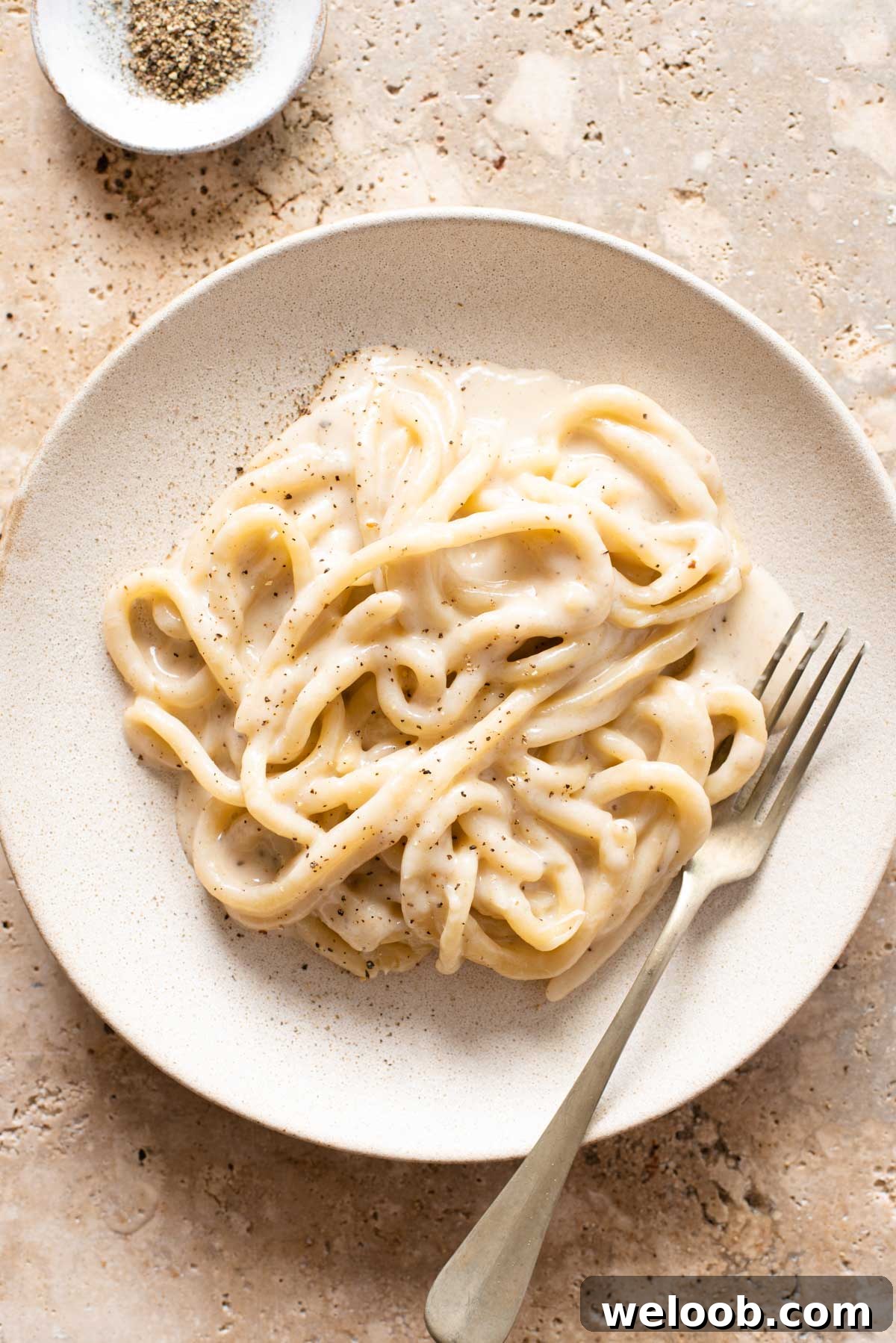
Learn to make an authentic Cacio e Pepe with just three ingredients. Paired here with Pici pasta, this recipe includes clear tips and step‑by‑step guidance so you can create a silky, creamy, and intensely cheesy sauce that you’ll want to make again and again.
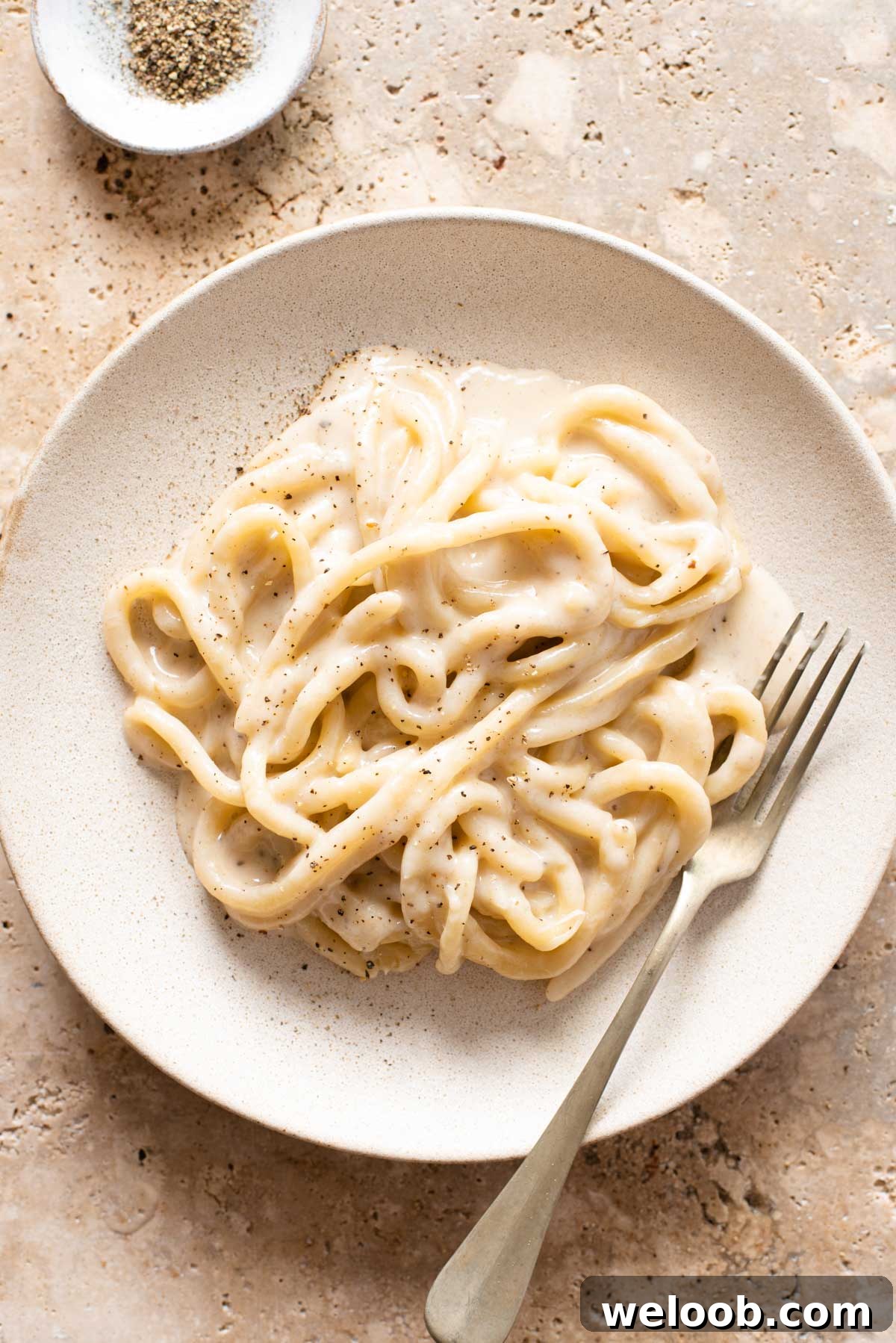
Cacio e Pepe means “cheese and pepper.” It’s one of the classic Roman pasta dishes alongside Gricia, Carbonara and Amatriciana. The traditional ingredients are Pecorino Romano DOP, freshly ground black pepper and starchy pasta water. Simple ingredients, remarkable flavor.
In Rome, the dish is usually served with spaghetti or tonnarelli; in Tuscany it’s often served with pici, a thick hand‑rolled pasta from Siena. I love pici with this sauce because the thick strands hold the creamy sauce beautifully.
Because the recipe is so minimal, technique matters. The most common issue is the cheese clumping or the sauce splitting; read the tips below before you begin to ensure a smooth result.
See the recipe below for ingredient notes, step‑by‑step photos, tips, variations and a video. For full ingredient amounts and a printable version scroll to the recipe section at the bottom.
Ingredients – what you need
The photo below shows everything you need, plus a few important ingredient notes.
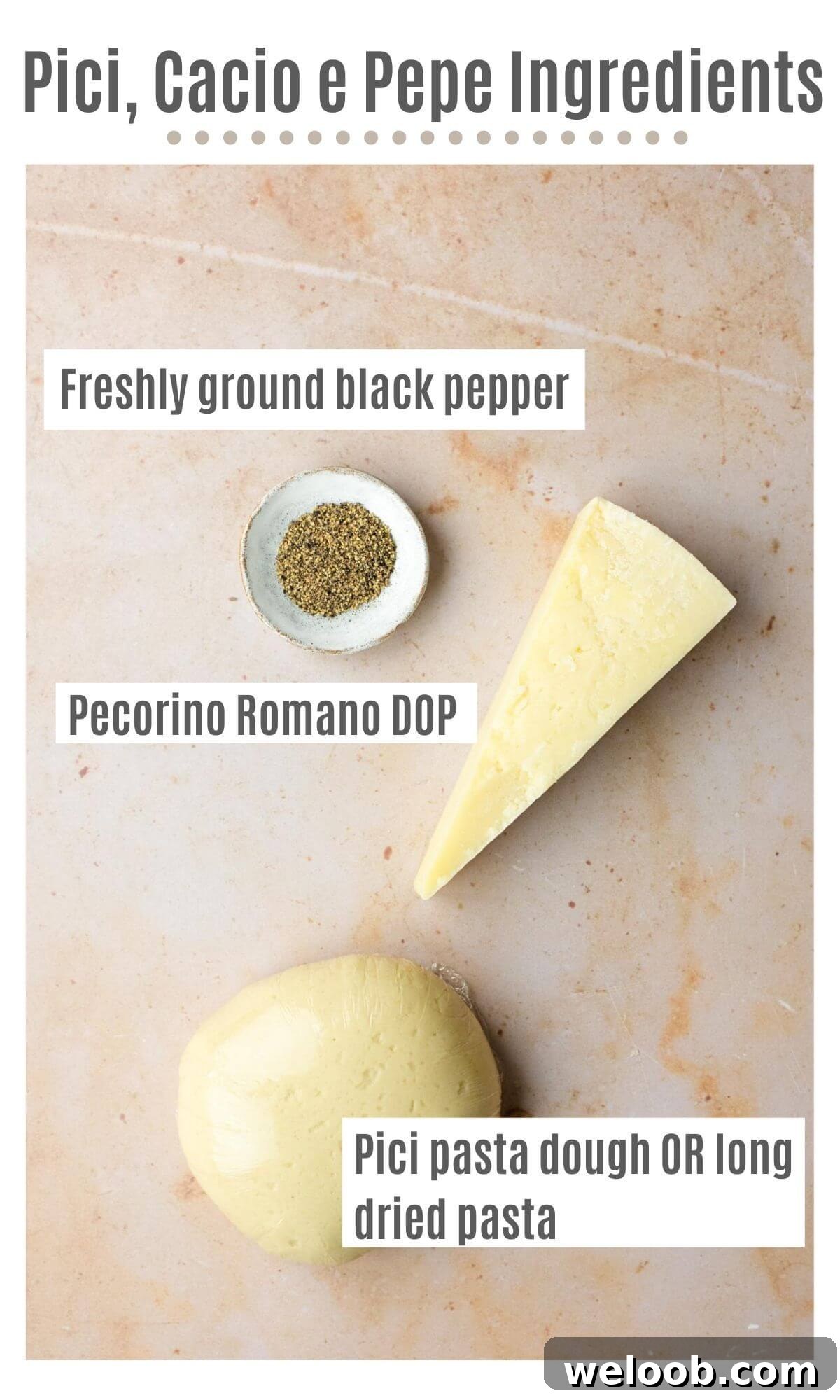
- Pecorino Romano DOP – Use authentic Pecorino Romano DOP. This designation matters: the proper cheese grates and emulsifies correctly; many supermarket Pecorinos will clump. Look for the DOP stamp on the rind, usually available at an Italian deli.
- Black pepper – Freshly grind whole black pepper so it’s coarse and fragrant. Avoid preground fine powder.
- Pasta – Pici is ideal and traditional for this version; if you prefer, use spaghetti, tonnarelli, bucatini or another long pasta. If using dried pasta, undercook it slightly so it finishes in the pan with the sauce.
Step by step photos and recipe instructions
Prep – Bring a pot of salted water to a boil. Use a bit less water than usual so it becomes extra starchy and helps create a creamier sauce. Finely grate the Pecorino and place it in a small mixing bowl.
If using dried pasta, start cooking it now and plan to undercook it by about 2–3 minutes.
Toast the pepper – Put the freshly ground pepper into a large dry frying pan over medium heat and toast for a few seconds until fragrant.
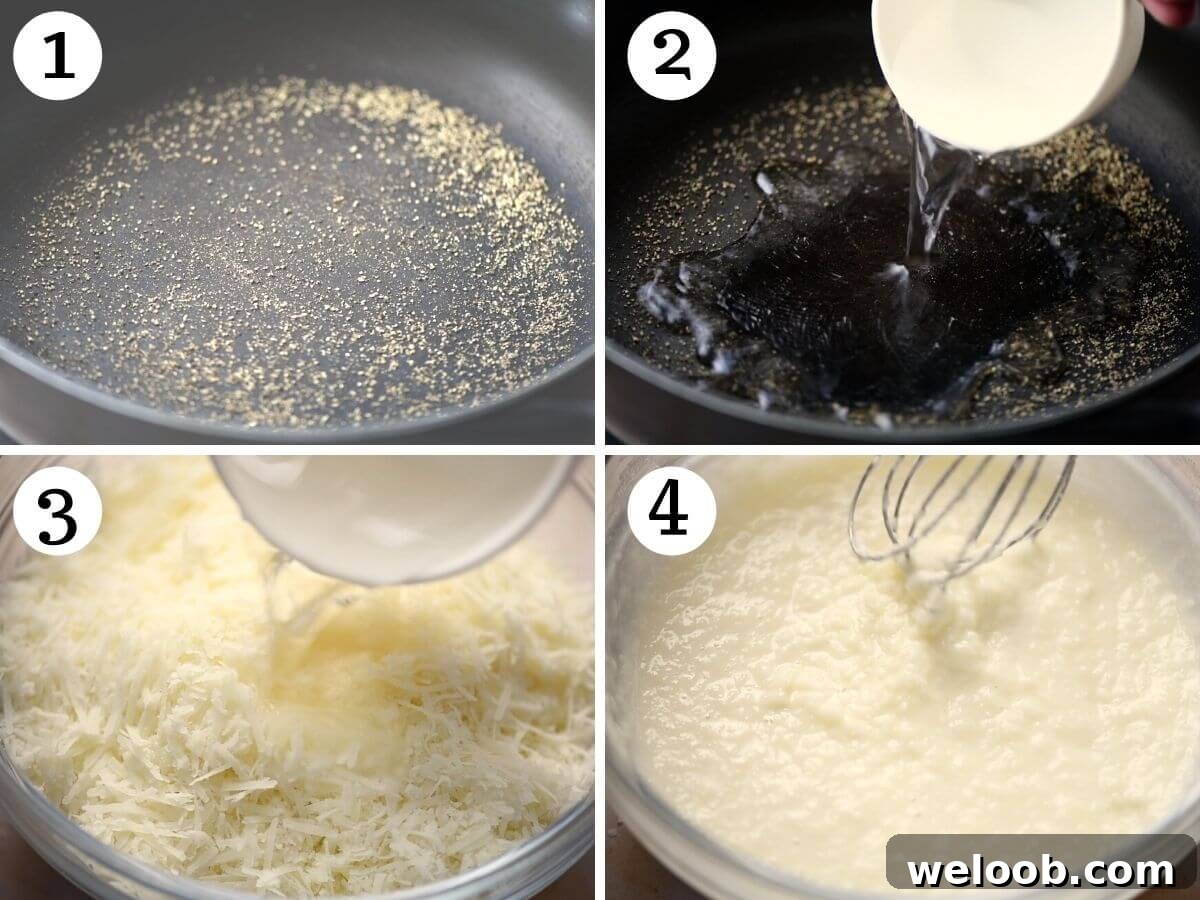
Add pasta water – After toasting, add about ½ cup (roughly 120ml) of the hot pasta water to the pan and let it simmer gently while the pasta finishes cooking. This infuses the water with pepper flavor and keeps it hot for emulsification.
Prepare the cheese slurry – Add a few ladles of hot pasta water to the grated Pecorino, a little at a time, and whisk until it reaches a loose, creamy paste—slightly thicker than heavy cream. It won’t be perfectly smooth yet; that will happen when combined with the pasta starch and heat.
If using fresh pasta, start cooking it when directed in the instructions—fresh pasta cooks much faster than dried.
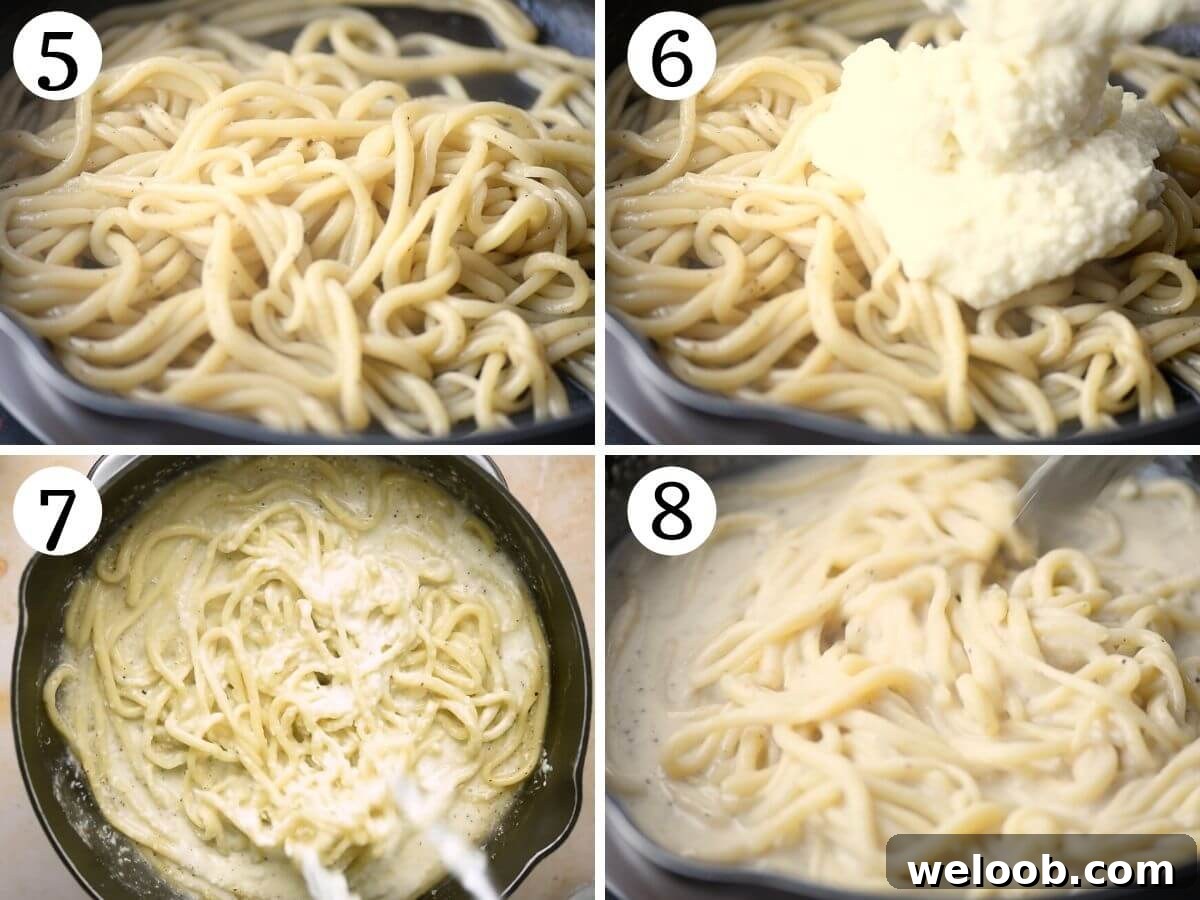
Finish the pasta in the pan – When the pasta is about 2–3 minutes from being done, transfer it directly from the pot to the pan with the pepper using tongs. Stir for about a minute to release additional starch into the pan; add a splash more pasta water if needed.
Make the sauce – Reduce the heat to low and add the Pecorino mixture. Stir continuously until the cheese and starchy water emulsify into a smooth, creamy sauce. Initially it may look like it’s splitting—this is normal; persistent stirring will bring it together. When the sauce reaches a glossy, saucy consistency, remove from the heat and continue stirring for another minute so it thickens slightly. Serve immediately.
Recipe tips and FAQs
- Use less water for the pasta pot: A smaller volume of water concentrates starch and helps create a silkier sauce.
- Use tongs to transfer pasta: Moving pasta directly from pot to pan keeps some cooking water clinging to the noodles so you don’t lose valuable starch.
- Keep stirring: When you add the cheese slurry to the pasta off the heat, stir steadily until the sauce becomes smooth. It will pass through a separated stage—persistent stirring fixes it.
No. For an authentic cacio e pepe and to avoid clumping, use Pecorino Romano DOP. Other cheeses, including Parmigiano Reggiano or generic Pecorino, will change the flavor and can affect the sauce texture.
Yes. Pici is traditional for this version, but spaghetti, bucatini or another long pasta also work well. Long shapes are easiest when you’re new to the technique.
More traditional Italian pasta recipes to try
- Spaghetti alla Carbonara
- Bucatini all’Amatriciana
- Pasta alla Gricia
- Pasta Alla Norma (Eggplant Pasta)
- Penne Pomodoro (Tomato Basil Pasta)
If you try this Pici Cacio e Pepe recipe, please rate it and leave a comment to share how it turned out. I enjoy hearing from readers and learning about your variations and tips.
Step By Step Photos Above
Most of our recipes include step photos, helpful tips and a video to help you get it right the first time.
Pici, Cacio e Pepe
By Emily
5 mins
10 mins
15 mins
4 servings
Ingredients
- 1 lb pici pasta, or other long pasta (450g)
- 2.5 cups Pecorino Romano DOP (200g), finely grated
- 1 tsp freshly ground black pepper
Instructions
- Important: Read all instructions first. Dried and fresh pasta require slightly different timing. Dried pasta should be cooked at step 3 and fresh pasta at step 7.
- Bring a pot of salted water to a boil using slightly less water than usual so it’s extra starchy. Finely grate the Pecorino and place it in a small bowl.
- If using dried pasta, start it now and undercook by 2–3 minutes.
- Toast the freshly ground black pepper in a large dry pan over medium heat for a few seconds until fragrant.
- Add about ½ cup (120ml) of pasta water to the pan and let it simmer while the pasta finishes cooking.
- Build the cheese paste by whisking a few ladles of hot pasta water into the grated Pecorino until you have a loose, creamy paste slightly thicker than heavy cream.
- If using fresh pasta, cook it now.
- When the pasta is about 2 minutes from done, transfer it to the pan with the pepper using tongs. Stir for about 1 minute to release more starch.
- Lower the heat, add the Pecorino mixture, and stir continuously until the cheese and water emulsify into a smooth, creamy sauce. It may look separated at first—keep stirring and it will come together. Remove from heat when glossy and saucy, and stir one more minute to thicken. Serve immediately.
Video
Notes
- Use tongs: Transferring pasta with tongs retains the right amount of pasta water and starch.
- Keep stirring: Stir continuously when combining the cheese slurry with the hot pasta; the sauce will come together after a brief separated stage.
- Storage: Cacio e pepe is best served immediately and does not reheat or freeze well.
Helpful Info for All Recipes
- I use extra virgin olive oil in recipes unless stated otherwise.
- All vegetables are medium unless noted.
- Recipes are tested using a fan (convection) oven unless stated.
- Nutrition calculations are approximations.
Nutrition
Carbohydrates: 87 g |
Protein: 31 g |
Fat: 15 g
Nutrition information is automatically calculated and should be used as an approximation.
Did you try this recipe?
Leave a comment below!