
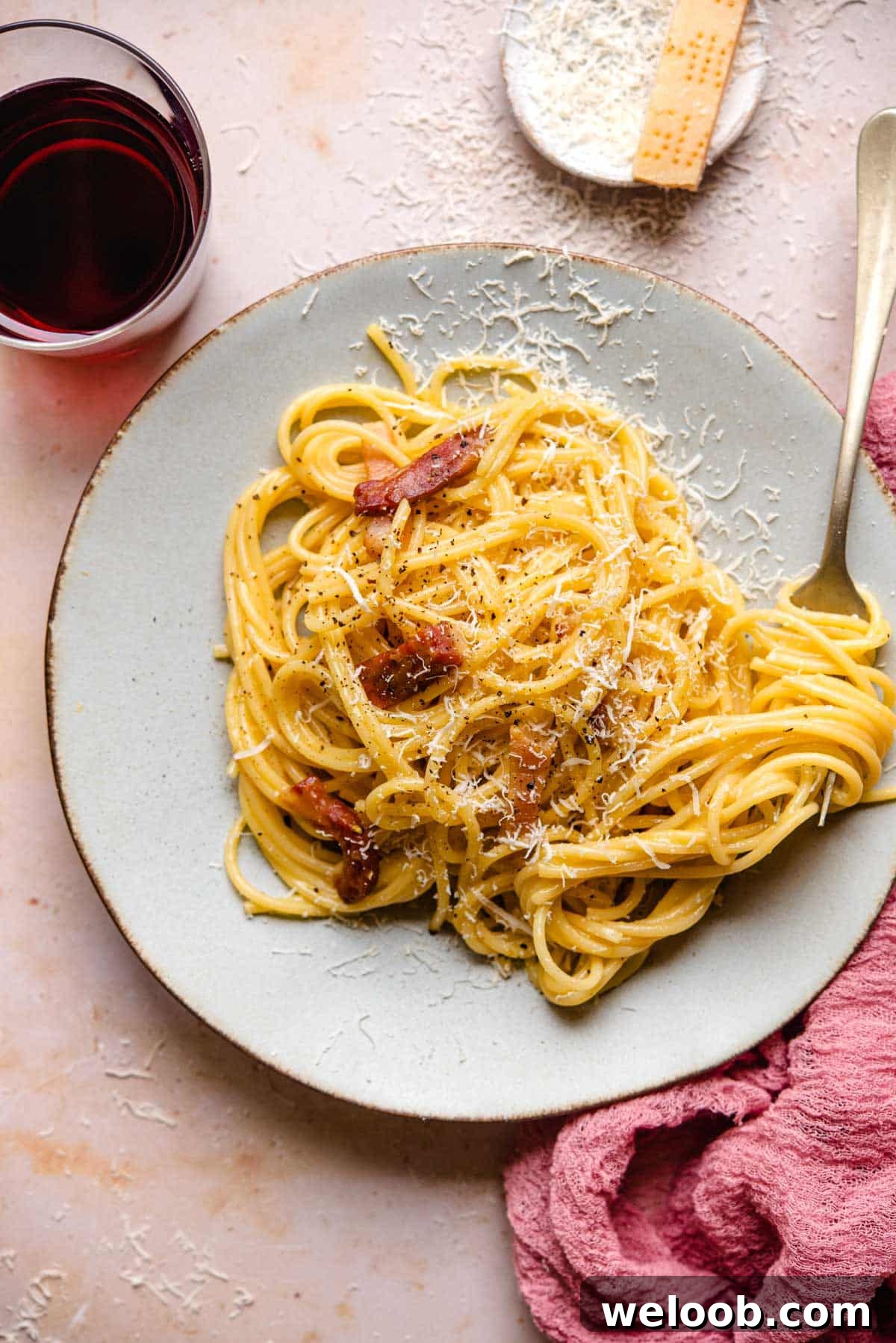
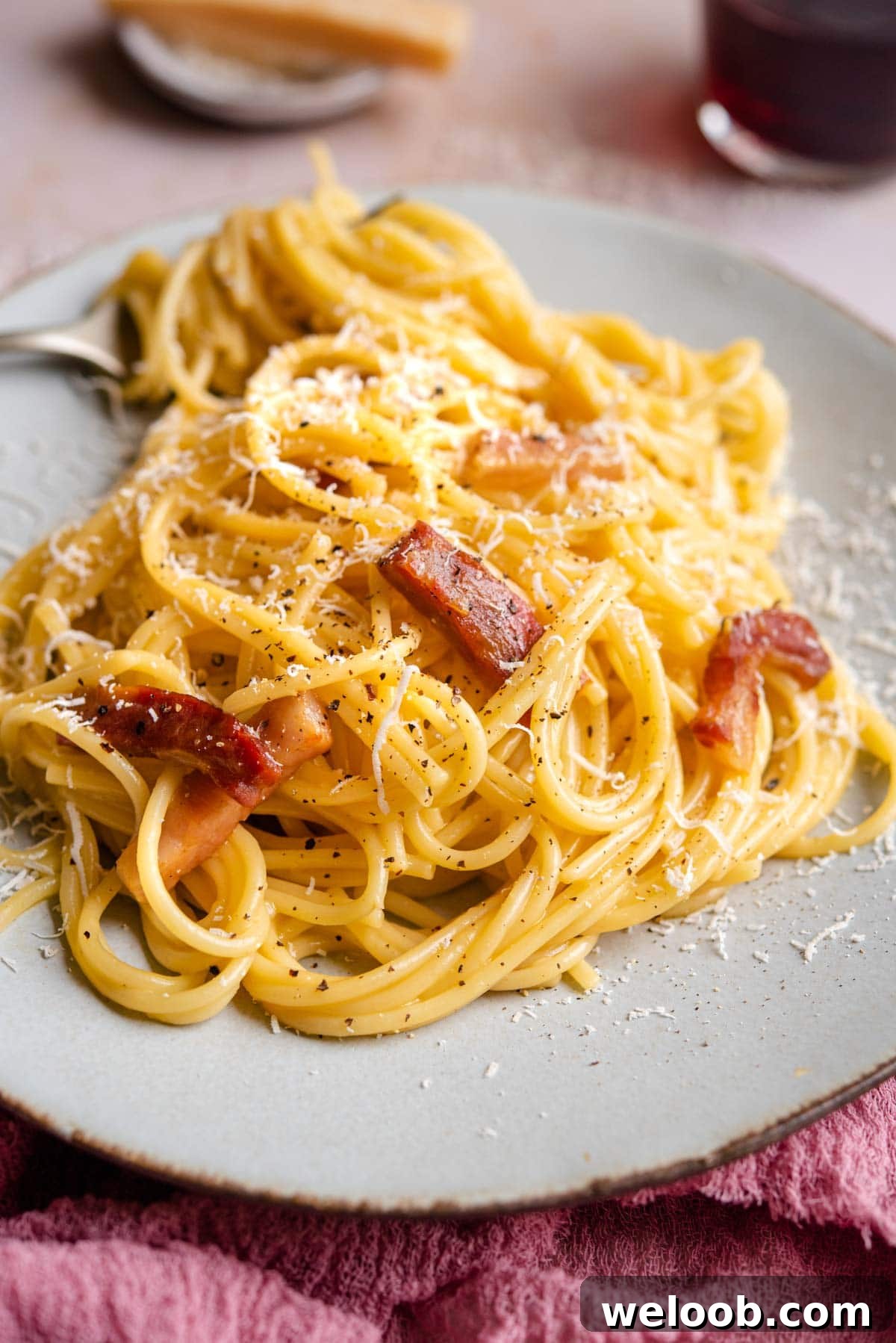
Learn how to make an authentic and delicious Spaghetti alla Carbonara using only five quality ingredients: pasta, guanciale, eggs, Pecorino Romano, and black pepper. This traditional Roman recipe contains no cream and relies on technique and good ingredients to create a silky, flavourful sauce. Follow the tips and step‑by‑step instructions below to make Carbonara like they do in Rome. Buon appetito!
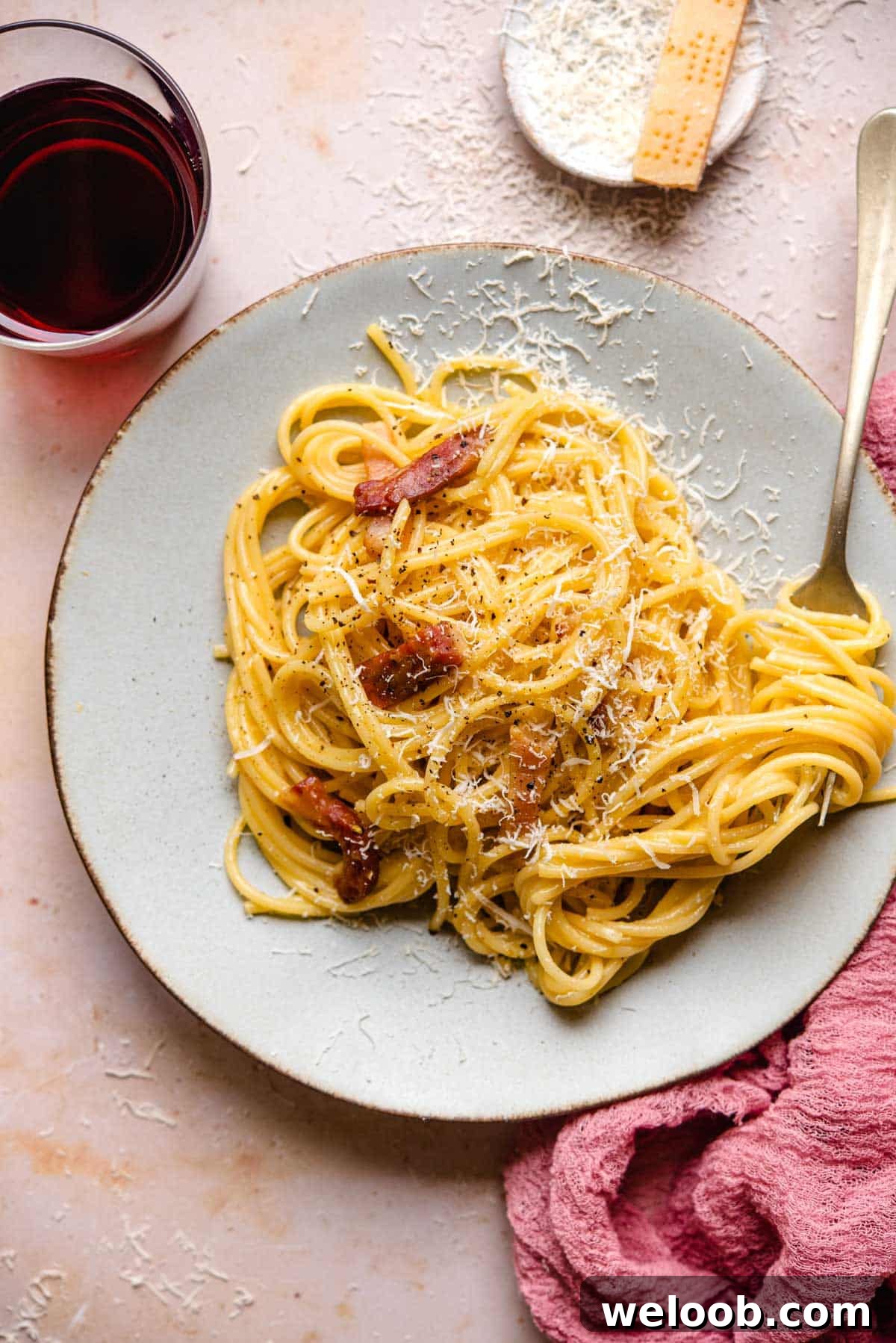
Carbonara is one of the four classic Roman pasta dishes, along with Cacio e Pepe, Pasta alla Gricia and Amatriciana. Although it’s popular worldwide, many outside Italy do not taste an authentic Carbonara because of a few common changes to the recipe.
- The addition of cream – Real Carbonara contains no cream. The eggs and cheese produce a rich, glossy sauce; added cream dilutes the flavours and makes the dish heavy.
- Using bacon – Bacon lacks the depth and fat of guanciale. Guanciale (cured pork jowl) renders flavorful fat that seasons the pasta; pancetta can be used in a pinch, but guanciale is traditional.
- Other unnecessary additions – The classic recipe is simply pasta, guanciale, eggs, Pecorino Romano and black pepper. Ingredients like onions, garlic or herbs change the authentic profile.
With those pitfalls in mind, choose a few high‑quality ingredients and keep the technique simple. Below you’ll find notes on ingredients, step‑by‑step photos, tips to avoid scrambled eggs, variations and the full recipe at the end.
See the recipe below including notes on ingredients, step by step photos, tips, variations and a video tutorial. For the printable recipe, scroll to the recipe card at the bottom.
Ingredients – what you need!
- Spaghetti – Use spaghetti for a classic result. If you don’t have it, rigatoni or mezze maniche work well too.
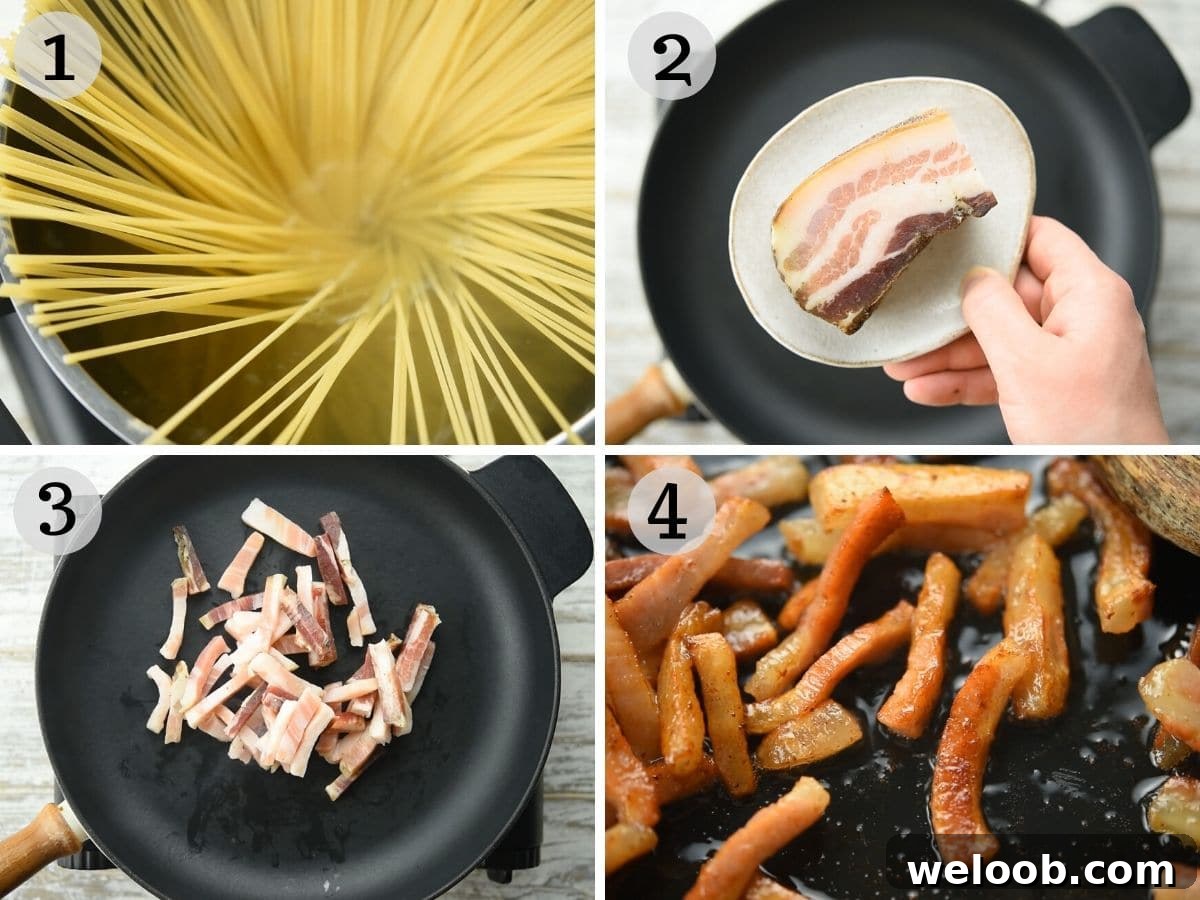
- Guanciale – Cured pork jowl with a pronounced flavour and plenty of fat. Trim the tough outer skin and cut into roughly 1/4 inch (1/2 cm) cubes or strips. If you can’t find guanciale, choose high‑quality pancetta with good fat.
- Eggs – Whole eggs are common; using yolks only yields an even richer sauce. Adjust according to preference.
- Pecorino Romano DOP – A tangy, salty sheep’s‑milk cheese that defines the dish. If unavailable, Parmigiano Reggiano or a mix of both can be used.
- Black pepper – Freshly ground for the best aroma and flavour.
Step by step recipe photos and instructions
Bring a large pot of well‑salted water to a boil and cook the spaghetti until al dente, following the package time (about 7–8 minutes).
While the pasta cooks, add the guanciale to a hot skillet and fry until golden brown and crisp. Do not discard the rendered fat; turn off the heat once the guanciale is cooked.
In a bowl, whisk together the eggs, grated Pecorino and freshly ground black pepper until fully combined.
When the pasta is ready, transfer it directly from the pot to the skillet using tongs so it mixes with the guanciale and its fat.
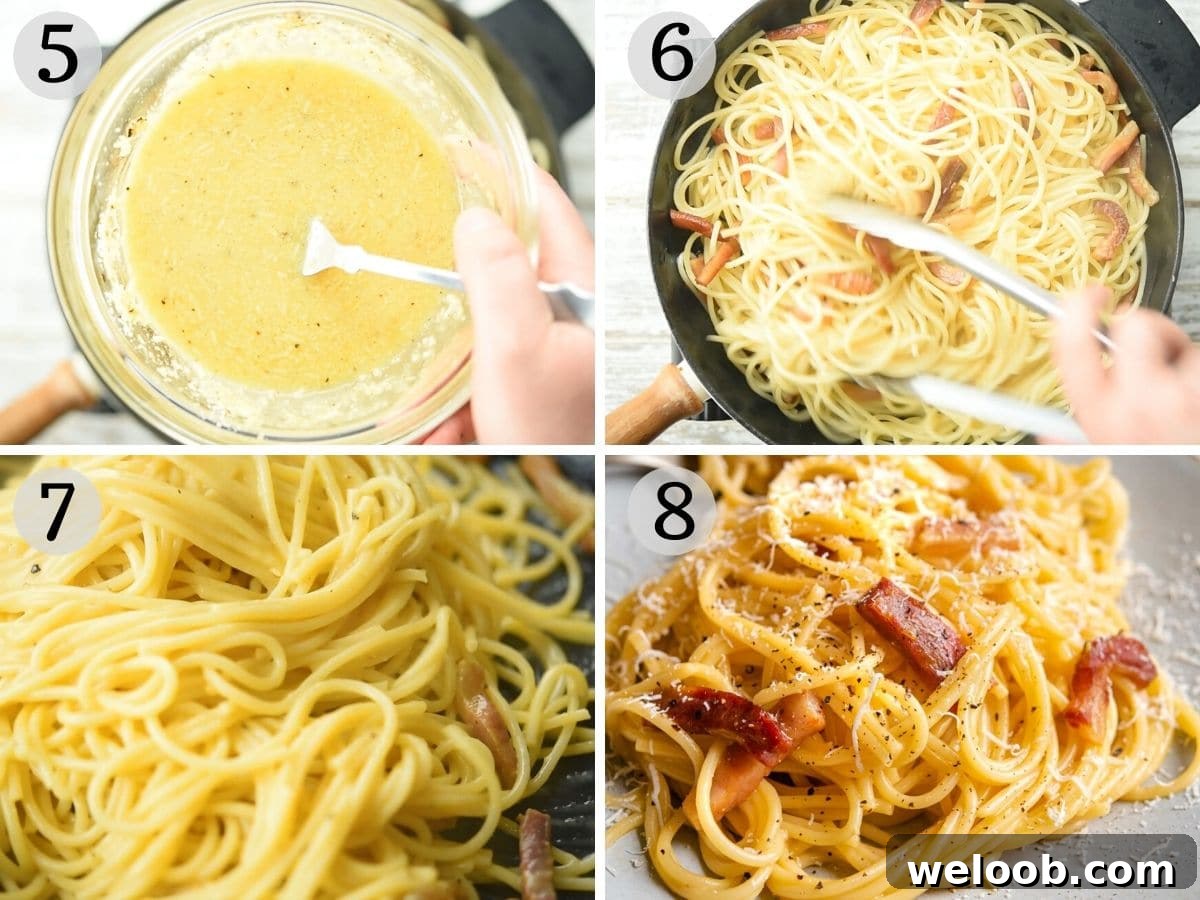
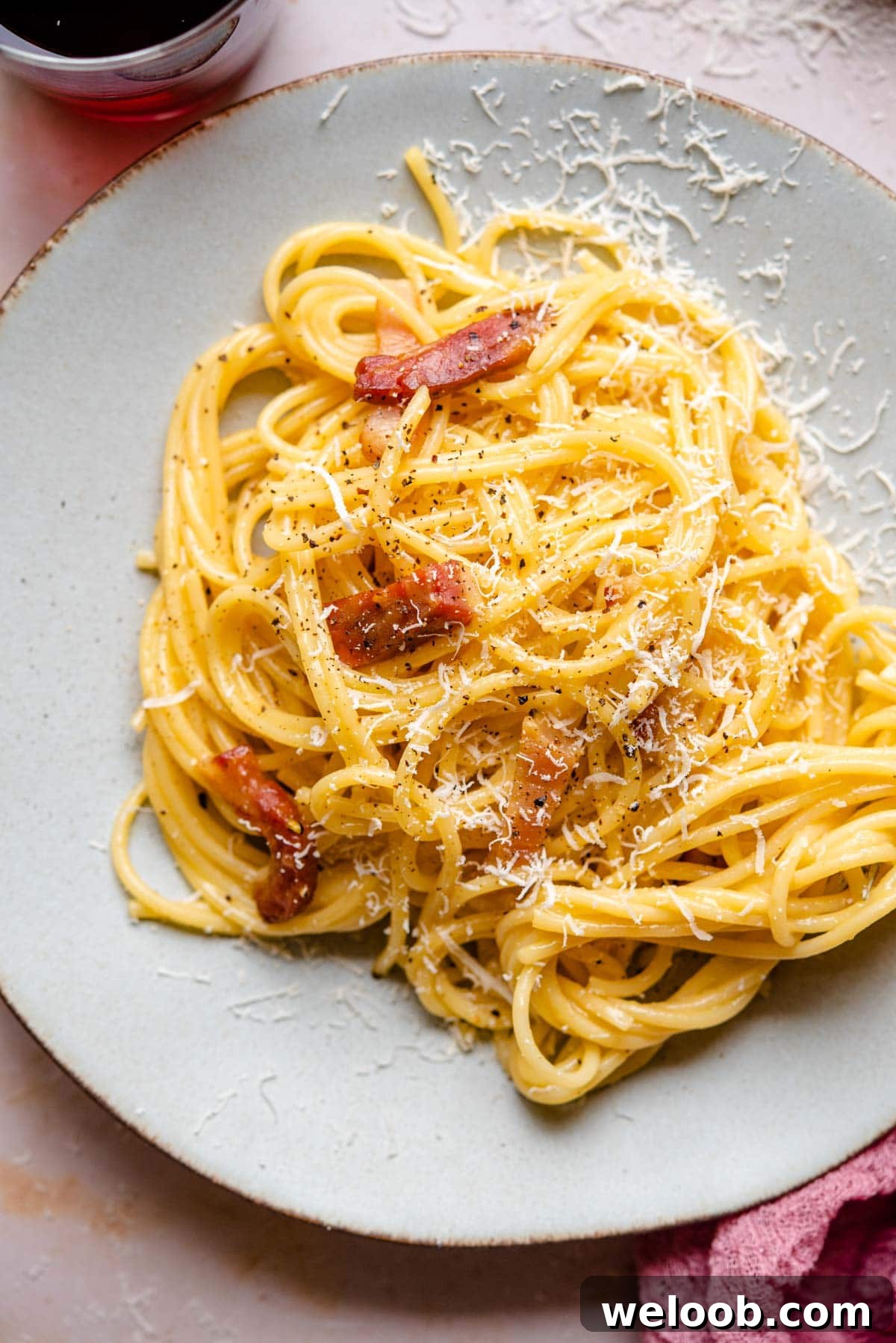
With the skillet off the heat, add the egg and cheese mixture while continuously tossing the pasta. The residual heat will gently cook the eggs and emulsify the sauce. When the sauce turns glossy and coats the pasta, serve with extra Pecorino and more black pepper.
How to stop the eggs from scrambling
Carbonara is straightforward when you follow a few simple precautions:
– Remove the pan from direct heat before adding the egg mixture; the pan should be warm but not scorching.
– Toss constantly as you pour the eggs into the pasta so the eggs heat evenly and create a smooth sauce rather than curdling.
– If needed, add a splash (about 1/4 cup) of reserved pasta water to loosen and silkify the sauce; the starchy water helps bind the sauce to the pasta.
Top tips for making the best Carbonara
- Trim the guanciale – Remove the thick skin before cutting, as it’s tough and unpleasant to eat.
- Don’t let the pan be too hot – Turn off the heat a minute or two before adding the egg mixture to avoid scrambling.
- Avoid adding salt to the sauce – Guanciale and Pecorino are salty, so taste before adding salt. Always salt the pasta water well.
- No spaghetti? – Rigatoni, mezze maniche or even gnocchi can work well with the same technique.
- Reserve pasta water – If you drain the pasta, save about 1/4 cup of cooking water to loosen the sauce if needed.
- Serve immediately – Carbonara is best eaten right away and does not reheat or freeze well.
Pecorino Romano is traditional and brings a distinctive tang and saltiness. Parmigiano Reggiano is an acceptable substitute and will still produce a delicious result, though the flavour will differ slightly.
Carbonara is best served fresh. If you have leftovers, consider folding them into a frittata rather than eating cold.
No. Carbonara does not freeze well. You can freeze guanciale separately so you always have it on hand.
The name may derive from carbone (charcoal). One story links the dish to coal miners, with black pepper representing coal flecks; another credits American influence during World War II when soldiers and locals combined bacon and eggs with pasta.
More delicious pasta recipes you might like
- Smoked Salmon Pasta Carbonara (a tasty variation using smoked salmon instead of guanciale).
- Artichoke Pasta – simple 10 minute recipe.
- Penne Pomodoro (Tomato Basil Pasta).
- Cavatelli and Broccoli Pasta.
- Herby Garlic Butter Pasta Sauce.
If you try this Spaghetti alla Carbonara or any other recipe from the blog, please leave a comment to let me know how it went — I love hearing from readers. Follow the blog on social media to see more recipes and updates.
Step By Step Photos Above
Most recipes include step‑by‑step photos, tips and sometimes video guidance.
Spaghetti alla Carbonara
By Emily
Ingredients
- 15 oz spaghetti (425g)
- 3 large eggs free range
- ⅔ cup Pecorino Romano (30g)
- 1 cup guanciale cut into cubes (150g)
- 2 tsp freshly ground black pepper plus more for serving
Instructions
- Bring a large pot of salted water to a boil and add the spaghetti. Cook until al dente (about 7–8 minutes or as packet indicates).
- Meanwhile, fry the guanciale in a hot skillet until browned and crisp. Turn off the heat and leave the rendered fat in the pan.
- Whisk the eggs, Pecorino and black pepper in a bowl until combined.
- Transfer the pasta to the skillet with the guanciale using tongs and toss so the pasta is coated in the fat.
- Off the heat, add the egg mixture while tossing continuously so the eggs don’t scramble. When the sauce becomes glossy and creamy, serve with extra Pecorino and pepper.
Notes
- Trim the guanciale: Remove the tough outer skin before chopping.
- Pan temperature: Turn off the heat a few minutes before adding the eggs to avoid scrambling.
- Salt: Guanciale and Pecorino are salty, so usually you won’t need additional salt in the sauce. Always salt the pasta water.
- No spaghetti? Use rigatoni or other pasta shapes if preferred.
- Reserve pasta water: Save about 1/4 cup when draining to adjust sauce texture if needed.
- Serve immediately and do not freeze.
Helpful Info for All Recipes
- I use extra virgin olive oil unless stated otherwise.
- All vegetables are medium sized unless noted.
- Recipes are tested using a fan (convection) oven unless otherwise stated.
- Nutrition details are an approximation.
Nutrition
| Carbohydrates: 80g
| Protein: 25g
| Fat: 35g
Nutrition information is automatically calculated and should be used as an approximation.
Did you try this recipe?
Leave a comment below!