
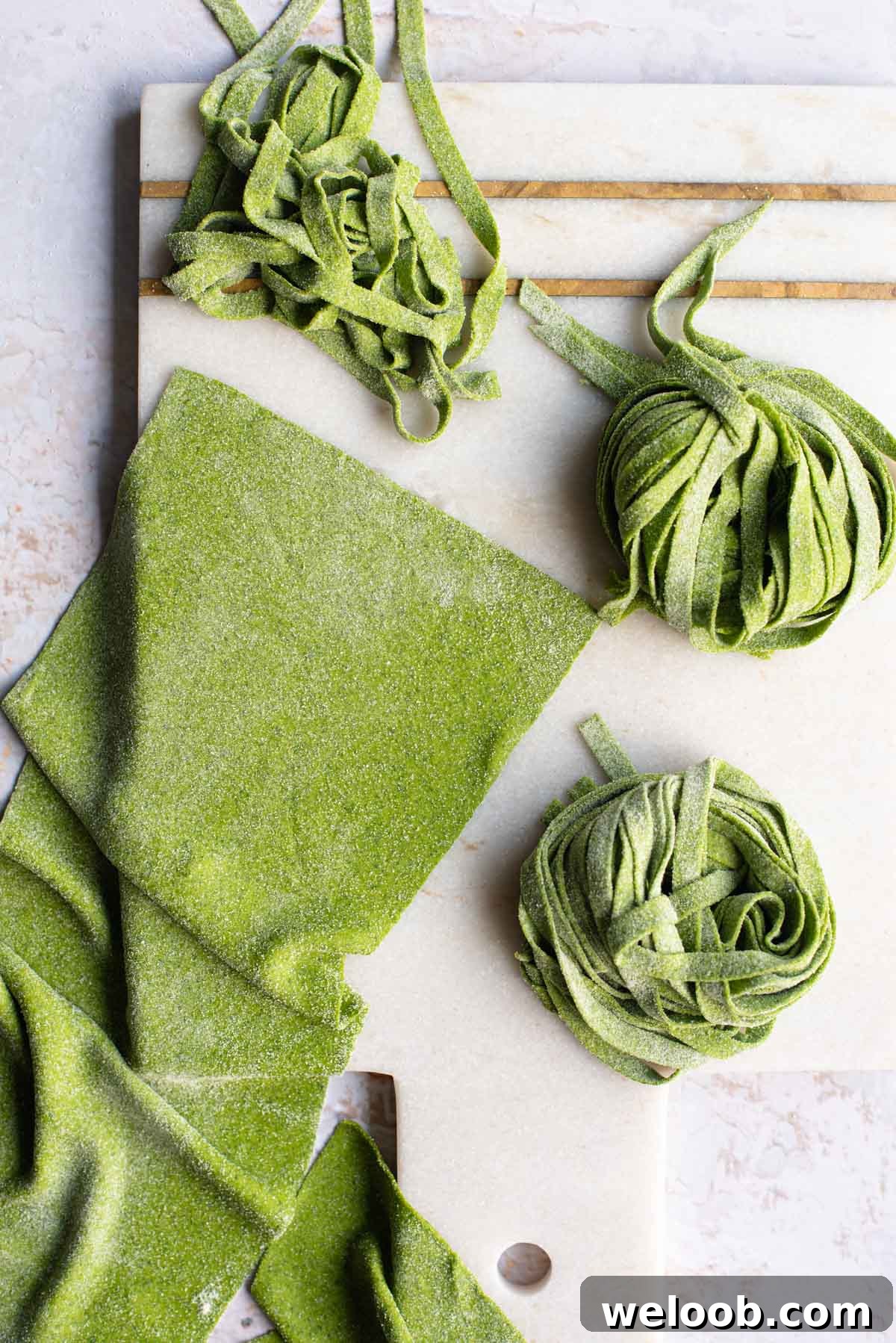
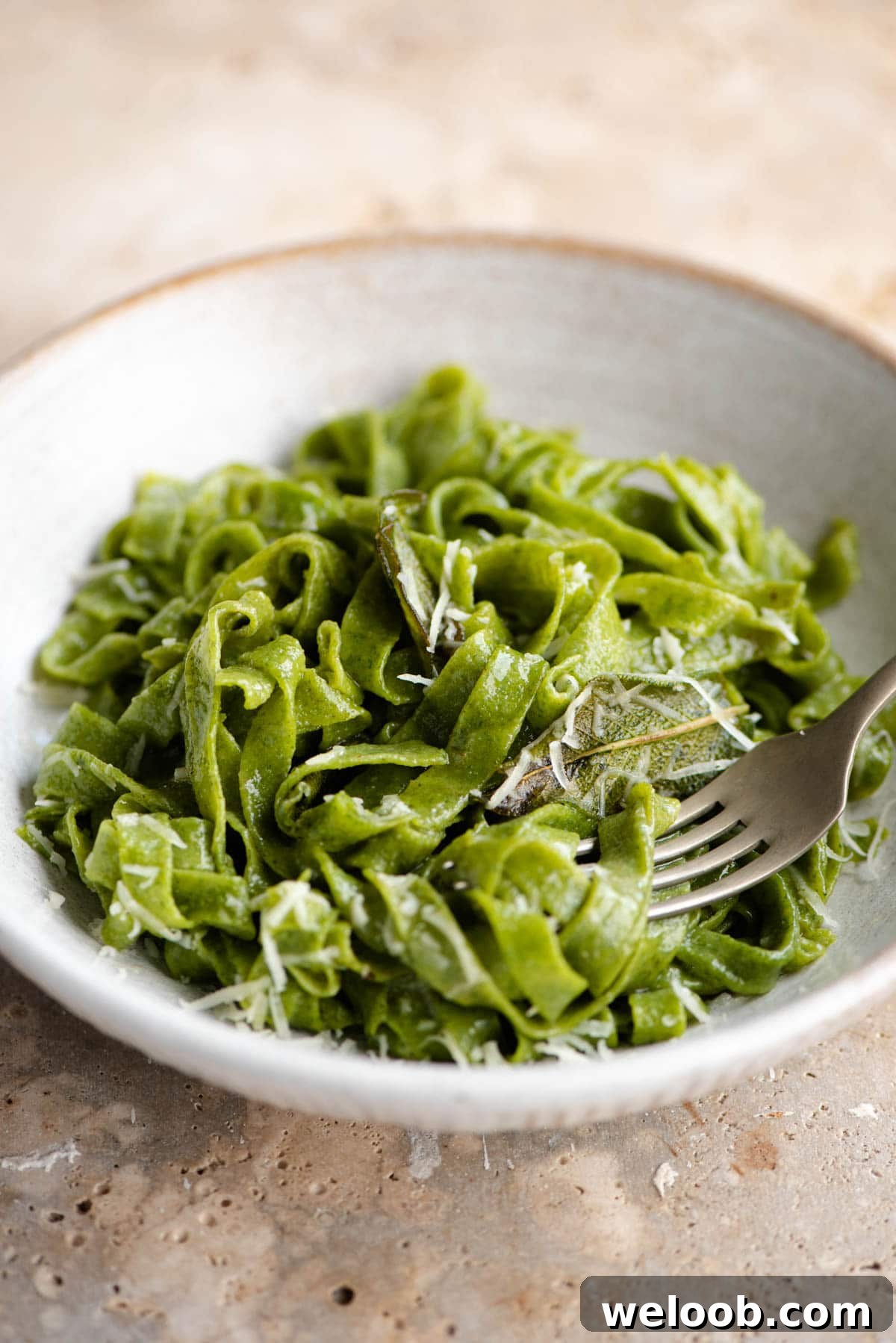
Learn how to make vibrant spinach pasta dough from scratch with just two main ingredients: flour and spinach. This straightforward recipe yields a bright green dough that can be rolled into lasagne sheets, cut into tagliatelle, or shaped however you like.
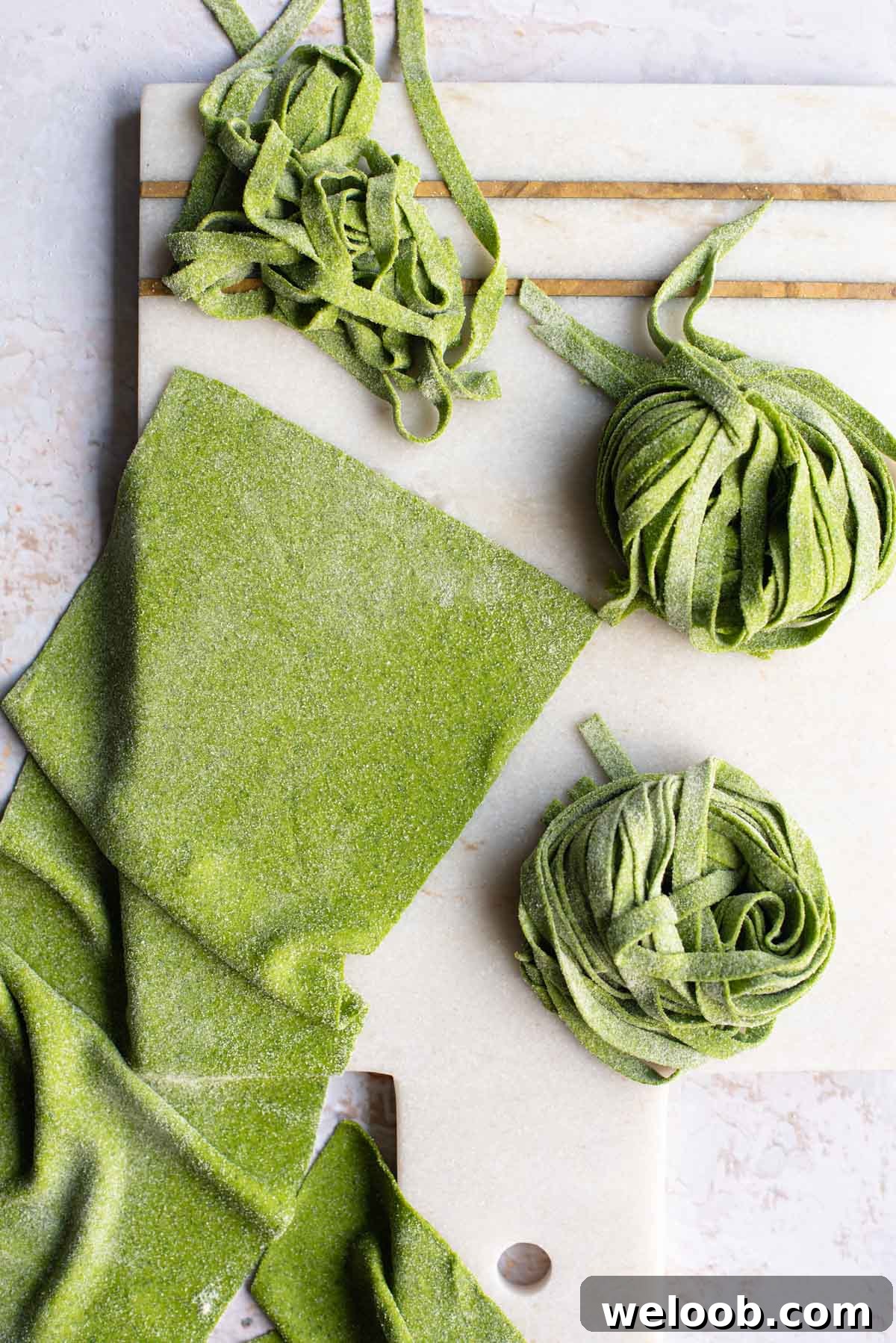
Homemade pasta is a treat: some shapes take patience, but the result is always worth it. Spinach pasta dough is especially easy because the moisture in the spinach replaces the need for eggs, producing a soft, naturally colored dough.
This version is made in a food processor and is ideal for tagliatelle with pesto or for sheets to use in a classic lasagne. Below you’ll find tips, step-by-step instructions and photos to guide you through the process.
Ingredients – what you need
The photo below shows the ingredients and a few helpful notes on choosing the right produce and flour.
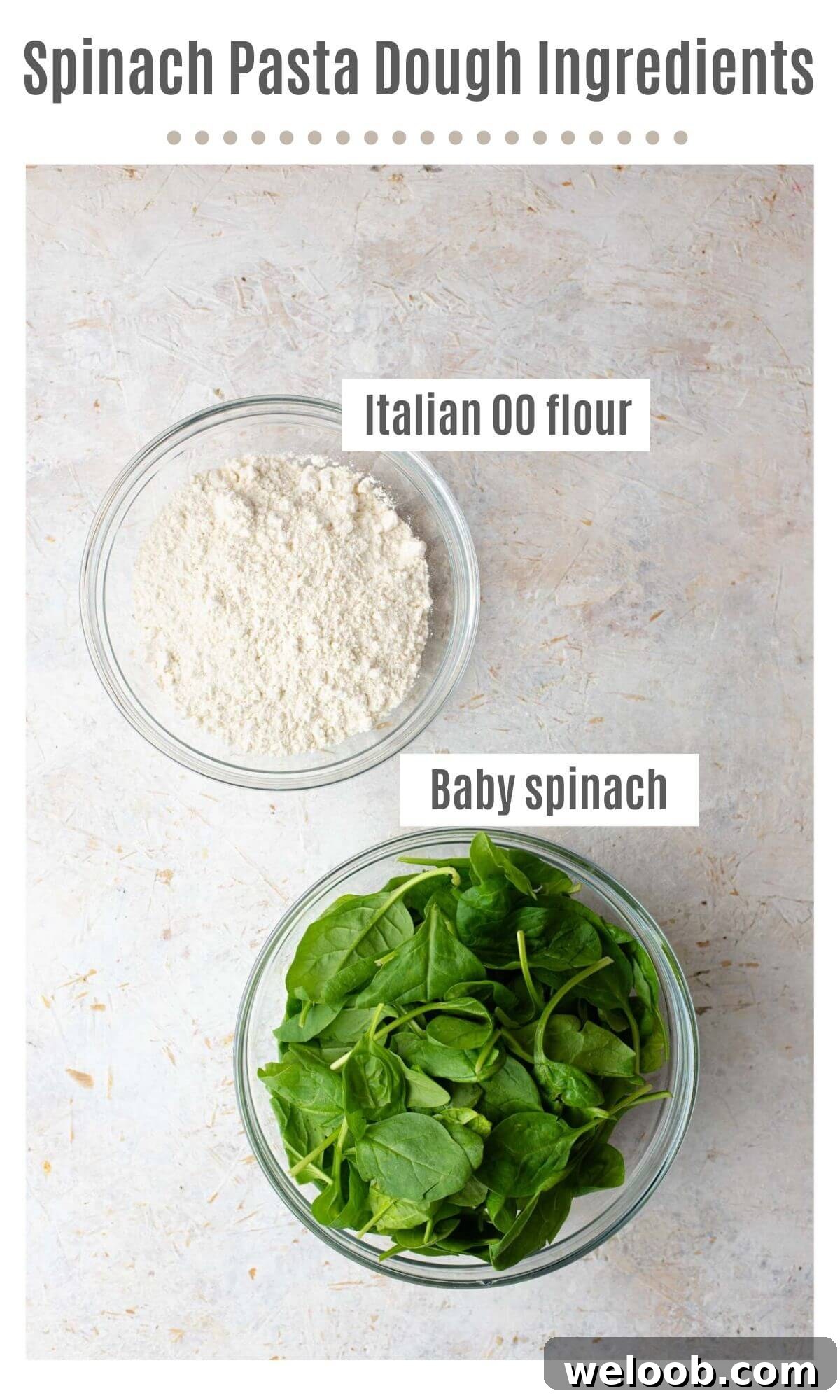
- Spinach – Use washed and thoroughly dried spinach. Excess water makes the dough too soft. Baby spinach is ideal; if using mature leaves, trim away thick stalks.
- Flour –Italian 00 flour gives the best texture for homemade pasta. If you don’t have 00, all-purpose flour will work but may slightly change the mouthfeel.
Ensure your spinach is ready to eat and free of excess moisture. If using larger leaves, remove tough stems before blending.
To start, place the flour in a food processor then add the spinach. Pulse for a few minutes: the mixture will first look powdery and then begin to come together into a dough (photos 1 & 2).
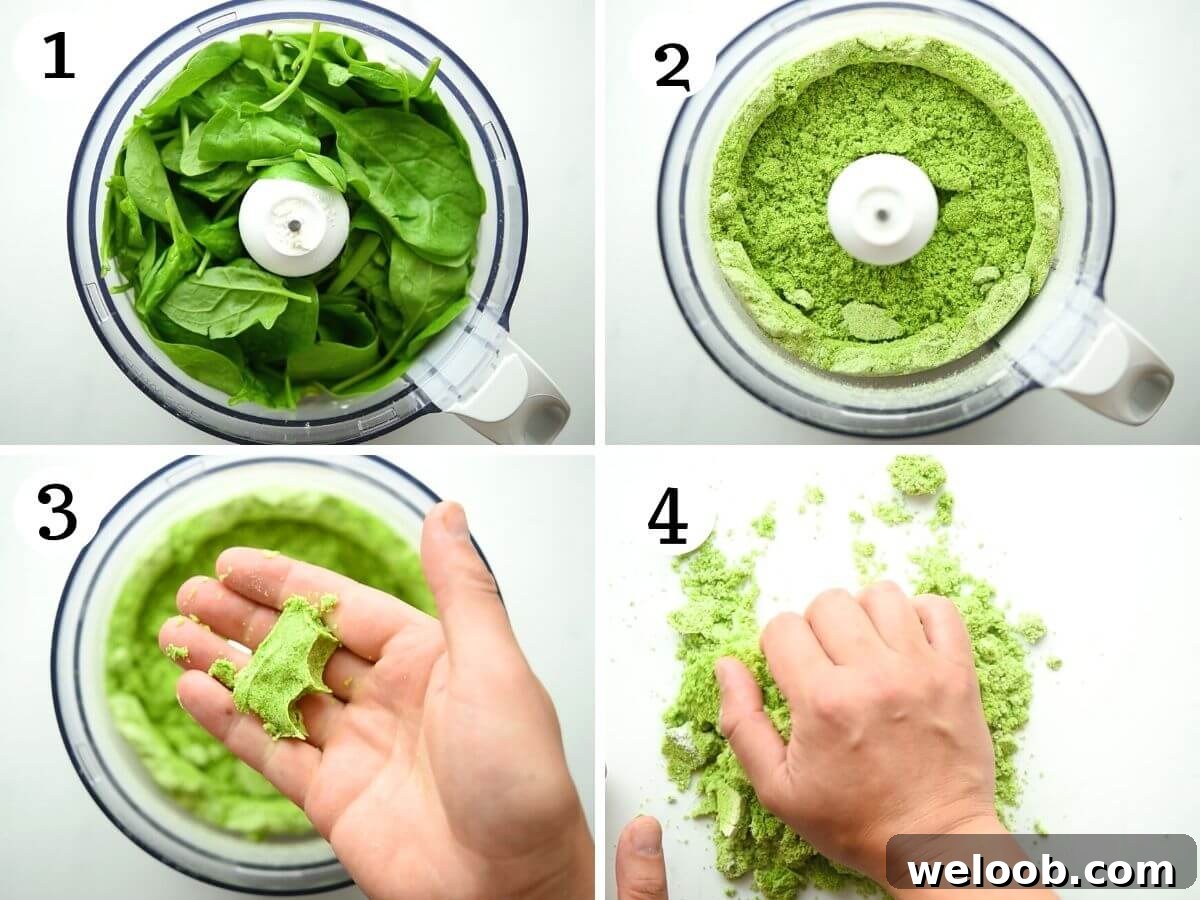
Stop and check the dough by hand: it should be soft and hold together. If it feels too dry, add a little more spinach and pulse again (photo 3).
Turn the dough out onto a clean surface and knead for about 10 minutes. It may feel stiff at first but will become smooth and elastic as the gluten develops (photos 4 & 5).
Wrap the dough in plastic and let it rest for 30 minutes. Resting relaxes the gluten and makes the dough easier to roll and shape.
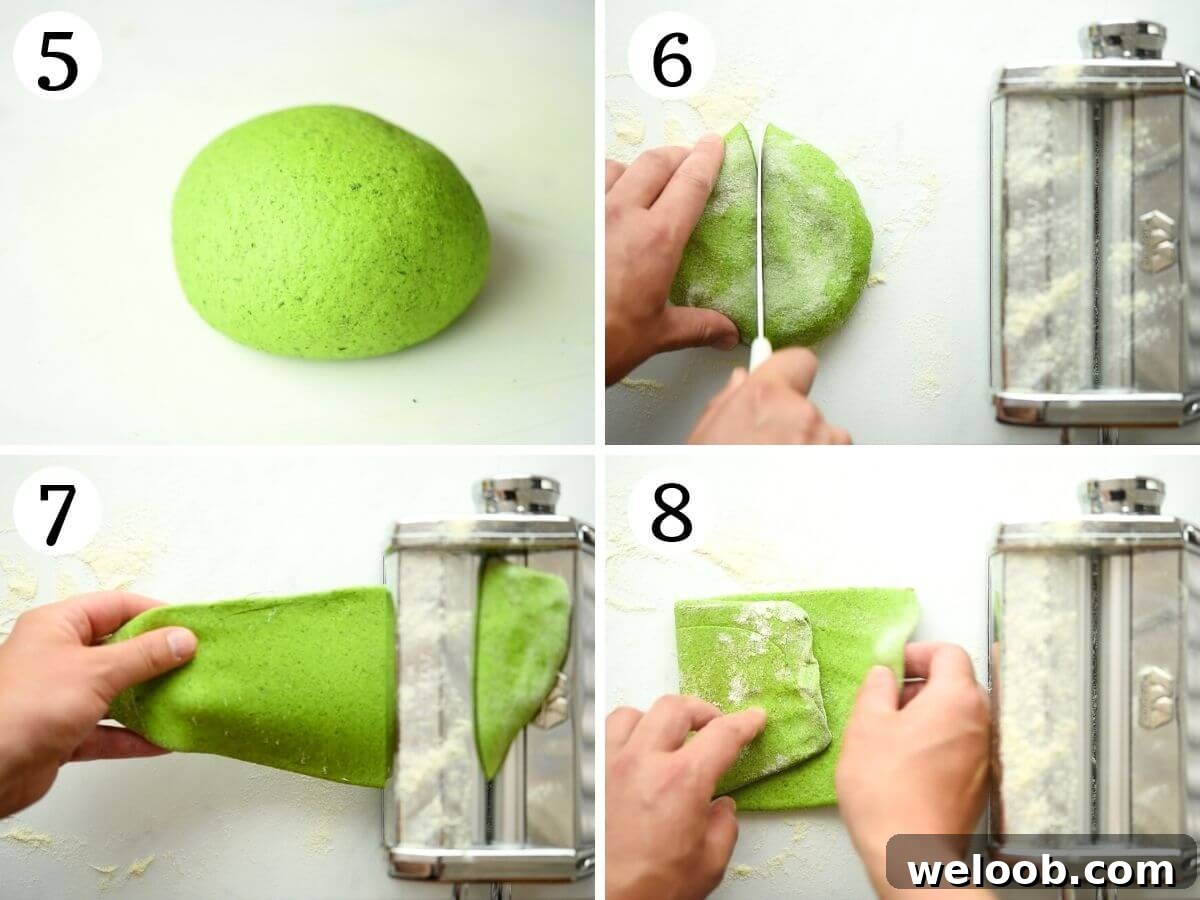
When rested, divide the dough in half and press each piece flat so it fits the widest setting of your pasta machine. Dust with semola or extra flour to prevent sticking (photo 6).
Pass the dough through the widest setting once, then fold one edge to the center and fold the other edge over it so the dough overlaps. Run it through the widest setting again and repeat this folding and passing four times (photos 7–10).
After that, feed the dough through progressively narrower settings one step at a time until you reach your preferred thickness. For tagliatelle, stopping at setting 5 on a Marcato Atlas machine works well, but adjust based on your machine and preference (photos 11 & 12).
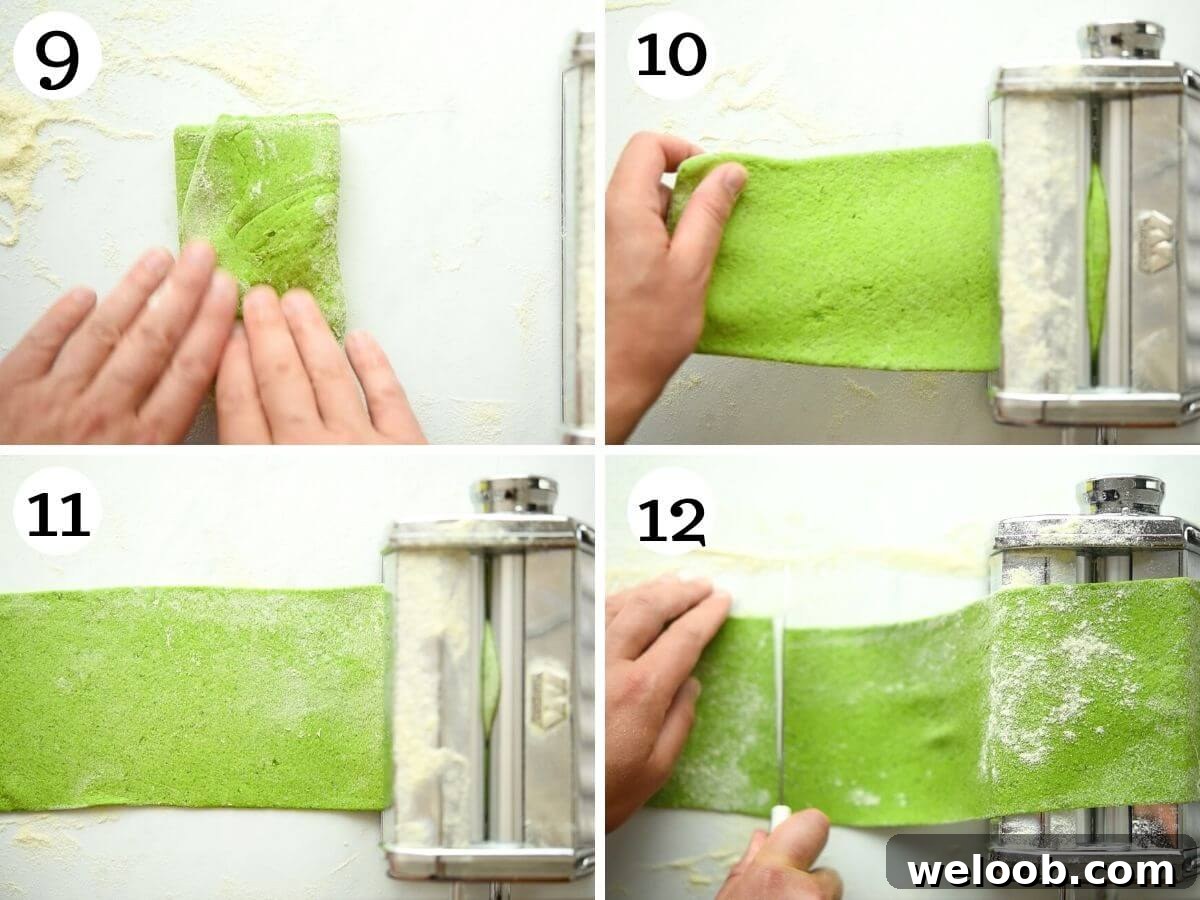
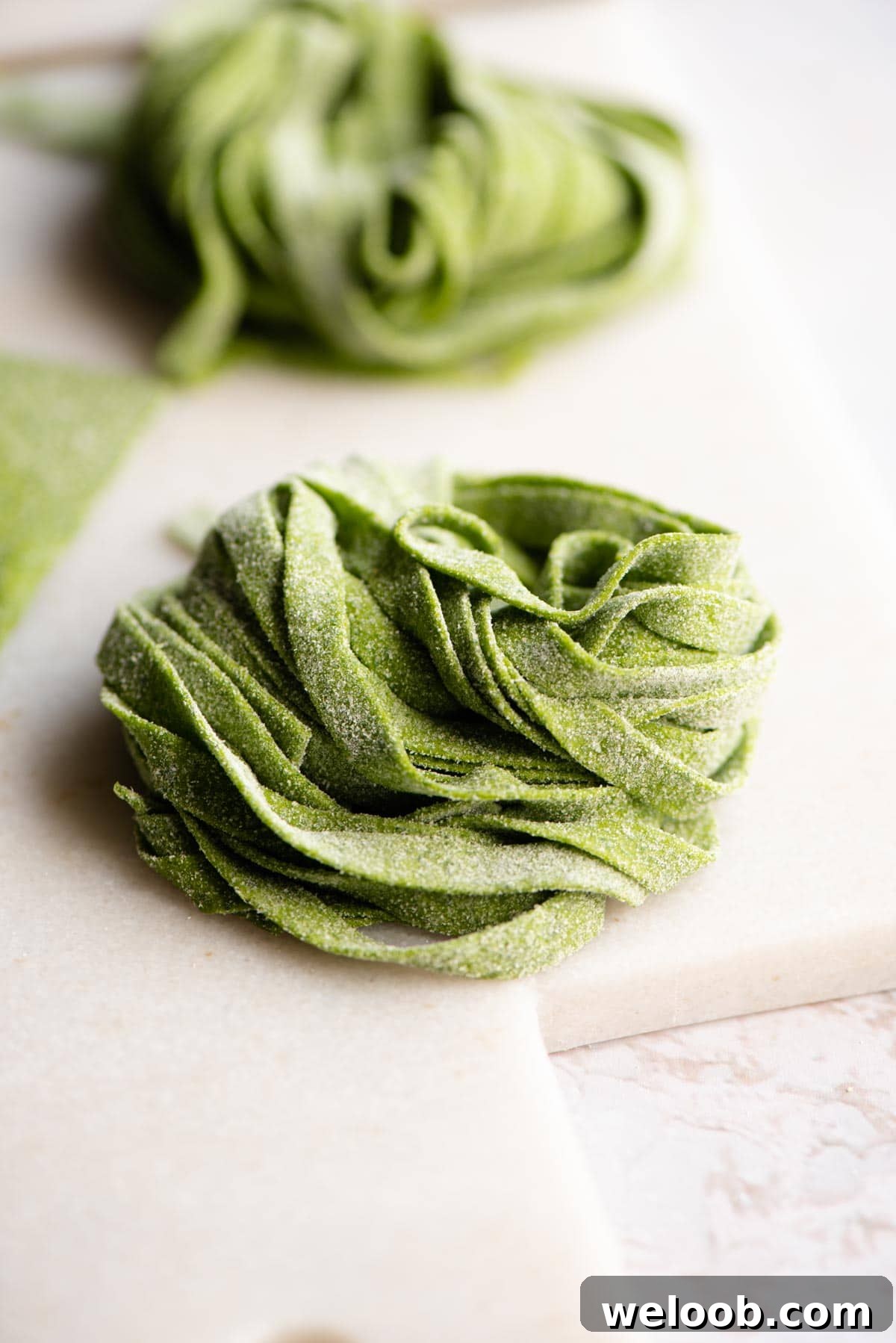
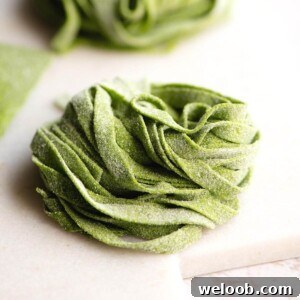
To make tagliatelle, cut the sheet in half and use a tagliatelle cutter on your machine (photos 12–16).
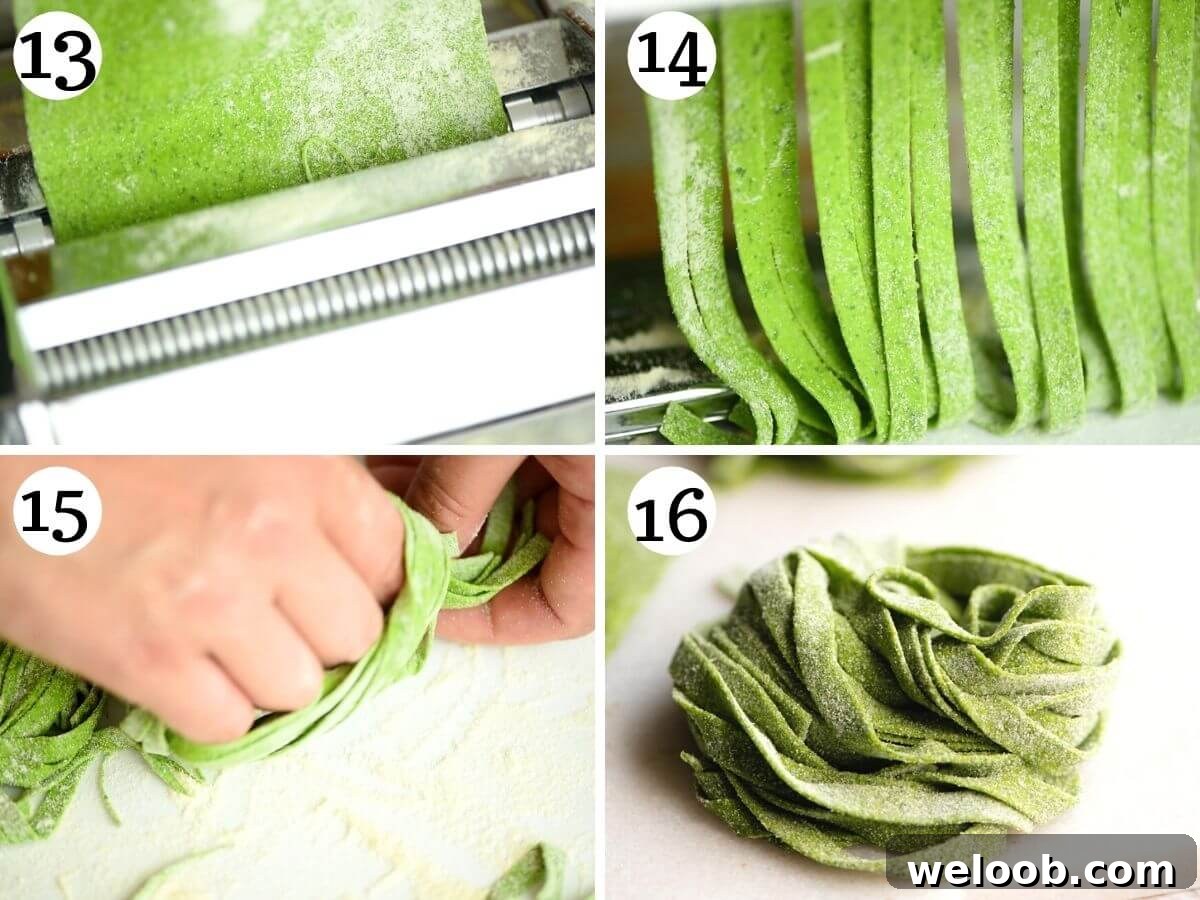
You can also cut tagliatelle, fettuccine or pappardelle by hand: roll the pasta sheet lightly, then slice to your desired width.
If you want to try other colors, beetroot makes a beautiful pink dough, or try a basic egg pasta for a traditional yellow hue.
Top tips and recipe FAQs
- Make sure your spinach is dry – use pre-washed ready-to-eat spinach or dry leaves thoroughly in a salad spinner to avoid excess moisture in the dough.
- If using cups – the packed volume of spinach varies. Start with about 2 packed cups and add more if the dough seems too dry. The amount can differ by up to a cup depending on how firmly it’s packed.
- Resting the dough – rest for at least 30 minutes so the gluten relaxes. This makes rolling and shaping much easier. Refrigerate only if you won’t use the dough the same day.
Baby spinach offers the best color and texture; if using mature leaves, remove thicker stalks before blending.
The dough will feel stiff initially but should become softer and elastic after kneading. If it remains dry, break the dough into pieces and pulse it in the food processor with a little extra spinach to hydrate it.
Kneading develops the gluten, giving pasta its structure and a pleasant chew. By the end the dough should be smooth and elastic.
Yes. Wrapped tightly in plastic, the dough can be refrigerated for 1–2 days before using.
Sauces to serve with your pasta
- Pesto alla Trapanese (Sicilian pesto)
- Classic basil pesto
- Authentic Bolognese (Ragù alla Bolognese) for lasagne
- Ricotta-based pasta sauce for a light, creamy finish
- Walnut sauce (salsa di noci)
- Simple, authentic Italian tomato sauce
If you try this Spinach Pasta Dough recipe, please rate it and leave a comment — feedback is always appreciated.
Step By Step Photos Above
Most recipes include step-by-step photos, helpful tips and video to guide you.
Spinach Pasta Dough
By Emily
Equipment
- Food processor
Ingredients
- 3 packed cups baby spinach (100g), washed and dried
- 1.5 cups Italian 00 flour (200g)
- Extra flour or semola rimacinata for dusting
Instructions
- Ensure your spinach is washed and dry. Remove thick stalks if using mature leaves.
- Place the flour and spinach in a food processor and blitz for a few minutes until the mixture starts to come together.
- Check the dough by hand. If it’s too dry, add a little more spinach and pulse again.
- Turn the dough onto a work surface and knead for about 10 minutes until smooth and elastic.
- Wrap in plastic and rest for 30 minutes to relax the gluten.
- Divide the dough and flatten to fit the widest setting of your pasta machine. Dust with semola or flour.
- Pass through the widest setting, fold the edges to the center and repeat four times. Then run through progressively thinner settings to your desired thickness.
- Cut into your preferred shape: use a tagliatelle cutter or slice by hand for ribbons.
Video
Notes
- Spinach must be dry: excess water will make the dough too soft.
- Using cups: spinach volume varies; start with about 2 packed cups and add more if the dough is dry.
- Resting: at least 30 minutes of rest makes the dough easier to work with. Refrigerate only if not using the same day.
Helpful Info for All Recipes
- I typically use extra virgin olive oil unless stated otherwise.
- All vegetables are medium-sized unless noted.
- Recipes are developed using a fan (convection) oven when applicable.
Nutrition
Carbohydrates: 37 g |
Protein: 7 g |
Fat: 1 g |
Fiber: 2 g
Nutrition information is an approximation.
Did you try this recipe?
Leave a comment below!