
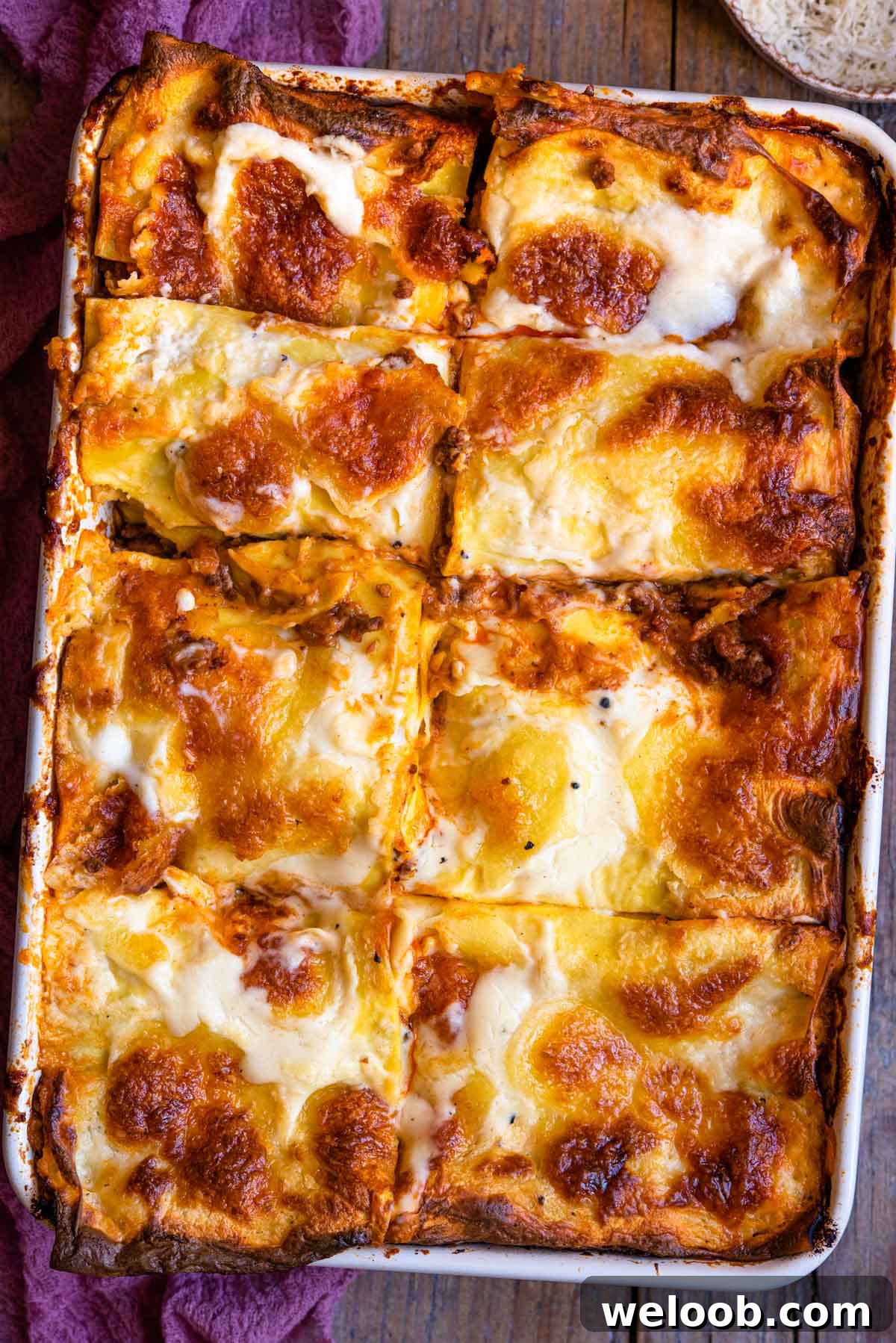
A classic, from-scratch Lasagne al Forno (Italian beef lasagna) that’s the ultimate comfort food. This recipe combines a rich homemade beef ragu, silky béchamel sauce, fresh pasta sheets and melted mozzarella for a bubbling, golden bake everyone will love.
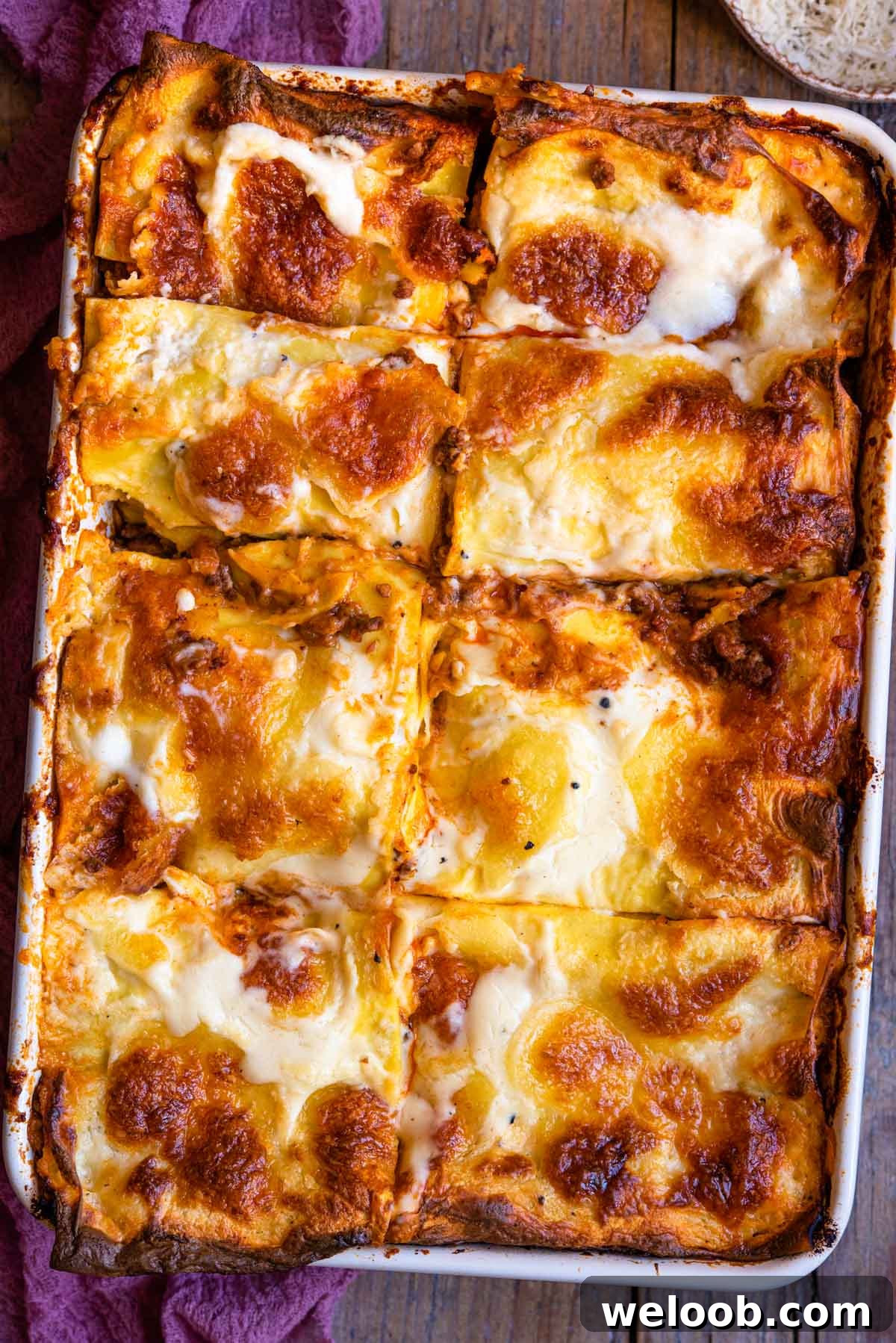
Lasagne al Forno is perfect for a relaxed Sunday dinner: the ragu can simmer for hours while you prepare the béchamel and pasta. If you want to keep things simple, use ready-made fresh pasta sheets — but making your own is rewarding if you have the time.
It’s truly special and worth the effort.
Is Lasagne Hard to Make?
Making lasagne from scratch can seem intimidating, but it’s straightforward when approached step by step. Here are the main components:
- Ragu (meat sauce) – Prep takes about 10–15 minutes to chop and brown ingredients. After that, it simmers gently for a few hours, developing deep flavour with minimal hands-on time.
- Pasta – Homemade pasta increases prep time, but fresh store-bought sheets are an excellent shortcut and give a nicer texture than dried sheets. See notes below for details.
- Béchamel sauce – This traditional Italian lasagne uses béchamel, not ricotta. A basic béchamel takes about 10 minutes and can be made ahead.
- Assembly – Layering pasta, ragu and béchamel takes around 10 minutes. It’s simple and fun.
- Baking – The lasagne needs roughly 45 minutes in the oven. From start to finish it takes time, but most of that is passive simmering.
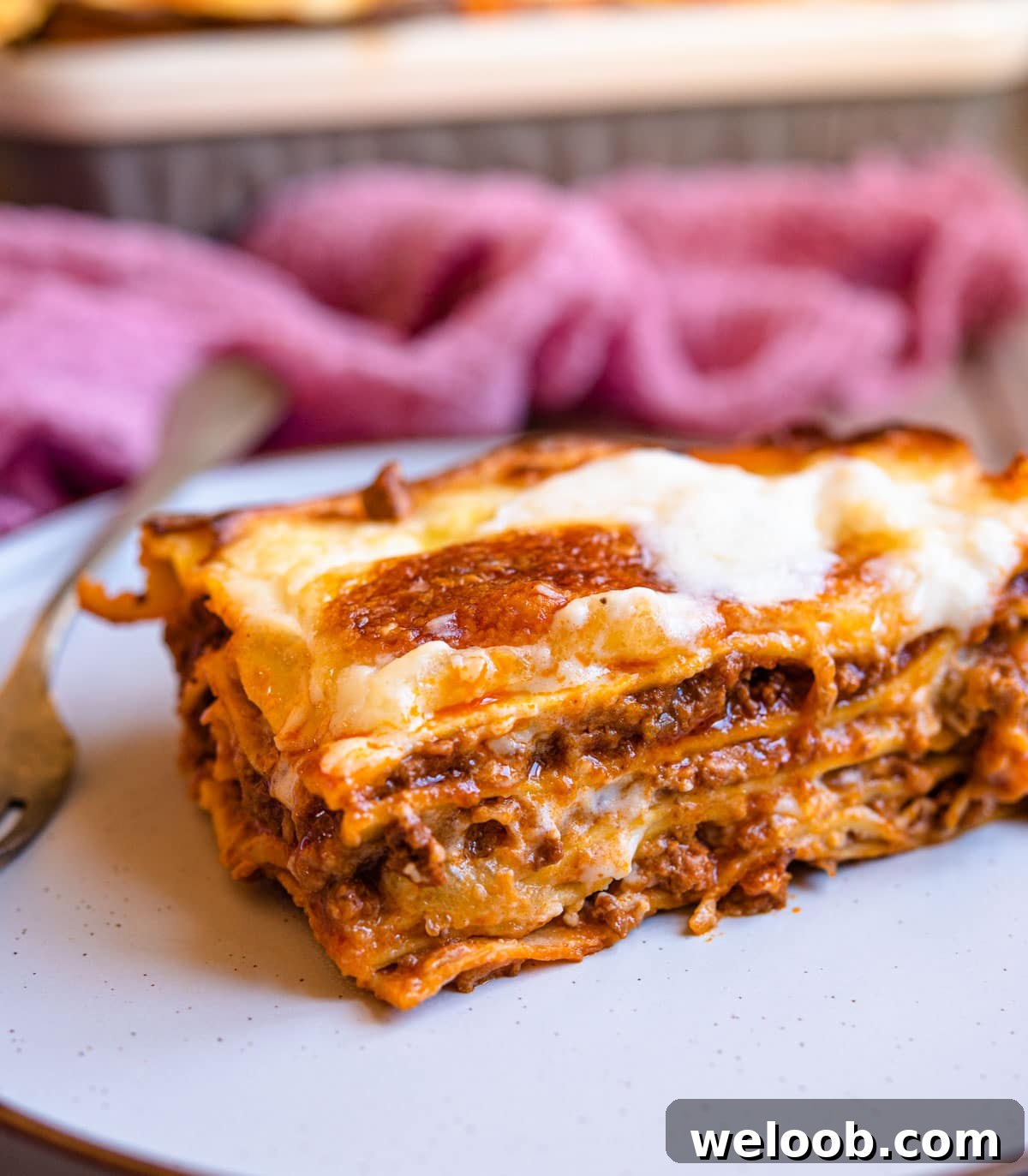
Fun Fact – The Difference between Lasagna and Lasagne
In Italian, “lasagna” refers to a single sheet of pasta, while “lasagne” is the plural. Because the dish uses multiple sheets, it’s correctly called “lasagne” or “Lasagne al Forno” in Italian. In many other places the dish is also called “lasagna.”
Whichever name you use, it’s the same delicious baked pasta we all love.
How to Make Lasagne al Forno – Step by Step
Il Soffritto
The ragu begins with il soffritto: finely chopped carrot, celery and white onion gently sautéed in olive oil for about 10 minutes until soft. This base adds depth to the sauce and works well prepared in advance — freeze batches and use as needed.
Top tip: Make a big batch of soffritto and freeze in portions to speed up future meals.
How to Make the Ragu
Finely chop carrot, celery and onion and sweat them gently in a large, deep pan with a little olive oil until soft. Add the beef and pork mince and brown, breaking it up with a spoon.
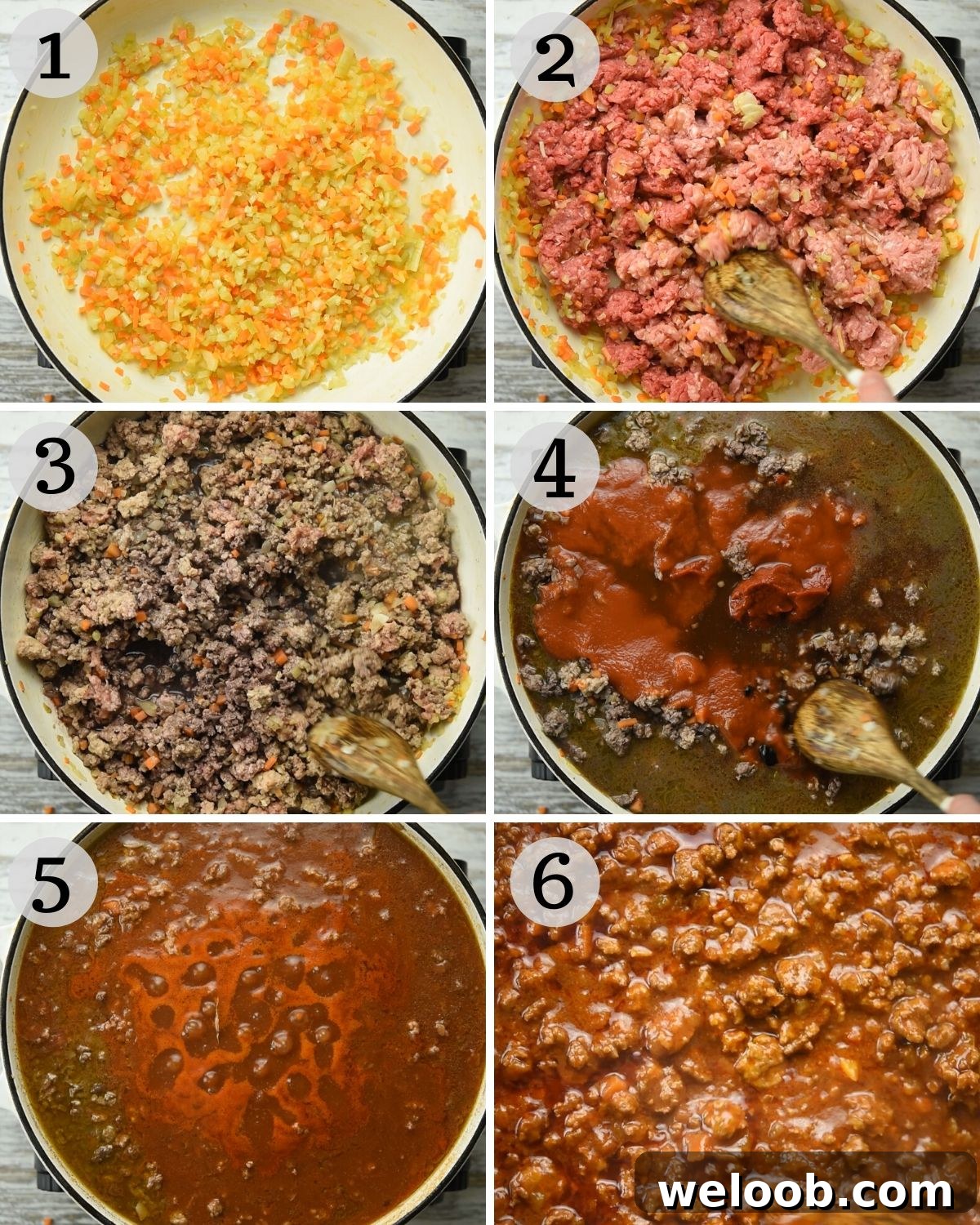
Pour in red wine and reduce by half, then add passata (sieved tomatoes), tomato paste, bay leaves, four cups of beef stock and a pinch of salt and pepper. Stir, then simmer uncovered on low for 2½–3 hours. Add the remaining stock halfway through the simmer to keep the sauce moist and concentrated in flavour.
How to Make Bechamel Sauce
Melt butter in a saucepan until bubbling. Stir in flour and cook for a minute to form a paste (roux). Slowly whisk in half the milk, stirring constantly to prevent lumps. When the sauce begins to thicken, add the remaining milk, a pinch of nutmeg, grated parmesan and seasoning.
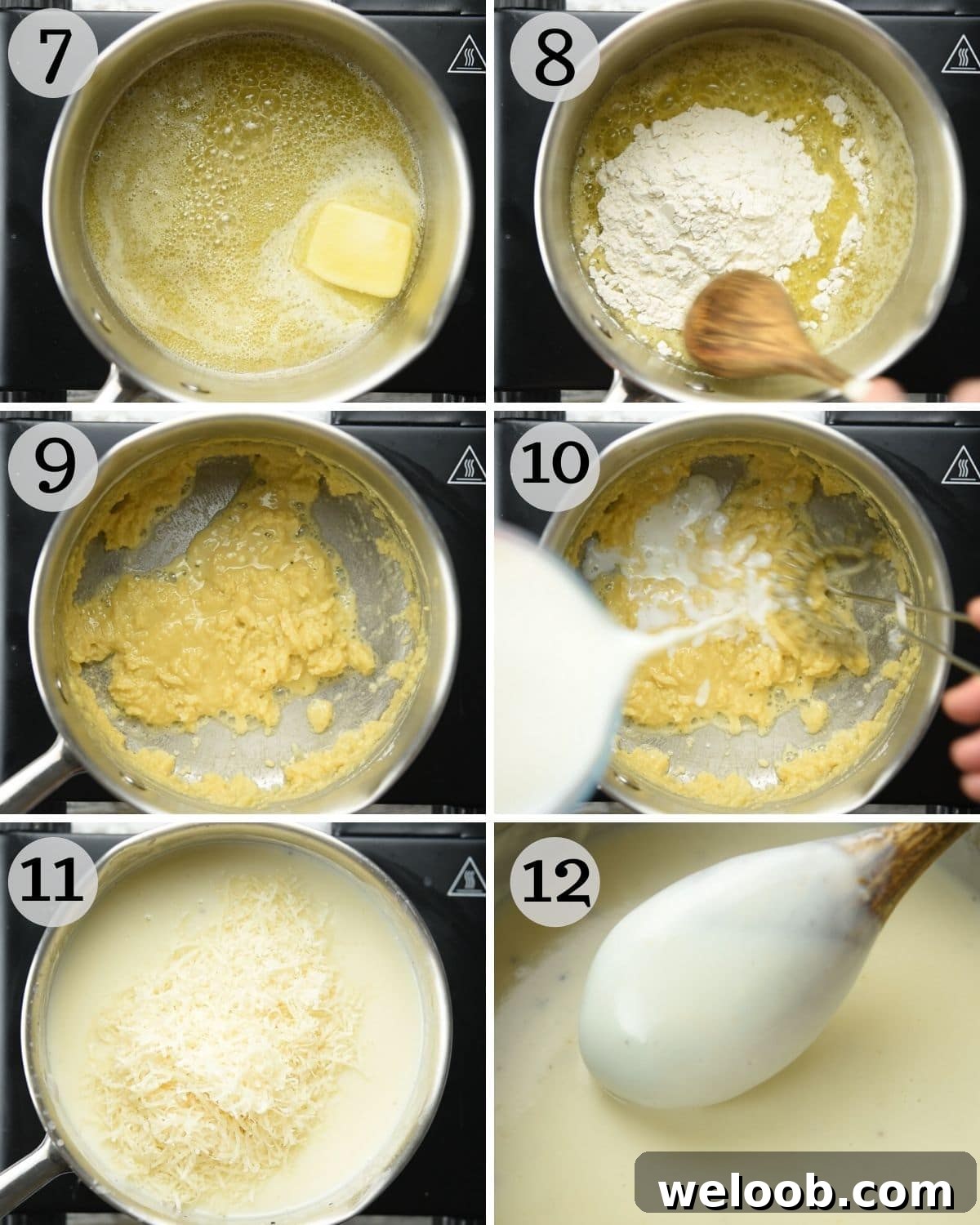
Continue to heat and stir until the béchamel is thick enough to coat the back of a wooden spoon, then remove from the heat and set aside.
How to Assemble the Lasagne
Spoon a little ragu into the base of a baking dish, then lay an even layer of lasagna sheets (cut to fit). Spread more ragu so the pasta is well covered, then add béchamel.
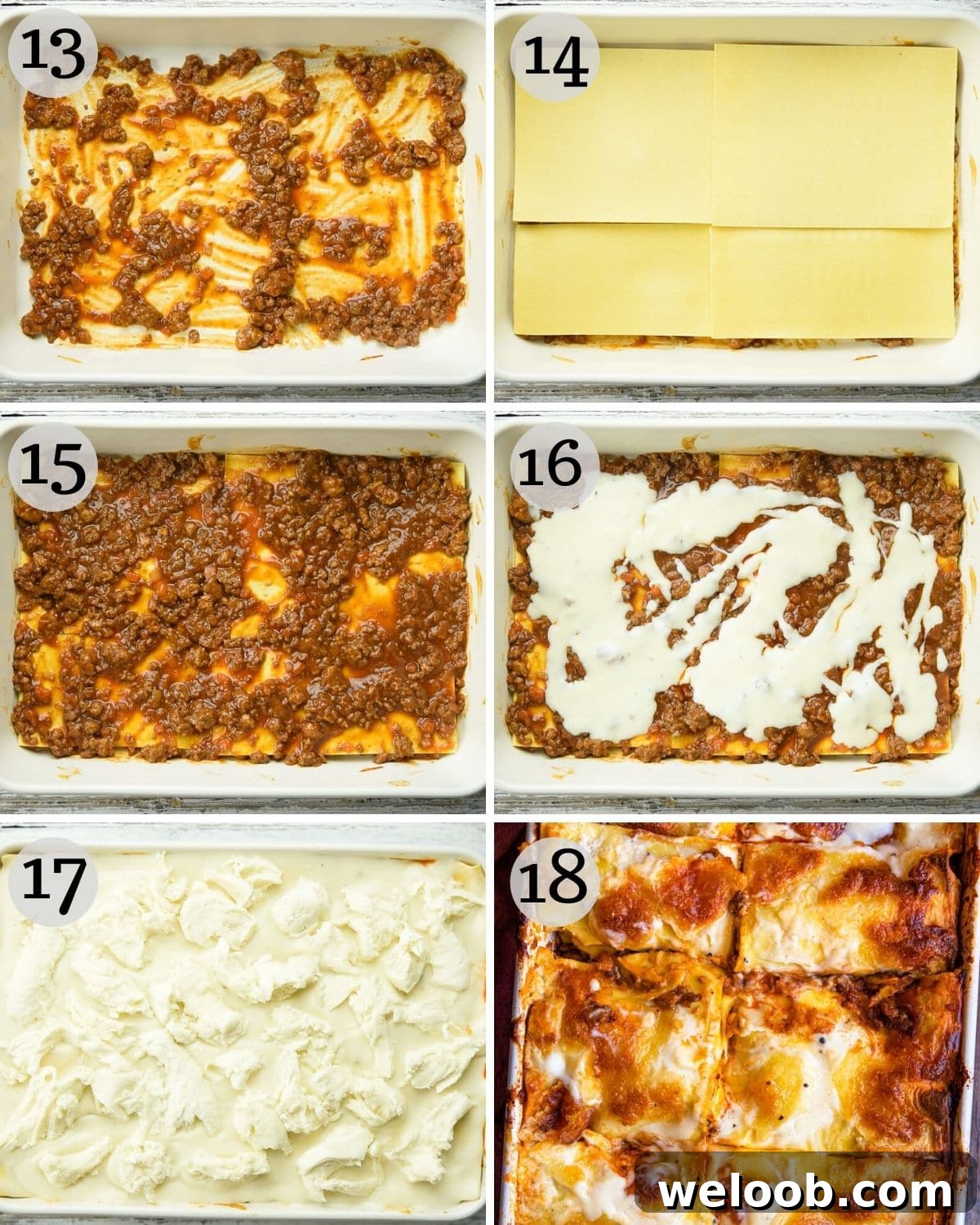
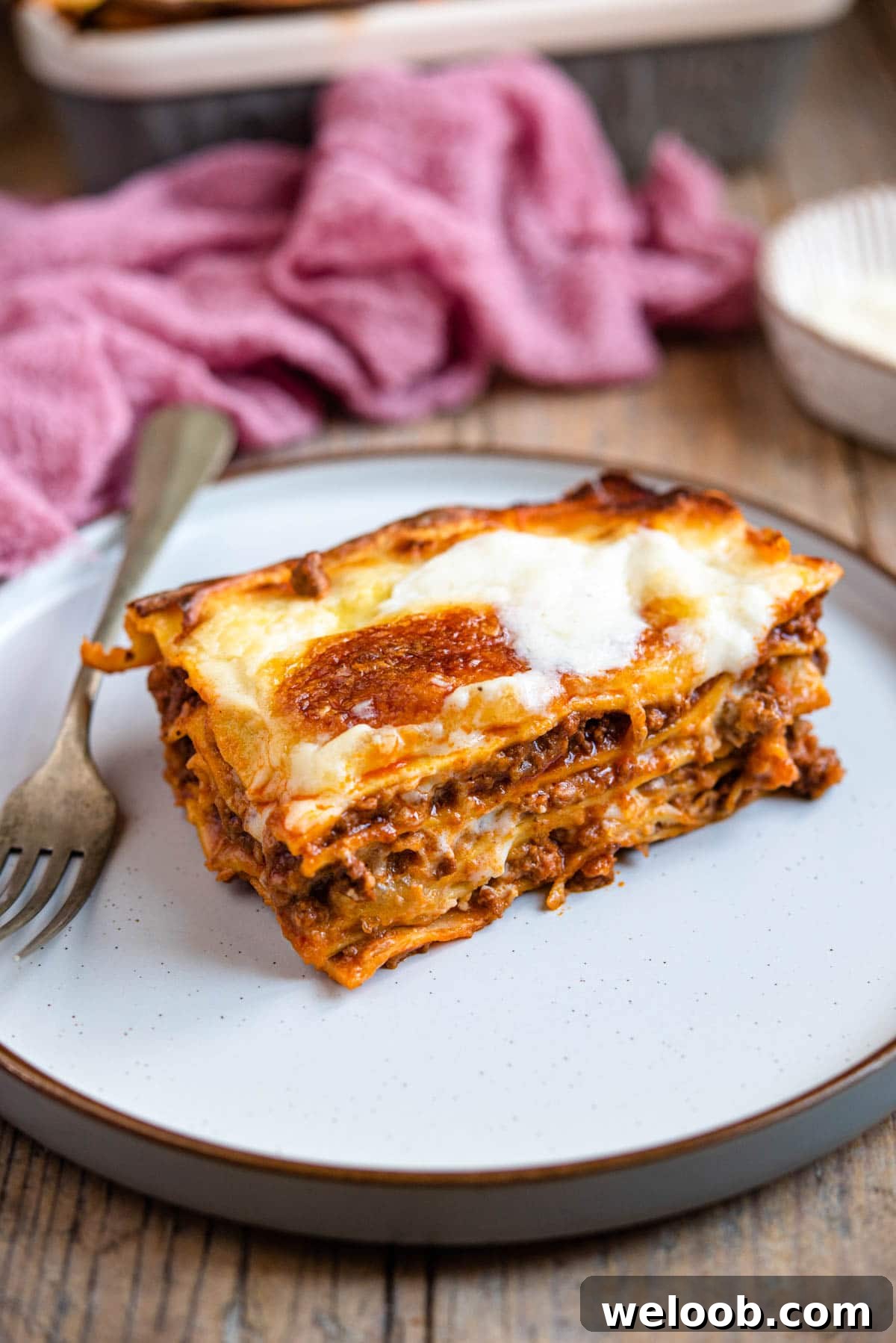
Repeat layers of pasta, ragu and béchamel until used, aiming for 4–5 layers of pasta. Finish with a top layer of pasta, cover with béchamel and scatter torn mozzarella over the surface. Bake until bubbling and golden, about 45 minutes, then rest 5–10 minutes before serving.
Dried Vs Fresh Lasagna Sheets
I prefer fresh lasagna sheets or homemade pasta when possible. Fresh sheets deliver a more delicate texture and typically don’t require pre-boiling, saving time and avoiding curled edges that can occur with some dried sheets.
Top Tips for Making Lasagne al Forno
- Give the ragu at least 3 hours to simmer for the best depth of flavour. Rushing this step won’t produce the same result.
- Simmer uncovered so the sauce concentrates. If it reduces too far, add ½ cup (125 ml) water at a time.
- Make the ragu a day or two ahead to cut prep time when assembling the lasagne.
- Ragu freezes well — thaw overnight before using.
- The béchamel here uses parmesan; for extra indulgence add a melting cheese such as gruyère or fontina.
- If using dried lasagna sheets, follow packet instructions for pre-boiling if required.
- If your lasagne collapses on the plate, the ragu likely hasn’t reduced enough. Refer to photos or a video for visual guidance on texture.
Other Lasagna Recipes You Might Like;
- Eggplant Lasagna with Prosciutto and Mozzarella
- Butternut Squash Lasagna – Sage, Prosciutto & Goat Cheese
- Lentil Ragu Lasagne
If you try this Classic Beef Lasagne, please rate the recipe and leave a comment to share how it turned out — feedback is always appreciated.
Step By Step Photos Above
Most recipes include step-by-step photos and tips to help you succeed first time.
Lasagne al Forno (Italian Beef Lasagna)
By Emily
Equipment
- 9×13 inch baking dish
Ingredients
Ragu
- 1 tbsp olive oil
- 1 cup carrot, finely chopped (1 large)
- 1 cup celery stalk, finely chopped (1 large)
- 1 cup white onion, finely chopped (1 large)
- 1 lb ground beef (mince) (500g)
- 1 lb ground pork (mince) (500g)
- 2.5 cups passata (tomato puree) (540g)
- 3 tbsp tomato paste
- 1 cup red wine (250ml)
- 6 cups beef stock (1.5 litres)
- 2 bay leaves
- 1 tsp sea salt flakes and pepper
White Sauce
- 5 tbsp butter (70g)
- 5 tbsp all-purpose flour (70g)
- 4 cups full fat milk (1 litre)
- 1/2 tsp nutmeg
- 1 cup parmesan, freshly grated (70g)
- 1 tsp sea salt and pepper, or to taste
Lasagne
- 1 lb fresh lasagna pasta sheets (500g)
- 2 balls mozzarella (8 oz / 250g), torn
Instructions
Ragu
- Finely chop carrot, onion and celery. Sauté gently in a large frying pan with olive oil until soft. Add beef and pork mince and cook until browned.
- If there’s excess fat, spoon some out. Add red wine and reduce by half.
- Add passata, tomato paste, bay leaves, 4 cups beef stock and a pinch of salt and pepper.
- Stir, then simmer uncovered on low for 2½–3 hours, adding the remaining stock halfway through.
White Sauce
- Melt butter in a saucepan until bubbling.
- Stir in flour to form a paste and cook for 1 minute.
- Whisk in half the milk slowly to prevent lumps. When it thickens, add the remaining milk, nutmeg, parmesan and seasoning.
- Continue to heat and stir until the sauce coats the back of a spoon. Remove from heat and set aside.
Assemble the lasagne
- Preheat the oven to 350°F (180°C).
- Spoon a little ragu into the bottom of the baking dish. Add an even layer of lasagna sheets cut to fit.
- Cover the pasta with more ragu, then add two ladles of white sauce.
- Repeat layers until ingredients are used, keeping enough béchamel for the top (aim for 4–5 layers).
- Top with torn mozzarella and bake for about 45 minutes or until bubbling and golden.
- Let rest 5–10 minutes before slicing and serving.
Notes
- Cook time: Allow at least 3 hours for the ragu to develop full flavour.
- Simmer uncovered: This concentrates the sauce. If it reduces too much, add ½ cup (125 ml) water at a time.
- Prep in advance: Make the ragu ahead to reduce assembly time.
- Freezing: Ragu freezes well; thaw overnight before assembling.
- Béchamel: Parmesan keeps it classic; add gruyère or fontina for extra richness.
- Dried pasta: If using dried sheets, follow packet instructions for pre-boiling if necessary.
Helpful Info for All Recipes
- I use extra virgin olive oil unless stated otherwise.
- When using canned tomatoes I prefer Cirio or Mutti for best flavour.
- Vegetable sizes are medium unless noted.
- Recipes are tested using a fan (convection) oven.
Nutrition
| Carbohydrates: 56 g
| Protein: 39 g
| Fat: 39 g
Nutrition information is approximate and provided as a guide.