Tomato Paste
The 1 Ingredient You Need
You only need one ingredient for this homemade tomato paste recipe: regular tomatoes! Many different types of tomatoes would work, but try to pick a kind with more tomato pulp, like Roma tomatoes or San Marzano tomatoes. Those are the best tomatoes for this recipe. However, you can also use Early Girl tomatoes!
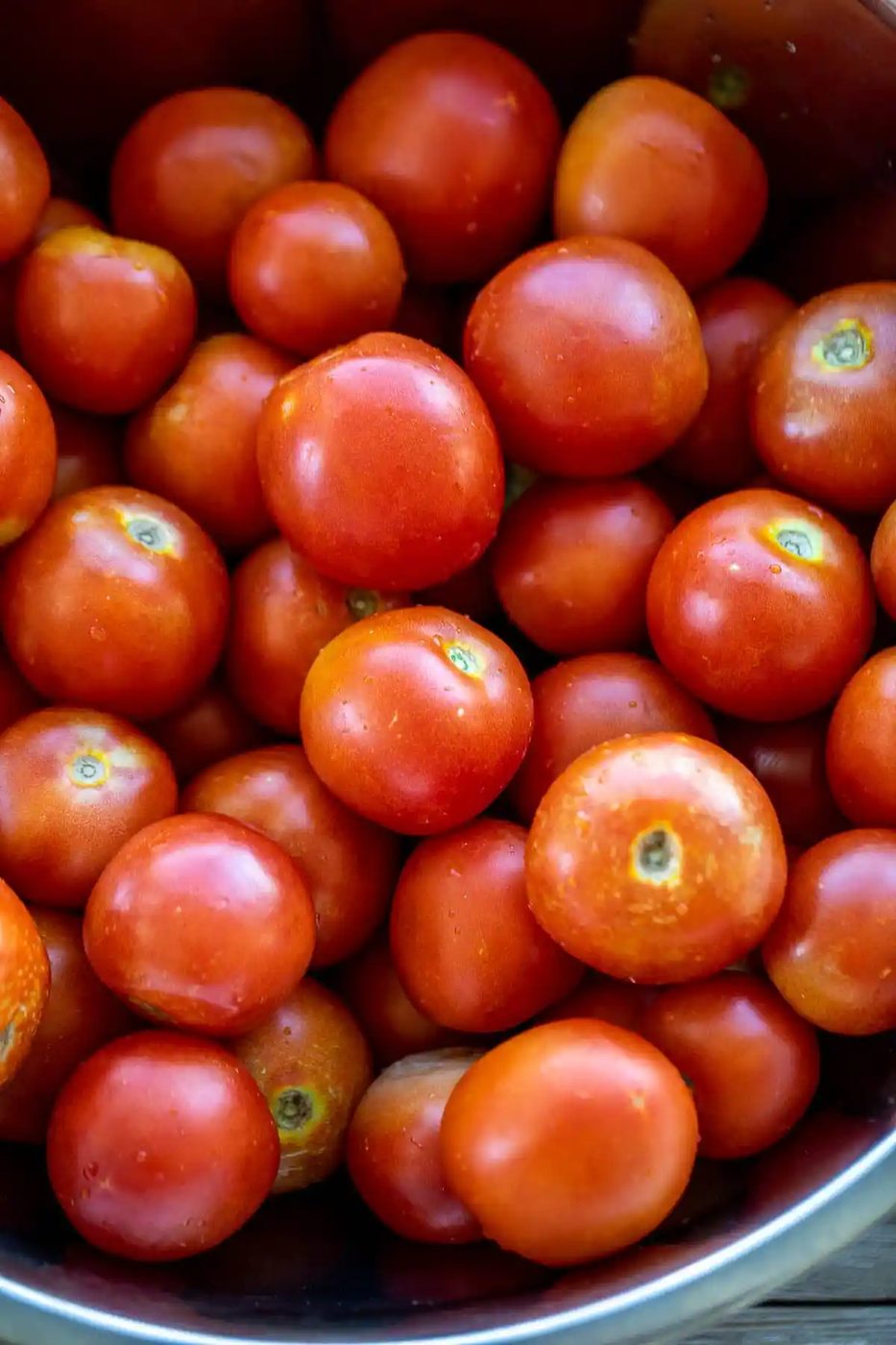
Some people add other ingredients like a little olive oil, citric acid (could come from lemon juice) and table or kosher salt to their homemade tomato paste. We prefer to keep it simple and most importantly salt-free.
It is better to add salt to the dishes you make with tomato paste as needed rather than have the tomato paste already salted. Later on, when you cook with it, you can dress it up with the different seasonings and herbs like bay leaves.
And this one-ingredient paste has low acidity compared to paste with added citric acid. Of course, tomatoes are naturally somewhat acidic, but this recipe has a more natural and consistent acidity and sweetness than other recipes.
4 Simple Steps For Making The Best Tomato Paste
You can make homemade tomato paste in 4 simple steps. There is no need for cooking tomatoes in boiling water beforehand since you’ll cook them after blending them. Although cooking them might feel like a long time, much of it is hands-off, and the prep time is only a half hour!
1. First, cut room temperature tomatoes into quarters, after rinsing them with cold water (you don’t need to remove the tomato skins).
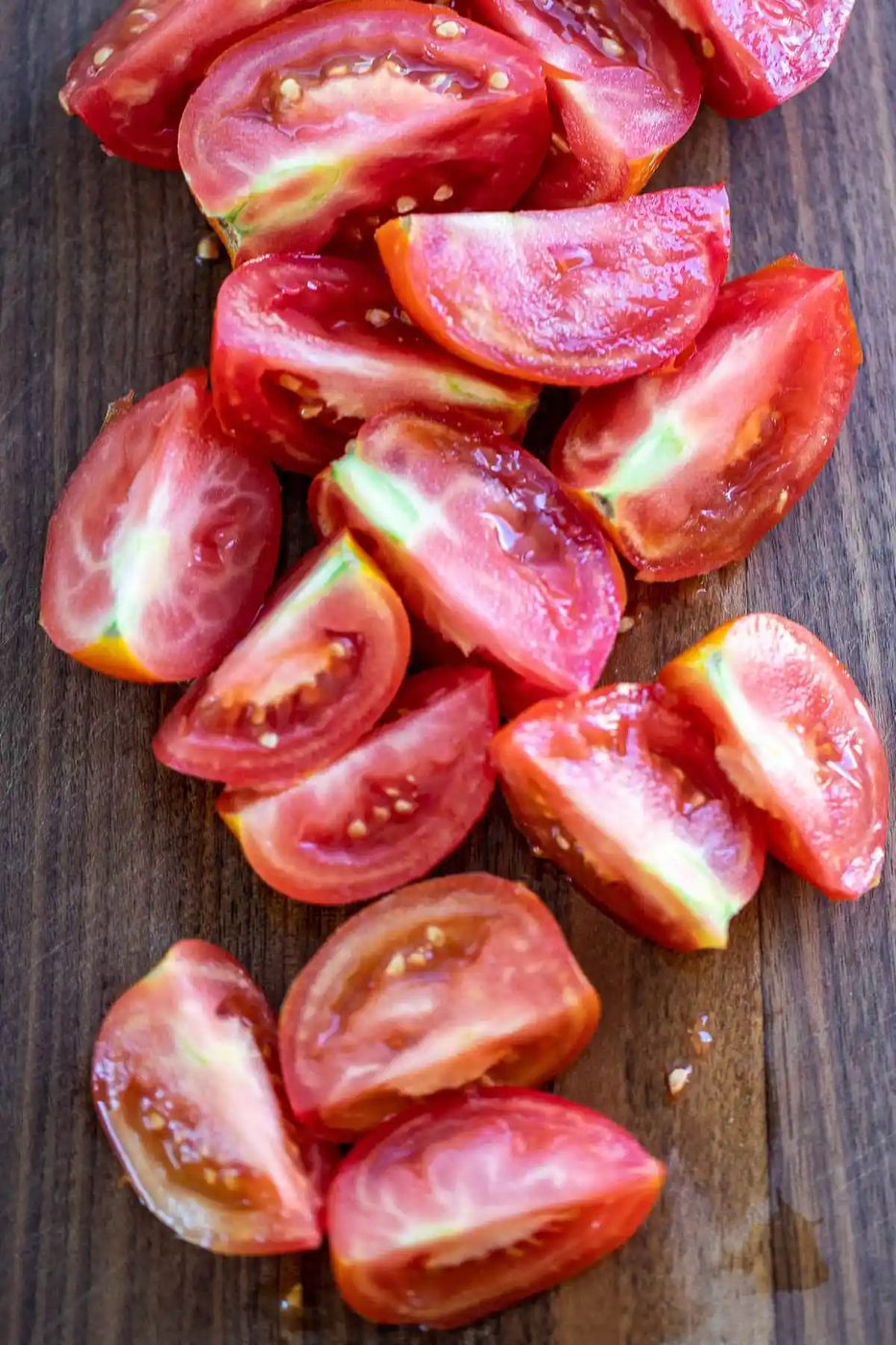
2. Blend the tomatoes to create a tomato purée.
3. Strain the tomatoes to remove the remaining seeds before beginning the cooking process.
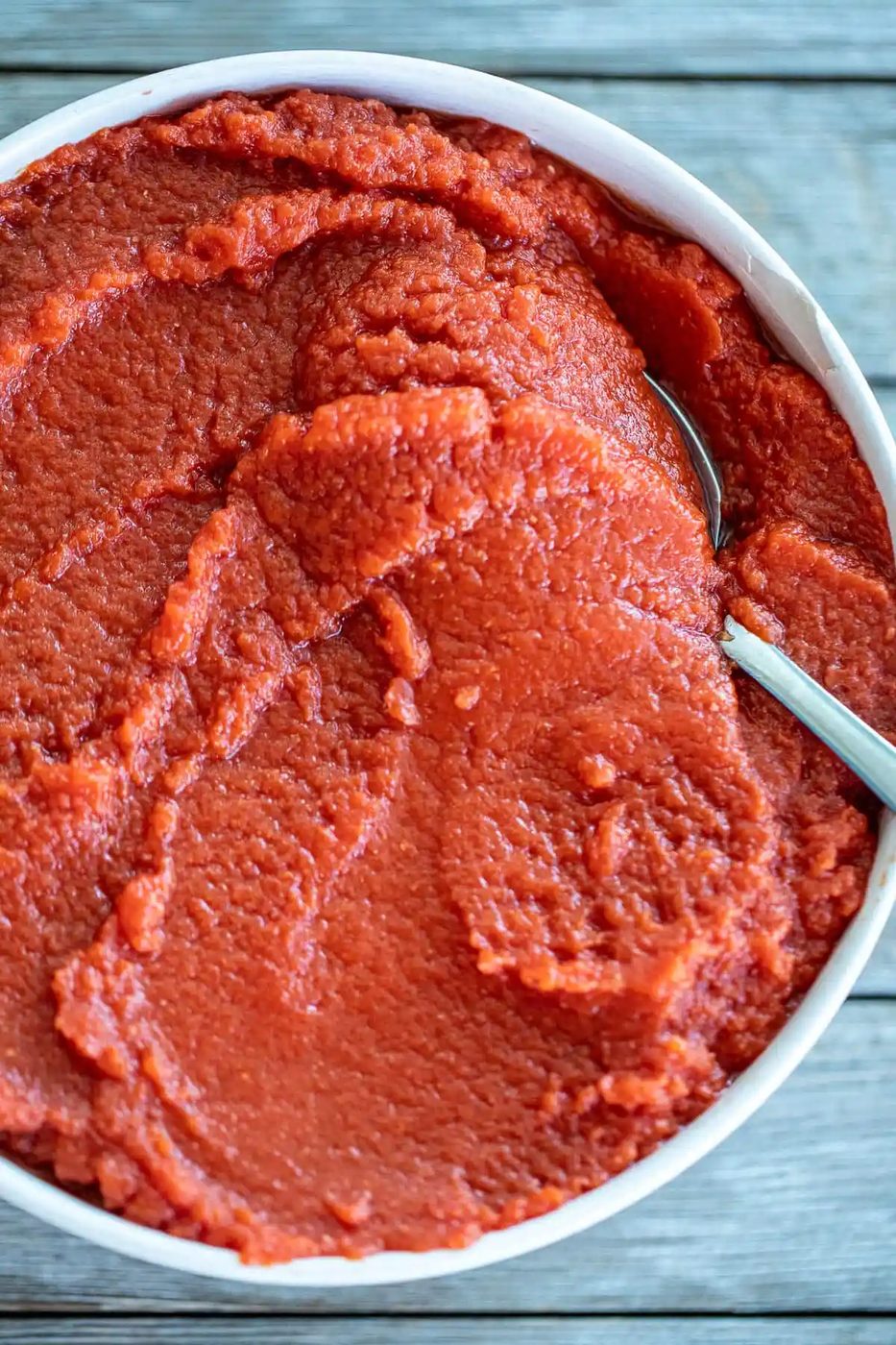
4. Place into a large pot and cook down until most of the liquid evaporates. As it cooks, you can lower the burner to medium heat, and then low heat. Give it enough time to transform into a thick tomato paste and allow it to become the right consistency, allowing the tomato water to evaporate.
Hint: Removing the seeds from the tomato paste leads to smoother looking tomato paste similar to that you will find in cans.
Some people allege that making tomato paste with seeds will make it bitter, but we have made tomato paste with seeds before, and we didn’t notice a difference in flavor. It is up to you whether you prefer no seeds, fewer seeds, or all of them in your paste.
How it comes together
SubscribeOther ways
Have fun while making homemade tomato paste, and try these variations.
- Roasted Tomato Paste – Place the tomatoes on a baking sheet and let it roast in the oven until slightly charred for a smoky roasted tomato paste. After roasting, blend the cooked tomatoes and proceed to make the tomato paste. Roasted tomatoes give it so much flavor!
- Spicy Tomato Paste – Add once scotch bonnet or habanero pepper while blending the tomatoes to make spicy tomato paste.
- Herby/Garlicky Tomato Paste – Blend the tomatoes with some fresh garlic, basil, and thyme to make a flavor-infused tomato paste.
You can literally add any flavors of choice to your homemade tomato paste.
Cook notes
- We don’t recommend using canned tomatoes. By far, using fresh tomatoes is the way to go, as it produces the best flavor and texture.
- You can also make this recipe in the slow cooker. Follow the prep and directions, then once it is in the slow cooker, allow the paste to reduce and thicken until there is little water left. You don’t need to stir it too often.
- Aside from cooking with the tomato paste, you can also turn it into homemade ketchup. We love doing this since it means we can skip all of the preservatives in store-bought ketchup! All you need is the tomato paste, white vinegar, a small amount of sugar, and seasonings to do so.
- As a good rule of thumb, the more the water evaporates, the lower you want to adjust the heat. This prevents the paste from burning on the bottom and having an unpleasant flavor.
No Special Equipment For Tomato Paste
You could make homemade tomato paste with just a blender for blending the tomatoes and a fine mesh sieve for straining the tomatoes. You can also use a food processor.
Also, some people use a food mill to process the tomatoes but you could totally just use a blender and strainer. However, we don’t recommend an immersion blender.
Leftovers
There are a few different ways to store your own homemade tomato paste for later use, extending its shelf life. After all, who doesn’t love longer storage? Here are a few ways to do so:
Ice Cube Method: A great way to store tomato paste is to put it into an ice cube tray and freeze it overnight. Once it freezes, remove the tomato paste cubes from the ice tray, put them into a plastic bag, and store in the freezer for 2-3 months. You can also put them in an airtight container. Add frozen cubes to recipes as called for.
Olive Oil Method: Put homemade tomato paste in mason jars up to three-quarters full. Then, pour a layer of olive oil to completely cover the tomato paste. Screw on the lid and store in the fridge for up to a week.
Canning Method: Canning the homemade paste is one of our favorite ways to store it. You can learn how to can tomato paste in a glass jar at home! For best results, follow this guide.
For every 10 pounds of fresh tomatoes used, you get about 2 pounds of homemade tomato paste.
- Yield: 6 servings
- Prep: 30 minutes
- Cook: 2 hours
- Total: 2 hours 30 minutes
Ingredients
- 10 pounds tomatoes
Method
- Cut Tomatoes. Rinse tomatoes thoroughly then cut them into quarters.
- Blend Tomatoes. Place the tomatoes in a blender and blend then into a puree. You'll have to do this in several batches.
- Sieve. Pass the blended tomatoes through a fine mesh sieve to remove the seeds and some of the skin.
- Cook Down To a Paste. Place the sieved tomato puree into a large pot and let it cook down until it reduces and looks like tomato paste. When it reduces significantly, turn the heat down to medium to prevent it from burning. Do not stir as it cooks. This whole process takes about 2-3 hours depending on the intensity of the heat and how watery the tomatoes are.
- Store. Store tomato paste by freezing in ice cubes, refrigerating in mason jars or canning. See Note 2