Lasagna with Béchamel Sauce
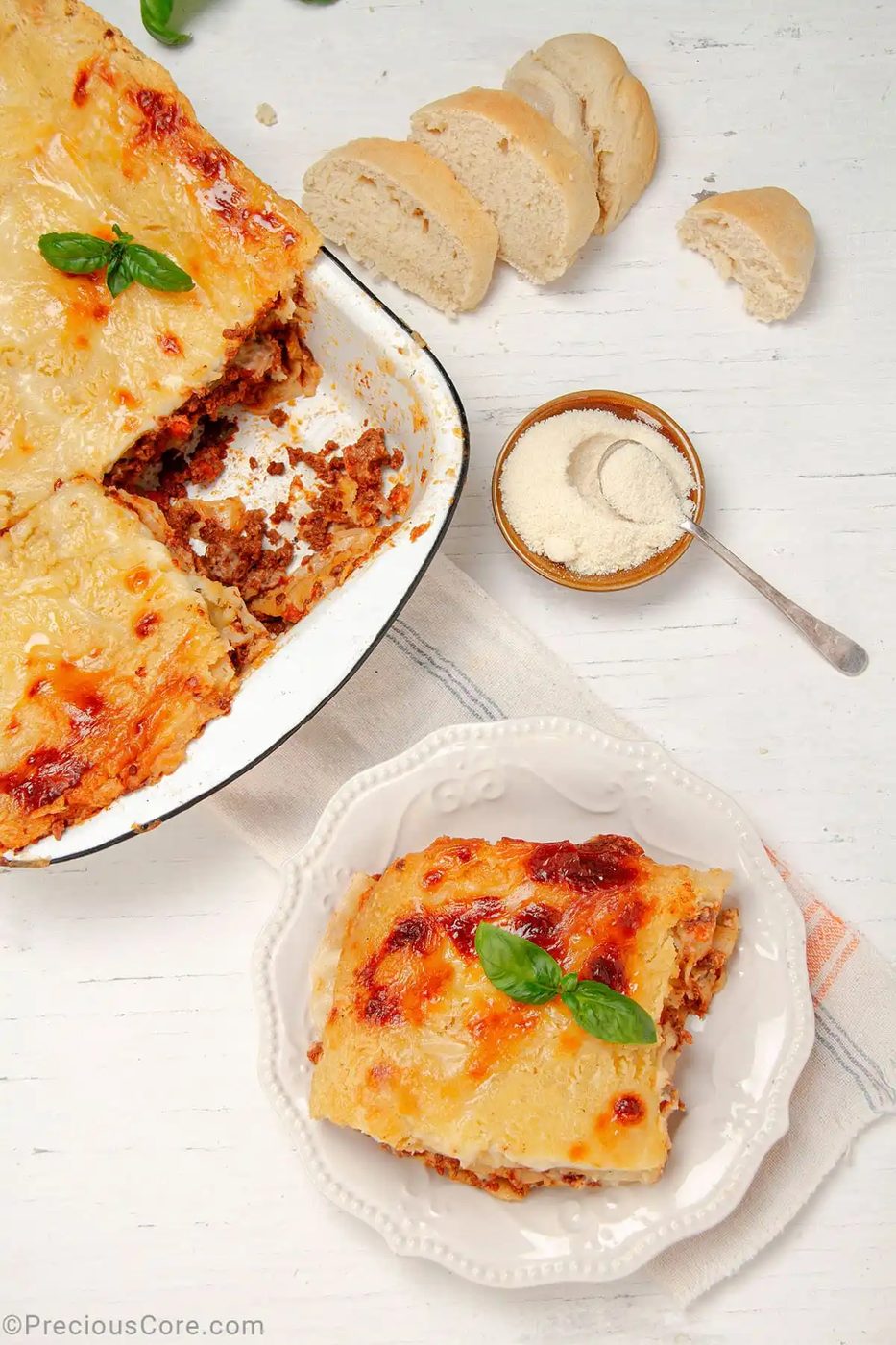
Best Recipe For Lasagna With Béchamel Sauce
The origin of this dish dates back to ancient Greece, where a dish called Laganon alternated layers of pasta and sauce. The Romans adopted this satisfying recipe with the expansion of their empire, and today it is undoubtedly an authentic Italian dish.
For us, lasagna symbolizes abundance and unity. For those of us blessed with a large family, we know how important it is to prepare hearty dishes that everyone enjoys. Lasagna fits this perfectly because it’s soft and always loved by children.
The best part is that it contains meat, milk, and even vegetables, making it a complete meal. Many times, we bring a large tray of lasagna to friends’ gatherings to bake while we chat and enjoy a relaxed Sunday.
The preparation of Lasagna with Homemade Bechamel is a labor of love, but every step is worth it. We usually prepare the Bolognese sauce the night before. If you can cook it slowly in a traditional pot or on the 6-hour program of a slow cooker, you’ll see how your lasagna reaches another level of simmered-all-day deliciousness.
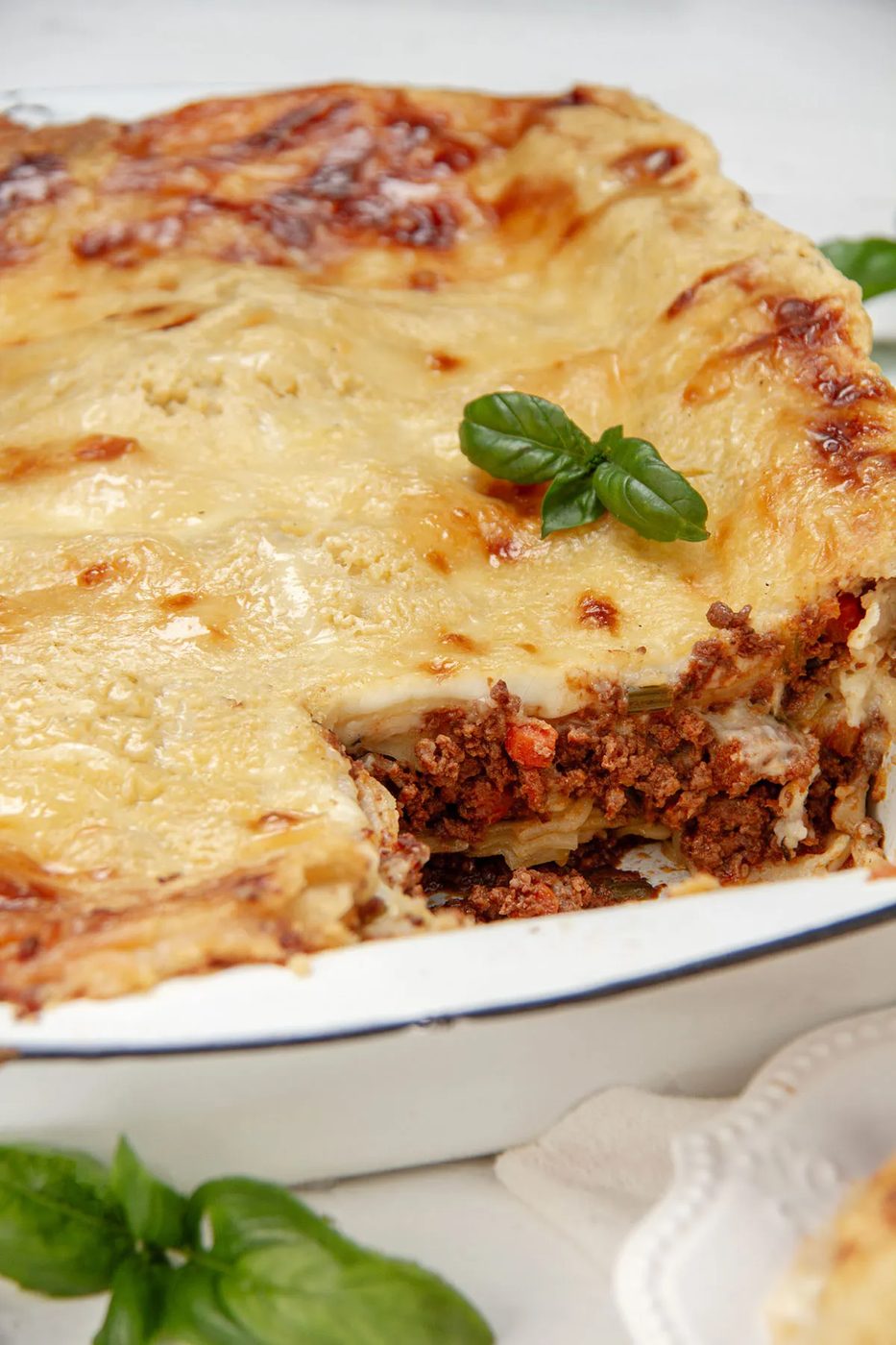
For us, the ingredients of the sauce are always the same, and our family loves them; we use a combination of onion, carrot, and celery, known in cooking as mirepoix (pronounced “mi-rwa-pwá”).
This aromatic base is fundamental in French cuisine and exquisite for lasagna meat. Besides the mirepoix, we add grated tomatoes, tomato paste, and some basic seasonings that always include a bay leaf and a bit of oregano. Next, we make the homemade béchamel. See step-by-step instructions for making Lasagna With Béchamel Sauce below.
Ingredients Needed
Here is everything you need for the homemade creamy béchamel sauce, lasagna Bolognese and the complete lasagna. It is the best lasagna you will ever make!
For the béchamel sauce, you need equal parts of butter and flour to make a roux.
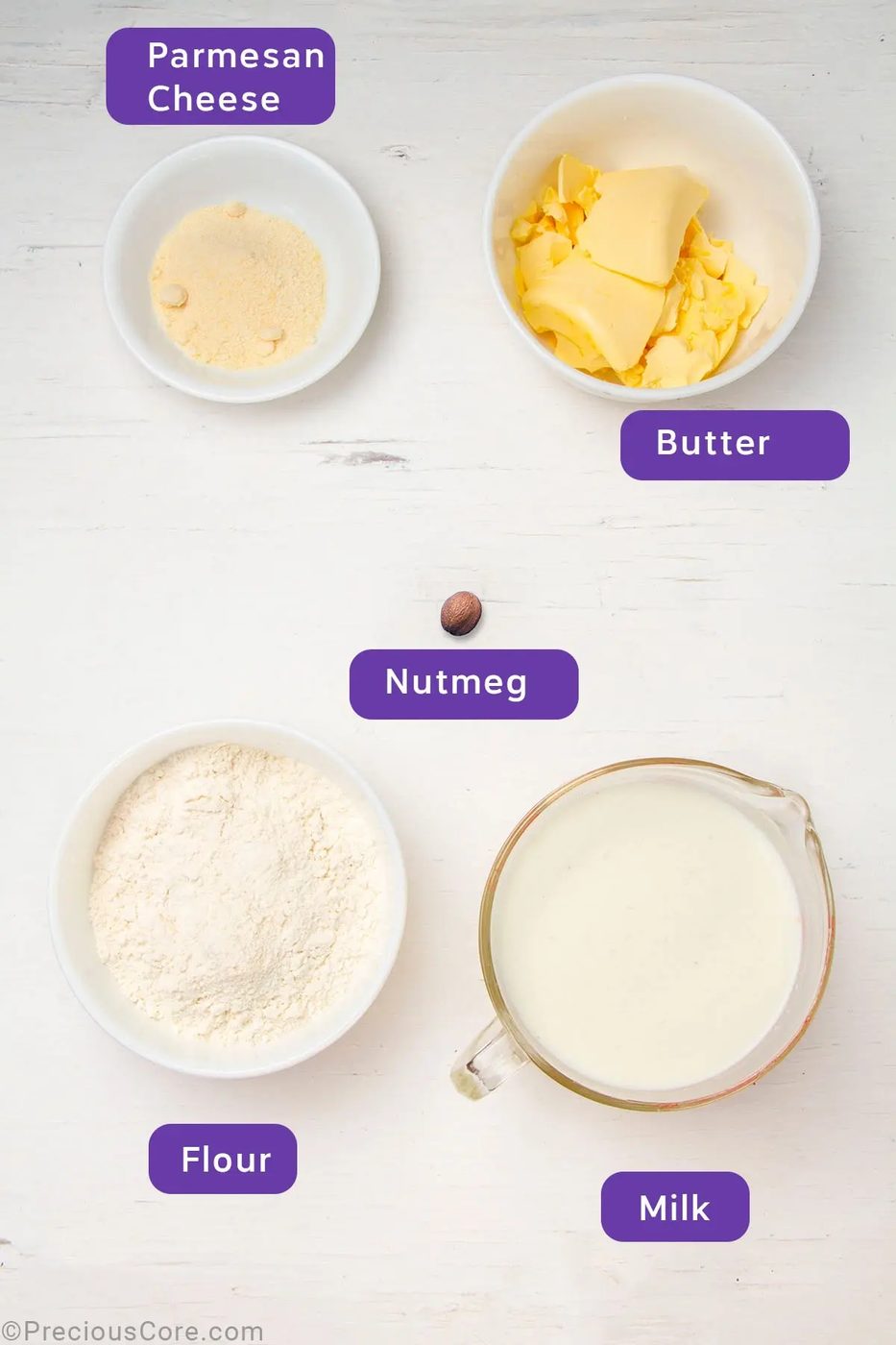
You also need some butter, nutmeg, and parmesan cheese. See the full list of ingredients on the recipe card below.
For the Bolognese sauce, which is the flavorful base of lasagna, the ingredients include:
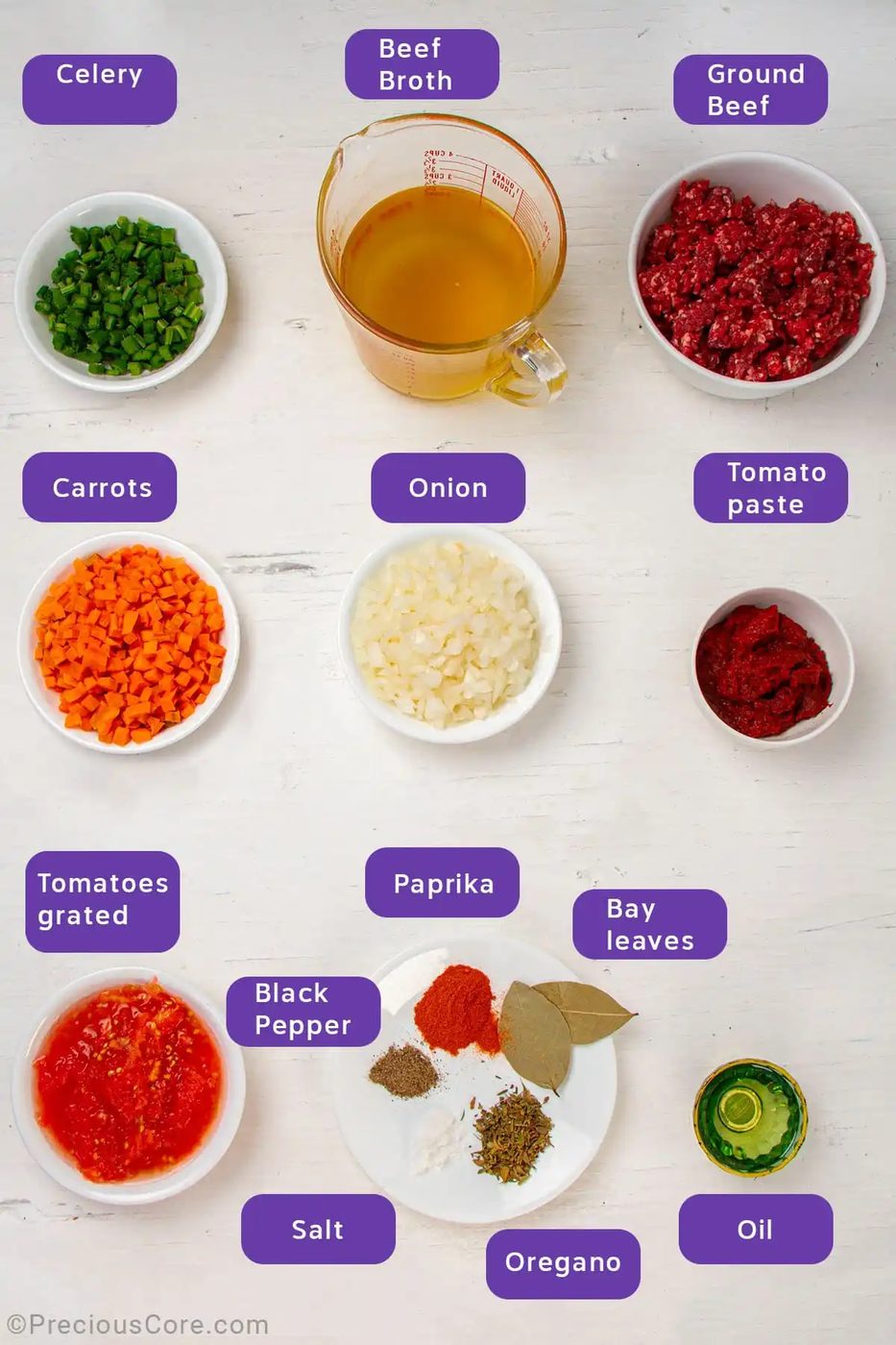
To assemble the lasagna, you need the prepared Bolognese and béchamel sauces, along with lasagna sheets also known as lasagna noodles. You also need some mozzarellas and parmesan cheeses for the topping.
For the full list of ingredients with measurements, check out the recipe card below.
How it comes together
We adore béchamel sauce, and making it is simpler than you might think.
- The first step is to measure the equal parts of butter and flour. In this case, we used 250 grams of each. Melt the butter.
- Then add the flour, mixing until it forms a lumpy mixture called roux.
To ensure your béchamel sauce doesn’t have lumps, gradually add whole milk, whisking continuously.
- Immediately add warm milk gradually while stirring with a whisk.
- Like magic, the lumps disappear from the mixture, and as it cooks, it becomes thicker and creamier. The sauce should be able to coat the back of a wooden spoon.
- At this point, you should turn off the heat.
- Stir in a quarter cup of grated Parmesan cheese and a pinch of nutmeg for that classic flavor.
Once you start making the béchamel, have everything at hand and never stop stirring the bottom of the pot to prevent the sauce from sticking and forming a burnt crust, which is very difficult to handle and could ruin the sauce.
Common Mistakes with Béchamel and How to Fix Them:
- Lumps: If there are lumps in your sauce, which happens if you didn’t whisk vigorously enough, you can blend it and return it to a clean pot to finish cooking until it reaches the desired consistency.
- Burnt Bottom: If a hard layer forms at the bottom, taste the béchamel. If it doesn’t taste burnt, you can save it by immediately removing it from the heat and transferring it to another pot without scraping the bottom.
- Hardened Top Layer: If you make the meat sauce and béchamel a day before and a hard layer forms on top (this happens if you don’t cover it with plastic wrap), add a bit more milk and blend it again.
How it comes together
- Sauté carrots, celery and onions in olive oil on medium-high heat.
- Add grated or crushed tomatoes and tomato paste. You can also use tomato sauce.
- Add ground beef and cook, breaking it with a spoon.
- Add beef broth, herbs, spices and seasoning like salt and black pepper.
- Simmer on medium heat until the sauce is done.
How To Layer Lasagna With Béchamel Sauce
At this point, with the béchamel and Bolognese sauces ready, all that’s left is to assemble the béchamel lasagna. We use no-boil lasagna noodles to save time. Before assembling, ensure the meat sauce is juicy, never dry. If it has dried out, add more water or broth.
- The first step is to grease a baking dish and place a bit of meat sauce at the base to keep the lasagna soft.
- Then, place the first layer of pasta. We make it double because our husband likes this consistency. You can place them in a single layer if that’s your preference.
- Next, evenly spread a generous layer of meat.
- Followed by spreading plenty of béchamel. You can add a layer of mozzarella cheese here, but we only add it at the end (it’s a matter of taste).
- Repeat the process (pasta-bolognese-béchamel) three or four times, depending on the depth of your dish. The last layer should be pasta, béchamel, and cheeses. We use a mix of mozzarella and Parmesan. You can also use Parmigiano in place of the parmesan.
Use oven-ready pasta: Save time by using pre-cooked pasta sheets that go straight into the oven.
Also, check out our recipe for Plantain Lasagna.
Pantry notes
There are dozens of variations of lasagna worth trying:
- Traditional Bolognese: Mix equal parts beef and pork. This is one of our regular recipes.
- Pesto Lasagna: Add pesto to either the meat or béchamel sauce.
- Vegetable Lasagna: Replace pasta layers with zucchini or eggplant slices.
- Different Pastas: Use fresh, dried, or alternative pasta types like noodles.
- Yield: 10 servings
- Prep: 30 minutes
- Cook: 2 hours
- Total: 2 hours 30 minutes
Ingredients
Bolognese Sauce
- 2 tbsp olive oil
- 2 celery stalks, finely chopped, 120 g.
- 2 medium onions, finely chopped, 300 g.
- 2 medium carrots, finely chopped, 400 g.
- 2 pounds ground beef, (900 g.)
- 4 cups grated tomatoes, (about 8 medium tomatoes), sub with canned crushed tomatoes
- 6 tbsp tomato paste
- 4 cups beef broth, 1 l.
- 2 bay leaves
- 1 tsp dried oregano
- Black pepper to taste
- 1/2 tsp paprika
- 1 tsp salt
Bechamel
- 250 g all-purpose flour, 2 cups
- 250 g butter, 17 tablespoons
- 6 cups whole milk, (1.4 liters)
- 1/4 cup Parmesan cheese (30 g.), grated
- Pinch of grated nutmeg
- Pinch of salt, as needed
Assembling the Lasagna
- 1 tsp butter, for greasing pan
- Prepared bolognese sauce
- Prepared béchamel sauce
- 24 lasagna pasta sheets
- 2 cups shredded mozzarella cheese, (200 g.)
- 1 cup shredded Parmesan cheese, (100 g.)
Method
- Sauté Vegetables: Heat oil in a large pot over medium heat. Add the chopped onion, celery, and carrots. Cook until the vegetables are soft and the onion is translucent about 5-7 minutes.
- Add Tomatoes and Paste: Stir in the grated tomatoes and tomato paste. Mix well to combine.
- Cook Meat: Add the ground beef to the pot. Cook, breaking it apart with a spoon, until browned and cooked through, about 8-10 minutes.
- Simmer: Pour in the beef broth, then add the bay leaves, oregano, black pepper, paprika, and salt. Bring the mixture to a boil, then reduce the heat and let it simmer uncovered for 1.5 hours, stirring occasionally.
- Make Roux: In a large saucepan, melt the butter over medium heat. Once melted, add the flour and stir continuously to form a roux. Cook for 2-3 minutes until slightly golden.
- Add Milk: Gradually add the warm milk, whisking constantly to prevent lumps. Continue to cook, stirring constantly, until the sauce thickens and coats the back of a spoon.
- Season and Finish: Remove the saucepan from heat and stir in the grated Parmesan cheese and nutmeg. Season with a pinch of salt if needed. Set aside.
- Preheat Oven: Preheat your oven to 375°F (190°C). Grease a large baking dish with the teaspoon of butter.
- Layering: Spread a thin layer of Bolognese sauce at the bottom of the prepared baking dish. Cover with a layer of lasagna sheets. Spread a layer of bolognese sauce over the pasta, followed by a layer of béchamel sauce. Repeat these layers (pasta, bolognese, béchamel) until you have 3-4 layers, ending with a layer of béchamel sauce on top.
- Add Cheese: Sprinkle the shredded mozzarella and grated Parmesan evenly over the top.
- Bake: Cover the dish with aluminum foil and bake in the preheated oven for 30 minutes. Remove the foil and bake for an additional 15 minutes, or until the top is golden and bubbly.
- Rest and Serve: Let the lasagna rest for 10-15 minutes before cutting and serving.
Notes
You could half all the ingredients in the béchamel sauce, and you will still get a great amount of béchamel sauce for the lasagna. If you make the full amount of béchamel and end up with leftover béchamel sauce, serve it with pasta, vegetables, fish, or steak.
This Lasagna tastes even better the next day! To reheat, we recommend covering it with foil and heating it in a 350 degrees F oven until heated through.
Lumps: If there are lumps in your sauce, which happens if you didn’t whisk vigorously enough, you can blend it and return it to a clean pot to finish cooking until it reaches the desired consistency.
Burnt Bottom: If a hard layer forms at the bottom, taste the bechamel. If it doesn’t taste burnt, you can save it by immediately removing it from the heat and transferring it to another pot without scraping the bottom.
Hardened Top Layer: If you make the meat sauce and bechamel a day before and a hard layer forms on top (this happens if you don’t cover it with plastic wrap), add a bit more milk and blend it again.