Lemon Butter Salmon
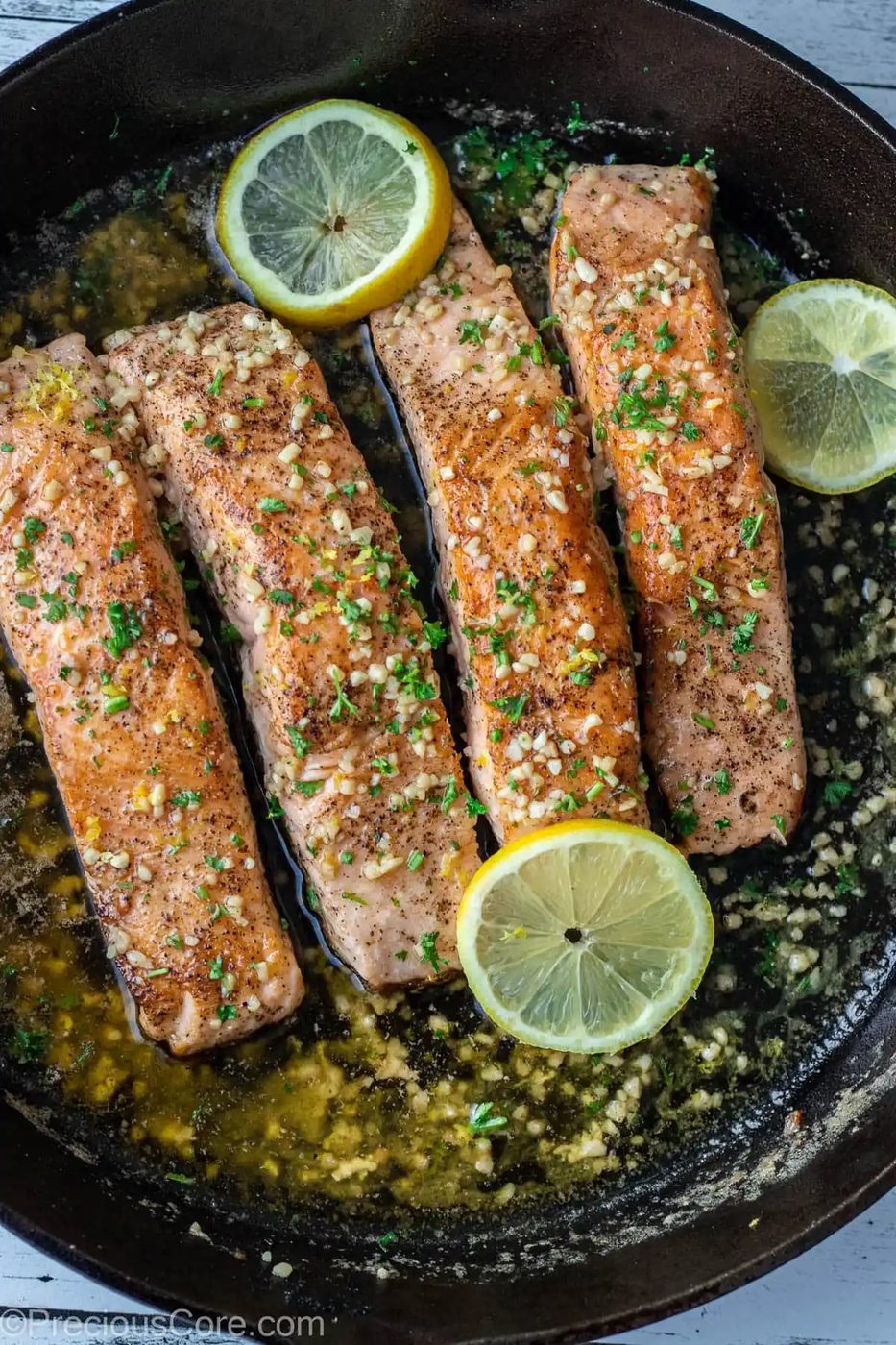
- Yield: 4 servings
- Prep: 10 minutes
- Cook: 10 minutes
- Total: 20 minutes
Ingredients
Here are the main ingredients you need for this Lemon Butter Salmon, not including salt, pepper, and olive oil.
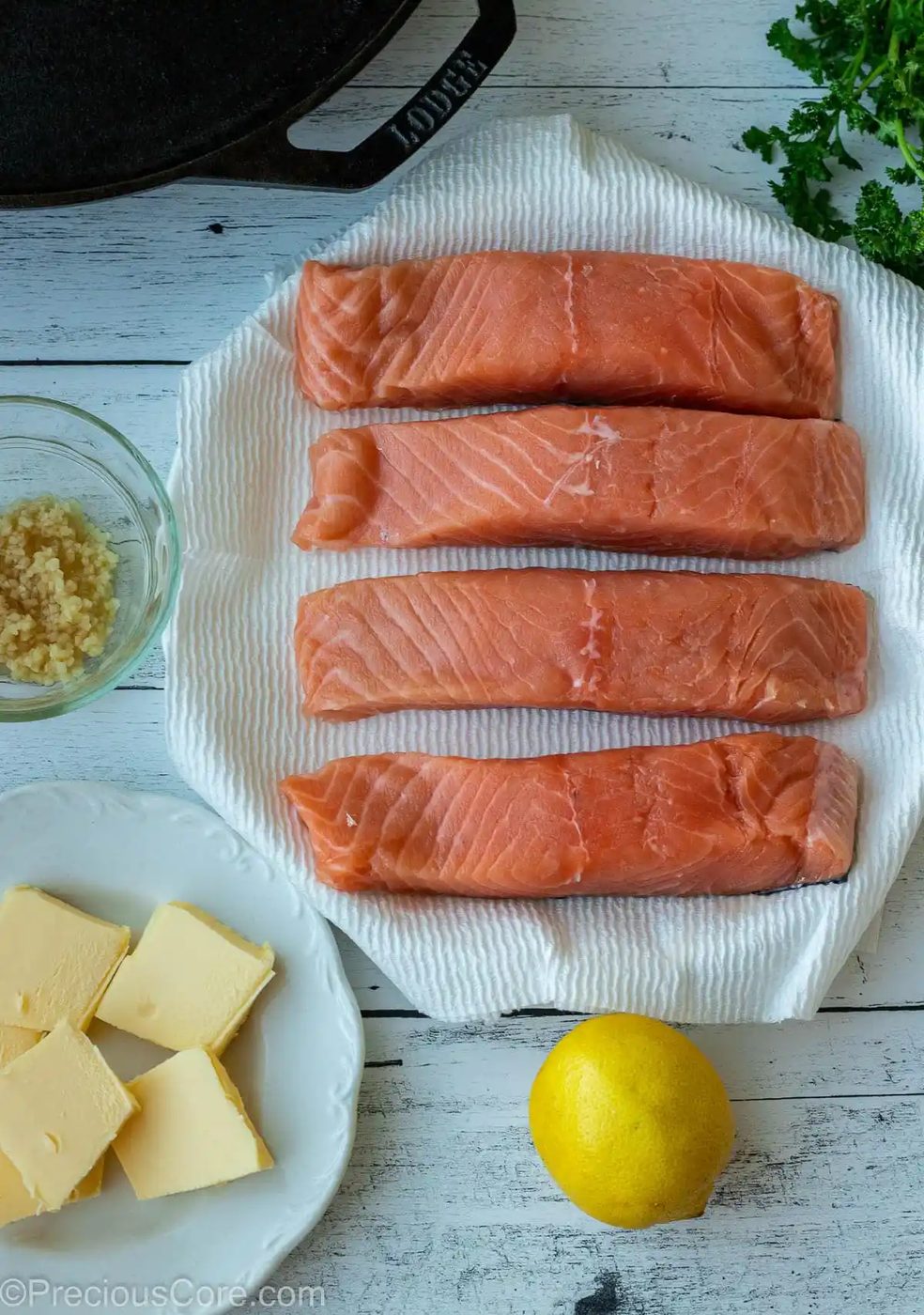
- Salmon: Fresh or frozen salmon is fine. Frozen salmon is a better choice for salmon though because the salmon is frozen right after being caught. Let the salmon thaw overnight in the fridge. See more options for thawing salmon below.
- Butter: Lots of it to create a satisfying sauce for the fish.
- Fresh Lemon: Use fresh lemon juice for the best flavor. Garnishing the dish with lemon zest before serving also imbues a lemony flavor without sourness.
- Minced Garlic: Adds lots of flavor to the lemon butter sauce. Don’t skip it!
See the recipe card at the bottom of this post for quantities.
Thawing Salmon
If you forget to thaw your salmon overnight in the fridge, you could still quickly thaw salmon. Thaw salmon quickly in cold water. Remove the vacuum-sealed packaging on the salmon and place the salmon in a dish with cold water, ensuring that the water completely covers the fish. Let it thaw for one hour. As it thaws, change the water every 15 minutes.
How it comes together
In four easy steps, you can make lemon butter salmon. Your whole family will love this easy fish dinner!
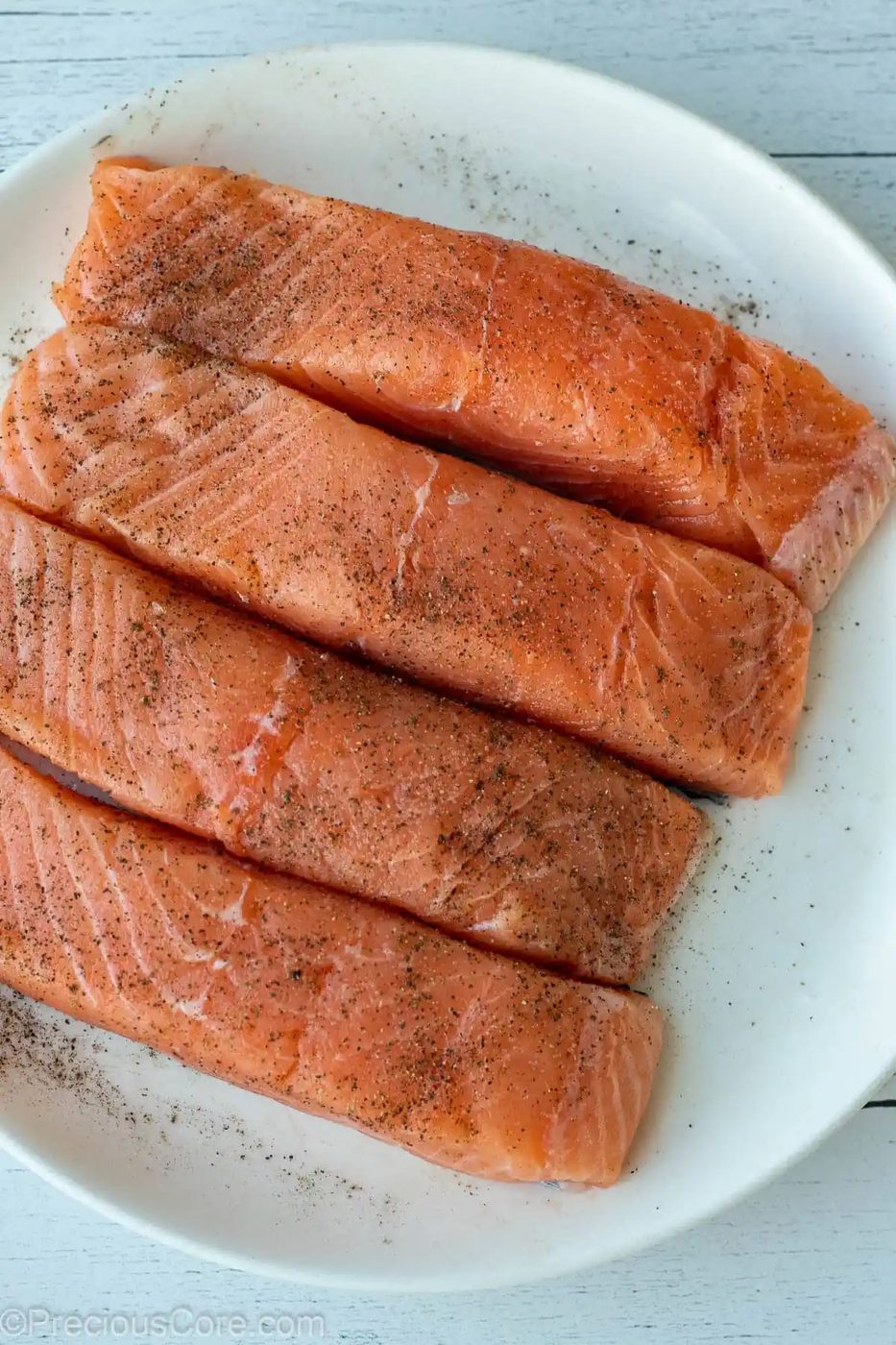
1. First, pat the salmon dry and season both sides with salt and pepper.
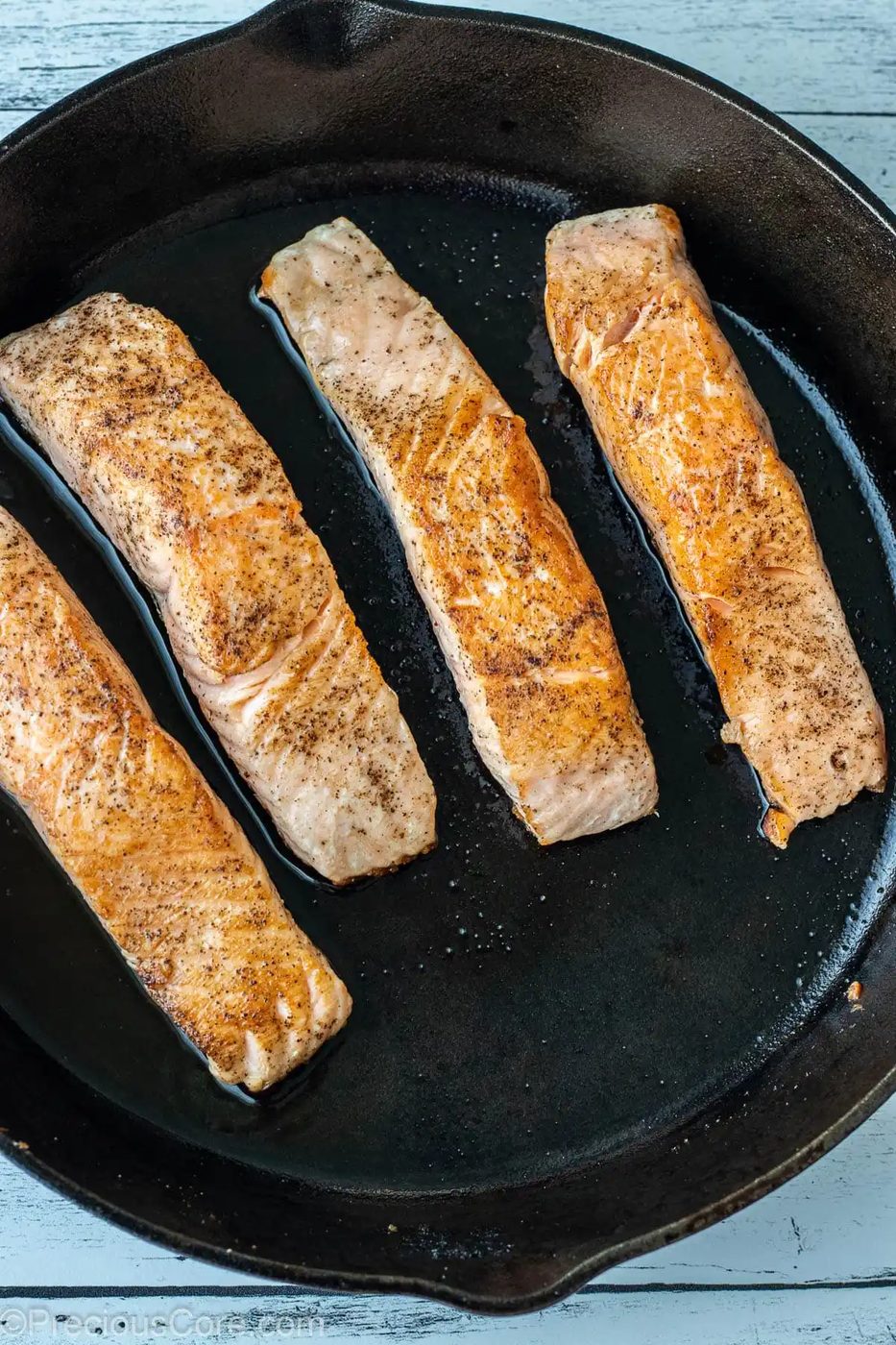
2. Next, pan-sear the salmon for about 3 minutes on the first side and 2 minutes on the second side.
3. Then add butter and garlic to the pan. Let the butter melt then baste the salmon with the garlic butter.
4. Sprinkle on lemon juice and garnish with minced parsley, lemon zest, and lemon slices. Serve warm.
Hint: Salmon cooks quickly so be careful not to overcook your fish. We find that about 3 minutes per side is a sweet spot. Only cook longer if the salmon fillets are significantly thicker.
How it comes together
- First, melt some unsalted butter in a pan.
- Add a little garlic then squeeze in lemon juice to taste.
- Season with salt and pepper.
You could also add herbs like parsley or dill to your lemon butter sauce and some lemon zest to impart a more lemony flavor.
Salmon Cooking Guide
The FDA recommends salmon be cooked to a minimum of 145 degrees Fahrenheit internal temperature. However, the salmon might toughen up and be overcooked if cooked to this point.
Cook salmon to register an internal temperature of about 125 degrees Fahrenheit for juicy flaky salmon.
Remember, the fish continues to cook while it is away from the heat. So no need to overcook it.
To tell if salmon is done without a meat thermometer, flake the fish with a fork. If it flakes easily, then the fish is done.
Salmon Buying Guide
Buy wild-caught salmon whenever possible. If buying farm-raised salmon, look for one that is responsibly raised. To be able to tell that salmon is responsibly raised, look for labels that include words like “responsibly farmed” or “certified sustainable”.
Good quality salmon will have a bright hue of color and will not be sunken or cloudy. Old or bad salmon will often look dull.
Types of Salmon
Salmon is categorized into two main categories, Pacific Salmon, which is wild-caught, and Atlantic salmon, which is mostly farm-raised. There are very few Atlantic salmon in the wild today due to overfishing and habitat destruction which is why mostly farm-raised Atlantic Salmon are available.
They are six types of salmon. The first five species are from the Pacific Ocean while the sixth one is from the Atlantic Ocean. They include:
- Sockeye or red salmon
- Pink or humpback salmon
- King or chinook salmon
- Chum or dog salmon
- Silver or coho salmon
- Salmo salar or Atlantic salmon from the Atlantic Ocean.
Check out this Grilled Sockeye Salmon recipe made with wild-caught sockeye salmon.
Pantry notes
No salmon, no problem! You could also try this recipe with the following kinds of fish.
- Trout
- Flounder fish
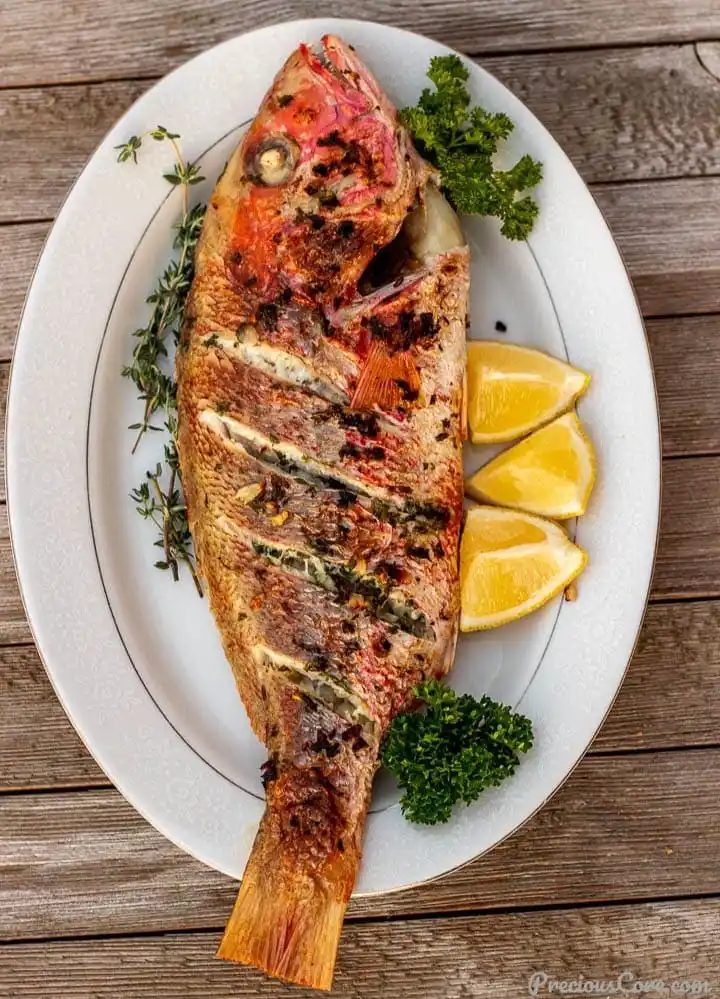
- Red snapper
- Tilapia
- Halibut
- Hake
- Cod
Other ways
- Lime butter salmon – use lime instead of lemon for lime butter salmon.
- Different seasonings on fish – season the salmon with other kinds of seasoning like old bay seasoning, lemon pepper seasoning, Italian seasoning, or Cajun seasoning. Don’t season the fish with any more salt if you use a seasoning that already contains salt.
- Spicy – add crushed pepper flakes or cayenne pepper to the fish to make it spicy.
Also, see this Lemon Butter Tilapia, Garlic Butter Tilapia, and Pan Seared Tilapia.
Ingredients
- 4 salmon fillets, 6 oz each
- ¼ teaspoon salt
- ¼ teaspoon ground black pepper
- 3 Tablespoons olive oil
- 6 Tablespoons salted butter*
- 1 Tablespoon minced garlic
- 1-2 Tablespoons lemon juice, freshly squeezed
- ⅛ teaspoon black pepper
- 1 Tablespoon minced parsley
- Lemon zest for garnish
Method
- Bring salmon to room temperature for about 20 minutes. Pat it dry with paper towels.
- Season both sides of the salmon with ¼ teaspoon of salt and ¼ of ground black pepper.
- Place a cast iron, stainless steel, or non-stick skillet on medium-high heat. Heat the pan up to be smoking hot. Add the olive oil to the pan.
- Add the seasoned salmon skin side down if using salmon with skin on. Cook on one side for 3-4 minutes then flip to the other side and cook for 2 minutes.
- Dot the pan with the butter and minced garlic. As the butter melts, spoon the melted butter and minced garlic over the salmon. Baste for 2 minutes.
- Sprinkle the lemon juice over the salmon and remove it from the heat. Garnish with minced parsley and lemon zest.
- Serve warm.