
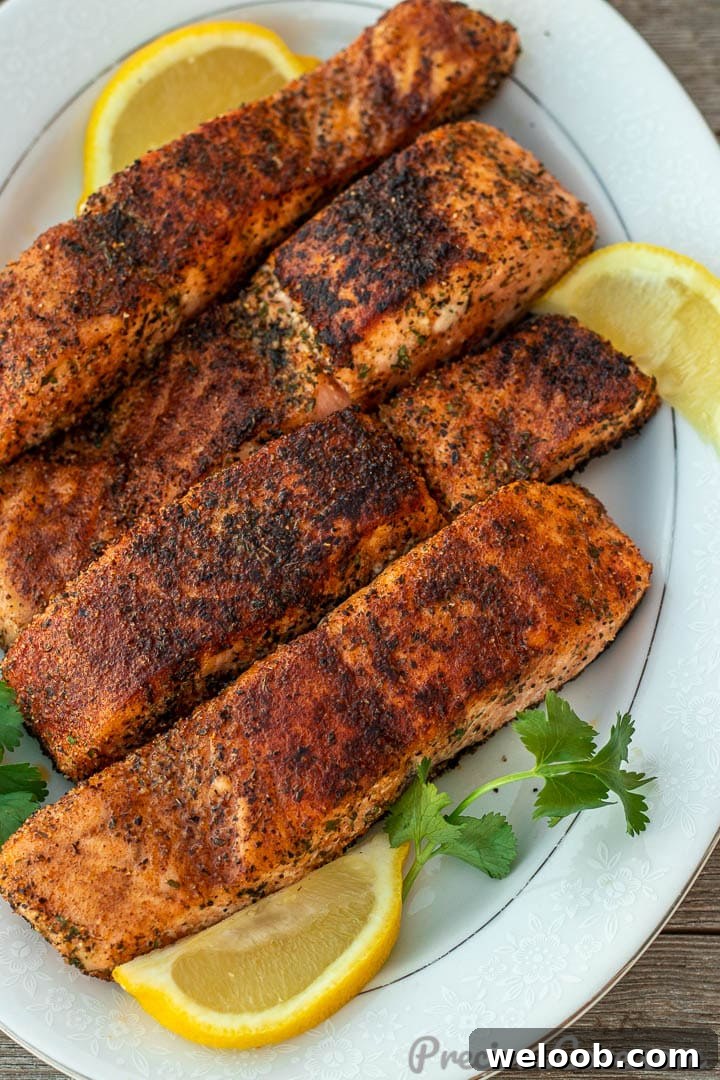
Make incredibly tasty Pan Grilled Salmon that’s crisp on the outside, tender and flaky inside, and on the table in about 15 minutes.
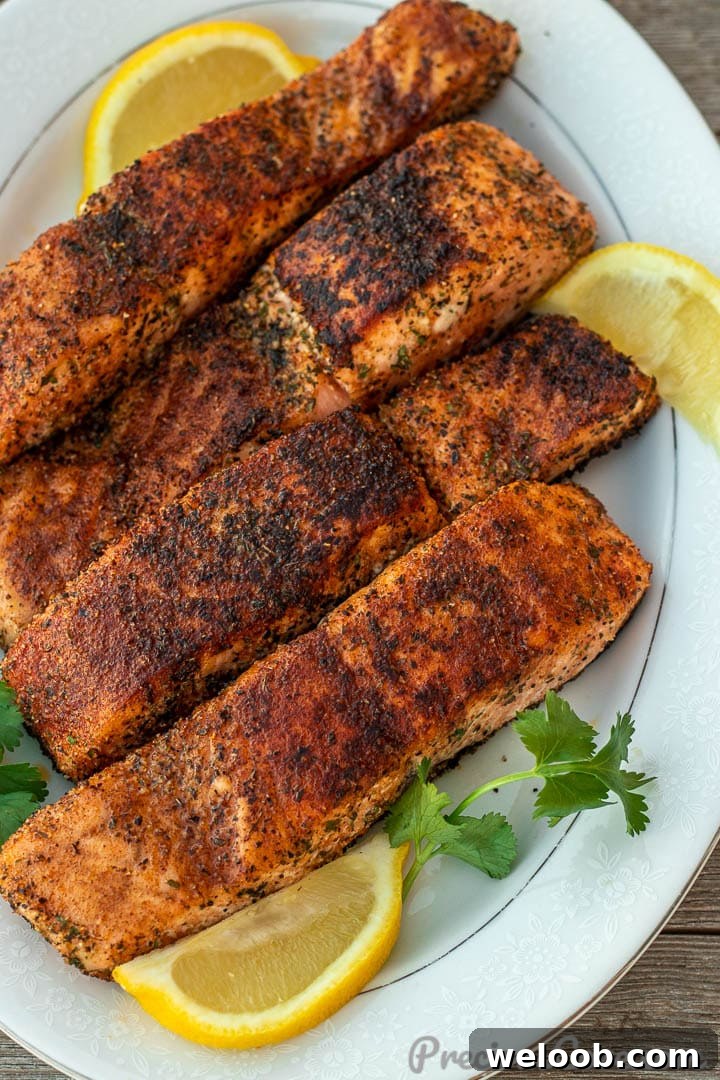
Pan-grilling is one of the fastest ways to get a satisfying dinner ready. Searing salmon in a hot skillet develops a golden crust while keeping the flesh moist and flaky. A simple dry rub boosts the flavor, and the whole process is quick and forgiving—perfect for weeknight meals.
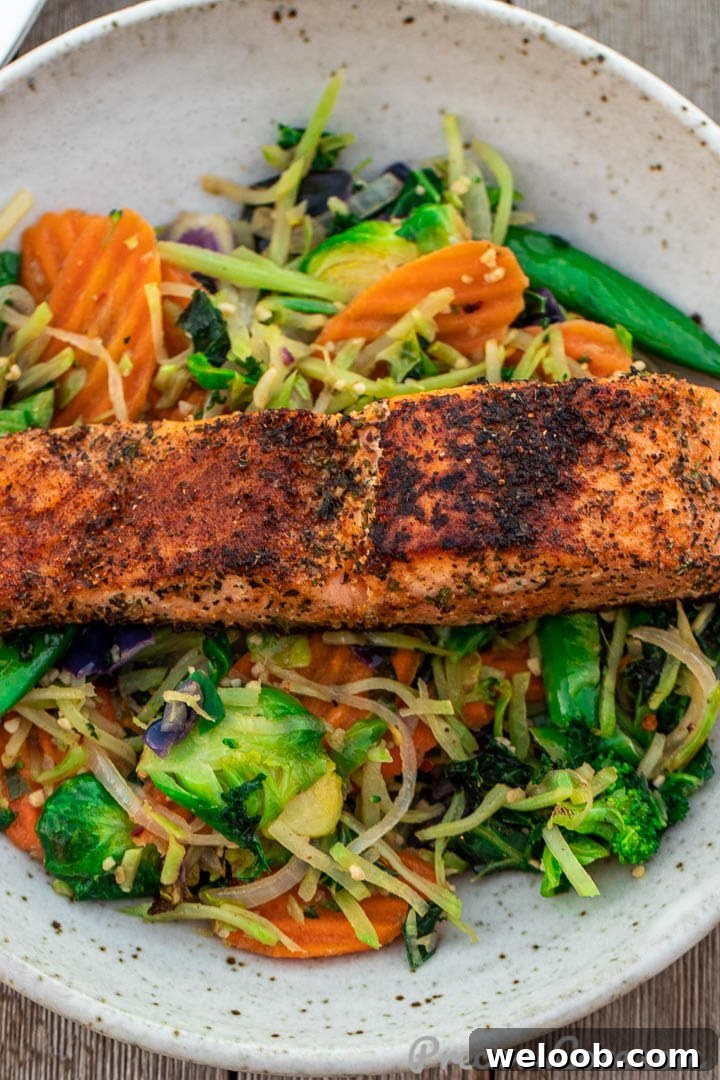
This salmon pairs beautifully with roasted or sautéed vegetables, a light salad, or a side like coconut rice. A bright mango-avocado salsa also complements the fish if you want something fresh and fruity.
Table of Contents
- Cooking Salmon In a Grill Pan
- Why You’ll Love This Recipe
- Ingredients For Pan Grilled Salmon
- Easy Salmon Seasoning
- How To Pan Grill Salmon
- Expert Tips For Pan Grilled Salmon
- Is It Better To Bake or Pan Fry Salmon?
- Variations
- More Recipe FAQs
- What To Serve With Pan Grilled Salmon
Cooking Salmon In a Grill Pan
A heavy skillet—cast iron is ideal—or a stovetop grill pan works best for pan-grilled salmon. Heat the pan until the oil shimmers, add seasoned fillets, and sear until golden. The method is fast and dependable, so you can have restaurant-quality fish without fuss.
Why You’ll Love This Recipe
This pan-grilled salmon is a go-to because it’s:
- Quick and easy: Minimal prep and a short cook time—dinner in about 15 minutes.
- Healthy: Salmon is nutrient-dense and full of protein and omega-3s.
- Versatile: Serve it with vegetables, rice, potatoes, or use it as the protein for a salad.
If you don’t have cast iron, a nonstick pan works fine for easier flipping, and stainless steel will work if well oiled.
Ingredients For Pan Grilled Salmon
You’ll need fresh salmon, a neutral oil, and a few simple dried seasonings. Use wild-caught or responsibly farmed salmon when possible. Typical ingredients:
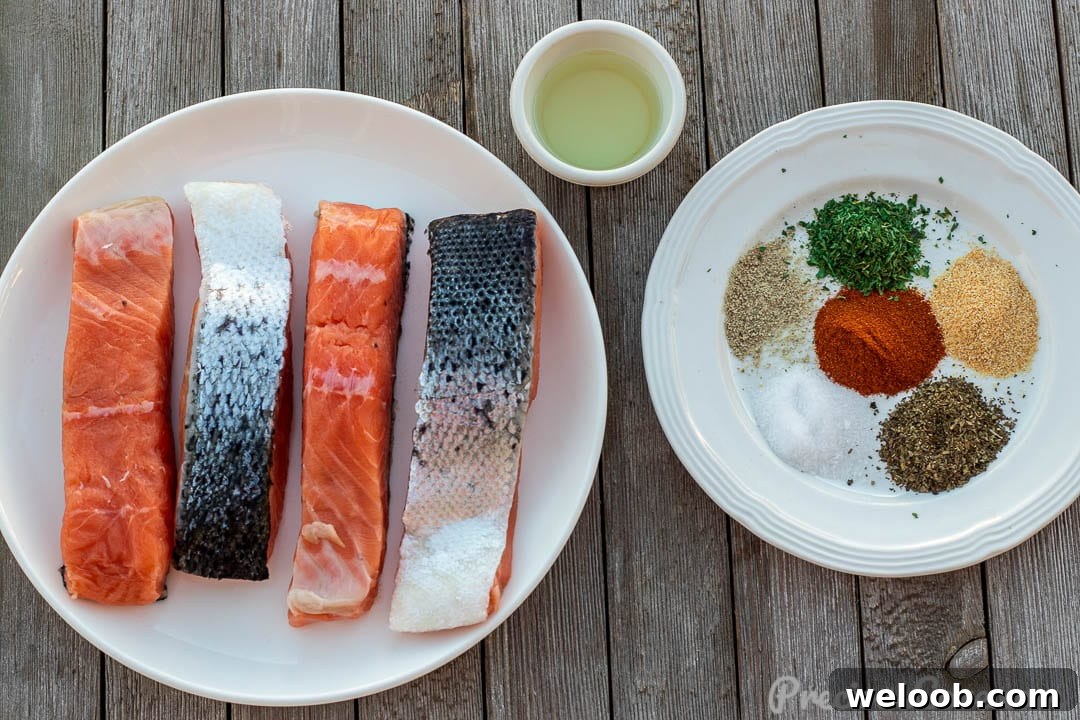
- Salmon fillets: 4 fillets (about 6 ounces each), skin on is optional but helps with searing.
- Salt and pepper: Salt and ground white or black pepper—white pepper is especially nice with fish.
- Seasonings: Garlic powder, onion powder, paprika, dried basil, and dried parsley combine into a flavorful dry rub.
- Olive oil: Or any neutral oil like vegetable or canola for pan-searing.
Season the salmon just before cooking; letting salt sit on the fish draws out moisture and prevents a crisp crust.
Easy Salmon Seasoning
Combine garlic granules, onion powder, salt, white or black pepper, paprika, dried basil, and parsley. This simple mix gives restaurant-quality flavor and works well on other proteins too.
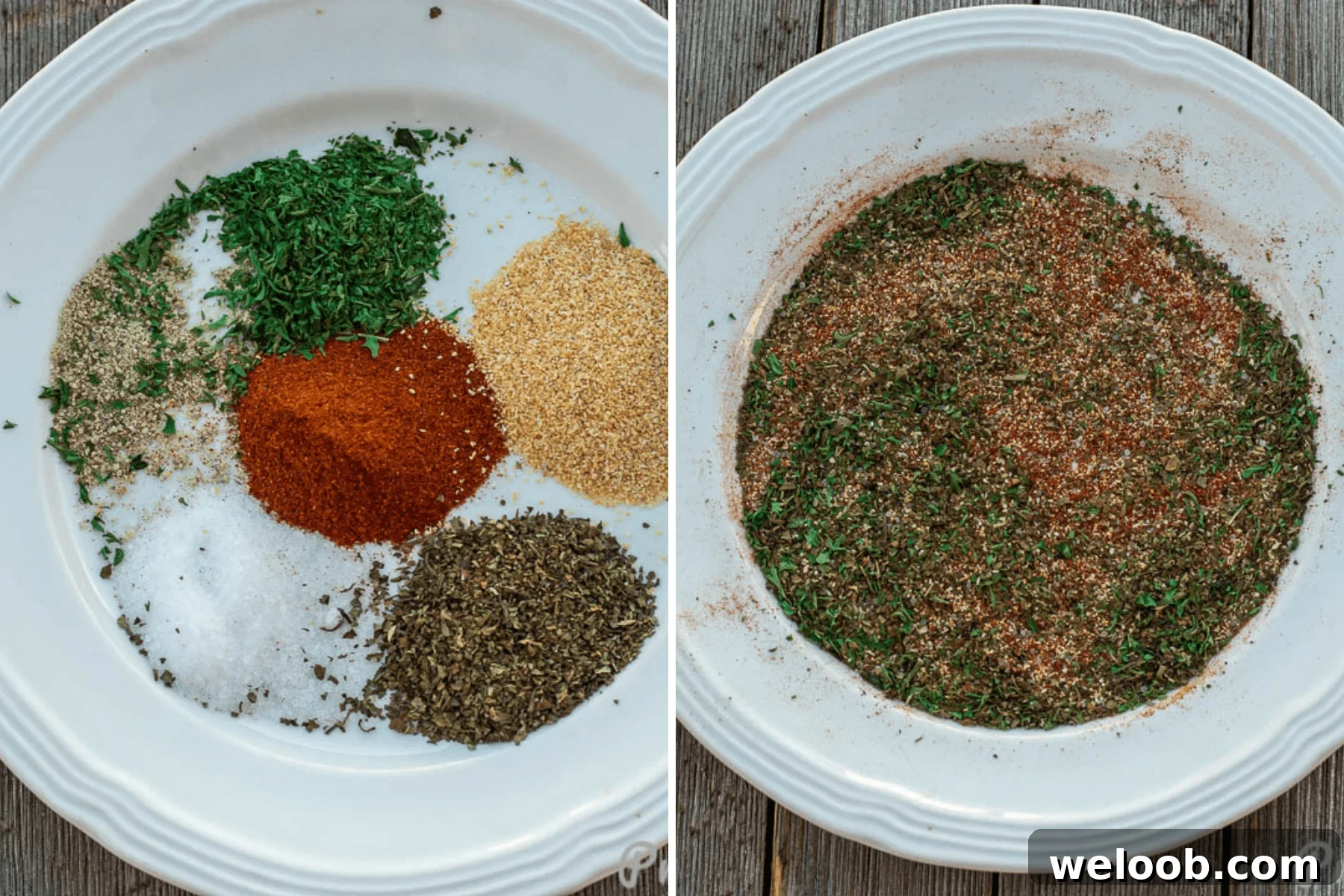
Bring fish to room temperature (about 20–30 minutes) before cooking for even results. Cold fish cooks unevenly.
How To Pan Grill Salmon
- Pat the fillets dry. Use paper towels to remove excess moisture—this helps form a good crust.
- Season generously. Mix the dry rub and rub about a teaspoon over each fillet, including the sides.
- Heat the pan and oil. Warm 1 tablespoon of oil over medium-high heat until it shimmers. Cast iron or a grill pan is ideal.
- Sear skin side down first. Place fillets skin-side down and cook undisturbed for about 3–5 minutes depending on thickness.
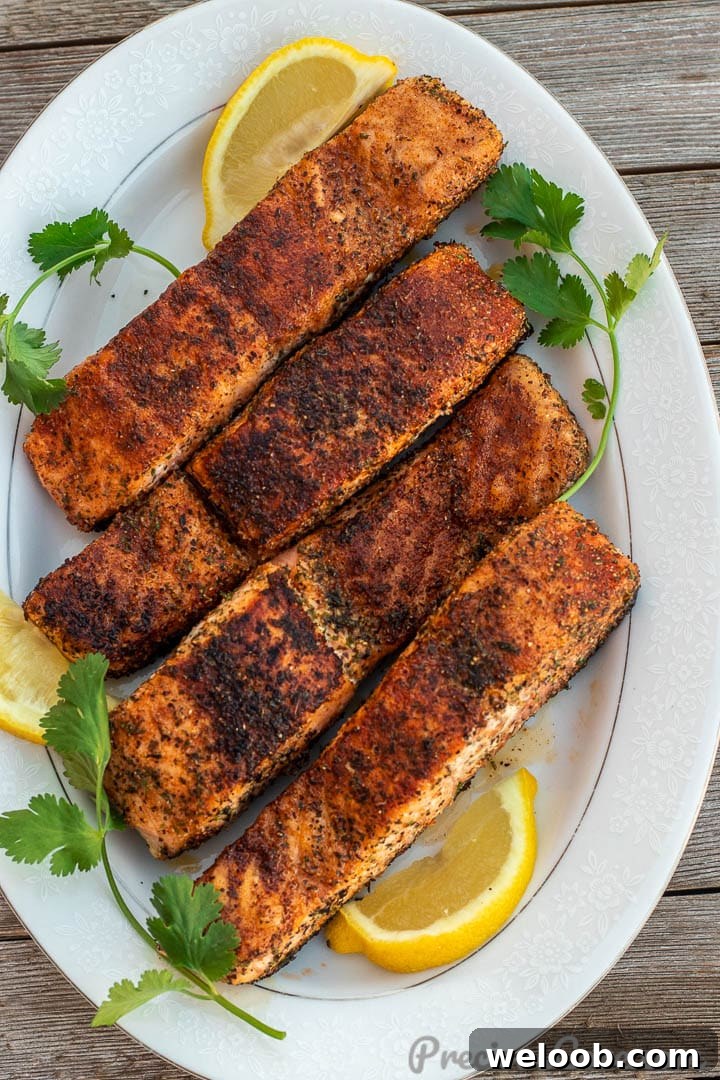
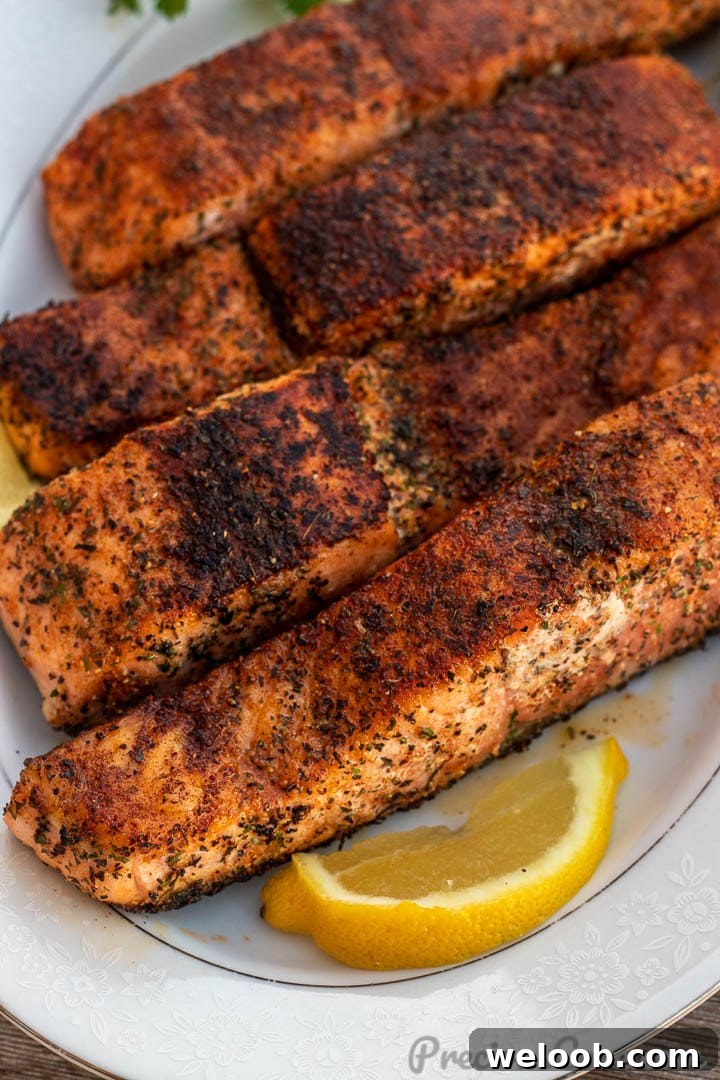
- Flip and finish. Turn the fillets and cook the other side for about 3–4 minutes more, until the flesh is opaque and flakes easily or reaches 145°F. For best texture, remove at ~140°F and let the fish rest while it finishes cooking.
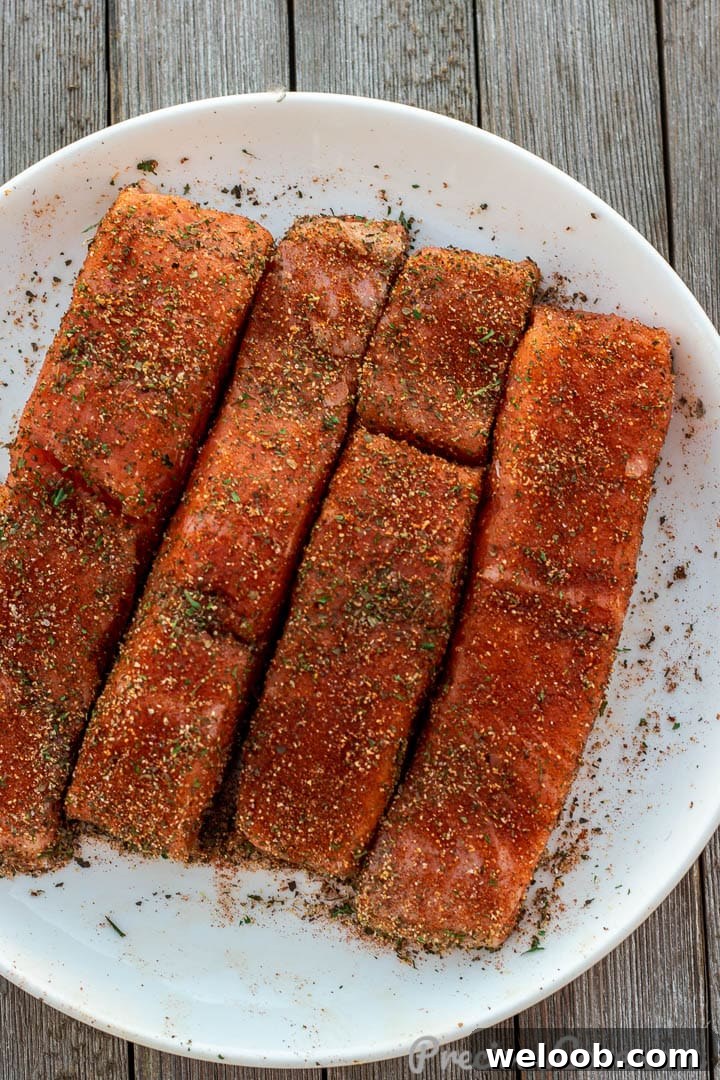
Let the cooked salmon rest for about 5 minutes, tented with foil, to allow juices to redistribute. Finish with a squeeze of fresh lemon and a sprinkle of chopped parsley, or spoon over a quick lemon-butter pan sauce.
Expert Tips For Pan Grilled Salmon
- Dry the fish well before seasoning to achieve a crisp crust.
- Use a well-heated pan and hot oil; a properly hot surface prevents sticking and promotes browning.
- Cook skin-side down first for easier flipping and crisp skin. Press the fillet briefly when it first hits the pan for good contact.
- Check doneness with an instant-read thermometer: remove at about 140°F since carryover will raise the temperature to the recommended 145°F.
- Don’t overcrowd the pan—cook in batches if needed and wipe out the pan between batches to remove burnt bits.
- A fish spatula makes flipping delicate fillets much easier.
Is It Better To Bake or Pan Fry Salmon?
Both methods have benefits. Baking is low-maintenance and great for hands-off cooking; pan-frying gives a crisp, caramelized exterior and cooks faster. The seasoning in this recipe works well for either method.
Variations
- Spicy: Add cayenne or red pepper flakes to the rub.
- Butter-basted: Finish with a spoonful of butter melted in the pan and spooned over the fish.
- Different flavors: Try Italian or Cajun seasoning, or keep it simple with just salt and pepper.
More Recipe FAQs
Yes—flip once so both sides cook evenly. Start skin-side down if your fillets have skin.
Cook roughly 3–5 minutes per side depending on thickness. Test for doneness by checking if it flakes easily or using a thermometer.
Salmon is done when it flakes easily with a fork and is opaque through the center. An internal temperature of 145°F is the standard; removing at ~140°F and resting gives tender results.
What To Serve With Pan Grilled Salmon
Serve with a variety of sides:
- Buttermilk mashed potatoes or roasted potatoes
- Sautéed vegetables or garlic butter green beans
- Steamed rice or coconut rice
- Mango avocado salsa for a bright, fresh contrast
- Sautéed peppers or a simple green salad
A squeeze of lemon over the finished fillets adds freshness and brightens the flavors. This is an easy, reliable way to enjoy salmon any night of the week.
More Easy Dinner Recipes
Explore other simple recipes like pan-seared steak, creamy chicken drumsticks, pan-seared tilapia, or lemon-butter tilapia for more weeknight ideas.