Pan Seared Flank Steak
Pan Seared Flank Steak
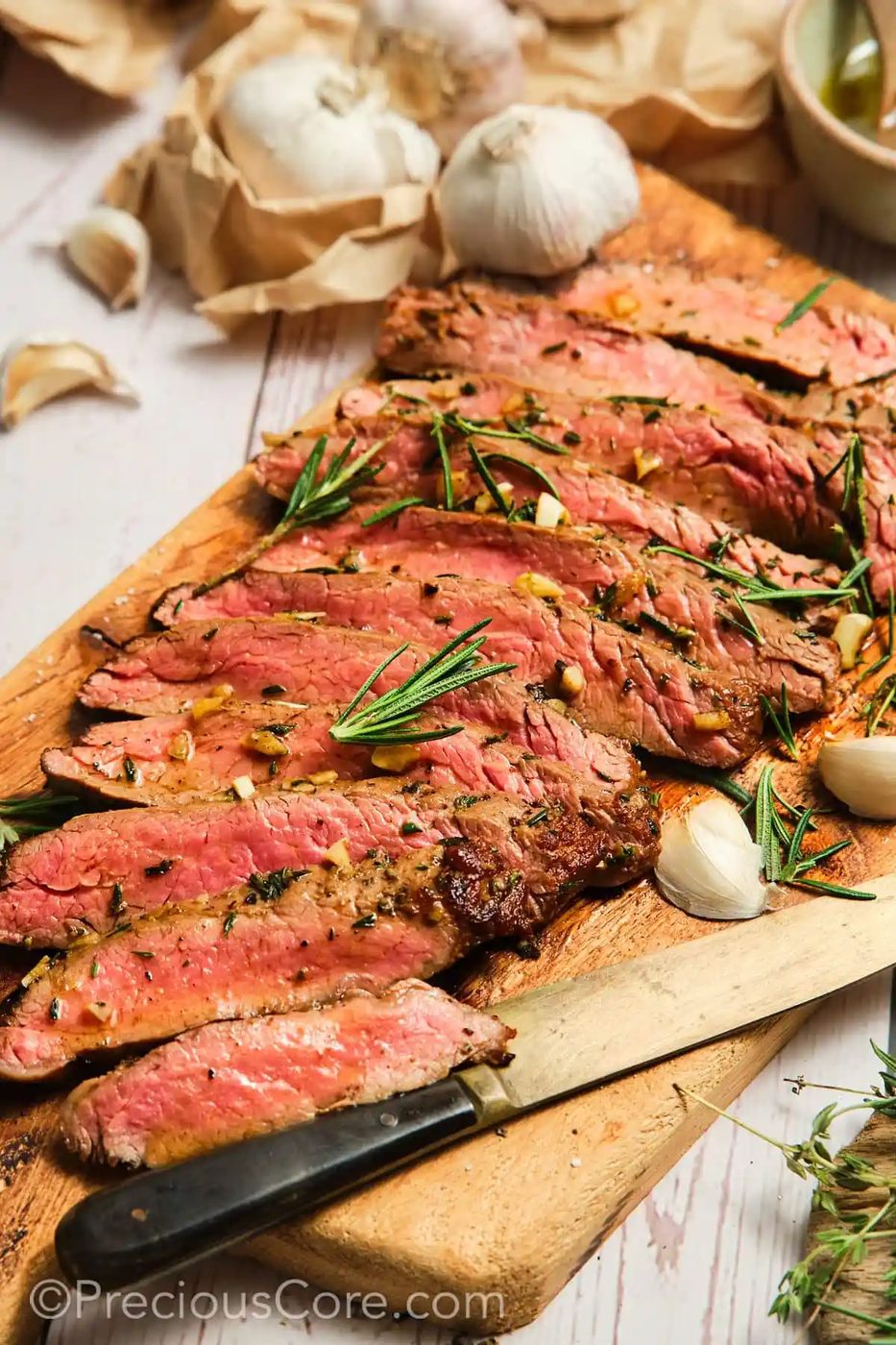
Flank steak is a tough, lean cut of beef that’s taken from the rib section of the cow. It’s the only cut that has a whole muscle running through it! Its long muscle fibers make it stand out from other cuts of steak, which are usually cut across the muscle fibers.
With this kind of steak, you’ll need to cut against the grain to break up the muscle fibers and connective tissues, which will help make it easier to chew.
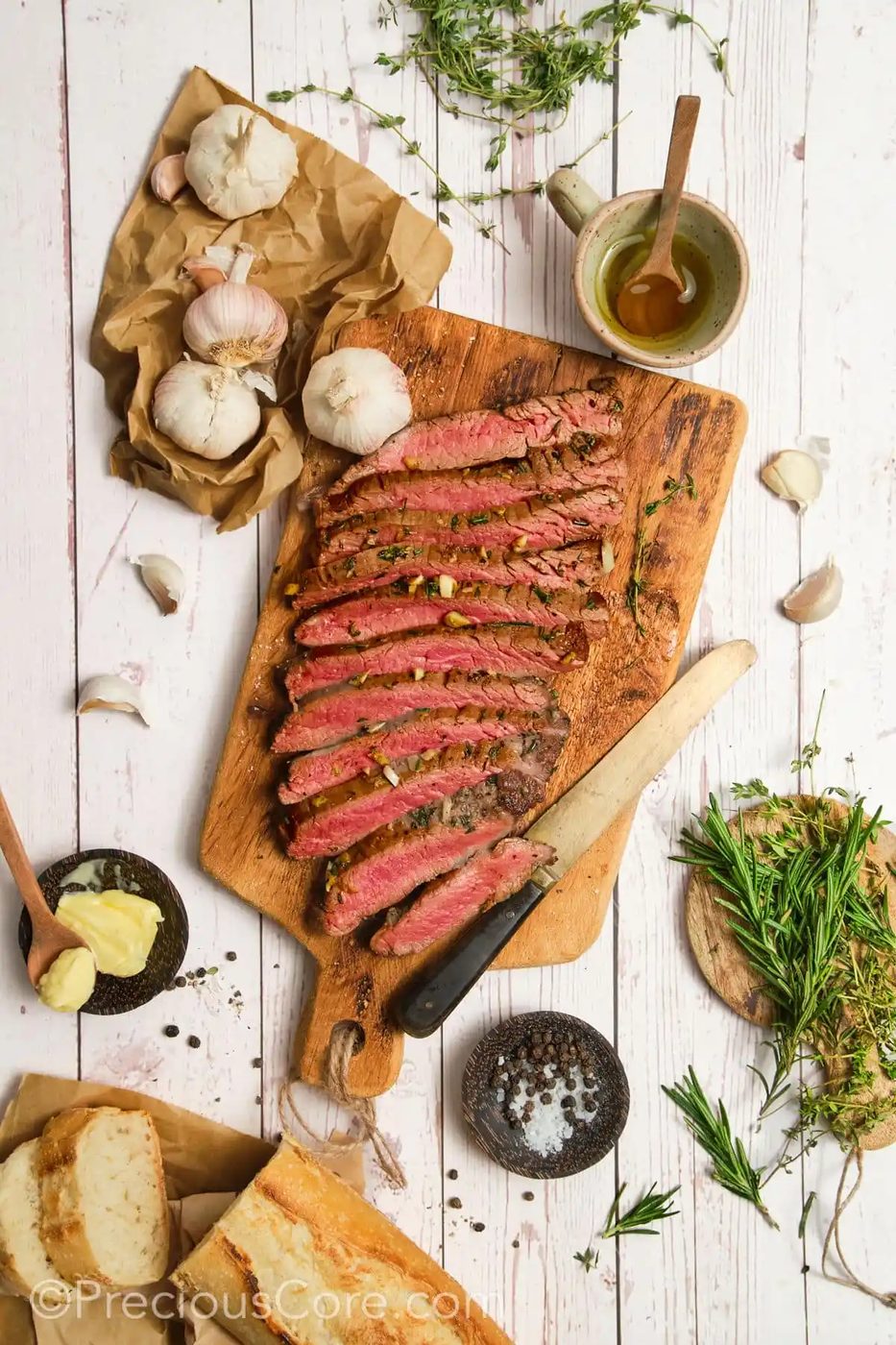
Whether you choose to use flank or skirt steak for this recipe, either will do. Both cuts are typically used for fajitas and offer a quick cook with tender results.
Now that we mention fajitas, have you tried our recipe for Beef Shawarma or Grilled Chicken Nuggets? All of which would be divine wrapped in soft flatbread, tortillas, or our Shawarma Bread.
The flavor of this Pan Seared Flank Steak is one you’re never going to forget, especially when you pair it with everyone’s favorite sides like Fried Carrots, Garlic Butter Green Beans, and Pan Fried Brussels Sprouts With Bacon!
Worth cooking
New to cooking? No worries! This is a great way to give cooking a try if you’re just starting to learn. You’ll love this recipe for several reasons:
- It’s versatile! Not only does it pair well with all sorts of sides, but you can use the leftover steak (if you’re lucky!) to make steak fajitas, stir fry, or creamy steak pastas—all easy meals for the day after.
- It’s full of flavor! Flank steak is already so full of flavor that you won’t need to buy a ton of ingredients to make it taste its best. The simple seasoning required in this recipe makes it a go-to for any busy day or night.
- It’s customizable! If there’s an ingredient you aren’t too fond of, like thyme, you can substitute it for another fresh herb like oregano and still keep the same succulent flavor. This recipe is easy to modify for picky eaters. Feeding someone finicky? Simply leave the extra herb butter to the side.
Ingredients Needed
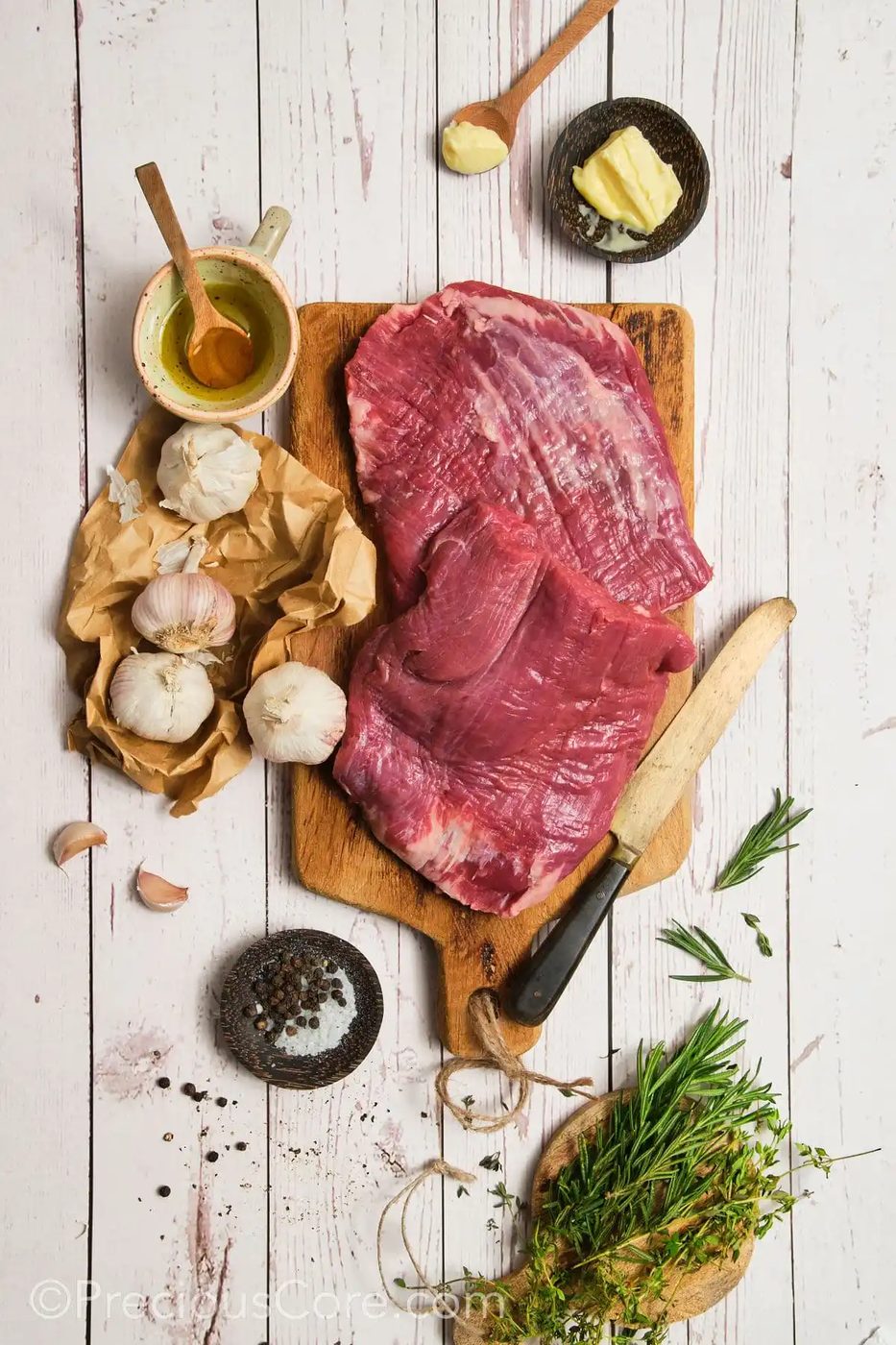
You’ll be able to find all of the ingredients needed for this recipe below. For now, here are a few more details about the most important ones:
Flank steak: Find a good cut of meat and set it out on the kitchen counter for 30 minutes to an hour so that it’s at room temperature when you go to cook it.
Garlic: Skip the garlic, and you skip out on a burst of flavor for your taste buds! Garlic gives off a strong aroma and combines with all the other ingredients to enhance the overall dish. We recommend freshly minced garlic.
Butter: The butter is the base of the garlic butter herb sauce that will pull everything together to create a one-of-a-kind flavor. The recipe calls for unsalted. Keep in mind if you use salted, adjust your added salt as needed.
Fresh herbs: Using fresh herbs like rosemary and thyme are what will really make the steak’s rich flavor stand out. They also give it a bit of color, making its presentation look even fancier!
How To Pan Sear Flank Steak
Step 1: Dry the Steak
Pat dry the steak with paper towels. This ensures a good sear.
Step 2: Heat the skillet
Place a cast iron pan or another skillet on medium-high heat and let it heat up for 4-5 minutes until smoking hot.
Step 3: Season the Steak
Meanwhile, season both sides of the steak evenly with salt and black pepper.
Step 4: Sear Steak
Pour 1 tablespoon olive oil into the smoking hot skillet and swirl so the oil coats the bottom of the pan. Let the steaks cook on one side for 2-3 minutes. Flip to the other side and let them cook for another 2 minutes or until the desired doneness. See the flank steak cooking guide below.
Once you flip the steaks to the other side, cut the unsalted butter into little cubes and dot around the steak.
If your pan is not hot enough the steak may stick. Try to not move it around or be tempted to lift it too soon. When a nice brown crust has formed on the first side of the steak, the meat should release naturally.
Step 5: Add Minced Garlic and Herbs
Let the butter melt, then add 4 minced garlic cloves, 2 sprigs of fresh rosemary, and 2 sprigs of fresh thyme.
Sizzle the steaks in the butter, then spoon the garlic herb sauce over the steak.
Step 6: Rest the Steaks
Remove the steak from the heat and let it rest covered with aluminum foil for 5 minutes.
Step 7: Slice the Steak
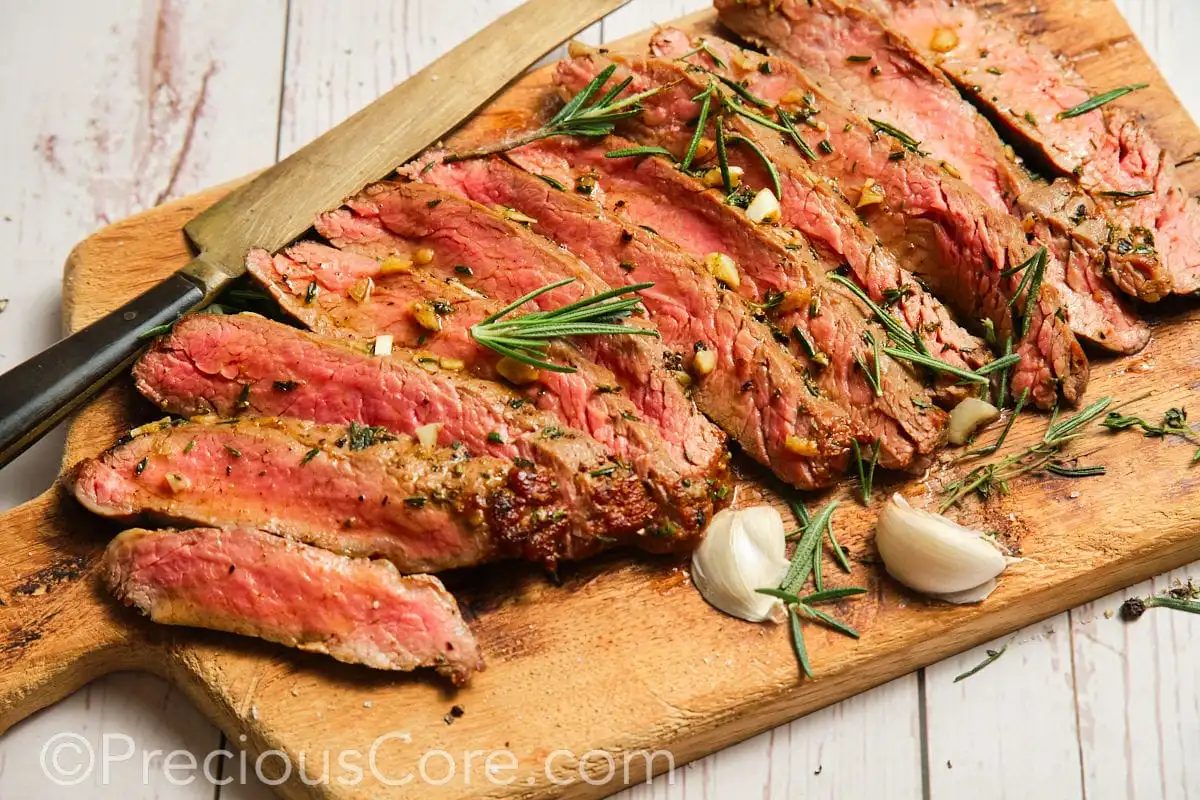
Using a cutting board, thinly slice the steaks against the grain, garnished with a tablespoon of fresh minced parsley if desired.
Pantry notes
- Chicken instead of Beef: 1 & ½ pounds of nice and flat, boneless, skinless chicken thighs could be a fast swap. Just make sure to cook your chicken until the internal temperature reads 165F and the juices run clear.
- Steak Choice: Skirt steak can be used as a swap in a pinch.
- Fresh Herbs: You may find that other herbs are to your liking, feel free to play around with adding oregano, cilantro, tarragon, or basil.
- Dairy Free: Butter and dairy not your thing? Olive oil in place of butter is an easy substitution. If you or someone in your family has a dairy intolerance, don’t worry! A good alternative is using vegan butter instead of unsalted butter, which will still give you just as great of a flavor. –
- Different Seasoning For The Steak: Season the steak with our irresistible recipe for Green Seasoning Marinade. It packs a real flavor punch.
- Dry Herbs: If fresh herbs are hard to come by, you can use half the amount of dry herbs in their place. The flavor of dried herbs is a little different, sometimes bringing out stronger flavors than their fresh counterparts. The color will also not be as green and fresh looking, but should still taste lovely.
- Pan Seared Flank Steak Salad: A plain green salad can get boring after a while. So, why not spice it up by throwing pieces of steak on top? In a large bowl, combine romaine lettuce, tomatoes, red onion, corn, and avocado, then sprinkle some feta cheese and salt and pepper on top. Finally, drizzle with balsamic vinaigrette dressing. Voilà, you’ve finally got yourself more than just a simple salad!
Cook notes
- Letting your steaks come up to room temperature before cooking makes for a more even heat distribution and a darker golden sear.
- Drying the raw steak before searing will ensure great browning or what is called maillard effect, caramelization of natural sugars in the meat.
- Frying Pan: You’ll need a heavy bottomed pan that has good conduction. Cast-iron pans are most common and have great even and powerful heating properties. This is why we recommend this kind of pan. But you can use any skillet you have on hand.
- Resting any meat ensures a juicier end product. Allowing the muscle fibers in the steak to fully relax after being on a hot pan will help the juices stay in the meat and not run all over your cutting board when sliced.
- Using a meat thermometer is an excellent choice when trying to achieve a desired doneness of your steaks. Flank and skirt steaks have a tendency to stay soft to the touch even when well cooked. This can be misleading if only using your sense of touch as a guide on doneness. Follow this steak internal temperature cooking guide below for doneness temperatures.
- To brighten the flavor of your sauce feel free to add a squeeze of fresh lemon juice or lime juice just before serving.
- After the steak cools, you can store leftovers in an airtight container with a fitting lid and keep it in the refrigerator. This steak makes incredible leftovers. While covering it with plastic wrap is also an option, the food may not taste as fresh or keep as long. Pour as much sauce over the steak as you can so that it’ll stay juicy while it sits!
For the tenderest seared steak always cut against the grain. Even when cutting into bite-sized morsels for little hands, cut against the grain, then into smaller bites.
Love good food? Also check out our Potato Cheese Balls and Mushroom Pizza Recipe.
Flank Steak Internal Temperature
Using an instant-read thermometer, follow this steak internal temperature cooking guide and cook the steak according to your preference:
- Rare: 120-125°F (49-52°C) – Red center, very juicy.
- Medium Rare: 130-135°F (54-57°C) – Pink center, juicy and tender.
- Medium: 140-145°F (60-63°C) – Pink to slightly pink center, still juicy.
- Medium Well: 150-155°F (66-68°C) – Hint of pink in the center, less juicy.
- Well Done: 160°F (71°C) and above – Little to no pink, firmer texture, less juicy.
- Yield: 4 servings
- Prep: 10 minutes
- Cook: 7 minutes
- Total: 17 minutes
Ingredients
- 1.5 pounds flank steak, at room temperature
- ¾ teaspoon salt
- ½ teaspoon ground black pepper
- 1 tablespoon olive oil, light olive oil
- 4 garlic cloves, peeled and minced
- 2 tablespoons unsalted butter
- 2 sprigs fresh rosemary, leaves removed from stem and minced
- 2 sprigs fresh thyme, leaves removed from stem and minced
- 1 tablespoon fresh minced parsley, optional, for garnish
Method
- Pat dry the steak with paper towels. This ensures a good sear.
- Place a cast iron skillet or any skillet you have on hand on medium high heat and let it heat up for 4-5 minutes until smoking hot.
- Meanwhile, season both sides of the dried steak evenly with salt and pepper.
- Pour the oil into the smoking hot skillet and swirl so the oil coats the bottom of the pan. This will prevent the steak from sticking to the bottom of the pan.
- Place the flank steak carefully into the cast iron skillet pressing each steak down carefully once it touches the skillet. This helps create a crust on the outside.
- Let the steaks cook on one side for 2-3 minutes or until desired doneness. Flip to the other side and let them cook for another 2 minutes or until the desired doneness. See the flank steak cooking guide in the recipe notes.
- Once you flip the steaks to the other side, cut the unsalted butter into little cubes and dot around the steak. Let it melt then add the minced garlic, rosemary and thyme. Let them sizzle in the butter then spoon the garlic herb sauce over the flank steak.
- Remove from heat and let it rest covered with aluminum foil for 5 minutes to reabsorb its juices, then place on a chopping board and slice thinly against the grain and serve warm, garnished with fresh minced parsley if desired.
Notes
Rare : 120-125°F (49-52°C) – Red center, very juicy.
Medium Rare : 130-135°F (54-57°C) – Pink center, juicy and tender.
Medium : 140-145°F (60-63°C) – Pink to slightly pink center, still juicy.
Medium Well : 150-155°F (66-68°C) – Hint of pink in the center, less juicy.
Well Done : 160°F (71°C) and above – Little to no pink, firmer texture, less juicy.