
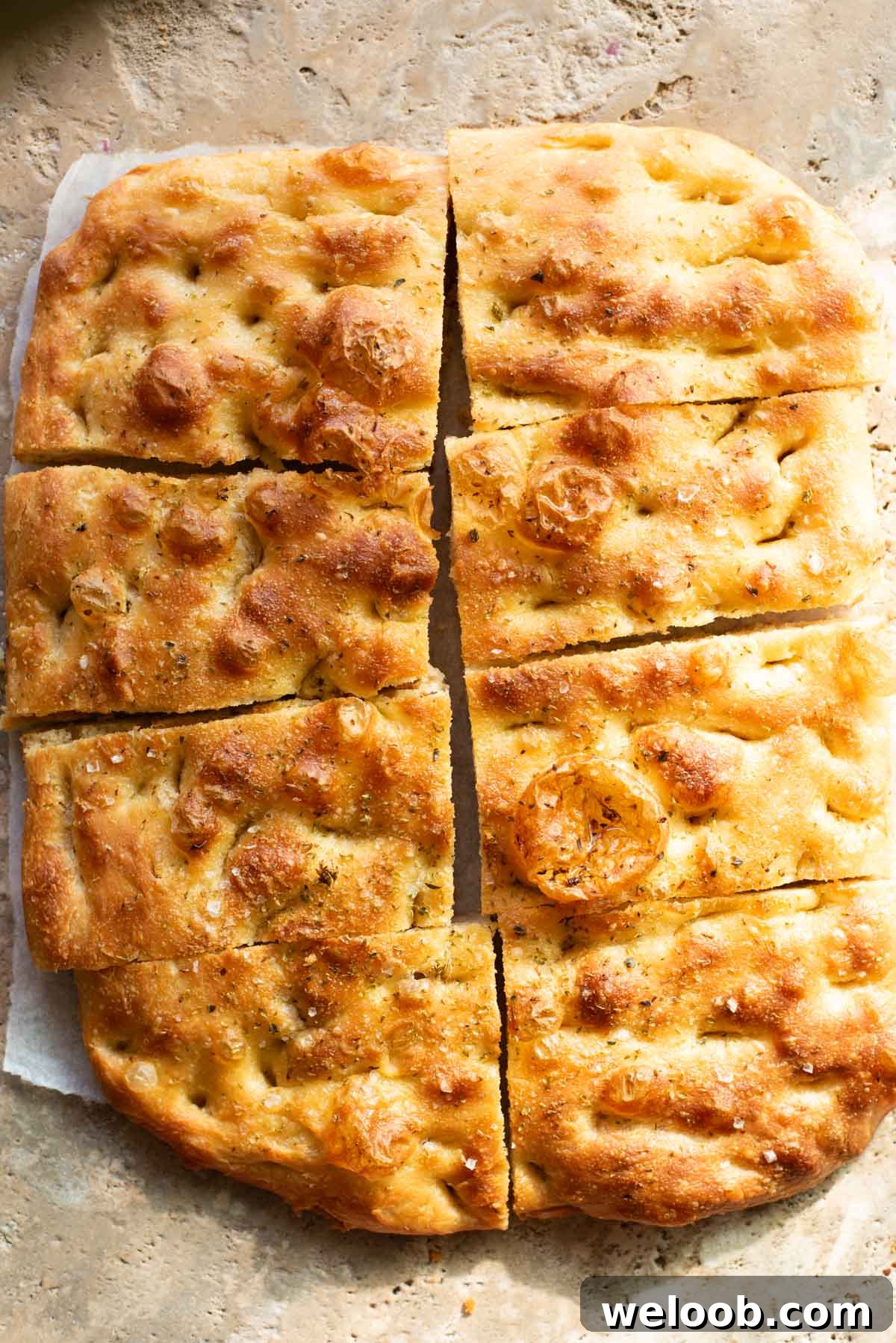
This is my favourite no-knead focaccia recipe. The dough is high-hydration, producing a light, bubbly crumb, a golden crust and a great flavour. It’s very easy to make, requires no kneading, and can be prepared up to 48 hours in advance. Serve it plain, with your favourite toppings or use it for delicious sandwiches.
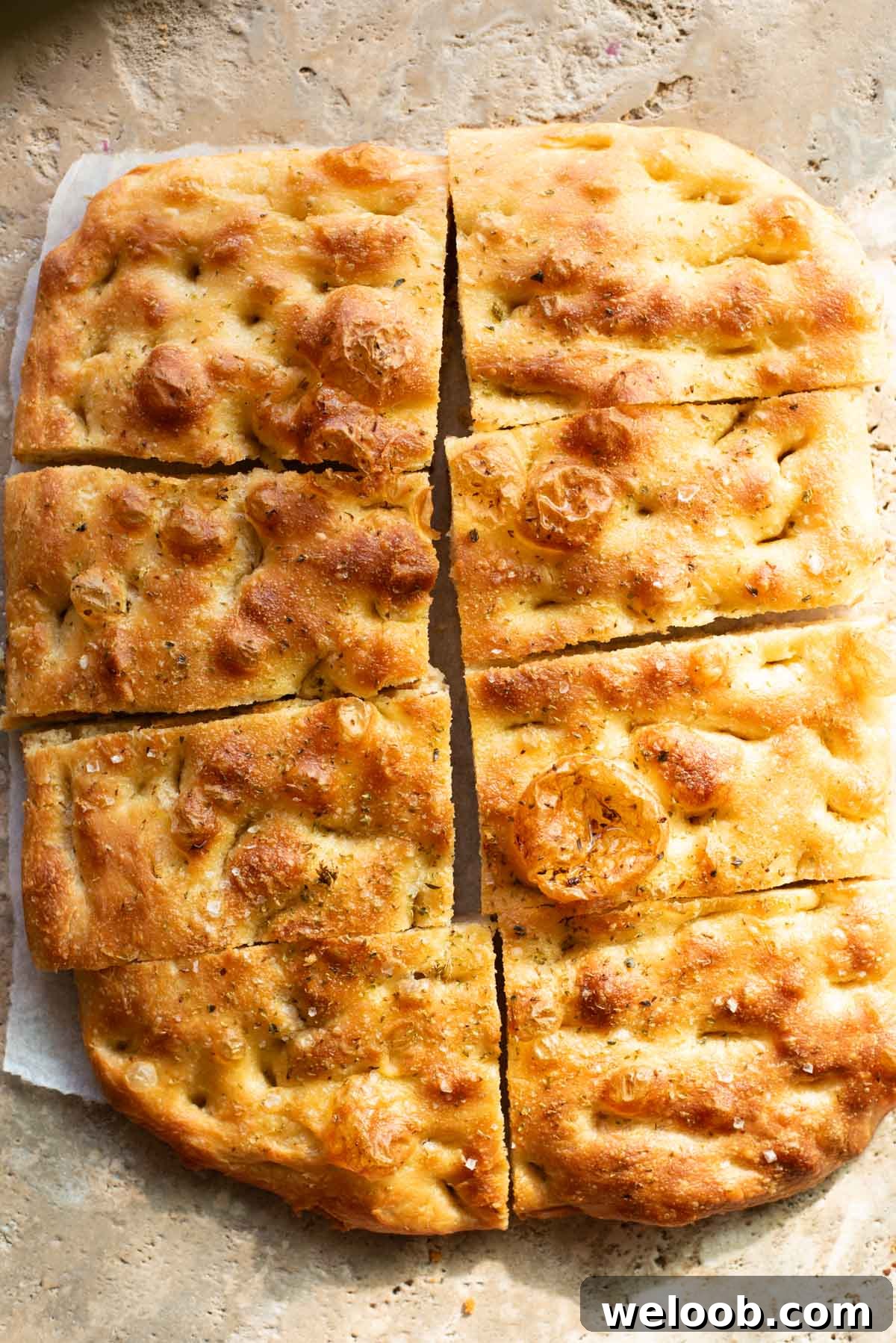
Table of Contents
- Why this is my favourite focaccia recipe
- My top tips (what I’ve learned)
- Ingredient notes
- Visual walk-through of the recipe
- Example baking timeline
- Focaccia flavour variations
- FAQs
- More delicious Italian breads to try
- Full Recipe
Why this is my favourite focaccia recipe
- High hydration (~80%) gives a light, airy, bubbly crumb and a crisp golden crust.
- Uses very little yeast, which helps digestion and develops flavour over time.
- No kneading — a simple stretch-and-fold and coil-fold sequence builds structure.
- Great for make-ahead: the dough stores in the fridge for up to 48 hours.
I’ve been making focaccia for years and recently refined my technique by experimenting with hydration and folds. Compared with a lower-hydration, same-day dough, this overnight method uses less yeast and more time to develop flavour. I use it for dipping, sandwiches, or as a snack — it’s consistently delicious.
My top tips (what I’ve learned)
Below are the key tips that help this recipe succeed. The full recipe is in the recipe card further down.
- Minimal yeast: A small amount of instant yeast is all that’s needed when you cold-proof the dough. It produces better flavour and is gentler on digestion.
- Time equals flavour: Longer proofing allows the dough to develop more depth than a quick, high-yeast, same-day dough.
- Use timers: There are 30-minute rests between folds; set timers so you don’t miss them.
- Don’t fear wet dough: High-hydration dough is sticky and soft. Use wet hands for folding and the stretch-and-fold method instead of kneading.
Ingredient notes
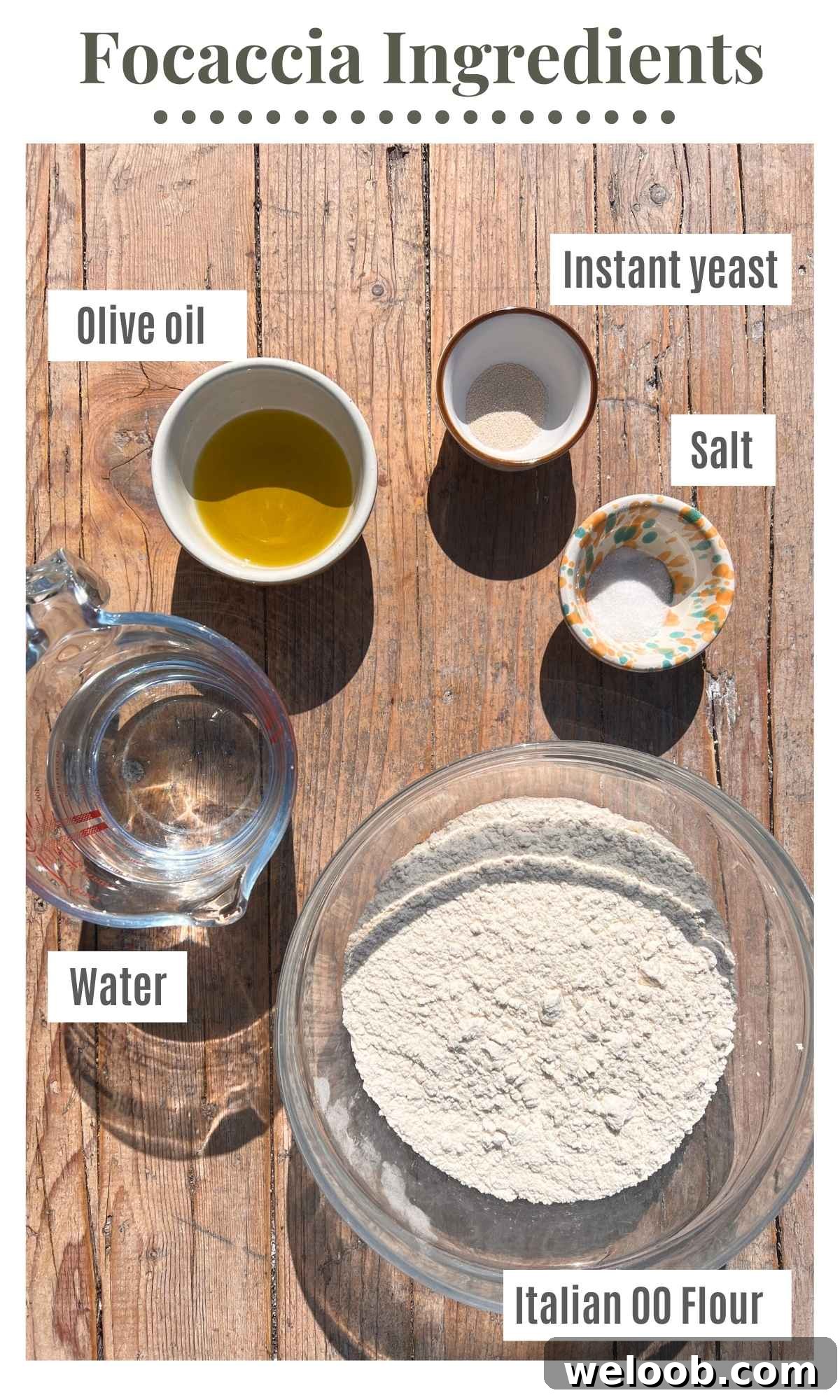
- Italian 00 or bread flour: Use 00 with around 12% protein or bread flour — both work well.
- Instant yeast: Many instant yeasts can be mixed directly with flour. If your yeast requires activation, follow the packet instructions and adjust the recipe’s water accordingly.
Visual walk-through of the recipe
Step 1: Add the flour to a large bowl and place the salt and yeast at opposite sides.
Step 2: Pour in the water and stir to form a rough dough. Add the olive oil and mix until no dry flour remains. Cover and rest 30 minutes.
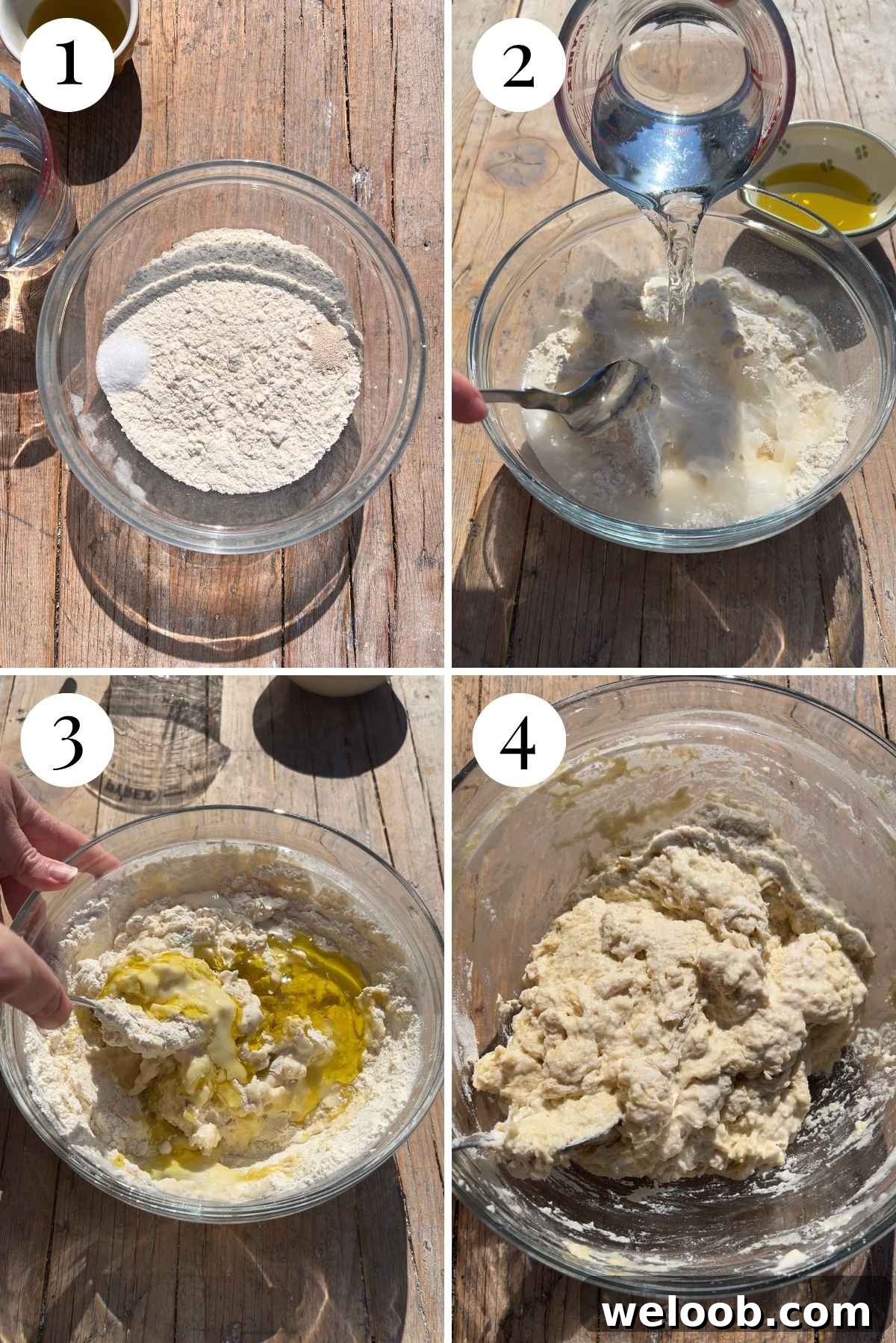
Step 3: Do a stretch-and-fold: wet your hand, lift one edge of the dough and fold it toward the centre. Work around the dough, cover and rest 30 minutes.
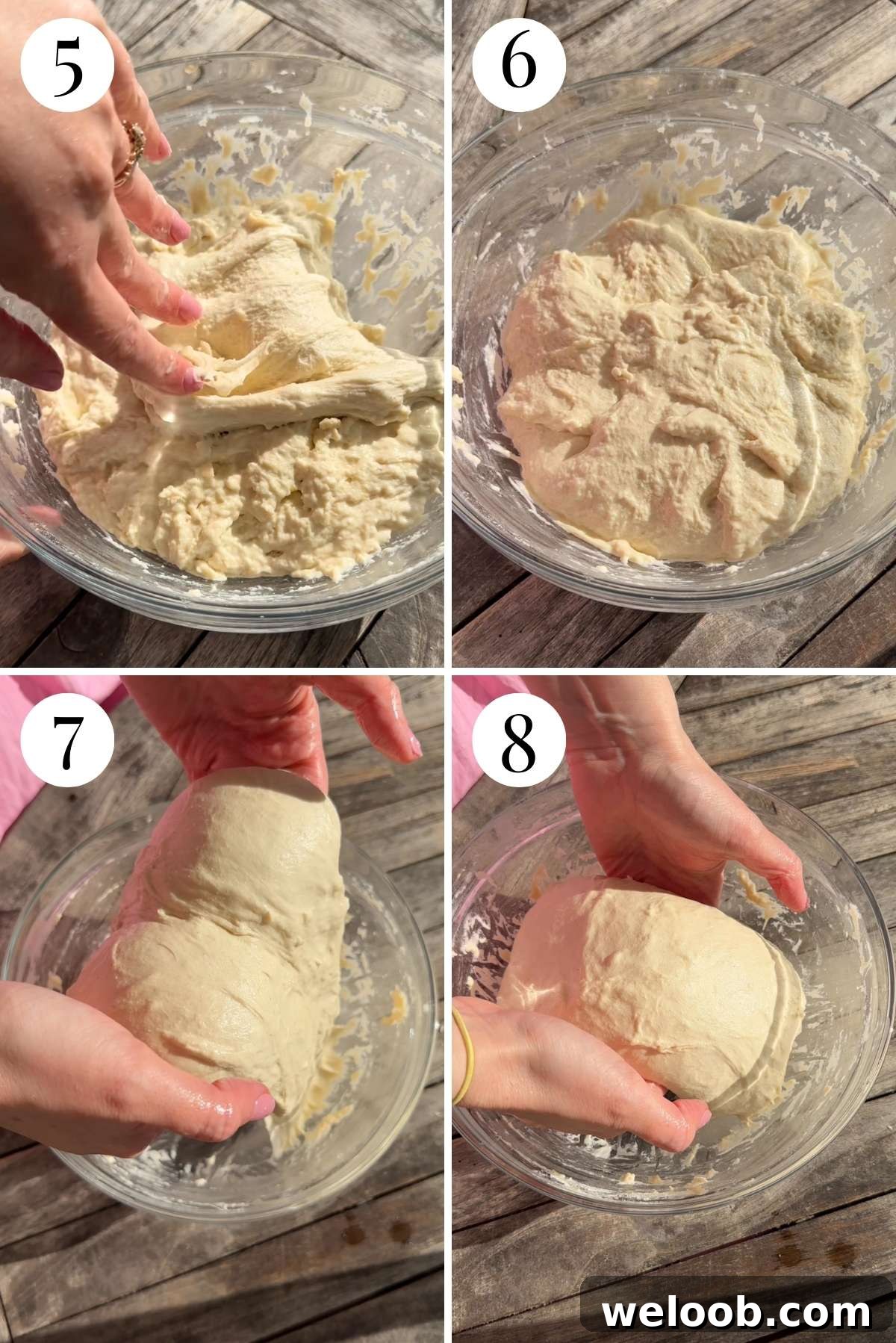
Step 4: Perform a coil fold: wet both hands, lift the dough from the middle, let it fall and repeat until the dough can be lifted from the bowl without tearing. Let it fold in on itself, turn the bowl and repeat from the other side. Rest 30 minutes, then repeat the coil fold two more times with 30-minute rests. Refrigerate overnight or up to 48 hours.
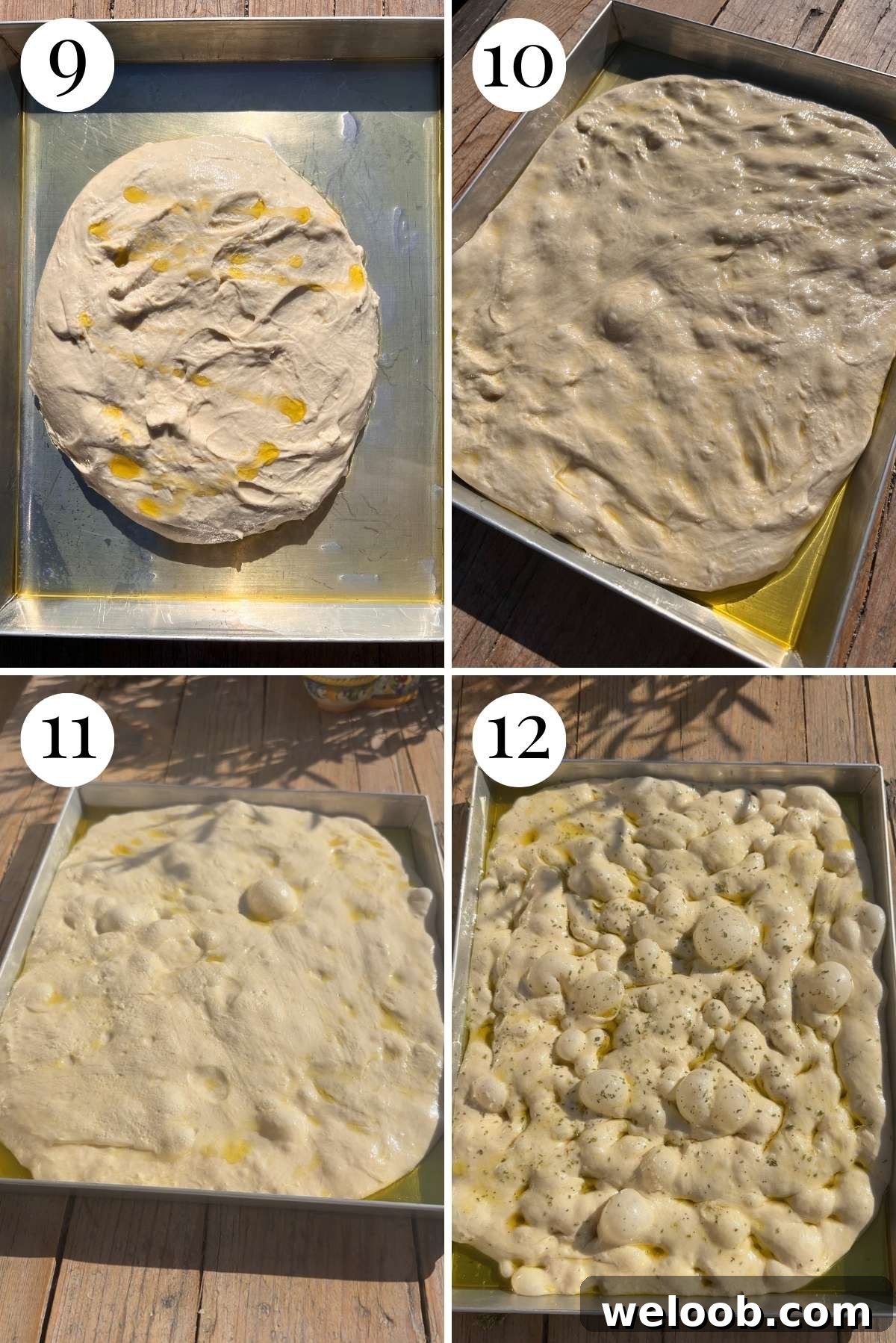
Step 5: Generously oil an 11×14 inch (or similar) baking tray. Transfer the dough to the tray using oiled hands and gently stretch it to fit. Drizzle with olive oil, cover and let it proof at room temperature until nearly doubled (about 2–4 hours, depending on temperature).
Step 6: Preheat the oven to 230°C (450°F). Oil your hands and press dimples all over the dough with your fingertips, taking care not to deflate large bubbles. Sprinkle with sea salt and herbs if desired, drizzle more oil and bake 20–25 minutes until golden.
Example baking timeline
Here’s a sample schedule you can follow when making this focaccia:
- 17:30 – Mix the dough
- 18:00 – First stretch-and-fold
- 18:30 – Coil fold 1
- 19:00 – Coil fold 2
- 20:00 – Coil fold 3, then refrigerate overnight
- 08:00 – Remove from fridge and transfer to tray
- 12:00 – Bake
Proofing times vary with room temperature; in warm conditions the dough will proof faster.
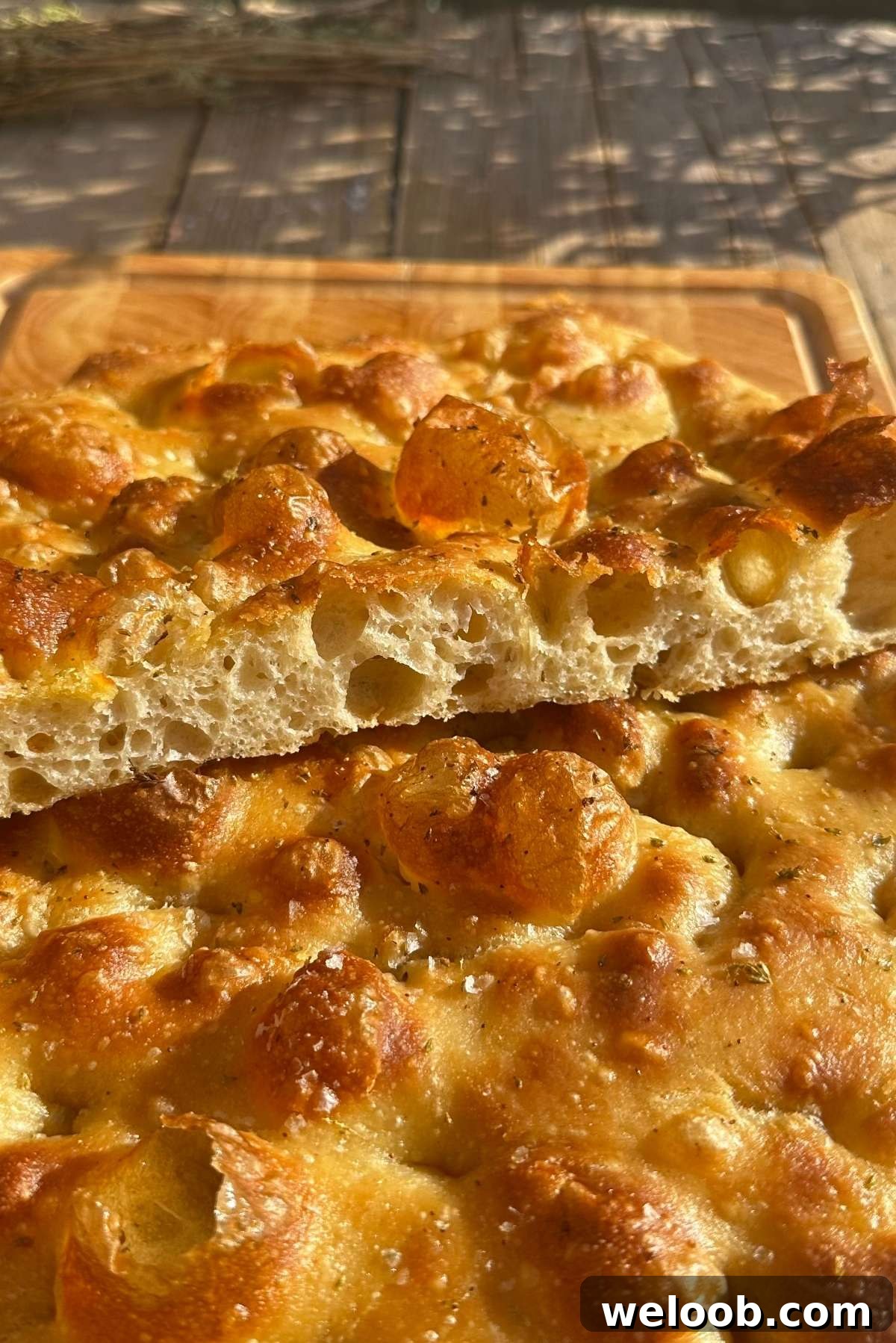
Focaccia flavour variations
Toppings and flavour combinations are endless. Try any of the suggestions below or use your own favourites.
- Olive focaccia: Press whole or sliced olives into the dough after dimpling.
- Tomato: Top with fresh cherry tomatoes, sun-dried tomatoes or a light smear of good tomato sauce.
- Herbs: Sprinkle dried oregano, rosemary or a mix of Italian herbs with sea salt.
- Onions: Thinly sliced raw onions or caramelised onions both work beautifully.
- Garlic oil: Mix crushed garlic into olive oil or melted butter and drizzle over before baking.
- Potato: Thin potato slices make a classic Italian topping — try with cheese for a hearty variation.
FAQs
Yes, but you’ll need more yeast (about 4 g / 1 teaspoon). After the folds, leave the dough at room temperature until it has doubled or tripled in size before shaping and baking.
Up to 48 hours. Beyond that the dough may overproof and lose volume when baked.
Yes. Complete the folding schedule, give the dough a couple of hours at room temperature, then freeze in a container. Thaw completely in the fridge or at room temperature and allow it to come back to room temperature before shaping and baking.
More delicious Italian breads to try
Bread & Savory Bakes
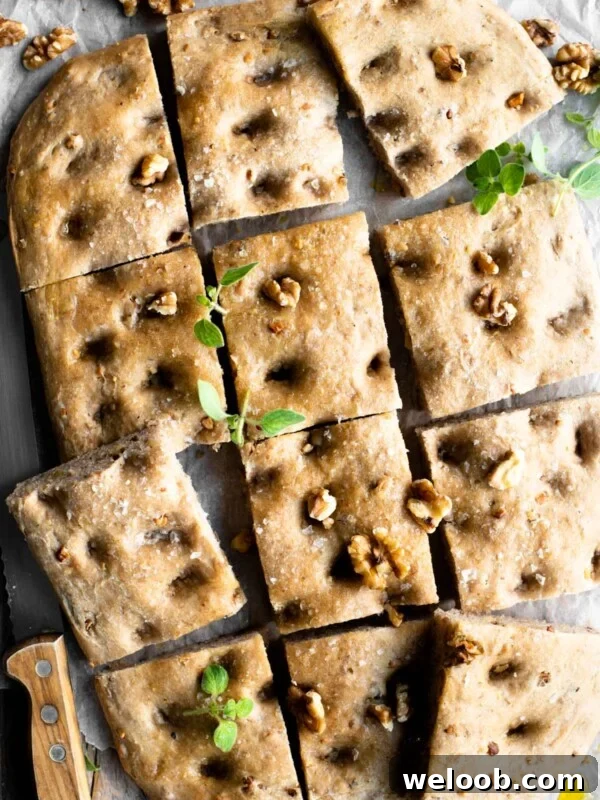
Walnut Focaccia
Bread & Savory Bakes
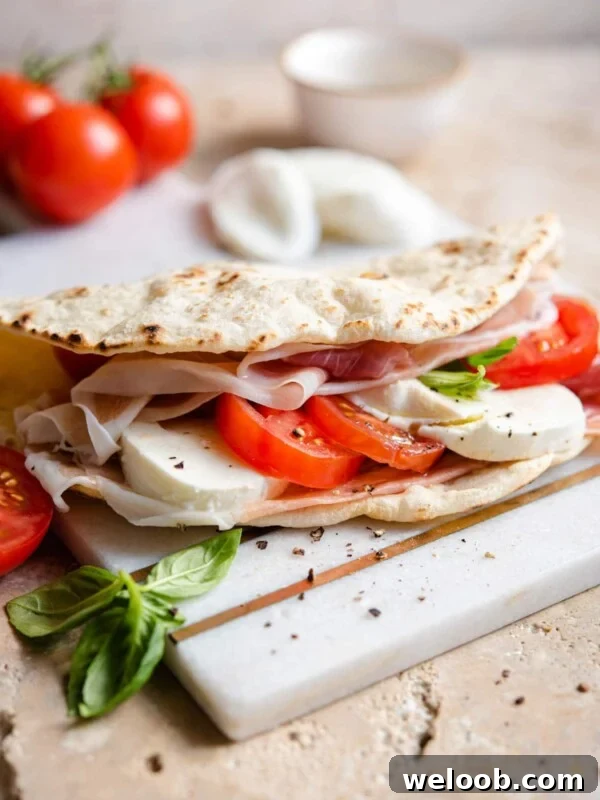
La Piadina: Italian Flatbread
Bread & Savory Bakes
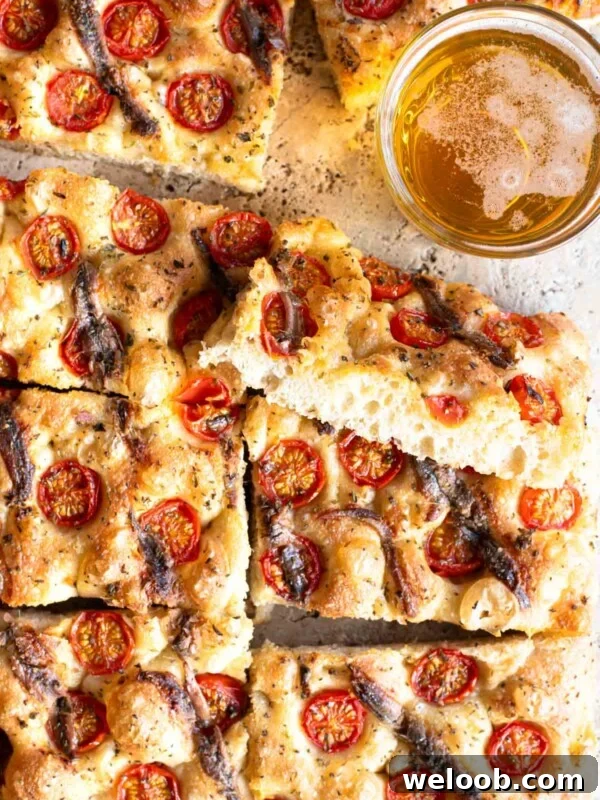
Cherry Tomato Focaccia with Anchovies and Oregano
Pizza
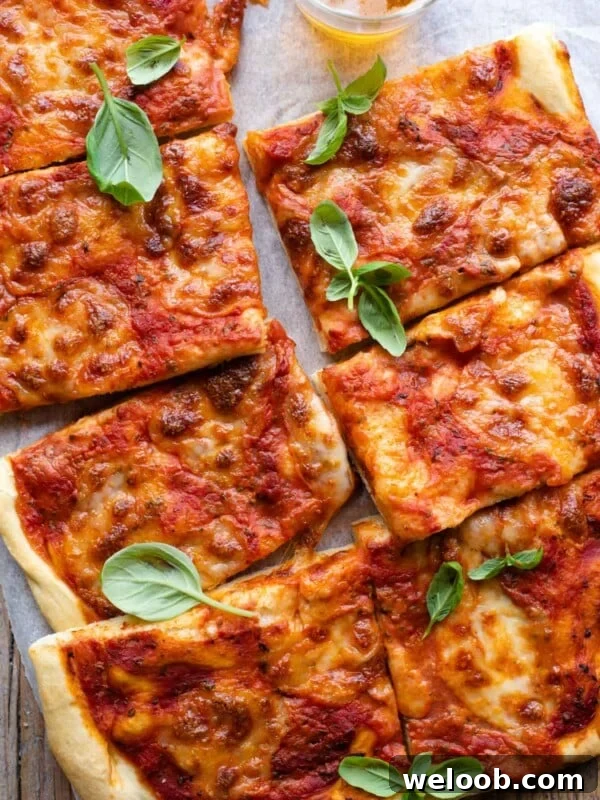
Focaccia Pizza
If you try this Overnight No-Knead Focaccia, please rate it and leave a comment to share how it turned out — I love hearing from readers.
Step By Step Photos Above
Most recipes include step-by-step photos and a short video demonstrating the folding techniques.
Easy Overnight No Knead Focaccia Recipe
By Emily
Equipment
- 11×14 inch baking tray
- Large mixing bowl
Ingredients
- 500 g Italian 00 or bread flour (approx 3 3/4 cups spooned and levelled)
- 400 ml water (1 and 2/3 cups)
- 1 g instant yeast (¼ tsp) — see notes
- 4 tbsp olive oil, plus more for greasing and topping
- 7 g salt, plus sea salt flakes for topping
Instructions
- Put the flour (500 g) in a large mixing bowl and place the yeast (1 g) and salt (7 g) at opposite ends. If your yeast requires activation, follow packet directions and reduce the recipe water accordingly.
- Add the water (400 ml) and stir to form a rough dough. Add the olive oil (4 tbsp) and stir until no dry flour remains. The dough will be very wet and sticky. Cover and rest 30 minutes.
- Wet your hands and perform a stretch-and-fold by folding each edge into the centre. Cover and rest 30 minutes. Repeat once more and rest another 30 minutes.
- Do a coil fold: wet hands, pick the dough from the centre, stretch it up and let it fall so the edges fold in. Repeat 3–4 times until the dough lifts from the bowl without tearing. Rest 30 minutes and repeat the coil fold twice more with 30-minute rests.
- Cover and refrigerate overnight or up to 48 hours.
- Remove from the fridge and transfer the dough to a well-oiled tray. Drizzle with olive oil, cover and proof at room temperature until nearly doubled (about 2–4 hours depending on temperature).
- Preheat oven to 230°C (450°F). Oil your hands and dimple the dough with your fingertips, avoiding bursting large air pockets. Sprinkle sea salt and herbs, drizzle more oil and bake 20–25 minutes until golden brown.
- Remove from oven and drizzle extra olive oil if desired. Serve warm or at room temperature. Best eaten the same day; store leftovers wrapped in foil and reheat in a 180°C (350°F) oven for 10 minutes to refresh.
Video
Notes
- Temperature: Proofing time in the tray depends on room temperature — quicker in summer, slower in winter.
- Tray size: A smaller tray is fine; avoid a much larger tray or your focaccia will be thin.
- Weigh your flour: Cup measurements vary widely; a scale gives the most consistent results.
- Yeast activation: Some instant yeasts must be activated in water first — follow packet instructions and adjust liquid if needed.
- Proofing window: The folding sequence gives about 2 hours of initial proof (up to 4 hours is fine). Don’t shorten this significantly.
- Storage: Best the same day. Wrap cooled focaccia in foil; to refresh the next day, warm at 180°C (350°F) for ~10 minutes.
Helpful Info for All Recipes
- I use extra virgin olive oil unless stated otherwise.
- Recipes are tested in a fan (convection) oven.
- Nutrition is calculated automatically and should be treated as an estimate.
Nutrition
Carbohydrates: 48 g |
Protein: 7 g
Nutrition information is approximate.
Did you try this recipe?
Leave a comment below!