
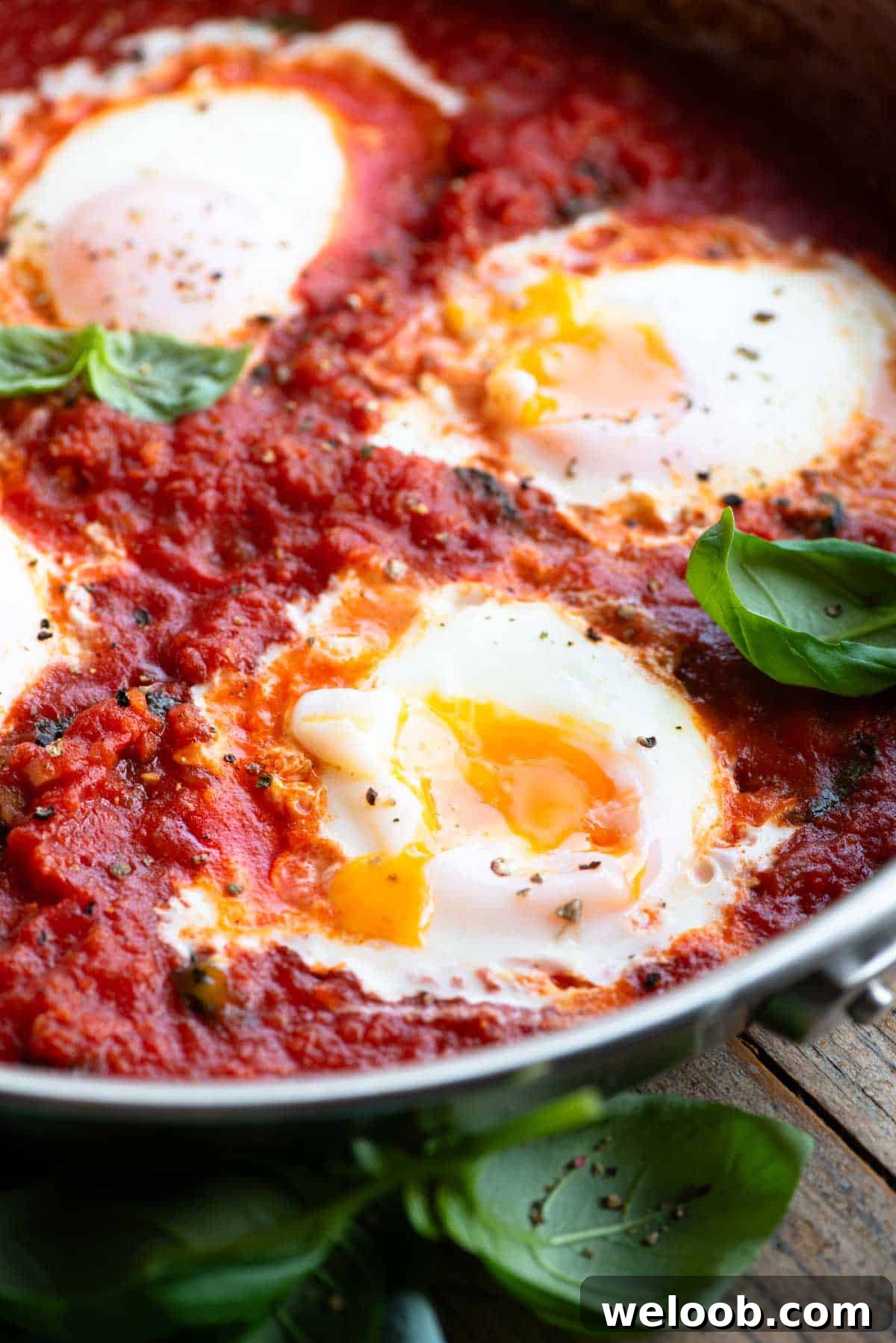
Eggs in purgatory made with spicy Calabrian ’Nduja. This easy recipe features a flavourful tomato sauce and gently poached eggs with runny yolks perfect for dunking crusty bread. Ready in under 30 minutes and ideal for breakfast, brunch, lunch or dinner.
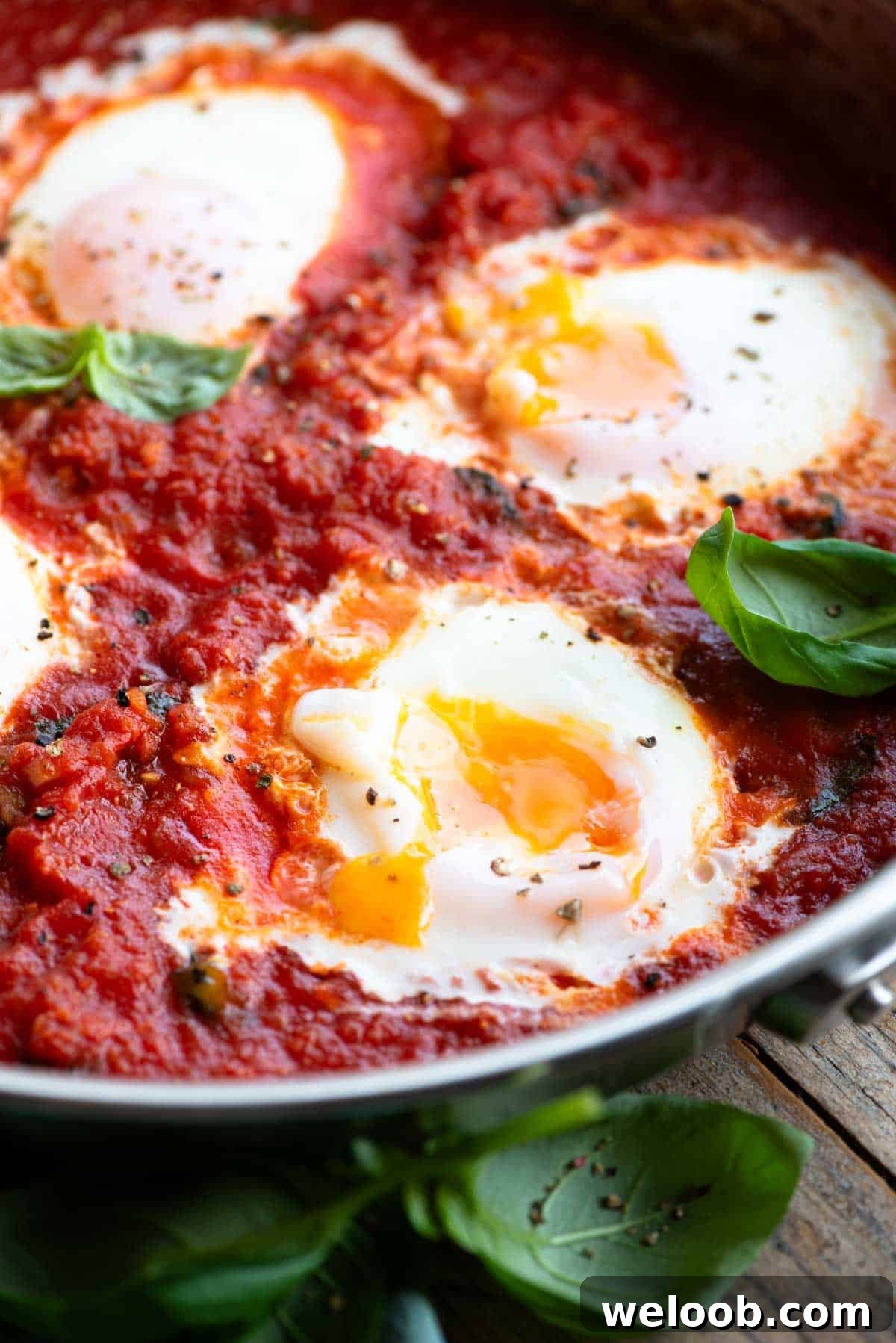
Uova in Purgatorio (eggs in purgatory) is a traditional Neapolitan dish from southern Italy. Fresh eggs are lightly poached in a vibrant tomato sauce so the whites set while the yolks stay luxuriously runny.
The recipe is simple — just a handful of ingredients — but delivers big, comforting flavour. We add spicy Calabrian ’Nduja for warmth and depth, but you can omit or swap it for another spicy sausage or chilli if you prefer.
Serve with crusty bread or char-grilled crostini for mopping up the sauce and egg yolks.
In Italy this dish is commonly eaten for lunch or dinner, though it’s equally excellent for breakfast or brunch. Below you’ll find ingredient notes, tips to cook the eggs perfectly and a few tasty variations.
Ingredient notes
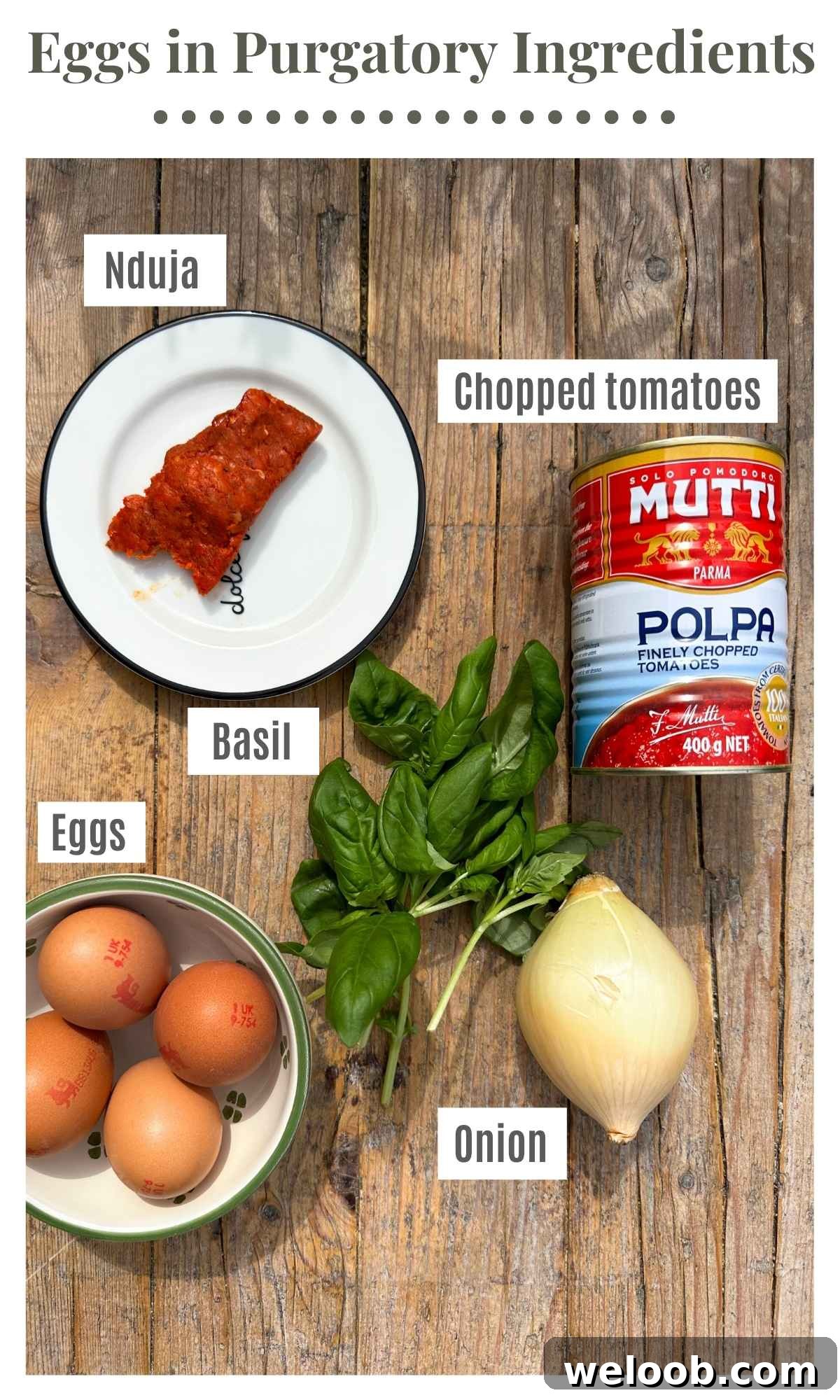
- Tomatoes: Use crushed or chopped tomatoes (Mutti Polpa is a finely crushed option). Plum tomatoes work well. Passata gives a smoother, richer sauce.
- Onion: White onion adds sweetness, but brown onion is an acceptable substitute.
- Basil: Fresh basil is recommended for brightness; avoid dried in this dish.
- Nduja: If you can’t find ’Nduja, substitute a spicy Italian sausage, salami, or fresh/dried chilli, or omit for a milder version.
Tips for perfectly cooked eggs
An undercooked egg white with an overcooked yolk is a common frustration. We tested this method repeatedly to get reliably set whites and runny yolks.
Key tips: cook over medium-low heat, cover the pan with a lid and use a timer. These steps ensure the whites set without turning the yolks firm.
How to make it (visual walk-through)
Step 1 – Heat 1–2 tablespoons olive oil in a 29cm (11.5-inch) pan. Sauté one finely chopped onion until soft and translucent (about 5–6 minutes). Add 1oz (30g) ’Nduja and cook until it softens.
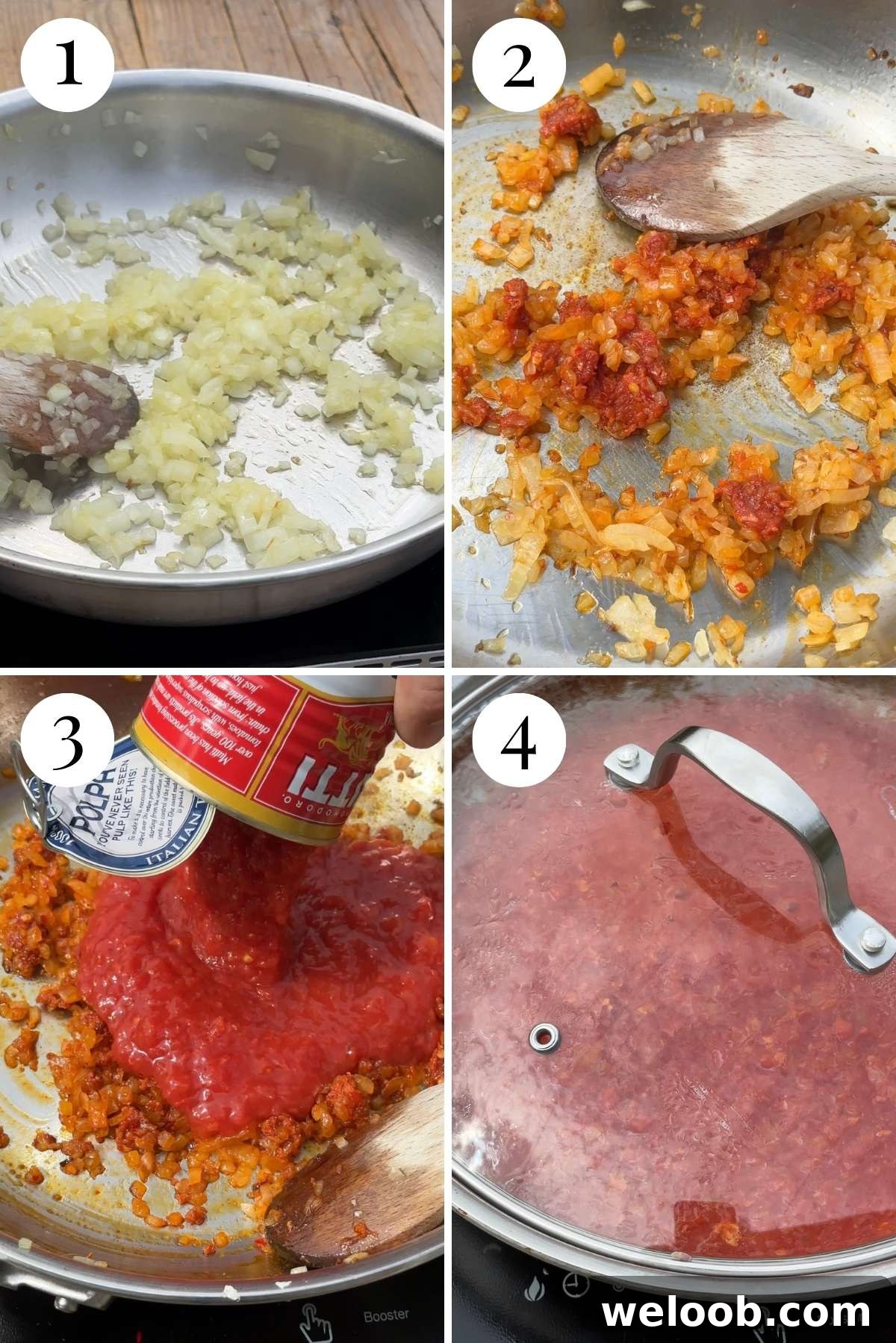
Step 2 – Add 14oz (400g) chopped tomatoes, a large handful of torn fresh basil, and a good pinch of salt and pepper. Simmer uncovered for 5 minutes, then cover and simmer another 5 minutes.
Step 3 – Make 4 shallow wells in the sauce. Crack each egg into a small ramekin and gently slide into a well. Reduce heat to medium-low, cover, and cook for 4 minutes. Remove the pan from the heat but keep the lid on and let it rest for 1 minute.
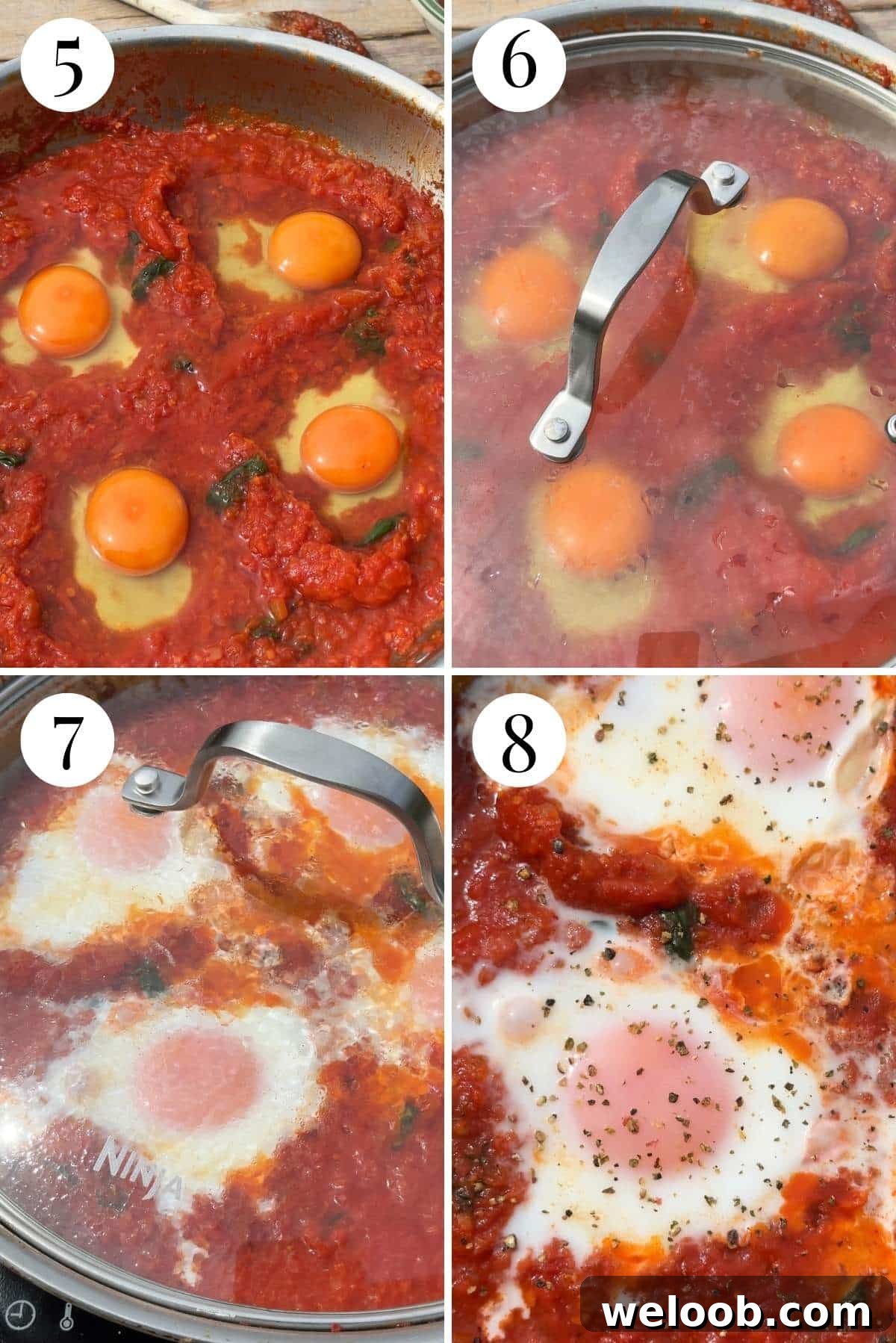
Step 4 – Uncover, season each yolk with a pinch of salt and pepper, and serve immediately with crusty bread for dipping.
Variations to try
- Add garlic: Sauté a clove or two with the onion for extra aroma.
- Olives and capers: Stir in for added saltiness and umami.
- Italian sausage: Brown crumbled sausage with the onion to make the dish heartier.
- Cheese: Finish with grated Parmigiano or Pecorino Romano when serving.

Recipe tips and FAQs
Use fresh eggs: Fresh, free-range eggs poach better and taste best.
Nduja spice level: Heat varies by brand. We use 1oz (30g) for a pleasant kick; adjust to taste.
Adding eggs: Crack eggs into individual ramekins, then gently slide them into the sauce wells for better control. A ladle can also help.
Both are tomato-and-egg dishes. Shakshuka typically includes bell peppers and warm spices like cumin, paprika and cayenne that give it a distinct Middle Eastern flavour.
The name likely comes from Dante’s description of purgatory in The Divine Comedy. The fiery red tomato sauce evokes the idea of an inferno while the white eggs suggest souls ascending toward redemption.
More Italian breakfast recipes to try
Italian breakfasts are often sweet, but here are a few savoury and sweet Italian options you might enjoy alongside this dish.

Breakfast
Sauteed Tomato Breakfast Crostini With Poached Eggs

Breakfast
Pane Frattau (Sardinian Bread with Tomato and Poached Egg)

Breakfast
Italian Breakfast Bundt Cake – Ciambella Allo Yogurt

Italian Desserts
Pasticciotti (Italian Cream Filled Pastries)
If you try this Eggs in Purgatory recipe, please rate it and share your experience in the comments — feedback is always welcome.
Step By Step Photos Above
Most recipes include step-by-step photos and helpful tips to make them succeed first time.
Nduja Eggs in Purgatory
By Emily

Equipment
- 29cm (11.5 inch) pan (stainless steel recommended)
- ramekin
Ingredients
- 14 oz (400g) chopped tomatoes (we used Mutti Polpa)
- 1 white onion, finely chopped
- 1 oz (30g) ’Nduja (about 2 tablespoons)
- 4 free-range eggs
- 1 large handful fresh basil, torn into pieces
- 1–2 tablespoons olive oil
- Salt and pepper, to taste
- Crusty bread, for serving
Instructions
- Heat 1–2 tablespoons olive oil in the pan. Sauté the finely chopped onion until soft and translucent (5–6 minutes), then add the ’Nduja and cook until softened.
- Add 14 oz / 400 g chopped tomatoes, torn basil and a pinch of salt and pepper. Simmer uncovered for 5 minutes on medium-high, then cover and simmer 5 more minutes.
- Make 4 wells in the sauce. Crack eggs one at a time into a ramekin and gently place into the wells. Cover and cook on medium-low for 4 minutes. Remove from heat and leave covered for 1 minute.
- Remove lid, season each yolk with a pinch of salt and serve with crusty bread.
Notes
- Crostini: Toast bread or char-grill slices in advance so they’re ready for serving.
- Prep ahead: The sauce can be made ahead and reheated before adding eggs.
- Serving: Best enjoyed immediately after cooking.
Helpful Info for All Recipes
- I use extra virgin olive oil unless specified otherwise.
- For canned tomatoes I prefer Cirio or Mutti for consistent flavour.
- Vegetable sizes are medium unless noted.
- Recipes are tested with a fan (convection) oven where applicable.
Nutrition
Carbohydrates: 8 g |
Protein: 7 g |
Fat: 9 g |
Cholesterol: 169 mg
Nutrition information is an approximation.