
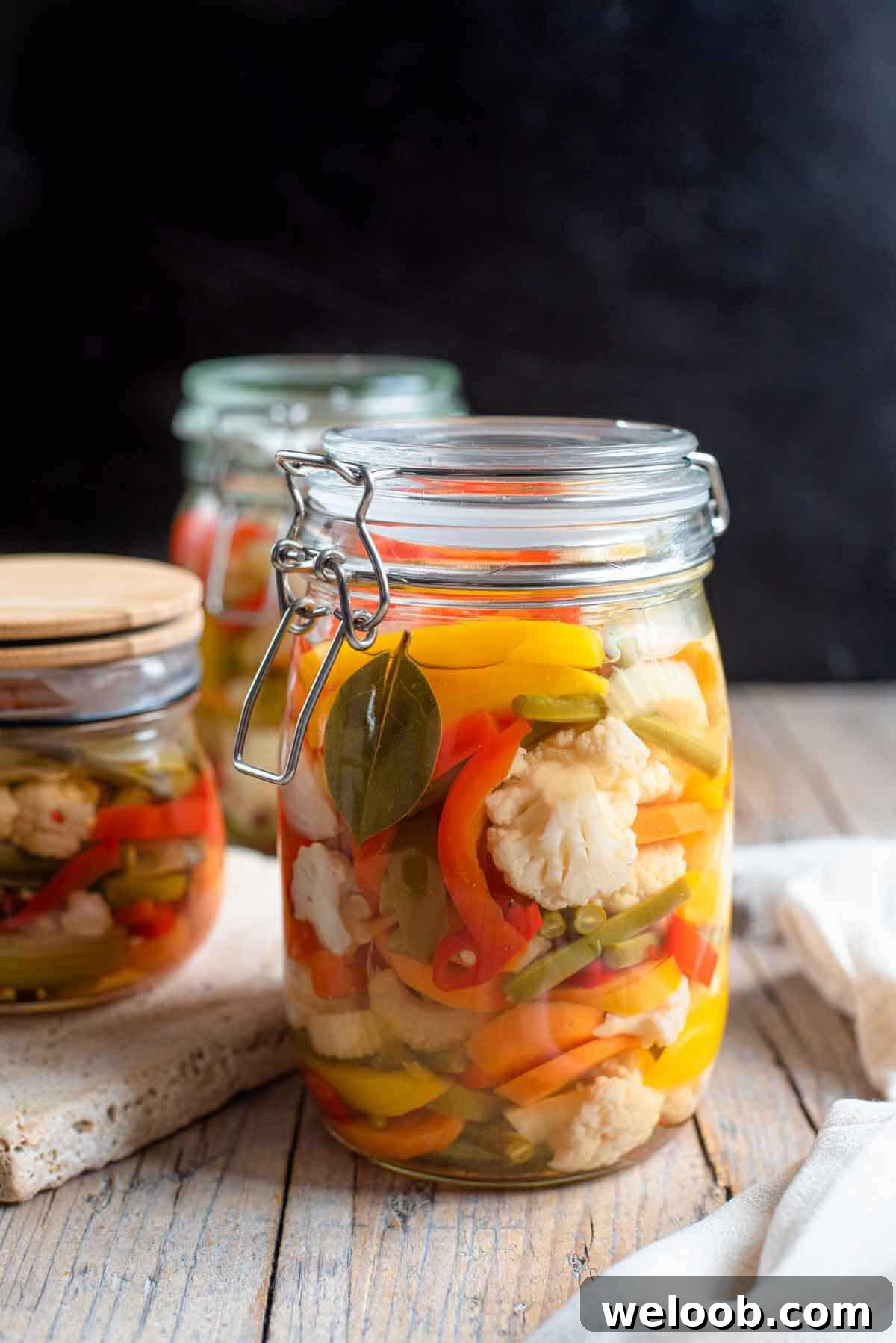
How to make La Giardiniera. Have a bounty of summer vegetables? Use this simple recipe to make Italian pickled vegetables to enjoy throughout the winter. They’re excellent with cured meats or cheese.
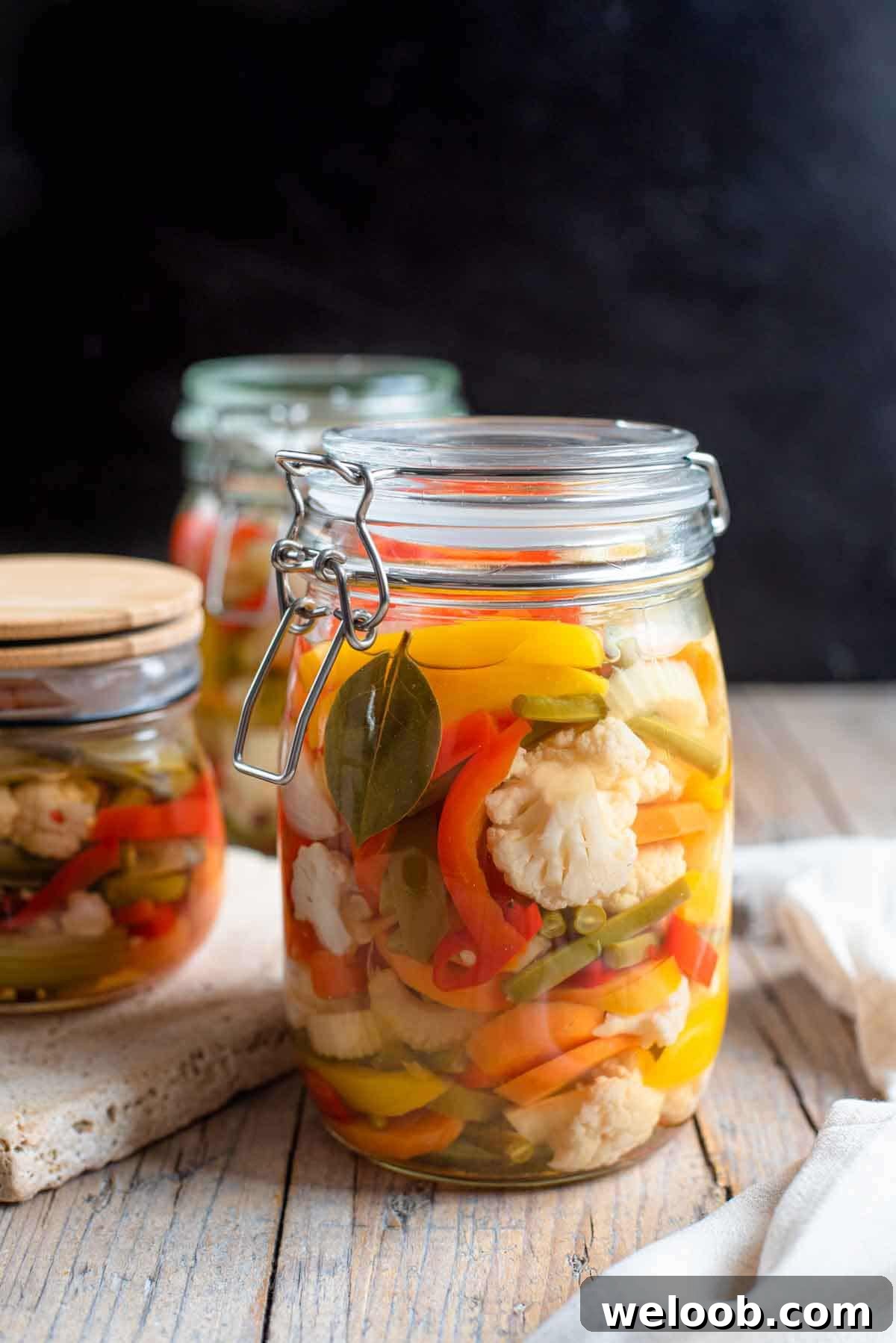
La Giardiniera, which literally means “the gardener,” is a traditional Italian preserve of seasonal vegetables packed into a tangy pickling brine so you can enjoy summer produce long after the harvest.
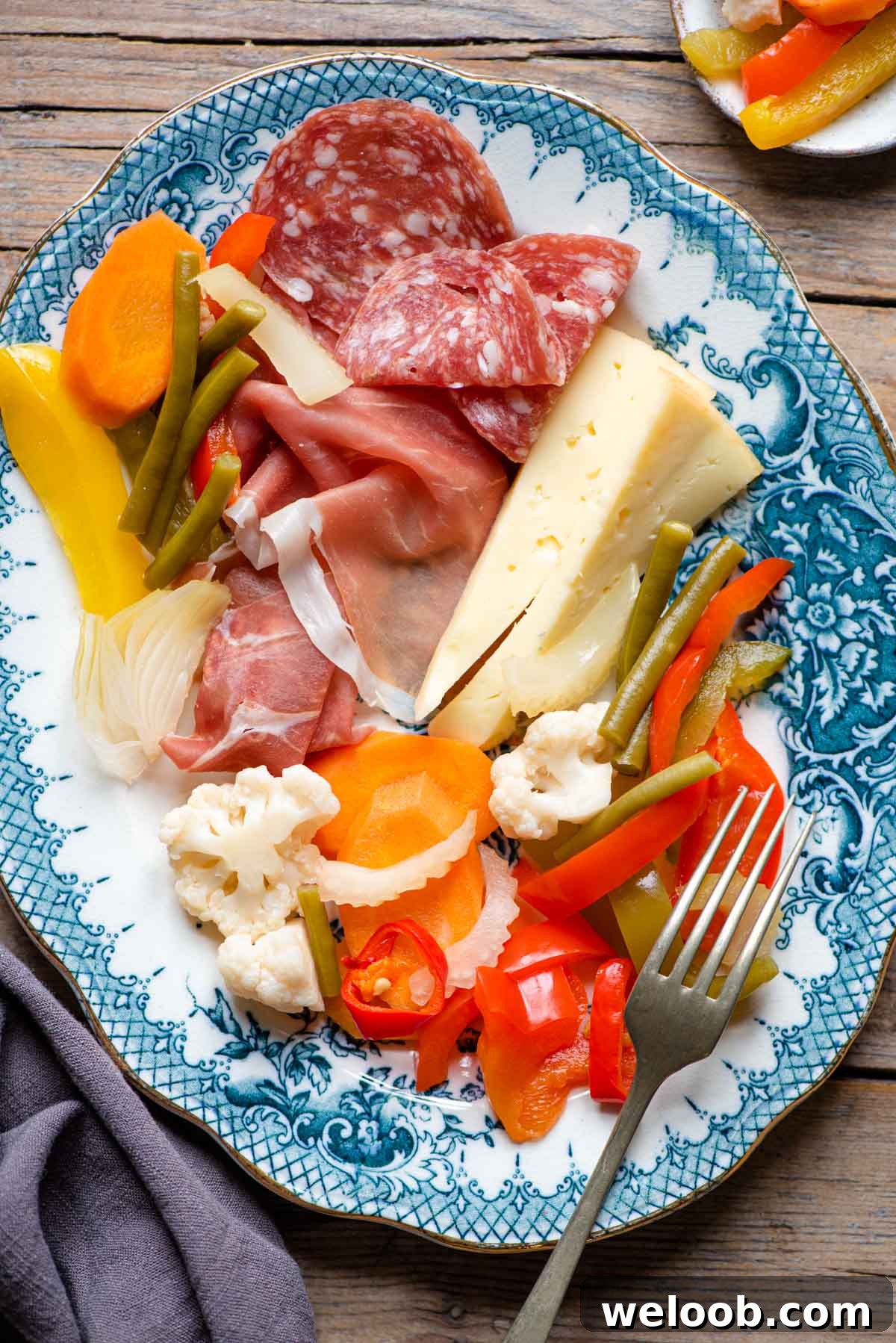
The pickled vegetables (verdure sott’aceto) stay crisp, bright and slightly sharp. They pair beautifully with rich cured meats and cheeses, are a great accompaniment to grilled meats, and can also be added to salads or sandwiches.
There’s no fixed rule about which vegetables to use — the aim is to preserve the freshest seasonal produce when it’s at its best.
Ingredients – what you need
- Vegetables – Use any combination you like. Common choices include cauliflower, carrots, green beans, bell peppers (all colours), celery, fennel, cucumber, small onions or scallions, and chilli peppers.
- Vinegar – Vinegar preserves the vegetables and keeps them crisp while adding flavour. White wine vinegar works well.
- Salt & sugar
- Peppercorns & bay leaves
- Water
How to make La Giardiniera – step by step
Sterilising jars
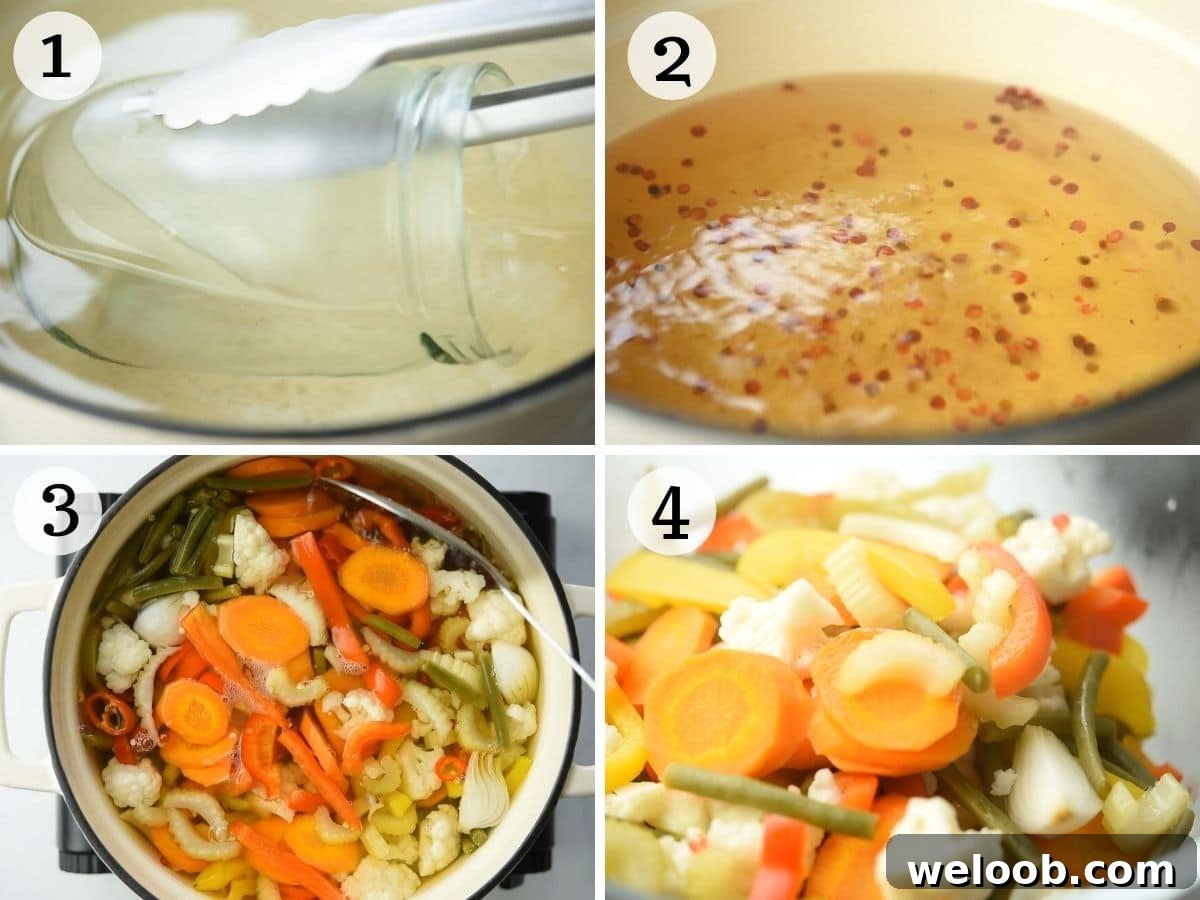
Place jars upright in a deep pot or on a canning rack and pour in hot water so the jars are fully submerged. Bring the water to a boil and keep boiling for 10 minutes. Sterilise lids and rubber seals in the same way. Remove jars with tongs and place them upside down on a clean kitchen towel — leave them wet until ready to fill.
Tip: If you don’t have a canning rack, tuck clean kitchen towels around the jars to prevent them from rattling during sterilisation.
Prepare the vegetables
Combine the water, vinegar, salt, sugar and peppercorns in a large pot and bring to a boil. Add the cauliflower first and cook for 3 minutes, then add the remaining vegetables and cook for another 5 minutes, until just tender but still crisp.
Canning
Use a slotted spoon to transfer the vegetables from the pot to a clean bowl.
Optionally strain the cooking liquid into a clean measuring jug so you can pour it back into the jars without bits of sediment.
Pack the sterilised jars with vegetables and place a bay leaf in each jar. Leave about 1 inch (2.5 cm) headspace at the top, then pour in the hot cooking liquid so it sits roughly 1/4 inch (1 cm) above the vegetables.
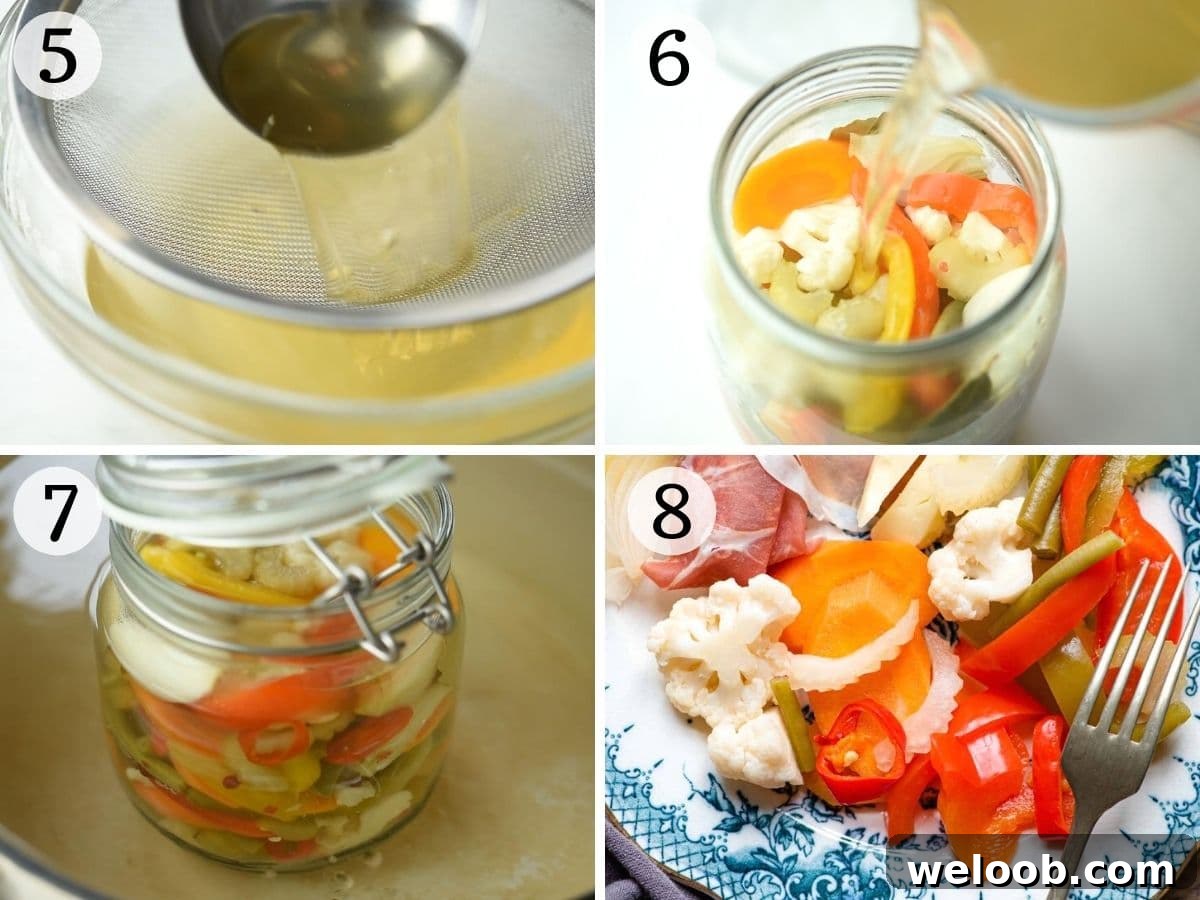
Carefully return the jars to the pot of hot water, ensuring the lids are not fully tightened, and bring to a boil. Process the jars in boiling water for 10 minutes (adjust processing time for altitude; see notes).
Remove jars with tongs and place them on a clean towel. Tighten the lids immediately to seal and leave the jars undisturbed until completely cool. Properly processed and sealed jars will keep for up to 3 months in a cool, dry place. Once opened, refrigerate and use within 4–5 days.
Top tips and recipe FAQs
- Vegetables – Cauliflower needs a slightly longer initial cook than other vegetables to become tender while remaining crisp.
- Herbs and spices – Traditional giardiniera uses bay leaves and peppercorns, but you can add other herbs and spices to taste.
- Jars – Clip-top jars with rubber seals or screw-top jam jars both work. See the sealing notes below to ensure a proper vacuum seal.
- Processing time* – If you live above 1,000 ft (300 m) altitude, increase the processing time according to high-altitude canning guidelines.
Sealing the jars
After the boiling process tighten the lids so they seal as they cool. Check seals when jars reach room temperature.
Clip-top jars – Loosen the clip without opening the jar; if you can lift the jar by the lid alone, the rubber seal is airtight.
Screw-top jars – You may hear lids pop as they seal. If not, press the centre of the lid — a properly sealed lid will be indented and will not flex up and down.
That depends on how much chilli you add. Classic Italian giardiniera is typically not very spicy, but you can increase the heat with more chillies if you like.
The second boil further sterilises the jars and helps create a reliable vacuum seal. Processing time may need to be adjusted for altitude.
Stored unopened in a cool, dry place, they keep up to 3 months. After opening, refrigerate and eat within 4–5 days.
If jars fail to seal, reprocess them with new sterilised lids or refrigerate the contents and use within 2–3 days. You can also freeze the contents for later use.
More Italian Antipasti recipes
- 5 Minute Marinated Olives
- Fried Sage Leaves with Anchovies
- Mozzarella in Carrozza (fried mozzarella sandwiches)
- Italian Marinated Eggplant
- Italian Farinata Chickpea Flatbread (La Cecina Toscana)
If you’ve tried this Giardiniera recipe or any other recipe on the blog, please share your experience in the comments — I love hearing from readers!
Step By Step Photos Above
Most recipes include step‑by‑step photos, tips and sometimes video to help you get it right first time.
La Giardiniera
By Emily
Ingredients
- 1 medium cauliflower, cut into small florets (300g)
- 3 bell peppers (yellow, green and red), sliced (450g)
- 3 large carrots, sliced (250g)
- 2 sticks celery (150g)
- 1.5 cups green beans, trimmed and halved (150g)
- 4 large scallions or small onions
- 2 fresh red chillies, to taste
- 4 cups white wine vinegar (1 litre)
- 4 cups water (1 litre)
- 2 tbsp sea salt flakes
- 2 tbsp sugar
- 1 tbsp whole peppercorns
- 1 bay leaf per jar
Instructions
Sterilising jars
- Place jars upright in a deep pot or on a canning rack, cover with water and boil for 10 minutes. Sterilise lids and seals the same way. Remove with tongs and place upside down on a clean towel.
- Tip: If you don’t have a rack, cushion jars with clean towels to prevent rattling.
Prepare the vegetables
- Combine water, vinegar, salt, sugar and peppercorns in a large pot and bring to a boil. Add cauliflower and cook 3 minutes, then add the remaining vegetables and cook 5 more minutes.
Canning
- Remove vegetables with a slotted spoon into a clean bowl.
- Optionally strain the cooking liquid into a jug.
- Pack jars with vegetables and a bay leaf, leaving 1 inch (2.5 cm) headspace. Pour in hot liquid to about 1/4 inch (1 cm) above the vegetables.
- Return jars to hot water with lids loosened and boil for 10 minutes (adjust for altitude).
- Remove jars, tighten lids immediately and let cool without moving. When cool, jars will keep up to 3 months; once opened, refrigerate and consume within 4–5 days.
Notes
- Weight – Aim for around 2 kg (4.5 lbs) of vegetables as a guide.
- Vegetables – Boil cauliflower slightly longer than other vegetables for the best texture.
- Herbs & spices – Bay leaves and peppercorns are classic; feel free to add other flavours.
- Jars – Clip-top or screw-top jars are both fine; ensure lids seal correctly after processing.
- Processing time* – Increase boiling time if you are above 1,000 ft altitude according to high-altitude canning guidance.
Helpful Info for All Recipes
- I typically use extra virgin olive oil unless stated otherwise.
- All vegetables are medium sized unless noted.
- Recipes are tested and developed using a fan (convection) oven where applicable.
Nutrition
Nutrition info is an approximation.
Did you try this recipe?
Leave a comment below!