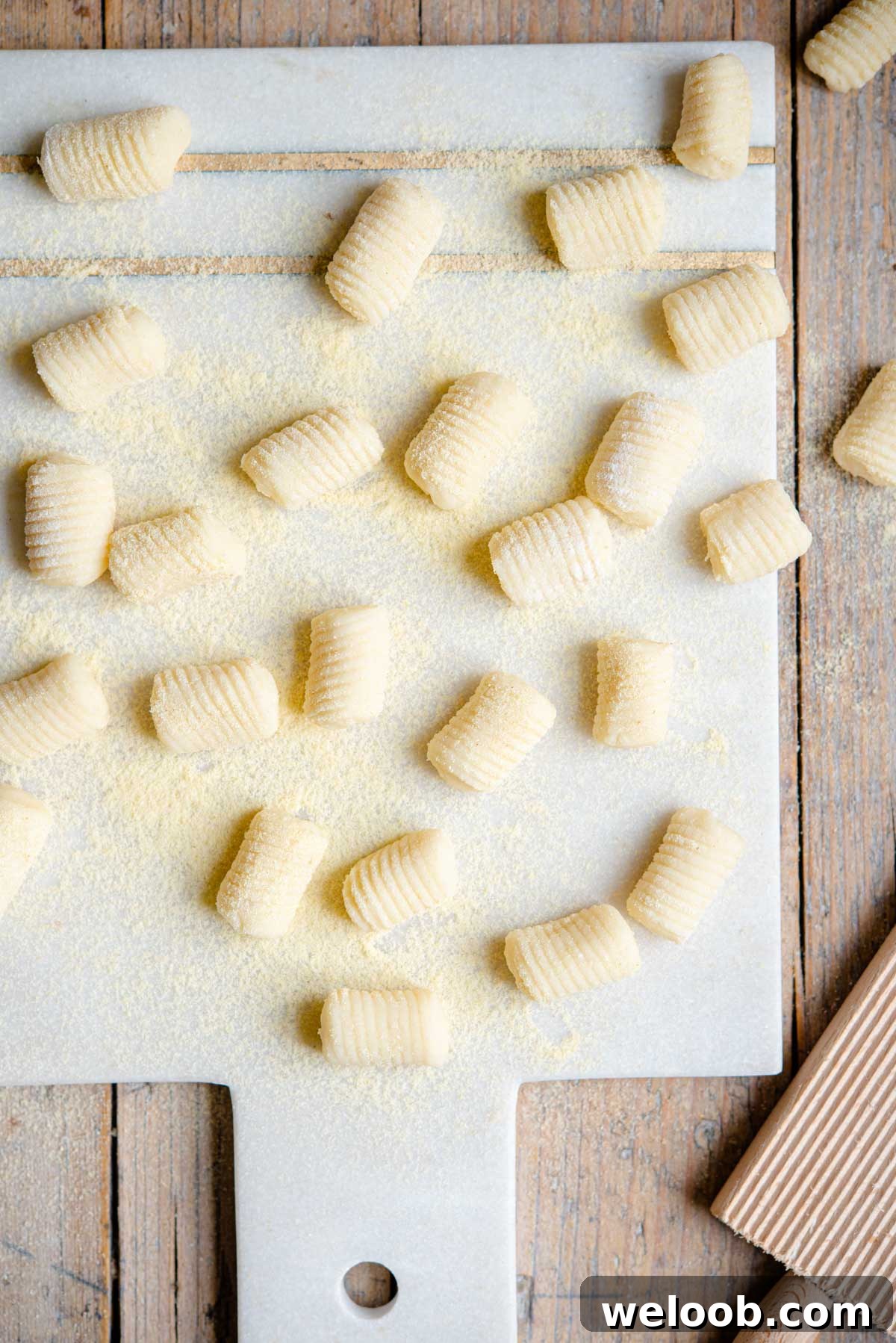
Learn how to make super soft, light and delicious Homemade Potato Gnocchi from scratch with this simple, step-by-step guide. It covers everything from preparing the potatoes and dough to shaping, cooking and choosing the perfect sauce.
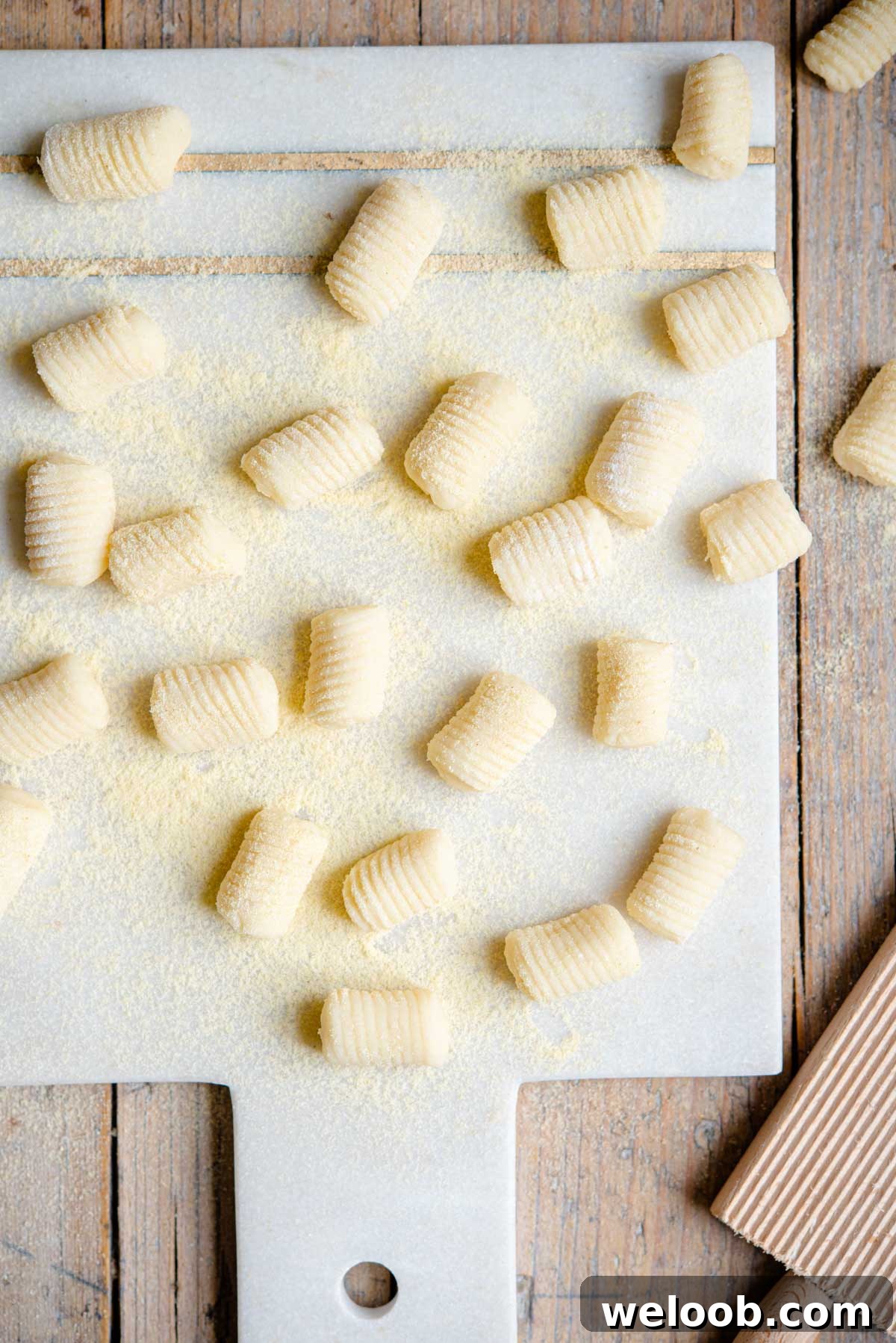
In Italy, gnocchi are often served as a small primo (first course) rather than as pasta. These little potato dumplings are delicate, tender and pair beautifully with many sauces—rich meat ragùs, simple tomato sauces, or a classic butter and sage finish.
Making gnocchi at home takes a bit of attention, but the results are worth it: homemade gnocchi are far superior to store-bought versions and make a comforting, satisfying meal.
Ingredients you need
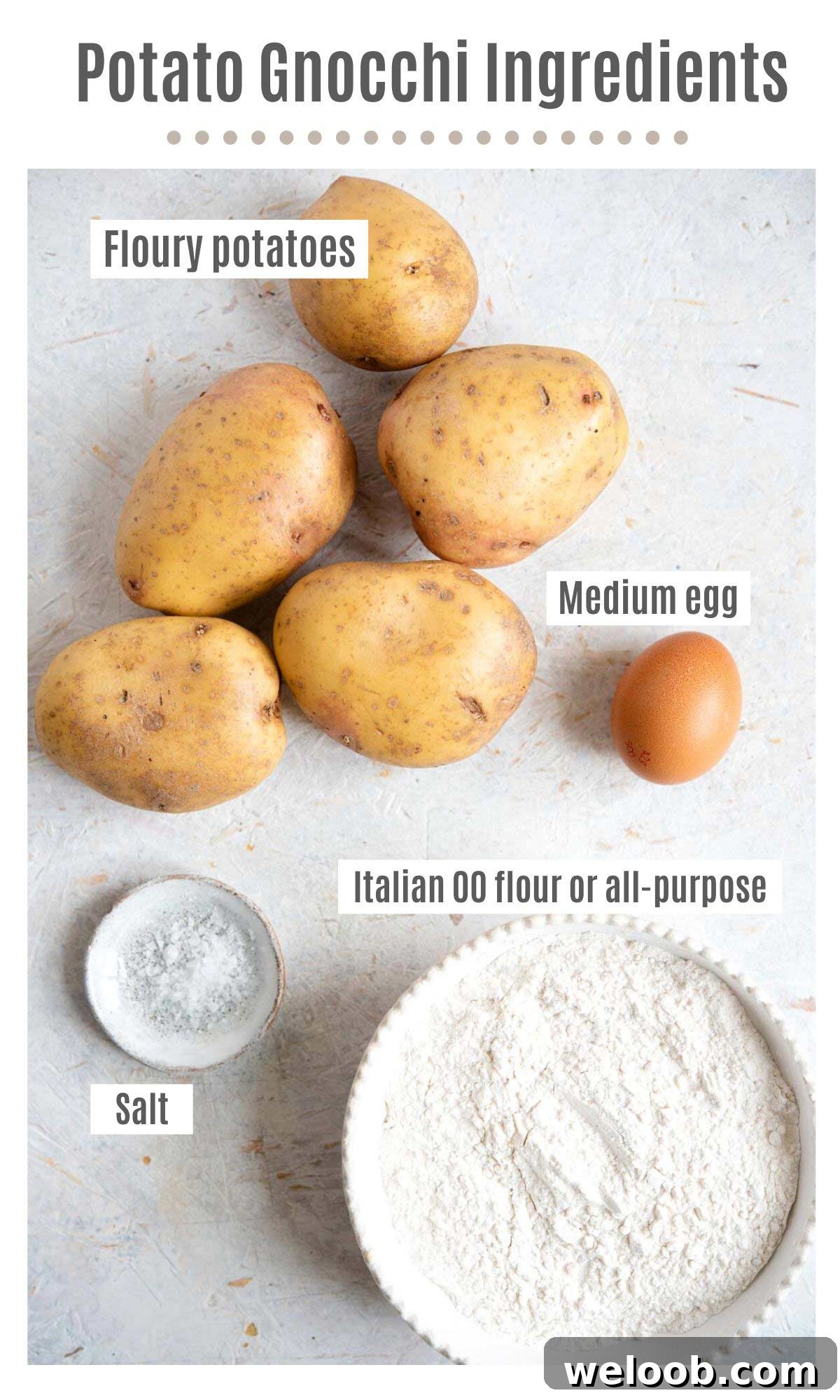
The ingredient list is short: potatoes, flour, egg and salt. Below are important notes about each ingredient to ensure light, tender gnocchi.
- Potatoes – Use floury potatoes such as Yukon Gold, Russet or Maris Piper. Waxy or new potatoes won’t produce the right texture.
- Flour – Italian Tipo 00 yields a very light result, but all-purpose flour works well too.
- Egg – Use one medium egg to help bind the dough; you can omit it, but the dough will be harder to handle.
How to make Potato Gnocchi – step by step
Start by cleaning the potatoes but do not peel them. Place whole potatoes in a large pot of cold water, bring to a boil and simmer until tender—about 30 minutes depending on size.
Check doneness by inserting a knife into the largest potato: it should slide in easily. Avoid checking too often to prevent excess water seeping in.
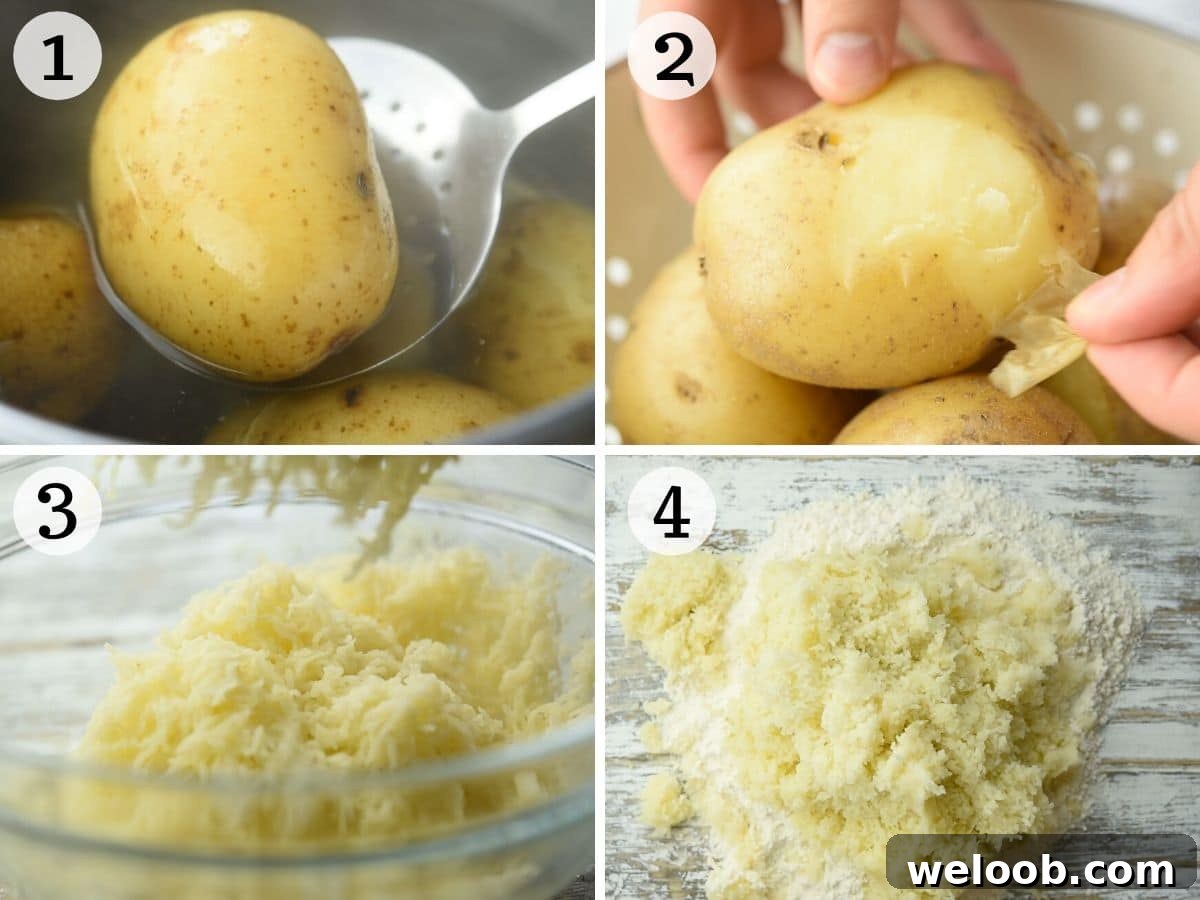
Drain the potatoes and, once cool enough to handle, peel them—the skins should rub off easily. While still warm, pass the peeled potatoes through a ricer for a light, lump-free texture.
How to make potato gnocchi dough
Pour the flour onto a clean work surface and heap the riced potatoes in the centre. Gently fold the flour into the potatoes, then add the beaten egg and a pinch of salt.
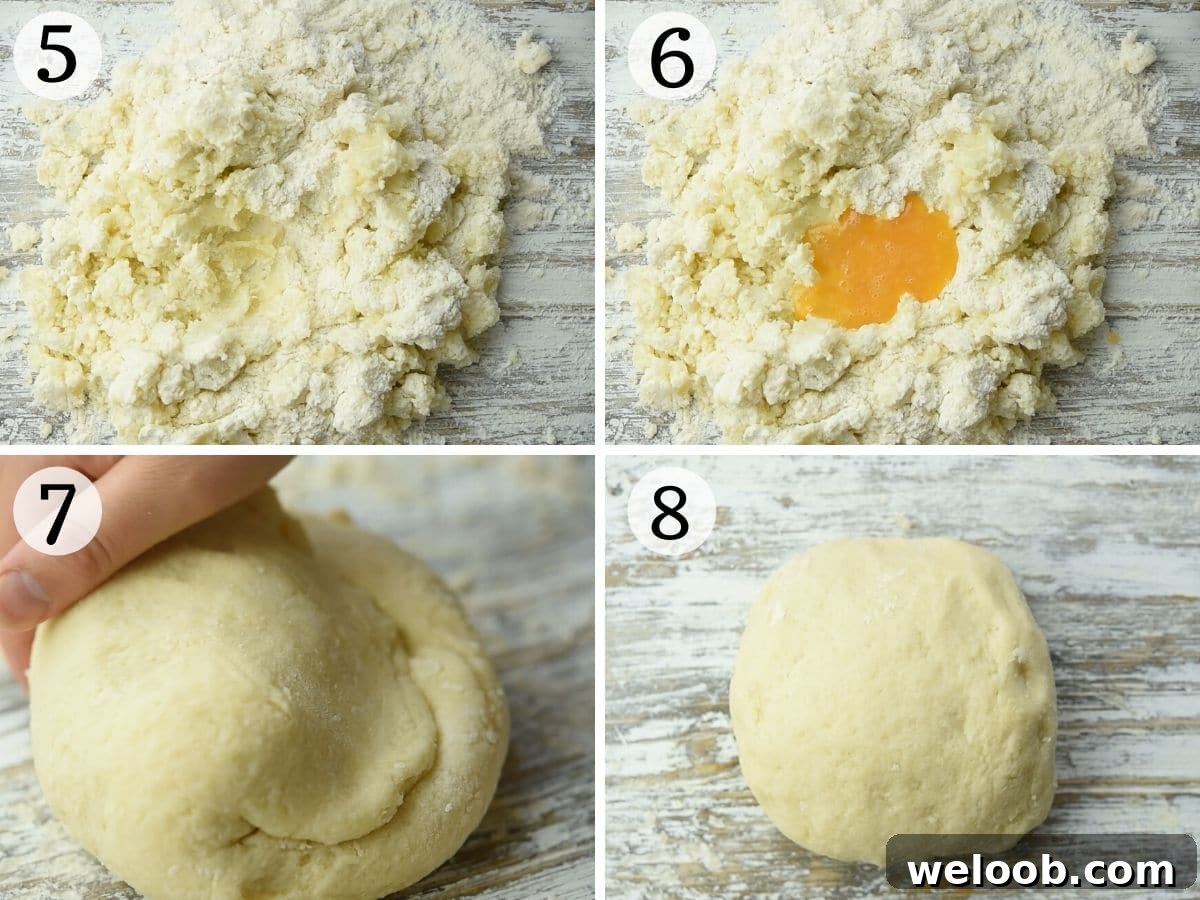
Knead lightly until the dough is smooth and soft but not sticky. Avoid overworking it, or the gnocchi will become dense. Only add small amounts of extra flour if the dough remains tacky.
How to cut and shape the gnocchi
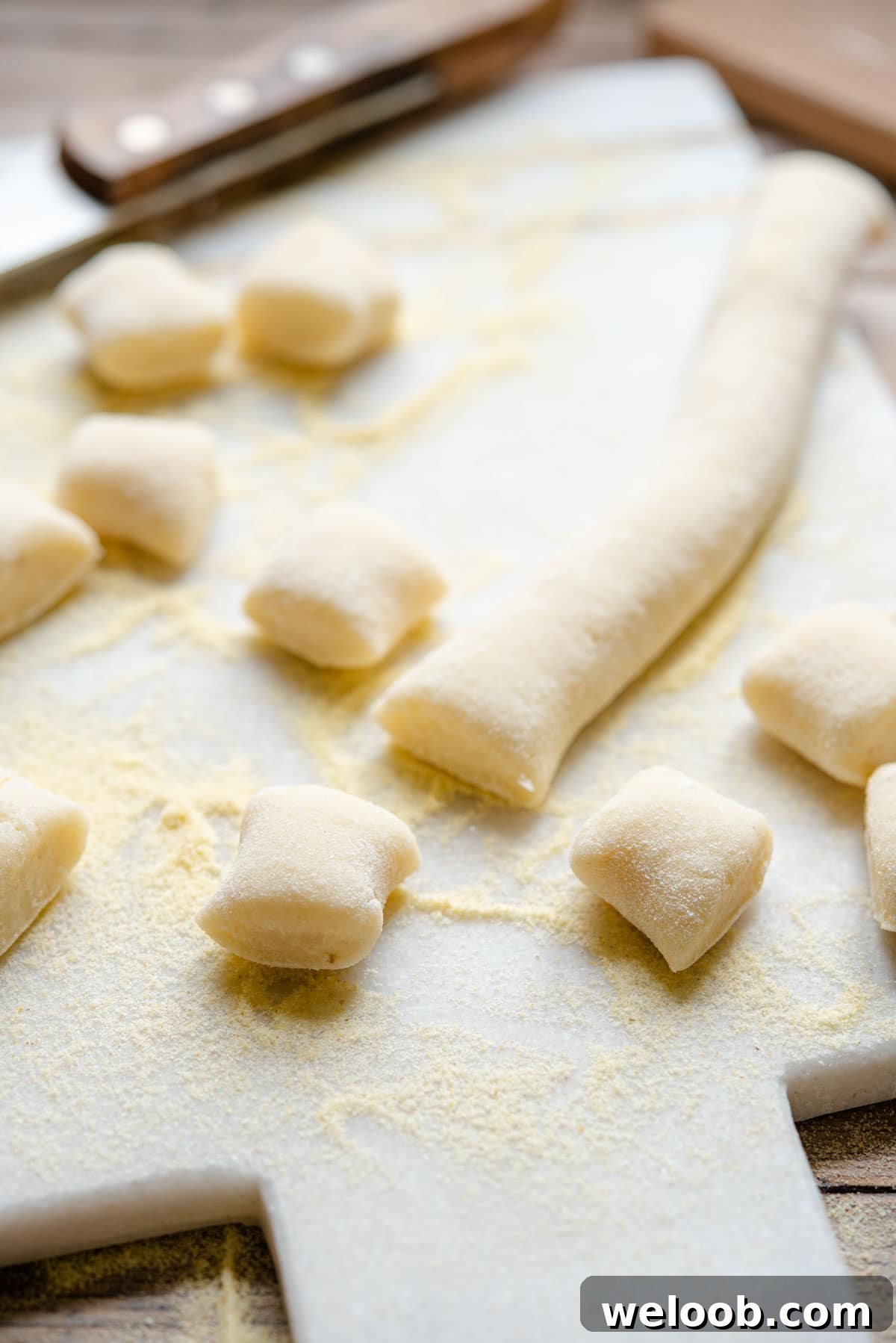
Divide the dough into four portions. Working with one portion at a time, roll it into a log about 2 cm (1 inch) thick and cut into 2 cm pieces.
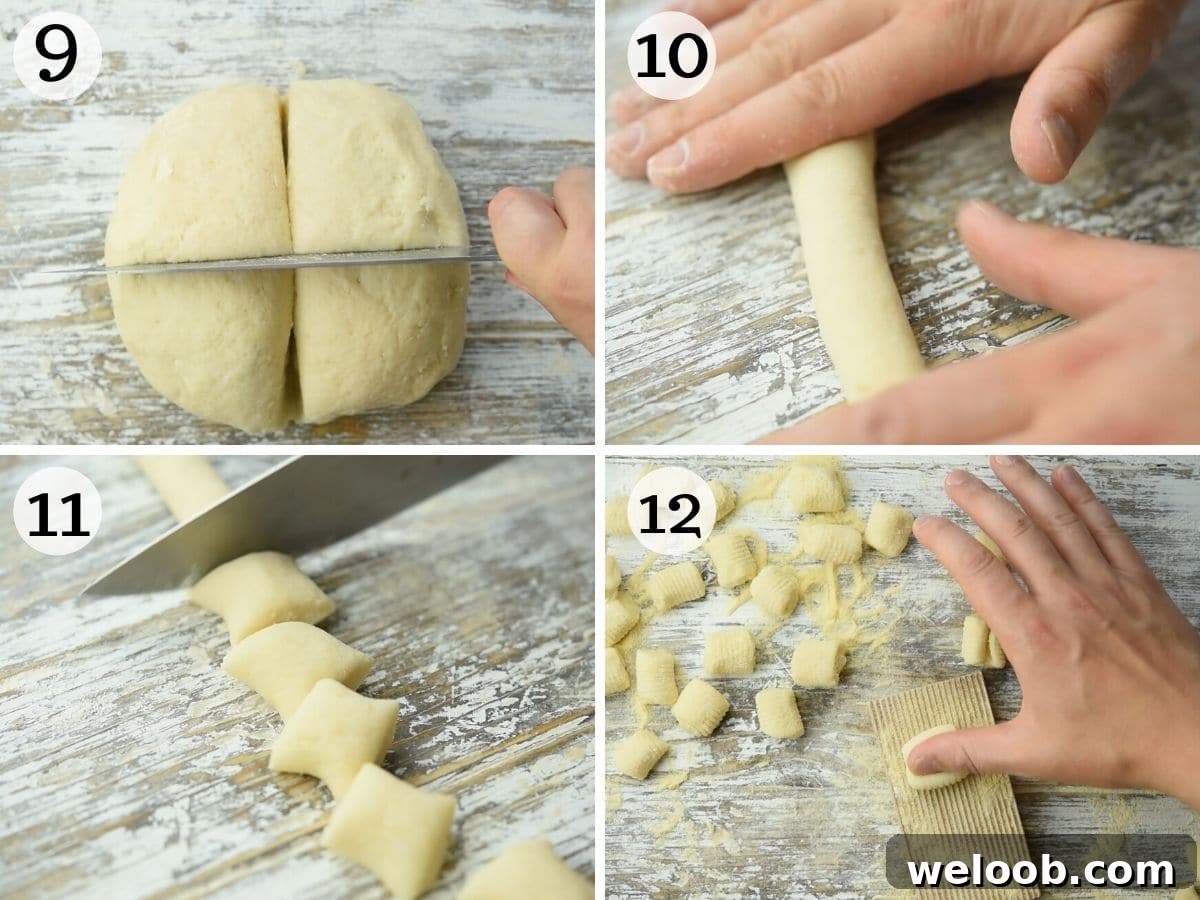
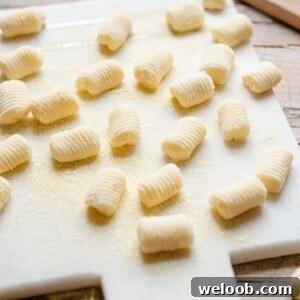
You can leave the pieces as they are or shape them using a gnocchi board or the back of a fork to create ridges. To shape on a board, dust it with flour or semolina, place a piece of dough on the board and roll it away from you while pressing with your thumb to form the ridge and indentation.
Cooking the gnocchi
Bring a large pot of water to a rolling boil and salt generously. Add the gnocchi in batches to avoid overcrowding. They’re done when they float to the surface—this usually takes only a minute or two.
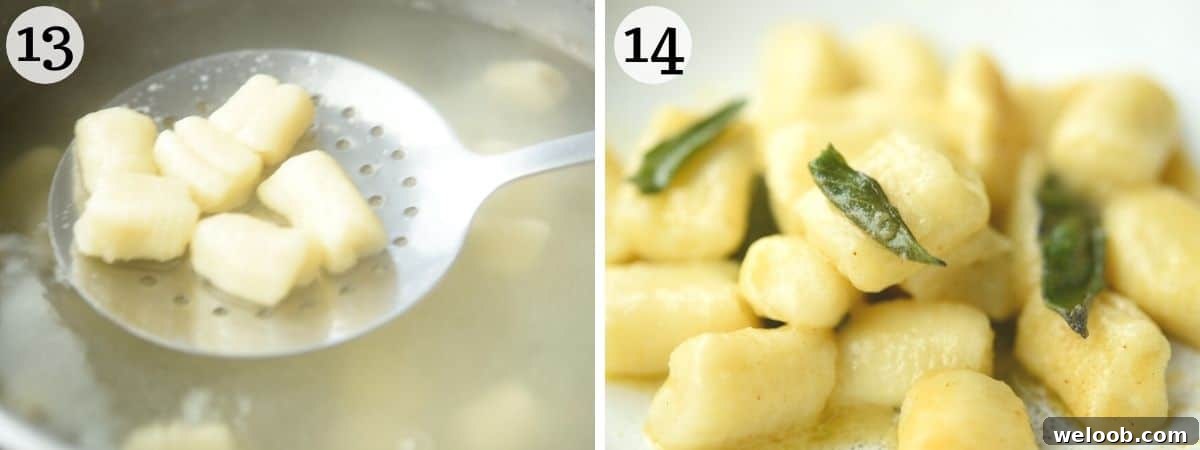
Lift cooked gnocchi with a slotted spoon directly into your prepared sauce, toss gently to coat, and serve immediately for best texture.
Choosing the right sauce
Gnocchi are versatile and pair well with many sauces: a rich meat ragù, fresh tomato sauce, basil pesto, walnut sauce (salsa di noci), or a luxurious brown butter and sage. Try different pairings to find your favourite.
Top tips and recipe FAQs
- Potato type – Use a floury potato (Yukon Gold, Russet or Maris Piper). Waxy potatoes won’t yield a proper dough.
- Peeling – Do not peel before boiling. Keeping the skins on reduces water absorption and gives drier, lighter mash for the dough.
- Boiling method – Start potatoes in cold water and bring to a boil. Adding them to boiling water can cause the skins to split and absorb water.
- Flour – Tipo 00 produces a tender result, but plain all-purpose flour is fine if that’s what you have.
Egg is optional. Traditional gnocchi often omit it, but including a medium egg makes the dough easier to handle.
Gnocchi dough becomes sticky over time. You can shape them up to an hour ahead—store on a tray dusted with semolina, covered and chilled.
Yes. Arrange shaped gnocchi in a single layer on a tray, freeze until firm, then transfer to a freezer bag. Cook from frozen—do not thaw.
If you try this Homemade Potato Gnocchi, please leave a comment to share how it turned out. I love hearing feedback and variations—enjoy making this classic comfort dish.
Potato Gnocchi
By Emily
Ingredients
- 2 lbs floury potatoes (Yukon Gold, Russet or Maris Piper) – about 1 kg
- 2 cups flour (Italian 00 or all-purpose) – about 250 g
- 1 medium egg
- Salt
Instructions
How to prepare the potatoes
- Clean the potatoes but do not peel them. Place in a large pot of cold water and bring to a boil. Simmer until tender, about 30 minutes.
- Check doneness by inserting a knife into the centre of the largest potato. Drain, let cool slightly, then peel—the skin should rub off easily.
- While still warm, pass the peeled potatoes through a potato ricer.
How to make potato gnocchi dough
- Tip the flour onto a clean surface and place the riced potatoes on top. Fold in the flour, then add the beaten egg and salt.
- Knead gently until the dough is smooth and soft but not sticky. Add flour sparingly if needed.
How to cut and shape the gnocchi
- Divide dough into four pieces. Roll each into a 2 cm (1 in) log and cut into 2 cm pieces.
- Shape on a gnocchi board or fork if desired to create ridges.
Cooking the gnocchi
- Bring a large pot of salted water to a boil. Add gnocchi and cook until they float to the surface, then remove with a slotted spoon into your sauce.
- Toss gently with sauce and serve immediately.
Notes
- Potato type: Use floury potatoes for best results; waxy varieties won’t bind correctly.
- Peeling: Do not peel before boiling to avoid excess water absorption.
- Boiling: Start from cold water to prevent skin splitting and water ingress.
- Flour: Tipo 00 produces a lighter texture; plain flour is an acceptable substitute.
Helpful Info for All Recipes
- I use extra virgin olive oil in recipes unless otherwise stated.
- All vegetables referenced are medium-sized unless noted.
- Recipes are tested using a fan (convection) oven when applicable.
Nutrition
Carbohydrates: 50 g |
Protein: 6 g |
Fat: 1 g
Nutrition information is automatically calculated and should be used as an approximation.