
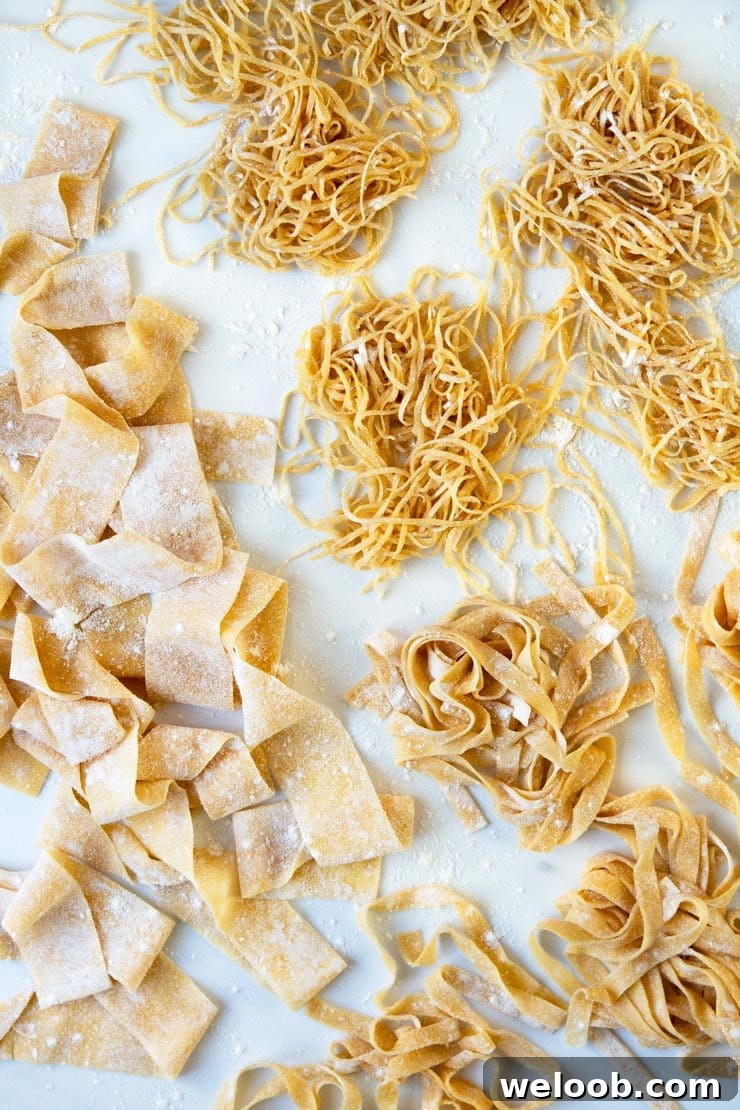
A simple, reliable recipe for homemade pasta dough. With this recipe you can create lasagne sheets, farfalle, ravioli, tagliatelle, pappardelle and more. Homemade pasta is easier than it looks and absolutely worth the effort.
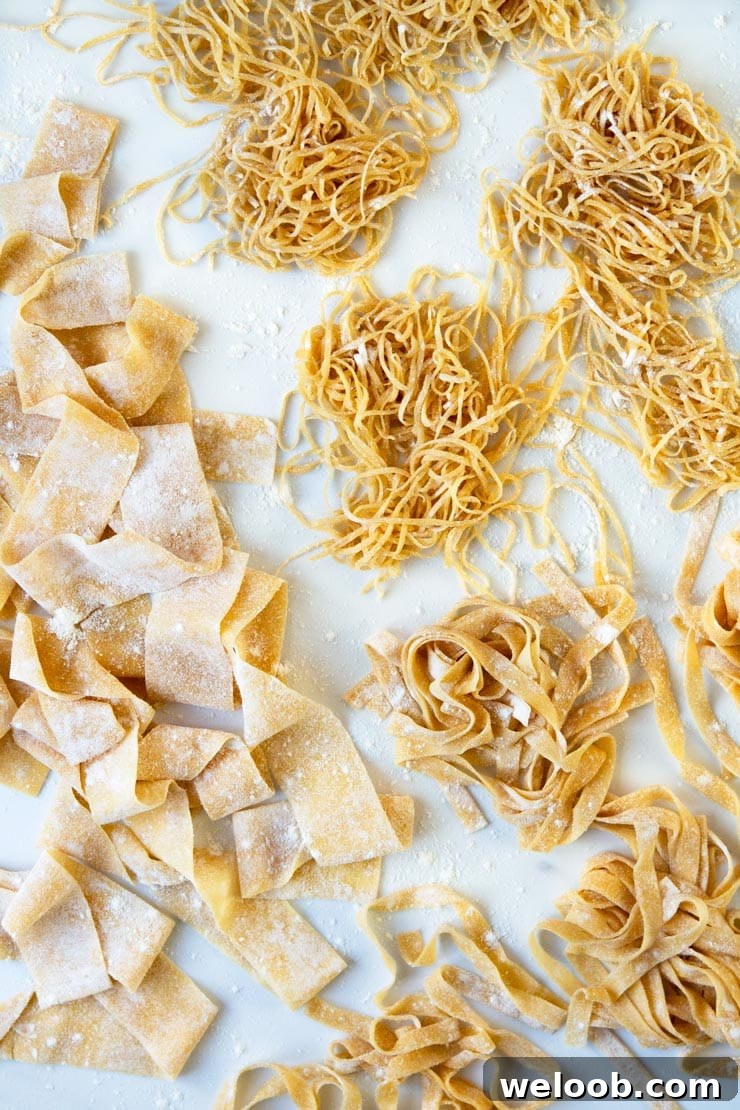
If you love Italian food, fresh pasta instantly elevates any dish — from a comforting lasagne layered with rich meat ragu and silky béchamel, to orecchiette with broccoli and chilli, or pappardelle tossed with mushrooms and speck.
The possibilities for shapes and sauces are endless. I could happily eat pasta every day and never tire of it.
There’s something irresistible about the flavour and texture of fresh homemade pasta. That first bite of tender, freshly made pasta is pure comfort.
This step-by-step guide covers a basic pasta dough you can use for a wide range of dishes. I’ve included photos showing how to make the dough from scratch and how to turn it into lasagne sheets, tagliatelle, pappardelle and fettuccine, but the techniques work for many other shapes too.
Egg to Flour Ratio
As a general rule use 1 large egg for every 100 g (3.5 oz) of 00 flour. I like to add one extra egg yolk to the whole mixture — not an extra yolk per 100 g.
For example, to make enough ravioli for 4–6 people I use 3 large eggs, 300 g (10.5 oz) 00 flour and 1 extra egg yolk.
Choose the best free-range eggs you can find. In Italy there’s a specific pasta egg called “Pasta Gialla” with deep orange yolks that give a beautiful golden colour. If you can’t find that, pick high-quality free-range eggs with rich yolks.
P.S. Egg size matters. This recipe assumes large eggs; if you use medium or small eggs you’ll need less flour.
Place the flour on a clean work surface, make a well in the centre and add the eggs.
Using a fork, whisk the eggs while slowly incorporating flour until the mixture looks like a rough dough. You may need to use your hands once the egg is mostly combined to bring the dough together.
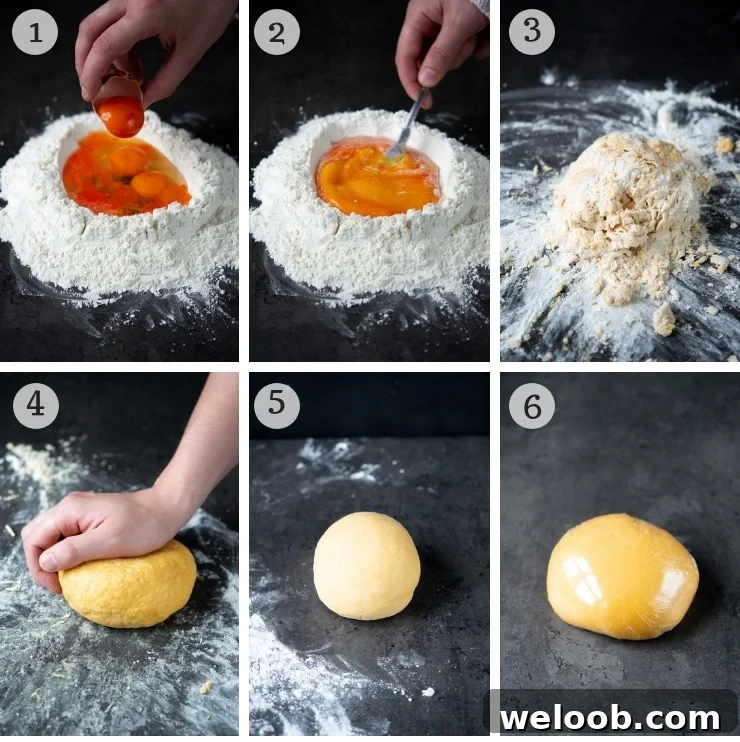
Gather the dough with your hands into a ball. Knead for about 10 minutes until the dough is smooth and elastic. Wrap in cling film and let rest for 30 minutes at room temperature.
After resting, cut the dough in half so it’s easier to roll. Flatten each piece with your palm so it will fit through the widest setting on your pasta machine (usually 0).
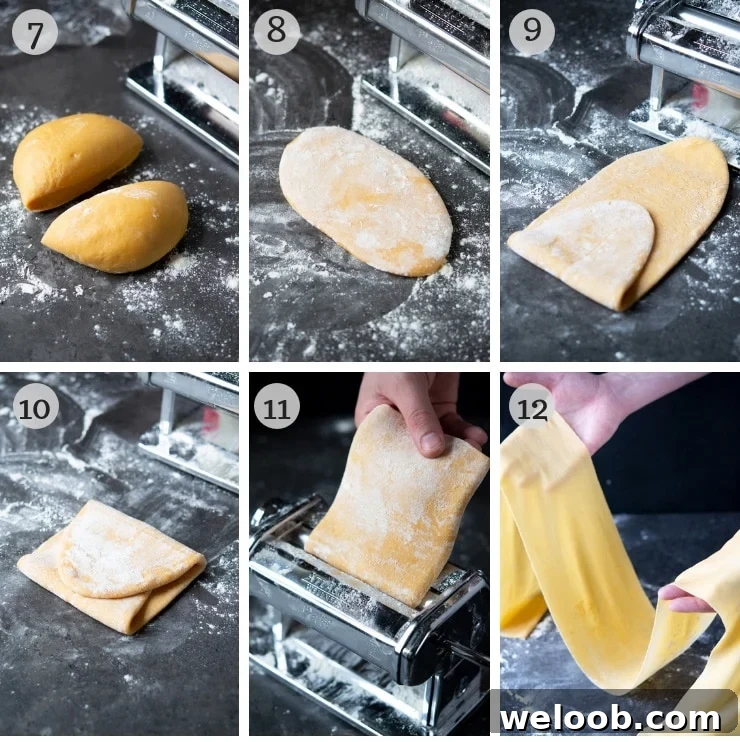
Pass the dough through the widest setting once, then fold one side over the other. Flatten and pass through the widest setting again. Repeat folding and passing through the widest setting a total of four times — this builds structure and a smooth surface.
Once the dough is smooth, run it through each setting once from the widest to the second-last setting (for most machines this is number 8).
Best Pasta Thickness to Choose
I rarely use the very last setting because the sheets become too thin and fragile. For ravioli I usually stop at the third-last setting (number 7). For lasagne, tagliatelle or pappardelle I prefer the second-last setting (number 8).
How to Make Different Pasta Shapes
Lasagne
Lasagne sheets are straightforward: roll the dough to your chosen thickness — I recommend the second-last setting — then cut the sheets to fit your baking dish.
Tagliatelle, Pappardelle & Fettuccine
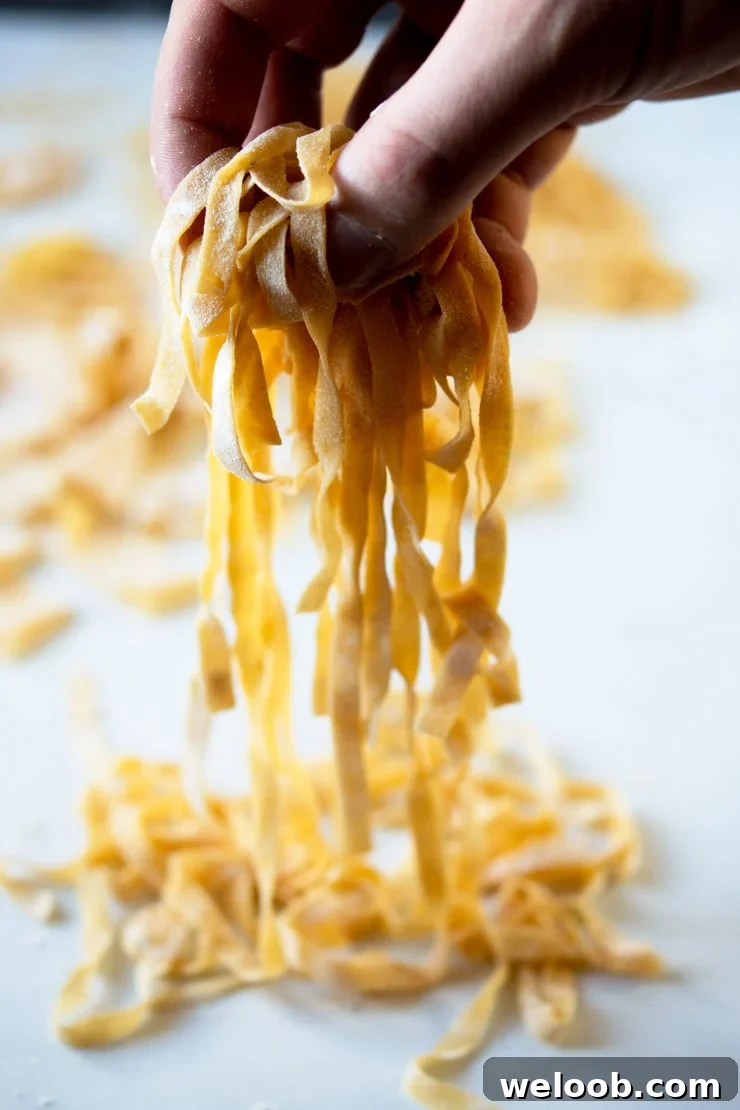
The process is the same for these ribbon shapes, only the width changes. Pappardelle, the widest, is easiest cut by hand. Fold a lasagne sheet over repeatedly until about 1 inch wide, then slice into 1/2 inch ribbons. Unravel and separate the strands into nests if not cooking immediately so they dry slightly.
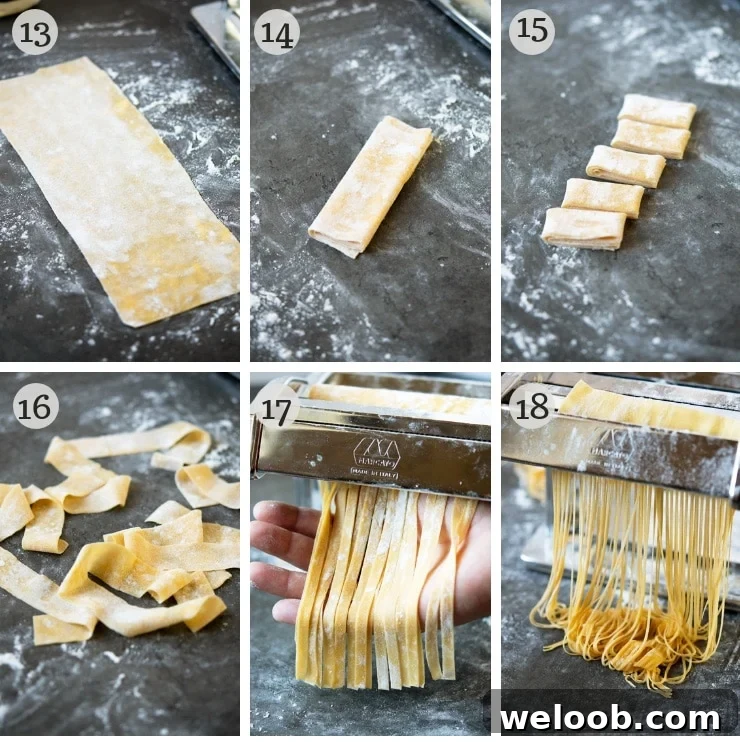
For tagliatelle and fettuccine use the appropriate cutter attachment on your machine and feed the sheets through to create even ribbons. Shape into nests to dry if you won’t use them straight away.
Top Tips
- Use 00 flour for the best texture when making pasta from scratch.
- Choose the highest quality free-range eggs you can find.
- Knead for at least 10 minutes until the dough feels smooth and elastic. If you cut the dough in half and see tiny air bubbles inside, it’s ready.
- Rest the dough for 30 minutes before rolling it out.
- Lightly dust your work surface with flour or semolina while rolling to prevent sticking.
- Sprinkle a little flour on the machine rollers to stop sticking during rolling.
Pasta Sauces to Serve with Homemade Pasta
- Artichokes and peas
- Sun-dried tomato and roasted red pepper
- Eggplant alla norma
- Parmesan and butter
- Easy sausage ragu
If you try this Homemade Pasta Dough or any other recipe, please rate it and leave a comment — I love hearing how it went!
Step By Step Photos Above
Most of our recipes include step-by-step photos, helpful tips and tricks to get it right first time.
Homemade Pasta Dough
By Emily
Ingredients
- 400 g 00 flour (3 cups spooned and levelled)
- 4 large eggs, free range
- 1 egg yolk, free range
Instructions
- Place the flour on a clean work surface, make a well in the middle and add the eggs.
- Using a fork, whisk the eggs while slowly incorporating flour until it resembles a rough dough. Use your hands when needed.
- Bring the dough together into a ball and knead for 10 minutes until smooth and elastic. Wrap in cling film and rest for 30 minutes at room temperature.
- Cut the dough in half and flatten so it fits through your pasta machine’s widest setting. Pass through the widest setting, fold, and repeat four times.
- Once smooth, pass the dough through each setting from the widest to the second-last setting (adjust based on desired thickness).
How to Make Lasagne Sheets, Tagliatelle, Pappardelle and Fettuccine
Lasagne
- Roll the dough to the desired thickness (second-last setting recommended) and cut sheets to fit your dish.
Tagliatelle, Pappardelle & Fettuccine
- For pappardelle fold the sheet until about 1 inch wide and hand-cut into 1/2 inch ribbons. Unravel and separate into nests to dry if needed.
- Use the appropriate cutter for tagliatelle and fettuccine and form nests if not cooking immediately.
Notes
The Best Pasta Thickness
I rarely roll to the very last setting; sheets become too thin and delicate. For ravioli I use number 7; for lasagne, tagliatelle and pappardelle I use number 8.
Egg to Flour Ratio
1 large egg per 100 g 00 flour. I add one extra yolk to the whole mixture. Example: 3 large eggs + 300 g flour + 1 yolk for 4–6 servings.
Extra Tips
- Use 00 flour for best results.
- Choose high-quality free-range eggs.
- Knead for at least 10 minutes until the dough is smooth and elastic; tiny air bubbles inside indicate readiness.
- Rest dough for 30 minutes before rolling.
- Lightly dust the work surface with flour or semolina when rolling.
- Dust the pasta machine rollers with flour to prevent sticking.
Helpful Info for All Recipes
- I use extra virgin olive oil in recipes unless stated otherwise.
- All vegetables are medium unless stated otherwise.
- Recipes are tested using a fan (convection) oven.
Nutrition
Carbohydrates: 71 g |
Protein: 21 g |
Fat: 8 g
Nutrition information is an approximation.
Did you try this recipe?
Leave a comment below!