Sautéed Vegetables
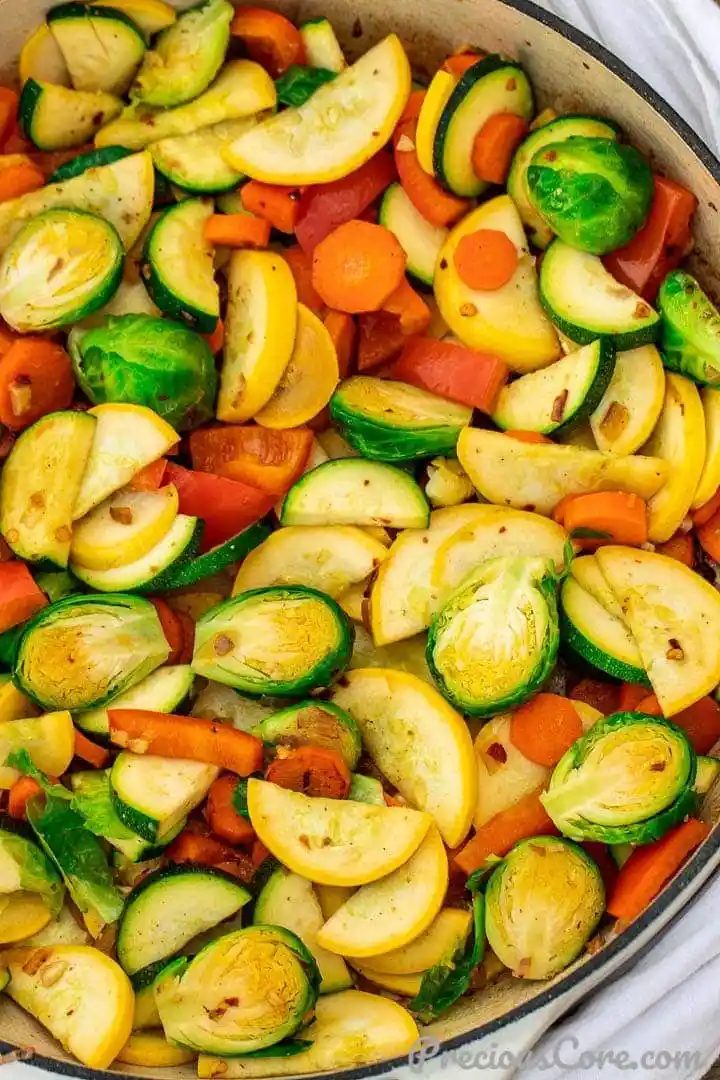
Sautéed Vegetables Recipe
In this post, we will show you how we make almost any vegetable satisfying. Sautéing them with lots of flavors is a good way to eat lots of veggies AND enjoy them.
This healthy side dish is so terrific that it will even impress picky eaters. It works with your favorite vegetables and is an easy way to meet your recommended daily values.
These simple sauteed vegetables can become a satisfying side dish that you make again and again. They’re also a great option for when you don’t have a ton of time!
We find that sautéing lots of veggies in a large skillet is one of the fastest ways to cook them, compared to the oven or another method. After your first time making this recipe, you’ll see exactly what we mean!
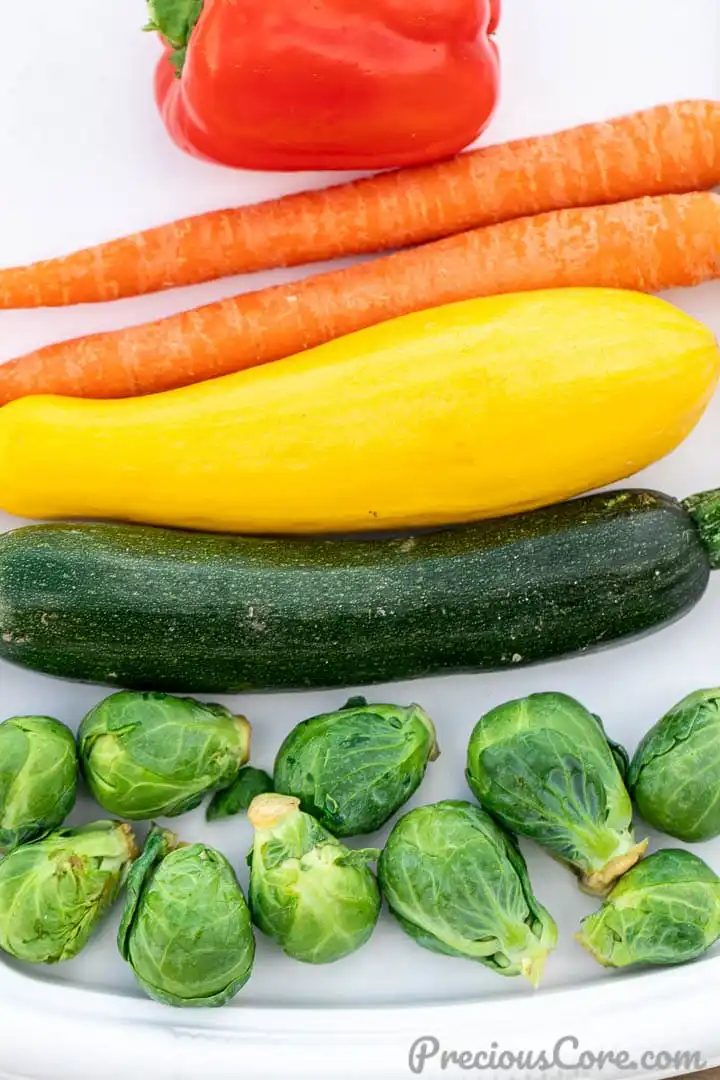
These days, we are always making some form of sautéed vegetables. Some are quick and easy with pre-cut and packaged vegetables. And sometimes we cut the different veggies myself. Regardless of whatever vegetables you choose, the principle for this easy sautéed vegetables recipe is the same.
Sautéed Vegetables Ingredients
To make sautéed vegetables, you could use a wide variety of fresh veggies. Here are some of the vegetables we used:
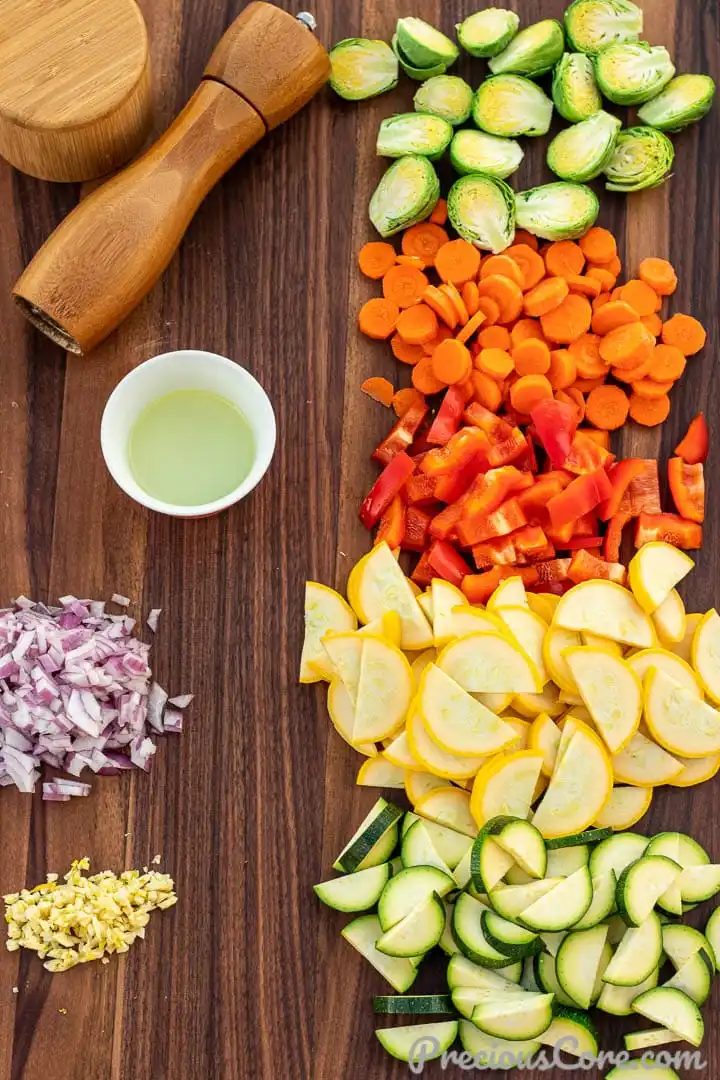
- Carrots. Carrots provide a bright color and a nice crisp texture. They contain high amounts of vitamin A!
- Bell Peppers and Onions. For color and crunch. Although we used red peppers, you can use yellow bell pepper or another color if that’s what you have on hand. Also, use whichever onions you prefer, like white, yellow, or red.
- Squash: Zucchini and yellow squash provide antioxidants and vitamins, as well as a nice tender texture and earthy taste.
- Olive Oil. For sautéing. This helps with browning and also prevents the veggies from sticking. You can use another neutral oil like vegetable or avocado oil.
- Seasonings: You’ll need assorted seasonings, such as black pepper, table or sea salt, bouillon powder, and pepper flakes if you want some spice.
Be sure to check the full recipe below for the quantities of the vegetables used.
A good rule of thumb is to use colorful veggies. This makes for a colorful dish that is loaded with nutrients.
Seasoning For Sauteed Vegetables
The best seasoning for Sauteed Vegetables is a combination of salt, black or white pepper, and bouillon powder. Also, sauteeing onion and garlic before adding the vegetables builds a great flavor base! However, you can also experiment and add Italian seasoning, garlic powder, and other spices.
Bouillon powder is our secret ingredient which adds a little extra something special and makes even unloved vegetables palatable. We particularly love and use Knorr Chicken Bouillon powder a lot!
How To Sauté Vegetables
1. Start the cooking process by heating up olive oil or any neutral oil in a non-stick skillet or large sauté pan.
2. Add chopped onions into the hot skillet and saute until translucent.
3. Add fresh minced garlic and sauté to release its flavor on the bottom of the pan. The garlic will caramelize and turn into little browned bits; be careful not to burn it. Also, add red pepper flakes if using and stir so it releases its flavor.
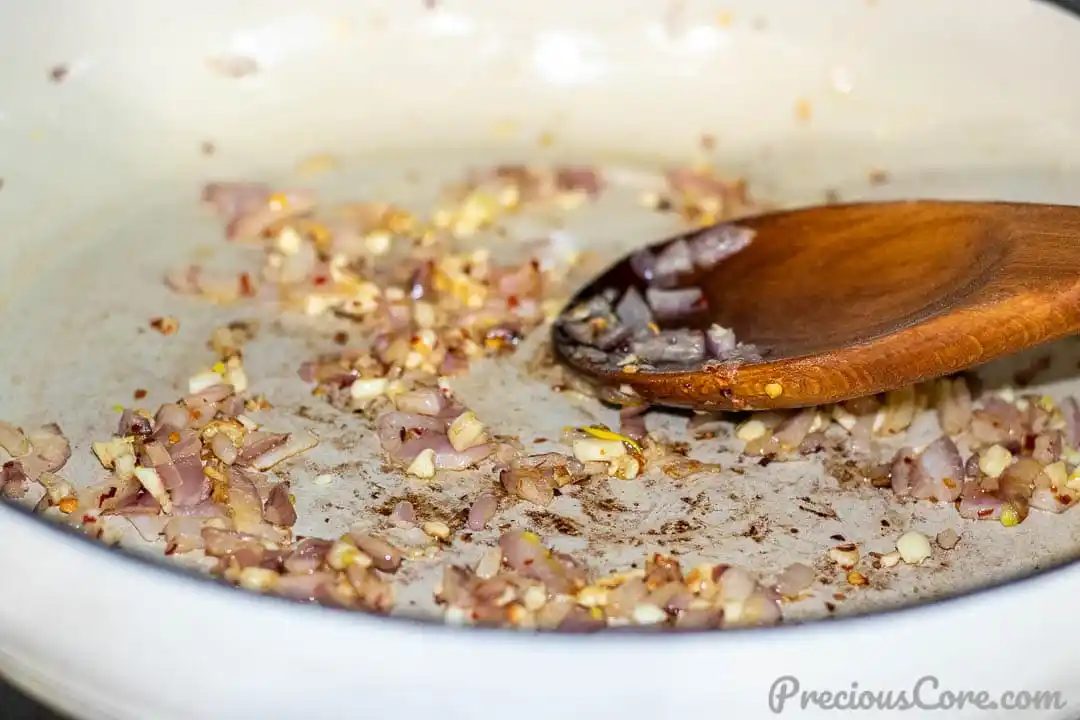
4. Add the vegetables to the pot. Let the hard vegetables cook for 30 seconds to one minute before adding the rest of the vegetables. By adding the harder vegetables with the longest cooking time first, the hard and softer vegetables will all have the same tenderness by the end of cooking.
5. Once all the vegetables are in the pot, sprinkle over the seasonings. Toss well to combine. Toward the last minute of cooking, taste the sautéed vegetables and adjust seasoning as needed. Serve immediately at the end of cooking.
Cook notes
- Make sure to use enough oil and use a good skillet. This will prevent the sauteed veggies from getting stuck while you cook them.
- Feel free to add other ingredients such as leafy greens, green onions, grape tomatoes, or diced fresh tomatoes. This recipe is very adaptable! With more ingredients, you might want to add more oil to compensate. Just a little oil will do.
- For a deeper umami taste, consider adding a splash of soy sauce or coconut aminos. Remember that these ingredients are robust, and a little goes a long way.
- A simple way to dress up the dish when serving it is to sprinkle on fresh herbs and a bit of freshly grated parmesan cheese. It really highlights the best qualities in the vegetables!
- You can easily double the recipe to make a big batch. Just make sure to use a large enough skillet because if you overfill the pan, the veggies will cook unevenly.
- Store any extra vegetables in an airtight container in the refrigerator. You can reheat them in the microwave, on the stovetop, or even in the air fryer if you want to make them extra crispy.
- Use vegetable broth or a splash of water to deglaze the pan if needed. Our personal favorite way is using the broth since it imparts more flavor.
Best Vegetables To Sauté
It is up to you what type of vegetables you want to use. Most types of veggies can be sautéed, but some of the great vegetable options include:
- Bell Peppers
- Carrots
- Fresh Green Beans
- Green Peas
- Zucchini
- Brussels Sprouts
- Broccoli
- Cauliflower
- Mushrooms
- Cabbage
- Snow Peas
- Asparagus
How Long To Sauté Vegetables
Sauté vegetables on medium high heat for 3 to 5 minutes. Sautéing vegetables at a high heat compared to low/medium heat allows the vegetables to caramelize while the moisture locks in.
Be sure not to overcook your vegetables, so they lose their crunch and nutrients. You are aiming to make crisp vegetables with a tender interior.
Can You Sauté Frozen Vegetables
Yes, you absolutely can sauté frozen vegetables. Note however that vegetables tend to lose their crunch after being frozen so frozen vegetables won’t have a bit of a crunch like fresh vegetables but they still taste great.
Sauteing frozen vegetables is a great way to save time. We often buy giant frozen vegetable packs from Costco and keep them in our freezer for a quick saute on busy weeknights.
How To Sauté Frozen Vegetables
Follow the same procedure for sautéing fresh vegetables. Start by sautéing onion and garlic then add the vegetables and let them sauté then you add the seasoning.
What To Serve With Sauteed Vegetables
Sauteed vegetables go well with:
- Pan Grilled Salmon
- Lemon Butter Tilapia
- Cajun Salmon
- Herb Roasted Chicken
- Pan Seared Tilapia
- Pan Seared Ribeye Steak
- Easy Coconut Rice or other grains
- Juicy Roast Turkey
- Lemon Butter Salmon
- Yield: 4 servings
- Prep: 20 minutes
- Cook: 10 minutes
- Total: 30 minutes
Ingredients
- 5 oz Brussel sprouts, about 10 Brussel sprouts, stalk trimmed and cut lengthwise in half
- 2 medium carrots, peeled and sliced into circles
- 1 red bell pepper, sliced into chunks, seeds removed
- 1 zucchini, cut into quarter inch thick circles or half moons
- 1 yellow squash, cut into quarter inch thick circles or half moons
- 2 tablespoons olive oil, or other neutral oil
- 1/2 cup diced red onion
- 1 tablespoon minced garlic
- 1/2 teaspoon salt
- 1/2 teaspoon ground white pepper or black pepper
- 1/2 teaspoon beef bouillon powder, other kinds of bouillon powder would work as well
Method
- Prep the Veggies. Rinse all vegetables and chop them.
- Place a large skillet or cast iron braiser pan (this helps hold heat well) on medium high heat. Add the oil and let it heat up until shimmering.
- Add the diced onion and stir. Sauté for one minute until translucent. Add the minced garlic and stir. Let the garlic cook in the oil for 30 seconds so its flavor can bloom.
- Sautee the Veggies. Add the Brussels sprouts to the pan and stir, cooking for one minute. Add in the carrots and stir. Let it cook for 30 seconds. Then add in the bell peppers and stir. Let it cook for 30 seconds. Add in the zucchini and yellow squash and stir. If you are using other kinds of vegetables, start by adding the hardest vegetables. Let all the vegetables cook to your desired doneness.
- Add in the salt, pepper and bouillon powder. Mix everything well to combine. Let them cook together for 2 minutes. Vegetables should still be crisp.
- Serve warm.