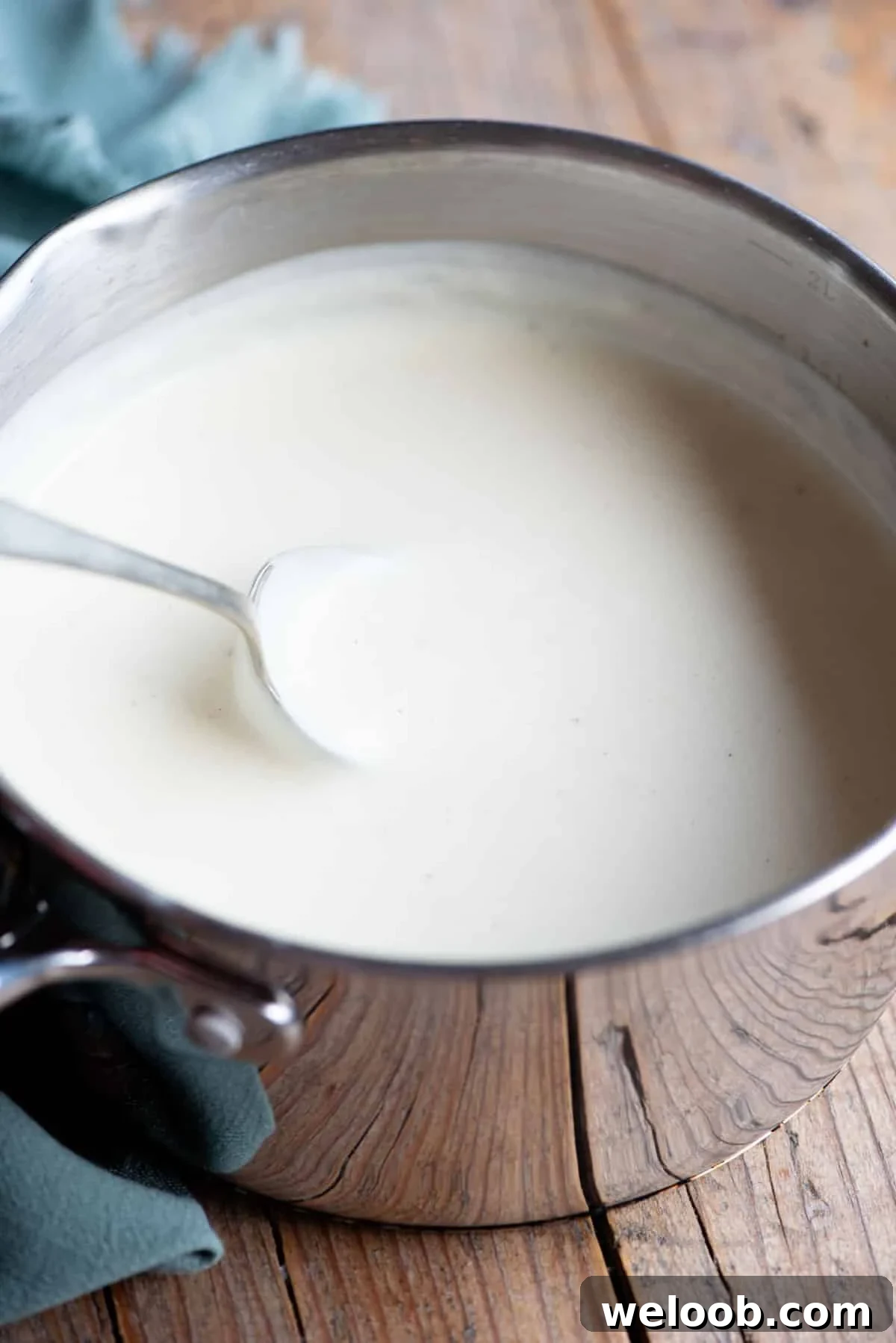
Italian Bechamel Sauce, known in Italy as Besciamella, is a silky white sauce made from butter, flour and milk. This classic sauce is rich, versatile and simple to prepare. Use it for traditional Italian dishes such as Lasagna Bolognese or Pasta al Forno.
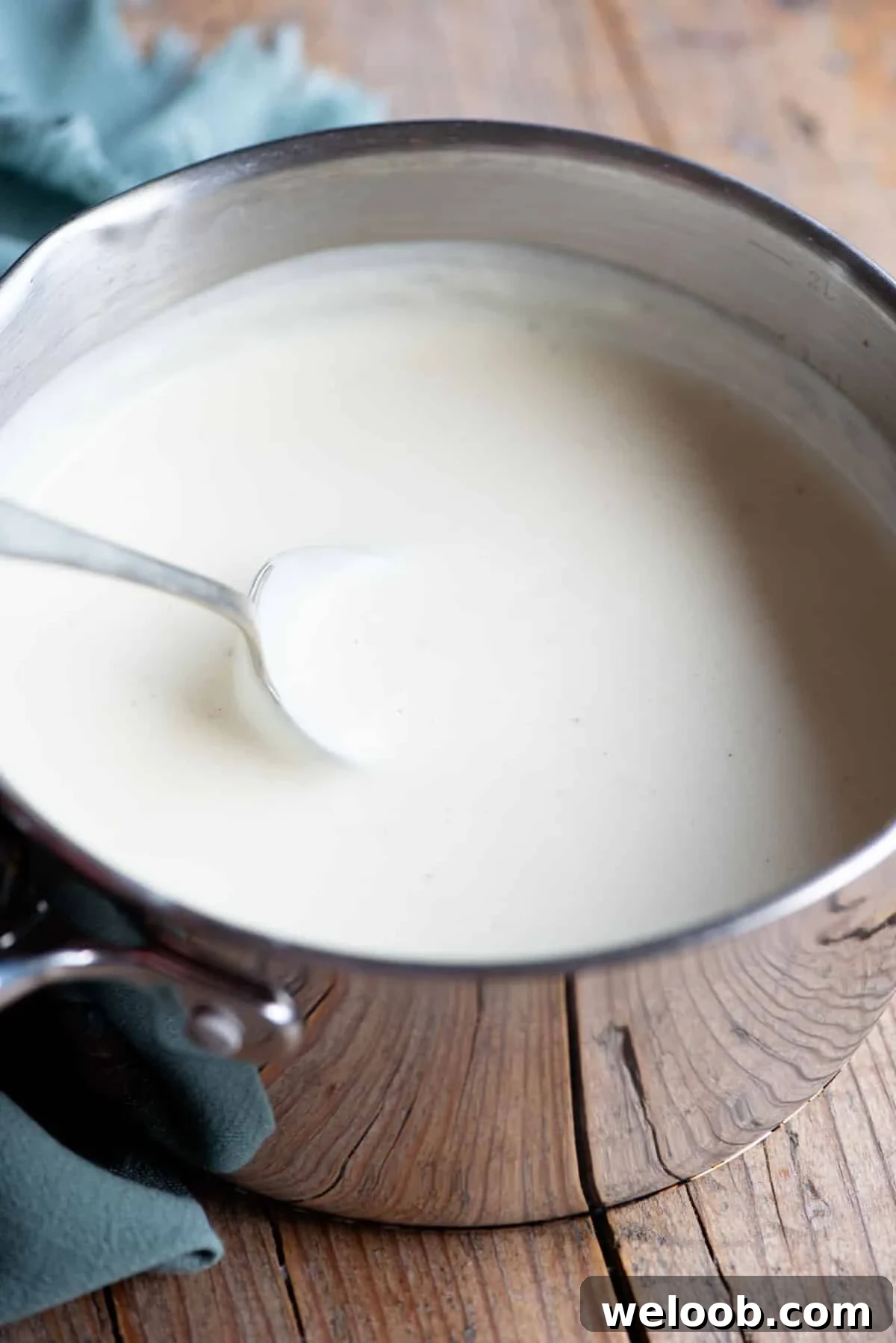
Bechamel was one of the first sauces I learned to make. It’s a foundational white sauce in both French and Italian cooking and forms the base for many beloved dishes.
In Italy, besciamella is used in Lasagne al Forno, Cannelloni, Pasta al Forno and vegetable bakes like Fennel Gratin, among others. Its smooth, creamy texture helps bind fillings and adds richness to layered and baked recipes.
The sauce’s origins are debated. While bechamel is commonly associated with French cuisine, some food historians suggest it may have roots in Tuscany where a thick binding sauce called Salsa Colla (“glue sauce”) was used. The sauce was later adapted in France and became associated with the name Béchameil.
Regardless of origin, besciamella is an essential technique for home cooks who enjoy Italian and French recipes.
Read on for the full recipe with ingredient notes, step-by-step photos, practical tips, variations and a video. For a printable recipe, see the recipe card below.
Ingredients
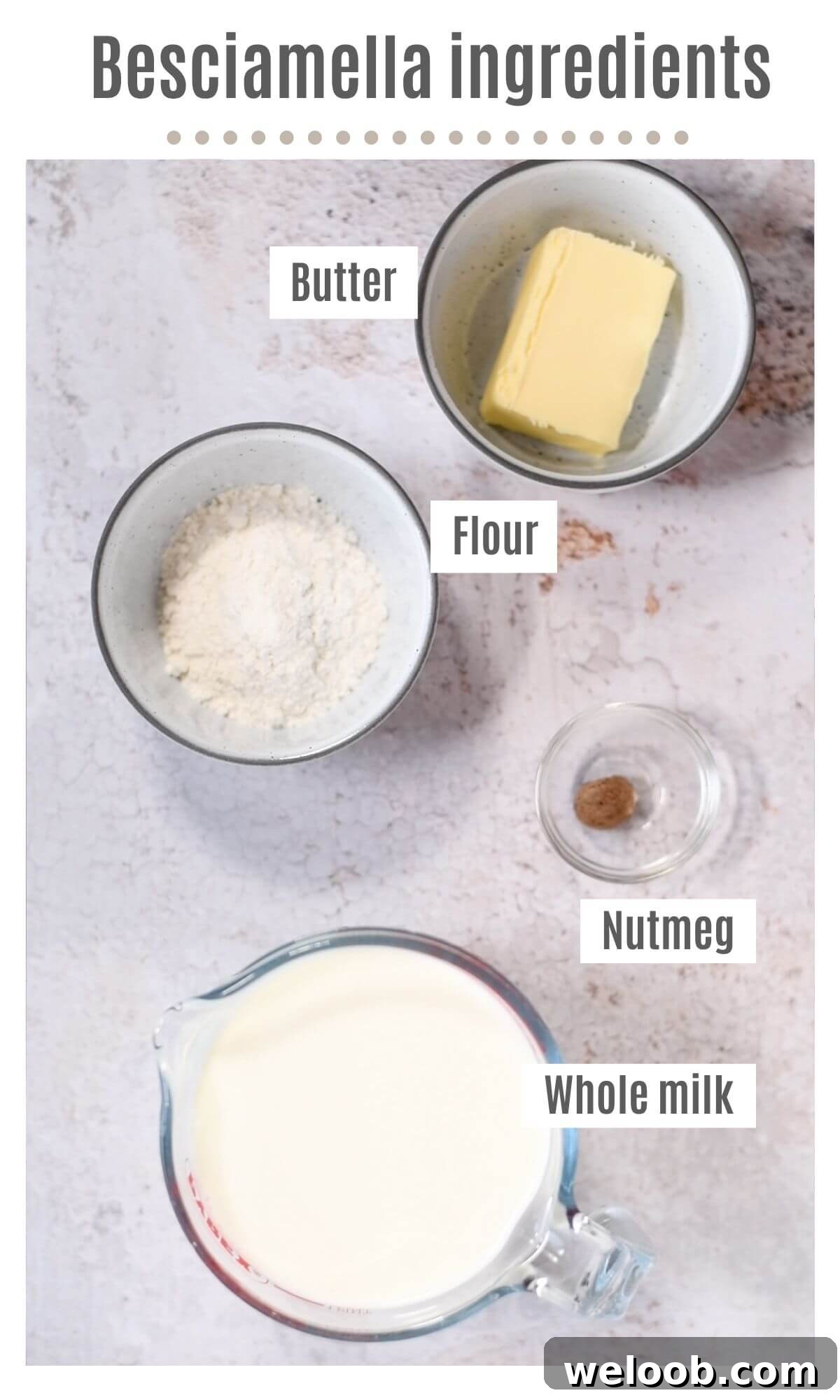
Ingredient notes and substitutions
- Flour: Use regular all-purpose (plain) flour.
- Butter: Unsalted butter is recommended so you can control seasoning. Cold or room-temperature butter is fine since it melts during cooking.
- Milk: Whole (full-fat) milk gives the creamiest, quickest-thickening result. Semi-skimmed works but will take longer to thicken.
- Nutmeg: A pinch of freshly grated nutmeg adds a subtle warmth. If using ground nutmeg, use very little.
- Salt and pepper: Add to taste at the end; freshly ground black pepper and sea salt flakes work well.
Step by step photos and instructions
Warm the milk in a saucepan until just warm, then remove from the heat.
In a separate saucepan, melt the butter over low-medium heat. Stir in the flour to form a roux — it should resemble a smooth paste. Cook, whisking, for 1–2 minutes to remove the raw flour taste.
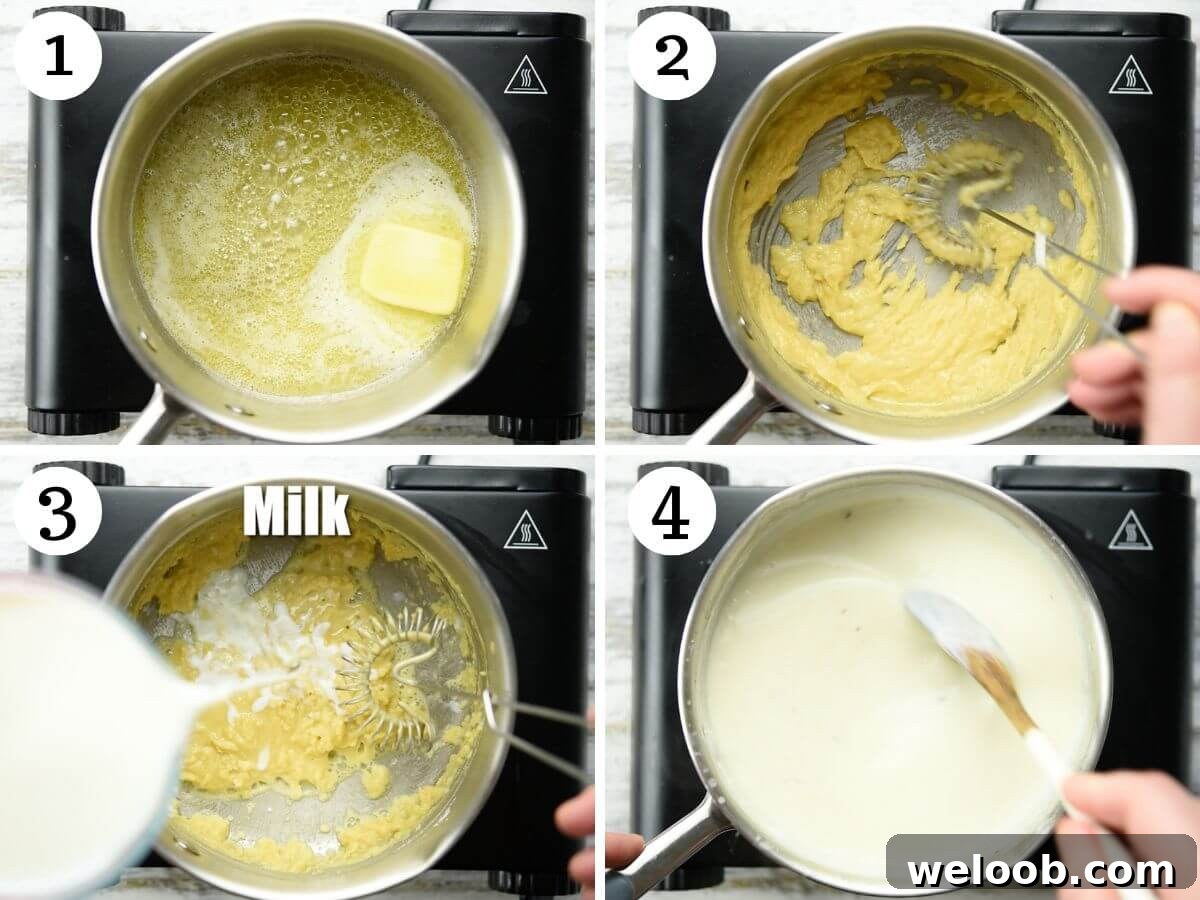
With the roux whisking constantly, add one third of the warm milk. Whisk vigorously to prevent lumps — the mixture should thicken quickly. Add the next third of milk and whisk until smooth, then pour in the remaining milk and whisk until the sauce is thick and silky.
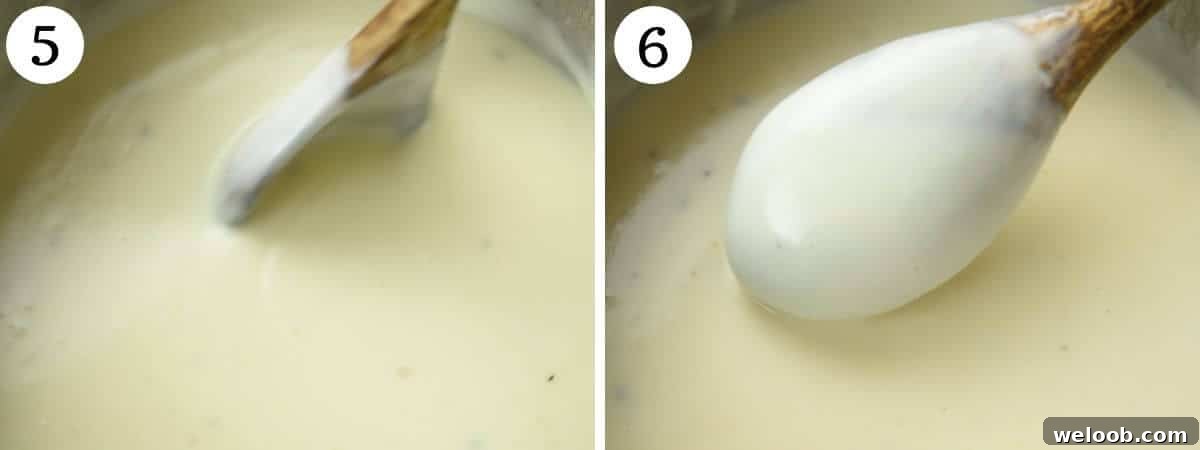
Season with nutmeg, salt and plenty of black pepper. Continue to cook for a few minutes while stirring until the sauce is glossy and has a smooth, velvety texture. Remove from the heat — your bechamel is ready to use.
Note: If adding cheese, stir it in at the end off the heat until fully melted.
Ways to use Italian Bechamel Sauce
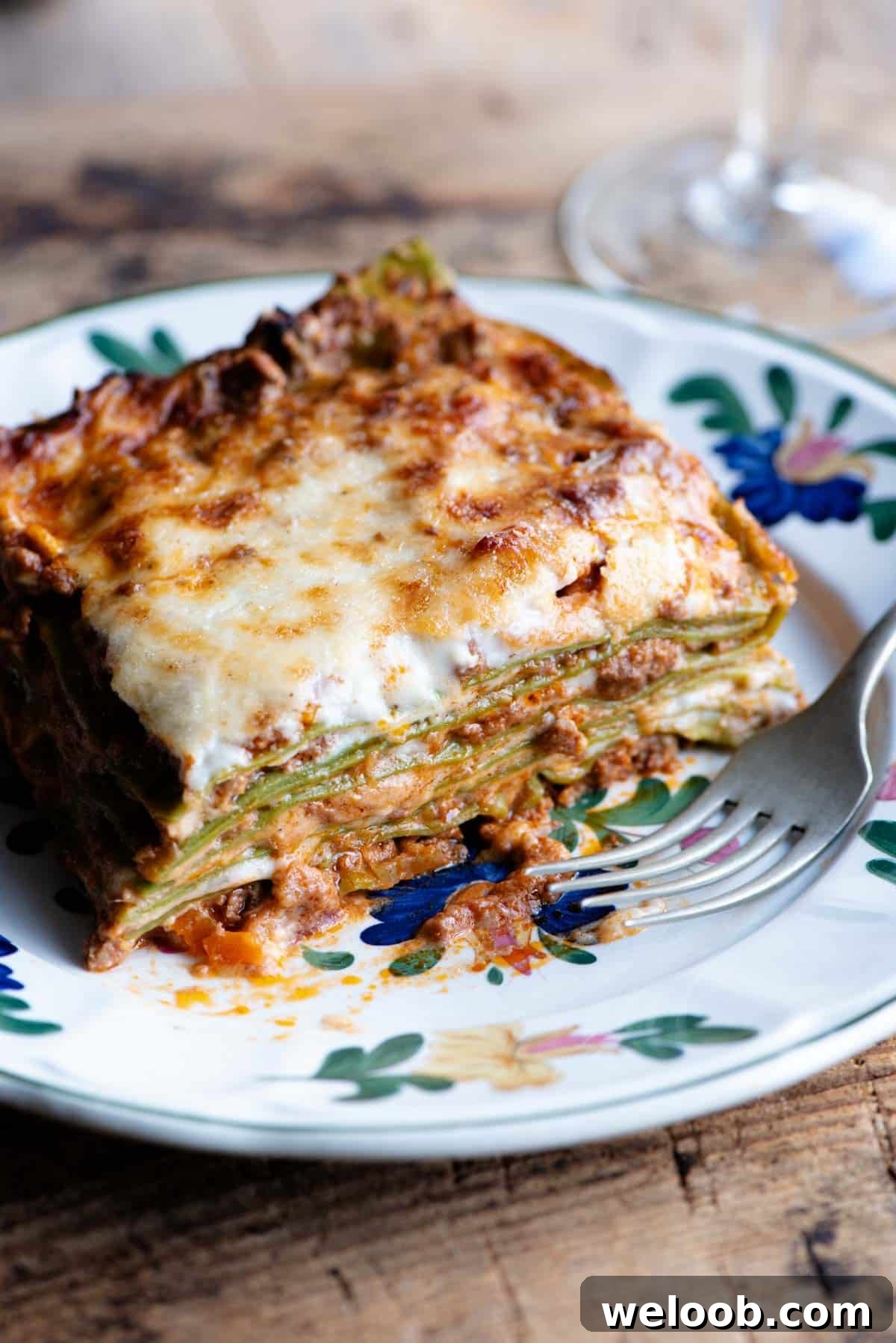
Besciamella is the classic finishing touch for many baked Italian dishes. It adds moisture and richness to lasagna, cannelloni and baked pasta, and it makes gratins and vegetable bakes especially creamy.
Popular dishes that use bechamel include Lasagna al Forno, Eggplant Lasagna, Lentil Ragu Lasagne and Butternut Squash Lasagna. It’s also excellent in baked pasta dishes, savoury crepes (crespelle), filled pastries and cauliflower gratin.
Recipe tips and FAQs
- Use warm milk: Warm milk incorporates more smoothly and helps the sauce thicken faster. Cold milk will work but slows the process.
- Use a whisk: A small hand whisk is ideal for combining milk and roux and preventing lumps.
- Prevent a skin: As the sauce cools it can form a skin. Lay plastic wrap directly on the surface of the sauce to stop this.
- Sauce not thickening? Increase the heat slightly and whisk; insufficient heat can prevent proper thickening.
- No butter? You can make a roux with another fat; adapt seasoning accordingly.
Yes. Cool completely, transfer to freezer bags, and freeze. Defrost thoroughly before using and whisk to refresh the texture.
A classic besciamella does not contain cheese. If you add cheese, the sauce becomes a Mornay (cheesy béchamel). In Italy Parmigiano Reggiano is a common addition when cheese is used.
If a skin forms, whisk it vigorously back into the sauce. To prevent it, place cling film directly on the surface while the sauce cools.
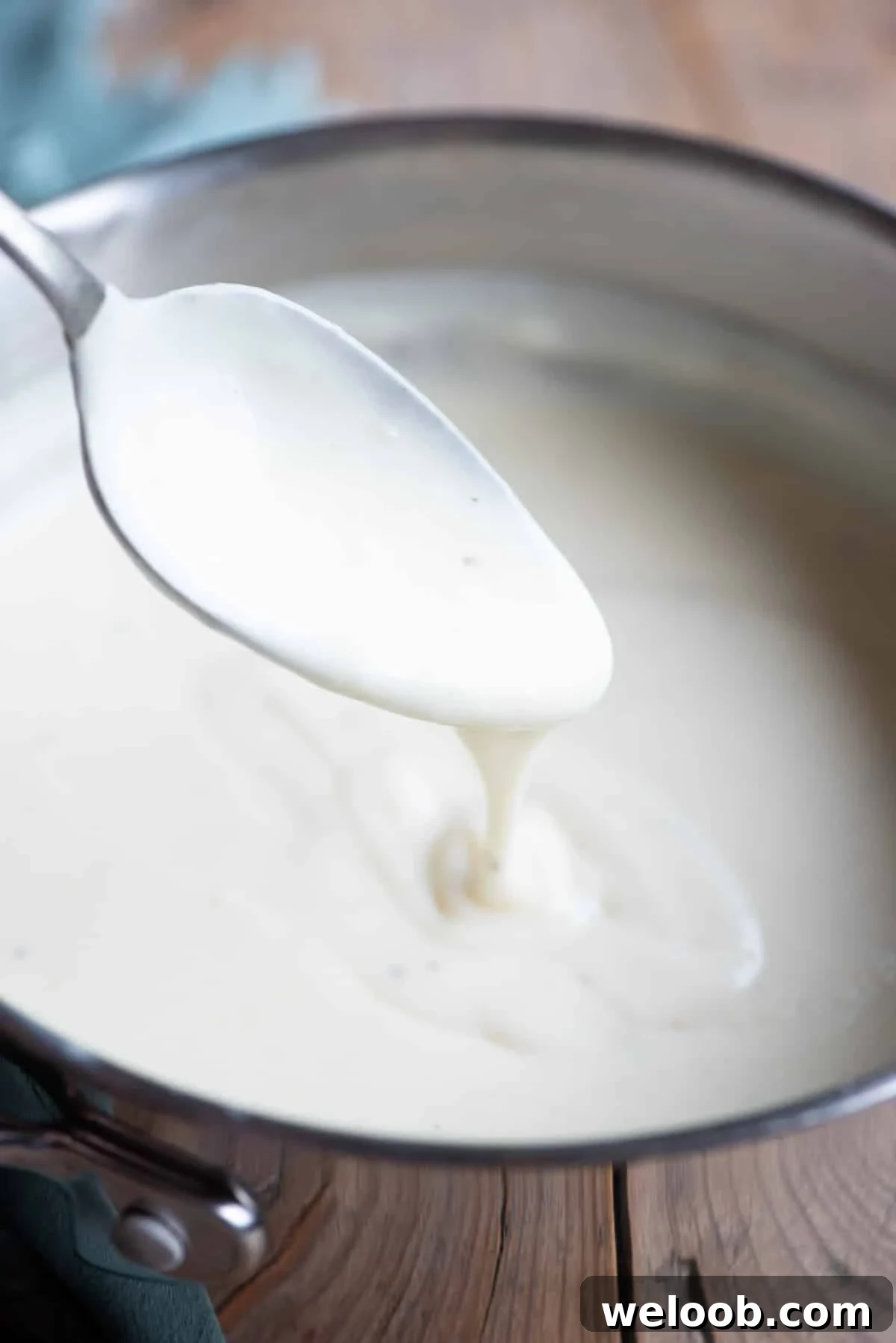
If you try this Besciamella recipe, please rate it or leave a comment — feedback is always appreciated. Follow the recipe card below for exact quantities, timings and a printable version.
Step By Step Photos Above
Most recipes include step-by-step photos, tips and a video.
Besciamella (Italian Béchamel Sauce)
By Emily
Ingredients
- 5 tablespoons butter (70g)
- 5 tablespoons all-purpose flour (70g)
- 4 1/4 cups whole milk (1 litre)
- 1 pinch freshly grated nutmeg
- Salt and pepper, to taste
Optional addition
- Parmigiano Reggiano or other cheese, to taste
Instructions
- Heat the milk in a saucepan until warm, then turn off the heat.
- In a separate saucepan, melt the butter and add the flour to make a roux (a paste). Whisk and cook for 1–2 minutes.
- Whisking constantly, add one third of the warm milk. Whisk vigorously to avoid lumps; it will thicken quickly. Add the next third and whisk until smooth, then add the remaining milk and whisk until the sauce is thick and smooth.
- Stir in nutmeg, salt and pepper and cook for a few minutes while whisking until the sauce is silky. Remove from heat.
- Note: if adding cheese, add it at the end and stir until fully melted.
Video
Notes
- Use warm milk: it helps the sauce thicken quickly.
- Use a whisk: to prevent lumps when adding milk to the roux.
- Prevent a skin: place plastic wrap directly on the sauce surface while cooling.
- Storage and freezing: refrigerate covered for 2–3 days or freeze once fully cooled.
- Sauce not thickening? increase the heat slightly and whisk until thickened.
Helpful Info for All Recipes
- I use extra virgin olive oil in recipes unless noted otherwise.
- All vegetables are medium unless stated otherwise.
- Recipes are tested using a fan (convection) oven.
Nutrition
Carbohydrates: 4 g |
Protein: 1 g |
Fat: 7 g |
Saturated Fat: 5 g
Nutrition information is automatically calculated and should be used as an approximation.